Complete Guide to Kogenji Temple (Kyoto Prefecture): The Charm of the Tenryuji Temple Sub-temple with its Tiger’s Roar Garden and Sword Marks from the Late Edo Period
Nestled within the grounds of Tenryuji Temple in Arashiyama, Kyoto, Kogenji Temple is a sub-temple of the Tenryuji branch of the Rinzai school of Zen Buddhism, dating back to the Muromachi period. It is known as a fascinating spot where history and art merge, featuring the “Tiger’s Roar Garden,” a dry landscape garden using Arashiyama as a borrowed landscape; sword marks left by Choshu samurai that convey the turmoil of the late Edo period; and fusuma paintings by Takeuchi Seiho, a master of modern Japanese painting. This article provides a detailed introduction to Kogenji Temple, including its history, highlights, and visiting information.
History and Origins of Kogenji Temple
Founding and Founding Priest
Kogenji Temple was founded in 1429 (Eikyo 1) by Hosokawa Mochiyuki, who was a shogunal deputy of the Muromachi shogunate. The temple’s founding abbot was Zen Master Gyokushu Eishu, a Dharma descendant of Musō Soseki (Musō Kokushi), the founder of Tenryū-ji Temple.
Its mountain name is Reigizan, and its principal image is Shakyamuni Buddha. Initially, it possessed vast temple grounds and held an important position as a sub-temple of Tenryū-ji. Hosokawa Mochiyuki was a powerful figure in the Muromachi Shogunate, and Kōgen-ji flourished under his patronage.
A History of Numerous Fires and Reconstructions
Throughout its long history, Kōgen-ji has suffered numerous fires and has been rebuilt each time. In particular, it is said to have suffered significant damage along with Tenryū-ji during the Ōnin War (1467-1477).
In 1884 (Meiji 17), it merged with its subsidiary temple, Ihoken, to form its current structure. This merger resulted in the transfer of cultural artifacts and treasures previously held by Ihoken to Kogenji Temple.
Positioning as a Sub-temple of Tenryuji Temple
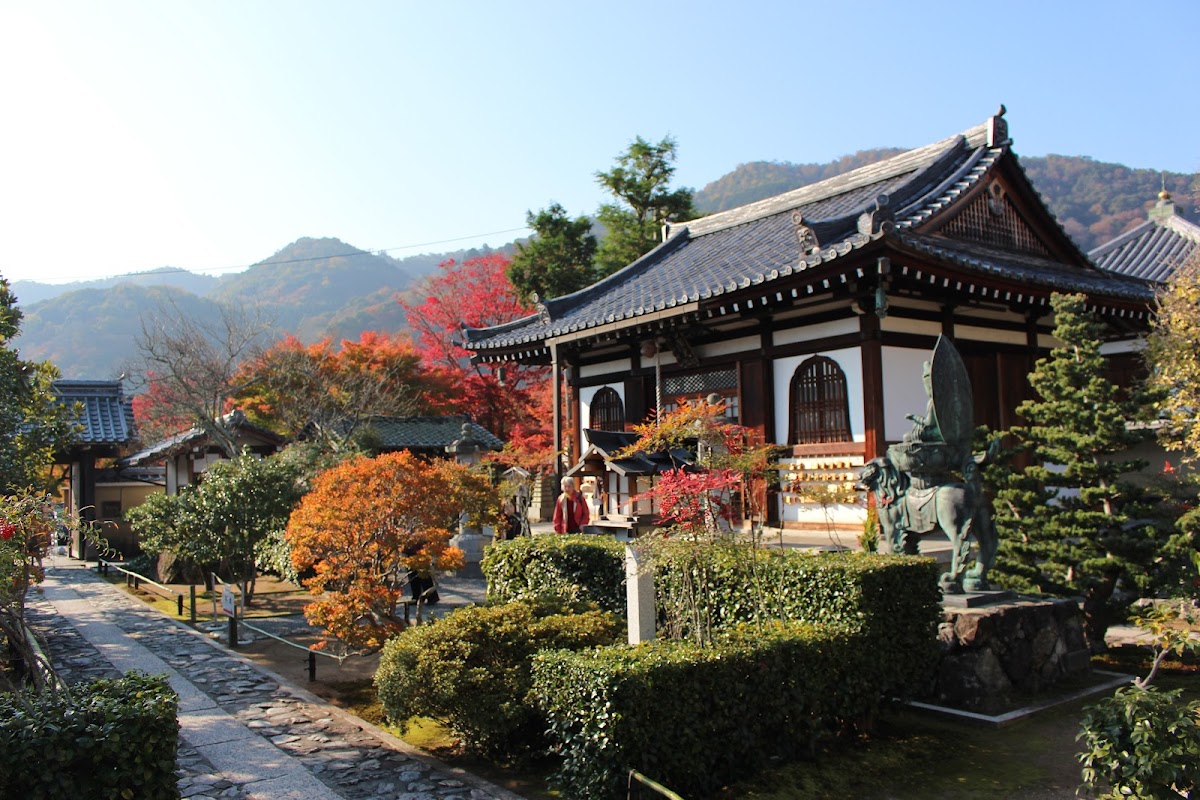
Kogenji Temple is one of the sub-temples of Tenryuji Temple, a UNESCO World Heritage Site. It is located to the right after entering the main gate of Tenryuji Temple, west of Sanshuin Temple. It enshrines Bishamonten, one of the Seven Lucky Gods of Tenryuji Temple, and attracts the devotion of many visitors.
Due to its location within the Tenryuji Temple grounds, it maintains a tranquil atmosphere despite being in the heart of Arashiyama’s tourist area, making it a valuable space.
Koshō no Niwa (Tiger’s Roar Garden): The Beauty of a Dry Landscape Garden Using Arashiyama as a Borrowed Landscape
Garden Composition and Characteristics
One of Kogenji Temple’s greatest highlights is the dry landscape garden known as “Koshō no Niwa” (Tiger’s Roar Garden). This garden is characterized by its design that incorporates Arashiyama as a borrowed landscape, with the natural mountain range and artificial garden harmoniously blended.
At the center of the garden is a curved expanse of white sand, believed to represent the ocean. The curves of the white sand evoke the movement of waves crashing against the shore, adding a dynamic element to the otherwise static dry landscape garden.
Seasonal Scenery
The Koshō Garden displays different expressions in each of the four seasons.
In spring, cherry blossoms bloom in profusion, creating a beautiful contrast between the white sand, the pink of the blossoms, and the fresh greenery of Arashiyama. The garden attracts many visitors, especially during the special spring viewing period (mid-March to mid-May).
In summer, the lush green of Arashiyama serves as a beautiful borrowed landscape, creating a cool and refreshing atmosphere.
In autumn, the red of the autumn leaves and nandina berries colors the garden, creating a magnificent contrast with the white sand. During the special autumn viewing period (early October to early December), visitors can enjoy particularly beautiful scenery, even within the Arashiyama area, known as one of Kyoto’s premier autumn foliage spots.
In winter, the serene beauty of the garden stands out against the backdrop of snow-covered Arashiyama.
Origin of the name “Koshō”
“Koshō” is a word that describes the sound of a tiger roaring. In Zen Buddhism, there is a phrase “Ryūgin Koshō” (龍吟虎嘯), which means that outstanding individuals resonate with each other, like a dragon roaring and a tiger roaring.
This garden name may embody the powerful force of Arashiyama’s nature and the beauty of the garden that responds to it. There is also an interpretation that the curves of the white sand represent the movement of a tiger.
Sword marks of Chōshū samurai that tell the history of the late Edo period
The Kinmon Incident and Kōgenji Temple
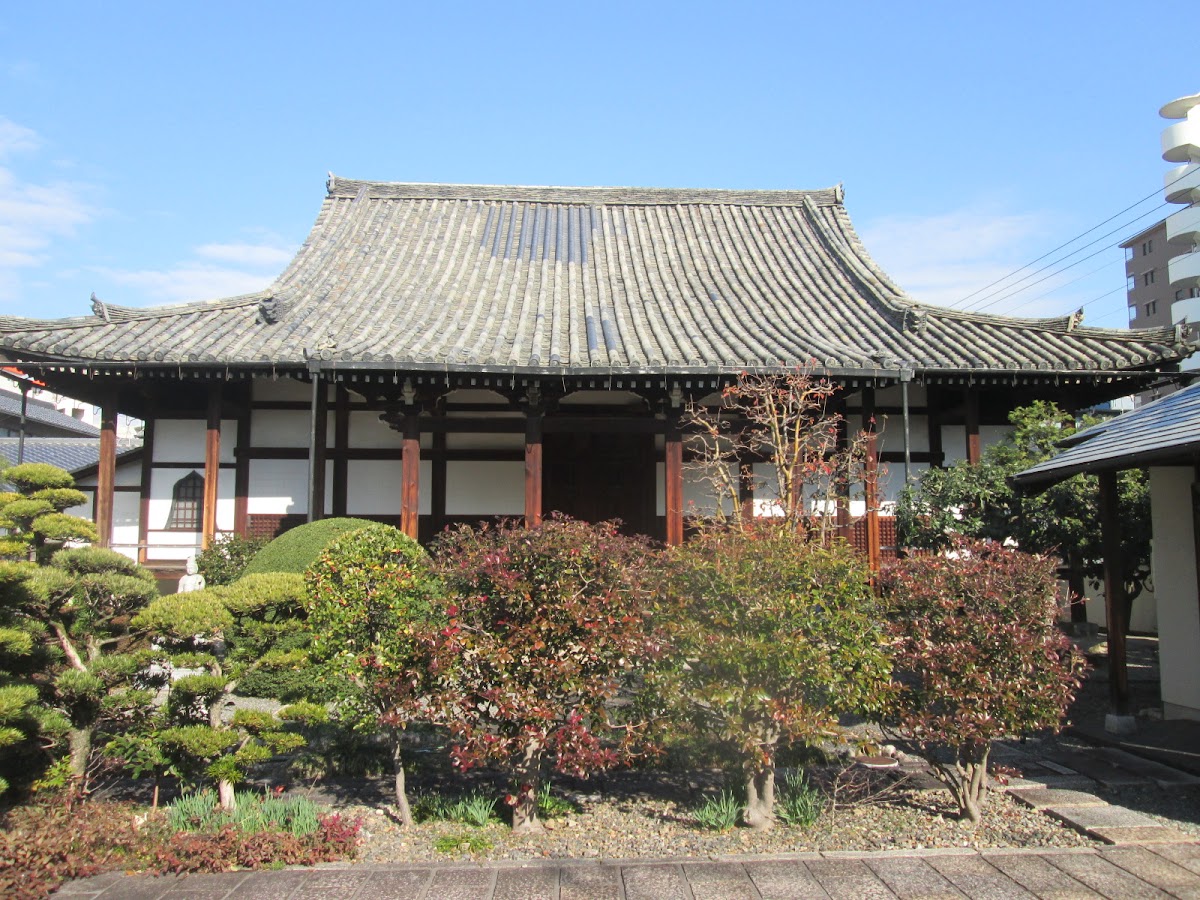
Kōgenji Temple preserves valuable historical sites that tell the story of the turbulent late Edo period. These are the “sword marks of Chōshū samurai” that remain on the pillars and lintels of the main hall.
On July 19, 1864 (Genji 1), the Kinmon Incident (Hamaguri Gate Incident) broke out around the Kyoto Imperial Palace. The defeated Choshu samurai fled Kyoto and retreated towards Arashiyama. During this retreat, they stopped at Kogenji Temple, where they tested their swords. The marks left by these sword tests are still visible in the main hall today.
History Told by Sword Marks
The deep, sharp sword marks remaining on the pillars and lintels of the main hall tell the story of the tense situation at the time. These marks are not merely acts of destruction, but are believed to have been made by samurai before battle to test the sharpness of their swords and to compose themselves.
Kogenji Temple carefully preserves these sword marks as witnesses to history, and they can be viewed up close during special viewings. It is a valuable historical artifact that allows one to feel the presence of the patriots of the late Edo period.
Significance in the History of the Late Edo Period
The Kinmon Incident was an event that significantly altered the political landscape of the late Edo period. Following this battle, the Choshu Domain was declared an enemy of the imperial court, leading to the First Choshu Expedition. The sword marks remaining at Kogenji Temple are valuable historical artifacts that convey the footprints of those who lived through such a turbulent era.
While Kyoto boasts numerous historical sites related to the end of the Edo period, places bearing actual evidence of visits by Choshu samurai are limited, making this a must-see spot for history buffs.
Takeuchi Seiho’s Fusuma Paintings and Temple Treasures
About Takeuchi Seiho
Kogenji Temple houses fusuma paintings by Takeuchi Seiho (1864-1942), a master of modern Japanese painting. Takeuchi Seiho was a leading figure in the Kyoto art world, leaving behind numerous innovative works that incorporated Western painting techniques into traditional Japanese painting.
Seiho was a recipient of the Order of Culture and made significant contributions to the development of modern Japanese painting. The artwork possesses a refined beauty, underpinned by keen observation and masterful technique.
Fusuma Paintings at Kogenji Temple
The fusuma paintings by Takeuchi Seiho, preserved at Kogenji Temple, are displayed during special viewings. These paintings hold a significant place in Seiho’s artistic career, depicting elegant scenes of seasonal flowers, birds, and landscapes.
These fusuma paintings adorn each room of the main hall, creating an artistic space in conjunction with the Koshō Garden. This is a rare opportunity to appreciate Seiho’s delicate brushwork and sense of color up close.
Other Temple Treasures
Besides Takeuchi Seiho’s fusuma paintings, Kogenji Temple also houses other valuable cultural artifacts from the Muromachi to Edo periods. Buddhist statues, paintings, calligraphy, and other items that tell the story of the temple’s long history as a sub-temple of Tenryūji Temple are sometimes displayed during special viewings.
In particular, the principal image, a statue of Shakyamuni Buddha, is believed to be a work from the Muromachi period, characterized by its serene expression and well-proportioned form.
Special Viewings
Spring and Autumn Special Viewings
Kogenji Temple is not open to the public year-round; it has special viewing periods twice a year, in spring and autumn.
Spring Special Viewing: Typically mid-March to mid-May
Autumn Special Viewing: Typically early October to early December
During the special viewing periods, you can view all of Kogenji Temple’s main attractions, including the Tiger’s Roar Garden, the sword marks left by Choshu samurai, and the sliding screen paintings by Takeuchi Seiho.
Visiting Hours and Fees
Visiting Hours: 9:00 AM – 5:00 PM (Last entry at 4:30 PM)
Admission Fees:
- Adults: 500 yen
- Elementary and Junior High School Students: 300 yen
- Combined Ticket with Hogon-in Temple: 900 yen
Hogon-in Temple, like Kogen-ji Temple, is a sub-temple of Tenryu-ji Temple and boasts a beautiful garden called “Shishiku no Niwa” (Lion’s Roar Garden). Since both temples are holding special viewings at the same time, using a combined ticket allows for efficient visitation.
Closed Days During the Period
Even during the special viewing period, there may be irregular closing days. It is recommended to check official information or inquire by phone in advance.
Access Information
Location
65, Saga Tenryuji Susukinobaba-cho, Ukyo-ku, Kyoto City, Kyoto Prefecture 616-8385
Access by Train
JR Sagano Line
- Approximately 13 minutes on foot from JR Saga-Arashiyama Station
Randen (Keifuku Electric Railway Arashiyama Line)
- Approximately 3 minutes on foot from Arashiyama Station (nearest station)
Hankyu Railway
- Approximately 15 minutes on foot from Hankyu Arashiyama Station
Randen Arashiyama Station is the closest and most convenient. From the station, head towards the main gate of Tenryuji Temple. After entering the main gate, proceed to the right to reach Kogenji Temple.
Access by Bus
Kyoto City Bus/Kyoto Bus
- Get off at the “Arashiyama Tenryuji-mae” bus stop, approximately 5 minutes on foot.
- Get off at the “Arashiyama” bus stop, approximately 10 minutes on foot.
From Kyoto Station, you can use City Bus Route 28. From Shijo Kawaramachi, you can use City Bus Route 11, etc.
Access by Car and Parking
Kogenji Temple does not have its own parking lot. We recommend using nearby paid parking lots or public transportation.
The Arashiyama area is very crowded during tourist season (especially spring and autumn), and parking lots are often full, so access by train or bus is the most reliable option.
Nearby Tourist Attractions
Tenryuji Temple
Tenryuji Temple, of which Kogenji Temple is a sub-temple, is the head temple of the Tenryuji branch of the Rinzai school of Zen Buddhism and is registered as a World Heritage Site. The Sogenchi Garden, designed by Muso Soseki, is known as a masterpiece of Japanese garden design. When visiting Kogenji Temple, be sure to also visit the head temple, Tenryuji Temple.
Hogon-in Temple
Like Kogen-ji Temple, Hogon-in is a sub-temple of Tenryu-ji Temple. Its highlight is the strolling garden known as “Shishiku no Niwa” (Lion’s Roar Garden). Special viewings are held in spring and autumn, and its autumn foliage is particularly renowned as one of Arashiyama’s most beautiful spots. Visiting both temples using a combined admission ticket is recommended.
Bamboo Grove Path
The bamboo grove path, located north of Tenryu-ji Temple, is a representative scenic spot of Arashiyama. The fantastical space created by the tall bamboo is popular with tourists from both Japan and abroad. It is a few minutes’ walk from Kogen-ji Temple.
Togetsukyo Bridge
Togetsukyo Bridge, a symbol of Arashiyama, is a 155-meter-long bridge spanning the Katsura River. You can enjoy the beautiful scenery of each season: cherry blossoms in spring, fresh greenery in summer, autumn leaves in fall, and snowscapes in winter. It is about a 10-minute walk from Kogen-ji Temple.
Nonomiya Shrine
Nearby in a bamboo grove, Nonomiya Shrine is a historical shrine that even appears in The Tale of Genji. It is revered as a deity of matchmaking and fertility. The shrine has a charming atmosphere, with its impressive black wooden torii gate and small brushwood fence.
Points and Manners for Visiting Kogenji Temple
Precautions During Visit
Kogenji Temple is only open to the public during special viewing periods, so be sure to check the dates before visiting. Even within the viewing period, there may be days when the temple is closed due to religious services, etc.
Photography may be prohibited inside the main hall; please follow the instructions of the staff. Photography is often permitted in the garden, but the use of tripods may be restricted.
Recommended Visiting Times
The time immediately after opening in the morning (9:00-10:00) is relatively uncrowded, allowing for a quiet visit. Weekday mornings are especially a good time to visit.
Tourism tends to increase in the afternoon, but it calms down again after 16:00. However, please note that the reception closes at 4:30 PM.
Recommended Seasons
Spring: The cherry blossom season from early to mid-April, or the beautiful fresh greenery in early May, are recommended.
Autumn: The peak of the autumn foliage season from mid to late November is the most popular. However, Arashiyama is extremely crowded during this time, so it’s necessary to plan with plenty of time to spare.
Temple Etiquette
Kogenji Temple is an active temple and a place of spiritual training. Please observe the following etiquette when visiting:
- Visit quietly (refrain from loud conversations)
- Do not damage the buildings or gardens
- Do not enter areas other than designated areas
- Take your trash with you
- Smoking is strictly prohibited in non-smoking areas
About Goshuin (Temple Seals)
Goshuin at Kogenji Temple
Goshuin can be obtained at Kogenji Temple during special viewing periods. The temple’s seal (Goshuin) will read “Reikizan Kogenji” and bear the temple’s official stamp.
You can obtain the Goshuin at the reception desk in the main hall. Bring your own Goshuincho (stamp book), or you can receive a pre-printed Goshuin on a separate sheet of paper.
Goshuin Fee
The Goshuin fee is usually 300 yen (this may change, so please check at the temple).
Tenryuji Seven Lucky Gods Pilgrimage
Kogenji Temple is one of the temples on the Tenryuji Seven Lucky Gods pilgrimage, and enshrines Bishamonten. You can also obtain a Goshuin for the Seven Lucky Gods pilgrimage. This is a popular pilgrimage route where you visit each of the sub-temples within the Tenryuji grounds to pay your respects to the Seven Lucky Gods.
To Deepen Your Appreciation of Kogenji Temple
Recommended Prior Study
Before visiting Kogenji Temple, learning about the history of the Muromachi period, Zen Buddhist culture, and Kyoto during the late Edo period will allow you to understand the temple more deeply. Knowing about the history of Hosokawa Mochiyuki and the Choshu Domain will help you appreciate the meaning of the sword marks more deeply.
Regarding Takeuchi Seiho’s works, viewing them beforehand through art books or other means will enhance your appreciation when you see them in person.
Take Your Time
To fully appreciate the charm of Kogenji Temple, we recommend allocating at least 30 minutes to an hour. Gazing at the Koshō Garden, feeling the changing seasons and the beauty of nature, appreciating the details of the sliding screen paintings, and reflecting on history—this kind of time management will help you understand the true value of Kogenji Temple.
Combining with Hōgonin Temple
By using a combined admission ticket to visit both Kogenji Temple and Hōgonin Temple, you can enjoy the differences in the individuality of their gardens. Comparing Kogenji Temple’s static dry landscape garden with Hōgonin Temple’s dynamic strolling garden will allow you to appreciate the diversity of Japanese gardens.
Summary
Kogenji Temple, located in the heart of Kyoto’s Arashiyama tourist area, offers a special space where you can feel tranquility and history. It boasts a variety of attractions, including the beauty of the Koshō Garden, which incorporates Arashiyama as a borrowed landscape, sword marks left by Chōshū samurai that convey the turmoil of the late Edo period, and the elegant fusuma paintings by Takeuchi Seihō.
Special viewing periods are limited to only two times a year, in spring and autumn, but this rarity only enhances the value of a visit. When visiting Arashiyama, be sure to check the Kogenji Temple special viewing schedule and experience this space where history and art merge.
With a history of nearly 600 years as a sub-temple of Tenryūji Temple, Kogenji Temple is a hidden gem where you can feel the profound culture and history of Kyoto. It’s a valuable spot to spend time peacefully amidst the crowded Arashiyama area, and we hope many people will visit.
Frequently Asked Questions (FAQ)
Q1: Is Kogenji Temple open for viewing at any time?
A1: No, Kogenji Temple is not open to the public year-round. It is only open during special viewing periods twice a year: in spring (mid-March to mid-May) and autumn (early October to early December). Please be sure to check the dates before visiting.
Q2: How much is the entrance fee for Kogenji Temple?
A2: It’s 500 yen for adults and 300 yen for elementary and junior high school students. A combined ticket for Kogenji Temple and Hogonin Temple (also a sub-temple of Tenryuji Temple) is available for 900 yen.
Q3: How do I get to Kogenji Temple?
A3: The nearest station is Arashiyama Station on the Randen (Keifuku Electric Railway), about a 3-minute walk. It’s about a 13-minute walk from JR Saga-Arashiyama Station and about a 15-minute walk from Hankyu Arashiyama Station. It’s about a 5-minute walk from the “Arashiyama Tenryuji-mae” bus stop on the Kyoto City Bus.
Q4: What is the best season to visit the Koshō Garden?
A4: In spring, the cherry blossom season in April is particularly beautiful, and in autumn, the autumn leaves from mid- to late November are especially beautiful. However, the fresh greenery in May and the early December when the nandina berries change color are also charming. Each season has its own unique beauty.
Q5: Where can I see the sword marks left by the Chōshū samurai?
A5: They remain on the pillars and lintels of the main hall. You can see them up close inside the main hall during special viewing periods. Viewing them while listening to the staff’s explanations will deepen your understanding.
Q6: Can I get a Goshuin (temple stamp) at Kōgenji Temple?
A6: Yes, you can get a Goshuin at the reception desk in the main hall during special viewing periods. The Goshuin fee is usually 300 yen. You can also get a Goshuin for the Tenryūji Seven Lucky Gods pilgrimage.
Q7: Is there a parking lot at Kōgenji Temple? A7: Kogenji Temple does not have its own parking lot. We recommend using nearby paid parking lots or public transportation. Especially during the spring and autumn tourist seasons, the entire Arashiyama area becomes crowded, so access by train or bus is the most reliable option.
Q8: Can I see Takeuchi Seiho’s fusuma paintings anytime?
A8: Takeuchi Seiho’s fusuma paintings are displayed during special viewing periods. However, they may not be on display depending on their condition, so we recommend contacting them in advance if you want to be sure to see them.