Complete Guide to Koshikiwa Shrine (Hyogo Prefecture) | A Thorough Explanation of a Power Spot for Fertility and Safe Childbirth Prayers
Koshikiwa Shrine, located at the foot of Mount Rokko in Nishinomiya City, Hyogo Prefecture, is an ancient shrine known for its blessings for fertility and safe childbirth. Within the shrine grounds stands the massive rock formation “Koshikiwa,” approximately 12 meters tall, conveying ancient beliefs to the present day. This article comprehensively introduces everything you need to know before visiting Koshikiwa Shrine, from its history and blessings to how to worship and access information.
What is Koshikiwa Shrine? | History and Origins
An Ancient Shrine Listed in the Engishiki Jinmyocho (Register of Shrines in the Engi Era)
Koshikiwa Shrine has a long history, and it is believed to be the “Okuninushi Nishi Shrine” listed in the Engishiki Jinmyocho, a register of shrines compiled over a thousand years ago. The Engishiki Jinmyocho is a register of major shrines throughout Japan, compiled in the 5th year of the Encho era (927 AD) during the mid-Heian period. Shrines listed in this register were considered highly prestigious, known as “Shikinaisha.”
The predecessor of Koshikiwa Shrine, Okuninushi Nishi Shrine, is recorded as a shrine located in Muko District, Settsu Province, indicating its historical significance as a center of worship in the region. The current shrine name, “Koshikiwa,” derives from the sacred rock, “Koshikiiwa.”
Reconstruction during the Meireki Era and the Enshrinement of Ebisu-no-Okami
Between the Shoho era and the 2nd year of the Meireki era (1656 AD), the shrine buildings were rebuilt by the monk Kyojun of Enmanji Temple. At this time, Ebisu-no-Okami was invited from Nishinomiya Shrine (the head shrine of Ebisu-no-Okami) and is now enshrined as the current deity. Ebisu-no-Okami, affectionately known as “Ebessan,” is widely worshipped as the god of business prosperity.
During the Edo period, the worship of Ebisu-no-Okami merged with the worship of the sacred rocks (Iwakura) centered around Koshikiwa, and the deity came to be revered by local people as the god of female protection, fertility, and safe childbirth.
The Mystery of the Sacred Rock “Koshikiwa”
The most distinctive feature of Koshikiwa Shrine is the gigantic granite rock “Koshikiwa” towering behind the shrine building. This massive rock, approximately 12 meters high and 40 meters in circumference, has been revered as an object of ancient Iwakura worship.
The name Koshikiwa is said to have originated from its resemblance to an ancient rice-cooking vessel called a “koshiki.” Although this giant rock was naturally formed, its mystical presence led ancient people to worship it as a sacred rock inhabited by a god.
Around Koshikiwa Rock, there is a tradition that “this sacred area must not be violated,” and it has been treated with reverence since ancient times. Even today, directly touching Koshikiwa Rock is forbidden, and worshipping from a distance is the proper procedure.
Benefits and Deities of Koshikiwa Shrine
Deities
The deity enshrined at Koshikiwa Shrine is Hiruko-no-Okami. Hiruko-no-Okami is the first child of Izanagi and Izanami, and is widely worshipped as Ebisu, the god of business prosperity, maritime safety, and abundant catches.
Furthermore, Koshikiwa Rock, an object of rock worship, is believed to be inhabited by a divine spirit that governs the life force of the earth, and has been revered since ancient times as a god that protects women’s vitality, fertility, and safe childbirth.
Main Benefits
Prayers for Conception and Fertility
Koshikiwa Shrine is known as one of the leading shrines in the Kansai region for prayers for conception and fertility. It is believed that the life force of the earth residing in Koshikiwa Rock bestows new life, and many couples visit to pray for children.
The shrine grounds offer amulets for conception and votive tablets for prayers for fertility, allowing visitors to offer their wishes with heartfelt devotion. There are many reports of people conceiving after praying at Koshikiwa Shrine, and word of mouth has led to visitors coming from all over the country.
Prayers for Safe Childbirth
Equally famous as prayers for conception is prayers for safe childbirth. There is a custom of visiting the shrine on the Day of the Dog in the fifth month of pregnancy to receive prayers for safe childbirth. Koshikiwa Shrine also performs prayers for maternity belts, praying for the health of both mother and child and a safe delivery.
Protection of Women
This shrine is revered not only for fertility and safe childbirth, but also as a protector of women’s overall health. Many people visit to pray for healing from gynecological diseases and relief from women’s specific health concerns.
Business Prosperity
The enshrined deity, Ebisu-no-Okami, is also known as Ebisu, the god of business prosperity. Many business owners and merchants visit the shrine to pray for success and prosperity in their businesses.
Famous Event: “Baby Crying Sumo”
What is Crying Sumo?
The “Baby Crying Sumo” is a famous event of Koshikiwa Shrine, known nationwide. Held every September, this traditional event involves placing babies aged 6 months to 2 years old in a sumo ring and praying for their healthy growth through their vigorous crying.
Based on the saying, “A crying baby grows up,” a baby’s loud crying is considered a sign of health and growth. A Shinto priest acting as the referee picks up the baby and, while chanting “Crying, crying,” prays for the baby’s health and growth.
Origin and Significance of Crying Sumo
The origin of crying sumo is said to date back to the Edo period, and it is a ceremony born from parents’ wishes for their child’s health and growth. At Koshikiwa Shrine, due to its character as a shrine for fertility and safe childbirth, this traditional ceremony has been passed down as a place to pray for the healthy growth of children who have been conceived.
Currently, it is common for families who have prayed for safe childbirth at Koshikiwa Shrine to participate in crying sumo with their newborn babies, demonstrating a form of faith that seeks protection from conception to safe childbirth and the child’s growth.
Highlights of the Shrine Grounds
Hyogo Prefecture Natural Monument Forest
The grounds of Koshikiwa Shrine are covered with a valuable natural forest designated as a Hyogo Prefecture Natural Monument. The spacious grounds are lush with evergreen broad-leaved trees such as oak, chestnut, and camphor trees, preserving a rich natural environment despite its urban location.
This forest is a representative evergreen broad-leaved forest of the Rokko Mountain Range and is protected as a natural forest of high academic value. Walking along the approach to the shrine, the light filtering through the trees creates a mystical atmosphere, allowing you to forget the hustle and bustle of the city.
Shrine and Worship Hall
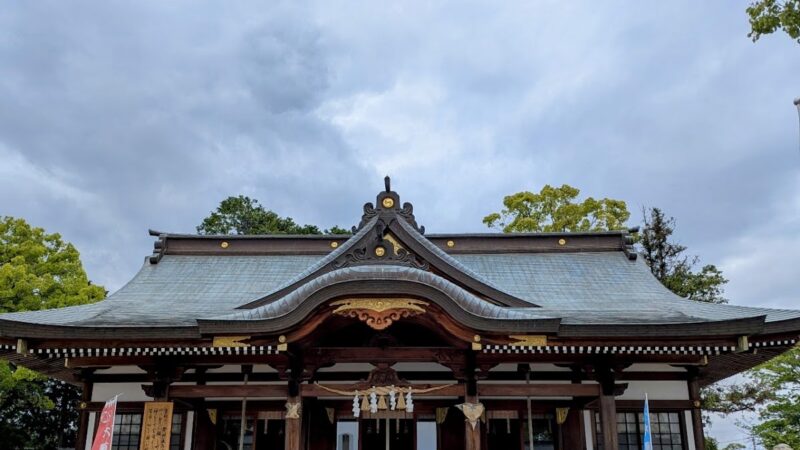
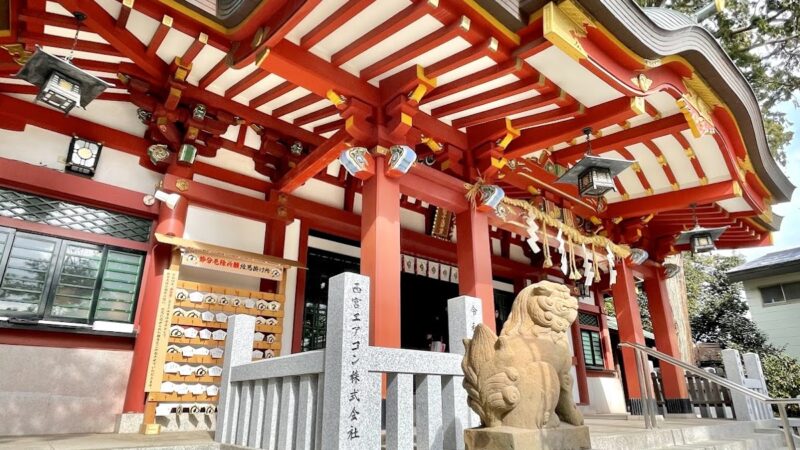
The shrine, rebuilt between the Shoho era and the second year of the Meireki era, retains the characteristics of early Edo period shrine architecture. In the worship hall, you can pay your respects to Ebisu-no-Okami, and prayers are also performed.
The shrine is built with Koshiki-iwa rock behind it, and worshippers pay their respects to Koshiki-iwa from afar. This indicates that Koshiki-iwa itself is the sacred object, and the shrine serves as its worship hall.
Haiku Monument of Yamazaki Sōkan
Within the shrine grounds is a haiku monument to Yamazaki Sōkan, a haiku poet from the Muromachi period. Yamazaki Sōkan is considered a pioneer of haikai poetry, and this monument is a valuable historical site demonstrating his connection to Koshikiwa Shrine.
Remaining Stones from Osaka Castle
Within the shrine grounds are also “remaining stones” that were quarried during the construction of Osaka Castle but were not used. During the construction of Osaka Castle by Toyotomi Hideyoshi, many stones were quarried from the Rokko Mountains, but some were left behind during transportation, and one of these remains at Koshikiwa Shrine.
How to Worship and Prayer Information
Etiquette for Worship
Worship at Koshikiwa Shrine follows the general etiquette for visiting a shrine.
- Bow before passing through the torii gate.
- Cleanse your hands and mouth at the purification fountain.
- Bow twice, clap twice, and bow once in front of the main hall.
- Bow when worshipping Koshikiwa Rock from afar.
Koshikiwa Rock is a sacred rock formation, and direct contact is prohibited. The correct way to worship is to pray from a distance.
Types of Prayer Services and Application Methods
Koshikiwa Shrine accepts the following types of prayer services:
- Prayer for Conception: A prayer for couples wishing for a child.
- Prayer for Safe Childbirth: A prayer performed on the Day of the Dog in the fifth month of pregnancy (prayer for the maternity belt is also possible).
- First Shrine Visit: A prayer to give thanks for the birth of a baby and to pray for their healthy growth.
- Shichi-Go-San: A celebration of milestones in a child’s growth.
- Prayer for Protection from Evil
- Prayer for Business Prosperity
- Prayer for Family Safety
- Groundbreaking Ceremony: A prayer for the safety of the land before construction.
If you wish to have a prayer performed, we recommend making a reservation by phone in advance. Same-day registration is possible, but there may be a waiting time during busy periods.
Items Offered (Amulets and Goshuin Stamps)
The following items are available at Koshikiwa Shrine.
- Amulet for Conception: An amulet for those wishing to conceive.
- Amulet for Safe Childbirth: An amulet for expectant mothers wishing for a safe delivery.
- Amulet for Health
- Amulet for Business Prosperity
- Goshuin (Shrine Seal): Given as a memento of your visit.
Goshuin are available at the shrine office, and the offering fee is approximately 300 yen. Original goshuin notebooks are also available for purchase.
Access Information
Basic Information
- Address: 5-4 Koshikiwa-cho, Nishinomiya City, Hyogo Prefecture
- Phone: 0798-31-0009
- Visiting Hours: Grounds are freely accessible (Shrine office is open from 9:00 to 17:00)
- Parking: Available (Free, approximately 10 spaces)
Access by Train
Using the Hankyu Koyo Line
- Get off at Koyoen Station on the Hankyu Koyo Line, approximately 15 minutes on foot
- Head north from the station, go through the residential area and up the hill
Using the Hankyu Kobe Line
- Get off at Shukugawa Station or Kurakuen-guchi Station on the Hankyu Kobe Line, approximately 15-20 minutes on foot
- Head north from Kurakuen-guchi Station, go through the residential area and up the hill
Using JR
- Get off at JR Kobe Line “Sakura Shukugawa Station” and walk for about 25 minutes, or take a bus.
Access by Bus
From Hankyu Shukugawa Station or JR Sakura Shukugawa Station, take the Hankyu Bus bound for “Koyoen” and get off at the “Koshikiwa Shrine” bus stop. It’s about a 5-minute walk from there.
Access by Car
- Approximately 15 minutes from Hanshin Expressway Kobe Line “Nishinomiya IC”
- Approximately 20 minutes from Meishin Expressway “Nishinomiya IC”
There are about 10 parking spaces on the shrine grounds, but it can get crowded on weekends and during festivals. If the parking lot is full, we recommend using a nearby coin parking lot or public transportation.
Notes on Access
Koshikiwa Shrine is located on the slopes of Mount Rokko, so you will need to climb a steep slope from the nearest station. Especially during the summer or when pregnant women are praying for a safe delivery, we recommend taking breaks and not overexerting yourself. It is important to wear comfortable walking shoes.
Nearby Tourist Attractions
Nishinomiya Shrine (Head Shrine of Ebisu)
This is the original shrine from which the deity Ebisu-no-Okami, enshrined at Koshikiwa Shrine, was invited. It is nationally famous as the head shrine of “Ebessan,” and is bustling with many worshippers on January 10th, the “Toka Ebisu” festival. Visiting both Koshikiwa Shrine and Nishinomiya Shrine is highly recommended.
Kurakuen
The area surrounding Koshikiwa Shrine is the Kurakuen area, known as an upscale residential area. Stylish cafes and restaurants are scattered throughout this quiet residential area, perfect for meals and relaxation after visiting the shrine.
Kitayama Greenery Botanical Garden
Located at the foot of Mount Rokko, this botanical garden allows visitors to enjoy seasonal flowers and plants. It’s about a 10-minute drive from Koshikiwa Shrine and is recommended for those who want to enjoy nature.
Shukugawa Park
This riverside park, located around Hankyu Shukugawa Station, is famous for its cherry blossoms. In spring, approximately 1,660 cherry trees bloom, attracting many visitors for cherry blossom viewing. You can enjoy the seasonal beauty of nature in conjunction with a visit to Koshikiwa Shrine.
Best Time to Visit and Crowds
Recommended Time to Visit
Spring (March-May)
The fresh greenery is beautiful, and the shrine grounds are full of life during this season. Visiting the nearby Shukugawa Park during cherry blossom season is also recommended.
Autumn (September-November)
In September, the baby crying sumo wrestling event is held, attracting many families. November is the season for Shichi-Go-San (a traditional Japanese rite of passage for children), allowing you to see children in their festive attire. The autumn foliage is also beautiful during this season.
Day of the Dog
It is common to pray for a safe delivery on the Day of the Dog in the fifth month of pregnancy. The Day of the Dog can be crowded, so it is recommended to visit with plenty of time to spare.
Busy Periods
- Days of the Dog (especially those that fall on a lucky day)
- Days of the Crying Sumo Tournament in September
- Shichi-Go-San season in November (especially weekends)
- The first three days of the New Year
If you want to avoid crowds, you can visit on weekday mornings or on days other than the Day of the Dog for a more relaxed visit.
Reviews and Reputation of Koshikiwa Shrine
Visitor Testimonials
Regarding Prayers for Conception and Safe Childbirth
“After three years of marriage, we were having trouble conceiving, so we prayed for conception at Koshikiwa Shrine. Six months later, I found out I was pregnant, and I also prayed for a safe delivery at the same shrine. I am truly grateful that I was blessed with a healthy baby.” (Woman in her 30s)
“I visited the shrine during my pregnancy to pray for a safe delivery. The uphill climb was a bit tough, but the quiet atmosphere of the grounds and the sight of the sacred Koshikiwa rock calmed my mind. I gave birth safely, and I returned to give thanks.” (Woman in her 20s)
Regarding the Atmosphere of the Shrine
“The shrine grounds were so quiet and mystical, it was hard to believe it was located in a residential area. I was overwhelmed by the size of the Koshikiwa rock and felt the weight of ancient faith.” (Man in his 40s)
“The shrine grounds, surrounded by a forest designated as a natural monument, were a healing space that made me forget the hustle and bustle of the city. It’s no wonder it’s a popular power spot.” (Woman in her 30s)
Reputation as a Power Spot
In recent years, influenced by YouTubers and others, it has gained nationwide attention as “one of Kansai’s leading power spots.” The area around Koshikiwa Rock, in particular, is highly regarded by people interested in spirituality as a place where one can feel the energy of the earth.
However, it is important to remember that Koshikiwa Shrine is a place of worship rather than a tourist destination, and to visit with respect.
Annual Events at Koshikiwa Shrine
Main Festivals
January
- Saitansai (January 1st): A festival celebrating the New Year
- Tondo Festival: A ceremony to burn old amulets and talismans
February
- Setsubun Festival: Setsubun events such as bean-throwing
September
- Baby Crying Sumo: A famous event at Koshikiwa Shrine
November
- Shichi-Go-San Ceremony: Celebrating the growth of children
December
- Oharai Ceremony: A Shinto ritual to purify and cleanse away the sins and impurities of the year
For detailed dates and times, it is recommended to check the official website of Koshikiwa Shrine or call them.
Notes and Manners for Visiting the Shrine
Regarding Attire
When receiving prayers, avoid overly casual attire and visit in clean, presentable clothing. Formal attire is especially desirable for prayers marking life milestones such as prayers for safe childbirth or the first shrine visit for a newborn. ### Regarding Photography
Photography is generally permitted on the shrine grounds, but please note the following:
- Photography is prohibited inside the shrine buildings and during prayers.
- Please be considerate of other worshippers.
- Koshikiwa Rock is a sacred place, so please photograph it with respect.
- When posting on social media, please be careful not to include other worshippers in your photos.
Regarding Pets
Some shrines prohibit pets. It is recommended to check in advance before visiting Koshikiwa Shrine.
How to Behave on the Shrine Grounds
Koshikiwa Shrine is located in a quiet residential area, so please avoid speaking loudly or making noise. The area around Koshikiwa Rock is especially sacred, so it is important to worship quietly.
Summary | Heartfelt Prayers at Koshikiwa Shrine
Koshikiwa Shrine in Nishinomiya City, Hyogo Prefecture, is a venerable shrine with a history of over 1,000 years. Koshikiwa Shrine, with its massive rock formation “Koshikiwa” as its sacred object, is a renowned power spot in the Kansai region, famous for its blessings related to fertility and safe childbirth, and is beloved by many worshippers.
As an ancient shrine listed in the Engishiki Jinmyocho (a historical record of shrines), surrounded by abundant nature designated as a Hyogo Prefecture Natural Monument, and dedicated to Ebisu-no-Okami, it is a rare shrine where history, nature, and faith harmonize.
People with various wishes visit Koshikiwa Shrine, including those praying for children, safe childbirth, the healthy growth of their babies, and business prosperity. Why not offer a heartfelt prayer in the shrine grounds, nestled in the quiet forest at the foot of Mount Rokko?
When visiting, please wear comfortable shoes as you will need to climb a slope, and remember that it is a sacred place, so please worship with respect. We hope that your visit to Koshikiwa Shrine will help fulfill your wishes.