Sanno Shrine (Fuefuki City, Yamanashi Prefecture) Complete Guide | Visiting the Yushima Giant Cedar and its History
Sanno Shrine, located in Fuefuki City, Yamanashi Prefecture, is a historic shrine known for the “Yushima Giant Cedar,” said to be over 1000 years old. Despite its location along a prefectural road, the shrine grounds are enveloped in tranquility, and ancient faith still thrives there. This article comprehensively introduces everything you need to know before visiting Sanno Shrine, from its history and highlights to cultural assets and detailed access information.
Basic Information about Sanno Shrine
Sanno Shrine is a shrine located in Kasugai-cho, Fuefuki City, Yamanashi Prefecture, and is a historic shrine that has been revered by local residents for a long time.
Name: Sanno Shrine
Address: Kofu, Kasugai-cho, Fuefuki City, Yamanashi Prefecture (Yushima area)
Deity: Susanoo-no-Mikoto
Shrine Rank: Former Village Shrine
Founding: The exact date is unknown, but based on the age of the sacred tree, it is thought to be from before the Heian period.
The shrine is located along the prefectural road, opposite the Nishiyama Power Plant, making it relatively easy to find. Access to the shrine grounds is via a stone staircase, and near the entrance awaits one of Japan’s largest trees.
History and Origins of Sanno Shrine
Sanno Faith and Susanoo-no-Mikoto
The name Sanno Shrine originates from the worship of Hiyoshi Taisha (Sanno Gongen), the guardian deity of Enryaku-ji Temple on Mount Hiei. While Sanno Shrines exist throughout Japan, the Sanno Shrine in Fuefuki City enshrines Susanoo-no-Mikoto as its principal deity.
Susanoo-no-Mikoto is a heroic deity in Japanese mythology, known for slaying the Yamata no Orochi (eight-headed serpent). He has long been revered as a god of protection against misfortune, disease, and abundant harvests. In particular, in Kai Province (present-day Yamanashi Prefecture), where agriculture was thriving, the worship of Susanoo-no-Mikoto was closely intertwined with the lives of the local people.
The Relationship Between the Yushima District and the Shrine
The Yushima district, where the Sanno Shrine is located, has long been an important settlement in the eastern part of the Kofu Basin. Kasugai-cho in Fuefuki City was formerly part of Higashi-Yamanashi District, and merged in 2004 to become the current Fuefuki City. This area is located at the foot of Mount Omuro and is blessed with abundant water and greenery.
For local residents, Sanno Shrine has served as a place to pray for a bountiful harvest and family safety, and as the center of the community. Every year, local people gather for the festival, where traditional Shinto rituals are performed.
National Natural Monument: “Yushima’s Giant Cedar”
One of Japan’s Largest Trees
The greatest attraction at Sanno Shrine is undoubtedly “Yushima’s Giant Cedar.” This sacred tree stands majestically on a west-facing slope south of the stone steps leading to the shrine entrance.
Tree Species: Japanese Cedar (Cryptomeria japonica)
Age: Estimated over 1000 years (some sources say 1200 years)
Height: Approximately 40 meters
Trunk Circumference: Approximately 11 meters
Designation: National Natural Monument
Known as one of the largest trees in Japan, its imposing presence overwhelms visitors. Its history of over 1000 years signifies that it has watched over this land from the Heian period to the present day.
Value as a Cultural Asset
The Yushima Giant Cedar is highly valued not only for its biological significance but also as a cultural asset. Its massive form, formed over many years, evokes both the power and sacredness of nature.
Despite its location on a slope, it remains in excellent condition thanks to the long-standing conservation efforts of local residents. Regular tree health surveys and conservation activities are still conducted, continuing efforts to pass on this precious cultural asset to future generations.
The trunk is so thick that it would take several adults holding hands to encircle it; its presence cannot be fully conveyed in photographs. We recommend visiting in person to experience its awe-inspiring presence up close.
Highlights of Sanno Shrine
Stone Steps and Approach
The stone steps leading from the prefectural road to the shrine have a charming, long-standing history. As you ascend the stone steps, you’ll gradually feel yourself moving away from the mundane world and approaching a sacred realm. Trees line the path, offering particularly beautiful scenery during the fresh green season and the autumn foliage season.
Shrine and Grounds
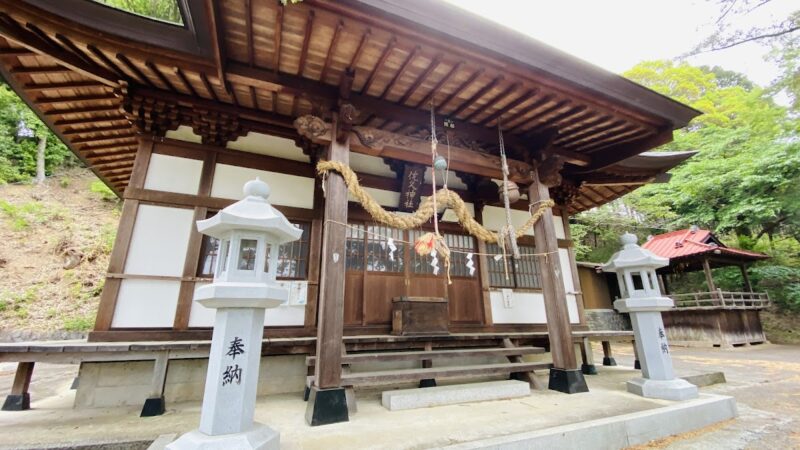
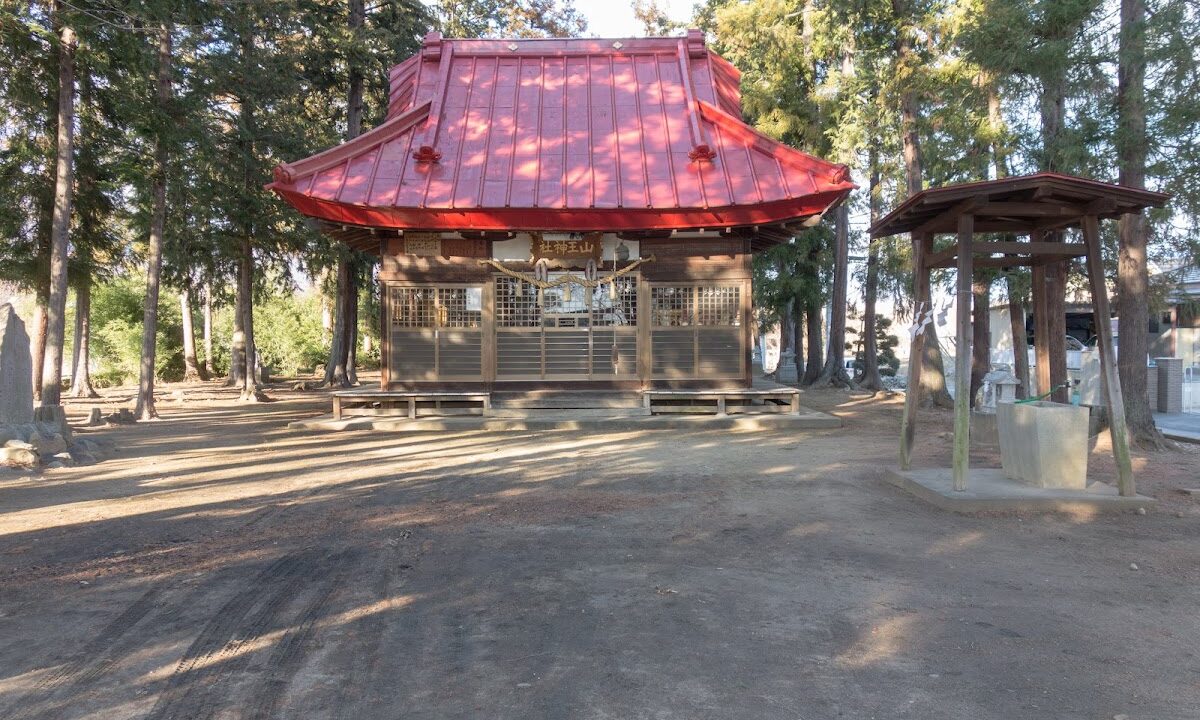
The main shrine, though simple, possesses a solemn atmosphere and continues to serve as the center of local faith. The grounds are enveloped in tranquility, providing a space for peaceful worship, far removed from the hustle and bustle of the city.
From the grounds, you can overlook the cityscape of Fuefuki, a view harmonizing with the rich natural beauty of the Kofu Basin. Especially on clear days, it’s a spectacular viewpoint offering panoramic views of the distant mountains.
Dialogue with the Sacred Tree
Standing before the Great Cedar of Yushima, you can truly feel the weight of 1000 years of history. This tree is a living witness, having seen through the entirety of Japanese history, from the Heian period to the Kamakura, Muromachi, Sengoku, Edo, Meiji, Taisho, Showa, Heisei, and Reiwa eras.
Many visitors touch the sacred tree, trying to feel its life force. Since ancient times, it has been believed that gods reside in giant trees, and cedar trees in particular have been revered as sacred. The time spent quietly joining hands and contemplating the history this tree has witnessed is a worthwhile experience.
Relationship with other shrines in Fuefuki City
Besides Sanno Shrine, Fuefuki City has many other historical shrines.
Yamanashioka Shrine
Located in Shizume, Kasugai-cho, Fuefuki City, Yamanashioka Shrine is a Shikinaisha (shrine listed in the Engishiki) said to be the birthplace of the place name “Yamanashi.” It is one of the 20 official shrines of Kai Province listed in the Engishiki Jinmyocho (a list of shrines compiled in the Heian period), and enshrines Oyamatsumi-no-Mikoto, Takaokami-no-Kami, and Wakeikazuchi-no-Kami. The main hall is designated as a National Important Cultural Property, and it is a historical shrine with deep religious ties to the Takeda and Tokugawa families.
Asama Shrine
Located in Ichinomiya-cho, Fuefuki City, Asama Shrine is a prestigious shrine known as the Ichinomiya (first-ranked shrine) of Kai Province. This shrine is a candidate for a Shikinaisha (a shrine listed in the Engishiki, an ancient Japanese legal text), and its former rank was Kokuhei Chusha (a national shrine of the second rank). Currently, it is a Beppyo Jinja (a shrine listed in the special register) of the Association of Shinto Shrines. As a shrine deeply connected to the worship of Mount Fuji, it attracts many worshippers.
Yamamiya Shrine
Yamamiya Shrine in Ichinomiya-cho, Fuefuki City, is known for the 36 rice paddies that once stood in front of its stone torii gate. These terraced rice paddies, cultivated using the clear stream of Yamamiya, were also called “Kunatsuta” and “Mizuta,” and are a historically significant area that has been cultivated since ancient times.
Visiting these shrines allows for a deeper understanding of Fuefuki City’s rich history and culture.
Festivals and Events
Sanno Shrine holds traditional local festivals every year.
Annual Grand Festival
Every autumn, the annual grand festival is held, where local residents gather to pray for a bountiful harvest and family safety. The Shinto rituals include traditional Kagura (sacred dance) and the recitation of prayers, making it an important opportunity to pass on local culture to future generations.
First Shrine Visit of the New Year
At the start of the new year, local residents visit the shrine to pray for safety and good health throughout the year. Welcoming the new year in the tranquil shrine grounds is a wonderful opportunity to cleanse the mind.
For specific festival dates, please check local information or Fuefuki City’s tourism information.
Basic Information
Official Name: Sanno Shrine
Pronunciation: Sanno Jinja
Location: Kofu, Kasugai-cho, Fuefuki City, Yamanashi Prefecture (Yushima area)
Deity: Susanoo-no-Mikoto
Founding: Unknown (Estimated to be before the Heian period)
Shrine Rank: Former Village Shrine
Annual Festival: Autumn (Details to be confirmed)
Cultural Property: Yushima’s Great Cedar (National Natural Monument)
Visiting Hours: Open to visitors at all times
Admission Fee: Free
Parking: Limited space available (Details to be confirmed on-site are recommended)
Restrooms: No facilities on the shrine grounds (Use nearby facilities)
Inquiries: Fuefuki City Tourism and Commerce Division or Fuefuki City Board of Education Cultural Properties Division
MAP & ACCESS
Access by Train
Nearest Station: JR Chuo Main Line “Isawa Onsen Station”
The distance from Isawa Onsen Station to Sanno Shrine is approximately 4 kilometers. It takes about 50 minutes on foot, so using a taxi or rental car is more convenient. By taxi, it takes about 10 minutes from the station.
Access by Car
From the Chuo Expressway:
- Approximately 15 minutes from “Ichinomiya Misaka IC”
- Approximately 20 minutes from “Katsunuma IC”
From Major Roads:
- Access via Prefectural Road from National Route 20
- Located along the Prefectural Road, opposite Nishiyama Power Plant
When using a car navigation system, searching for “Sanno Shrine Fuefuki City” or “Yushima’s Giant Cedar” is recommended. However, if you need a detailed address, it is recommended to use the nearby “Nishiyama Power Plant” as a landmark.
Parking Information
There is some parking space around the shrine, but it is not sufficient for large vehicles or multiple vehicles. When visiting the shrine, please be considerate of local residents and avoid parking on the street.
Nearby Tourist Attractions
When visiting Sanno Shrine, we recommend also visiting other tourist attractions in Fuefuki City.
- Yamanashioka Shrine: Approximately 5 minutes by car, approximately 15 minutes on foot
- Isawa Onsenkyo: Approximately 10 minutes by car, with plenty of day-trip hot springs and accommodations
- Fuefuki River Fruit Park: Approximately 20 minutes by car, orchards and observation facilities
- Monde Brewery: Approximately 10 minutes by car, winery tours available
Fuefuki City is known as “Japan’s No. 1 Peach and Grape Village,” and attracts many tourists, especially during the spring peach blossom season and the autumn grape-picking season. Enjoying seasonal fruit picking or hot springs in conjunction with your shrine visit is highly recommended.
Manners and Precautions for Visiting a Shrine
Basic Shrine Visit Etiquette
- Bow before passing through the torii gate: This is a courtesy before entering the sacred area.
- Walk along the edge of the path: The center is considered the path of the gods.
- Purify yourself at the water basin: If available, purify your hands and mouth.
- Two bows, two claps, one bow: This is the general etiquette for visiting a shrine.
Consideration for the Sacred Tree
The Yushima Great Cedar is a valuable cultural asset. Please observe the following points:
- Be careful not to step on the base of the tree.
- Do not damage the bark.
- Do not litter.
- Do not break branches.
Photography
Photography of the shrine grounds and the sacred tree is generally permitted, but please be considerate of other visitors. If using a tripod, choose a location that does not obstruct passage.
The Charms of Fuefuki City
Fuefuki City was formed on October 12, 2004, through the merger of six towns and villages: Isawa, Misaka, Ichinomiya, Yashiro, Sakaigawa, and Kasugai. It became its current form on August 1, 2006, after the incorporation of Ashikawa Village.
Fruit Kingdom
Fuefuki City boasts the highest production volume of peaches and grapes in Japan and is nationally known as the “Fruit Kingdom.” In spring, peach blossoms bloom all at once, creating a pink carpet across the basin. From summer to autumn, visitors can enjoy fruit picking of peaches, grapes, pears, and other fruits.
Hot Springs
Isawa Onsenkyo is a representative hot spring area in Yamanashi Prefecture, with many hot spring inns and hotels. The alkaline simple hot spring water is said to be effective for neuralgia, muscle pain, and fatigue recovery.
History and Culture
Fuefuki City is home to many historical shrines, temples, and cultural properties, including Sanno Shrine. With a history of flourishing as the center of Kai Province, Fuefuki City boasts numerous historical sites associated with Takeda Shingen.
Seasonal Scenery
Spring (March-May)
Peach blossoms are in full bloom, painting the entire city of Fuefuki pink. Peach blossoms can also be enjoyed around Sanno Shrine, and visiting amidst the fresh greenery is a special experience.
Summer (June-August)
A season of lush greenery. This is the time when the vitality of the Yushima Great Cedar is most palpable. The shade of the trees is cool, making it ideal for escaping the summer heat.
Autumn (September-November)
A season of beautiful autumn foliage. The trees in the shrine grounds change color, creating a tranquil atmosphere for worship. The annual festival is also held during this time.
Winter (December-February)
The shrine grounds are enveloped in silence during winter, exuding a crisp, serene atmosphere. Snow sometimes accumulates, and the silver-covered sacred trees present a fantastical beauty. ## Summary
Sanno Shrine in Fuefuki City, Yamanashi Prefecture, is a shrine brimming with the charm of history and nature, boasting the “Yushima Great Cedar,” a nationally designated natural monument over 1,000 years old. The shrine dedicated to Susanoo-no-Mikoto, the tranquil grounds, and the awe-inspiring sacred tree leave visitors deeply moved.
When visiting Fuefuki City, be sure to include a visit to Sanno Shrine in your itinerary, along with fruit picking and hot springs. Leaving the hustle and bustle of the city and standing before this ancient tree that has stood for 1,000 years, you’re sure to have a soul-cleansing experience.
Sanno Shrine is a place of worship protected by the local community and a valuable cultural asset. We hope you will visit and experience its history and charm firsthand.