Complete Guide to Kurama-dera Temple | A Thorough Explanation of History, Highlights, Visiting Information, and Nearby Spots
Kurama-dera Temple, nestled on Mount Kurama in Sakyo Ward, Kyoto City, is the head temple of the Kurama Kōkyō sect, boasting a history of approximately 1250 years. As a place where Minamoto no Yoshitsune (Ushiwakamaru) trained, and as a power spot with legends of tengu (mythical mountain spirits), it attracts many visitors from both Japan and abroad. This article comprehensively explains everything you need to know before visiting, from the historical background of Kurama-dera Temple to practical information for visiting.
What is Kurama-dera Temple? | Overview of the Head Temple of Kurama Kōkyō
Kurama-dera Temple is located in Kurama Honmachi, Sakyo Ward, Kyoto City, and is known as the head temple of the unique religion “Kurama Kōkyō.” Its mountain name is Mount Kurama, and its principal deity is a three-in-one being called “Son-ten,” comprising Bishamonten, Senju Kannon Bodhisattva, and Gohō Maō Son.
The entire Kurama Mountain, at an altitude of approximately 584 meters, constitutes the temple grounds. Within its vast precincts, numerous buildings are scattered, including the main hall (Kondo), a pagoda, and a treasure hall. It is an ancient sacred site, containing geological formations dating back approximately 260 million years, and has attracted worshippers as a place where cosmic energy gathers.
About Kurama Kōkyō
Kurama-dera Temple long belonged to the Tendai sect, but in 1949 (Showa 24), it became independent and founded Kurama Kōkyō. Kurama Kōkyō venerates “Son-ten” as a symbol of the great spirit, great light, and great energy of the universe, and aims to awaken the inner dignity of humanity based on the teaching that “everything resides in Son-ten.”
History of Kurama-dera Temple | From Founding to the Present
Origin of Founding
Kurama-dera Temple’s founding dates back to the first year of the Hōki era (770 AD). Legend has it that Gancho Shonin, a senior disciple of Jianzhen, climbed Mount Kurama following a divine revelation in a dream. He was attacked by a female demon but was saved by Bishamonten (Vaisravana). In gratitude for this miraculous event, Gancho Shonin built a hermitage and enshrined Bishamonten, which is considered the beginning of Kurama-dera Temple.
Development during the Heian Period
In 796 (Enryaku 15), Fujiwara no Isendo renovated the temple buildings and enshrined the Thousand-Armed Kannon Bodhisattva. Throughout the Heian period, Kurama-dera Temple, as the guardian temple of northern Kyoto, attracted fervent devotion from the imperial court and nobility, and was bustling with many pilgrims.
Sei Shonagon’s *The Pillow Book* also mentions “things that are near yet far, the winding road of Kurama,” indicating that the switchback path was known even then.
Connection to Minamoto no Yoshitsune (Ushiwakamaru)
Kurama-dera Temple is particularly famous as the place where Minamoto no Yoshitsune spent his childhood. After losing his father, Minamoto no Yoshitomo, in the Heiji Rebellion, Ushiwakamaru (later Yoshitsune) was entrusted to Kurama-dera Temple for about 10 years from the age of 7, where he trained.
According to legend, Ushiwakamaru learned military tactics from a tengu (a mythical creature) deep in Mount Kurama night after night, acquiring astonishing martial arts skills. Many places where Ushiwakamaru is said to have trained, as well as spots related to the tengu legend, remain within the temple grounds.
Kurama-dera Temple in Modern Times
During the Meiji era, despite being affected by the anti-Buddhist movement, the temple continued to preserve its faith. In the Showa era, in 1949, it separated from the Tendai sect and established the Kurama Kōkyō sect. Today, the main hall and pagoda have been rebuilt in reinforced concrete, and the temple continues to develop as a fusion of tradition and modernity.
Highlights of Kurama-dera Temple | Main Spots within the Temple Grounds
Niomon Gate (Main Gate)
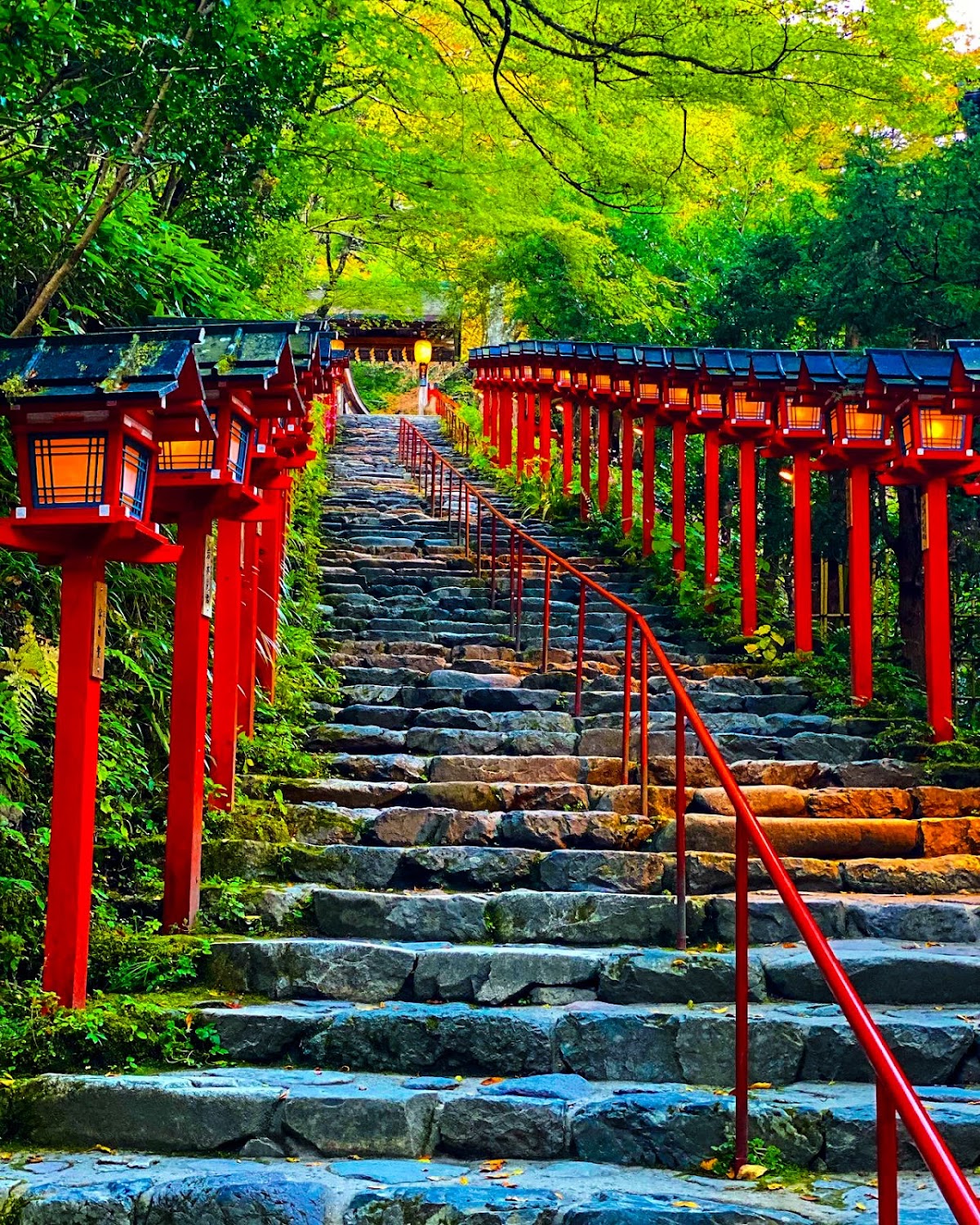
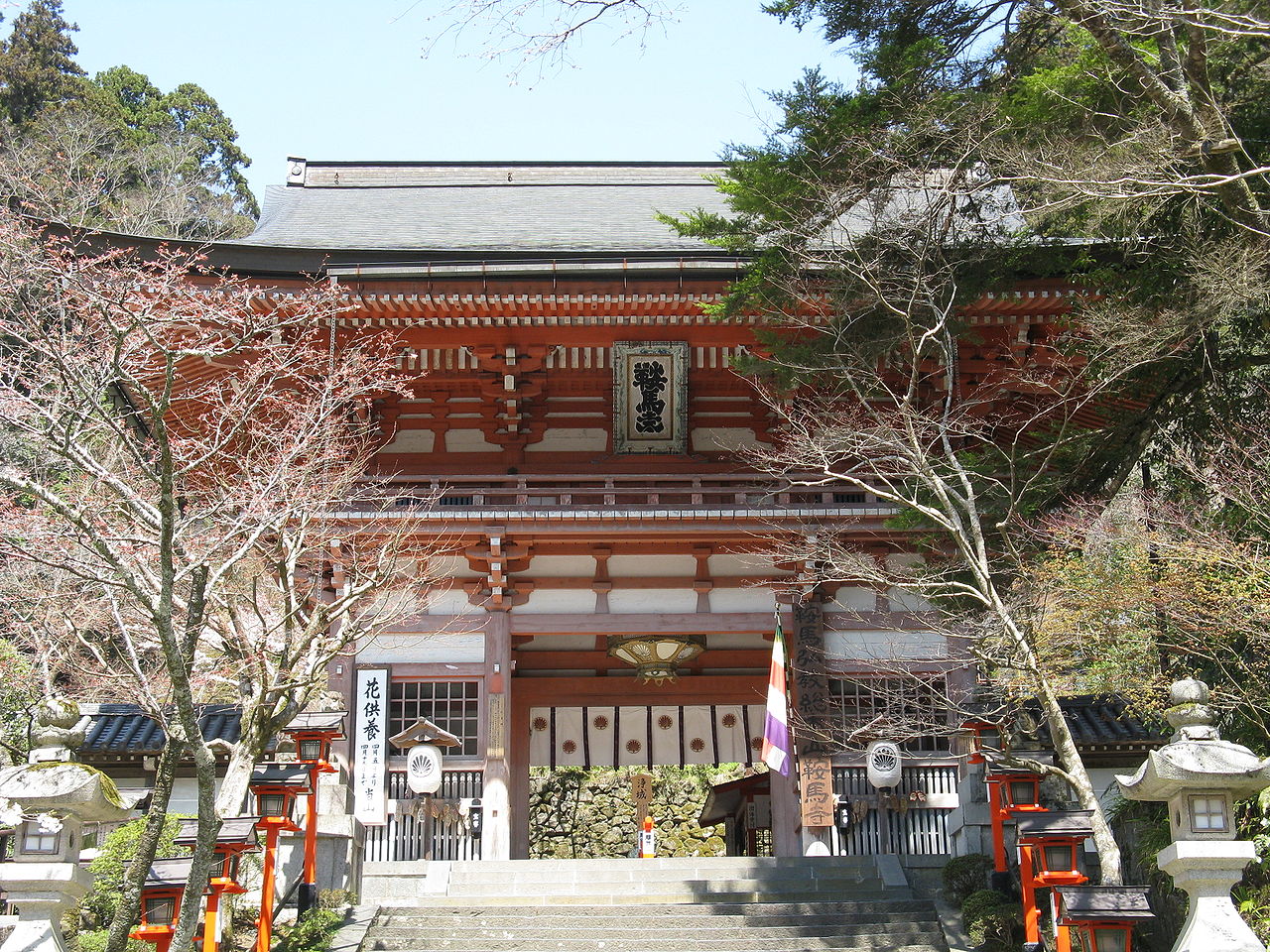
The Niomon Gate, the starting point for visiting Kurama-dera Temple, is a striking main gate with its vibrant vermilion color. On either side are enshrined the Agyo and Ungyo Nio statues, welcoming visitors. The path leading from here to the main hall (Kondo) is known as a pilgrimage route surrounded by lush nature.
Cable Car (Kurama-yama Cable Railway)
The Kurama-yama Cable Car, one of the shortest railways in Japan, operates from the Niomon Gate to the Tahoto Station near the main hall (Kondo). It covers a total length of approximately 200 meters and an elevation difference of approximately 90 meters in about 2 minutes.
Cable Car Operating Hours:
- First Departure (Uphill): 8:40
- Last Departure (Downhill): 16:25
- Interval: Approximately 15 minutes
While the cable car is recommended for those with mobility issues or those wishing to save time, visiting on foot also allows you to fully appreciate the charm of Kurama-dera Temple.
Main Hall (Kondo)
The main hall (Kondo), the heart of Kurama-dera Temple, is a magnificent structure built at an altitude of approximately 410 meters. The principal deity, “Son-ten,” is enshrined here, and worshippers aim to become one with the energy of the universe.
Main Hall Opening Hours: 9:00 – 16:15
From the plaza in front of the main hall, you can enjoy a panoramic view of the Hiei Mountain range, and appreciate the beautiful scenery of each season, including cherry blossoms in spring and autumn leaves.
Kongosho (Diamond Floor)
In front of the main hall (Kondo), there is a stone pavement called the “Kongosho,” which features a hexagram (Star of David). This location is considered the center of Mount Kurama and a powerful spiritual spot where cosmic energy is concentrated.
Many worshippers stand at the center of this hexagram, raising both hands to the heavens to receive cosmic energy as part of their “qi” (life energy) practice. It is believed that a special energy is particularly strong on full moon nights, and many believers gather here for the May Full Moon Festival (Wesak Festival).
Reihoden (Treasure Hall)
The Reihoden, which houses and displays the treasures of Kurama-dera Temple, enshrines numerous temple treasures, including the National Treasure, the standing statue of Bishamonten, and other important cultural properties. Visitors can admire valuable Buddhist statues, paintings, and ancient documents that tell the history of Kurama-dera Temple up close.
Reihoden (Treasure Hall) Admission Fee: 200 yen (separate from the mountain fee)
Opening Hours: 9:00 AM – 4:00 PM (Closed Mondays, or the following day if Monday is a public holiday)
Okunoin Maōden (Inner Sanctuary Demon King Hall)
Located deep within Mount Kurama, about 30 minutes from the main hall (Kondo) via the Root Path, is the Okunoin Maōden, a mystical place where the Guardian Demon King is enshrined. Legends of the Guardian Demon King (Sanat Kumara), who is said to have descended to Earth from Venus 6.5 million years ago, remain here.
It is also said that Ushiwakamaru learned military strategy from a Tengu (mythical creature) in this area, making it a popular spot for experiencing spiritual energy.
Root Path
Part of the path leading from the main hall to the inner sanctuary features a unique landscape called the “Root Path.” The exposed cedar roots intertwine in a complex pattern, creating a scene reminiscent of a natural work of art.
Due to the hard soil of Mount Kurama, tree roots cannot penetrate deep into the ground, resulting in a natural phenomenon where they grow close to the surface. Be careful of your footing while enjoying the mystical atmosphere.
Yuki Shrine
Located along the path from the Niomon Gate to the main hall, Yuki Shrine is known for the Kurama Fire Festival. This historic shrine, established in 940 AD (Tenkei 3) by inviting a deity from the Kyoto Imperial Palace, boasts a worship hall designated as an Important Cultural Property and a large cedar tree approximately 800 years old.
The Kurama Fire Festival, held annually on October 22nd, is considered one of Kyoto’s three great unusual festivals. It’s a magnificent event where parishioners carrying torches parade through the streets chanting “Sairei, Sairyo!”
Kurama-dera Temple’s Annual Events and Announcements
May Full Moon Festival (Vesak Festival)
One of the most important events at Kurama-dera Temple is the “May Full Moon Festival (Vesak Festival),” held annually on the night of the full moon in May. On this day, it is believed that a passage opens between heaven and earth, and an exceptionally strong celestial energy pours down.
This mystical festival, where prayers are offered on the Kongo-sho (diamond floor) in front of the main hall, aims to become one with the energy of the universe. Many believers and worshippers gather from all over Japan.
Bamboo Cutting Ceremony
Held annually on June 20th, the “Bamboo Cutting Ceremony” is a traditional event commemorating the legend of the monk Minen slaying a giant serpent. Kurama monks and warrior monks of the Omi-za compete to see who can cut bamboo the fastest, predicting the abundance or scarcity of the year’s harvest.
Yoshitsune Festival
On September 15th, the “Yoshitsune Festival” is held to commemorate the virtues of Minamoto no Yoshitsune. It commemorates Yoshitsune’s boyhood at Kurama Temple, and includes dedications of martial arts and performing arts.
Kurama Fire Festival (Yuki Shrine)
On the night of October 22nd, the “Kurama Fire Festival,” held as the annual festival of Yuki Shrine, is one of Kyoto’s three great unusual festivals. Large and small torches fill the town of Kurama, creating a fantastical scene of flames dancing and scorching the night sky.
Kurama-dera Temple Visiting Information | Visiting Hours, Fees, and Access
Basic Information
Official Name: Kurama-dera Temple (Head Temple)
Sect: Kurama Kōkyō
Principal Deity: Son-ten (Bishamonten, Senju Kannon Bodhisattva, Gohō Maō Son)
Address: 1074 Kurama Honmachi, Sakyo-ku, Kyoto City, Kyoto 601-1111
Phone Number: 075-741-2003
Official Website: https://kuramadera.or.jp/
Visiting Hours and Fees
Visiting Hours: 9:00 AM – 4:15 PM (Main Hall Opening Hours)
Mountain Entry Fee: 300 yen
Treasure Hall Admission Fee: 200 yen (separate)
Cable Car Fare: One-way fare: 200 yen (donation)
*The mountain maintenance fee is a contribution towards the conservation of Kurama Mountain’s natural environment and the maintenance of the temples.
Access Method
Access by Train
Using the Eizan Electric Railway (most recommended):
- From Kyoto city, take the Keihan Railway to “Demachiyanagi Station”
- Transfer to the Eizan Electric Railway and get off at the last stop, “Kurama Station” (approx. 30 minutes)
- From Kurama Station, it’s about a 5-minute walk to the Niomon Gate.
You can enjoy beautiful scenery throughout the seasons from the windows of the Eizan Electric Railway, and the autumn foliage season is especially spectacular.
Using JR:
- From JR Kyoto Station, take the Nara Line to “Tofukuji Station”.
- Transfer to the Keihan Railway and go to “Demachiyanagi Station”.
- Transfer to the Eizan Electric Railway and get off at “Kurama Station”.
Access by Bus
Take Kyoto Bus Route 52 bound for “Kurama” and get off at the “Kurama” bus stop. However, since buses are infrequent, using the train is recommended.
Access by Car
There is no dedicated parking lot around Kurama-dera Temple. Using public transportation is strongly recommended. Paid parking lots in the surrounding area are limited and become particularly crowded during the autumn foliage season and on event days.
Estimated Time Required for Visiting
- Niomon Gate to Main Hall (Kondo) Only: Approximately 1-1.5 hours
- Main Hall (Kondo) to Inner Sanctuary (Okunoin) to Kifune (Kurama Mountain Traverse): Approximately 2-3 hours
- Thorough Visit (Including Reihoden): Approximately 3-4 hours
Choose your visiting route according to your physical strength and available time.
Information on Kurama-dera Temple’s Goshuin (Temple Stamps)
You can receive multiple Goshuin stamps at Kurama-dera Temple.
Types of Goshuin (Temple Seals)
- Goshuin of the Main Hall (Kondo): Goshuin of the principal deity, “Son-ten”
- Goshuin of the Inner Sanctuary (Maōden): Goshuin of the Guardian Demon King
- Goshuin of Yuki Shrine: Goshuin of the shrine known for the Kurama Fire Festival
Place and Time of Issuance
Location: The office inside the Main Hall (Kondo), and the Inner Sanctuary (Maōden)
Time: Approximately 9:00 AM to 4:00 PM
Donation Fee: 300 yen each
Goshuin notebooks with original Kurama-dera designs are also available for purchase. Beautiful designs featuring the nature of Mount Kurama and Son-ten are popular.
Points to Note and Recommendations for Visiting Kurama-dera
Clothing and Items to Bring
As Kurama-dera is a mountain temple, the following preparations are recommended.
- Comfortable walking shoes: The approach to the shrine has many slopes and stairs, and some areas have unstable footing due to tree roots.
- Comfortable clothing: Clothing suitable for mountain hiking is ideal.
- Drinks: Hydration is especially important in summer.
- Rain gear: Mountain weather is unpredictable.
- Insect repellent: In summer, take precautions against mosquitoes and other insects.
Best season for visiting
Spring (April-May): Beautiful fresh greenery, and the May full moon festival is a special experience.
Autumn (November): Stunning autumn foliage, the most popular season.
Winter (December-February): The snowy scenery is magical, but be careful of your footing when there is snow.
The autumn foliage season (mid-to-late November) is crowded, so visiting on weekdays or early in the morning is recommended.
Traverse from Kurama Mountain to Kifune
For those confident in their physical fitness, the Kurama Mountain traverse course, starting from Kurama-dera Temple, passing through Okunoin, and ending at Kifune Shrine, is highly recommended. This approximately 2-hour hiking course allows you to enjoy a scenic mountain trail.
Route: Kurama-dera Temple Niomon Gate → Main Hall (Kondo) → Okunoin Maōden → Kifune Shrine → Kifuneguchi Station
After descending, enjoying riverside dining in Kifune is a highlight of Kyoto sightseeing.
Tourist Spots Around Kurama-dera Temple
Kifune Shrine
Located on the opposite side of Kurama Mountain, Kifune Shrine is an ancient shrine dedicated to the god of water. It’s also famous as a power spot for matchmaking, and its water fortune-telling slips are popular. Many tourists visit it in conjunction with Kurama-dera Temple.
Kifune Riverside Dining
Kifune’s riverside dining, a summer tradition, offers a luxurious experience of enjoying Kyoto cuisine on tatami mats built over a clear stream. Dining while listening to the refreshing sound of the river is truly special.
Attractions along the Eizan Electric Railway Line
Along the Eizan Electric Railway line heading towards Kurama, there are the following tourist spots:
- Shugakuin Imperial Villa: An imperial villa from the Edo period (advance reservation required)
- Shisendo Temple: An elegant mountain villa built by Ishikawa Jozan
- Rurikoin Temple: A temple famous for its “floor of autumn leaves” (open only during special spring and autumn viewing periods)
Ohara Area
The Ohara area, along with Kurama and Kibune, is also popular and known as “Kyoto’s inner sanctuary.” With its many tranquil temples such as Sanzen-in and Jakko-in, it offers a relaxed Kyoto sightseeing experience.
The Charm of Kurama-dera Temple as a Power Spot
Kurama-dera Temple is one of Japan’s leading power spots, attracting people seeking spiritual experiences.
A Sacred Site of Cosmic Energy
Kurama Kōkyō considers Mount Kurama a sacred site where cosmic energy pours down. The Kongōshō (Diamond Floor) in front of the main hall is considered one of the most powerful energy spots on Earth, and many people practice meditation and Qigong there.
The Legend of Sanat Kumara
The legend of Sanat Kumara, said to have descended from Venus 6.5 million years ago, enhances the mystique of Kurama-dera Temple. It is said that one can feel the energy of this cosmic being in the Okunoin Maōden (Inner Sanctuary).
The Legend of the Tengu and a Place of Training
The legend of Ushiwakamaru learning military strategy from a Tengu indicates that Mount Kurama has been a place of training since ancient times. Surrounded by deep forests, Mount Kurama remains a popular destination for spiritual training and self-reflection.
Summary | A Journey to Purify Mind and Body at Kurama-dera Temple
Kurama-dera Temple is the head temple of the Kurama Kōkyō sect, with a history of over 1250 years. It is a temple with multifaceted charm, associated with Minamoto no Yoshitsune and considered a power spot. There are many ways to enjoy it, including visiting the main hall (Kondo), experiencing the energy of the Kongō-shō (diamond floor), admiring the mystical scenery of the tree root path, and hiking from Mount Kurama to Kibune.
It is easily accessible from Kyoto city, and we recommend taking a full day to visit, including enjoying the scenery from the Eizan Electric Railway train. Experience a Kyoto trip that refreshes both mind and body at Kurama-dera Temple, which displays different expressions in each season—the fresh greenery of spring, the autumn leaves, and the snowscapes of winter.
When visiting, keep in mind that it is a mountain temple, so prepare comfortable clothing and shoes, and fully enjoy the profound charm of Kurama-dera Temple, where nature and history intertwine.