Complete Guide to Kyoto Ryozen Gokoku Shrine | A Thorough Explanation of the Sacred Site of the Late Edo Period Where Sakamoto Ryoma Rests
Nestled at the foot of Higashiyama in Kyoto, Kyoto Ryozen Gokoku Shrine is Japan’s first officially sanctuary dedicated to the patriots who sacrificed their lives for Japan’s modernization during the turbulent period of the late Edo period and the Meiji Restoration. This place, where historical heroes such as Sakamoto Ryoma and Nakaoka Shintaro rest, is a sacred site for history buffs, attracting many visitors throughout the year. This article comprehensively introduces everything you need to know before visiting Kyoto Ryozen Gokoku Shrine, from its historical background and highlights to visiting information and annual events.
What is Kyoto Ryozen Gokoku Shrine? | The History of Japan’s First Officially Sanctuary
Circumstances of its Founding and its Connection to the Meiji Restoration
The history of Kyoto Ryozen Gokoku Shrine dates back to the first year of the Meiji era (1868). During the turbulent Bakumatsu period, many patriots dedicated themselves to the Sonno Joi (Revere the Emperor, Expel the Barbarians) movement and the anti-shogunate movement, losing their lives before achieving their goals. To honor their achievements and comfort their spirits, the Meiji government, through a decree of the Grand Council of State, decided to establish the “Ryozan Kansai Shokonsha” (Reizan Official Shrine for the Spirits). This became Japan’s first officially-sponsored shrine for the spirits and a precursor to all Gokoku Shrines throughout the country.
The reason Ryozan was chosen as the location was that, during the Bakumatsu period, various domains such as the Tosa, Choshu, and Satsuma domains had already buried their martyrs in the central area of the 36 peaks of Higashiyama. Its location, close to the center of Kyoto yet nestled in the tranquil mountains, was recognized as a suitable place to comfort the souls of these patriots.
Renaming in 1939 and the Transformation into a Gokoku Shrine
Initially called “Ryozan Kansai Shokonsha,” it was renamed “Kyoto Ryozan Gokoku Shrine” in 1939 (Showa 14). This name change was part of a nationwide trend of converting Shokonsha shrines to Gokoku Shrines, further clarifying their character as shrines dedicated to the spirits of those who sacrificed their lives for the nation.
After the war, it separated from the management of the Association of Shinto Shrines and now operates independently as a specially designated shrine. Its crest features cherry blossoms and chrysanthemums, symbolizing the pure ideals and loyalty to the Imperial Family of the Meiji Restoration patriots.
Breakdown of Enshrined Spirits
Kyoto Ryozen Gokoku Shrine enshrines a total of 73,011 spirits of those who sacrificed their lives for the nation. The breakdown is as follows:
Meiji Restoration Patriots: 1,356 individuals
These are patriots who were active from the end of the Edo period to the Meiji Restoration and contributed to Japan’s modernization. This includes famous figures who appear in history textbooks, such as Sakamoto Ryoma, Nakaoka Shintaro, Kido Takayoshi (Katsura Kogoro), Kusaka Genzui, and Yoshimura Torataro.
War Dead: 71,655
These are soldiers from Kyoto Prefecture who died in the First Sino-Japanese War, the Russo-Japanese War, World War I, the Manchurian Incident, the Second Sino-Japanese War, and the Greater East Asia War (World War II). The war memorial park, known as Showa no Mori, is lined with monuments and memorials commemorating these war dead.
Highlights of the Grounds | Ryozen Cemetery and Sakamoto Ryoma’s Grave
Architectural Style of the Main Hall and Worship Hall
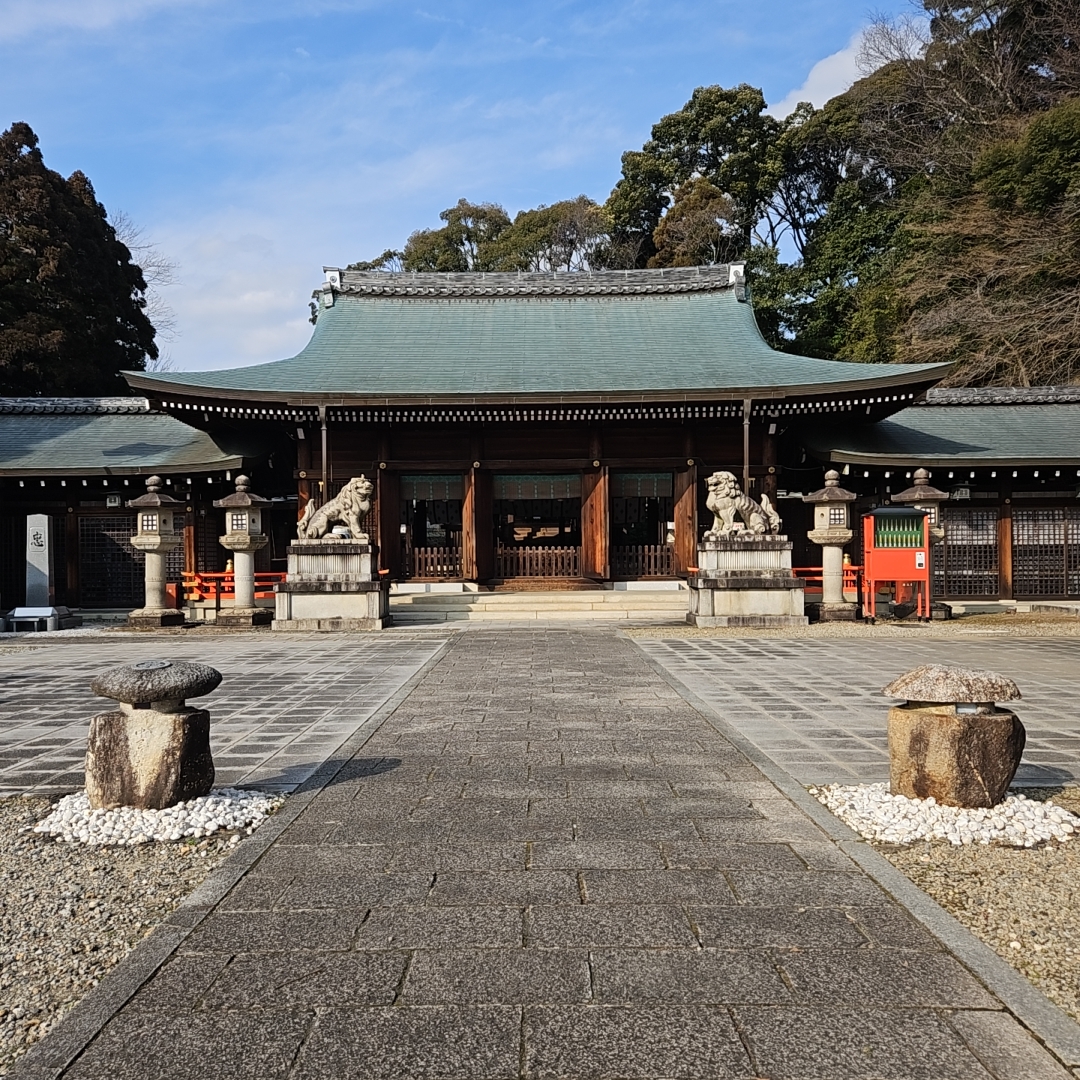
The main hall and worship hall of Kyoto Ryozen Gokoku Shrine follow traditional shrine architecture while also incorporating modern elements from the Meiji era onward. From the worship hall, you can enjoy a panoramic view of Kyoto city, especially during cherry blossom and autumn foliage seasons.
The main hall enshrines the spirits of patriots and heroes who sacrificed their lives for the nation, allowing visitors to pray in a solemn atmosphere. The grounds are enveloped in tranquility, providing a space to quietly contemplate history away from the hustle and bustle of the city. ### Ryozen Cemetery | A Sacred Site Where the Patriots of the Meiji Restoration Rest
The Ryozen Cemetery, located on the east side of the shrine grounds, is arguably the most impressive sight at Kyoto Ryozen Gokoku Shrine. Here, numerous graves of patriots from the late Edo period and the Meiji Restoration are lined up, making it a pilgrimage site for history buffs.
The Graves of Sakamoto Ryoma and Nakaoka Shintaro
The most famous are the graves of Sakamoto Ryoma and Nakaoka Shintaro, standing side by side. The two men, who perished together at the Omiya Inn in Kyoto on November 15, 1867 (Keio 3), now rest side by side in this place. Fresh flowers and sake are always offered at Ryoma’s grave, demonstrating his enduring popularity.
The gravestone is situated atop a high stone staircase, overlooking the city of Kyoto. This is said to be based on the anecdote that Ryoma, during his lifetime, requested to be buried in a place where he could see the entire city of Kyoto.
The Grave of Kido Takayoshi (Katsura Kogoro)
The grave of Kido Takayoshi (Katsura Kogoro), one of the three great figures of the Meiji Restoration, is also located in Reizan Cemetery. Kido, a native of the Choshu Domain, played a central role in the Meiji government after the Restoration and laid the foundation for modern Japan.
The Graves of Other Famous Patriots
The graves of figures who left their mark on the history of the late Edo period are scattered throughout the cemetery, including those of Kusaka Genzui (a Choshu Domain samurai who died in the Kinmon Incident), Yoshimura Torataro (a Tosa Domain samurai who died in the Tenchugumi Incident), and Ou, the mistress of Takasugi Shinsaku. Each tombstone bears inscriptions of their domain of origin and career, allowing visitors to experience the history of the late Edo period while touring the cemetery.
Showa no Mori | War Memorial Park
While Ryozen Cemetery is a place to enshrine the patriots of the late Edo period and the Meiji Restoration, “Showa no Mori” is a war memorial park commemorating those from Kyoto Prefecture who lost their lives in modern wars.
Numerous monuments and memorials stand within the grounds, bearing the names of victims from various wars, from the First Sino-Japanese War to the Greater East Asia War. A prayer hall (Noritosha) is also provided, serving as a place of remembrance for the war dead.
Showa no Mori is an important space that conveys the history of Japan from the late Edo period to the Showa era, and the existence of those who sacrificed their lives for the country in each era.
Ishin no Michi | A Historic Approach
The slope leading to Kyoto Ryozen Gokoku Shrine is called “Ishin no Michi” (Path of the Restoration), a charming stone-paved approach. Climbing this slope will take you to the shrine grounds. Along the way, you’ll find historical sites and explanatory signs related to the late Edo period, allowing you to enjoy a historical walk while visiting the shrine.
Nearby is the Ryozen Historical Museum, which displays valuable materials and artifacts from the late Edo period and the Meiji Restoration. Visiting it in conjunction with the shrine will allow you to gain a deeper understanding of the history of the late Edo period.
Visiting Information | Visiting Hours, Fees, and Access
Visiting Hours and Fees
Mountain Entry Reception Hours
9:00 AM to 5:00 PM (Open all year round)
Admission Fee (Ryozen Cemetery Admission Fee)
While visiting the shrine itself is free, an admission fee is required to enter the Ryozen Cemetery.
- Adults: 300 yen
- Elementary and Junior High School Students: 200 yen
This admission fee is required to visit the graves of Sakamoto Ryoma and Nakaoka Shintaro. The admission fee is used for the maintenance and memorial services of the cemetery.
Access Methods
Access by Public Transportation
- Kyoto City Bus
- Get off at “Higashiyama Yasui” bus stop, approximately 10 minutes on foot
- Get off at “Kiyomizu-do” bus stop, approximately 15 minutes on foot
- Keihan Railway
- Get off at Gion Shijo Station, approximately 20 minutes on foot
- Get off at Kiyomizu Gojo Station, approximately 20 minutes on foot
- Hankyu Railway
- Get off at Kawaramachi Station, approximately 25 minutes on foot
Access by Private Car
The roads around the shrine are narrow and parking is limited, so we recommend using public transportation. If you must visit by car, please use a nearby paid parking lot and access the shrine on foot.
By Taxi
Approximately 15 minutes from Kyoto Station, fare approximately 1,500 yen. Telling the driver “Kyoto Ryōzen Gokoku Shrine” or “Ryōzen” will be understood.
Location and Basic Information
- Address: 1 Seikanji Reizan-cho, Higashiyama-ku, Kyoto City, Kyoto Prefecture 605-0861
- Phone: 075-561-7124
- Official Website: http://gokoku.or.jp/
Annual Events | Ryoma Festival and Spring Grand Festival
Kyoto Reizan Gokoku Shrine holds various festivals throughout the year. Among them, the Ryoma Festival is particularly famous.
Ryoma Festival (November 15th)
The Ryoma Festival, held annually on November 15th, is a festival commemorating the anniversary of Sakamoto Ryoma’s death. Since November 15th is both Ryoma’s birthday and his death anniversary in the old lunar calendar, a grand festival is held on this day.
Ryoma Festival Details
- Start Time: 3:30 PM
- After the Shinto ritual, Shamo Nabe (gamecock hot pot) will be served to worshippers (limited quantity)
- Ryoma fans and history enthusiasts gather from all over the country, making the shrine grounds very lively.
- A memorial service at the grave will also be held simultaneously to comfort Ryoma’s spirit.
Shamo Nabe is said to be a dish Ryoma enjoyed during his lifetime, and tasting it on this day allows you to feel a connection to Ryoma.
Spring Grand Festival (April)
The Spring Grand Festival is one of the most important festivals of the shrine, held during the cherry blossom season. Cherry trees are planted on the shrine grounds, and a solemn Shinto ritual is held amidst a beautiful landscape when the trees are in full bloom.
Many worshippers visit this festival to comfort the spirits of the Meiji Restoration patriots and war dead, and to pray for peace.
Matsugiku Festival (Autumn Grand Festival)
The Matsugiku Festival, held in autumn, is also known as the Autumn Grand Festival and is an important annual event alongside the Spring Grand Festival. It expresses gratitude and remembrance for the war dead during the beautiful autumn foliage season.
Memorial Day Ceremonies
Memorial days are held on the anniversaries of the deaths of major patriots. In addition to the memorial days for Sakamoto Ryoma and Nakaoka Shintaro (November 15th), smaller ceremonies are held on the anniversaries of each patriot’s death.
Nearby Tourist Attractions | Ryozen Historical Museum and Higashiyama Walk
Ryozen Historical Museum
Located very close to Kyoto Ryozen Gokoku Shrine, the Ryozen Historical Museum is a specialized museum focusing on the late Edo period and the Meiji Restoration. It displays valuable historical materials such as Sakamoto Ryoma’s belongings, Shinsengumi-related materials, and letters and weapons from patriots of various domains.
Visiting the museum in conjunction with a visit to the shrine will allow for a deeper understanding of the history of the late Edo period. Special exhibitions are held regularly, so you’ll discover something new every time you visit.
Kodai-ji Temple and Entoku-in Temple
Within walking distance is Kodai-ji Temple, associated with Kita-no-Mandokoro (Nene), the principal wife of Toyotomi Hideyoshi. This famous temple, known for its beautiful gardens and seasonal illuminations, is a classic spot for sightseeing in Higashiyama.
Kiyomizu-dera Temple
Kiyomizu-dera Temple, one of Kyoto’s most representative tourist attractions, is also within walking distance. The experience of viewing the entire city of Kyoto from the Kiyomizu Stage is a highlight of any Kyoto trip.
Yasaka Shrine and Gion
To the north of the Higashiyama area are Yasaka Shrine and the Gion geisha district, where you can enjoy the quintessential Kyoto atmosphere. It’s about a 20-minute walk from Ryozen Gokoku Shrine, making it an ideal historical walking course in Higashiyama.
The Charm of Kyoto Ryozen Gokoku Shrine | Why History Fans Must Visit
A Sacred Site Where the Most Important Figures of the Late Edo Period Gather
The greatest charm of Kyoto Ryozen Gokoku Shrine lies in the fact that it is the actual resting place of historical figures who appear in textbooks. Standing before the graves of key figures of the Meiji Restoration such as Sakamoto Ryoma, Nakaoka Shintaro, and Kido Takayoshi, you can feel the spirit of the era in which they lived.
It is a precious place where you can truly feel, through the tombstones, the fact that the figures depicted in history books, novels, and dramas actually existed and risked their lives for the future of Japan.
Breathtaking Views Overlooking Kyoto City
From the shrine grounds and Ryozen Cemetery, you can enjoy a panoramic view of Kyoto city. By gazing at the same view of Kyoto that Ryoma and others must have seen, you can feel a connection to history that transcends time and space.
Especially during cherry blossom season and autumn foliage season, a breathtaking view unfolds, blending historical atmosphere with natural beauty.
A Historical Experience in a Tranquil Atmosphere
Compared to bustling tourist destinations like Kiyomizu-dera Temple and Yasaka Shrine, Kyoto Ryozen Gokoku Shrine maintains a relatively quiet environment. In this tranquil setting, you can reflect on the history of the late Edo period and contemplate the lives of the patriots.
For history enthusiasts, this will be more than just sightseeing; it will be a pilgrimage-like experience visiting historical sites.
A Place of Remembrance Transcending Time
Because it enshrines not only the patriots of the late Edo period and Meiji Restoration, but also those who lost their lives in various wars of modern Japan, it holds significance as a place of remembrance encompassing the entirety of modern Japanese history. Visiting Showa no Mori (Showa Forest) allows you to renew your appreciation for the preciousness of peace and your gratitude to those who sacrificed their lives to protect it.
Points to Note and Manners When Visiting
Photography Manners in the Cemetery
While Ryozen Cemetery is a tourist destination, it is also an actual cemetery. Photography is permitted, but please observe the following manners.
- Do not touch or sit on the tombstones directly.
- Do not make loud noises.
- Be considerate of other visitors.
- Use flash photography sparingly.
Clothing and Belongings
The Ishin-no-Michi (Path of the Restoration) is a stone-staircase path, so comfortable shoes are recommended. Particular caution is needed during rainy weather, as it can become slippery.
The sun is strong in summer, and it gets cold in winter due to the mountainous terrain. Please dress appropriately for the season.
Etiquette for Visiting a Shrine
Follow the basic etiquette for visiting a shrine.
- Bow when passing through the torii gate.
- Cleanse your hands and mouth at the water basin.
- Bow twice, clap twice, and bow once in front of the main hall.
- Quietly clasp your hands together in prayer at the cemetery and remember the deceased.
Summary | Experiencing the Spirit of the Late Edo Period at Kyoto Ryozen Gokoku Shrine
Kyoto Ryozen Gokoku Shrine is a historically extremely important place where the patriots who laid the foundation for Japan’s modernization rest. Founded in 1868 as Japan’s first officially sanctuary for the war dead, this shrine has continued to honor the spirits of those who sacrificed their lives for the nation for over 150 years.
This place, where the souls of 1,356 patriots of the Meiji Restoration, including Sakamoto Ryoma and Nakaoka Shintaro, and over 70,000 war dead rest, is not merely a tourist spot, but a sacred place where you can experience Japanese history itself.
From the shrine grounds, you can enjoy a panoramic view of Kyoto city and truly feel the image of Japan that these patriots risked their lives to protect. Climbing the path of the Meiji Restoration and standing before the graves of historical figures in the Ryozen Cemetery will be an unforgettable experience for history buffs.
Throughout the year, events such as the Ryoma Festival and the Spring Grand Festival are held, offering new discoveries and inspiration with each visit. When you visit Kyoto, be sure to visit Kyoto Ryozen Gokoku Shrine and feel the spirit of the Meiji Restoration. A dialogue with living history, something you can’t experience in history textbooks, awaits you.