Complete Guide to Makiosan Seimyoji Temple (Kyoto Prefecture): The Charm and Highlights of the Three Ancient Temples of the Sanbi Group (alongside Jingoji and Kozanji)
Located in the mountainous area of the Atago mountain range in the northwestern part of Ukyo Ward, Kyoto City, Makiosan Seimyoji Temple is one of Kyoto’s leading ancient temples, known as the “Three Sanbi” along with Jingoji and Kozanji. While nationally known as a famous spot for autumn foliage, its location away from the city center makes it a special place where you can enjoy history and nature in a tranquil environment. This article provides a detailed introduction to Seimyoji Temple, including its history, highlights, access methods, and visiting information.
History and Origin of Makiosan Seimyoji Temple
History of its Founding
Seimyoji Temple is said to have been founded during the Tenchō era (824-834) by Chisen Daidoku, a senior disciple of Kūkai (Kōbō Daishi). Initially, it flourished as a Shingon Buddhist temple, but later converted to the Tendai sect, which it remains to this day.
The temple’s name, “Saimyoji,” is said to derive from its location west of Jingoji Temple. The mountain name, Makioyama, is believed to have been given because many Japanese cypress trees (maki) grew naturally in the surrounding area.
Transition from the Medieval to the Early Modern Period
From the Heian period to the Kamakura period, Saimyoji flourished as a training ground for many monks, as part of the Sanbi (Three Biwa) area. However, much of the temple complex was destroyed during the Onin War (1467-1477), forcing it into temporary decline.
In the Edo period, during the Genna era (1615-1624), it received the patronage of Keishoin (the mother of Tokugawa Tsunayoshi), and the main hall and guest hall were rebuilt. This reconstruction established the basic layout of Saimyoji Temple as seen today.
Seimyoji Temple in the Modern Era
While the impact of the anti-Buddhist movement during the Meiji era was relatively minor, the temple suffered damage from natural disasters such as typhoons during the Showa period. However, thanks to the support of local believers and tourists, restoration and maintenance have continued.
Currently, it welcomes many worshippers and tourists as a famous spot for autumn foliage and a tranquil training ground.
Main Highlights of Seimyoji Temple
Main Hall (Shakado)
The main hall of Seimyoji Temple is a building rebuilt in the early Edo period, and it has the typical style of a Tendai sect temple, with a hipped roof and cypress bark roofing. A statue of Shakyamuni Buddha is enshrined as the principal image, with Manjushri Bodhisattva and Samantabhadra Bodhisattva enshrined as attendant deities.
The interior of the main hall is usually closed to the public, but it may be possible to view the inner sanctuary during special viewing periods. The solemn atmosphere inside the hall and the aged Buddha statues leave a deep impression on visitors.
Guest Hall and Garden
To the east of the main hall is the guest hall, and its front garden is designated as a scenic spot by Kyoto City. This garden is believed to have been created in the early Edo period and possesses a unique style combining a dry landscape garden and a pond garden.
Water drawn from the Kiyotaki River flows through the garden, allowing visitors to enjoy the scenery of each season. Especially during the autumn foliage season, the vibrant colors of maple and other trees adorn the garden, creating a picturesque scene.
Bell Tower and Bell
Within the temple grounds is a bell tower built during the Edo period, housing a bronze bell. This bell was cast during the temple’s reconstruction in the Genna era and is known for its elegant tone.
On New Year’s Eve, visitors are allowed to ring the bell, making it a solemn and beloved event for locals welcoming the new year.
Stone Steps and Approach
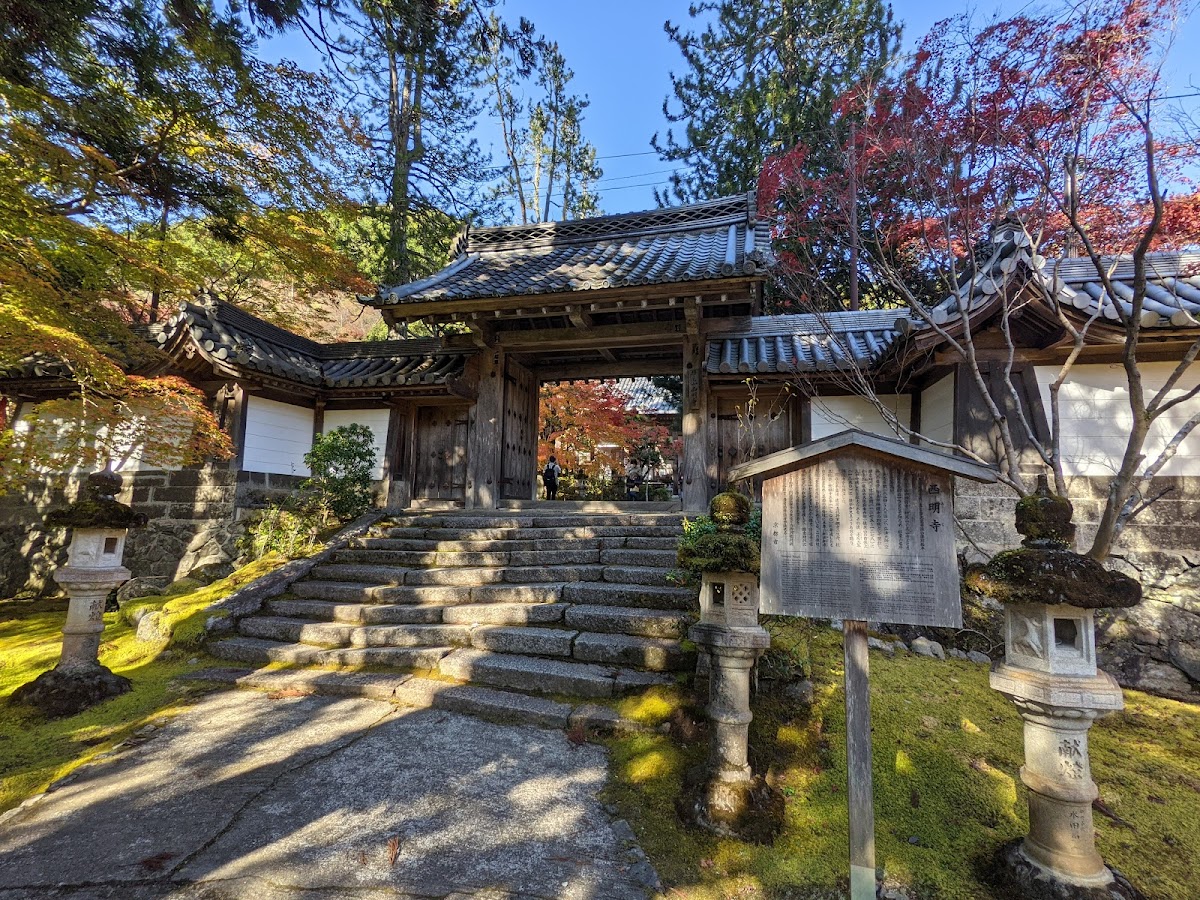
The approach to Seimyoji Temple begins at Shizuki Bridge over the Kiyotaki River, and ascends a moss-covered stone staircase. This staircase has approximately 200 steps, lined with cedar and maple trees, creating a tranquil atmosphere.
Walking along the approach is a kind of spiritual experience, a time to escape the hustle and bustle of everyday life and calm the mind. In autumn, both sides of the steps are covered in autumn leaves, creating an experience akin to walking through a tunnel of foliage.
Shōtendō Hall
To the north of the main hall is the Shōtendō Hall, where Kankiten (Shōten) is enshrined. Kankiten is believed to bring good fortune in business and successful relationships, attracting many worshippers.
The area around the Shōtendō Hall is particularly quiet, maintaining an atmosphere of deep faith.
What is Sanbi?: The Relationship with Jingoji and Kozanji Temples
Origin of Sanbi
“Sanbi” is a collective name for three areas located in the mountainous region of Ukyo Ward, Kyoto City: Takao (Jingoji Temple), Makio (Seimyo-ji Temple), and Toganoo (Kozanji Temple). All three are situated along the Kiyotaki River and have long been known as Kyoto’s inner sanctuary.
While each of the three temples is independent, they are geographically close and have deep historical ties. They are particularly recognized as a renowned spot for autumn foliage, attracting many tourists who enjoy a tour of Sanbi in the fall.
Relationship with Jingoji Temple
Jingoji Temple is the central temple of Sanbi, located about a 15-minute walk from Seimyo-ji Temple. It is an ancient Shingon Buddhist temple, known for having been the head priest of Kobo Daishi (Kukai).
There is a theory that Seimyo-ji and Jingoji Temples were once located within the same temple grounds, indicating a close relationship. Even today, a mountain path connects the two temples and is a popular hiking course.
Relationship with Kōzan-ji Temple
Kōzan-ji Temple, located in Toganoo, is a renowned temple registered as a World Heritage Site. It is famous for its Chōjū-jinbutsu-giga (Scrolls of Frolicking Animals and Humans) and for having Japan’s oldest tea plantation.
Kōzan-ji Temple is about a 30-minute walk from Seimyō-ji Temple and is often included in the Sanbi pilgrimage route. Each of the three temples possesses a different charm, offering visitors a diverse experience.
Seimyō-ji Temple as a Famous Autumn Foliage Spot
Best Time to See Autumn Foliage
The autumn foliage at Seimyō-ji Temple is typically at its best from early to late November. Due to its relatively high altitude, the leaves begin to change color earlier than in Kyoto city.
At its peak, the entire temple grounds are dyed in red and yellow, and the foliage around the main hall and along the approach to the temple is particularly magnificent. The autumn leaves, which change their appearance depending on the light of morning and evening, are something you will never tire of seeing, no matter how many times you visit.
Autumn Foliage Illumination
During the autumn foliage season, nighttime illuminations are sometimes held for a limited time. The illuminated leaves present a different, more fantastical beauty than during the day, attracting many photography enthusiasts.
The illumination period and times vary each year, so it is recommended to check official information before visiting.
Crowds and Viewing Tips
Weekends during the autumn foliage season can be crowded, but it is relatively less crowded than Jingoji Temple or Kozanji Temple. Choosing early mornings or weekdays will allow you to enjoy the autumn foliage in a more peaceful atmosphere.
The stone steps leading to the temple are somewhat steep, so comfortable shoes are recommended. Also, be careful as the steps can become slippery in rainy weather.
Saimyoji Temple in Every Season
Saimyoji Temple in Spring
In spring, cherry blossoms and azaleas bloom on the temple grounds, and the fresh greenery is beautiful. It is less crowded than the autumn foliage season, allowing for a more peaceful visit.
From April to May, many wildflowers can be seen, making it a suitable time for nature observation.
Summer at Seimyoji Temple
In summer, the temple is enveloped in lush greenery, and the gentle murmur of the Kiyotaki River provides a refreshing coolness. The temperature is lower than in downtown Kyoto, making it a popular summer retreat.
Visiting the temple amidst the sound of cicadas offers a unique summer experience.
Autumn at Seimyoji Temple
As mentioned above, autumn is the busiest season for visitors, as it is a famous spot for viewing autumn foliage. Maple, Japanese maple, and ginkgo trees change color, transforming the temple grounds into a tapestry of autumn colors.
Winter at Seimyoji Temple
Winter is the quietest season, with fewer visitors. The snow-covered grounds present a beauty reminiscent of an ink painting.
Some facilities may be closed during the winter, so prior confirmation is necessary.
Access Methods
Access by Public Transportation
Using JR Bus (Most Common)
- Take the JR Bus “Takao/Keihoku Line” from JR Kyoto Station.
- Get off at the “Makinoo” bus stop (approximately 50 minutes).
- Approximately 5 minutes on foot from the bus stop.
Using City Bus
- Take City Bus Route 8 from Kyoto Municipal Subway “Shijo” Station or Hankyu “Karasuma” Station.
- Get off at the “Takao” bus stop (approximately 50 minutes).
- Approximately 20 minutes on foot from the bus stop (or approximately 30 minutes via Jingoji Temple).
Access by Car
From Kyoto City Center
- Head north on National Route 162 (Shuzan Kaido).
- Approximately 30 minutes.
- Parking: Paid parking is available nearby (can be crowded during the autumn foliage season).
From Meishin Expressway
- From Kyoto Minami IC, via National Route 1 and Route 162
- Approximately 40 minutes
By Taxi
From JR Kyoto Station, it takes approximately 40 minutes by taxi, costing around 4,000 to 5,000 yen. If you plan to visit all three temples, chartering a taxi is an efficient option.
Visiting Information
Visiting Hours
- Regular Season: 9:00 AM – 5:00 PM
- Autumn Foliage Season: 8:30 AM – 5:30 PM (Subject to change)
- Open Year-Round (Except during severe weather)
Admission Fee
- Adults: 500 yen
- High School and Junior High School Students: 400 yen
- Elementary School Students: 200 yen
- Special rates may apply during the autumn foliage season
Estimated Time Required
If you only wish to view the temple grounds, it will take approximately 30 to 45 minutes. If you plan to leisurely admire the gardens and enjoy taking photographs, allow about 1 to 1.5 hours.
If you plan to visit Jingoji, Kozanji, and Jingoji together to complete the Sanbi pilgrimage, we recommend allocating half a day to a full day.
Nearby Tourist Attractions
Jingoji Temple
This is the closest tourist attraction to Saimyoji Temple, located about a 15-minute walk away. It houses the National Treasure, a standing statue of Yakushi Nyorai, and numerous temple treasures associated with Kukai.
It is also famous for its autumn foliage, and you can experience the unique “kawarake-nage” (throwing earthenware discs).
Kozanji Temple
This temple is a World Heritage Site, located about a 30-minute walk from Saimyoji Temple. It is known for its Choju-jinbutsu-giga (Scrolls of Frolicking Animals and Humans) and Japan’s oldest tea plantation.
The view from Sekisui-in is spectacular, and it is especially crowded with tourists during the autumn foliage season.
Kiyotaki
A small village located upstream of the Kiyotaki River, it is a popular starting point for hiking. There is also a hiking trail from Kiyotaki to Mt. Atago.
In summer, it is bustling with families enjoying river activities, and there are also several traditional Japanese inns.
Atago Shrine
This shrine is located at the summit of Mt. Atago (elevation 924m) and is revered as a god of fire prevention. The round trip hike takes 4-5 hours, but the view from the summit is magnificent.
How to Spend Your Time and Manners at Seimyoji Temple
Manners for Visiting
Seimyoji Temple still functions as a training ground for asceticism. Please observe the following manners when visiting:
- Maintain silence: Please refrain from loud conversations.
- Photography Manners: Photography may be prohibited inside the main hall.
- Refrain from entering areas other than designated areas.
- Take your trash with you.
Recommended Ways to Spend Your Time
Enjoy Meditation and Silence
Sit quietly on a bench or in the garden within the temple grounds and listen to the sounds of nature. The gentle murmur of the Kiyotaki River and the chirping of birds create a calming atmosphere.
Photography
Especially during the autumn foliage season, there are many photo opportunities. Picturesque scenes unfold, such as the approach to the temple bathed in morning light and the autumn leaves with the main hall as a backdrop.
Visiting the Three Temples
If you have time, we recommend visiting the three temples of Jingoji, Saimyoji, and Kozanji. Each has its own unique charm, making for a fulfilling day.
Annual Events at Saimyoji Temple
First Three Days of the New Year
Many worshippers visit for their first shrine visit of the year. A visit to this tranquil mountain temple is perfect for welcoming the new year with a refreshing feeling.
Setsubun Festival (around February 3rd)
During Setsubun, a bean-throwing ceremony is held to pray for protection against evil. It’s a friendly event with a warm, homey atmosphere, mainly attended by local people.
Special Viewing During the Autumn Foliage Season (November)
During the peak of the autumn foliage season, cultural properties that are normally closed to the public may be specially opened. Details should be confirmed in advance.
New Year’s Eve Bell Ringing (December 31st)
On New Year’s Eve, the temple bell is rung, and general visitors can participate. Experiencing the New Year in the quiet mountains will surely be a special memory.
Points to Note When Visiting Saimyoji Temple
Clothing and Items to Bring
- Comfortable Shoes: Sneakers are suitable due to the many stone steps.
- Seasonal Clothing: Temperatures are lower in this mountainous area than in urban areas.
- Rain Gear: A folding umbrella is recommended as the weather can change quickly.
- Drinks: There are no vending machines on the temple grounds, so please bring your own.
Considerations Regarding Physical Fitness
The stone steps leading to the temple are approximately 200 and somewhat steep. Those with concerns about their legs or back are advised to climb slowly and take breaks.
Accessibility Information
Unfortunately, as Seimyoji Temple is an ancient temple located in the mountains, accessibility features are limited. Visiting in a wheelchair may be difficult in many areas, so it is recommended to consult with the temple in advance.
Gourmet Information Around Seimyoji Temple
Shojin Ryori (Vegetarian Cuisine)
There are several ryokan (traditional Japanese inns) in the Mio area that serve shojin ryori. Dishes using seasonal vegetables and wild plants are a treat to enjoy after visiting the temple.
Riverside Dining
In the summer, there are restaurants where you can enjoy riverside dining along the Kiyotaki River. Dining while listening to the cool sound of the river is a special experience.
Teahouses
There are teahouses offering sweets and light meals around Jingoji Temple and Kozanji Temple. Taking a break with matcha tea and Japanese sweets is also recommended.
Cultural Properties of Seimyoji Temple
Important Cultural Properties
Seimyoji Temple houses the following important cultural properties:
- Main image: Shakyamuni Buddha statue (Heian period)
- Attendant bodhisattva statues: Manjushri and Samantabhadra
- Ancient documents
These are usually not open to the public, but may be displayed during special viewings.
Kyoto City Designated Scenic Spot
The front garden of the guest hall is designated as a scenic spot by Kyoto City and is a valuable cultural asset that preserves the garden style of the early Edo period.
Summary: The Charm of Seimyoji Temple
Makioyama Seimyoji Temple is a special place where you can enjoy history and nature simultaneously in a tranquil environment away from the hustle and bustle of Kyoto. It is famous as a spot for autumn leaves, but it has beauty in every season, and there are new discoveries to be made each time you visit.
A pilgrimage to the three temples of Makioyama, including Jingoji and Kozanji, will be a particularly fulfilling experience among Kyoto sightseeing. The atmosphere unique to mountain temples, different from temples and shrines in the city, and the natural beauty created by the clear waters of the Kiyotaki River, deeply soothe the hearts of visitors.
When you visit Kyoto, be sure to take a short detour to experience the tranquility and beauty of Seimyoji Temple. You’ll be able to forget the hustle and bustle of the city and enjoy a precious moment of peace.