Complete Guide to Saimyoji Temple | National Treasure Temples of Kotō Sanzan and Kyoto’s Sanbi: History and Access Information
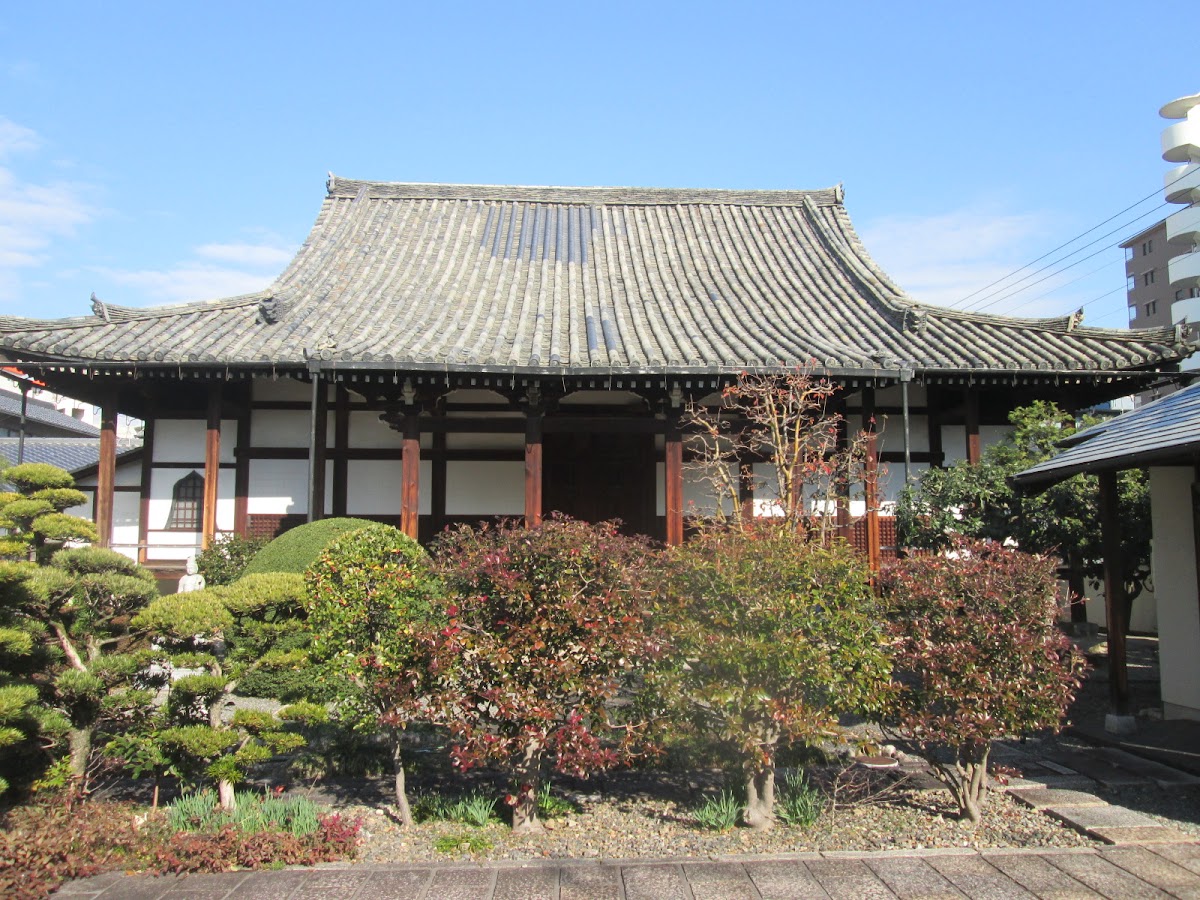
There are several temples named Saimyoji throughout Japan, but the most famous are “Koto Sanzan Saimyoji” in Kōra-chō, Shiga Prefecture, and “Makio-san Saimyoji” in Ukyō-ku, Kyoto City. Both temples possess national treasure buildings and attract many visitors as famous spots for autumn foliage. This article provides a detailed explanation of these two Saimyoji temples, including their history, cultural assets, highlights, and access information.
Kotō Sanzan Saimyoji (Kōra-chō, Shiga Prefecture)
History and Origin
Located in Ikedera, Kōra-chō, Inukami-gun, Shiga Prefecture, Saimyoji is a Tendai sect temple with the mountain name Ryūōzan. It is said to have been founded in the early Heian period, in the first year of the Jōwa era (834), by Sanshū Shōnin at the behest of Emperor Ninmyō.
Along with Kongōrin-ji and Hyakusai-ji, it is counted as one of the “Three Mountains of Kotō,” and is located in a scenic area surrounded by the rich nature of the Suzuka Mountains. During the Sengoku period, many of the temple buildings were destroyed by fire during the wars of Oda Nobunaga, but it was rebuilt in the mid-Edo period by Mochizuki Yūkan.
It is also known as the 32nd temple of the Saigoku Yakushi Forty-Nine Sacred Sites, and attracts worshippers with Yakushi Nyorai (Medicine Buddha) as its principal deity.
National Treasure Building
Main Hall (National Treasure No. 1)
The main hall of Seimyō-ji Temple is a valuable building that preserves the architectural style of the early Kamakura period. It was designated as National Treasure No. 1 based on the Cultural Properties Protection Law enacted in 1950. It is said to have been built by craftsmen from Hida, and is characterized by its purely Japanese architectural style.
Inside the main hall, the Yakushi Triad is enshrined, with Yakushi Nyorai (Medicine Buddha) at its center, along with Nikko Bosatsu (Sunlight Bodhisattva) and Gekko Bosatsu (Moonlight Bodhisattva). All three are designated as Important Cultural Properties. Some of the coloring from the Kamakura period remains on the pillars and beams inside the hall, allowing visitors to feel the solemn atmosphere of that time.
Three-Storied Pagoda (National Treasure)
The three-storied pagoda, designated as a National Treasure alongside the main hall, is believed to have been built in the late Kamakura period. Its elegant form, approximately 24 meters tall, harmonizes beautifully with the surrounding nature. Inside the first floor is enshrined Dainichi Nyorai (Vairocana Buddha), which is also an Important Cultural Property.
The three-storied pagoda is the only pagoda among the Kotō Sanzan (Three Temples of Kotō) to be designated a National Treasure, making it an extremely valuable cultural asset in architectural history.
Important Cultural Properties
In addition to National Treasures, Seimyōji Temple houses numerous Important Cultural Properties.
- Two Heavenly Kings Standing Statues: The statues of Jikokuten and Zochoten, the two Heavenly Kings enshrined in the main hall, are known for their powerful expressions and form.
- Twelve Divine Generals Standing Statues: Twelve divine generals who protect Yakushi Nyorai.
- Seated Yakushi Nyorai Statue: A Heian period Buddhist statue that attracts worshippers as the principal image.
- Nikko Bosatsu and Gekko Bosatsu Standing Statues: Attendant Buddhas that make up the Yakushi Triad.
These cultural artifacts represent the pinnacle of Buddhist art from the Heian to Kamakura periods.
Highlights of the Temple Grounds
Horai Garden
The Horai Garden, which spreads out in front of the main hall, is a beautiful pond garden with moss and autumn leaves. It is said to have been created during the Genroku era, and the deep green moss covering the entire grounds has earned it the nickname “Moss Temple.”
Famous Autumn Foliage Spot
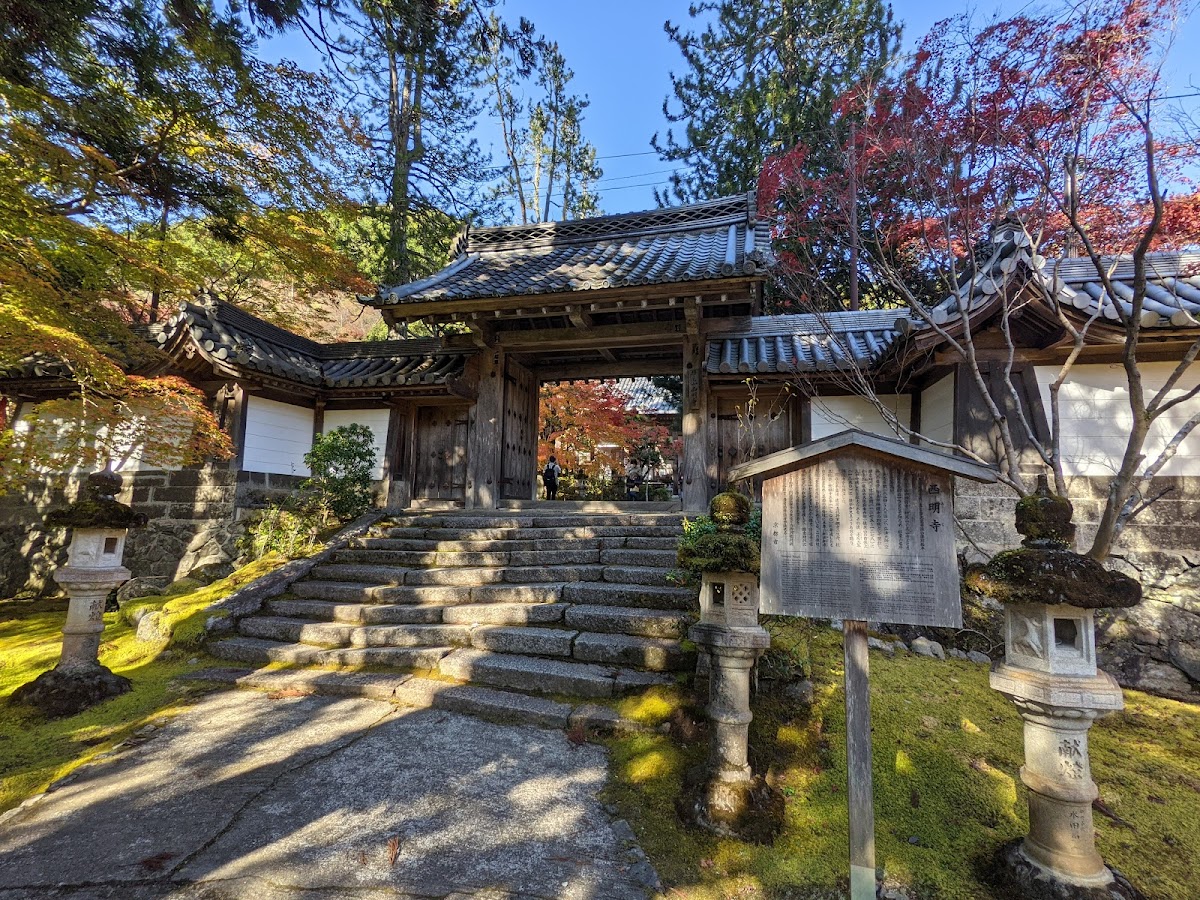
Nishimyoji Temple is known as one of Shiga Prefecture’s premier spots for viewing autumn leaves. Approximately 1,000 maple trees are planted on the temple grounds, and the best time to see them is usually from mid- to late November. The contrast between the national treasure building and the autumn leaves is breathtaking, and it was the only place in Shiga Prefecture selected by CNN as one of “Japan’s 31 Most Beautiful Places.”
Everblooming Cherry Tree
The temple grounds are home to a rare “everblooming cherry tree” that blooms twice a year, in spring and autumn. During the autumn foliage season, visitors can enjoy the precious sight of cherry blossoms and autumn leaves blooming simultaneously.
Visiting Information
- Visiting Hours: 8:30 AM – 5:00 PM (Last entry at 4:30 PM)
- Admission Fee: Adults 600 yen, Junior High School Students 300 yen, Elementary School Students 200 yen (Common ticket for the Kotō Sanzan temples is also available)
- Address: 26 Ikedera, Kōra-chō, Inukami-gun, Shiga Prefecture 522-0254
- Phone: 0749-38-4008
Access
Public Transportation
- From JR Biwako Line “Kawase Station,” take the Kokoku Bus and get off at “Nishimyōji-mae,” then walk for about 10 minutes.
- From Ōmi Railway “Amago Station,” take a taxi for about 10 minutes.
- During the autumn foliage season, the “Koto Sanzan Shuttle Bus” operates.
By Car
- Approximately 5 minutes from Meishin Expressway “Koto Sanzan Smart IC”
- Approximately 20 minutes from the Hikone Interchange on the Meishin Expressway
- Parking: Free (approximately 200 spaces)
Makiosan Seimyoji Temple (Ukyo-ku, Kyoto City)
History and Origin
Located in Makiocho, Umegahata, Ukyo-ku, Kyoto City, Seimyoji Temple is a semi-special head temple of the Daikakuji branch of the Shingon sect. Its mountain name is Makiosan, and its principal image is Shakyamuni Buddha.
It is believed to have originated during the Tenchō era (824-834) when Chisen Daitoku, a senior disciple of Kūkai (Kūkai), founded it as a branch temple of Jingoji Temple. Initially part of Jingoji Temple, it became independent as Byōdōshin’ōin during the Shōō era (1288-1293) under Emperor Go-Uda.
Located on the mountainside across the Kiyotaki River from the Shuzan Road, northwest of Kyoto city, it is known as one of the “Three Sanbi” temples, along with Takao-san Jingoji and Togao-san Kozanji.
Temple Grounds and Buildings
Main Hall
The current main hall was rebuilt in 1700 (Genroku 13) through a donation from Keishoin. The principal image, a standing statue of Shakyamuni Buddha, is a Buddhist statue in the style known as the Seiryoji-style Shakyamuni Buddha.
Guest Hall and Garden
A dry landscape garden spreads out in front of the guest hall, creating a beautiful space with a harmony of stone arrangements and white sand. You can feel the worldview of Zen in a tranquil atmosphere.
Autumn Leaves and Nature
Makio-san Seimyo-ji is known as one of Kyoto’s leading spots for viewing autumn leaves. Combined with the beauty of the valley along the Kiyotaki River, the temple grounds are adorned with fiery red leaves in autumn. The contrast between the vermilion-painted Shizuki Bridge and the autumn foliage is particularly famous as a breathtaking sight.
The entire area encompassing Takao, Makio, and Toganoo is known as a famous spot for autumn leaves, and it is bustling with tourists from early to late November every year.
Visiting Information
- Visiting Hours: 9:00 AM – 5:00 PM (May vary depending on the season)
- Admission Fee: 500 yen (May have a different fee during the autumn foliage season)
- Address: 1 Makio-cho, Umegahata, Ukyo-ku, Kyoto City, Kyoto Prefecture 616-8291
- Phone: 075-861-1770
Access
Public Transportation
- From JR Kyoto Station, take the JR Bus and get off at “Makinoo” bus stop, then walk for about 5 minutes.
- From Shijo Station on the Karasuma Subway Line, take City Bus Route 8 and get off at “Makinoo” bus stop.
- From Karasuma Station on the Hankyu Kyoto Line, take City Bus Route 8.
By Car
- Approximately 40 minutes from Kyoto Minami IC on the Meishin Expressway
- Parking: Paid parking available nearby (may be crowded during the autumn foliage season)
Other Information about Seimei-ji Temple
Nishimyoji Temple (Hino-cho, Shiga Prefecture)
There is also a Nishimyoji Temple in Hino-cho, Gamo-gun, Shiga Prefecture. It is a Rinzai Zen temple of the Eigenji school, nestled amidst the deep green of Mt. Ryuo, a branch peak of Mt. Watamuki. It is said to have been founded during the Nara period and has a long history as a center of local faith.
Nishimyoji Temple (Kawasaki City, Kanagawa Prefecture)
In Nakahara-ku, Kawasaki City, there is Ryushukuzan Kongoin Nishimyoji Temple. It is an ancient temple founded during the Nara period on Mt. Arima Ryushuku, and is one of the oldest temples in the city.
Points to Note When Visiting Nishimyoji Temple
Best Season
Both temples are most popular during the autumn foliage season, but each has its own unique charm.
- Spring: Fresh greenery and cherry blossoms (the ever-blooming cherry blossoms at Seimyoji Temple in Kotō Sanzan are especially precious)
- Summer: The beauty of deep green and moss (the moss garden at Seimyoji Temple in Kotō Sanzan is a must-see)
- Autumn: Spectacular autumn foliage (both temples are best viewed in November)
- Winter: Snowscapes and a tranquil atmosphere
Photography Tips
When photographing the harmony between national treasure buildings and nature, keep the following points in mind.
- The soft morning light beautifully illuminates the buildings.
- Weekday mornings are relatively less crowded during the autumn foliage season.
- Please be considerate of other visitors when using tripods.
- Photography inside the temple is often prohibited, so please check beforehand.
Nearby Tourist Spots
Around Seimyoji Temple (Koto Sanzan)
- Kongorinji Temple: One of the Koto Sanzan temples, famous for its blood-stained autumn leaves.
- Hyakusaiji Temple: One of the Koto Sanzan temples, boasts a famous garden with panoramic views.
- Hikone Castle: A famous castle with a national treasure keep, approximately 30 minutes by car.
Around Makioyama Seimyoji Temple
- Jingoji Temple: An ancient temple associated with Kukai, containing numerous national treasures.
- Kozanji Temple: A World Heritage Site, famous for the Choju-giga scrolls.
- Arashiyama Area: A representative Kyoto tourist spot, including Togetsukyo Bridge and the Bamboo Grove.
Manners and Precautions for Visiting Temples
Basic Manners for Visiting Temples
- Bow at the temple gate before entering the grounds.
- Pray quietly and be considerate of other visitors.
- Refrain from eating or drinking outside designated areas.
- Always take your trash with you.
- Do not touch cultural artifacts.
Clothing and Belongings
- As it is located in a mountainous area, comfortable clothing and walking shoes are recommended.
- Bring insect repellent in summer and warm clothing in winter.
- Be careful as the ground can be slippery in rainy weather.
- Bring your goshuincho (stamp book) if you wish to receive a goshuin (temple stamp).
Cultural Value of Seimyoji Temple
Significance in Architectural History
The main hall and three-story pagoda of Seimyoji Temple, one of the three temples of Kotō, are valuable cultural assets that convey the architectural techniques of the Kamakura period. The designation of the main hall as National Treasure No. 1 is particularly significant in the history of cultural property preservation. It is highly regarded in architectural history research as a representative example of pure Japanese-style architecture.
A Treasure Trove of Buddhist Art
The Buddhist statues housed in both temples are important historical materials illustrating the evolution of Buddhist art from the Heian period to the Kamakura period. In particular, the two standing statues of the Heavenly Kings and the twelve standing statues of the Divine Generals at Kotō Sanzan Seimyōji are known as representative works of the powerful sculptural beauty of the Kamakura period.
Harmony with Nature
Both Seimyōji temples are located in rich natural environments, and the architecture and nature are in perfect harmony. This Japanese aesthetic of “coexistence with nature” continues to fascinate many people even today.
Summary
While there are temples named Seimyōji throughout Japan, Kotō Sanzan Seimyōji in Kōra-chō, Shiga Prefecture, and Makioyama Seimyōji in Ukyō-ku, Kyoto City, are widely known as famous temples possessing National Treasure buildings.
Kotō Sanzan Seimyōji, centered around its main hall (National Treasure No. 1) and three-story pagoda, preserves the architectural beauty and Buddhist art of the Kamakura period. The temple grounds, with their beautiful moss and autumn foliage, display different expressions throughout the seasons, attracting many visitors from both Japan and abroad, especially during the autumn foliage season.
Makioyama Seimyoji Temple is an ancient Shingon Buddhist temple founded by Chisen Daidoku, a leading disciple of Kukai, and is a popular spot for viewing autumn leaves, one of Kyoto’s three famous temples. Combined with the beauty of the gorge along the Kiyotaki River, it is one of Kyoto’s most representative scenic spots.
Both Seimyoji temples are valuable places where you can experience Japanese history and culture. Please visit and experience for yourself the grandeur of the national treasure buildings, the beauty of the important cultural properties, and their harmony with the rich natural environment. Through your visit, you will have a valuable opportunity to connect with traditional Japanese culture and spirituality.