Complete Guide to Manganji Temples: Sacred Sites Nationwide Where Wishes Come True, History, and Access Information
There are several temples named Manganji throughout Japan. “Mangan” in Buddhism means the fulfillment of a wish, and these temples are known as sacred sites where many worshippers come to pray. This article focuses on the particularly famous Manganji temples in Kawanishi City, Hyogo Prefecture, Tochigi City, Tochigi Prefecture, and Choshi City, Chiba Prefecture, providing detailed information on their history, points of interest within the temple grounds, cultural assets, and access methods.
What is Manganji?: Origin of the Name and Distribution Nationwide
The temple name “Manganji” originates from the Buddhist concept of “Mangan,” meaning the fulfillment or achievement of a wish. The existence of temples with the same name throughout Japan is due to their shared history and their common devotion as sacred sites where worshippers’ wishes are granted.
The following are some of the major Manganji temples:
- Shinshuzan Manganji (Kawanishi City, Hyogo Prefecture): Koyasan Shingon sect, 13th temple of the New Saigoku Thirty-Three Kannon Pilgrimage
- Izurusan Manganji (Tochigi City, Tochigi Prefecture): Shingon Chizan sect, 17th temple of the Bando Thirty-Three Kannon Pilgrimage
- Fudarakusan Manganji (Choshi City, Chiba Prefecture): Kanto Special Pilgrimage Site, worshipped as a Kannon that grants wishes
- In addition, Manganji temples are scattered throughout various locations, including Yokosuka City.
Each of these temples has its own unique history and characteristics as a different sect and pilgrimage site.
Shinshuzan Manganji (Kawanishi City, Hyogo Prefecture): An ancient temple associated with the Minamoto clan
History and Origin
Located in Manganji-cho, Kawanishi City, Hyogo Prefecture, Shinshuzan Manganji is an ancient temple said to have been founded by Shodo Shonin during the Nara period. The temple’s mountain name is Shinshuzan, and it belongs to the Koyasan Shingon sect. Its principal image is the Meaki no Amida Nyorai (Amida Buddha with Eyes Opened), which is worshipped as such.
From the Heian period to the medieval period, Manganji Temple, along with Tada Shrine, played an important role as a place of prayer for the Minamoto clan. When Minamoto no Mitsunaka established his residence in Tada, this area flourished as the birthplace of the Minamoto clan, and Manganji Temple developed under their patronage. Its deep connection with the Minamoto clan occupies an important position in the temple’s history.
The Kannon Hall is the 13th temple on the New Saigoku Thirty-Three Kannon Pilgrimage, attracting many pilgrims. The principal image, the Thousand-Armed Kannon, is carefully preserved as a hidden Buddha, and is only unveiled to the public during the spring equinox each year.
Highlights of the Temple Grounds
The grounds of Shinshuzan Manganji Temple contain many buildings and stone structures that tell the story of its history.
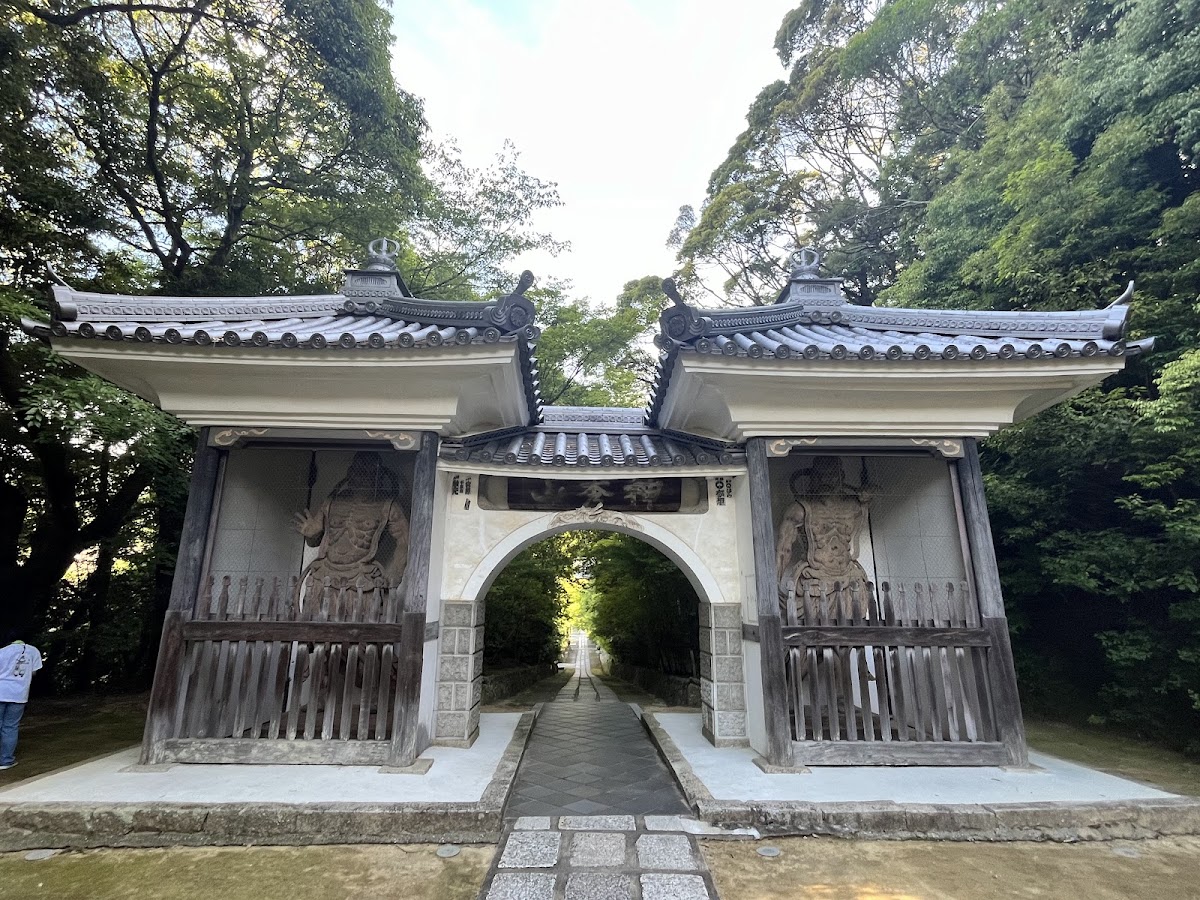
The Sanmon (main gate) is the first building welcoming visitors and is a grand structure that reflects the temple’s status. Passing through the gate reveals a spacious temple grounds.
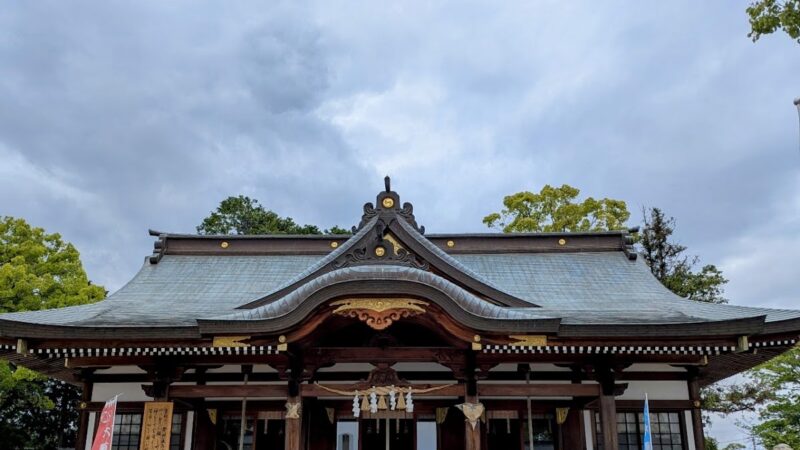
The Kondo (main hall) is the central building housing the principal image, the Amitabha Buddha with its eyes opened. Daily services are held within the hall, and visitors can offer prayers in a tranquil space.
The Kannon-do (Kannon Hall) houses a standing statue of the Thousand-Armed Kannon, believed to be from the mid-Heian period. This statue is usually kept private as a hidden Buddha, but it is specially unveiled during the spring equinox, attracting many visitors. The exquisite sculptural technique of the Thousand-Armed Kannon is highly regarded as a masterpiece of Heian Buddhist art.
The Bishamondo (Bishamonten Hall) enshrines Bishamonten, and is visited by people praying for good fortune in competitions and business prosperity.
The Honbo is the central facility for the management and operation of the temple, and also functions as the temple office. Guidance for visitors and the issuance of temple seals (Goshuin) are handled here.
Numerous historical stone structures are placed within the temple grounds, such as the Gorinto (five-ringed stupa) and Hokyointo (treasure chest stupa), which attest to the depth of faith in the past. The bell not only announces the time, but its sound is also said to purify the hearts of visitors.
A columbarium is also located within the temple grounds, where memorial services for parishioners and believers are held.
Cultural Properties
Among the cultural properties owned by Manganji Temple, the Standing Statue of the Thousand-Armed Kannon is particularly noteworthy. This Buddha statue, believed to have been created in the mid-Heian period, is known for its exquisite carving techniques and graceful form, and is designated as an Important Cultural Property of Hyogo Prefecture.
In addition, the temple possesses Buddhist art objects, ancient documents, and scriptures from the medieval to early modern periods as temple treasures, and also preserves historical materials that demonstrate its connection to the Minamoto clan.
Access Information
Access by Train/Bus:
- Get off at Hibarigaoka-Hanayashiki Station on the Hankyu Railway Takarazuka Line
- Approximately 10 minutes by Hankyu Bus from the station, get off at the Manganji bus stop (immediately adjacent)
- Or approximately 2.5 km (30 minutes) on foot from the station
Access by Car:
- Approximately 15 minutes from Takarazuka IC on the Chugoku Expressway
- Parking available (for visitors)
Location:
7-1 Manganji-cho, Kawanishi City, Hyogo Prefecture
Visiting Hours:
- Grounds are freely accessible (Temple office hours: 9:00~16:00)
- The Thousand-Armed Kannon statue in the Kannon Hall is specially displayed only during the spring equinox period
Admission Fee:
- Free admission to the grounds
- Donations accepted during special openings
Izurusan Manganji Temple (Tochigi City, Tochigi Prefecture): A sacred site of the Bando Pilgrimage
History and Origin
Located in Izuru-cho, Tochigi City, Tochigi Prefecture, Izurusan Manganji Temple is an ancient temple belonging to the Chizan branch of the Shingon sect and is known as the 17th temple on the Bando Thirty-Three Kannon Pilgrimage. Its mountain name is Izurusan, and its principal image is the Thousand-Armed Kannon Bodhisattva.
According to temple tradition, its origins date back approximately 1200 years to the discovery of the “Sacred Cave of Kannon,” or limestone cave, by En no Ozunu, a Shugendo practitioner. It is said that during the Tenpyo-Jingo era (765-767), Kobo Daishi Kukai himself carved a statue of the Thousand-Armed Kannon Bodhisattva and enshrined it in this location.
Izurusan has long been revered as a sacred mountain and flourished as a training ground for Shugendo practitioners. The spring water gushing from the limestone cave is known as sacred water and still attracts many worshippers today.
Temple Grounds and Training Experiences
The most distinctive features of Izurusan Manganji Temple are its natural, sacred environment and the training programs available even today.
The Kannon Hall houses the principal image, the Thousand-Armed Kannon Bodhisattva, and is constantly visited by pilgrims on the Bando Pilgrimage. The hall is filled with a solemn atmosphere, and quietly offering prayers brings inner peace.
The Limestone Cave (Kannon’s Sacred Cave) is a sacred site that is the origin of the temple, and a statue of Kannon is enshrined inside. The spring water gushing from the cave is known as “Izuru’s Sacred Water” and is believed to bring healing from illness and longevity.
Manganji Temple offers training programs such as Zen meditation, waterfall meditation, and sutra copying, all of which are open to the public. Waterfall meditation, in particular, is popular as a valuable experience of purifying the mind and body while bathing in pure mountain water.
Exorcism and protection prayers are also performed here, and many worshippers visit at important turning points in their lives.
Access Methods
Access by Train and Bus:
- Get off at Tochigi Station on the JR Ryomo Line or Tobu Nikko Line.
- Take the Kanto Jidosha Bus bound for Izuru Kannon for approximately 30 minutes and get off at the last stop.
Access by Car:
- Approximately 20 minutes from Tochigi IC on the Tohoku Expressway.
- Approximately 25 minutes from Sano Tanuma IC on the Kita-Kanto Expressway.
- Parking available (free).
Location:
288 Izuru-cho, Tochigi City, Tochigi Prefecture
Visiting Hours:
- 8:00~17:00 (may vary depending on the season)
Admission Fee:
- Free entry to the temple grounds.
- Donation for entry to the limestone cave.
Preceding and Following Temples
If you are visiting the Bando Thirty-Three Kannon Pilgrimage:
- Temple No. 16: Mizusawa-dera (Shibukawa City, Gunma Prefecture)
- Temple No. 17: Izurusan Manganji (Tochigi City, Tochigi Prefecture)
- Temple No. 18: Chuzenji (Nikko City, Tochigi Prefecture)
Fudarakusan Manganji (Choshi City, Chiba Prefecture): Inubosaki’s One-Wish Kannon
History and Characteristics
Fudarakusan Manganji, located in Choshi City, Chiba Prefecture, is a temple that attracts worshippers as a special sacred site in the Kanto region. Its principal image is the Eleven-Faced Kannon Bodhisattva, widely known as the “One-Wish Kannon” or “Kannon who grants wishes.”
The mountain name, Fudarakusan, originates from Fudaraku Pure Land, considered the pure land of Kannon Bodhisattva, indicating its character as a center of Kannon worship.
A major characteristic of Manganji is the belief in the “One-Wish Kannon,” which is said to grant only one of the biggest wishes of the year. The teaching that Kannon (Goddess of Mercy) will surely answer your most important wish, rather than being greedy for many, is passed down through generations.
Highlights of the Temple Grounds
The Main Hall houses the principal image, the Eleven-Faced Kannon Bodhisattva, and many worshippers pray there daily, offering their wishes.
The Mangan-do Hall is an important building on the temple grounds, enshrining the 188 sacred sites of the Shikoku 88 Temple Pilgrimage, the Saigoku 33 Temple Pilgrimage, the Bando 33 Kannon Pilgrimage, and the Chichibu 34 Kannon Pilgrimage. It is believed that visiting the Mangan-do Hall grants the same blessings as visiting all the sacred sites throughout Japan, making it popular with worshippers from afar.
The Daishi-do Hall enshrines Kobo Daishi and is the center of Shingon Buddhism.
Manganji Temple is located near Inubosaki Cape and is also known as a temple where one can witness the first sunrise of the year. On New Year’s Day, many worshippers visit the shrine for their first shrine visit of the year and to pray for the first sunrise of the year, offering their New Year’s wishes to Kannon (the Goddess of Mercy).
Annual Events
Manganji Temple holds various events throughout the year:
- Buddhist Hymn Gathering: Held regularly every month, it provides an opportunity to deepen faith through Buddhist hymns.
- Sutra Copying Session: By copying scriptures such as the Heart Sutra, participants can calm their minds and accumulate merit.
- Pilgrimage Tours: Tours visiting nearby sacred sites such as Kamakura are organized, providing a place for participants to interact with each other.
- Goma Prayer Ceremony: Goma fire rituals are held regularly, and the wishes of worshippers are prayed for.
Access
Access by Train:
- Get off at Inubo Station on the Choshi Electric Railway, approximately 15 minutes on foot.
- Transfer to the Choshi Electric Railway from Choshi Station on the JR Sobu Main Line.
Access by Car:
- Approximately 40 minutes from the Sawara-Katori Interchange on the Higashi-Kanto Expressway.
- Approximately 10 minutes from Choshi city center towards Inubosaki.
- Parking Available
Location:
9822-1 Tennodai, Choshi City, Chiba Prefecture
Visiting Hours:
- Grounds are freely accessible (Temple office is usually open from 9:00 to 17:00)
Etiquette and Manners for Visiting Manganji Temple
Proper Worship Etiquette
When visiting Manganji Temple, please observe the following basic worship etiquette:
- Bow at the Temple Gate: Bow at the temple gate before entering the grounds to compose yourself.
- Purification at the Water Basin: Purify your hands and mouth with the water before worshiping.
- Worship at the Main Hall: Offer your donation, ring the temple bell, and pray with your hands clasped together.
- Receive a Goshuin (Temple Seal): You can receive a Goshuin at the temple office after worshiping.
- Bow at the Temple Gate: Bow at the temple gate when leaving the grounds.
How to Make Your Wish Come True
Especially at Manganji Temple, known as the “One Wish Kannon,” there are specific customs for making a wish:
- Focus on One Wish: Choose the most important wish of the year.
- Wish Specifically: Visualize a specific wish, not a vague one.
- Gratitude: Offer gratitude beforehand for your wish being granted.
- Continuous Visits: After your wish is granted, always return to the temple to express your gratitude.
Photography Etiquette
Photography is generally permitted on the temple grounds, but please note the following:
- Permission may be required to photograph the interior of the main hall or Buddha statues.
- Be considerate of other visitors.
- Maintain silence and avoid disrupting the solemn atmosphere.
- Prior confirmation is required before using a tripod.
Tourist Attractions Around Manganji Temple
Around Manganji Temple, Kawanishi City, Hyogo Prefecture
- Tada Shrine: Known as the birthplace of the Minamoto clan, this shrine, along with Manganji Temple, is a historical site associated with the Minamoto clan.
- Chimei Lake: A lake with a rich natural environment, campgrounds, and leisure facilities.
- Ichikura Dam: A dam lake with beautiful scenery throughout the seasons.
Around Manganji Temple, Tochigi City, Tochigi Prefecture
- Izuruhara Benten Pond: A spring-fed pond with high transparency, selected as one of Japan’s 100 Best Waters.
- Tochigi City Center: A historical townscape known as a town of storehouses.
- Taiheizan Mountain: A mountain famous for its cherry blossoms and hydrangeas.
Around Manganji Temple, Choshi City, Chiba Prefecture
- Inubosaki Lighthouse: The easternmost lighthouse in the Kanto region, offering spectacular views of the Pacific Ocean.
- Earth’s Curvature Observation Deck: An observation facility where you can enjoy a 360-degree panoramic view.
- Choshi Electric Railway: A local line with a retro atmosphere, popular for sightseeing along the line.
- Choshi Fishing Port: A market and restaurants where you can enjoy fresh seafood.
Contact Information
Inquiries to each Manganji temple are handled by their respective temple offices:
Shinshuzan Manganji (Kawanishi City, Hyogo Prefecture)
- Telephone inquiries: During temple office hours (9:00 AM – 4:00 PM)
- Consultations regarding special viewings and group visits are also available.
Izurusan Manganji (Tochigi City, Tochigi Prefecture)
- Reservations for experiential programs such as Zen meditation, waterfall meditation, and sutra copying sessions.
- Applications for exorcism prayers.
Fudarakusan Manganji (Choshi City, Chiba Prefecture)
- Applications for Goma prayers.
- Applications for pilgrimage tours.
- Confirmation of dates for Buddhist hymn and sutra copying sessions.
Each temple operates an official website where you can find the latest information and event announcements. We recommend checking opening hours and any special events before visiting.
How to Check the Latest Information
You can check the latest information about Manganji Temple in the following ways:
- Official Website: Each Manganji Temple operates its own official website, which is updated with event schedules and visiting information.
- SNS: Some temples post information about the temple grounds and the blooming status of seasonal flowers on Facebook and Instagram.
- Tourism Association: Local tourism associations also provide information about Manganji Temple.
- Telephone Inquiry: You can check the latest information by calling the temple office directly.
Especially during cherry blossom and autumn foliage seasons, and during special opening periods, it is recommended to check the latest information before visiting.
Summary: Fulfilling Wishes at Manganji Temple
Manganji Temples, scattered throughout Japan, each have their own unique history and characteristics, but they all share the common characteristic of being sacred sites where wishes are granted, attracting the faith of many people.
Manganji Temple on Mt. Shinshu in Kawanishi City, Hyogo Prefecture, is a historically valuable ancient temple associated with the Minamoto clan, and it continues to protect a precious cultural asset: a statue of the Thousand-Armed Kannon from the Heian period. Izurusan Manganji Temple in Tochigi City, Tochigi Prefecture, welcomes pilgrims as one of the 33 Kannon pilgrimage sites of Bando, and also offers a place for spiritual training such as Zen meditation and waterfall meditation. Fudarakusan Manganji Temple in Choshi City, Chiba Prefecture, is known as “Ichigan Kannon” (One Wish Kannon), fostering a faith in sincerely fulfilling a single wish, and is a beloved place to offer New Year’s wishes along with the first sunrise of the year at Inubosaki.
Whichever Manganji Temple you visit, the important thing is to make your wish with a sincere heart and never forget to be grateful. By believing in the compassionate power of Kannon and praying with a heartfelt devotion, your wish will surely come true.
Walking through the historic temple grounds and quietly offering your prayers is a precious opportunity to escape the hustle and bustle of modern life and find peace of mind. Please visit a Manganji Temple and experience a prayer with a heartfelt wish.