Complete Guide to Tada Shrine | A Thorough Explanation of the History, Deities, Access, and Annual Events of the Birthplace of the Seiwa Genji Clan
Tada Shrine is a historic shrine located in Kawanishi City, Hyogo Prefecture, known as the birthplace of the Seiwa Genji clan. Founded in 970 by Minamoto no Mitsunaka, it boasts a history of over a thousand years as a sacred site dedicated to the ancestral deities of the Genji clan. This article comprehensively explains everything you need to know before visiting Tada Shrine, including its detailed history, enshrined deities, cultural properties, annual events, and access methods.
What is Tada Shrine? | The Sacred Birthplace of the Seiwa Genji Clan
Tada Shrine is located in Tadain Tadasho-cho, Kawanishi City, Hyogo Prefecture, and is a renowned shrine counted as one of the “Three Genji Shrines,” along with Rokuson’o Shrine (Minami-ku, Kyoto City, Kyoto Prefecture) and Tsuboi Hachimangu Shrine (Habikino City, Osaka Prefecture). Formerly a prefectural shrine, it is currently designated as a special shrine by the Association of Shinto Shrines.
This area holds historical significance as the birthplace of the Minamoto warrior group, as Minamoto no Mitsunaka, the ancestor of the Seiwa Genji clan, established his base in Tada. The shrine grounds are designated a national historic site, and it is one of the representative shrines and temples of the Hokusetu region, possessing numerous cultural assets including the main hall, worship hall, and guardian gate.
Basic Information about Tada Shrine
Location: 1-1 Tadasho-cho, Tadain, Kawanishi City, Hyogo Prefecture
Main Deities: Minamoto no Mitsunaka, Minamoto no Yorimitsu, Minamoto no Yorinobu, Minamoto no Yoriyoshi, Minamoto no Yoshiie (Five Lords of the Seiwa Genji)
Founded: Tenroku 1 (970)
Former Shrine Rank: Prefectural Shrine
Other Names: Tadain, Tada Daigongen Shrine
Cultural Properties: Main Hall (Important Cultural Property), Worship Hall/Zuishinmon Gate (Hyogo Prefecture Designated Cultural Property), and many others
History of Tada Shrine | From Tendai Buddhist Temple to Shrine
Founding in Tenroku 1 (970) and Tadain
The history of Tada Shrine begins in Tenroku 1 (970), when Minamoto no Mitsunaka, the ancestor of the Seiwa Genji, built a large Tendai Buddhist temple, “Tadain,” in Tada, Settsu Province. Minamoto no Mitsunaka was a great-grandson of Emperor Seiwa and possessed vast estates in Settsu, Yamato, and Ise provinces. He organized a warrior group and laid the foundation for the Minamoto samurai clan.
Tada-in was built as a magnificent Tendai sect temple, complete with a main hall, worship hall, Hokke-do hall, and golden hall. After Mitsunaka’s death, a mausoleum was constructed according to his will to enshrine five lords: Mitsunaka, Yorimitsu, Yorinobu, Yoriyoshi, and Yoshiie. This became the prototype for the present-day Tada Shrine.
Development as Tada Daigongen Shrine
Throughout the medieval period, Tada-in was revered as “Tada Daigongen Shrine” by the Minamoto clan. Minamoto shoguns of the Kamakura shogunate, including Minamoto no Yoritomo, also held this place, where their ancestral deity was enshrined, in special regard, donating land and repairing the shrine buildings. During the Muromachi period, the Ashikaga clan, also descendants of the Minamoto clan, revered Tada Shrine and provided its protection.
During the Sengoku period (Warring States period), the shrine was devastated by war, but in the Edo period, it came under the patronage of the Tokugawa shogunate. Because the Tokugawa clan also claimed descent from the Seiwa Genji clan, Tada Shrine received special reverence.
Reconstruction of the Shrine by Tokugawa Ietsuna
The current shrine buildings were rebuilt in 1667 (Kanbun 7) by Tokugawa Ietsuna, the fourth shogun. The master carpenter was Nakai Masatomo, a shogunate construction official, and the construction was carried out on a building-by-building contract basis. This reconstruction transformed Tada Shrine into a magnificent shrine with a splendid collection of buildings.
The shrine grounds extend two blocks on four sides and have a double structure of inner and outer enclosures. The outer enclosure’s south gate features a two-story gate (a Hyogo Prefecture designated cultural property), and the east and west sides are large Korean-style gates (also Hyogo Prefecture designated cultural properties), creating a solemn atmosphere.
Separation of Shinto and Buddhism in the Meiji Era and the Renaming to Tada Shrine
In 1871 (Meiji 4), following the Meiji Restoration, the Buddhist facilities of Tada-in were abolished under the Shinto-Buddhism Separation Order, and the shrine became an independent entity. As a result, the name was changed from “Tada-in” and “Tada Daigongen-sha” to “Tada Shrine,” which it remains to this day.
Tada Shrine, which ended its nearly thousand-year history as a Tendai Buddhist temple and began a new chapter as a purely Shinto shrine, retains its historical value and cultural significance, and continues to be carefully preserved to this day.
Deities Enshrined | About the Five Lords of the Seiwa Genji Clan
Tada Shrine enshrines the five ancestral deities of the Seiwa Genji clan.
Minamoto no Mitsunaka
The de facto founder of the Seiwa Genji clan. A great-grandson of Emperor Seiwa, he established his base in Tada, Settsu Province, and organized a samurai group. As the ancestor of the Tada Minamoto clan, he laid the foundation for the warrior Minamoto clan. He established Tada-in Temple, laying the foundation for the Minamoto clan’s prosperity.
Minamoto no Yorimitsu
The eldest son of Mitsunaka. A warrior known for the legend of slaying Shuten-doji at Mt. Oe. He led his Four Heavenly Kings (Watanabe no Tsuna, Sakata no Kintoki, Usui no Sadamitsu, and Urabe no Suetake) and left behind numerous tales of bravery, enhancing the Minamoto clan’s reputation as warriors.
Minamoto no Yorinobu
The third son of Mitsunaka. He became the ancestor of the Kawachi Minamoto clan and established a base in eastern Japan, including suppressing the rebellion of Taira no Tadatsune. The lineage of the Kawachi Minamoto clan, which later led to Minamoto no Yoritomo, begins with Yorinobu.
Minamoto no Yoriyoshi
Son of Yorinobu. He defeated the Abe clan of Oshu in the Former Nine Years’ War, establishing the Minamoto clan’s power in eastern Japan. It is said that a shrine dedicated to Minamoto no Mitsunaka was also built in Musashi Province (present-day Nakano Ward, Tokyo).
Minamoto no Yoshiie
The son of Yoriyoshi, a renowned general known by the nickname “Hachiman Taro.” He distinguished himself in the Later Three Years’ War, making the Minamoto clan’s military reputation famous throughout the land. He is a direct ancestor of Minamoto no Yoritomo, who founded the Kamakura Shogunate.
These five figures played a decisive role in the formation and development of the Minamoto samurai group, and Tada Shrine has been revered for generations as the guardian deity of the Minamoto clan.
Shrine Grounds and Cultural Properties | National Treasure-Class Buildings
Main Hall (Important Cultural Property)
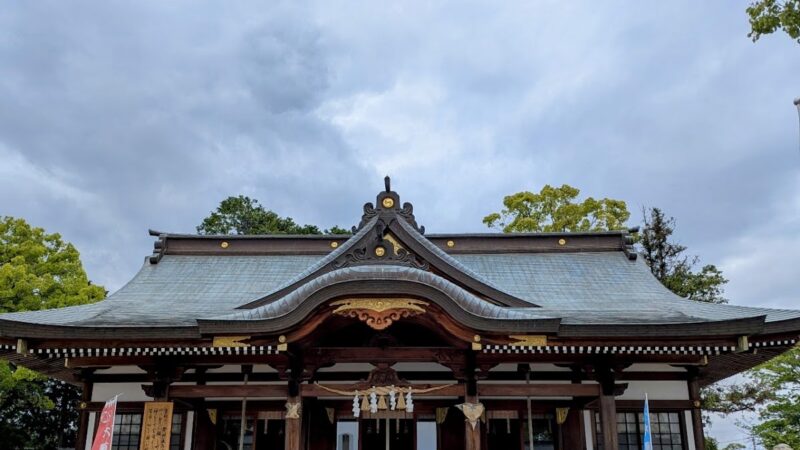
The main hall of Tada Shrine was rebuilt in 1667 by Tokugawa Ietsuna and is designated as a National Important Cultural Property. This unique structure features five shrine buildings lined up in the five-bay nagare-zukuri style, dedicated to the five lords Minamoto no Mitsunaka, Yorimitsu, Yorinobu, Yoriyoshi, and Yoshiie.
The architectural style strongly retains characteristics of the early Edo period, and it is highly regarded as a masterpiece of architecture, harmoniously blending exquisite carvings with elegant curves.
Worship Hall (Hyogo Prefecture Designated Cultural Property)
Like the main shrine, this building was rebuilt in 1667 (Kanbun 7) and is a Hyogo Prefecture designated cultural property. It is a magnificent building with a hipped roof, playing an important role as a place for worshippers to offer prayers. The interior features a coffered ceiling, creating a solemn atmosphere.
Zuishinmon Gate and Tower Gate (Hyogo Prefecture Designated Cultural Property)
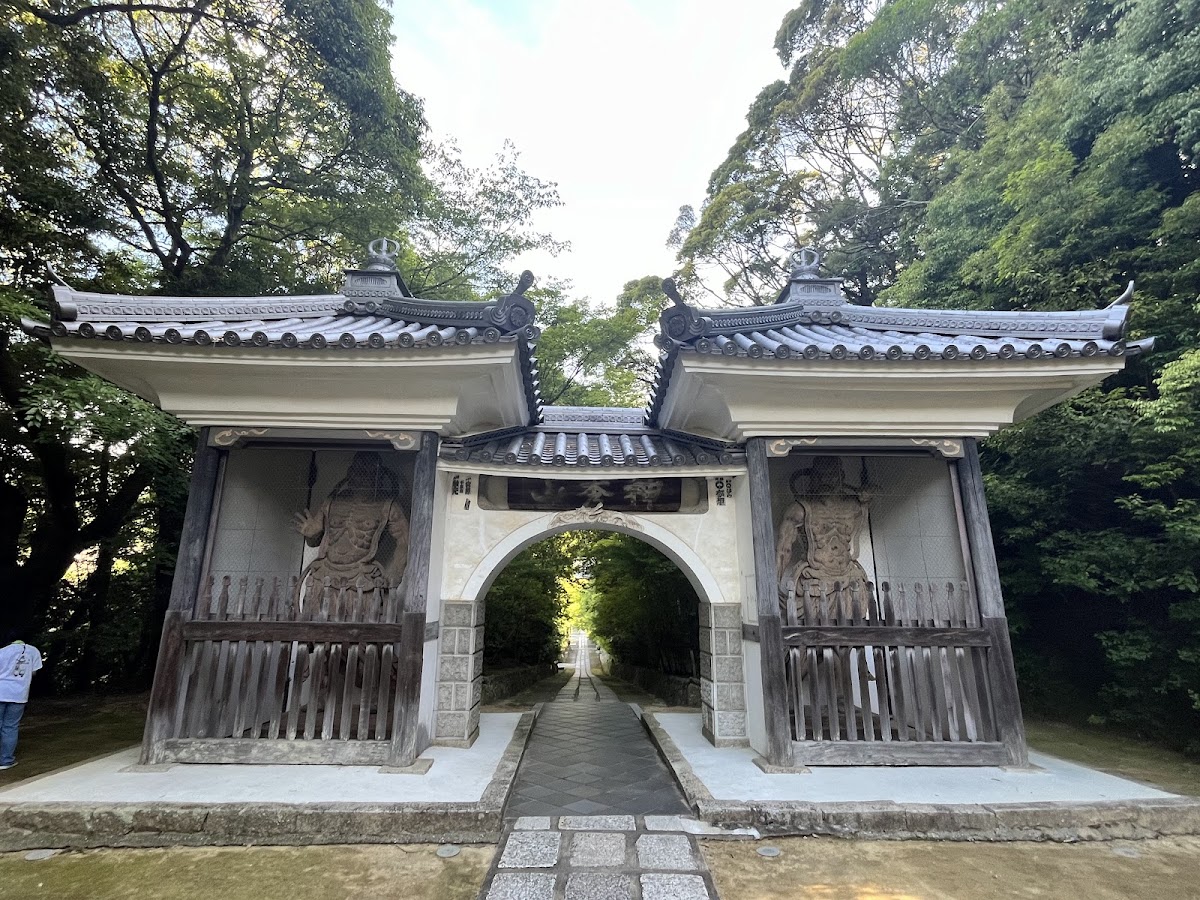
The Zuishinmon Gate and Tower Gate, guarding the entrance to the shrine grounds, are also Hyogo Prefecture designated cultural properties. The Zuishinmon Gate houses guardian deity statues on either side, serving to ward off evil spirits. The Tower Gate is a magnificent two-story gate, enhancing the prestige of the shrine grounds. ### East and West Gates (Hyogo Prefecture Designated Cultural Property)
The East and West Gates, with their rare Korean-style architecture, are also designated cultural properties of Hyogo Prefecture. As important buildings surrounding the outer enclosure, they are an indispensable part of the overall structure of the shrine grounds.
Tada Shrine Documents (National Important Cultural Property)
Tada Shrine houses the “Tada Shrine Documents,” a valuable collection of ancient documents dating from the medieval to early modern periods, which are designated as a national important cultural property. These documents, including materials related to the Minamoto clan and documents concerning the shrine’s lands, are extremely valuable for historical research.
Minamoto Clan’s Treasure Sword, Onikirimaru, and Armor
The treasure hall of Tada Shrine houses valuable cultural properties, including the famous sword “Onikirimaru,” a tribute to the Minamoto clan, as well as armor and other weapons. Onikirimaru is a legendary sword said to have been used by Minamoto no Yorimitsu when he defeated Shuten-doji at Mt. Oe, and is a treasure that conveys the martial prowess of the Minamoto clan to this day.
Annual Events | Festivals and Events at Tada Shrine
Tada Shrine holds various festivals and events throughout the year.
Spring Grand Festival (April)
The Spring Grand Festival is one of the most important festivals at Tada Shrine. It is a grand festival celebrating the divine virtues of the Five Lords of the Minamoto clan and praying for the prosperity of the parishioners and worshippers. Shinto rituals and offerings are performed. The shrine grounds are bustling with many worshippers, and the atmosphere is vibrant, celebrating the arrival of spring.
Tada Market (March and May)
Several times a year, a market called “Tada Market” is held on the shrine grounds. The markets in March and May are particularly large, featuring stalls selling local specialties, handicrafts, and food, attracting many visitors. It is a popular place for regional cultural exchange.
Prayer for Victory in the Spring Grand Sumo Tournament
Tada Shrine is known as a shrine dedicated to the god of martial fortune, and before the Spring Grand Sumo Tournament, sumo wrestlers and related personnel often visit to pray for victory. The tradition of seeking the protection of the warrior god of the Minamoto clan continues to this day.
Other Annual Events
- Saitansai (January 1st): A festival celebrating the New Year
- Setsubunsai (February 3rd): Events such as bean-throwing
- Autumn Grand Festival (October): A festival giving thanks for the autumn harvest
- Niinamesai (November 23rd): A festival giving thanks for a bountiful harvest
- Oharai (June 30th & December 31st): A Shinto ritual to purify oneself of sins and impurities accumulated over the past six months
Prayers and Information | Etiquette for Visiting
About Prayers
Tada Shrine accepts prayers from individuals and groups at any time. Prayers can be offered for various wishes, including family safety, business prosperity, protection from evil, success in examinations, and safe childbirth.
Those wishing to receive a prayer should apply at the shrine office. Reservations are not required, but advance notice is recommended for group prayers or special dates/times. The offering fee varies depending on the prayer; please contact the shrine directly for details.
Items Offered
Tada Shrine offers items such as amulets, talismans, and goshuin (shrine seals) at its office. As a shrine associated with the Minamoto clan, amulets for victory and military success are particularly popular. Goshuin are available both as pre-printed and handwritten, and many people receive them as a memento of their visit.
Shrine Grounds News | Seasonal Scenery
Tada Shrine’s grounds are blessed with beautiful nature throughout the seasons. Cherry blossoms bloom in spring, and lush green trees adorn the grounds during the season of fresh greenery. In autumn, the autumn foliage is beautiful, and in winter, the snowscape creates a fantastical atmosphere.
Especially after a snowfall, the shrine grounds become a sacred space enveloped in silence, offering a solemn atmosphere unlike the usual. Tada Shrine, which shows a different face with each season, is a fascinating place where you can discover something new no matter how many times you visit.
Transportation Information | Access to Tada Shrine
Access by Train
Using the Nose Railway
- Get off at Tada Station on the Nose Railway, approximately 15 minutes on foot
- Transfer to the Nose Railway from Kawanishi-Noseguchi Station on the Hankyu Railway, and get off at Tada Station
The path from Tada Station to the shrine is a gentle uphill slope. The walking path is also charming, allowing you to feel the history of the area associated with the Minamoto clan.
Access by Car
Using the Hanshin Expressway and Chugoku Expressway
- Approximately 10 minutes from the Kawanishi-Obana Interchange on the Hanshin Expressway Route 11 Ikeda Line
- Approximately 20 minutes from the Takarazuka Interchange on the Chugoku Expressway
The shrine grounds have a parking lot for visitors. However, congestion is expected on days with events such as the Spring Grand Festival, so using public transportation is recommended.
Nearby Tourist Attractions
Around Tada Shrine, there are many spots where you can experience nature and history, such as Manganji Temple, Saimyoji Waterfall, and Chimei Lake. There are many other sights to see along the Nose Railway line, allowing you to leisurely enjoy the charm of northern Osaka over the course of a day.
Tada Shrine in Tokyo | A Site Associated with the Minamoto Clan of Musashi Province
In fact, there is also a “Tada Shrine” in Nakano Ward, Tokyo. Located in Minamidai, Nakano Ward, Tokyo, it also enshrines Minamoto no Mitsunaka as its deity.
The Origin of Tada Shrine in Tokyo
It is said that Tada Shrine in Tokyo originated when Minamoto no Yoriyoshi and his son Yoshiie, on their return from pacifying Oshu (the Former Nine Years’ War), offered a sacred mirror to Omiya Hachimangu Shrine as a token of gratitude for their prayers being answered, and erected a shrine to Lord Mitsunaka in the village of Zoshiki.
As a base for the Minamoto clan in Musashi Province (present-day Tokyo, Saitama, and parts of Kanagawa prefectures), Lord Mitsunaka is said to have contributed to the advancement of culture in this area and has been revered as the guardian deity of the region.
Tada Shrines in Settsu and Musashi Provinces
Tada Shrine in Kawanishi City, Hyogo Prefecture, and Tada Shrine in Nakano Ward, Tokyo, both enshrine Lord Minamoto no Mitsunaka and are revered alongside Hachiman, the guardian deity of the Minamoto clan. The existence of shrines with the same name in two geographically distant locations—Settsu Province (present-day Hyogo Prefecture) and Musashi Province (Tokyo)—speaks to the vast sphere of influence of the Minamoto clan and the deep reverence for Lord Mitsunaka.
The Tada Shrine in Tokyo continues to protect the safety and well-being of its parishioners as the local guardian deity, and both shrines are valuable examples that convey the spread of Minamoto faith to this day.
Highlights and Recommended Points of Tada Shrine
A Must-See Sacred Site for History Fans: A Place Associated with the Minamoto Clan
Tada Shrine is a sacred site for history fans, as it is the birthplace of the Seiwa Genji clan, the origin of the samurai government in Japanese history. The fact that the ancestors of warlords who shaped Japanese history, such as Minamoto no Yoritomo, Ashikaga Takauji, and Tokugawa Ieyasu, are enshrined here speaks to the historical importance of this place.
A Treasure Trove of Cultural Assets Where You Can Enjoy Architectural Beauty
The shrine buildings, which preserve the architectural style of the early Edo period, are well worth seeing for those interested in architecture and art. The five-bay nagare-zukuri style structure of the main shrine and the majestic appearance of the Zuishinmon and Romon gates are particularly noteworthy.
A Healing Space Enveloped in Silence
Located in the northern part of Osaka Prefecture, far from the hustle and bustle of the city, Tada Shrine is a healing space enveloped in silence. Walking along the path surrounded by trees within the shrine grounds, you can feel a refreshing sense of peace.
The Beauty of Nature in Every Season
The shrine grounds, which show different expressions in each season—cherry blossoms in spring, fresh greenery in summer, autumn leaves in fall, and snowscapes in winter—offer a fresh and moving experience no matter how many times you visit. The beauty during the autumn foliage season is especially exceptional, attracting many photography enthusiasts.
Summary | The Significance of Visiting Tada Shrine
Tada Shrine is a historic shrine that has been revered as a sacred site of the Seiwa Genji clan for over a thousand years since its founding in 970 AD. This shrine enshrines five lords—Mitsunaka, Yorimitsu, Yorinobu, Yoriyoshi, and Yoshiie—as its deities, and as the birthplace of the Minamoto samurai clan, it has left an important mark on Japanese history.
Originally built as the large Tendai sect temple “Tada-in,” it was revered by the Minamoto clan as “Tada Daigongen Shrine” during the medieval period. Although it became the current “Tada Shrine” after the separation of Shinto and Buddhism in the Meiji era, its historical value remains unchanged. It is designated a national historic site and possesses numerous important cultural properties, including the main hall.
The current shrine buildings were rebuilt in 1667 by Tokugawa Ietsuna, the fourth shogun, and are a valuable collection of cultural properties that convey the architectural beauty of the early Edo period. The shrine grounds are surrounded by a double enclosure, and feature dignified buildings such as the tower gate and guardian gate.
Throughout the year, various festivals are held, including the spring grand festival, and events such as the “Tada Market” are also held. The shrine offers prayers and distributes amulets, fulfilling the various wishes of its visitors.
Access is approximately a 15-minute walk from Tada Station on the Nose Railway, and it is also easily accessible by car. Besides the Tada Shrine in Kawanishi City, Hyogo Prefecture, there is another Tada Shrine in Nakano Ward, Tokyo, dedicated to Minamoto no Mitsunaka, demonstrating the spread of Minamoto worship to this day.
As the birthplace of the Seiwa Genji clan, Tada Shrine conveys the origins of the samurai government. By visiting this sacred place where history, culture, and nature harmonize, you can touch upon the origins of Japanese samurai culture. When visiting the Hokusetu area, be sure to stop by Tada Shrine.