Matsushima Shrine (Chuo Ward, Tokyo) Complete Guide | Goshuin (Shrine Seal), History, Benefits, and Access Information
About Matsushima Shrine
Matsushima Shrine is a historic shrine located in Nihonbashi Ningyocho, Chuo Ward, Tokyo. Despite its modern location on the first floor of a building in the bustling Ningyocho area, it boasts a history dating back to the Kamakura period and enjoys deep devotion from local residents and worshippers.
It enshrines Daikokuten, one of the Seven Lucky Gods of Nihonbashi, and enshrines many other deities, making it popular for its diverse blessings, including “good relationships, fertility, and business prosperity.” It is particularly popular among worshippers collecting Goshuin (shrine seals).
Basic Information
Location: 2-15-2 Nihonbashi Ningyocho, Chuo-ku, Tokyo
Former Shrine Rank: Village Shrine
Former Town Name: Guardian Shrine of Matsushima-cho
Main Deities: Inakuradama-no-Mikoto, Izanagi-no-Mikoto, Izanami-no-Mikoto, Hinokuma-no-Okami, Kitano-no-Okami, Taokihooi-no-Kami, Hikosashiri-no-Kami, Awashima-no-Okami, Hachiman-no-Okami, Sarutahiko-no-Kami, Kotohira-no-Okami, Amenohiwashi-no-Kami, Omiyanome-no-Kami, Okuninushi-no-Mikoto
Annual Festival Day: November, Day of the Rooster (Tori-no-ichi Market)
Origin and History
Origin of Founding
The exact founding date of Matsushima Shrine is unknown due to the loss of shrine records in the Great Kanto Earthquake and the war. However, according to oral tradition, it is estimated to be before the Genko era (1321) of the Kamakura period.
At that time, this area was an inlet with scattered small islands. One of these islands was densely covered with pine trees. It is believed that when the ancestors of the Shibata family moved to this island from Shimosa Province (present-day northern Chiba Prefecture), they enshrined various deities as a private shrine within their residence.
Because it was located on an island overgrown with pine trees, it came to be called “Matsushima Inari Daimyojin.” The place name “Matsushima” also originates from the existence of this shrine.
Opening to the Public and Development
In 1585 (Tensho 13), the Shibata family opened Matsushima Inari Daimyojin, which had been a private shrine on their property, to the public, allowing free worship. This led to it becoming a local guardian shrine, attracting the faith of ordinary people.
During the Edo period, the surrounding area underwent land reclamation and developed into Ningyocho. Matsushima Shrine also gained followers along with the area’s development, and was particularly revered as the guardian deity of merchants and artisans.
Changes in the Modern Era
On June 10, 1916 (Taisho 5), the name was changed from “Matsushima Inari Daimyojin” to “Matsushima Shrine.”
In the Showa era, the shrine buildings and records were destroyed by the Great Kanto Earthquake (1923) and air raids during World War II. After the war, it was rebuilt through the enthusiasm of local residents, and the current shrine buildings were constructed.
Currently situated on the first floor of a building, this unique location represents a form of shrine in Tokyo that emerged during post-war urban development and the efficient use of land. Despite the limited space, the shrine grounds are kept pristine and welcome many worshippers.
Deities and Benefits
Diverse Deities
The most distinctive feature of Matsushima Shrine is that it enshrines 14 deities. This reflects its history of merging with smaller shrines and Inari shrines throughout the Edo period.
Main Deities Enshrined:
- Inakuratama-no-Mikoto: As Inari, the god of abundant harvests and business prosperity.
- Izanagi-no-Mikoto and Izanami-no-Mikoto: The married couple from the Japanese creation myth, gods of matchmaking and marital harmony.
- Okuninushi-no-Mikoto: Known as Daikokuten, the god of good fortune and matchmaking.
- Ame-no-Hiwashi-no-Kami: The god of the Tori-no-Ichi market, god of good fortune and prosperity.
- Kotohira-no-Okami: God of maritime safety and traffic safety.
- Sarutahiko-no-Kami: God of opening paths and protection against misfortune.
In addition, various other deities are enshrined, including Kitano-no-Okami (Sugawara no Michizane), the god of learning; Awashima-no-Okami, the god of safe childbirth and child-rearing; and Hachiman-no-Okami, the god of good fortune in competitions.
Diverse Blessings
Due to the many deities enshrined here, Matsushima Shrine is believed to offer a variety of blessings, including:
- Good Relationships/Successful Romance: Izanagi-no-Mikoto, Izanami-no-Mikoto, Okuninushi-no-Mikoto
- Marital Harmony/Family Safety: Izanagi-no-Mikoto, Izanami-no-Mikoto
- Fertility/Safe Childbirth/Child Rearing: Awashima-no-Okami
- Business Prosperity/Success: Inakuradama-no-Mikoto, Okuninushi-no-Mikoto
- Good Fortune/Increased Wealth: Okuninushi-no-Mikoto, Amenohiwashi-no-Kami
- Academic Success: Kitano-no-Okami
- Traffic Safety/Safe Travel: Kotohira-no-Okami, Sarutahiko-no-Kami
- Protection from Evil/Protection from Misfortune: Sarutahiko-no-Kami
- Good Luck in Competitions/Prayers for Victory: Hachiman-no-Okami
As a “shrine where anything can be granted,” it attracts worshippers with a variety of wishes.
Daikokuten of the Nihonbashi Seven Lucky Gods
Matsushima Shrine is one of the “Nihonbashi Seven Lucky Gods” and is responsible for Daikokuten (Daikokuten).
What are the Nihonbashi Seven Lucky Gods?
The Nihonbashi Seven Lucky Gods is a pilgrimage to eight temples and shrines scattered throughout the Nihonbashi area of Chuo Ward (the number of temples and shrines is eight because Suitengu Shrine enshrines two deities, Benzaiten and Bishamonten).
Composition of the Nihonbashi Seven Lucky Gods:
- Koami Shrine: Fukurokuju and Benzaiten
- Chanoki Shrine: Hotei
- Suitengu Shrine: Benzaiten
- Matsushima Shrine: Daikokuten
- Suehiro Shrine: Bishamonten
- Kasama Inari Shrine: Jurojin
- Sugimori Shrine: Ebisu
- Takada Ebisu Shrine: Ebisu
About Daikokuten
Daikokuten (Daikokuten) is a god of fortune known for his benevolent appearance, holding a magic mallet and carrying a large bag on his back. Originally, he was a Hindu god, Mahakala, who was incorporated into Buddhism and further syncretized with the Japanese god Okuninushi-no-Mikoto.
Benefits of Daikokuten:
- Abundant harvest
- Business prosperity
- Increased wealth
- Prosperity of descendants
- Good fortune and happiness
Matsushima Shrine enshrines Okuninushi-no-Mikoto as Daikokuten, and attracts many worshippers, especially during the New Year and Tori-no-Ichi festivals.
Route to the Seven Lucky Gods Pilgrimage
The Nihonbashi Seven Lucky Gods pilgrimage can be completed on foot in about 2-3 hours. Matsushima Shrine is located in the Ningyocho area, a convenient location about a 5-minute walk from Suitengu Shrine and within walking distance of Suehiro Shrine.
During the New Year period, the shrine is especially bustling with worshippers on the Seven Lucky Gods pilgrimage, and each shrine and temple provides special paper and treasure ships.
Shrine Grounds Guide
Unique Shrine Grounds Located on the First Floor of a Building
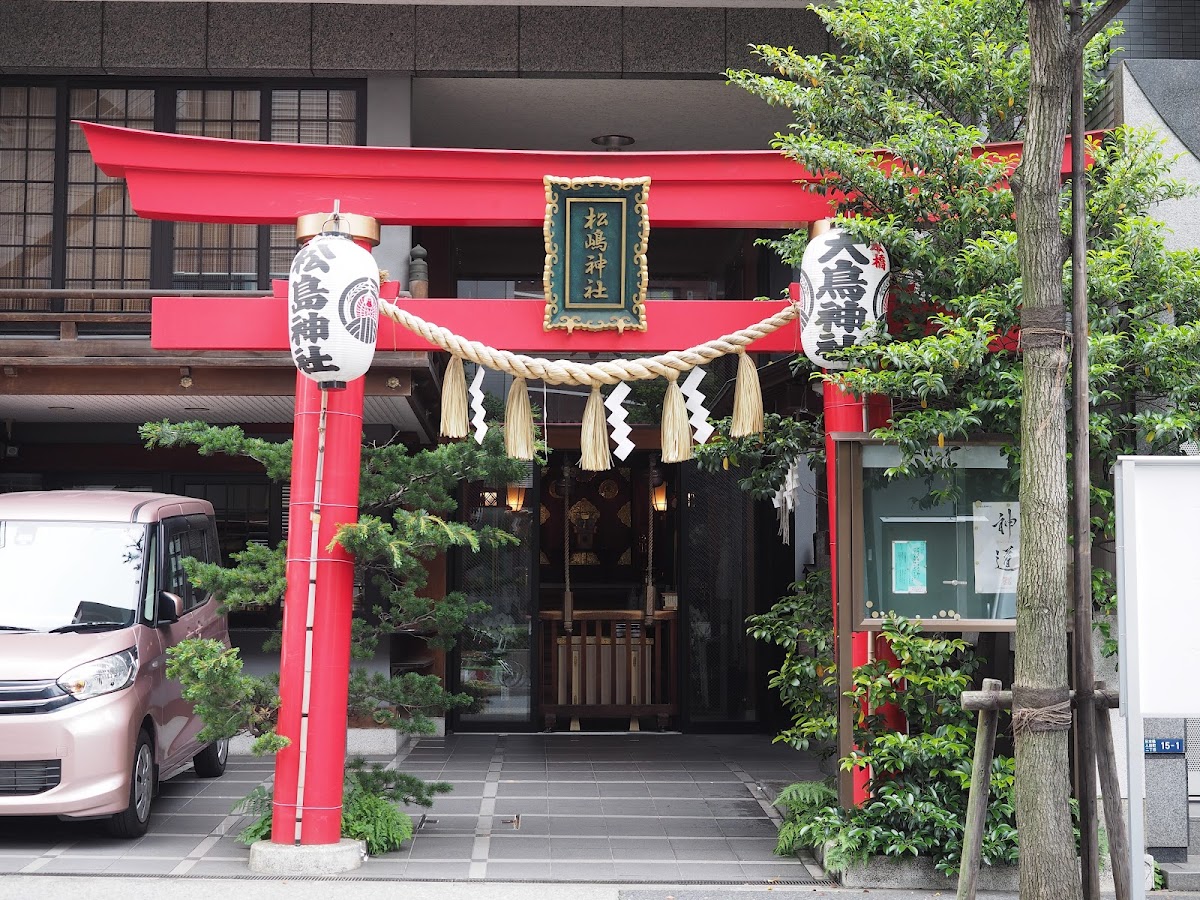
The most distinctive feature of Matsushima Shrine is its modern form, located on the first floor of a building. Located a short distance from Shin-Ohashi Street, the shrine grounds occupy the first floor of a building.
Despite the limited space, the torii gate, shrine building, and shrine office are all arranged, creating a compact yet functional shrine grounds typical of those in the heart of the city.
Torii Gate and Approach
A vermilion torii gate stands facing the road. Passing through the gate, one immediately comes to the shrine building. The approach is very short, but it offers a sudden escape from the hustle and bustle of the city, revealing a sacred space.
Shrine Building
The shrine building is a genuine wooden structure built in the Shinmei-zukuri style, rebuilt after the war. Although small in scale, it is meticulously maintained, and the carvings and decorations are beautifully executed.
A donation box is placed in front of the shrine building, and worshippers perform the ritual of two bows, two claps, and one bow.
Shrines and Stone Monuments
Several shrines and stone monuments are enshrined within the grounds:
- Ootori Shrine: A shrine dedicated to Amenohiwashi-no-kami, particularly lively during the Tori-no-ichi market in November.
- Chikaraishi (Strength Stone): A stone used for strength contests during the Edo period remains.
- Various Stone Monuments: Stone monuments indicating the enshrined deities, and commemorative monuments donated by worshippers.
Shrine Office
The shrine office is located next to the main shrine building, where goshuin (shrine stamps) are issued and various prayers are accepted. Goshuin are usually given as pre-printed stamps, but they are popular due to their wide variety.
Goshuin Information
Matsushima Shrine’s Goshuin
Matsushima Shrine is known for its wide variety of goshuin, making it popular among worshippers who collect goshuin.
Regular Goshuin (Shrine Seals):
- Matsushima Shrine Goshuin: The name “Matsushima Shrine” is written in ink in the center, “Homage” is written in the upper right corner, along with the date and the shrine’s seal.
- Daikokujin Goshuin: This is a goshuin for the Nihonbashi Seven Lucky Gods pilgrimage, and features the seal of Daikokujin.
Limited Edition Goshuin:
Matsushima Shrine also offers limited edition goshuin tailored to the seasons and events:
- New Year’s Limited Edition Goshuin: A special design celebrating the New Year.
- Tori-no-Ichi Limited Edition Goshuin: A special goshuin given out on the Day of the Rooster in November.
- Monthly Goshuin: A goshuin with a design that changes monthly (please check availability).
- Seasonal Goshuin: Designs that evoke the season, such as cherry blossoms and autumn leaves.
Goshuin Issuance Hours and Offering Fee
Issuance Hours: Approximately 10:00 AM to 4:00 PM (may vary depending on the day)
Offering Fee: Normally 500 yen and up (price may vary for limited edition goshuin stamps)
Distribution Method: Generally, pre-written stamps are given on paper.
Direct writing in goshuin stamp books may not be possible depending on the crowd situation and the priest’s schedule. We recommend checking in advance.
Goshuin Stamp Books
Matsushima Shrine also offers original goshuin stamp books. The design may change depending on the season, but they are characterized by beautiful designs that express the unique features of the shrine.
Annual Events and Festivals
Tori-no-Ichi Market (Day of the Rooster in November)
The largest event at Matsushima Shrine is the “Tori-no-Ichi Market,” held on the Day of the Rooster in November. It is the annual festival of the Otori Shrine within the grounds, and is a ceremony dedicated to Amenohiwashi-no-Kami.
At the Tori-no-Ichi Market, kumade (bamboo rakes) for business prosperity and good fortune are distributed, attracting many worshippers and businesspeople. Due to its location in Ningyocho, many local restaurants and business people also visit.
Tori-no-Ichi Market Dates:
The Day of the Rooster in November (there are three Tori-no-Ichi days depending on the year)
Time: From the night before to late at night on the day of the market
Other Annual Events
- Hatsumode (January 1st-3rd): Many visitors come as part of the Nihonbashi Seven Lucky Gods pilgrimage
- Setsubun Festival (around February 3rd): Shinto rituals such as bean-throwing
- Annual Grand Festival: The grand festival held once a year
- Monthly Festival: The regular monthly festival
Access Information
Access by Train
Matsushima Shrine is within walking distance of several Tokyo Metro and Toei Subway stations, making it very convenient to access.
Nearest Stations:
- Tokyo Metro Hanzomon Line “Suitengumae Station”
- Approximately 2 minutes on foot from Exit 7 (closest)
- Distance: Approximately 150m
- Tokyo Metro Hibiya Line/Toei Asakusa Line “Ningyocho Station”
- Approximately 5 minutes on foot from Exit A1
- Distance: Approximately 400m
- Tokyo Metro Tozai Line “Kayabacho Station”
- Approximately 10 minutes on foot from Exit 12
- Distance: Approximately 800m
Walking Route (from Suitengumae Station)
- Exit Suitengumae Station from Exit 7
- Proceed west along Shin-Ohashi Street (towards Nihonbashi)
- Turn right at the first corner (north)
- Matsushima Shrine is on the first floor of a building approximately 50m ahead on your right.
Nearby Shrines and Temples
Near Matsushima Shrine are numerous other temples and historical shrines and temples, in addition to those of the Nihonbashi Seven Lucky Gods:
- Suitengu Shrine: Approximately 5 minutes on foot, famous for safe childbirth and fertility
- Koami Shrine: Approximately 10 minutes on foot, dedicated to Fukurokuju and Benzaiten of the Nihonbashi Seven Lucky Gods
- Suehiro Shrine: Approximately 7 minutes on foot, dedicated to Bishamonten of the Nihonbashi Seven Lucky Gods
- Sugimori Shrine: Approximately 8 minutes on foot, dedicated to Ebisu of the Nihonbashi Seven Lucky Gods
- Kasama Inari Shrine: Approximately 12 minutes on foot, dedicated to Jurojin of the Nihonbashi Seven Lucky Gods
Access by Car and Parking
Access by Car:
- Approximately 5 minutes from the Hakozaki IC on the Metropolitan Expressway Inner Circular Route
- Approximately 5 minutes from the Hakozaki IC on the Metropolitan Expressway Route 6 Mukojima Line
Parking:
Matsushima Shrine does not have its own parking lot. We recommend using public transportation when visiting.
If you absolutely must come by car, please use the nearby coin-operated parking lots:
- Times Ningyocho No. 0 Parking Lot (multiple lots available)
- Mitsui’s RePark Nihonbashi Ningyocho
- Numerous other coin-operated parking lots are available around Ningyocho Station and Suitengumae Station.
The average rate is 300 yen for 30 minutes.
Manners and Etiquette for Visiting a Shrine
Basic Etiquette for Visiting a Shrine
The basic etiquette for visiting a shrine is as follows:
- Bow at the Torii Gate: Bow before passing through the torii gate.
- Purify yourself at the Water Basin: Matsushima Shrine may not have a water basin, but if there is one, purify your hands and mouth.
- Walk along the Path: The center of the path is considered the path of the gods, so walk along the sides.
- Offer a Coin: Quietly place your offering in the offering box.
- Ring the Bell: Ring the bell if there is one.
- Two Bows, Two Claps, One Bow:
- Bow deeply twice (two bows)
- Clap twice (two claps)
- Make a wish in your heart
- Bow deeply once (one bow)
- Bow upon leaving the torii gate: When leaving the shrine grounds, turn back at the torii gate and bow.
Photography
Photography is generally permitted on the shrine grounds, but please note the following:
- Photography inside the shrine building may be prohibited.
- Be considerate of other worshippers.
- Refrain from taking photos during prayers or Shinto rituals.
- Use flash sparingly.
- When posting on social media, be careful not to include other worshippers in your photos.
Attire
For regular visits, no special attire is required. However, please consider the following:
- Wear clean clothing.
- Avoid revealing clothing.
- Remove hats and sunglasses before passing through the torii gate.
- Formal attire or equivalent is preferable if receiving prayers.
The Charm and Characteristics of Matsushima Shrine
An Oasis in the City Center
The charm of Matsushima Shrine lies in its modern setting—located on the first floor of a building—yet stepping inside reveals a tranquil sacred space. Just a short distance from the bustling shopping street of Ningyocho, you’ll find a space that allows you to forget the hustle and bustle of the city.
A “Shrine Where Anything Can Be Granted” with Diverse Deities
With 14 deities enshrined, it’s known as a “shrine where anything can be granted.” Its popularity stems from the fact that you can pray for various wishes at once, such as love, work, health, and academic success.
Popular with Goshuin Collectors
The wide variety of goshuin (temple/shrine stamps), especially the beauty of the limited-edition stamps, makes it highly popular among goshuin collectors. There’s a different kind of enjoyment to be had each season.
A Key Point on the Nihonbashi Seven Lucky Gods Pilgrimage
As one of the shrines on the Nihonbashi Seven Lucky Gods pilgrimage, it attracts many visitors, especially during the New Year. Its convenient location on the pilgrimage route makes it easily accessible.
The Lively Atmosphere of the Tori-no-Ichi Market
During the Tori-no-Ichi Market in November, the area’s unique character in Ningyocho attracts many local shopkeepers and businesspeople, creating a lively atmosphere reminiscent of Edo-era Japan. ## Nearby Tourist Attractions
When visiting Matsushima Shrine, be sure to explore the surrounding tourist attractions as well.
Ningyocho Shopping Street
Just a short walk from Matsushima Shrine is Ningyocho Shopping Street, which retains the atmosphere of the Edo period. Long-established Japanese confectionery shops, rice cracker shops, and restaurants line the street, making it a great place to enjoy street food and souvenir shopping.
Recommended Shops:
- Ningyoyaki Honpo Itakuraya: Ningyoyaki, a specialty of Ningyocho
- Yanagiya: A famous taiyaki shop
- Tamahide: A long-established restaurant famous as the birthplace of oyakodon (chicken and egg rice bowl)
- Morinoen: A Japanese tea specialty shop popular for its hojicha (roasted green tea) soft serve ice cream
Suitengu Shrine
Suitengu Shrine, located a 5-minute walk away, is nationally famous as a deity of safe childbirth and fertility. The new shrine building, rebuilt in 2016, is modern and beautiful, and also features a rooftop garden.
Hamacho Park
A vast park located about a 10-minute walk away, this urban oasis is beloved by local residents. It’s also a famous cherry blossom viewing spot, bustling with visitors in spring.
Koami Shrine
Located a 10-minute walk away, Koami Shrine enshrines Fukurokuju and Benzaiten, two of the Seven Lucky Gods of Nihonbashi. It’s revered as a “god of good fortune and protection against evil” because all its parishioners returned safely during World War II.
Meijiza Theater
A long-established theater located a 7-minute walk away, it stages Kabuki, plays, and concerts. It’s a traditional theater dating back to the Edo period.
Notes and Q&A for Visitors
Notes for Visitors
Opening Hours:
While the shrine grounds are generally open 24 hours, the shrine office is open from approximately 10:00 AM to 4:00 PM. If you wish to receive a Goshuin (shrine stamp) or other items, please visit during these hours.
Peak Seasons:
- The first three days of the New Year (January 1st-3rd)
- Tori-no-ichi Market (Rooster Day in November)
- Weekend afternoons
These periods are particularly crowded. For those who wish to visit at a leisurely pace, weekday mornings are recommended.
Shrine Grounds Size:
Due to the limited space on the first floor of a building, consideration for other visitors is necessary when visiting in large groups or groups.
Frequently Asked Questions
Q: Can I get a Goshuin (shrine stamp) written directly?
A: Generally, Goshuin are given as pre-written slips (on paper). While direct writing may be possible depending on the crowd situation and the priest’s schedule, we recommend checking in advance.
Q: Can I receive prayers?
A: We accept various prayers. We recommend making a reservation by phone in advance. Please inquire directly regarding the offering fee and reception hours.
Q: Do you have amulets or ema (votive tablets)? **
A: Various amulets, votive tablets, and fortune slips are available. They are given out at the shrine office.
Q: Where can I buy the Seven Lucky Gods calligraphy scroll?
A: Calligraphy scrolls for the Nihonbashi Seven Lucky Gods pilgrimage can be purchased at each temple and shrine, including Matsushima Shrine. The price is around 1,000 yen.
Q: Can I have a wedding ceremony here?
A: Due to the size of the shrine grounds, please contact the shrine directly regarding wedding ceremonies.
Q: Are pets allowed?
A: Pets such as small dogs are often allowed if they are carried or kept in a carrier bag, but it is recommended to check in advance.
Summary
Matsushima Shrine is a historical shrine located in Nihonbashi Ningyocho, Chuo-ku, Tokyo, with a history dating back to the Kamakura period. Despite its modern location on the first floor of a building, Matsushima Shrine enshrines 14 deities and is affectionately known as the “shrine where anything can be granted” due to its diverse blessings.
It is also known as the shrine that enshrines Daikokuten, one of the Seven Lucky Gods of Nihonbashi, and is bustling with many worshippers during the New Year’s Seven Lucky Gods pilgrimage and the Tori-no-ichi market in November. Its wide variety of goshuin (shrine stamps) are also popular, earning high praise from worshippers who collect them.
With excellent access, just a 2-minute walk from Suitengumae Station and a 5-minute walk from Ningyocho Station, it is surrounded by numerous tourist attractions such as the Ningyocho shopping street and Suitengu Shrine.
Matsushima Shrine, a tranquil space where you can pray in peace despite being in the heart of the city, is a must-visit spot for Tokyo sightseeing and shrine pilgrimages. Why not visit and pray for good fortune, business prosperity, good luck, and more?