Misaki Inari Shrine (Chiyoda Ward, Tokyo) Complete Guide | History, Goshuin (Shrine Seal), and Access Information
Misaki Inari Shrine, located in Kanda Misaki-cho, Chiyoda Ward, Tokyo, is a historic shrine believed to have been founded between the late Heian period and the early Kamakura period. Despite its prime location in the heart of Tokyo, just a two-minute walk from Suidobashi Station, it maintains a tranquil atmosphere and has long been revered by the local community as a guardian shrine. This article provides a detailed overview of Misaki Inari Shrine, including its history, enshrined deities, goshuin information, highlights within the grounds, and helpful access information for visitors.
Overview of Misaki Inari Shrine
Misaki Inari Shrine is located at 2-9-12 Kanda Misaki-cho, Chiyoda Ward, Tokyo, and its former shrine rank was Village Shrine. While its official name is “Misaki Inari Shrine,” it is also commonly known as “Misaki Shrine” by locals due to the enshrinement of Kotohira Shrine (described later).
The current location of the shrine, Kanda Misaki-cho, is conveniently situated just a 2-minute walk from Suidobashi Station on the JR Chuo and Sobu Lines and the Toei Mita Line, and within walking distance of Korakuen Station on the Tokyo Metro Marunouchi and Namboku Lines, and Kasuga Station on the Toei Oedo and Mita Lines. It’s also close to Tokyo Dome and Korakuen Amusement Park, offering a peaceful space for worshippers amidst the hustle and bustle of the city center.
Deities Enshrined
Misaki Inari Shrine enshrines the following four deities:
- Ukanomitama-no-kami: The principal deity of Inari, widely worshipped as the god of abundant harvests and business prosperity.
- Susanoo-no-Mikoto: A heroic god known as the god of protection against misfortune and disaster.
- Oichihime-no-kami: A goddess considered the guardian deity of markets and commerce.
- Ōmononushi-no-kami: Worshipped as the god of nation-building, as well as the god of business prosperity and matchmaking.
Due to these enshrined deities, Misaki Inari Shrine is believed to offer a wide range of divine blessings, including abundant harvests, business prosperity, protection from evil, and safe travel.
Shrine Rank and Annual Festival
Misaki Inari Shrine was formerly a village shrine and has been revered as the guardian shrine of Misaki Village, Toshima District, Musashi Province. The annual festival is held every year on May 9th (or early May), with local people gathering for festival events such as a portable shrine procession.
History of Misaki Inari Shrine
Founding History
The exact founding date of Misaki Inari Shrine is unknown, but it is said to be before the Kenkyū era (1190-1199) or around the Nin’an era (1166-1169). It is believed that the shrine originated in the late Heian period to the early Kamakura period, when it was enshrined as a guardian deity in this region.
There are various theories about the original location of the shrine, but it is believed to have been enshrined either near Wadakura, which corresponds to the current East Garden of the Imperial Palace, or in Misaki Village, Toshima District, Musashi Province (near present-day Hongo 1-chome), at the foot of Kanda-yama (present-day Surugadai). At that time, Kanda-yama was a plateau-like terrain, and the shrine, as the guardian deity of Misaki Village which spread out at its foot, attracted the faith of the local people.
From the Muromachi Period to the Edo Period
Historical records confirm that Misaki Inari Shrine was located in Hongo during the mid-Muromachi period. During this time, it was revered as the guardian deity of Misaki Village, Toshima District, Musashi Province, and as a god protecting the region’s agriculture and livelihood.
In the Edo period, the shrine was relocated several times due to the development of Edo Castle town and urban development. The shrine is also known as the “Inari Shrine for Safe Travels,” as it is said that daimyo (feudal lords) on their way to Edo (present-day Tokyo) for the sankin-kōtai (alternate attendance) system would visit to pray for safe travels. It is believed that the daimyo would visit to purify their minds and bodies and pray for a safe journey.
During this period, the shrine received numerous donations from samurai and townspeople, leading to improvements to the grounds. As Edo developed, Misaki Inari Shrine played an important role as a guardian deity of the region.
Changes After the Meiji Era
With the arrival of the Meiji era, the wave of modernization swept over Misaki Inari Shrine, and it underwent significant changes.
In 1860 (Man’en 1), with the establishment of the Kōbusho (military training school) by the shogunate, the shrine was forced to relocate towards Suidōbashi. Furthermore, in the latter half of the Meiji era, the Kōbu Railway (present-day JR Chūō Line) was extended to Manseibashi, necessitating another relocation for the railway construction.
In 1905 (Meiji 38), Misaki Inari Shrine was relocated to its current location at 2-9-12 Kanda Misaki-cho, Chiyoda-ku, Tokyo. This area, very close to Suidobashi Station, was a rapidly developing transportation hub. For over 100 years since then, it has been revered as the guardian shrine of the region.
Under the Meiji-era shrine ranking system, it was designated a village shrine, establishing its status as the local tutelary shrine. It survived the damage of World War II and has continued to exist as a spiritual anchor for the local people since the war.
Enshrinement of Kotohira Shrine
Misaki Inari Shrine also enshrines Kotohira Shrine. Therefore, it is affectionately known locally as “Misaki Shrine.” Kotohira Shrine is worshipped as the god of maritime safety and traffic safety, and its enshrinement has further expanded the divine blessings of Misaki Inari Shrine.
Shrine Grounds Guide and Highlights
Main Shrine and Worship Hall
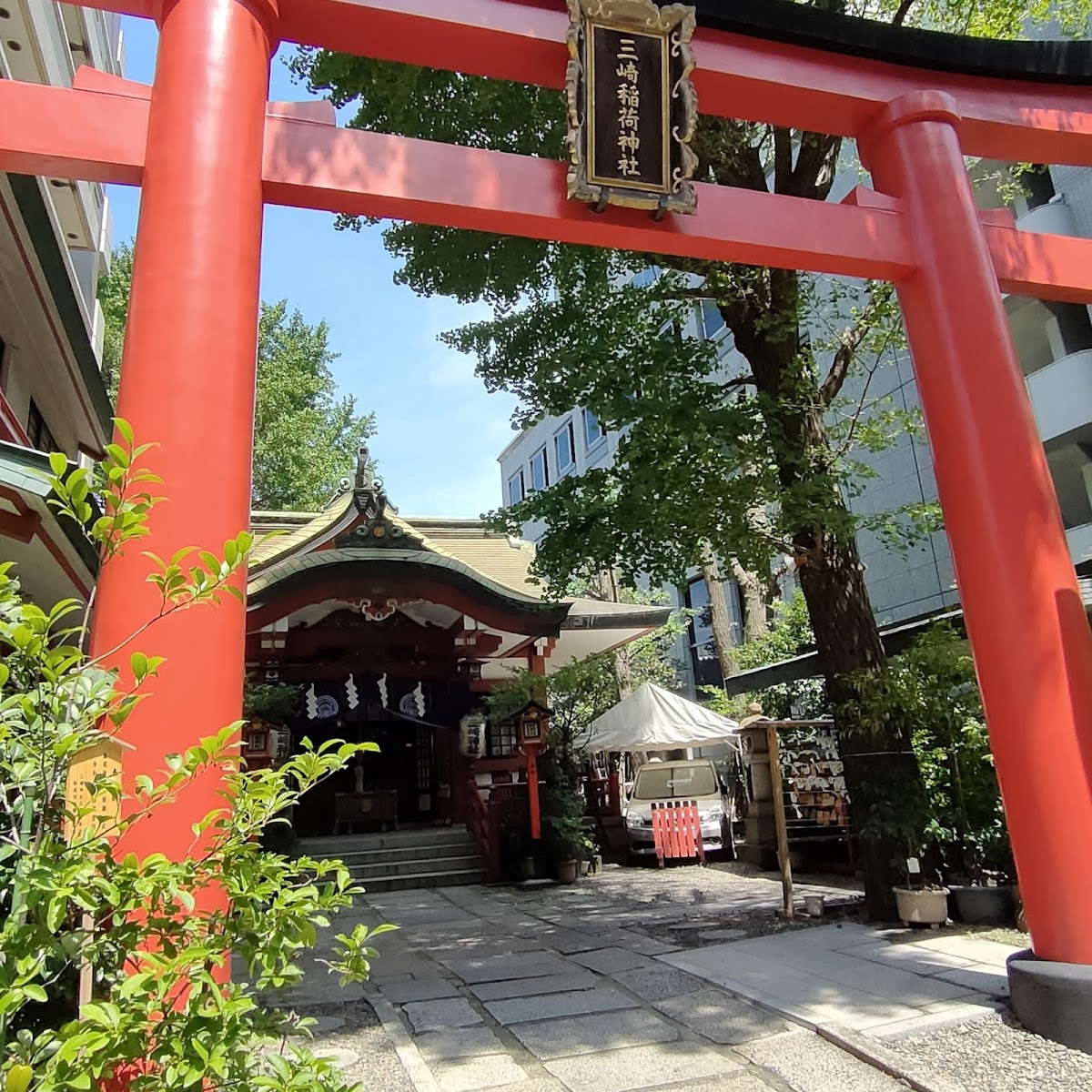
Misaki Inari Shrine maintains a tranquil atmosphere despite its central urban location. Upon passing through the torii gate, the worship hall is directly ahead. While relatively compact, the hall is a beautifully maintained structure.
In front of the worship hall, instead of guardian lions (komainu), there are fox statues, befitting an Inari shrine. These fox statues are positioned to welcome worshippers and are beloved symbols of Inari worship.
Atmosphere of the Shrine Grounds
The shrine grounds are not large, but they are kept clean, providing a space where worshippers can offer prayers in peace. Although surrounded by buildings in the heart of the city, a strangely serene atmosphere permeates the grounds.
There is also a water basin for purification before worship. As is typical of a shrine in the city center, on weekday mornings, business people can be seen visiting before their commute, offering a glimpse into the form of faith in modern urban life. ### Divine Blessings for Purification and Safe Travel
Misaki Inari Shrine is known as the “Inari of Safe Travels” due to the historical fact that daimyo (feudal lords) prayed there for safe travels during their sankin-kōtai (alternate attendance) journeys in the Edo period. It is also called the “Inari of Purification” because it was used as a place to purify the mind and body before entering the castle.
Even today, many people visit the shrine to pray for safe travels or for purification of mind and body before starting something new. Located in the heart of Tokyo’s business district, many visitors also pray for business success and prosperity.
Goshuin (Shrine Seal) Information
Issuance of Goshuin
Misaki Inari Shrine offers goshuin to visitors. Goshuin are cherished by many visitors as proof of their visit and as a way to forge a connection with the shrine.
Goshuin (Shrine Seal) Reception Hours: 9:00 AM – 5:00 PM
Goshuin are available at the shrine office and are given either handwritten or pre-printed. Bringing your goshuincho (seal book) is recommended when visiting.
Goshuin Design
The goshuin at Misaki Inari Shrine features the shrine’s name, “Misaki Inari Shrine,” written in ink, and the shrine’s seal. Its simple yet dignified design makes it popular among goshuin collectors.
Depending on the season, limited-edition goshuin may be offered to coincide with special events such as the annual festival. The latest information is sometimes posted on the official Instagram (@misakijinja), so it’s a good idea to check before your visit.
Etiquette When Receiving a Goshuin
Please observe the following etiquette when receiving a goshuin.
- First, complete your prayers before receiving your Goshuin (temple/shrine stamp).
- Politely request it at the shrine office.
- Open your Goshuincho (stamp book) and hand it over.
- Prepare the offering fee (usually around 300-500 yen).
- Express your gratitude when receiving it.
Goshuin are not just stamps; they are important for forging a connection with the shrine. It is important to treat them with respect.
Access and Transportation Information
Access by Train
Misaki Inari Shrine is within walking distance of several stations, making it very convenient to access.
Nearest Stations:
- JR Chuo Line/Sobu Line Suidobashi Station: Approximately 2 minutes on foot from the West Exit (closest)
- Toei Mita Line Suidobashi Station: Approximately 2 minutes on foot from Exit A2
- Tokyo Metro Marunouchi Line/Namboku Line Korakuen Station: Approximately 5 minutes on foot from Exit 2
- Toei Oedo Line/Mita Line Kasuga Station: Approximately 7 minutes on foot from Exit A1
Access from Suidobashi Station is the most convenient. Exit the West Exit, turn right, and walk a short distance along Hakusan-dori Street. You will enter the residential area of Kanda Misaki-cho. Follow the signs and you will arrive in a few minutes.
Access by Car and Parking
Misaki Inari Shrine does not have its own parking lot. If you are visiting by car, you will need to use a nearby coin-operated parking lot.
There are several coin-operated parking lots around Suidobashi Station, but they can get crowded during events at Tokyo Dome. We recommend using public transportation whenever possible.
Nearby Tourist Attractions
The following tourist attractions are located near Misaki Inari Shrine:
- Tokyo Dome: Approximately 5 minutes on foot. A multi-purpose facility where professional baseball games and concerts are held.
- Tokyo Dome City Attractions: Approximately 5 minutes on foot. An urban amusement park.
- Koishikawa Korakuen: Approximately 10 minutes on foot. A Japanese garden designated as a National Special Historic Site and Special Place of Scenic Beauty.
- Yushima Seido: Approximately 15 minutes on foot. The center of Confucianism during the Edo period.
- Kanda Myojin: Approximately 20 minutes on foot. A famous shrine known as the guardian shrine of Edo (Tokyo).
Visiting these tourist attractions before or after your visit to the shrine is highly recommended.
Shrine Information Summary
Shrine Name: Misaki Inari Shrine
Common Name: Misaki Shrine
Deities Enshrined: Ukanomitama-no-kami, Susanoo-no-Mikoto, Oichihime-no-kami, Omononushi-no-kami
Shrine Rank: Former Village Shrine
Annual Grand Festival: May 9th (Early May)
Location: 2-9-12 Kanda Misaki-cho, Chiyoda-ku, Tokyo 101-0061
Phone Number: Inquiries can be made through the Chiyoda Branch of the Tokyo Association of Shrines
Nearest Station: Approximately 2 minutes walk from Suidobashi Station (JR and Toei Mita Line)
Parking: None (Use nearby coin parking)
Goshuin (Shrine Seal) Reception Hours: 9:00 AM – 5:00 PM
Official SNS: Instagram @misakijinja
Corporate Number: 2010005000554
Information for Visitors
Visiting Hours
The grounds of Misaki Inari Shrine are generally open all day, and you can visit at any time. However, the issuance of Goshuin (shrine stamps) and services at the shrine office are available from 9:00 AM to 5:00 PM.
For those who wish to visit in peace, weekday mornings are recommended. The number of visitors may increase on holidays and during the annual festival.
Visiting Etiquette
The basic visiting etiquette at a shrine is as follows:
- Bow before the Torii Gate: Before entering the shrine grounds, bow before the Torii gate.
- Purify at the Water Basin: Purify your hands and mouth at the water basin.
- Proceed to the Main Hall: The center of the path is considered the path of the gods, so walk along the sides.
- Offer a Coin: Place your offering in the offering box.
- Ring the Bell: If there is a bell, ring it.
- Two Bows, Two Claps, One Bow: Bow deeply twice, clap twice, and finally bow once.
- One Bow Upon Exit: When leaving the shrine grounds, turn around and bow once after passing through the torii gate.
Prayers and Sorrows
Misaki Inari Shrine accepts individual prayers and blessings. Various prayers are possible, including those for business prosperity, family safety, safe travels, and protection from evil. If you wish to have a prayer performed, it is recommended to contact the shrine in advance to arrange a date and time.
Annual Events at Misaki Inari Shrine
Grand Festival (Early May)
The most important festival at Misaki Inari Shrine is the Grand Festival, held annually on May 9th (or early May). On this day, a portable shrine procession takes place, with local parishioners carrying the shrine through the town.
The annual festival features Kagura (sacred dance) performances and food stalls, creating a lively atmosphere that attracts local residents. The usually quiet shrine grounds become vibrant during this time, allowing visitors to enjoy the traditional festival ambiance.
New Year’s Visit
Many worshippers visit the shrine for their first shrine visit of the new year. Its convenient location near Suidobashi Station means that many business people can be seen visiting before returning to work.
From New Year’s Day to the third day, the shrine is bustling with people praying for safety and prosperity in the new year. If you wish to avoid crowds, visiting after the first three days is recommended.
Other Annual Events
Misaki Inari Shrine also holds traditional annual events for Inari shrines, such as the Hatsuumasai (First Horse Day Festival) and the Natsukoshi no Oharae (Summer Purification Ceremony). Details of these events are sometimes posted on the official Instagram account.
Faith and Divine Virtues of Misaki Inari Shrine
Abundant Harvest and Business Prosperity
The main deity, Ukanomitama-no-kami, is known as Inari-sama for the divine virtues of abundant harvests and business prosperity. In modern times, many worshippers visit to pray for business success and the prosperity of their ventures.
Due to the many office buildings in the surrounding area, company executives and sales professionals can be seen visiting to pray for successful business negotiations and improved performance.
Safe Travel and Protection from Misfortune
The divine virtue of safe travel, originating from an Edo period story, is still widely believed today. Many people visit before business trips or vacations to pray for safe journeys.
Furthermore, because Susanoo-no-Mikoto is also enshrined, the shrine is also believed to offer protection from misfortune and disaster. Many people visit at important life milestones or during unlucky years to pray for protection from misfortune.
Purification of Mind and Body
The shrine enjoys a strong reputation as a “purifying Inari,” attracting many visitors before starting something new or seeking a fresh start. It’s a beloved place to find peace and tranquility amidst the hustle and bustle of the city center.
Connection with the Community
Since its founding, Misaki Inari Shrine has maintained deep ties with the local community as the guardian shrine of the region. From the time of Misaki Village in Toshima District, Musashi Province, it was revered as a deity protecting local agriculture and life, and prospered alongside the town’s development during the Edo period.
Since relocating to its current location in 1905 (Meiji 38), it has played a central role in the local community as the tutelary deity of Kanda Misaki-cho. Events such as the annual festival and New Year’s visits bring together local people, serving as a place to pass on traditions to future generations.
In recent years, activities introducing the shrine’s history have also been undertaken as part of efforts to preserve local history and culture. The official Instagram account shares information about the shrine grounds and events, conveying the shrine’s appeal to younger generations.
Summary
Misaki Inari Shrine is a shrine with a long history, said to have been founded between the late Heian period and the early Kamakura period. It began as the guardian shrine of Misaki Village in Toshima District, Musashi Province, and during the Edo period, it became known as “Inari for safe travels” and “Inari for purification,” where daimyo (feudal lords) prayed for safe journeys during their sankin-kotai (alternate attendance) duties.
After numerous changes, it was established in 1905 (Meiji 38) in its current location in Kanda Misaki-cho, Chiyoda-ku, Tokyo, and has been revered by the local community for over 100 years. Despite its prime location in the heart of Tokyo, just a 2-minute walk from Suidobashi Station, it maintains a quiet and peaceful atmosphere for worship.
Misaki Inari Shrine enshrines four deities: Ukanomitama-no-kami, Susanoo-no-Mikoto, Oichihime-no-Kami, and Omononushi-no-Kami. It offers a wide range of blessings, including bountiful harvests, business prosperity, safe travel, and protection from evil. Even today, it attracts various visitors, including those praying for business success, safe travels, and purification of mind and body.
Goshuin (stamped seals) are available from 9 AM to 5 PM. The official Instagram account provides the latest information, so it’s recommended to check it before your visit.
It’s also recommended to visit in conjunction with nearby tourist attractions such as Tokyo Dome and Koishikawa Korakuen Garden. Please do visit Misaki Inari Shrine, where you can feel history and tradition despite being in the heart of Tokyo.