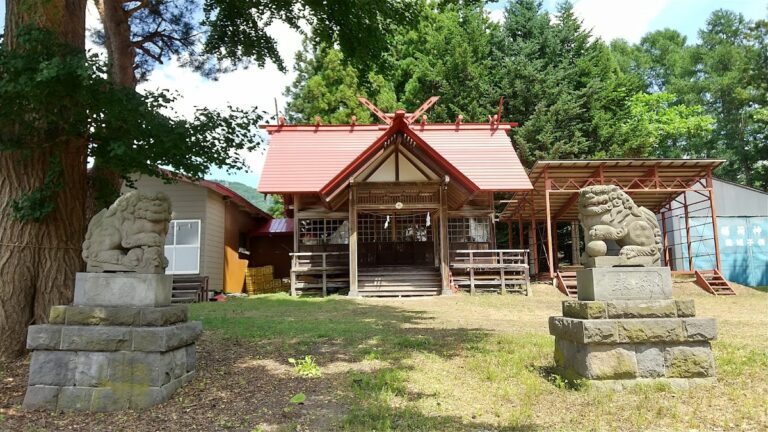
Mishima Shrine (Nanae Town, Hokkaido) | The Charm and Visitor Guide to One of Southern Hokkaido’s Oldest Shrines with a 500-Year History
Located in Nanae Town, Kameda District, Hokkaido, Mishima Shrine boasts a history of over 500 years, having been founded in 1504 (Eisho 1). It is the oldest shrine in Nanae Town and one of the oldest in Hokkaido. As a shrine dedicated to the Oyamatsumi faith, which was invited from Omishima Island in Iyo Province (present-day Ehime Prefecture), it has been deeply cherished by the local people. This article comprehensively introduces information useful for visiting Mishima Shrine, including its history, enshrined deities, highlights of the grounds, goshuin (shrine stamps), and access methods.
History and Origins of Mishima Shrine
Circumstances of its Founding and Deep Connection to Omishima Island in Iyo Province
The history of Mishima Shrine dates back to the Muromachi period. The founding of the shrine is said to have begun in 1504 (Eisho 1), when the deity was invited from the Oyamazumi Shrine, located on Omishima Island in Iyo Province (present-day Omishima-cho, Imabari City, Ehime Prefecture), to the Nanae-Narukawa area.
The Oyamazumi Shrine is an ancient shrine known as the head shrine of all Yamazumi and Mishima shrines nationwide, and has been deeply revered by samurai warriors as a god of maritime safety and military fortune. The fact that its divided spirit was enshrined in distant Hokkaido is thought to reflect the longing for their homeland and the earnest wishes for peace and security in their new land of the people who had settled in the area at that time.
Changes in the Shrine in Nanae Town
Although the Mishima Shrine was originally located in Nanae-Narukawa, it underwent several changes throughout its history. From the Edo period to the Meiji period, as the region was developed, the shrine also developed as a central presence in the local community.
With the establishment of the shrine system during the Meiji era, Mishima Shrine was ranked as a village shrine. This meant that it was recognized as an important shrine in the region under the shrine ranking system at the time. Later, in 1897 (Meiji 30), it was officially designated as a village shrine, establishing its position as a religious and cultural center in the region.
Relocation to the Current Location and Construction of the Shrine Building
The relocation to the current location at 576-1 Honmachi, Nanae-cho is closely related to the development of the region. As the Honmachi area developed as the center of Nanae-cho, the shrine also moved to this location, creating an environment that made it easier for more people to visit and worship.
The shrine building is constructed in the Shinmei-zukuri style, which is one of the oldest forms of Japanese shrine architecture, exemplified by Ise Grand Shrine. The simple yet solemn atmosphere of the Shinmei-zukuri shrine building speaks to the long history and prestige of Mishima Shrine.
Although it has been struck by natural disasters such as typhoons in the past, the shrine building has been preserved thanks to the faith and efforts of the local people. In particular, during a typhoon in 2004, a tree in the shrine grounds broke and flew away, but miraculously, it flew over the roof of the shrine building without touching it, thus avoiding damage. This anecdote is passed down among the local people as evidence of the shrine’s miraculous power.
Deities and Divine Virtues
Oyamatsumi-no-Mikoto
Oyamatsumi-no-Mikoto, the principal deity of Mishima Shrine, is a great god known as the god of mountains and the sea in Japanese mythology. According to the Kojiki and Nihon Shoki, he is the child of Izanagi-no-Mikoto and Izanami-no-Mikoto, and has been revered as the ruler of the mountains of Japan.
Oyamatsumi-no-Mikoto’s divine virtues are wide-ranging. As a mountain god, she is believed to protect agriculture and forestry; as a sea god, she protects fishing and maritime safety; and she is also believed to grant a wide range of blessings related to all aspects of people’s lives, including military success, family safety, and business prosperity. Especially in Hokkaido, a land of pioneering, she has attracted the faith of people who wished for stability and prosperity in their new lives.
Konohanasakuya-hime no Mikoto
Konohanasakuya-hime no Mikoto is the daughter of Oyamatsumi no Mikoto and is a goddess known as a symbol of beauty and purity. According to the Kojiki, she became the consort of Ninigi no Mikoto, who descended from heaven, and the myth tells of her giving birth to three divine children after enduring the ordeal of giving birth in flames.
Her divine virtues are said to particularly appeal to women’s wishes, including safe childbirth, fertility, matchmaking, beauty, and protection from fire. With its beautiful, blossoming appearance reminiscent of cherry blossoms, it attracts the faith of people praying for happiness and prosperity at important milestones in their lives.
Ukanomitama-no-Mikoto
Ukanomitama-no-Mikoto is the god of grain and food, widely known as Inari-sama. In Japan, a country based on agriculture, it has long been revered as the god of abundant harvests and business prosperity.
At Mishima Shrine, it is believed that Ukanomitama-no-Mikoto was enshrined with the hope of developing local agriculture and ensuring the stability of people’s lives. Even today, many worshippers visit the shrine praying for business prosperity and financial stability.
Highlights and Facilities on the Shrine Grounds
Magnificent Shrine Buildings and Torii Gate
Upon entering the grounds of Mishima Shrine, the first thing that catches the eye is the magnificent torii gate. Passing through the first torii gate and proceeding along the approach, the Shinto shrine buildings, built in the Shinmei-zukuri style, welcome worshippers with a solemn atmosphere. The shrine building, though simple, exudes a sense of dignity, possessing the majesty befitting a shrine with a long history.
The area surrounding the shrine is a well-maintained precinct, exuding a refreshing atmosphere. When visiting, the correct etiquette is to first bow at the torii gate, walk while avoiding the center of the path, purify oneself at the water basin, and then proceed to the shrine.
The Mysterious Dragon Pond
Within the shrine grounds lies a mystical pond called the “Dragon Pond.” This pond is off-limits, preserving its sacredness. The clear water of the pond evokes a sacred atmosphere in visitors, symbolizing the divine power of the shrine.
Dragons have been worshipped since ancient times as gods of water and rain. The name “Dragon Pond” itself suggests that this pond is not merely a scenic element, but holds significance as an object of worship. The area around the pond is especially carefully protected as a sacred place, and visitors can feel its mystical atmosphere by quietly observing it.
Shrine Office and Offerings
Mishima Shrine has a magnificent shrine office where you can receive offerings such as goshuin (stamped seals), amulets, and talismans. The shrine priest and shrine maidens are very helpful and will gladly answer any questions you may have about the shrine or proper etiquette for visiting.
The offerings include amulets for various wishes, such as traffic safety, family safety, academic success, and business prosperity. Special offerings are sometimes distributed depending on the season, so there’s always something new to discover with each visit.
Natural Environment of the Shrine Grounds
The grounds of Mishima Shrine are lined with ancient trees, allowing visitors to enjoy the beauty of nature throughout the seasons. Cherry blossoms bloom in spring, the greenery deepens in summer, the autumn leaves color the grounds, and in winter, a snowscape quietly envelops the shrine.
Especially characteristic of shrines in Hokkaido, the snow-covered grounds in winter present a fantastical beauty. The contrast between the pure white snow and the shrine buildings makes it a popular spot for photography.
Annual Festival and Annual Events
Annual Festival (August 9th)
The annual festival of Mishima Shrine is held every year on August 9th. This is the most important festival for the shrine, a Shinto ritual to express gratitude to the enshrined deity and to pray for peace and prosperity in the community.
On the day of the festival, solemn Shinto rituals are performed, and the area is filled with a lively atmosphere as people from the community gather. A procession of the portable shrine and offering ceremonies are sometimes held, making it a summer tradition in Nanae Town. For parishioners and worshippers, it is the most important day of the year, and many people attend.
Dondo-yaki
As a traditional New Year’s event, Mishima Shrine holds the Dondo-yaki ceremony. Dondo-yaki is a Shinto ritual in which New Year’s decorations, old amulets, and talismans are burned, praying for good health and a bountiful harvest throughout the year.
The sight of local people gathering around the bonfire to make New Year’s wishes is a heartwarming scene that reflects the strong bonds of the community. For children, it’s also a valuable opportunity to experience traditional Japanese culture.
Other Annual Events
Besides the annual festival and the Dondo-yaki (bonfire), Mishima Shrine holds various other annual events, including the New Year’s Day Festival, Setsubun Festival, and Shichi-Go-San (children’s festival). These events play an important role in preserving traditional Japanese culture and strengthening community ties.
Goshuin (Shrine Seal) Information
About the Issuance of Goshuin
Mishima Shrine offers Goshuin. Goshuin are popular among many visitors as proof of worship and as a tangible record of their connection with the shrine.
When receiving a Goshuin, it is customary to complete your prayers first before visiting the shrine office. Bring your Goshuincho (seal book) and request it at the shrine office; they will carefully write it for you. The offering fee is generally around 300 to 500 yen, but it is recommended to confirm at the shrine office.
Water Fortune Slips are Also Popular
Mishima Shrine also offers water fortune slips. These are special fortune slips where characters appear when dipped in water. Combined with the mystical atmosphere of the Dragon Pond, they are popular with visitors.
The fortune slips display a single kanji character, such as “知” (knowledge), along with its meaning. For example, if the character is “知,” the message might be “Accumulate knowledge; it will become your strength in the future,” which can serve as a guide for life.
Basic Information and Access
Location and Contact Information
Location: 576-1 Honcho, Nanae-cho, Kameda-gun, Hokkaido 041-1111
Phone Number: 0138-65-2074
FAX: 0138-65-9918
Access by Car
Mishima Shrine is located in the Honcho district, the central area of Nanae-cho, north of Hakodate City. It is easily accessible by car, and parking is available.
- From Hakodate City Center: Approximately 20 minutes north on National Route 5
- From Hakodate Airport: Approximately 30 minutes via National Routes 278 and 5
- From Onuma Park: Approximately 10 minutes south on National Route 5
It is located near the Nanae Town Hall, so using the town hall as a landmark will make it easy to find. To the right of the first torii gate is the Nanae Post Office, and to the left is a sports field; these also serve as landmarks.
Access by Public Transportation
If using public transportation, the nearest station is Nanae Station on the JR Hakodate Main Line. It’s about a 15-minute walk from Nanae Station.
Alternatively, you can take a local bus from Hakodate city. Take a Hakodate Bus bound for Nanae and get off at the “Honmachi” bus stop; the shrine is a few minutes’ walk from there.
Visiting Hours and Precautions
While you can generally visit the shrine grounds freely, the shrine office is open from approximately 9:00 AM to 5:00 PM. If you wish to receive a goshuin (shrine stamp) or other items, it is recommended to visit within these hours.
During winter, there may be snow, so please be careful of your footing. The stairs and approach to the shrine can be particularly slippery, so it is important to wear appropriate footwear.
Nearby Tourist Attractions
Onuma Quasi-National Park
Located about 15 minutes by car from Mishima Shrine, Onuma Quasi-National Park is one of Hokkaido’s most representative scenic spots. The beautiful scenery created by the three lakes—Onuma, Konuma, and Junsai-numa—with views of Mount Komagatake, attracts many tourists throughout the seasons.
In addition to visiting the shrine, we recommend enjoying cycling, boating, or strolling along the lakeside of Onuma.
Greenpia Onuma
Greenpia Onuma is a comprehensive resort facility equipped with hot springs and sports facilities. It’s easily accessible, about 10 minutes by car from Mishima Shrine, allowing you to relax and soothe your fatigue in the hot springs after your visit.
Nanae Town History Museum
This facility allows you to learn about the history and culture of Nanae Town, and also features detailed exhibits on the history of Mishima Shrine. Visiting before or after your shrine visit will allow you to gain a deeper understanding of the local history.
Guidelines for Visiting Mishima Shrine
Etiquette for Visiting Shrines
There are basic etiquette rules for visiting shrines. When visiting Mishima Shrine, please observe the following etiquette rules.
- Bow at the Torii Gate: Bow before passing through the torii gate to show respect for entering the sacred area.
- Walking the Path: The center of the path is considered the path of the gods, so walk along the sides.
- Watering Ritual: At the water basin, cleanse your left hand, then your right hand, then take water in your left hand and rinse your mouth, and finally cleanse your left hand.
- Worship at the Main Hall: The basic ritual is two bows, two claps, one bow (bowing deeply twice, clapping twice, and finally bowing deeply once more).
- Bow Upon Exit: When leaving the shrine grounds, turn back to the torii gate and bow.
Photography Etiquette
Photography is generally permitted on the shrine grounds, but please remember that it is a sacred place and observe the following etiquette.
- Please refrain from taking photos inside the shrine or during religious ceremonies.
- Please be considerate of other worshippers.
- Do not take photos in restricted areas (such as around the Dragon Pond).
- When posting on social media, please be mindful of using respectful language towards the shrine.
The Role of Mishima Shrine in the Community
As a Center of Faith
For over 500 years, Mishima Shrine has functioned as a center of faith in Nanae Town. It has a history of being a source of comfort and support for local people during important life events, both joyful and sorrowful.
It remains an indispensable part of the community, serving as a place where important life ceremonies such as first shrine visits, Shichi-Go-San (a traditional rite of passage for children), exorcisms, and weddings are held.
As a Place for Cultural Inheritance
Shrines are also important places for inheriting traditional Japanese culture. Through annual events such as festivals and Dondo-yaki (a traditional bonfire festival), children have opportunities to experience traditional Japanese culture.
Furthermore, it plays a role in preserving and passing on tangible and intangible cultural assets, such as shrine architecture, ritual practices, and festival traditions. ### As a Community Hub
In modern society, the weakening of local communities is a problem, but shrines still function as places where local people gather. Through festivals and cleaning activities, intergenerational exchanges are fostered, strengthening community bonds.
Summary: The Value of Mishima Shrine, a Shrine Marking Hokkaido’s History
Located in Nanae-cho, Kameda-gun, Hokkaido, Mishima Shrine is a representative ancient shrine of the southern Hokkaido region, boasting a history of over 500 years since its founding in 1504. With Oyamatsumi-no-Mikoto, who was invited from Oyamatsumi Shrine on Omishima Island in Iyo Province, as its main deity, and also enshrining Konohanasakuya-hime-no-Mikoto and Ukanomitama-no-Mikoto, it continues to attract the faith of local people as a historically significant shrine.
With its Shinto-style shrine buildings, the mystical Dragon Pond, and the changing seasons, the shrine grounds offer plenty to see and provide visitors with a tranquil experience. The annual festival on August 9th and other yearly events are important opportunities for preserving local culture and strengthening community bonds.
The shrine also offers Goshuin (stamped seals), making it a worthwhile visit for those touring shrines in Hokkaido. Its convenient location, easily accessible from Hakodate City and Onuma Park, makes it a great stop during your southern Hokkaido sightseeing trip.
Mishima Shrine, a place of reverence for people for over 500 years in the pioneering land of Hokkaido, boasts a history and tradition that speaks volumes about the history of Hokkaido itself, making it a valuable cultural heritage. As you offer your prayers in the tranquil grounds, you can feel the prayers of people from long ago and the profound faith rooted in this land.