Munakata Shrine (Yonago City, Tottori Prefecture) Complete Guide | History, Deities, Goshuin (Shrine Seal), and Access Information
Munakata Shrine, located in Yonago City, Tottori Prefecture, is a historically significant shrine listed in the Engishiki Jinmyocho (a list of shrines compiled during the Heian period) as “Munakata Shrine, Aimi District, Hoki Province.” With the Munakata Three Goddesses as its principal deities, this shrine boasts a history of over 1200 years and is said to originate from the arrival of the Munakata clan from Kyushu, who brought their ancestral deities to this area.
This article comprehensively covers everything you need to know before visiting Munakata Shrine, including its detailed history, enshrined deities, highlights within the grounds, goshuin information, and access methods.
History and Origins of Munakata Shrine
Origin of Founding and Arrival of the Munakata Clan
The exact founding date of Munakata Shrine is unknown, but it is said that in ancient times, the Munakata clan arrived in this area from Kyushu, carrying their ancestral deities, the three Munakata goddesses (Tagorihime-no-Mikoto, Takitsuhime-no-Mikoto, and Ichikishimahime-no-Mikoto), and worshipped them here.
According to tradition, Susanoo-no-Mikoto (Susanoo-no-Mikoto) landed in Munakata by boat with the three goddesses, and it is said that the boat later turned into stone, becoming the “Ofunezuka” (Boat Mound). This tradition suggests the Munakata clan’s character as a seafaring people and their high level of navigational skill.
Munakata Shrine in Ancient Documents
The historical importance of Munakata Shrine is evident from its records in multiple ancient documents.
Records in the Nihon Montoku Jitsuroku
The entry for August of the 3rd year of Saikō (856) states, “Munakata Shrine in Hōki Province, Junior Fifth Rank, Upper Grade,” indicating that it was already a high-ranking shrine, having been granted a divine rank by the imperial court, in the early Heian period.
Listing in the Engishiki Jinmyōchō
The Engishiki Jinmyōchō, compiled in the 5th year of Enchō (927), lists it as “Munakata Shrine in Aimi District, Hōki Province,” establishing its status as a Shikinaisha (a shrine listed in the Engishiki). This indicates that it was one of the major shrines in Hōki Province (present-day central-western Tottori Prefecture).
Munakata Shrine is counted as one of the six shrines of Hōki Province and, as the oldest shrine in the region, was a central figure in local faith.
Changes from the Medieval to the Early Modern Period
It is said that in ancient times, the main shrine of Munakata Shrine was located on the mountaintop behind the present shrine site. The rituals performed at the mountaintop represent an ancient form of Shinto worship and may be linked to mountain worship.
Later, due to difficulties in performing rituals at the mountaintop, the shrine was moved to the mountainside. However, problems such as water shortages arose even at the mountainside, leading to its eventual relocation to its current site.
Records show that during the Sengoku period, the shrine was revered by local warlords, including Amago Haruhisa.
Developments since the Modern Era
With the establishment of the shrine system during the Meiji era, surrounding smaller shrines were merged, resulting in the current shrine that enshrines many deities. This merger further strengthened Munakata Shrine’s character as the guardian shrine of the region.
Even today, it attracts fervent devotion from local residents, and is bustling with many worshippers during New Year’s visits, Shichi-Go-San (a traditional rite of passage for children), and the autumn grand festival.
Deities and the Blessings of the Gods
Main Deities: The Three Munakata Goddesses
The main deities of Munakata Shrine are the three goddesses known as the Three Munakata Goddesses. Tagorihime-no-Mikoto
She is considered the eldest of the three Munakata goddesses and is enshrined at Okitsumiya (Okinoshima, Munakata City, Fukuoka Prefecture). She is believed to grant blessings for safe voyages and safe travel.
Tagitsuhime-no-Mikoto
She is the second of the three goddesses and is enshrined at Nakatsumiya (Oshima, Munakata City, Fukuoka Prefecture). She is revered as the guardian deity of maritime traffic.
Ichikishimahime-no-Mikoto
She is the third of the three goddesses and is enshrined at Hetsumiya (Tajima, Munakata City, Fukuoka Prefecture). She is syncretized with Benzaiten and is believed to grant blessings for improvement in performing arts, beauty, and financial fortune.
These three goddesses are deities born from the oath (ukei) between Susanoo-no-Mikoto and Amaterasu-Omikami, and have been worshipped since ancient times as guardians of maritime traffic and gods of safe voyages.
Enshrined Deities (Deities Enshrined Together)
Due to the consolidation of shrines during the Meiji era, many deities are enshrined at Munakata Shrine in addition to the main deity. The total number of deities reaches eighteen.
Gods of War and Land Pacification
- Futsunushi-no-Mikoto: A god of war appearing in the myth of the transfer of the land.
- Takemikazuchi-no-Mikoto: A god of war known as the god of thunder and sword.
- Yamato Takeru-no-Mikoto: A heroic god known for his eastern expedition.
Gods of the Sea
- Uwatsutsu-no-Mikoto: One of the three Sumiyoshi gods.
- Nakatsutsu-no-Mikoto: One of the three Sumiyoshi gods.
- Sokotsutsu-no-Mikoto: One of the three Sumiyoshi gods.
These three Sumiyoshi gods are also known as guardian deities of maritime traffic.
Hachiman Gods and Imperial Ancestors
- Hondawake no Mikoto: Emperor Ojin, also known as Hachiman, the god of military fortune and victory.
Creation Gods and Gods of the Land’s Creation
- Izanagi no Mikoto: The male god in the creation myth of Japan.
- Susanoo no Mikoto: Father of the Munakata Three Goddesses, god of protection against evil.
Gods of Agriculture and Industry
- Ukanomitama no Mikoto: Inari, god of abundant harvests and business prosperity.
- Ukemochi no Mikoto: God of food.
Gods of Rituals and Performing Arts
- Amenofutodama no Mikoto: God who presides over rituals.
- Uzume no Mikoto: Goddess of performing arts.
Gods of Guidance
- Sarutahiko-no-Mikoto: God of opening roads and traffic safety
Local God
- Asohiko-no-Mikoto: God of the Aso region
By enshrining such diverse gods, Munakata Shrine is a shrine that bestows a wide range of blessings, including traffic safety, maritime safety, abundant harvests, business prosperity, protection from evil, matchmaking, and improvement in performing arts.
Highlights of the Shrine Grounds
Shrine Architecture
Main Hall
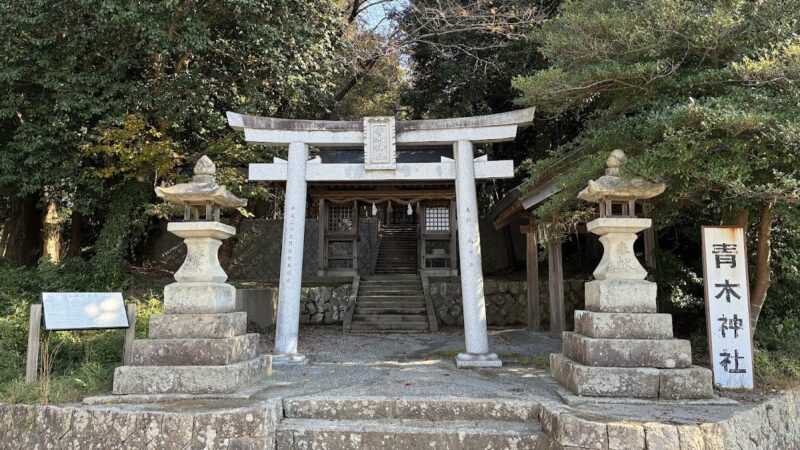
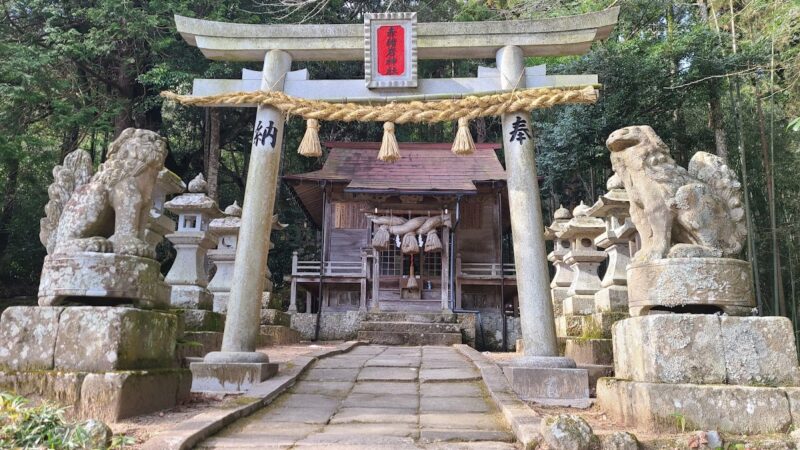
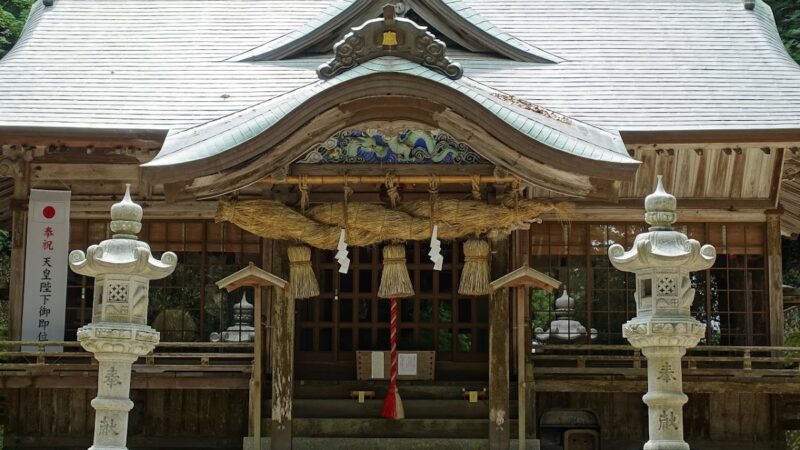
The main hall of Munakata Shrine maintains a traditional shrine architectural style, exuding a sense of historical weight. Many gods are enshrined within the main hall, including the three Munakata goddesses, the principal deities.
Worship Hall
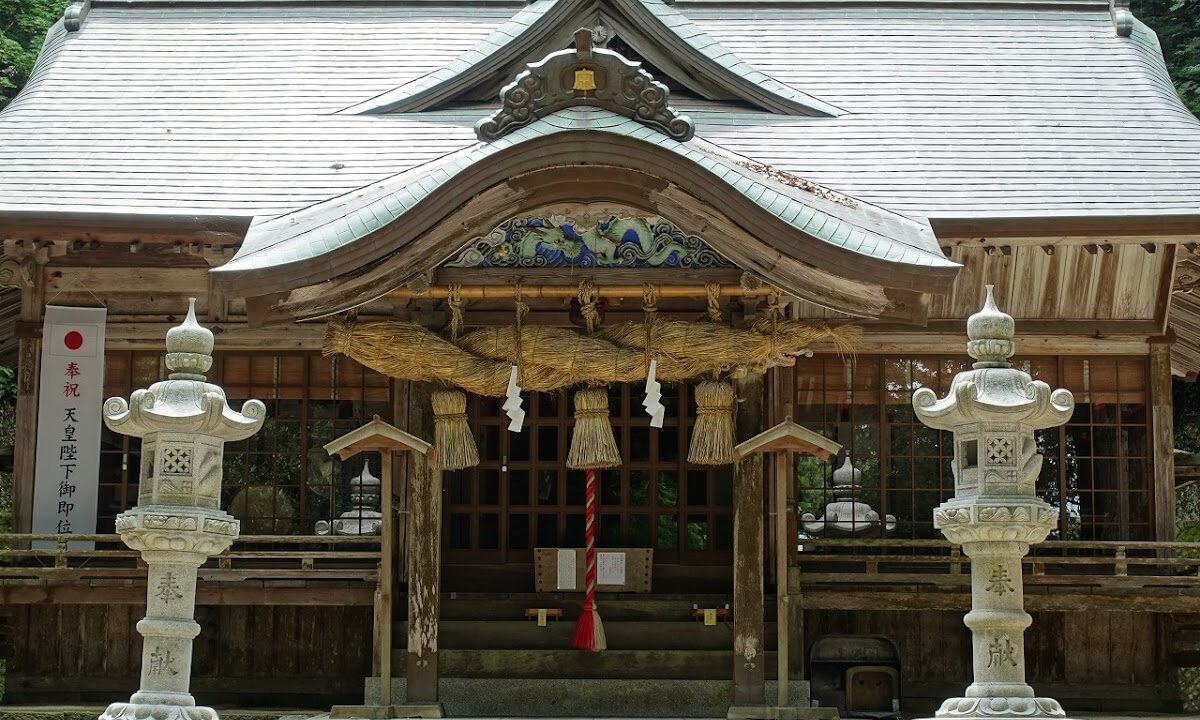
The worship hall, where worshippers offer their prayers, is located in front of the main hall, and general worshippers pay their respects from here. The worship hall’s construction is simple and sturdy, creating an atmosphere of ancient elegance.
Burial Mounds on the Shrine Grounds
Numerous remains from the Kofun period (Tumulus period) have been confirmed within and around the grounds of Munakata Shrine. Six circular burial mounds and five keyhole-shaped burial mounds exist, indicating that this area was considered sacred by the Munakata clan since ancient times.
The existence of these burial mounds suggests that Munakata Shrine was not merely a place of worship, but also a political and social center of the Munakata clan. The development from burial mounds to shrine worship is an interesting case study for understanding the origins of shrine worship in Japan.
The Legend of the Ofunezuka (Boat Mound)
Within the shrine grounds is a legendary site called “Ofunezuka.” Legend says that when Susanoo-no-Mikoto transported the three Munakata goddesses by boat, the boat turned to stone. This legend symbolically illustrates the Munakata clan’s maritime nature and their history of migration from Kyushu to the San’in region.
A Famous Spot for Autumn Foliage
Munakata Shrine is known for its particularly beautiful scenery during the late autumn foliage season. The trees throughout the shrine grounds are ablaze with vibrant red, making it a popular “hidden gem” among local Yonago residents.
Because of its quiet, unspoiled environment, untouched by tourism, visitors can enjoy the vivid autumn colors, attracting photography enthusiasts and nature lovers. The best time to see the leaves is usually from mid- to late November.
Shrines and Subsidiary Shrines
Besides the main shrine, there are several smaller shrines within the grounds, reflecting the local faith. Visitors can be seen respectfully offering prayers at all the shrines, demonstrating the deep-rooted faith of the community.
Goshuin (Shrine Seal) Information
Goshuin Issuance
Munakata Shrine offers goshuin (shrine seals). The goshuin features a traditional calligraphic style that reflects the shrine’s history and prestige.
Where to Obtain
Goshuin are available at the shrine office. However, there may not always be a resident priest, so it is recommended to contact the shrine in advance if you wish to be sure to receive a goshuin.
Offering Fee
Similar to most shrines, the fee is approximately 300 to 500 yen (this may change, so please confirm when you visit).
Regarding Goshuincho (Stamp Books)
Please inquire directly with the shrine regarding the availability of original goshuincho.
Etiquette for Visiting Shrines
Goshuin (stamps) are given as proof of your visit. Always receive them after completing your prayers. It is also important to treat the shrine priests with respect.
Access and Visiting Information
Location
Address
298 Munakata, Yonago City, Tottori Prefecture 683-0103
Transportation Access
Access by Car
- Approximately 5 minutes south from the Yonago Minami Interchange on the Yonago Expressway
- Head towards Hoki Town on National Route 181. After passing under the Yonago Bypass overpass, it will be on your right.
- Approximately 20 minutes from Sakaiminato via National Route 431.
Parking
There is parking space for visitors on the temple grounds. Spaces are limited, so please be aware of congestion during peak seasons such as New Year’s.
Access by Public Transportation
- Approximately 15 minutes by taxi from Yonago Station on the JR San’in Main Line
- If using a local bus, you will need to walk from the nearest bus stop.
Access by public transportation is somewhat inconvenient; therefore, we recommend access by car.
Visiting Hours
The shrine grounds are generally open for free worship. However, the shrine office has limited operating hours, so it is recommended to check in advance if you wish to receive a Goshuin (shrine stamp) or prayers.
Nearby Tourist Attractions
Yonago Castle Ruins
Located in the city of Yonago, the castle ruins offer a spectacular view of Yonago city, the Sea of Japan, and Mt. Daisen from the castle tower base. Approximately 15 minutes by car from Munakata Shrine.
Mt. Daisen
The highest sacred mountain in the Chugoku region, offering beautiful scenery throughout the seasons. Approximately 40 minutes by car from Munakata Shrine.
Kaike Onsen
A hot spring resort facing the Sea of Japan, with many inns where you can enjoy fresh seafood. Approximately 20 minutes by car from Munakata Shrine.
Annual Events and Festivals
Grand Festival
Munakata Shrine holds its Grand Festival in the autumn. Local parishioners and devotees gather for events such as a portable shrine procession and Kagura (sacred dance) performances. Please contact the shrine for detailed dates.
New Year’s Visit
Many worshippers visit the shrine for their first shrine visit of the new year. It is an important event for local people to pray for safety and prosperity throughout the year.
Shichi-Go-San (7-5-3 Festival)
In November, families can be seen visiting for Shichi-Go-San. This traditional event, praying for the healthy growth of children, is well-established in the community.
Characteristics and Charms of Munakata Shrine
Status as a Shikinaisha (Shrine Listed in the Engishiki)
Being listed as a Shikinaisha (Shrine Listed in the Engishiki Jinmyocho) means that it is a historically significant shrine recognized by the imperial court since the Heian period. As one of the six shrines of Hoki Province, it was a central figure in local faith.
Traces of the Munakata Clan
The history of the Munakata clan, based at Munakata Taisha Shrine in Kyushu, extending as far as the San’in region to worship their ancestral deity, is a valuable example illustrating the migration of clans and the spread of faith in ancient Japan.
Relationship with Kofun (Ancient Burial Mounds)
The presence of a group of burial mounds within the shrine grounds indicates that this area has been considered important as a sacred place since ancient times. The example of a burial ground of a powerful figure from the Kofun period later becoming the grounds of a shrine is fascinating when considering the history of Japanese faith.
Faith Rooted in the Community
In a quiet environment untouched by tourism, Munakata Shrine continues to attract the fervent faith of local residents, preserving the original form of Japanese shrine faith. The sight of local people praying at every shrine within the grounds conveys a deep connection between the shrine and the community.
Points for Visiting the Shrine
Etiquette for Visiting the Shrine
- Bow before passing through the torii gate.
- Purify your body and mind at the water basin.
- Bow twice, clap twice, and bow once in front of the main hall.
- Visit the subsidiary shrines within the grounds.
- Bow once again at the torii gate when leaving.
Photography
Photography is generally permitted within the grounds, but please refrain from taking photos inside the main hall or in sacred areas. Also, please be considerate of other visitors.
Attire
While casual attire is acceptable, it is preferable to wear clothing that reflects the sacred nature of the place. If receiving prayers, formal attire is preferable.
Summary
Munakata Shrine is an important shrine in Yonago City, Tottori Prefecture, with a history of over 1200 years, listed in the Engishiki Jinmyocho (a historical record of shrines). It enshrines the three Munakata goddesses as its main deities, and its origins lie in the Munakata clan from Kyushu arriving in this area and enshrining their ancestral deities. The shrine grounds contain a group of ancient burial mounds, suggesting that it has been considered a sacred site since ancient times. The legend of “Ofunezuka,” where Susanoo-no-Mikoto is said to have brought the three goddesses by boat, is also a fascinating story.
Due to a merger during the Meiji era, the shrine now enshrines eighteen deities and is believed to offer a wide range of blessings, including traffic safety, maritime safety, abundant harvests, and business prosperity. During the autumn foliage season, the grounds are beautifully colored, making it a popular hidden gem among locals.
It’s easily accessible, located about 5 minutes from the Yonago Minami Interchange on the Yonago Expressway, and situated along National Route 181. Goshuin (shrine stamps) are also available, making it a recommended spot for those who enjoy visiting shrines.
In a quiet environment untouched by tourism, Munakata Shrine offers a glimpse into the deeply rooted faith of the community. When visiting Yonago, why not pay a visit? You’ll be able to experience its ancient history and the fervent faith of the local people that continues to this day.