Myohonji Temple (Kamakura City, Kanagawa Prefecture) Complete Guide | History, Highlights, Seasonal Flowers, and Access Information
Located in Omachi, Kamakura City, Kanagawa Prefecture, Myohonji Temple is the oldest Nichiren Buddhist temple, enveloped in tranquility despite being within walking distance of Kamakura Station. This ancient temple, nestled in a valley called Hikigaya, holds a tragic history from the Kamakura period, yet continues to captivate visitors with its beautiful seasonal flowers and magnificent architecture.
This article provides detailed information you should know before visiting Myohonji Temple, including its historical background, highlights within the grounds, seasonal ways to enjoy the temple, access information, and nearby tourist spots.
History and Origin of Myohonji Temple
The Tragedy of the Hiki Clan and the Founding of the Temple
Hikigaya, where Myohonji Temple stands, was once the site of the residence of the Hiki clan, who played an important role in the Kamakura Shogunate. Hiki Yoshikazu was the adopted son of Hiki no Ama, the wet nurse of Minamoto no Yoritomo, and wielded considerable power as a powerful retainer of the shogunate.
However, in 1203 (Kennin 3), the “Hiki Rebellion” broke out. The Hiki clan, defeated in a power struggle with the first regent, Hojo Tokimasa, met a tragic end in this area. Yoshikazu and many of his family members lost their lives in Hikigaya.
Approximately 60 years after this tragedy, in 1260 (Bun’ō 1), Hiki Yoshimoto, the youngest son of Hiki Yoshikazu and the only survivor, founded Myōhonji Temple in this area, inviting Nichiren Shonin as its founding priest to pray for the souls of his family. Hiki Yoshimoto was also a Confucian scholar who served Emperor Juntoku, and he established this temple to comfort the spirits of his family and to serve as a base for spreading the teachings of Nichiren Shonin. ### Origin of the Mountain and Temple Names
The official name of Myohonji Temple is “Chokozan Myohonji.” The mountain name “Choko” originates from the Buddhist name given by Nichiren Shonin to Hiki Yoshikazu, and the temple name “Myohon” comes from the Buddhist name given to Yoshikazu’s mother. This naming reflects a deep desire to honor the Hiki family.
Importance as the Oldest Nichiren Sect Temple
Myohonji Temple occupies an extremely important position in religious history as the oldest Nichiren sect temple, founded by Nichiren Shonin. It is a temple that Nichiren Shonin was directly involved with during his lifetime, and as a sacred head temple of the Nichiren sect, it continues to attract fervent devotion to this day.
From the Kamakura period to the present day, despite suffering numerous fires and disasters, it has been rebuilt each time, continuing to uphold the Dharma in the Hikigaya area. While the main buildings today were rebuilt after the Edo period, the historical spirit from the temple’s founding has been continuously passed down.
Myohonji Temple Grounds and Highlights
The Serenity of the Approach from the Main Gate
Approximately 8-10 minutes on foot from the east exit of Kamakura Station, after passing through a residential area, the main gate of Myohonji Temple appears. Passing through this gate, you feel as if you’ve been transported to another world, a stark contrast to the hustle and bustle of the city.
The approach is surrounded on both sides by deep greenery, and you proceed as if passing through a tunnel of trees. This approach itself is a highlight, displaying different expressions in each of the four seasons. Fresh greenery in spring, deep green in summer, vibrant autumn leaves, and a dignified silence in winter welcome visitors.
The Majestic Appearance of the Nitenmon Gate (Niomon Gate)
As you proceed along the approach, you will come across the Nitenmon Gate, one of the symbolic buildings of Myohonji Temple. This gate was rebuilt in 1840 (Tenpo 11) and is known as one of the most magnificent temple gates in Kamakura.
The name Nitenmon (Two Heavenly Kings Gate) comes from the two guardian statues of Jikokuten and Tamonten enshrined on either side of the gate. When passing through this gate, visitors naturally straighten their posture and feel a sense of purification. The contrast between the gate’s vermilion color and the surrounding greenery is particularly beautiful during the seasons of fresh green leaves and autumn foliage.
The Imposing Appearance of the Founder’s Hall (Main Hall)
After passing through the Nitenmon Gate, the imposing Founder’s Hall comes into view. The Founder’s Hall is the main hall of Myohonji Temple and is a hip-and-gable roofed building rebuilt in 1818 (Bunsei 1).
This Founder’s Hall houses one of three statues said to depict Nichiren Shonin in his lifetime. This seated statue is said to be life-size and is an extremely valuable cultural asset. The interior of the main hall is usually closed to the public, but it may be possible to view it during special religious ceremonies.
The grounds in front of the founder’s hall are spacious and ideal for quiet worship. The imposing presence of the building harmonizes with the surrounding nature, allowing visitors to fully appreciate the beauty of Kamakura temple architecture.
Burial Grounds of the Hiki Clan
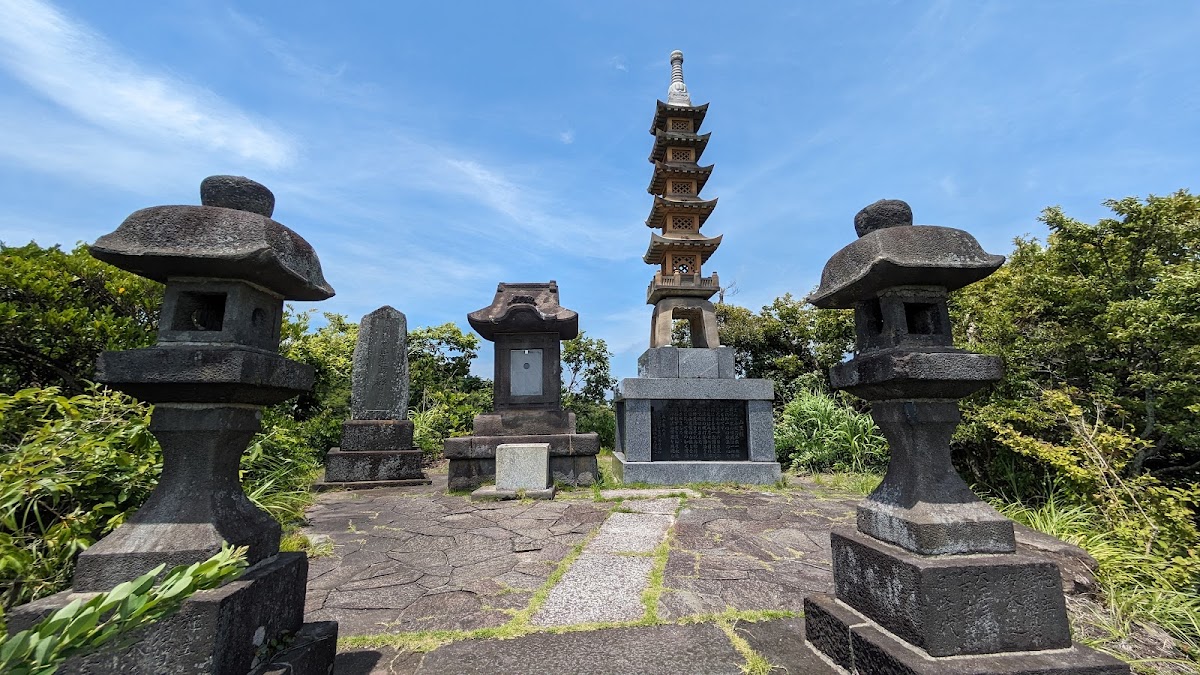
At the back of the grounds lies the burial grounds of the Hiki clan, who met a tragic end in the Hiki Rebellion. Tombstones commemorating Hiki Yoshikazu and his family stand side by side, conveying the tragedy of history.
This burial ground is a place that makes one realize that Myohonji Temple is not merely a tourist temple, but a family temple with a deep historical background. Many visitors quietly offer their prayers, reflecting on those who were victims of the power struggles of the Kamakura period.
Bell Tower and Other Buildings on the Grounds
Several other buildings, such as a bell tower and a study hall, are located within the grounds. These buildings are usually closed to the public, but their historical value can be felt even from their exteriors.
The entire temple grounds are designated as a national historical site, and not only the buildings but also the topography itself possesses historical value. The layout of the temple complex, which takes advantage of the valley topography of Hikigaya, clearly demonstrates the characteristics of Kamakura-period temple architecture.
Seasonal Flower Highlights of Myohonji Temple
Myohonji Temple is also known as the “Temple of Flowers,” and various flowers adorn the grounds throughout the year. We will introduce the seasonal highlights in detail.
Spring: Famous Flowering Crabapple (Mai-do) Spot
Representative of spring at Myohonji Temple are the flowering crabapples (Mai-do) blooming in front of the Founder’s Hall. From late March to early April, the delicate pale pink flowers bloom profusely, attracting many worshippers and photography enthusiasts.
The flowering crabapple is a flower native to China and has long been called the “immortal among flowers.” The crabapple trees at Myohonji Temple are particularly magnificent, and their beautiful contrast with the vermilion of the founder’s hall makes them one of the representative spring scenes of Kamakura.
Cherry blossom season is also not to be missed. Several Somei Yoshino and mountain cherry trees are planted on the temple grounds, and their blooming period sometimes overlaps with that of the crabapple trees. Compared to other famous cherry blossom spots in Kamakura that are crowded with tourists, Myohonji Temple is a relatively quiet hidden gem where you can enjoy cherry blossom viewing.
Summer: Fresh Greenery and Hydrangeas
In early summer, Myohonji Temple is enveloped in deep green. From the approach to the temple grounds, the green of the trees becomes denser, and a cool breeze flows through the air.
In June, hydrangeas also begin to bloom. Kamakura is famous for its hydrangeas, but the hydrangeas at Myohonji Temple are not as well-known as those at other famous spots, making it a hidden gem where you can enjoy them in peace. Hydrangeas planted throughout the temple grounds add color to the rainy season.
Even during the hot summer months, the temple grounds remain relatively cool thanks to the valley topography and lush greenery.
Autumn: The Beauty of Autumn Leaves
From late November to early December, Myohonji Temple transforms into a famous spot for autumn foliage. The maple and ginkgo trees on the grounds change color, and the autumn leaves around the Nitenmon Gate and in front of the Soshido Hall are particularly magnificent.
The autumn leaves illuminated by the morning light and the slanted light of dusk are exceptionally beautiful. Compared to other famous autumn foliage spots in Kamakura, Myohonji Temple is less crowded, allowing visitors to enjoy the autumn leaves at a leisurely pace.
Winter: The Beauty of Camellias and Silence
Winter at Myohonji Temple is the quietest time of the year. With fewer visitors, you can pray in peace amidst a crisp, serene atmosphere.
From January to February, camellias begin to bloom. The camellias planted throughout the temple grounds add a touch of splendor to the winter landscape. Especially after a snowfall, the contrast between the white snow and the red camellias is beautiful, making it perfect for photography.
Basic Information and Access to Myohonji Temple
Location and Contact Information
- Address: 1-15-1 Omachi, Kamakura City, Kanagawa Prefecture 248-0007
- Phone: 0467-22-0777
- Official Website: https://www.myohonji.or.jp/
Visiting Hours and Admission Fee
- Temple Grounds Visiting Hours: Open all day (gate is always open)
- Temple Office Reception Hours: 9:00 AM – 5:00 PM
- Admission Fee: Free
- Parking: Available (limited number of spaces, for visitors only)
One of the attractions of Myohonji Temple is that admission is free. You can easily visit and enjoy the changing seasons again and again.
Access Information
Access by Train
- Approximately 8 minutes on foot from the East Exit of Kamakura Station on the JR Yokosuka Line
- Approximately 8 minutes on foot from Kamakura Station on the Enoshima Electric Railway
Exit the East Exit of Kamakura Station, cross Wakamiya-oji Street, and head towards Honkaku-ji Temple. Pass by Honkaku-ji Temple, cross the Namekawa River, and continue straight; you will see the main gate of Myohon-ji Temple. There are signs along the way, so even first-time visitors should be able to arrive without getting lost.
Access by Car
- Approximately 20 minutes from the Asahina Interchange on the Yokohama-Yokosuka Expressway
There are a few parking spaces, but they can be full, especially during peak tourist seasons and weekends. We recommend using a paid parking lot near Kamakura Station and walking.
Estimated Time Required for Visiting
If you take your time strolling through the temple grounds and praying at the Founder’s Hall, it will take approximately 30 minutes to 1 hour. If you plan to take photos or carefully admire the seasonal flowers, it’s best to allow 1 hour or more.
Recommended Tourist Spots Around Myohonji Temple
When visiting Myohonji Temple, you can make your Kamakura sightseeing even more fulfilling by also visiting the surrounding tourist spots.
Honkakuji Temple
Located about a 5-minute walk from Myohonji Temple, Honkakuji Temple is a Nichiren Buddhist temple also known as “Higashi Minobu.” A portion of the remains of Nichiren Shonin are enshrined on the temple grounds, and many people visit both Myohonji and Honkakuji together. The “Hatsu Ebisu” festival is held there during the New Year, attracting many visitors.
Joeiji Temple (Botamochi Temple)
Located about a 7-minute walk from Myohonji Temple, Joeiji Temple is known by the nickname “Botamochi Temple.” Legend says that as Nichiren Shonin was being led to the Tatsunokuchi execution grounds, a nun on the platform offered him botamochi (rice cakes).
Yakumo Shrine
Located about a 10-minute walk from Myohonji Temple, Yakumo Shrine is known as Kamakura’s oldest shrine for warding off evil. This tranquil shrine is perfect for visiting in conjunction with Myohonji Temple.
Shopping Streets Around Kamakura Station
On your way back to Kamakura Station from Myohonji Temple, you’ll find many restaurants and souvenir shops along Komachi Street and Wakamiya-oji Street. Enjoying Kamakura’s local cuisine or purchasing souvenirs after your visit is highly recommended.
Recommended Restaurants Around Myohonji Temple
There are many restaurants around Myohonji Temple where you can enjoy the unique atmosphere of Kamakura.
Shojin Ryori (Vegetarian Cuisine) and Japanese Food
Shojin Ryori and Japanese food are a great complement to a temple tour in Kamakura. Within walking distance of Myohonji Temple, there are several restaurants offering kaiseki cuisine using seasonal ingredients and dishes made with Kamakura vegetables.
Cafes and Japanese Sweets Shops
For a break after your visit, we recommend cafes renovated from old houses or Japanese-style sweets shops. You can enjoy matcha and Japanese sweets sets, or Kamakura’s unique desserts.
Shirasu (Whitebait) Dishes
Don’t miss the shirasu dishes, a specialty of Kamakura. Around Kamakura Station, there are many restaurants serving rice bowls and set meals using fresh shirasu.
Hotels and Accommodations near Myohonji Temple
As a base for sightseeing in Kamakura, there are various accommodations around Myohonji Temple.
Hotel Metropolitan Kamakura
The Hotel Metropolitan Kamakura, directly connected to Kamakura Station, boasts an excellent location, approximately a 10-minute walk from Myohonji Temple. This new hotel, opened in 2020, features modern rooms and excellent facilities. It’s ideal as a base for sightseeing in Kamakura and convenient for early morning visits to Myohonji Temple.
Kamakura Prince Hotel
Located in Shichirigahama, the Kamakura Prince Hotel is a resort hotel offering ocean views. While it’s a bit far from Myohonji Temple, it’s a popular base for sightseeing throughout Kamakura.
Guesthouses and Minshuku (Japanese Inns)
Kamakura also has many guesthouses renovated from old houses and cozy, home-style minshuku. You can stay at a reasonable price and enjoy interacting with the locals.
Points to Note and Manners When Visiting Myohonji Temple
Visiting Manners
Myohonji Temple is both a tourist destination and a temple that still functions as a place of worship. Please observe the following manners when visiting:
- Be quiet on the temple grounds and refrain from loud conversations.
- Photography is generally prohibited inside buildings such as the Founder’s Hall (exterior photography is permitted).
- Be especially quiet and respectful in the cemetery.
- Always take your trash with you.
- Do not touch plants or buildings.
Regarding Clothing
There are no particularly strict dress code regulations, but please dress appropriately for visiting a temple. Since some parts of the temple grounds are unpaved, comfortable shoes are recommended.
Regarding Photography
Photography of the temple grounds and the exterior of buildings is permitted, but please be considerate of other visitors. Permission is required in advance for the use of tripods and commercial photography.
Tips for Avoiding Crowds
Myohonji Temple is generally not very crowded, but visitor numbers increase during peak seasons for flowering crabapples and autumn leaves, as well as during long holidays. Visiting early in the morning or on weekdays is recommended. The temple grounds are especially peaceful in the morning, allowing for quiet worship.
Annual Events and Activities at Myohonji Temple
Myohonji Temple holds various religious services and events throughout the year.
Main Annual Events
- New Year’s Day: First Shrine Visit of the Year, Special New Year’s Prayer
- February: Setsubun Festival
- April: Flower Festival (Buddha’s Birthday Celebration)
- September: Autumn Equinox Festival
- October: Nichiren Shonin Memorial Service
- December: New Year’s Eve Bell Ringing
The Memorial Service in October, in particular, is an important service commemorating the death anniversary of Nichiren Shonin, and includes events such as a lantern procession.
To Enjoy Myohonji Temple to the Fullest
Recommendation for Early Morning Visits
The best way to experience the charm of Myohonji Temple is to visit early in the morning. Visiting during a time when there are fewer tourists allows you to pray peacefully in the tranquil temple grounds. The way the morning light filters through the trees is mystical and perfect for photography.
Seasonal Visits
Myohonji Temple shows a different face in each of the four seasons, offering new discoveries with every visit. Visiting in different seasons—to see the flowering crabapples in spring, the fresh greenery in summer, the autumn leaves, and the camellias in winter—allows you to appreciate the multifaceted charm of Myohonji Temple.
Incorporating it into a Kamakura Temple and Shrine Pilgrimage
Myohonji Temple is conveniently located near Kamakura Station, making it easy to combine with other temples and shrines. You can create a temple and shrine pilgrimage course in eastern Kamakura by combining it with temples such as Hongakuji Temple, Joeiji Temple, and Yakumo Shrine.
Frequently Asked Questions about Myohonji Temple
Q: How much is the entrance fee for Myohonji Temple? **
A: Visiting the grounds of Myohonji Temple is free. There is no entrance fee.
Q: Is there parking?
A: There is a parking lot for visitors, but spaces are limited. It is often full during peak tourist seasons and weekends, so we recommend using public transportation.
Q: Can I get a Goshuin (temple stamp)?
A: Yes, you can get a Goshuin at the temple office (9:00 AM – 5:00 PM). You can bring your own Goshuin book or purchase a pre-printed Goshuin.
Q: Are pets allowed?
A: Pets are allowed on the temple grounds, provided they are on a leash and do not disturb other visitors. However, we recommend checking with the temple office beforehand.
Q: Is it accessible for wheelchair users?
A: The path from the main gate to the founder’s hall has unpaved sections and a slight incline, making it difficult for wheelchair users to visit. We recommend visiting with an assistant.
Q: When is the best time to visit?
A: The flowering crabapples in spring (late March to early April) and the autumn foliage (late November to early December) are particularly popular, but the fresh greenery of early summer and the tranquil winter also have their own unique charms.
Q: How long does it take?
A: A leisurely visit takes about 30 minutes to an hour. If you plan to take photos or enjoy the seasonal flowers, it’s best to allow a little more time.
Summary: Experiencing Kamakura’s History and Nature at Myohonji Temple
Myohonji Temple in Kamakura City, Kanagawa Prefecture, is a historically significant temple, the oldest temple of the Nichiren sect, and holds a profound story of the tragedy of the Hiki clan. Despite its convenient location within walking distance of Kamakura Station, the temple grounds are enveloped in tranquility, allowing you to forget the hustle and bustle of the city.
The majestic Nitenmon Gate, the imposing Soshido Hall, and the flowers that bloom in every season deeply impress visitors. The flowering crabapples in spring and the autumn foliage are particularly noteworthy, making it a hidden gem in Kamakura that attracts many repeat visitors.
Admission is free, making it easy to visit, and a visit in the quiet early morning hours offers a special experience. When sightseeing in Kamakura, be sure to visit Myohonji Temple and feel the weight of its history and the beauty of nature firsthand.
Visiting nearby temples such as Honkakuji and Joeiji will make for a more fulfilling temple and shrine tour of Kamakura. Combining it with the gourmet food and shopping around Kamakura Station will allow you to fully enjoy a day in Kamakura.
Myohonji Temple is a temple with profound charm, offering new discoveries with every visit. Visiting in different seasons to enjoy its ever-changing scenery is highly recommended. Why not spend some time at Myohonji Temple, surrounded by Kamakura’s history, nature, and tranquility, to find peace of mind?