Myokenji Temple Complete Guide | History, Gardens, and Access Information for Kyoto’s Nichiren Sect Head Temple
Located in Kamigyo-ku, Kyoto City, Myokenji Temple is a renowned temple boasting a history of over 700 years as the head temple of the Nichiren sect. It was recognized as an imperial prayer temple by Emperor Go-Daigo and is also known for being used as lodging by Toyotomi Hideyoshi during his time in Kyoto. This article comprehensively introduces all the information you need to know before visiting Myokenji Temple, including its history, highlights, the charm of its gardens, visiting information, and access methods.
What is Myokenji Temple? | Kyoto’s First Nichiren Sect Temple
Myokenji Temple was founded in 1321 (Genko 1) during the late Kamakura period, and is the first Nichiren sect temple in Kyoto. Its mountain name is Gusokuzan, and it enshrines the Sanbo-son (Three Treasures).
Position as a Nichiren Sect Head Temple
The Nichiren sect has seven head temples throughout Japan, and Myokenji Temple is one of them, playing an important role in the Kansai region. Also known as “Shikai Shōdō” and “Shijō Monryū,” it is considered the birthplace of the Nichiren Buddhist sect. Furthermore, along with Myōkaku-ji and Rippon-ji, it is referred to as “Ryūge no Mitsugusoku” or “Sangusoku-zan,” and is positioned as a special temple among Nichiren Buddhist temples in Kyoto.
About the Founder, Nichizō Shōnin
Myōken-ji Temple was founded by Nichizō Shōnin. Nichizō Shōnin was a disciple of Nichirō, one of Nichiren Daishōnin’s six senior disciples, making him a grand-disciple of Nichiren. Entrusted directly by Nichiren Daishōnin with missionary work in Kyoto, Nichizō Shōnin persevered in his missionary activities despite initially facing fierce persecution from Enryaku-ji Temple on Mount Hiei.
In 1321, Nichizō Shōnin gained the patronage of Emperor Go-Daigo and finally succeeded in establishing a dojo that would become a base for Nichiren Buddhist missionary work in Kyoto. This marked the beginning of Myōken-ji Temple. Being recognized as an imperial prayer temple by Emperor Go-Daigo was a groundbreaking event for the Nichiren sect.
The History of Myoken-ji Temple | 700 Years of Relocation and Reconstruction
The 700-year history of Myoken-ji Temple is also a history of repeated relocations and reconstructions.
From Founding to the Muromachi Period
At its founding in 1321 (Genko 1), Myoken-ji Temple was located in a different place than its current location. In the later years of Nichizo Shonin’s life, the temple’s foundation was solidified when Daikaku Daisojo succeeded him as the second head priest.
During the Muromachi period, Myoken-ji Temple developed as a central Nichiren sect temple in Kyoto. However, the temple grounds were destroyed by fire during the Onin War (1467-1477), forcing a temporary relocation.
The Tenbun Persecution and the Sengoku Period
In 1536 (Tenbun 5), the Tenbun Persecution, a religious conflict between the Nichiren sect and other sects, dealt a devastating blow to Nichiren Buddhist temples in Kyoto. Myokenji Temple was no exception, forcing it to evacuate to Sakai.
In 1542 (Tenbun 11), it was finally permitted to return to Kyoto, but it continued to relocate several times afterward. During the Sengoku period, it flourished as one of Kyoto’s largest temples, possessing a vast area stretching from Nishinotōin in the east to Aburakōji in the west, and from Ōike in the south to Nijō in the north.
Relationship with Toyotomi Hideyoshi
During the Tenshō era (1573-1592), Toyotomi Hideyoshi used Myokenji Temple as his lodging in Kyoto. Hideyoshi’s frequent use of Myokenji Temple speaks to its size and high status at the time. During Hideyoshi’s stays in Kyoto, Myokenji Temple sometimes became a political stage.
From the Edo Period to the Present
In 1587 (Tensho 15), Myokenji Temple was relocated to its current location (Myokenji-mae-cho, Kamigyo-ku) by order of Hideyoshi. Throughout the Edo period, Myokenji Temple enjoyed stable development as an important temple of the Nichiren sect.
However, in 1788 (Tenmei 8), much of the temple complex was destroyed in the Great Fire of Tenmei. Reconstruction proceeded during the Bunka era (1804-1818), and many of the major buildings visible today were constructed during this period.
Currently, Myokenji Temple functions as a major head temple with nine sub-temples, serving as one of the centers of Nichiren Buddhism.
Highlights of Myokenji Temple | Architecture, Gardens, and Cultural Properties
Myokenji Temple boasts many attractions, including historical buildings and beautiful gardens.
Main Hall and Major Buildings
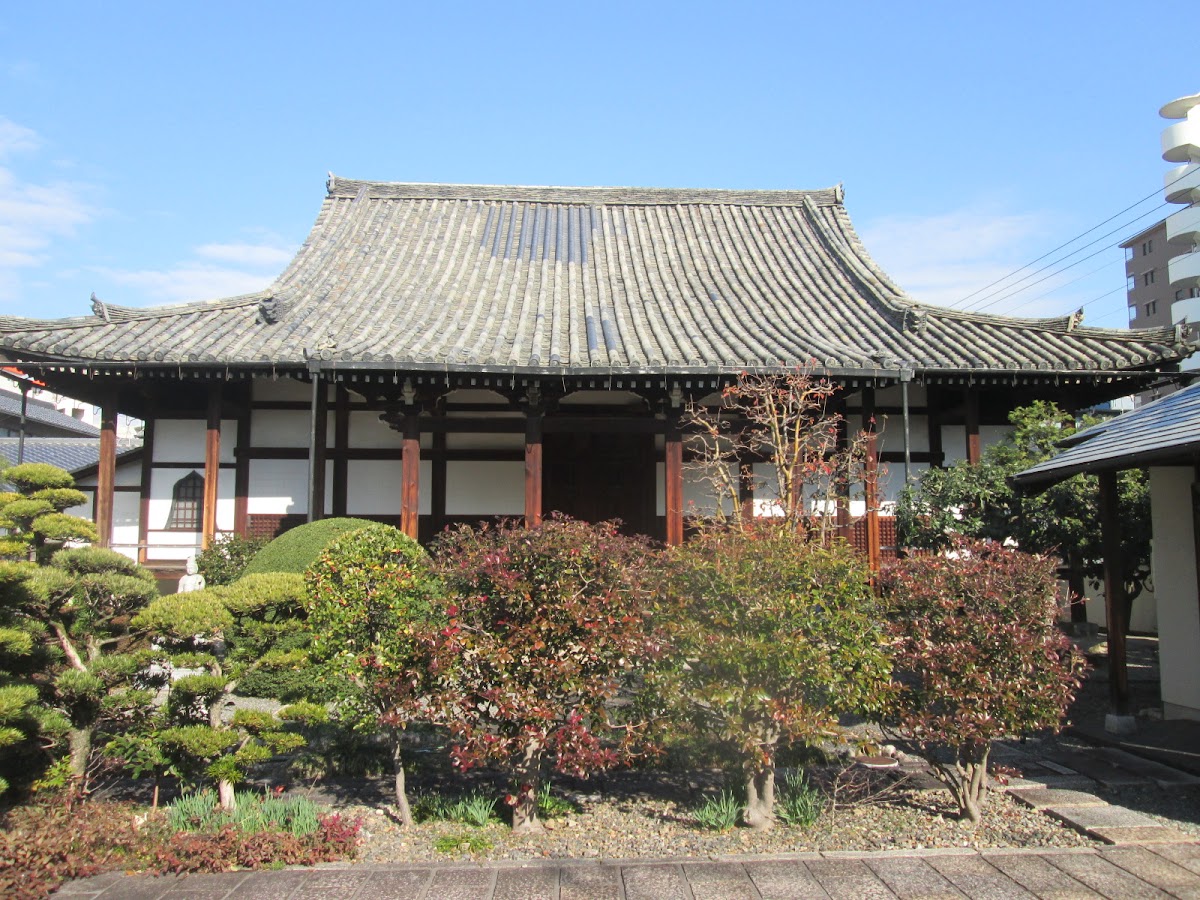
The Main Hall was rebuilt after the Great Fire of Tenmei and enshrines the Three Treasures (Shakyamuni Buddha, Many Treasures Buddha, and the Ten Realms Mandala) as its principal deities. Its majestic presence conveys the dignity of a major Nichiren Buddhist temple.
The Imperial Messenger Gate is an important building that demonstrates the temple’s status as an imperial temple. Although usually closed, its dignified appearance adds elegance to the temple grounds.
The Bell Tower and Founder’s Hall also retain their Edo period reconstruction forms and are buildings of high historical value.
Four Dry Landscape Gardens
One of the major attractions of Myokenji Temple is the four dry landscape gardens scattered throughout the temple grounds. These were created after the Edo period and each possesses a distinct character.
Moso Bamboo Grove and Korin Curved Stream Garden
The Korin Curved Stream Garden is known as a garden associated with Ogata Korin, a renowned painter of the Edo period. It is believed that Ogata Korin’s residence was located on this site, and the garden features a flowing design reminiscent of the graceful curves seen in Korin’s “Red and White Plum Blossom Screen.”
The garden features a beautifully curved waterway (dry stream) surrounded by a moso bamboo grove. The landscape, a blend of the bamboo’s greenery and the arrangement of garden stones, captivates visitors throughout the seasons.
Other Gardens
In addition to the Korin Curved Stream Garden, Myokenji Temple boasts several other dry landscape gardens, including the Guest Hall Front Garden and the Great Study Hall Garden. Each has a different arrangement of stones, expressing a Zen-like tranquility and beauty.
While touring the gardens, you can appreciate the Edo period’s landscape gardening techniques and aesthetic sensibilities.
Seasonal Scenery | Cherry Blossoms and Autumn Leaves
Myokenji Temple is known for its natural beauty throughout the four seasons.
In spring, cherry blossoms bloom throughout the temple grounds, creating a particularly beautiful landscape with the contrast between the bamboo grove and the blossoms. During the special spring opening period, areas normally closed to the public may be accessible.
In autumn, autumn leaves cover the temple grounds, creating a spectacular view when combined with the dry landscape garden. The autumn foliage in the Korin-style garden is a popular spot, attracting many photography enthusiasts.
Cultural Properties and Temple Treasures
Myokenji Temple houses many cultural properties and temple treasures accumulated over its long history. Precious items such as relics related to Nichiren Shonin and Nichizo Shonin, gifts from successive emperors, calligraphy, paintings, and Buddhist statues are carefully preserved.
During special openings and exhibitions, there are opportunities to view these temple treasures.
Visiting Information | Hours, Fees, and Notes
This section summarizes practical information for visiting Myokenji Temple.
Visiting Hours and Fees
Normal Visiting Hours: 10:00 AM – 4:00 PM (Last entry at 3:30 PM)
Admission Fee: 500 yen for adults, 300 yen for junior and senior high school students, free for elementary school students and younger (Information as of 2024)
*Visiting hours may change depending on the season and events. During special opening periods, hours may be extended and fees may change, so it is recommended to check the official website for the latest information before visiting.
About Goshuin (Temple Seals)
Goshuin (temple seals) are available at Myokenji Temple. Goshuin reception hours are the same as visiting hours, but may not be available during religious services or events.
Pre-printed goshuin may also be available, so if you want to be sure to receive a goshuin, it is recommended to inquire in advance.
Photography
Photography is generally permitted on the temple grounds, but may be restricted inside the main hall and in some gardens. Furthermore, prior permission is required for the use of tripods or monopods, and for commercial photography. Please enjoy photography while respecting proper etiquette.
Notice of Suspension or Change in Visiting Hours
Myokenji Temple may suspend or change visiting hours due to memorial services, events, and temple activities. Particular attention should be paid during the following periods:
- Obon period (mid-August)
- Year-end and New Year holidays
- Special memorial service days
- Temple event days
If you are visiting from a distance, we recommend checking the official website or inquiring by phone in advance.
Access to Myokenji Temple | Directions by Train, Bus, and Car
Myokenji Temple is located in Kamigyo-ku, Kyoto City, and is easily accessible from within Kyoto City.
Location
514 Myokenji-mae-cho, Kamigyo-ku, Kyoto City, Kyoto Prefecture 602-0005
Access by Train and Bus
Using Kyoto Municipal Subway
- Get off at Kuramaguchi Station on the Karasuma Line, approximately 10 minutes on foot
- Get off at Imadegawa Station on the Karasuma Line, approximately 15 minutes on foot
Using Kyoto City Bus
- From Kyoto Station, take City Bus Route 9 and get off at Horikawa-Teranouchi, approximately 3 minutes on foot
- From Kyoto Station, take City Bus Route 101 and get off at Horikawa-Teranouchi, approximately 3 minutes on foot
- From Shijo-Kawaramachi, take City Bus Route 9 and get off at Horikawa-Teranouchi, approximately 3 minutes on foot
Located along Horikawa Street, making access from bus stops very convenient.
Access by Car and Parking
By Private Car
- Approximately 30 minutes from the Kyoto Minami Interchange on the Meishin Expressway
- Approximately 25 minutes from the Kyoto Higashi Interchange on the Meishin Expressway
Parking: There is parking space for visitors on the temple grounds, but the number of spaces is limited. Especially during the cherry blossom season in spring and the autumn foliage season, congestion is expected, so we recommend using public transportation.
Nearby Tourist Attractions
Many historical temples and tourist attractions are within walking distance of Myokenji Temple:
- Myokakuji Temple (approximately 5 minutes on foot): One of the three essential ritual objects of Ryuge
- Honpoji Temple (approximately 10 minutes on foot): A temple associated with Hasegawa Tohaku
- Kamigoryo Shrine (approximately 10 minutes on foot): The birthplace of the Onin War
- Kyoto Gyoen National Garden (approximately 15 minutes on foot): A vast park
When visiting Myokenji Temple, you can enjoy a more fulfilling Kyoto sightseeing experience by also visiting these nearby spots.
Annual Events and Special Openings at Myokenji Temple
Myokenji Temple holds various Buddhist events throughout the year.
Main Annual Events
- New Year’s Day Ceremony (January 1st): A Buddhist service celebrating the New Year
- Setsubun Ceremony (around February 3rd): Events such as bean-throwing
- Flower Festival (April 8th): Celebrating the birth of Buddha
- Obon Ceremony (August): A memorial service for ancestors
- Oeshiki Ceremony (October): A memorial service for the anniversary of the death of Nichiren Daishonin
Special Openings in Spring and Autumn
Myokenji Temple sometimes holds special openings in spring and autumn. During these special openings, buildings and gardens that are normally closed to the public are opened, and temple treasures are displayed.
Spring Special Openings are often held to coincide with the cherry blossom season, and Autumn Special Openings are often held to coincide with the peak of the autumn foliage season. These are valuable opportunities to experience the charm of Myokenji Temple in a way that is different from the usual.
The dates and content of the special openings vary from year to year, so we recommend checking the official website or the Kyoto City Tourism Association for information.
Morning Service
Myokenji Temple holds a morning service (morning prayer) every day. While it may be possible for the general public to participate, prior confirmation is necessary. The service, held in the tranquil morning grounds, will be a spiritual experience different from everyday life.
About Temple Lodging and Facility Use
Myokenji Temple offers various facilities on its grounds for use.
Temple Lodging Use
Myokenji Temple has temple lodging facilities where you can stay overnight. Staying at a temple with a history of being a regular lodging for Toyotomi Hideyoshi will be a special experience.
At the temple lodging, you can enjoy temple-specific experiences such as vegetarian meals and participation in the morning service. However, reservations are required for the use of the temple lodgings, and there may be restrictions on the number of people accepted and the time of year.
Meeting and Training Use
Myokenji Temple’s guest hall and study can be used as a venue for cultural activities such as meetings, training sessions, tea ceremonies, and haiku gatherings. Meetings and training sessions held in this historic space will surely leave a special impression on participants.
Advance application and usage fees are required. Please contact the temple directly for details.
Sutra Copying and Buddha Image Copying Experience
Myokenji Temple may offer experiences in sutra copying and Buddha image copying. The experience of calming oneself and taking up a brush in the tranquil temple will be a valuable time for modern people.
We recommend checking the availability of these experiences and how to make reservations in advance.
Frequently Asked Questions (FAQ)
Q1: How long does it take to visit Myokenji Temple?
A1: If you take your time to stroll around the temple grounds and gardens, it takes approximately 30 minutes to 1 hour. If you plan to thoroughly appreciate the gardens and enjoy taking photographs, it’s best to allow at least an hour.
Q2: Is it possible to visit in a wheelchair?
A2: While there are some steps within the temple grounds, the main areas are accessible by wheelchair. However, assistance may be necessary due to steps inside the buildings and in some parts of the garden. It’s best to contact them in advance for a smoother experience.
Q3: Are pets allowed?
A3: Generally, pets are not permitted on the temple grounds. This excludes assistance dogs such as guide dogs.
Q4: What are the differences between Myokenji, Myokakuji, and Ripponji temples?
A4: These three temples are known as the “Three Essential Temples of Ryuge,” and while all are important Nichiren Buddhist temples, they each have distinct histories and characteristics. Myokenji is the first Nichiren Buddhist temple in Kyoto and is notable for being an imperial temple commissioned by Emperor Go-Daigo.
Q5: Do you sell Goshuincho (stamp books)?
A5: Myokenji Temple sells original Goshuincho. Designs and availability may vary depending on the season, so please check details at the temple.
Q6: When is the best time to see the autumn leaves?
A6: Typically, the best time to see the autumn leaves is from mid-November to early December. However, this may vary depending on the year’s weather, so we recommend checking the latest autumn foliage information before your visit.
Q7: Is group visitation possible?
A7: Group visits are accepted, but advance reservations are required. Please contact us in advance with the number of people and your desired date and time to make arrangements. You can also inquire about group-specific explanations and guided tours when making your reservation.
Summary | The Charm of Myokenji Temple and Recommendations for Visiting
Myokenji Temple, as a head temple of the Nichiren sect with a history of over 700 years, occupies an important position in the religious history of Kyoto. Myokenji Temple is a temple with multifaceted charm, boasting a historical background as an imperial temple commissioned by Emperor Go-Daigo and a lodging place for Toyotomi Hideyoshi, as well as a beautiful garden associated with Ogata Korin and the natural beauty of the four seasons.
Despite its convenient location in Kamigyo Ward, Kyoto City, stepping onto the temple grounds envelops you in a tranquility and beauty that makes you forget the hustle and bustle of the city. It’s especially beautiful during the cherry blossom season in spring, the autumn foliage season, the fresh green season, and the snowy winter landscapes.
Beyond being a tourist temple, Myokenji Temple is a living temple that still functions as a center of Nichiren Buddhism. In a space where history, culture, art, and faith are fused, it offers visitors deep inspiration and peace of mind.
When visiting Kyoto, be sure to add Myokenji Temple to your list of places to visit. You’ll discover a quiet and profound charm of Kyoto that’s different from the famous tourist spots.