Complete Guide to Choseizan Shokyu Zenji Temple | History, Goshuin (Temple Seal), and Visiting Information for Kamakura’s Only Soto Zen Temple
Choseizan Shokyu Zenji Temple, located in Jomyoji, Kamakura City, Kanagawa Prefecture, is known as the only Soto Zen temple in the Kamakura area. It has a history of relocating from Shirokane, Minato-ku, Tokyo in 1966, and quietly continues to uphold the Dharma as a Zen temple with Jizo Bodhisattva as its principal deity. This article comprehensively introduces useful information for visiting Choseizan Shokyu Zenji Temple, including its history, highlights within the temple grounds, goshuin information, and access methods.
About Choseizan Shokyu Zenji Temple
Basic Information
Choseizan Shokyu Zenji Temple is a Soto Zen temple located at 5-9-36 Jomyoji, Kamakura City, Kanagawa Prefecture. Its official name is “Choseizan Shokyu Zenji,” and its mountain name is Choseizan. There are only four Soto Zen temples in Kamakura City, and this temple is a precious existence as the only Soto Zen temple in the Kamakura area (the former Kamakura town area).
Location: 5-9-36 Jomyoji, Kamakura City, Kanagawa Prefecture 248-0003
Sect: Soto Zen
Mountain Name: Choseizan
Principal Image: Jizo Bodhisattva
Nearest Station: Kamakura Station (JR Yokosuka Line/Enoshima Electric Railway)
About Soto Zen
Soto Zen is a branch of Zen Buddhism, founded by Zen Master Dogen, and is one of the major sects of Japanese Buddhism. It emphasizes “Shikantaza,” that is, single-minded devotion to seated meditation, and values the teaching that daily life itself is a form of training. It has two head temples: Eiheiji Temple in Fukui Prefecture and Sojiji Temple in Yokohama City.
Kamakura is known as an area with many Rinzai Zen temples, and famous Zen temples such as Kencho-ji and Engaku-ji belong to the Rinzai school. Within this context, Choseizan Shokyu Zen-ji stands out as a Soto Zen temple.
History of Choseizan Shokyu Zen-ji
From the Shirokane Era to the Relocation to Kamakura
The history of Choseizan Shokyu Zen-ji began as a temple located in Shirokane, Minato-ku, Tokyo. Shirokane is a historic area dating back to the Edo period, and was home to many temples. However, the urban development during Japan’s high economic growth period in the Showa era significantly altered the temple’s environment.
In 1966 (Showa 41), Shokyu Zen-ji relocated from the hustle and bustle of Tokyo to the Jomyoji district of the ancient city of Kamakura. This relocation is thought to have been in search of a quiet environment suitable for Zen practice. The Jomyoji district is located in the eastern part of Kamakura and is a tranquil area dotted with historical temples such as Hokoku-ji and Jomyoji.
A Journey in Kamakura
More than half a century has passed since its relocation to Kamakura, and Choseizan Shokyu Zenji Temple continues its journey as a temple deeply rooted in the community. The temple grounds, with their modern gate and traditional main hall, exude a unique atmosphere where old and new harmonize.
As the only Soto Zen temple in the Kamakura area, it serves as a valuable center for transmitting the teachings of Soto Zen and attracts the faith of the local community. From its relocation to the present day, it has continued to pray for the peace and well-being of people, with Jizo Bodhisattva as its principal deity.
Highlights of the Temple Grounds
Harmony Between a Modern Gate and a Traditional Main Hall
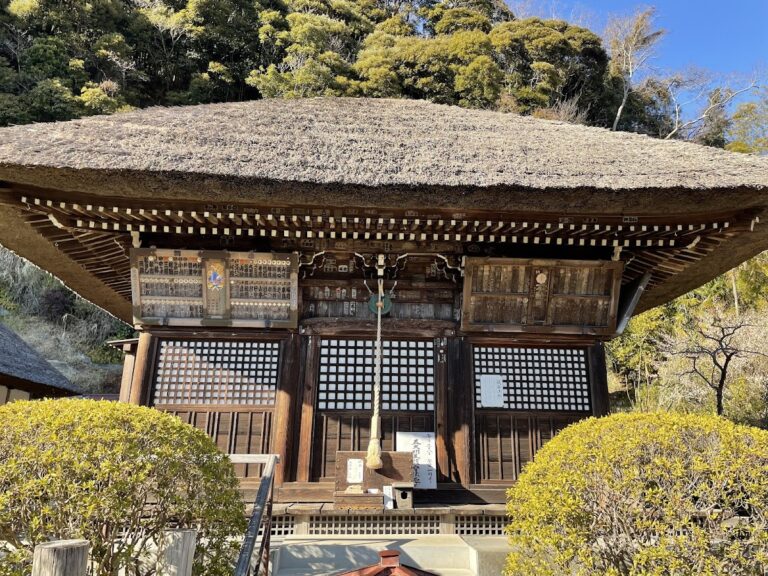
Upon visiting Choseizan Shokyu Zenji Temple, the first thing that catches the eye is its modern architectural style gate. This gate, believed to have been built at the time of the temple’s relocation to Kamakura or later, features a simple and modern design. At first glance, its modern appearance doesn’t seem like that of a temple gate, but upon passing through it, the traditional Japanese architecture of the main hall comes into view.
This “contrast between modernity and tradition” is one of the major characteristics of Choseizan Shokyu Zenji Temple. The architectural layout reflects the passage of time, a characteristic of a temple relocated from an urban area.
Main Hall and Jizo Bodhisattva
The main hall houses the principal image, Jizo Bodhisattva. Jizo Bodhisattva is worshipped as the bodhisattva who saves all sentient beings in all six realms (hell, hungry ghosts, animals, asuras, humans, and heaven) after the death of Shakyamuni Buddha until the appearance of Maitreya Bodhisattva. It is especially widely revered as the protector of children and aborted fetuses, and as the Buddha of safe travel.
It is relatively rare for a Soto Zen temple to have Jizo Bodhisattva as its principal image, and this is another characteristic of Choseizan Shokyu Zenji Temple. The main hall has a tranquil atmosphere, allowing visitors to quietly offer their prayers.
Atmosphere of the Temple Grounds
Located in the residential area of the Jomyoji district, Choseizan Shokyu Zenji Temple is not large in scale, but its well-maintained grounds are impressive. While it doesn’t have the vast grounds and gardens of famous temples in Kamakura, it has a more approachable and tranquil atmosphere.
The surrounding area is a quiet residential neighborhood, offering a relaxed pace of life unlike the bustling tourist area around Kamakura Station. It’s an ideal environment for those seeking a peaceful and tranquil visit away from the hustle and bustle.
Goshuin Information
Features of the Goshuin
Choseizan Shokyu Zenji Temple offers goshuin (temple stamps). Only pre-printed goshuin are available; handwritten goshuin are not offered. In recent years, many temples and shrines have increased their use of pre-printed goshuin, due to factors such as the increase in visitors and staffing levels at temples.
The goshuin design features a two-sided illustration, with a Jizo Bodhisattva image on the right. This Jizo Bodhisattva represents the principal deity and is visually beautiful. Notably, the temple name, “Shokyu-ji,” is written at the bottom of the illustration. The official name is “Matsuhisa Zenji,” but the abbreviated name “Matsuhisa-ji” is used for the temple’s official seal (Goshuin).
Regarding the Issuance of Temple Seals (Goshuin)
To receive a temple seal (Goshuin), you should speak to someone at the main hall or request assistance via intercom. However, depending on the size and staffing of the temple, staff may be absent. Therefore, if you want to be sure to receive a temple seal, it is recommended to check in advance by phone.
Temple seals are originally given as proof of worship. Avoid receiving a temple seal without worshipping; first, worship at the main hall before requesting one. It is also recommended to bring your temple seal book (Goshuincho).
Manners for Collecting Temple Seals (Goshuin)
Due to the recent boom in temple seal collecting, issues of manners have been raised. Please pay attention to the following points to ensure a pleasant experience when receiving your temple seal.
- Prioritize Worship: Temple seals are proof of worship. First, offer your prayers with sincerity.
- Be polite: Don’t forget to greet and express your gratitude to the temple staff.
- Consider the time of day: Avoid inappropriate times such as early morning or late evening.
- Keep requests to a minimum: Avoid requesting a large number of goshuin (temple stamps) at once.
- Respect the spirit of offering: Goshuin are not something you “purchase,” but rather something you receive as an offering.
Access Method
Access by Train and Bus
To access Choseizan Shokyu Zenji Temple using public transportation, it is convenient to take a bus from Kamakura Station.
From JR Yokosuka Line/Enoshima Electric Railway “Kamakura Station”:
- Go to the bus terminal at the east exit of Kamakura Station.
- Take Keikyu Bus routes “Kama 23,” “Kama 24,” or “Kama 36,” etc.
- Get off at the “Sensuibashi” bus stop.
- Approximately 3-5 minutes on foot from the bus stop.
The bus ride takes about 10 minutes. The Sensuibashi bus stop is a major bus stop in the Jomyoji area and is used for accessing Hokokuji Temple, Jomyoji Temple, and other locations.
Access on Foot
It is also possible to access the area on foot from Kamakura Station. The distance is approximately 2.5-3 km, and it takes about 30-40 minutes on foot. Enjoying the scenery of Kamakura while walking is a good option.
Walking Route from Kamakura Station:
- Exit Kamakura Station’s East Exit and head towards Tsurugaoka Hachimangu Shrine along Wakamiya-oji Street.
- With Hachimangu Shrine on your right, head east along Kanazawa-kaido (Prefectural Road 204).
- Enter the Jomyoji area and follow the signs to Matsuhisa Zenji Temple.
Along the way, you’ll pass other famous sights such as Tsurugaoka Hachimangu Shrine, Egara Tenjin Shrine, and Hokokuji Temple, so visiting them in conjunction with Kamakura sightseeing is recommended.
Access by Car and Parking
If accessing by car, it’s about a 10-minute drive from the Asahina Interchange on the Yokohama-Yokosuka Expressway. However, it’s necessary to check in advance regarding the temple’s dedicated parking lot. Kamakura’s roads are narrow, and traffic congestion occurs on weekends and during peak tourist seasons, so using public transportation is recommended.
There are a few coin-operated parking lots around the Jomyoji area, but not many. If you want to guarantee a parking spot, consider parking in a large parking lot near Kamakura Station and taking a bus.
Nearby Attractions
Hokoku-ji Temple (Bamboo Temple)
Located within walking distance of Choseizan Shokyu Zenji Temple, Hokoku-ji Temple is a Rinzai Zen temple of the Kencho-ji school, famous as the “Bamboo Temple.” Its bamboo grove, with approximately 2000 moso bamboo trees, is one of Kamakura’s representative landscapes, attracting many tourists from both Japan and abroad. Visitors can enjoy matcha tea amidst the bamboo grove, experiencing a tranquil atmosphere.
Distance: Approximately 5-7 minutes on foot from Shokyu Zenji Temple
Jomyoji Temple
This Rinzai Zen temple of the Kencho-ji school holds the fifth rank among the Five Great Zen Temples of Kamakura. Founded during the Kamakura period, its vast grounds include a main hall, a dry landscape garden, and a tea room. Dining in a Western-style building is also available at the stone oven garden terrace on the temple grounds.
Distance: Approximately 7-10 minutes on foot from Matsuhisa Zen Temple
Kamakura-gu Shrine (Daito-gu Shrine)
This shrine is dedicated to Prince Moriyoshi and was founded by imperial decree of Emperor Meiji. It is a historical site that tells the tragic history of Prince Moriyoshi, who played a key role in the overthrow of the Kamakura Shogunate. The grounds also contain the remains of the dungeon where the prince was imprisoned.
Distance: Approximately 10-15 minutes on foot from Matsuhisa Zen Temple
Egara Tenjin Shrine
This shrine is dedicated to Sugawara no Michizane, the god of learning, and is considered one of the three great Tenjin shrines in Japan, alongside Dazaifu Tenmangu Shrine in Fukuoka and Kitano Tenmangu Shrine in Kyoto. Many worshippers visit during exam season. The grounds also contain an ema (votive tablet) hall where manga artists have dedicated their votive tablets.
Distance: Approximately 15 minutes on foot from Matsuhisa Zen Temple
Points and Manners for Worship
Worship Etiquette
We will introduce basic worship etiquette at Soto Zen temples. 1. Bow at the Temple Gate: Bow before entering the temple grounds.
- Purify at the Water Basin: Purify your hands and mouth (if a water basin is available).
- Worship at the Main Hall: Join your hands in prayer in front of the main hall, bow, and then offer your donation.
- Pray with Joined Hands: Bow deeply and pray quietly with your hands together.
- Bow upon Departure: Bow again at the temple gate when leaving the grounds.
Unlike Shinto shrines, clapping (kashiwade) is not done at Buddhist temples. Quietly joining your hands in prayer is the basic custom.
Clothing and Belongings
There are no specific dress code requirements, but please dress appropriately for the sacred place of a temple. It is best to avoid revealing or overly flashy clothing.
Things that are useful to bring:
- Goshuincho (stamp book) (if you want to receive a stamp)
- Small change (for offerings)
- Camera (if photography is permitted)
- Comfortable walking shoes (if you plan to explore the surrounding area)
Regarding Photography
Photography within the temple grounds is generally permitted, but photography inside the main hall or of Buddha statues may be prohibited. Please check before taking photos or look for any signs prohibiting photography. It is also important to be considerate of other visitors.
About Soto Zen Temples in Kamakura
Soto Zen Temples in Kamakura City
As mentioned above, there are only four Soto Zen temples in Kamakura City. Kamakura has a history of developing as a center for Rinzai Zen temples, represented by the Kamakura Five Mountains, making Soto Zen temples a minority.
In the Kamakura area (former Kamakura town area), Choseizan Shokyu Zenji is the only Soto Zen temple, highlighting its rarity. The other three temples are located in surrounding areas such as the Ofuna and Koshigoe districts.
Differences between Rinzai and Soto Zen Buddhism
Both are Zen Buddhist schools, but they differ in their methods of practice and emphasis on teachings.
Rinzai Zen:
- Emphasizes koans (Zen dialogues)
- Practice method called “Kanzen”
- Aims for rapid attainment of enlightenment
- Spread among the samurai class
Soto Zen:
- Emphasizes Shikantaza (simply sitting in meditation)
- Practice method called “Mokushōzen” (silent illumination)
- The idea that meditation itself is enlightenment
- Widely spread among common people
Chōseizan Shōkyū Zenji Temple, as a Soto Zen temple, cherishes this spirit of “Shikantaza.”
Charms of the Jōmyōji District
An area where you can enjoy a quiet Kamakura
The Jōmyōji district is a quiet residential area located east of Kamakura Station. In contrast to the bustling atmosphere of Komachi Street and the area around Tsurugaoka Hachimangu Shrine, this area exudes a calm and tranquil ambiance. With relatively few tourists, it’s a popular area for those who want to leisurely appreciate Kamakura’s history and culture.
Ancient Roads that evoke a sense of history
The Jomyoji district retains ancient roads dating back to the Kamakura period, making it ideal for historical walks. Along the Kanazawa Kaido, traces of the important road that once connected Kamakura and Kanazawa (Kanazawa Ward, Yokohama City) remain.
Cafes and Restaurants
Around Hokokuji Temple and within the grounds of Jomyoji Temple, you’ll find charming cafes and restaurants. Enjoying matcha tea while overlooking a bamboo grove or lunch in a Western-style building offers unique Kamakura experiences. A visit after your temple visit is highly recommended.
Annual Events and Special Days
Main Events of the Soto Zen School
Soto Zen temples hold various events throughout the year. It is believed that the following Buddhist events are also held at Choseizan Shokyu Zenji Temple.
- Shushōe (New Year’s Ceremony): New Year’s memorial service (January)
- Spring Equinox Ceremony: Spring equinox memorial service (March)
- Hanamatsuri (Flower Festival): Memorial service celebrating the birth of Buddha (April 8th)
- Urabon-e (Obon Festival): Obon memorial service (July or August)
- Autumn Equinox Ceremony: Autumn equinox memorial service (September)
- Jōdō-e (Enlightenment Ceremony): Memorial service commemorating the enlightenment of Buddha (December 8th)
For specific dates and details of events, please contact the temple directly.
Jizo Bodhisattva’s Festival Day
Since the principal deity is Jizo Bodhisattva, the 24th of each month is considered Jizo Bodhisattva’s festival day. It is believed that visiting the temple on this day brings special blessings.
Inquiries about Choseizan Shokyu Zenji Temple
Contact Information
For inquiries regarding visiting hours, event schedules, issuance of Goshuin (temple stamps), and other matters, please contact the temple directly.
Address: 5-9-36 Jomyoji, Kamakura City, Kanagawa Prefecture 248-0003
For detailed contact information such as phone numbers, due to privacy concerns, please check directly at the temple or refer to the Kamakura City temple guide.
Visiting Hours
Generally, temples are open for visits from sunrise to sunset, but it is recommended to confirm specific hours in advance. This is especially important if you wish to receive a Goshuin or wish to enter the main hall.
Kamakura Sightseeing and Temple Visit Plan
Half-Day Course: Jomyoji Area Tour
Duration: Approximately 3-4 hours
- Take a bus from Kamakura Station to Sensuibashi (10 minutes)
- Stroll through the bamboo grove and enjoy matcha tea at Hokokuji Temple (60 minutes)
- Visit Choseizan Shokyu Zenji Temple (20 minutes)
- Visit Jomyoji Temple and stroll through the grounds (40 minutes)
- Visit Kamakura-gu Shrine (30 minutes)
- Return to Kamakura Station by bus or on foot
This course allows you to efficiently visit the main temples and shrines in the Jomyoji area.
One-Day Course: Enjoying East Kamakura
Duration: Approximately 6-7 hours
- Walk from Kamakura Station to Tsurugaoka Hachimangu Shrine (15 minutes)
- Visit Tsurugaoka Hachimangu Shrine (40 minutes)
- Visit Egara Tenjin Shrine (30 minutes)
- Visit Kamakura-gu Shrine (30 minutes)
- Lunch (60 minutes)
- Visit Hokoku-ji Temple (Bamboo Temple) (60 minutes)
- Visit Choseizan Shokyu Zenji Temple (20 minutes)
- Visit Jomyoji Temple (40 minutes)
- Take a bus back to Kamakura Station
This plan allows you to thoroughly explore the eastern area of Kamakura. You can enjoy history and nature.
Summary: The Charm of Choseizan Shokyu Zenji Temple
Choseizan Shokyu Zenji Temple, though not large in scale, is a temple with unique value as the only Soto Zen temple in the Kamakura area. With its history of relocating from Shirokane in Minato Ward, Tokyo, to Kamakura, its faith centered on Jizo Bodhisattva, and its grounds where modern gates and traditional main halls harmonize, Choseizan Shokyu Zenji Temple possesses a unique character that sets it apart from other temples in Kamakura.
Unlike famous temples bustling with tourists, its quiet environment makes it ideal for those seeking peace of mind away from the hustle and bustle of the city. Visiting it along with nearby attractions such as Hokokuji Temple and Jomyoji Temple allows you to experience the diverse temple culture of Kamakura.
For those collecting Goshuin (temple stamps), the beautifully printed Goshuin featuring Jizo Bodhisattva is another appealing feature. When visiting Kamakura, be sure to stop by Choseizan Shokyu Zenji Temple. In Kamakura, where Rinzai Zen temples are numerous, it offers a valuable opportunity to experience the teachings of the Soto Zen sect.
Nestled in the quiet residential area of Jomyoji, Choseizan Shokyu Zenji Temple, with its understated yet undeniable presence, speaks volumes about the profound depth of Kamakura’s temple culture. Why not add a visit to Choseizan Shokyu Zenji Temple to your trip to discover a new side of the historic ancient city of Kamakura?