
Complete Guide to Narao Shrine (Shin-Kamigoto Town, Minami-Matsuura District, Nagasaki Prefecture) | A Power Spot with a Natural Monument Banyan Tree
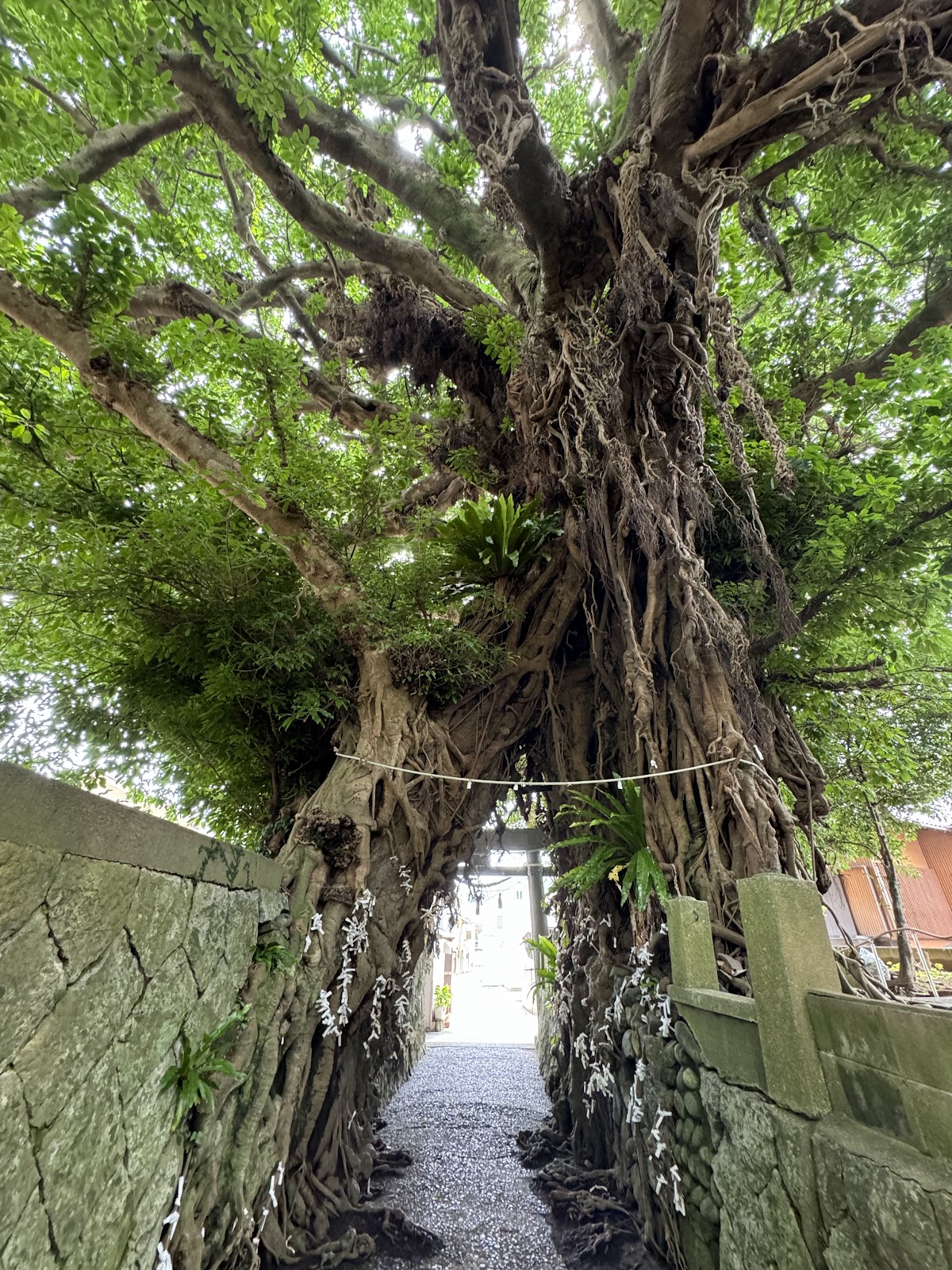
Narao Shrine, located in Shin-Kamigoto Town, Minami-Matsuura District, Nagasaki Prefecture, is a shrine enveloped in a mystical atmosphere, with a giant banyan tree, designated as a national natural monument, covering the approach to the shrine. Its history, dating back to the Keicho era, and the banyan tree standing like a natural torii gate, captivate visitors, making it a representative power spot in Shin-Kamigoto Town, attracting many worshippers.
This article comprehensively introduces information you should know before visiting Narao Shrine, including its history, enshrined deities, highlights, access methods, and surrounding tourist spots.
History and Origin of Narao Shrine
Migration from Kishu and the Founding of the Shrine
The history of Narao Shrine dates back to the Keicho era (1596-1615). During this period, many fishermen from Hirokawa Town, Wakayama Prefecture (then known as Kishu Hiroura), migrated to the Goto Islands and established a fishing base in the Narao area. They cherished the faith of their homeland, and the enshrinement of a divided spirit of the Kishu Seven Shrines Gongen in this area is considered the origin of the present-day Narao Shrine.
The Kishu Seven Shrines Gongen refer to deities associated with the Kumano faith of Wakayama Prefecture, and were important objects of worship for fishermen praying for maritime safety and abundant catches. This shrine embodies the feelings of these migrants who, even in the distant Goto Islands, never lost their faith in the gods of their homeland.
Origin of the Place Name “Narao”
There are several theories regarding the origin of the place name “Narao,” but the most widely accepted is that it was named “Narao” because many oak trees (Nara) flourished in this area at the time. This suggests that the warm coastal climate and rich natural environment were suitable for the growth of various trees.
Even today, more than 400 years after the fishermen first settled there, the Narao district thrives as an important settlement in Shin-Kamigoto Town, and Narao Shrine continues to be preserved as the center of faith for the local residents.
Deities and Beliefs
Main Deity
The main deity of Narao Shrine is Kuninotokotachi-no-kami. In Japanese mythology, Kuninotokotachi-no-kami is a primordial deity who appeared at the creation of heaven and earth, and is revered as the fundamental deity of land formation.
This deity is worshipped as a god who brings stability and prosperity to the land, making him a fitting deity for the people of Narao who pray for safety in fishing and navigation, and for the development of their region.
Other Deities
Because it enshrines a divided spirit of the Kishu Seven Shrines, it is believed that several other deities are also enshrined there besides Kuninotokotachi-no-kami. It is highly likely that deities associated with Kumano faith, as well as deities presiding over maritime safety and abundant catches, are enshrined here, conveying the history of Narao, which prospered from fishing.
Benefits
Narao Shrine is said to offer the following benefits:
- Maritime Safety and Navigation: As a shrine worshipped by fishermen, prayers are offered for safety related to the sea.
- Prayers for Abundant Catch: Prayers are offered for the prosperity of fishing and abundant catches.
- Prayers for Longevity: There is a legend that passing under the banyan tree will bring longevity.
- Family Safety: Faithful as a guardian deity protecting the region.
- Good Fortune and Prosperity: Energy as a power spot.
The Natural Torii Gate “Narao’s Banyan Tree” is a Power Spot
The Banyan Tree, a Nationally Designated Natural Monument
The biggest highlight of Narao Shrine is the giant banyan tree that straddles the approach to the shrine. This banyan tree is designated a national natural monument, and its appearance, covering the approach to the shrine like a natural torii gate, is truly breathtaking.
The tunnel of banyan trees that unfolds beyond the torii gate creates a mystical atmosphere, giving visitors the feeling of entering another world. Many worshippers visit specifically to see this banyan tree, and it is also a popular spot for photography.
Characteristics and Ecology of the Banyan Tree
The banyan tree (Ficus microcarpa) is an evergreen tree belonging to the fig genus of the mulberry family, and is a warm-climate plant native to the Ryukyu Islands. In Japan, it grows wild along the coast of southwestern Japan and prefers a warm climate.
It is believed that the banyan tree at Narao Shrine was planted here after seeds were carried by migratory birds. The banyan tree has the characteristic of growing epiphytically on other trees, and it grows into a unique shape with its aerial roots hanging down. The banyan tree at Narao Shrine, with its distinctive aerial roots and branches covering the entire approach to the shrine, displays a magnificent natural beauty.
Legend of Longevity
Locally, there’s a legend that “passing under the banyan tree will bring longevity,” and many visitors pass through this natural torii gate, praying for health and long life. Many pray for the health and longevity of their families, drawing on the vitality of the banyan tree, which is said to be hundreds of years old.
In particular, many people visit with their beloved parents and grandparents, passing under the banyan tree together, praying for family bonds and long life.
Attractiveness as a Power Spot
Narao Shrine is known as a representative power spot in Shin-Kamigoto Town. The mystical space created by the banyan tree, the sacred atmosphere of the shrine with its long history, and its location near the sea combine to give visitors a special energy.
Standing beneath the banyan tree, you can forget the hustle and bustle of the city and feel the power of nature and the blessings of the gods. It is a place loved by many as a place to calm the mind, offer quiet prayer, heal the fatigue of daily life, and gain new vitality.
Highlights of the Shrine Grounds
Main Hall
The main hall, located beyond the approach and banyan tree, is characterized by its beautiful architecture in soft pastel colors. While it is a traditional shrine building, the warm colors harmonize with the atmosphere of the tropics.
The main hall enshrines the deities, including Kuninotokotachi-no-Mikoto, and you can quietly offer your prayers. We recommend spending a leisurely time praying in the grounds where a pleasant sea breeze blows.
Torii Gate and Approach
After passing through the torii gate at the entrance of the shrine, a “natural torii gate” made of banyan trees immediately appears. The path leading from the first torii gate to the second torii gate (a banyan tree) is a sacred space that truly evokes the feeling of entering a divine realm.
As you walk along the path, you can gradually experience the feeling of transitioning from the everyday world to the world of the gods.
Natural Environment of the Shrine Grounds
Besides the banyan trees, the grounds of Narao Shrine are blessed with abundant nature. The vegetation, unique to its proximity to the sea, allows visitors to enjoy the changing scenery throughout the seasons. In particular, the vitality of the plants that grow under the sea breeze makes visitors feel the greatness of nature.
Festivals and Annual Events
Annual Grand Festival
At Narao Shrine, the annual grand festival is held every year, with local residents gathering for religious ceremonies. As befits a region that prospered from fishing, the ceremonies center around prayers for maritime safety and abundant catches, preserving the region’s traditional culture.
Other Annual Events
- Hatsumode (First Shrine Visit of the New Year): Bustling with worshippers praying for happiness in the new year and safety throughout the year.
- Setsubun Festival: An event to ward off evil and invite good fortune.
- Autumn Grand Festival: A prayer for gratitude for the harvest and for a bountiful harvest next year.
For specific festival dates, we recommend checking with the Shin-Kamigoto Town Tourism Association or local tourist information centers.
Basic Information & Access
Location (Address)
332 Narao-go, Shin-Kamigoto-cho, Minami-Matsuura-gun, Nagasaki Prefecture 853-3101
Phone Number
0959-44-0323
Access Method
From Narao Port
- Walking: Approximately 10 minutes
- Car: Approximately 3 minutes
Narao Port is one of the main ports in Shin-Kamigoto Town and can be accessed by ferry from Nagasaki Port and Sasebo Port. The shrine is within walking distance from the port, so you can enjoy a stroll along the way.
Nearest Bus Stop and Route
You can use the town buses and Seihoku buses that operate within Shin-Kamigoto Town. The nearest bus stop is “Narao,” and the shrine is just a few minutes’ walk from there. Since the bus schedule is limited, it is recommended to check it in advance.
Access by Car
From the main roads in Shin-Kamigoto Town, you can reach the Narao area by following the signs. There is some parking space around the shrine, but it may get crowded during peak seasons, so it is recommended to visit with plenty of time to spare.
Visiting Hours
The shrine grounds are generally open for free visits. However, it is recommended to avoid visiting early in the morning or late at night and instead visit during daylight hours. For capturing the beauty of the banyan trees in photographs, the soft morning light is especially recommended.
Admission Fee
Free
Nearby Tourist Attractions
Fukusenji Temple (Kashiragashima Catholic Church)
Within driving distance from Narao Shrine lies Kashiragashima Catholic Church, a component of the World Cultural Heritage site “Hidden Christian Sites in the Nagasaki Region.” This beautiful stone church is a must-see for anyone visiting Shin-Kamigoto Town.
Around Narao Port
Around Narao Port, you’ll find restaurants serving fresh seafood and shops selling local specialties. Enjoy Goto udon noodles and dishes made with fresh seafood.
Yakagame Park
This park offers a panoramic view of Shin-Kamigoto Town’s beautiful coastline and is accessible from the Narao area. The view from the observation deck is spectacular, allowing you to fully appreciate the natural beauty of the Goto Islands.
Aosagura Catholic Church
This is another beautiful church designated as a National Important Cultural Property. The magnificent brick architecture tells the story of Goto’s history.
Local Gourmet Information
Goto Udon
When visiting Shin-Kamigoto Town, you absolutely must try “Goto Udon.” It features thin noodles with a firm, chewy texture, giving it a unique mouthfeel. There are also restaurants serving Goto Udon around the Narao area.
Fresh Seafood
In Narao, a fishing town, you can enjoy dishes made with fresh seafood. Local restaurants offer set meals and sashimi made with fish caught that day.
Kankoro Mochi
“Kankoro Mochi,” a traditional confection of the Goto Islands, is appealing for its simple sweetness made from sweet potatoes. It makes a perfect souvenir.
Notes and Manners for Visiting Shrines
Attire
Please dress in clean, understated clothing appropriate for visiting a shrine. The area under the banyan tree offers shade, but it can get hot in the summer, so we recommend bringing a hat, parasol, and plenty of water.
Photography
Photography of the banyan tree and the temple grounds is permitted, but please be considerate of other visitors. It is considered good manners to refrain from taking photos inside the main hall.
Nature Conservation
The banyan tree is a national natural monument, so please be careful not to touch or damage it. Absolutely avoid breaking branches or pulling on aerial roots.
Taking Your Trash Home
If there are no trash cans on the temple grounds, please be sure to take your trash home with you. Individual consideration is essential to protect the beautiful natural environment.
Travel Tips for Shin-Kamigoto Town
Accommodation
Shin-Kamigoto Town, including the Narao area, offers a variety of accommodations, including guesthouses and hotels. You can choose according to your preference, from guesthouses where you can experience island life to hotels with ocean views.
Getting Around the Island
Shin-Kamigoto Town is large, so renting a car is convenient. You can rent a car at the port and freely explore the island. Buses also operate, but the number of services is limited, so be sure to check the timetable in advance.
Island Specialties
Shin-Kamigoto Town boasts a wealth of attractive local products, including Goto udon noodles, camellia oil, kankoro mochi (sweet rice cakes), and fresh seafood. Choosing souvenirs is one of the joys of your trip.
Best Season
Shin-Kamigoto Town can be visited year-round, but the climate is particularly mild from spring to autumn, making it ideal for sightseeing. You can enjoy swimming in the sea during the summer, but caution is advised during typhoon season. Winter is relatively mild, but the sea can be rough, so check the ferry schedule.
Summary
Narao Shrine is a shrine whose charm lies in the mystical atmosphere created by the banyan tree, designated as a national natural monument, and its history dating back to the Keicho era. Fishermen who migrated from Kishu enshrined the gods of their homeland, and the shrine has been protected by the local people for over 400 years.
Passing through the banyan tree that covers the approach to the shrine like a natural torii gate is said to bring blessings of longevity, making it a representative power spot of Shin-Kamigoto Town and attracting many visitors. Its convenient location, about a 10-minute walk from Narao Port, is also a major draw, making it a must-visit spot when sightseeing in Shin-Kamigoto Town.
At Narao Shrine, enveloped in beautiful nature, deep history, and a mystical atmosphere, you can quietly offer your prayers and fully enjoy the island time of the Goto Islands. Combined with nearby tourist attractions and gourmet food, you’re sure to enjoy a fulfilling trip to Shin-Kamigoto Town.


