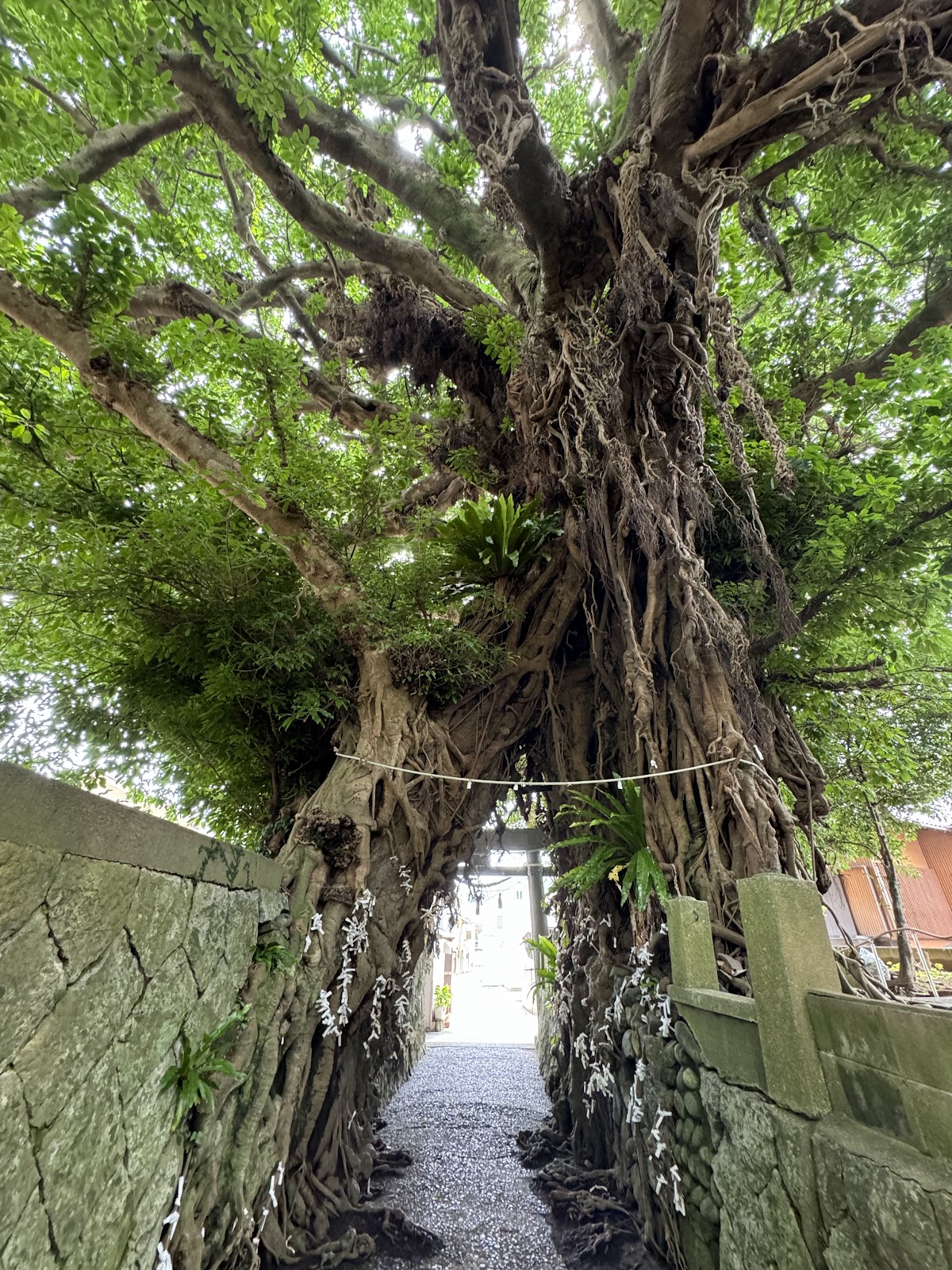
Complete Guide to Shijiki Haguro Shrine (Iwaseura-go, Shin-Kamigoto-cho, Nagasaki Prefecture)
Shijiki Haguro Shrine, located in Iwaseura-go, Shin-Kamigoto-cho, Minami-Matsuura-gun, Nagasaki Prefecture, is an important shrine that conveys the history and culture of the Goto Islands to the present day. Established in 1688 (Genroku 1) as a prayer shrine for the lord of the Goto domain, it was deeply revered by the lord and local residents throughout the Edo period. This article provides a detailed explanation of Shijiki Haguro Shrine, including its history, enshrined deities, rituals, and essential information for visitors.
Basic Information on Shijiki Haguro Shrine
Location and Access
Address: 703-9 Suginomoto, Iwaseura-go, Shinkamigoto-cho, Minamimatsuura-gun, Nagasaki Prefecture
Postal Code: 853-3102
Corporate Number: 3310005003773
Shijiki Haguro Shrine is located in the Iwaseura district of Shinkamigoto-cho, approximately 10 minutes by car from Narao Port. The surrounding area is rich in nature, maintaining a peaceful environment for worship.
Shrine Overview
Shijiki Haguro Shrine has long been revered by local residents as the tutelary deity of Narao Higashigake (Narao, Iwaseura, Higashikamiura, Tainoura, Asetsu, Ota). It held the status of a prayer shrine for the lords of the Goto domain, and during the Edo period, it was an important shrine that the lords always visited when they traveled to Edo for their sankin-kotai (alternate attendance) duties.
History of Shijiki Haguro Shrine
Founding and the Haguro Gongen Shrine Era
The exact founding date of Shijiki Haguro Shrine is unknown, but it was initially called “Haguro Gongen Shrine.” Haguro Gongen is a Shugendo (mountain asceticism) belief originating from Mount Haguro, one of the three sacred mountains of Dewa in Yamagata Prefecture. Its spread to the Goto Islands is thought to be related to the development of maritime transportation from the medieval to the early modern period.
According to the shrine’s remaining ridgepole inscriptions and records, it is recorded that the shrine was rebuilt in September of the first year of the Jōkyō era (1684). This period corresponds to the early Edo period, a time when the Goto Domain’s governing system was stable.
Establishment in the First Year of the Genroku Era and the Goto Domain Lord’s Prayer Shrine
In the first year of the Genroku era (1688), Shijiki Haguro Shrine was officially established as a prayer shrine for the Goto Domain lord. The Goto Domain ruled the Goto Islands, and due to its strategic location at a key point for maritime traffic, maritime safety was a crucial issue for the domain’s survival.
Successive lords of the Goto Domain would always visit this shrine to pray for safe passage at sea during their journeys to Edo for the sankin-kotai (alternate attendance) system. As a shrine visited by the lords themselves, Shijiki Haguro Shrine held a religiously and politically significant position within the Goto Domain.
Reconstruction in 1864
In 1864 (Genji 1), Shijiki Haguro Shrine was rebuilt. This period coincided with the turbulent end of the Edo period, a time of great change throughout Japan. Even so, the fact that the shrine was rebuilt as a center of local faith demonstrates how important Shijiki Haguro Shrine was to the local residents.
Developments After the Meiji Era
With the arrival of the Meiji era, the separation of Shinto and Buddhism forced shrines throughout the country to undergo significant transformations. Shijiki Haguro Shrine also changed its name from “Haguro Gongen-gu” to its current name, “Shijiki Haguro Shrine,” and began a new chapter as a Shinto shrine.
Even as the eras of Showa, Heisei, and Reiwa changed, Shijiki Haguro Shrine continued to attract the faith of local residents, primarily in the Iwaseura area, as the tutelary deity of the region.
Deities and Divine Virtues
Main Deity
The deities enshrined at Shijiki Haguro Shrine are believed to be gods descended from Haguro Gongen. Haguro Gongen is generally considered a syncretic deity combining Ideha-no-kami, Ukanomitama-no-mikoto, and Oyamatsumi-no-kami.
Divine Virtues
The divine virtues of Shijiki Haguro Shrine are said to be as follows:
Maritime Safety: Since the lords of the Goto domain prayed for safe passage at sea during their sankin-kotai (alternate attendance) journeys, the shrine is worshipped as a guardian deity of safe voyages and maritime traffic.
Abundant Harvest: In the Goto Islands, where agriculture and fishing are thriving, the shrine has been revered as a place to pray for bountiful harvests and catches.
Protection of the Region: As the tutelary deity of Narao Higashigake, it is worshipped as a god that protects the safety and prosperity of the local residents.
Good Fortune and Prosperity: It is believed to grant the fulfillment of worshippers’ wishes, ensure family safety, and bring business prosperity.
Rituals and Annual Events
Annual Grand Festival
Shijiki Haguro Shrine holds various rituals throughout the year. The annual grand festival, in particular, is an important regional event, attracting many worshippers. The annual festival features a procession of portable shrines and dedication ceremonies, providing an opportunity to strengthen community bonds.
Monthly Festivals and Daily Rituals
Monthly festivals are held to pray for the safety and prosperity of the community. Annual Shinto events such as New Year’s visits, Setsubun festivals, and summer purification rituals are also held, making the shrine a central part of the religious life of the local residents.
Individual Prayers
Shijiki Haguro Shrine also accepts individual prayers. People visit the shrine with various wishes, including prayers for safety, family safety, success in exams, and recovery from illness.
Highlights of the Shrine Grounds
Shrine Building
Rebuilt in 1864 (Genji 1), the shrine building retains the characteristics of late Edo period shrine architecture. Its robust construction, designed to withstand the unique climate of the Goto Islands, conveys a sense of history, having endured many years of wind and rain.
Shrine Precincts
Besides the main shrine building, several smaller shrines are enshrined within the grounds of Shijiki Haguro Shrine. These shrines reflect various local beliefs and, along with the main deity, are revered by the local residents.
Stone Sculptures and Votive Offerings
Within the shrine grounds are stone sculptures such as stone lanterns and guardian lion-dogs, donated by generations of worshippers. Some of these offerings bear inscriptions of dates from the Edo period to the modern era, making them valuable historical documents that tell the story of the shrine’s long history.
Natural Environment
The grounds of Shijiki Haguro Shrine are surrounded by the rich natural beauty of the Goto Islands. Evergreen broad-leaved trees flourish in the shrine’s grove, allowing visitors to experience the changing seasons. The grounds are particularly enveloped in the beautiful colors of nature during the fresh greenery of spring and the vibrant autumn foliage.
Shrine Culture of Shin-Kamigoto Town
Shrine Group in Narao Higashigake
Shijiki Haguro Shrine is positioned as the tutelary shrine of Narao Higashigake (Narao, Iwaseura, Higashikami-no-ura, Tai-no-ura, Asetsu, Ota). In addition to Shijiki Haguro Shrine, many other shrines are scattered throughout this area, including Narao Shrine, Tenman Shrine, Yamagami Shrine, Daio Shrine, and Kotohira Shrine.
Relationship with Shijiki Haguro Shrine (Ota)
In addition to the Shijiki Haguro Shrine in Iwaseura-go, Shin-Kamigoto Town also has a “Shijiki Haguro Shrine” in Ota-go. The Ota Shijiki Haguro Shrine enshrines Tokiwake-no-miko and Ukanomitama-no-kami as its deities and is said to have been founded in 1575. In 1955, a new shrine building was constructed at its current location as “Shijiki Haguro Shrine.” The existence of a shrine with the same name indicates that the place name “Shijiki” and the “Haguro” faith were widely prevalent in this region.
Goto Domain and Shrine Faith
In the Goto Domain, the lord himself deeply revered shrines and devoted himself to their maintenance and management. The fact that Shijiki Haguro Shrine was designated as the lord’s prayer shrine indicates that the shrine functioned not merely as a religious facility, but as an integral part of the domain’s governing system.
During the Edo period’s sankin-kōtai system (alternate attendance system), the lord of the Goto Domain had to undertake a long voyage from Nagasaki to Edo. The safety of maritime travel was a matter of great importance, concerning the lord’s life, and prayer at Shijiki Haguro Shrine was an indispensable ritual for him.
Etiquette and Manners for Visiting a Shrine
Basic Etiquette for Visiting a Shrine
When visiting Shijiki Haguro Shrine, please observe the following basic etiquette:
- Bow at the Torii Gate: Before passing through the torii gate, bow to show respect for entering the sacred area.
- Purification at the Water Basin: Purify your hands and mouth at the water basin. Purify your left hand, then your right hand, then your mouth, and finally your left hand again.
- Walking Along the Path: The center of the path is considered the path of the gods, so walk along the edges.
- Worship at the Main Hall: At the main hall, worship using the two bows, two claps, and one bow ritual. After offering your donation and ringing the bell, bow deeply twice, clap twice, and finally bow deeply once.
- Bow upon Exit: When leaving the shrine grounds, turn around and bow after passing through the torii gate.
Attire and Manners for Visiting a Shrine
When visiting a shrine, clean and subdued attire is desirable. Especially when performing a formal worship service or receiving prayers, formal attire is recommended. It is also important to remain quiet within the shrine grounds and be considerate of other visitors.
Tourism in Shin-Kamigoto Town and Shijiki Haguro Shrine
Nearby Tourist Spots
When visiting Shijiki Haguro Shrine, we recommend also visiting other tourist spots in Shin-Kamigoto Town.
Narao Shrine: Located in the Narao district near Iwaseura-go, this shrine offers a glimpse into the region’s history.
Yakagame no Daryu: A representative scenic spot in Shin-Kamigoto Town, where strangely shaped rocks jutting out into the sea create a magnificent landscape.
Kashiragashima Catholic Church: A beautiful stone church, one of the constituent sites of the World Cultural Heritage site “Hidden Christian Sites in the Nagasaki Region.”
Aosagura Catholic Church: A brick church built during the Meiji era, designated as an Important Cultural Property.
Access to Shin-Kamigoto Town
Shin-Kamigoto Town can be accessed by ferry or high-speed boat from Nagasaki Port or Sasebo Port.
From Nagasaki Port: Approximately 1 hour 30 minutes to 2 hours by high-speed boat, approximately 3 hours by ferry
From Sasebo Port: Approximately 2 hours 30 minutes to 3 hours by ferry
After arriving at Narao Port, you can take a rental car or taxi to Shijiki Haguro Shrine.
History and Culture of the Goto Islands
Geography and History of the Goto Islands
The Goto Islands are an archipelago consisting of over 140 islands located west of Nagasaki Prefecture. From ancient times, it played an important role as a hub for exchange with the continent and is also known as a port of call for Japanese envoys to Tang China.
In the Middle Ages, the Uku clan, a branch of the Matsuura clan, ruled the area, later changing their name to the Goto clan and continuing until the Edo period. During the Edo period, it was a small domain of just over 10,000 koku as the Fukue Domain (Goto Domain), but it held an important position as a key point for maritime traffic.
History of Hidden Christians
The Goto Islands are also known for the history of hidden Christians during the Edo period’s ban on Christianity. In particular, in the 19th century, many Christians migrated from the Sotome region and secretly continued to practice their faith. After religious freedom was restored in the Meiji era, many churches were built, and even today, beautiful church architecture can be found scattered throughout the islands.
Shin-Kamigoto Town, where the Shijiki Haguro Shrine is located, is also one of the stages of this history, forming a unique cultural landscape where Shinto and Christianity coexist.
Nature and Life in the Goto Islands
The Goto Islands are blessed with a warm oceanic climate and a rich natural environment. Fishing and agriculture are the main industries, and local specialties such as Goto udon noodles, Goto beef, and camellia oil are particularly well-known.
In recent years, tourism has also developed, leveraging the beautiful natural scenery and rich history and culture, attracting many tourists.
Cultural Value of Shijiki Haguro Shrine
Value as Historical Documents
The ridgepole inscriptions and shrine records remaining at Shijiki Haguro Shrine are valuable historical documents for understanding the history of the Goto Domain, the changes in the local community, and the reality of religious beliefs. In particular, documents showing the relationship between the Goto Domain lord’s sankin-kotai (alternate attendance) and shrine visits are of great significance for studying the relationship between daimyo (feudal lords) and shrines during the Edo period.
Architectural Historical Value
The shrine building, rebuilt in 1864, retains the characteristics of late Edo period shrine architecture and is valuable for understanding the style of shrine architecture in the Goto Islands. This is an excellent example of how shrine architecture has been maintained within the geographical conditions of an isolated island.
Folkloric Value
The local rituals and annual events centered around Shijiki Haguro Shrine are important elements that convey the folk culture of the Goto Islands. They preserve unique forms of worship specific to island regions, such as the worship of tutelary deities, prayers for maritime safety, and prayers for abundant harvests.
Preservation and Succession of Shijiki Haguro Shrine
Role of the Local Community
The maintenance and management of Shijiki Haguro Shrine are supported by the local community. The shrine is protected in various ways, including cleaning activities by parishioners and local residents, the operation of festivals, and the repair of the shrine buildings.
While depopulation and an aging population are progressing, and the transmission of faith to younger generations is a challenge, efforts continue to protect the shrine as a symbol of the region’s history and culture.
Utilization as a Tourism Resource
Shijiki Haguro Shrine is also one of the important tourism resources of Shin-Kamigoto Town. While preserving its historical value, the shrine is expected to contribute to regional development by being open to tourists.
Efforts are needed to convey the charm of Shijiki Haguro Shrine to more people through the installation of appropriate signage, improvement of the worship environment, and enhancement of information dissemination.
Summary
Shijiki Haguro Shrine is a historical shrine that has attracted the faith of the local community for over 300 years since its establishment in 1688 (Genroku 1) as a prayer shrine for the lord of the Goto Domain. It has a history of the lord of the Goto Domain praying for safe passage at sea during his sankin-kotai (alternate attendance) journeys, and is revered by local residents as the tutelary deity of Narao Higashigake.
Located in Suginomoto, Iwaseura-go, Shinkamigoto-cho, Minamimatsuura-gun, Nagasaki Prefecture, Shijiki Haguro Shrine is a valuable cultural heritage that conveys the history and culture of the Goto Islands to the present day. By visiting the shrine in its tranquil grounds and reflecting on its history, you can experience the rich spiritual culture of the Goto Islands.
When you visit Shin-Kamigoto Town, be sure to stop by Shijiki Haguro Shrine and experience its history and divine blessings. Visiting the shrine surrounded by beautiful nature will be a valuable experience that will cleanse your soul and give you renewed energy.