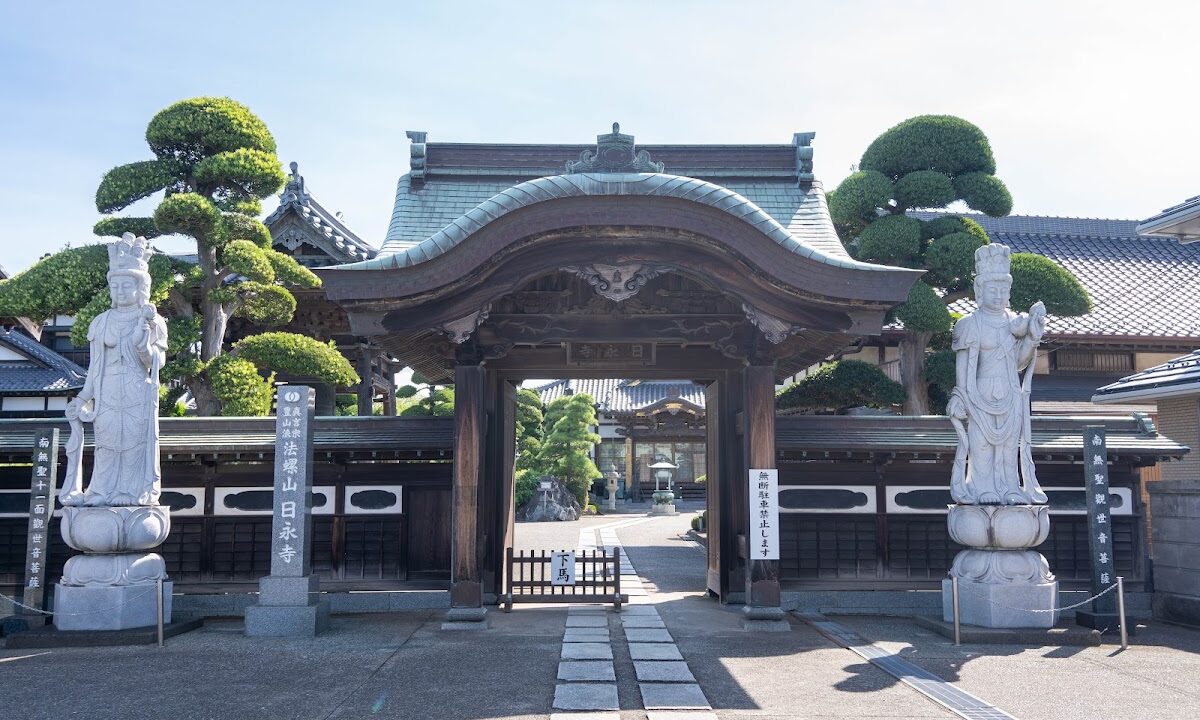
Nichieiji Temple (Inage Ward, Chiba City, Chiba Prefecture) Complete Guide | Thorough Explanation of History, Access, and Cemetery Information
Nichieiji Temple, located in Konakadai-cho, Inage Ward, Chiba City, Chiba Prefecture, is a historic temple belonging to the Buzan branch of the Shingon sect. This guide provides a detailed explanation of this temple, which has a long history and is beloved by the local community, including its origins, grounds, cemetery information, and access methods.
Basic Information about Nichieiji Temple
Nichieiji Temple, a Shingon sect temple of the Buzan branch, stands in a residential area of Inage Ward, Chiba City, and serves as a center of local faith.
Location and Contact Information
- Location: 730 Konakadai-cho, Inage-ku, Chiba City, Chiba Prefecture
- Phone Number: 043-252-0445
- Sect: Shingon-shu Buzan-ha
- Opening Hours: 9:00 AM – 5:00 PM
About Shingon-shu Buzan-ha
Shingon-shu Buzan-ha is a Buddhist sect of Shingon Buddhism that inherits the teachings of Kobo Daishi Kukai. Its head temple is Hase-dera Temple in Sakurai City, Nara Prefecture, and it has approximately 3,000 temples nationwide. It is characterized by its emphasis on rituals such as incantations, prayers, and goma fire rituals, based on the teachings of esoteric Buddhism.
Nichiei-ji Temple, as a temple of Shingon-shu Buzan-ha, performs these traditional Buddhist rituals, supporting the religious lives of the local people.
History and Origins of Nichiei-ji Temple
History from the Kamakura Period
Nichiei-ji Temple is said to have been founded during the Kamakura period. While many details regarding its exact founding date and the founder are unclear due to the loss of historical documents during the war (discussed later), it is certainly an ancient temple with a history spanning several hundred years.
The Kamakura period saw the establishment of the samurai government and a new development in Buddhism. Established Buddhist sects, including Shingon Buddhism, spread widely among the samurai class and common people. Nichiei-ji Temple was founded during this period as a local center of faith, and it is believed to have continued to protect Buddhist teachings in Chiba ever since.
Damage from War and Reconstruction
A major turning point in the history of Nichiei-ji Temple was the war damage of 1945. Nichiei-ji Temple suffered extensive damage from air raids at the end of World War II. The main hall and other temple buildings were destroyed, and the temple’s historical records and valuable documents were also lost.
The loss of these ancient records means that much of the detailed history and historical events of Nichieiji Temple have been lost, which is a great loss from the perspective of historical research. Currently, only fragmentary information remains about what Nichieiji Temple looked like and what activities it conducted before the war.
Post-War Reconstruction
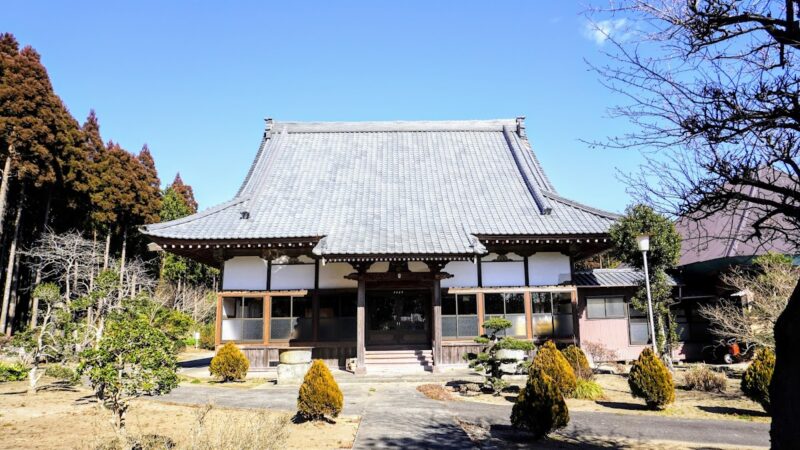
Reconstruction from the war was achieved through the faith and efforts of the local people. In 1952 (Showa 27), the current main hall was rebuilt. The reconstruction of the main hall just seven years after the war, considering the difficult economic conditions at the time, speaks volumes about the strong faith and unity of the parishioners and local residents.
The rebuilt main hall has continued to function as the center of faith in the community for over 70 years. Having overcome the turmoil of the post-war period, and through the transitions of the high economic growth era, the Heisei era, and the Reiwa era, Nichieiji Temple has remained a constant presence in the community.
Temple Grounds and Facilities
Size of the Temple Grounds
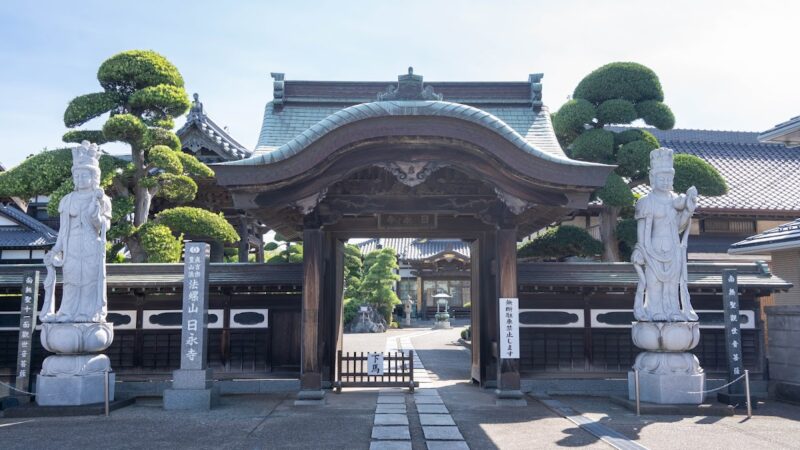
Nichieiji Temple’s grounds cover approximately 550 tsubo (approximately 1,818 square meters). Despite being located in a residential area, this size provides ample tranquility and peace for visitors.
The grounds include religious facilities such as the main hall, as well as a cemetery where thousands of souls are enshrined. It boasts a relatively large site for an urban temple, with a spacious layout.
Parking Available
Nichieiji Temple has a parking lot for visitors. Convenient access by car is a significant advantage for modern visitors. Since visitors often bring flowers and incense when visiting graves, the availability of parking reduces the burden.
Main Hall and Religious Facilities
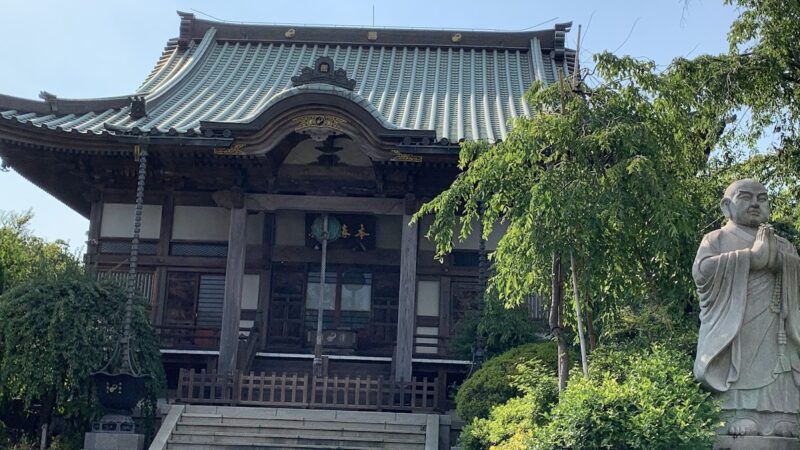
The main hall, rebuilt in 1952, possesses a solemn atmosphere befitting a Shingon Buddhist temple. Daily services, memorial services, and other religious ceremonies are held in the main hall.
As a Shingon Buddhist temple, it is likely equipped with facilities necessary for esoteric Buddhist rituals, such as a goma altar. It probably also performs blessings and prayers for the fulfillment of the wishes of its parishioners and followers.
About the Cemetery/Burial Grounds of Hinaga-ji Temple
Characteristics of Temple Cemeteries
Hinaga-ji Temple operates a temple cemetery, offering plots for general burial. A temple cemetery is a cemetery managed and operated by a temple, and has characteristics that differ from public cemeteries and private burial grounds.
Advantages of Temple Cemeteries:
- Long-term peace of mind due to perpetual management by the temple
- Convenience of being able to hold memorial services and rites at the same temple
- Easy consultation on Buddhist matters due to the presence of resident monks
- A religious atmosphere for remembering the deceased
Points to Note about Temple Cemeteries:
- In most cases, becoming a parishioner of that temple is a requirement
- The religious sect is limited (in the case of Nichieiji Temple, it is the Shingon-shu Buzan sect)
- Obligations as a parishioner (payment of maintenance fees, participation in events, etc.)
Cemetery Size and Number of Graves
Nichieiji Temple’s cemetery grounds enshrine several thousand spirits. This is a considerable size for a temple in the urban area of Inage Ward, Chiba City, and is evidence of the faith it has attracted from local people over many years.
The cemetery is maintained within a part of the temple grounds, with rows of appropriately divided general burial plots. Each burial plot is managed on a family basis, and ancestral memorial services are performed.
Perpetual Use Fee and Costs
The perpetual use fee for a plot at Hinagaji Temple’s cemetery varies depending on the size and location of the plot, but is generally in the range of 300,000 to 1,200,000 yen.
Breakdown of Costs:
- Perpetual Use Fee: Fee for the right to use the cemetery land perpetually (approximately 300,000 to 1,200,000 yen)
- Gravestone Cost: The cost of the gravestone itself and construction (separate contract with a stonemason)
- Management Fee: Annual cemetery management fee (varies by temple)
- Becoming a Temple Member: Fee for becoming a temple member (varies by temple)
These costs vary greatly depending on the location of the cemetery, the size of the plot, and the design and material of the gravestone. For a detailed estimate, we recommend contacting Hinagaji Temple directly.
Procedure for Building a Grave
The procedure for building a grave at Hinagaji Temple is generally as follows:
- Inquiry to the Temple: First, contact Nichieiji Temple to check the availability and conditions of burial plots.
- On-site Visit: Actually visit the cemetery to check the location and atmosphere of the plots.
- Plot Selection: Choose your desired plot and apply for perpetual use.
- Becoming a Temple Member: In the case of temple cemeteries, becoming a temple member is often a requirement.
- Selecting a Stone Mason: Choose a stone mason who will design and construct the tombstone.
- Tombstone Construction: Design, manufacture, and installation of the tombstone.
- Eye-Opening Ceremony: A memorial service to imbue the completed tombstone with a spirit.
Cemetery Management and Maintenance
At Nichieiji Temple, a temple cemetery, the entire grounds are well-maintained. While the temple handles cleaning of common areas and maintenance of plants, cleaning and offering flowers at individual grave sites are generally the responsibility of the plot user.
If regular visits to the grave are difficult, you may be able to receive services such as proxy memorial services by consulting with the temple.
Access Information
Access by Train
Nichieiji Temple is accessible from several stations.
From JR Sobu Main Line/Chuo Sobu Line “Inage Station”:
- Distance: Approximately 0.9 km
- Walking time: Approximately 12-15 minutes
- Inage Station is a major station where rapid trains also stop, making it convenient to access from the Tokyo area.
From Keisei Chiba Line “Keisei Inage Station”:
- Distance: Approximately 1.0 km
- Walking time: Approximately 13-16 minutes
- A convenient route for Keisei Line users.
Walking Route
The walking route from Inage Station is northwest of the station exit. It’s a quiet route through a residential area, with a shopping street along the way where you can purchase offerings such as flowers.
Access by Car
As mentioned above, Nichieiji Temple has a parking lot, making it convenient to access by car.
Access from Major Roads:
- Approximately 1.5 km north from National Route 14 (Chiba Kaido)
- Approximately 3 km from the Keiyo Expressway “Anagawa IC”
When using car navigation, searching for “730 Konakadai-cho, Inage-ku, Chiba City, Chiba Prefecture” or the phone number “043-252-0445” will provide accurate directions.
Public Transportation (Bus)
You can also take a bus from Inage Station. Route buses operating within Chiba City also run towards Konakadai-cho, making it convenient on days with bad weather or heavy luggage. For the latest bus route information, please check the Chiba City transportation guide or the Chiba Chuo Bus website.
Regional Characteristics of Inage-ku, Chiba City
History and Development of Inage-ku
Inage-ku is one of the six wards that make up Chiba City, located in the northwestern part of the city. Extending from the area facing Tokyo Bay to the inland, Inage Ward forms a harmonious urban environment with residential areas, commercial districts, and educational facilities.
The name Inage has a long history; during the Edo period, it flourished as a temple town for Inage Asama Shrine. From the Meiji era onward, it developed as a commuter area for Tokyo, and particularly after World War II, it rapidly became a residential area.
Konakadai-cho Area
Konakadai-cho, where Hinaga-ji Temple is located, is an area within Inage Ward that has developed as a residential area. Amidst the wave of urbanization after the war, farmland and open fields were converted into residential areas, forming the residential area we see today.
The area has schools and parks, creating a calm living environment with many families. Hinaga-ji Temple continues to function as a spiritual center for the residents of this area.
Surrounding Temples and Shrines
In addition to Hinaga-ji Temple, Inage Ward has many other temples and shrines.
- Inage Asama Shrine: An ancient shrine known as the guardian shrine of Inage.
- Dainichi-ji Temple: A Shingon Buddhist temple.
- Raiko-ji Temple: A Jodo Buddhist temple.
Along with these temples and shrines, Hinaga-ji Temple is an important part of shaping the religious culture of Inage Ward, Chiba City.
Memorial Services and Rituals at Hinaga-ji Temple
Annual Events
As a Shingon Buddhist temple, it is believed that various Buddhist events are held at Hinaga-ji Temple throughout the year.
Main Annual Events of the Shingon Sect:
- First Three Days of the New Year: Shushō-e (New Year’s memorial service)
- Spring Equinox Service: Ancestor memorial service centered around the spring equinox
- Obon: Urabon-e (a ceremony to welcome the spirits of ancestors)
- Autumn Equinox Service: Ancestor memorial service centered around the autumn equinox
- Kōbō Daishi Memorial Service: A memorial service on the anniversary of Kōbō Daishi’s death (March 21st)
Individual Memorial Services
In addition to the above, individual memorial services are also held upon request from parishioners and followers.
- Funeral: Wake, funeral service, and memorial service
- Annual Memorial Services: First anniversary, third anniversary, seventh anniversary, etc.
- Monthly Memorial Service: Memorial service held on the anniversary of death each month
- Eye-Opening Ceremony: Consecration of a new tombstone or Buddhist altar
- Burial Ceremony: Ceremony to place the remains in the grave
Prayer and Blessing
Shingon Buddhism is a sect of esoteric Buddhism and places great importance on blessings and prayers. It is possible that prayers are performed at Nichiei-ji Temple in response to various wishes of its followers.
- Family Safety: Praying for the health and peace of the family
- Business Prosperity: Praying for the success of one’s business
- Exorcism: Protection from misfortune during unlucky years
- Recovery from Illness: Praying for recovery from illness
- Traffic Safety: Praying for safety in vehicles, etc.
Other Forms of Memorial Service
About Perpetual Memorial Services
In recent years, due to the declining birthrate, aging population, and the rise of nuclear families, more and more people are worried about not having successors to their family graves or being unable to maintain them in the future. To meet these needs, many temples offer perpetual memorial services.
Perpetual memorial services are a system in which a temple performs memorial services for the deceased in perpetuity. Instead of individual gravestones, the remains are interred in a communal grave or ossuary, and the temple takes responsibility for continuing the memorial services.
We recommend contacting Nichieiji Temple directly to inquire whether they offer perpetual memorial services.
Consultation Regarding Grave Closure
Many people are considering “grave closure” due to reasons such as difficulty in managing a grave in a distant location or the lack of a successor.
Grave closure involves removing an existing grave and moving the remains to another location (e.g., a perpetual memorial grave, columbarium, or scattering of ashes). This process requires the following steps:
- Consultation with and permission from the current cemetery administrator
- Obtaining a reburial permit (administrative procedure)
- Removal of the tombstone and retrieval of remains
- Closing ceremony (soul removal)
- Moving to the new burial site
- Opening ceremony (soul insertion)
Nichieiji Temple may be able to assist with these consultations.
Manners When Visiting Nichieiji Temple
Basic Manners for Visiting a Temple
When visiting a temple, please observe the following basic manners.
Attire:
- If attending a memorial service, wear mourning attire or semi-formal attire.
- For regular visits to graves, wear clean and subdued clothing.
- Avoid excessive exposure or flashy clothing.
Behavior on the Temple Grounds:
- Walk quietly and do not speak loudly.
- Smoking is only permitted in designated areas (or prohibited).
- Take your trash with you.
- Obtain permission before taking photographs.
Etiquette for Visiting Graves
Items to Bring:
- Offering flowers (chrysanthemums, carnations, etc.)
- Incense sticks and matches or a lighter
- Prayer beads
- Cleaning supplies (broom, rag, bucket, etc.)
Procedure for Visiting Graves:
- Visit the main hall and greet the principal image of Buddha.
- Proceed to the grave site.
- Clean the gravestone and surrounding area.
- Fill the flower vase with water and offer the flowers.
- Fill the water basin with water.
- Light the incense sticks and place them in the incense burner.
- 8. Bow and pray, remembering the deceased.
- Clean up and leave.
- Contacting and Consulting with the Temple
- When contacting the temple for requests regarding memorial services or consultations about cemeteries, please note the following:
- Call during opening hours (9:00 AM – 5:00 PM)
- State your request concisely
- Discuss the date of the memorial service several weeks in advance of your desired date
- Do not hesitate to inquire about the cost.
Shingon Buddhist Temple Network in Chiba Prefecture
Nichiei-ji Temple, belonging to the Shingon-shu Buzan sect, has a network with Shingon Buddhist temples throughout Japan. There are many Shingon Buddhist temples in Chiba Prefecture, and they have built cooperative relationships with each other.
Shingon-shu Buzan sect temples in Chiba Prefecture sometimes hold joint training sessions and memorial services, strengthening their sectarian unity. For parishioners and believers, this network is helpful when finding a new family temple, such as when moving.
The Role of Temples in Modern Times
Center of the Local Community
In modern society, the role of temples extends beyond mere religious institutions. They also function as centers of local communities, serving as places for people to interact and as a source of spiritual support.
Nichieiji Temple, located in Konakadai-cho, Inage-ku, Chiba City, has served as a spiritual support for its residents. It is a place to reaffirm family bonds through funerals and memorial services, and a place to feel connected to ancestors through visits to graves.
End-of-Life Support
In recent years, the term “end-of-life planning” has become commonplace, and many people are now thinking about the end of their lives. Temples, as important partners in end-of-life planning, offer consultations on the following:
- Grave preparation and selection
- Pre-funeral consultation
- Consultation on posthumous names
- Buddhist advice on wills and inheritance
- How to write an end-of-life notebook
Nichieiji Temple may also offer these consultations, so we recommend contacting them if you are interested.
Mental Health Care
Modern society is stressful, and more and more people are seeking peace of mind. Temples have long been a source of comfort and support for people’s emotional troubles.
Through dialogue with monks, you can receive advice from a Buddhist perspective on life’s worries and anxieties. Furthermore, the tranquil atmosphere of the temple grounds provides a place to escape the hustle and bustle of everyday life and find peace of mind.
Summary
Located in Konakadai-cho, Inage-ku, Chiba City, Chiba Prefecture, Hinaga-ji Temple is a Shingon-shu Buzan-ha temple with a history dating back to the Kamakura period. Although its ancient records were lost in the bombing of 1945, the main hall was rebuilt in 1952, and for over 70 years since then, it has functioned as a center of local faith.
Within the approximately 550-tsubo (approx. 1820 sq ft) temple grounds, there is a cemetery where thousands of souls are enshrined. Burial plots can be acquired for perpetual use fees ranging from approximately 300,000 to 1,200,000 yen. It is easily accessible, located about 12-15 minutes on foot from JR Inage Station, and has ample parking.
As a temple cemetery, Hinaga-ji Temple goes beyond simply providing burial plots; it plays a comprehensive role in supporting the spiritual lives of its parishioners and local residents through memorial services, life counseling, and more. In modern times, when considering end-of-life planning and choosing a burial plot, a temple cemetery with a long history and tradition can be considered a safe and reliable option.
For details about the cemetery, requests for memorial services, and other inquiries, please contact Hinaga-ji Temple directly (Tel: 043-252-0445). Opening hours are 9:00 AM to 5:00 PM.
For those seeking a burial plot in Inage-ku, Chiba City, those looking for a Shingon Buddhist temple, or those seeking a trustworthy, community-based temple, Hinaga-ji Temple is a worthwhile option to consider.