Complete Guide to Nison-in Temple (Ukyo-ku, Kyoto Prefecture) | A Tranquil Ancient Temple Woven with Autumn Leaves and Two Buddha Statues
Located at the foot of Mt. Ogura in Sagano, Ukyo-ku, Kyoto City, Nison-in Temple is an ancient Tendai sect temple enveloped in tranquility, a little removed from the hustle and bustle of the Arashiyama area. Named “Nison-in” (meaning “Temple of Two Buddhas”) because it enshrines two Buddha statues as its principal deities—”Shakyamuni of Departure” and “Amida of Welcoming”—this temple, with its history dating back to the Heian period and its beautiful natural scenery throughout the seasons, continues to attract many visitors.
This article comprehensively introduces everything you need to know before visiting Nison-in Temple, from its historical background and highlights within the grounds to access information and visiting details.
History and Origin of Nison-in Temple
Founding and Imperial Prayer Temple of Emperor Saga
The official name of Nison-in Temple is “Ogurayama Nisonkyoin Kedaiji,” and it is said to have been founded during the Jōwa era (834-848) by Jikaku Daishi Ennin at the request of Emperor Saga. Emperor Saga was an emperor in the early Heian period and is known for his deep involvement in the development of the Sagano area. Many temples and shrines associated with the emperor exist in this region.
From its founding, it flourished as a Tendai sect temple, and its mountain name, “Ogurayama,” originates from Mount Ogura, which rises behind it. Mount Ogura is also known as the site where the Hyakunin Isshu (One Hundred Poets, One Poem Each) was compiled, making it a literaryly significant location.
The Two Principal Deities and Their Meaning
The temple name, Nison-in, derives from the two Buddha statues enshrined there as its principal deities. One is “Hokken no Shaka Nyorai” (Shakyamuni Buddha of Departure), and the other is “Raigo no Amida Nyorai” (Amida Buddha of Welcoming).
“Hokken” means that Shakyamuni Buddha sends sentient beings away from this world to the Pure Land, and “Raigo” means that Amida Buddha comes from the Pure Land to welcome them. In other words, these two deities symbolize the process from a person’s death to their rebirth in the Pure Land, and are important Buddhist statues that visually represent the teachings of Pure Land Buddhism. This unique composition of principal deities is a major characteristic of Nison-in that is rarely seen in other temples.
The Onin War and the History of Reconstruction
Like many other temples in Kyoto, Nison-in lost most of its buildings during the Onin War (1467-1477). Later, during the Edo period, reconstruction progressed with the support of figures such as Sanjonishi Sanesue and Suminokura Ryōi.
The current main gate is said to have been relocated from Fushimi Castle’s Yakui-mon gate, making it a valuable cultural asset that preserves the architectural style of the Momoyama period. This main gate is the face of Nison-in Temple, and its majestic presence welcomes visitors.
Highlights of the Temple Grounds
Main Gate (Yakui-mon Gate of Fushimi Castle)
A visit to Nison-in Temple begins at the main gate. This main gate is said to have been relocated from Fushimi Castle’s Yakui-mon gate, and is a valuable relic that preserves the architectural style of the Momoyama period. A Yakui-mon gate is a type of gate with supporting pillars behind the main pillars, commonly used in samurai residences and temples.
Standing before the main gate, one can feel its imposing structure and the weight of history. Passing through the gate, a beautiful approach known as “Momiji no Baba” (Maple Horse Riding Ground) unfolds before you.
The Autumn Leaves Horse Riding Path (Approach)
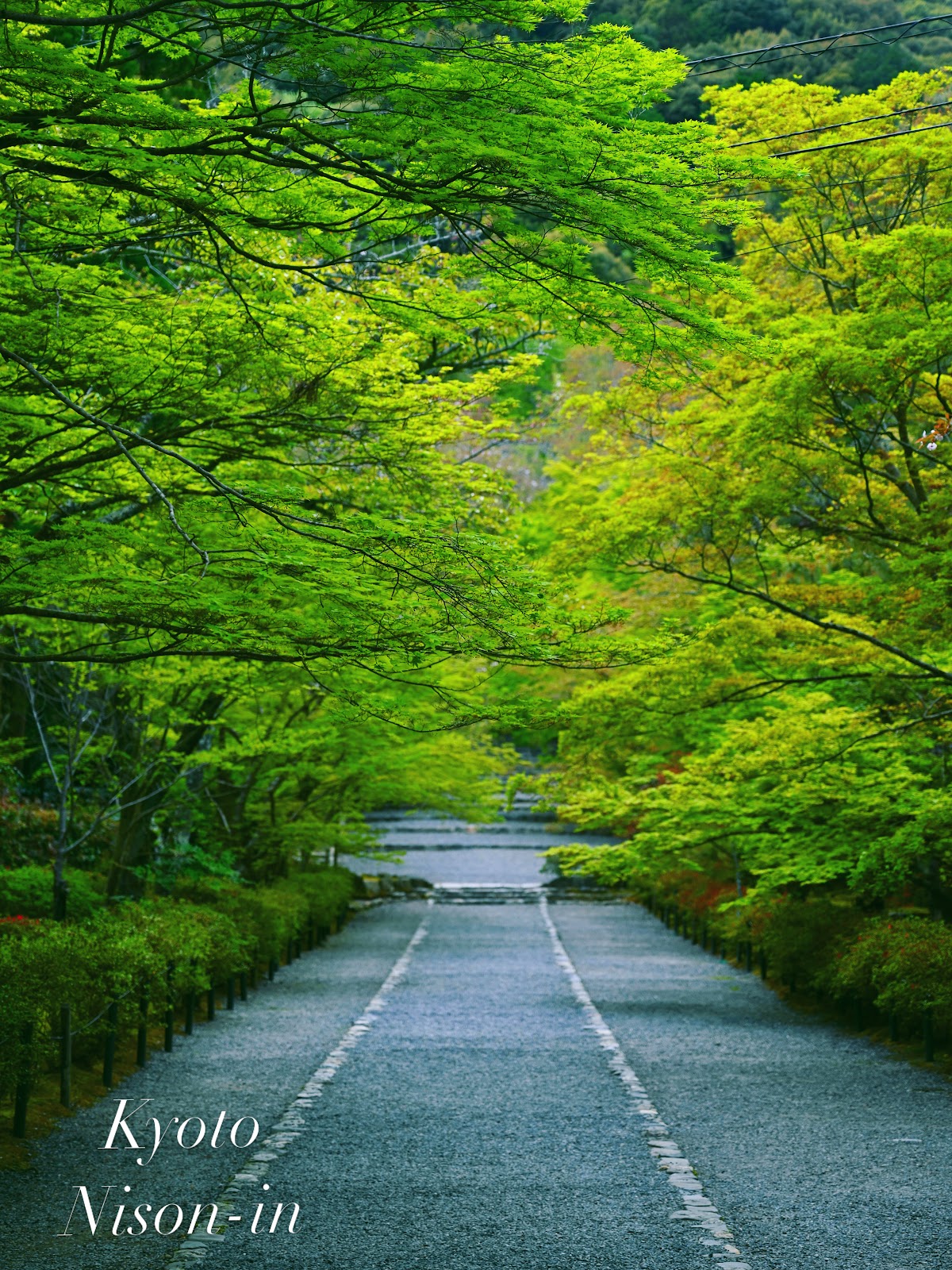
The approach leading from the main gate to the main hall is called the “Autumn Leaves Horse Riding Path” and is one of the representative landscapes of Nison-in Temple. Maple and other trees are planted on both sides of this approximately 200-meter-long path, forming a magnificent tunnel of autumn foliage.
The name “Horse Riding Path” is said to originate from the fact that horses were once ridden along this path. This gently sloping path displays different expressions in each of the four seasons: the fresh green of spring, the deep green of summer, the vibrant autumn leaves, and the snowy landscape of winter.
Especially during the autumn foliage season, the trees, colored in red and yellow, cover the path, creating a fantastical space woven from light and shadow. Compared to other famous autumn foliage spots in the Arashiyama area, it is less crowded, and the ability to enjoy the autumn leaves in peace is one of Nison-in Temple’s charms.
The Main Hall and the Two Principal Images
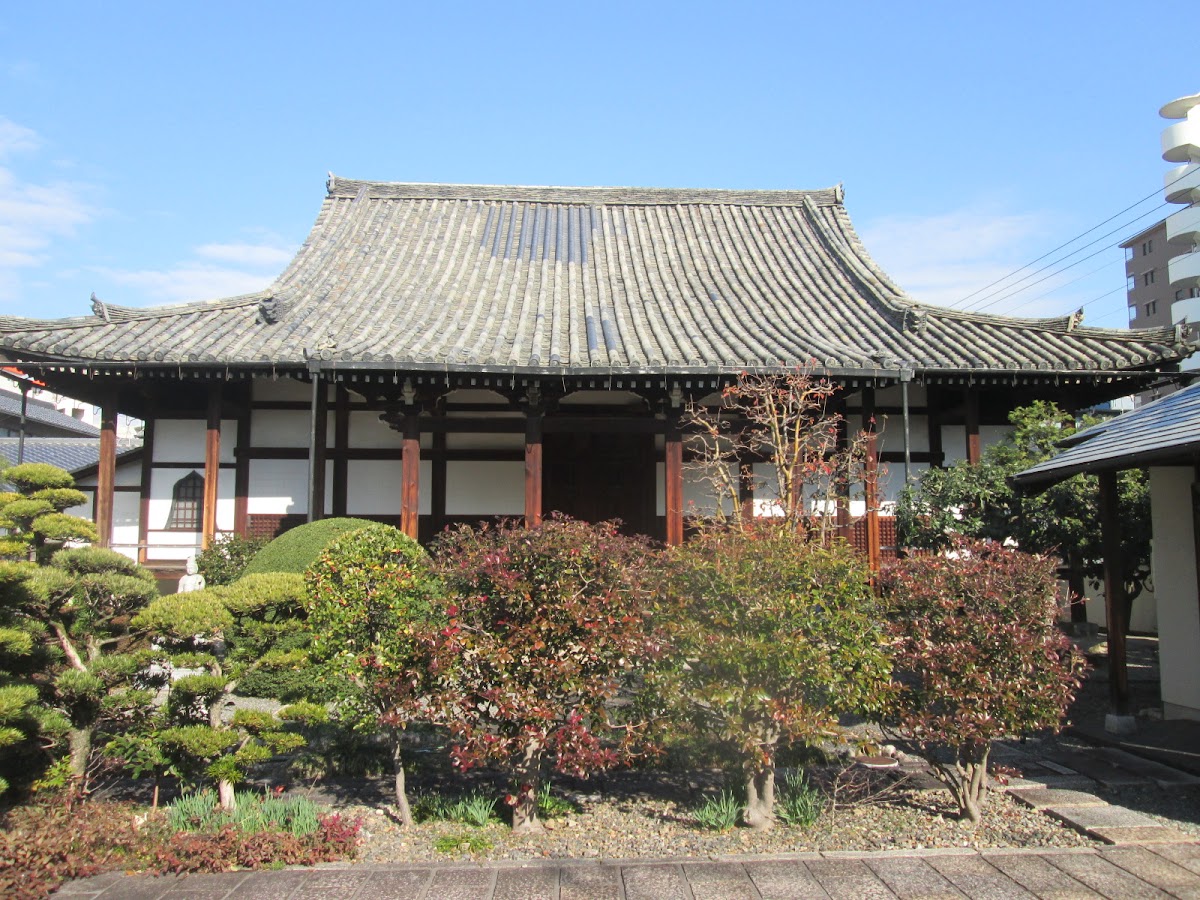
After climbing the Autumn Leaves Horse Riding Path, the main hall comes into view. Inside the main hall are enshrined the “Shakyamuni Buddha of Departure” and the “Amida Buddha of Welcoming,” which are the origin of the name Nison-in Temple.
These two Buddha statues are believed to be from the late Heian period and are both protected as important cultural properties. Shakyamuni Buddha is depicted with his right hand raised, while Amida Buddha is shown with the mudra of welcoming, and together they symbolize the path to the Pure Land.
In the main hall, you can quietly admire these Buddha statues. In the solemn atmosphere of the hall, you can experience the spirit of the Pure Land faith that has continued since ancient times.
Site of Shiguretei, Associated with Fujiwara no Teika
At the back of the temple grounds is the site believed to be the location of Shiguretei, the mountain villa of Fujiwara no Teika, a poet of the Kamakura period. It is said that Fujiwara no Teika compiled the *Ogura Hyakunin Isshu* (One Hundred Poets, One Poem Each) at Shiguretei, making it an extremely important site in literary history.
Currently, a stone monument marks the “Shiguretei Pavilion Site,” allowing visitors to imagine the atmosphere of that time. However, there are various theories regarding the exact location of Shiguretei Pavilion, and legends of its site also remain at other nearby temples, such as Jojakkoji Temple.
Nevertheless, there is no doubt that this place had a deep connection with Fujiwara no Teika and played an important role in the history of Japanese literature. For those familiar with the Hyakunin Isshu (One Hundred Poets, One Poem Each), it will be a place that evokes special feelings.
The Birthplace of Ogura An (Sweet Red Bean Paste)
A little-known fact is that Nison-in Temple is also said to be the birthplace of “Ogura An” (sweet red bean paste). One theory suggests that the origin of Ogura An lies in the use of red beans harvested from Mount Ogura to make the paste.
A stone monument marking the birthplace of Ogura An stands on the temple grounds, making it an interesting place to learn about the history of Japanese confectionery culture. When visiting, why not try to find this monument?
Graves of Famous People
Many famous people are buried in the cemetery of Nison-in Temple. Particularly famous are the following individuals:
- Suminokura Ryōi and Suminokura Soan: Wealthy merchants of the early Edo period who contributed to river excavation projects in Kyoto. They are known for excavating the Hozugawa and Takasegawa rivers.
- Sanjōnishi Sanetaka and Sanjōnishi Kinjō: Heads of the prestigious Sanjōnishi family, a noble family. They were also known as cultural figures.
- Ito Jinsai: A Confucian scholar of the Edo period. Known as the founder of the Kogigaku school.
These graves are located in a corner of the temple grounds, and many history enthusiasts visit this place where important historical figures rest peacefully.
Nison-in Temple in the Seasons
Springtime Greenery and Cherry Blossoms
In spring, Nison-in Temple is distinguished by the beauty of its fresh greenery. The trees in the autumn-colored horse riding grounds sprout leaves all at once, forming a vibrant green tunnel. Furthermore, cherry trees are planted on the temple grounds, allowing visitors to enjoy the cherry blossoms from late March to early April.
Spring at Nison-in Temple is relatively quiet, making it a peaceful time for worship. Walking along the path through the fresh greenery is filled with refreshing air, allowing for a complete refresh of mind and body.
Summer’s Deep Green and Tranquility
In summer, Nison-in Temple becomes a tranquil space enveloped in deep green. The trees in the autumn foliage area turn a deep green, creating a cool and refreshing atmosphere in their shade.
Summer is the off-season for tourism, so the temple grounds are especially quiet. Strolling slowly through the grounds while listening to the cicadas is a delightful experience. Visiting early in the morning to avoid the heat is also recommended.
Autumn’s Spectacular Foliage
Nison-in Temple is busiest during the autumn foliage season. Every year from mid-November to early December, the autumn foliage area transforms into a magnificent tunnel of vibrant autumn leaves.
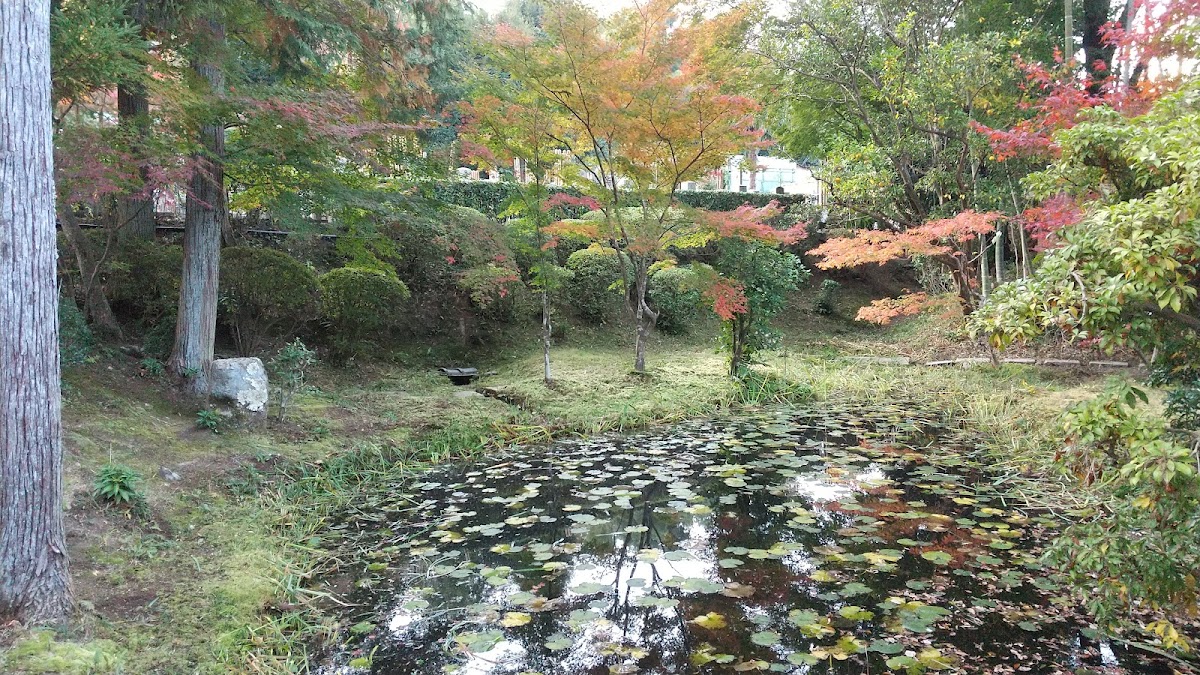
The path leading to the temple is covered with trees dyed in various colors—red, yellow, and orange—creating a beautiful landscape reminiscent of a ukiyo-e painting. The autumn leaves, constantly changing their appearance depending on the light, are captivating and could be admired for hours.
While many tourists visit during the autumn foliage season, it’s still less crowded than places like the area around Togetsukyo Bridge in Arashiyama or Tenryu-ji Temple. The relatively tranquil atmosphere is one of Nison-in’s charms.
Winter Snowscape
In winter, especially on snowy days, Nison-in is enveloped in a fantastical beauty. The snow-covered autumn leaves create a serene landscape like a sumi-e (ink painting).
With fewer visitors in winter, Nison-in truly becomes a place to “experience tranquility.” While the cold is intense, a visit to Nison-in on a snowy day will be a special experience.
Visiting Information
Visiting Hours and Admission Fees
- Visiting Hours: 9:00 AM – 4:30 PM (Open year-round)
- Admission Fee:
- Adults (Junior high school students and older): 500-600 yen (May vary depending on the season)
- Elementary school students and younger: Free
Visiting hours may change depending on the season, so it is recommended to check the official website or call before visiting.
Location and Contact Information
- Address: 27 Nagakami-cho, Saga Nison-in Monzen, Ukyo-ku, Kyoto City, Kyoto Prefecture 616-8425
- Phone Number: 075-861-0687
- FAX: 075-861-7972
Access Methods
Access by Train
Nison-in Temple is accessible from several stations, but it is a short walk from the nearest station.
Access via JR San’in Main Line (Sagano Line)
- Approximately 19 minutes on foot from JR Saga-Arashiyama Station
- Exit the station and head northwest, passing through the residential area of Sagano to reach Nison-in Temple.
- There are guide signs along the way.
Access via Keifuku Electric Railway Arashiyama Main Line
- Approximately 15 minutes on foot from Arashiyama Station
- Head north from Arashiyama’s main street, passing through the residential area to reach Nison-in Temple.
- Other temples such as Jojakkoji Temple are also nearby and can be visited together.
Access by Bus
- Approximately 10 minutes on foot from Kyoto City Bus “Saga Shakado-mae” bus stop
- Accessible by city bus from Kyoto Station, Shijo Kawaramachi, etc.
- Walk north from the bus stop.
Access by Car
- Free parking available on the temple grounds (limited number of spaces)
- During peak seasons such as autumn foliage season, the parking lot is likely to be full, so we recommend using public transportation.
- When setting your car navigation system, please enter the address or phone number.
Combining with nearby tourist spots
There are many tourist spots within walking distance of Nison-in Temple.
- Jojakko-ji Temple: Approximately 5 minutes on foot. Famous for its autumn foliage.
- Gio-ji Temple: Approximately 7 minutes on foot. Known for its beautiful moss garden.
- Rakushisha: Approximately 10 minutes on foot. The hermitage of Mukai Kyorai, a disciple of Matsuo Basho.
- Arashiyama Bamboo Grove: Approximately 15 minutes on foot. A representative tourist spot of Arashiyama.
We also recommend a one-day course combining these spots to explore the Sagano area.
Points and manners for visiting
Time required for visiting
Visiting Nison-in Temple usually takes about 30 minutes to 1 hour. This amount of time is recommended for a leisurely stroll along the autumn-colored horse riding grounds, a visit to the main hall, and a tour of the temple grounds.
If you plan to enjoy taking photos or explore the Shiguretei site and cemetery in detail, it’s best to allocate 1.5 to 2 hours.
Photography
Photography is generally permitted on the temple grounds, but there are some areas, such as inside the main hall, where photography is prohibited. Please refrain from taking photos in areas where photography is prohibited.
Also, it’s important to be considerate of other visitors and observe proper etiquette when taking photos. Especially during the autumn foliage season, many people visit, so please be mindful of others.
Clothing and Items to Bring
The path to Nison-in Temple is a gentle uphill slope, so comfortable shoes are recommended. High heels should be avoided.
Clothing appropriate for the season; take precautions against heatstroke in summer and warm clothing in winter. Also, bring an umbrella or raincoat in case of rain. The path can become slippery when wet, so please be careful.
Cultural Properties of Nison-in Temple
Important Cultural Properties
Nison-in Temple possesses several cultural properties designated by the national government, Kyoto Prefecture, and Kyoto City.
- The Principal Image: Standing Statue of Shakyamuni Buddha and Standing Statue of Amida Buddha: Valuable Buddhist statues believed to be from the late Heian period.
- The Main Gate: A Momoyama period building said to have been relocated from Fushimi Castle.
These cultural properties occupy an important position in the history of Japanese Buddhist art and architecture.
Other Temple Treasures
The main hall and treasure hall also house calligraphy, paintings, and Buddhist implements from various periods. During special exhibitions, there are opportunities to view these temple treasures.
Points to Note When Visiting Nison-in Temple
How to Avoid Crowds
Nison-in Temple is most crowded during the autumn foliage season (mid-November to early December). If visiting during this period, it is relatively less crowded in the early morning right after opening or in the evening just before closing.
Furthermore, weekdays tend to be less crowded than weekends. For those who wish to visit in peace and quiet, it is recommended to avoid the autumn foliage season and visit during the fresh green season or early summer.
Consideration for Neighbors
Since the area around Nison-in Temple is a residential area, visitors must be considerate of the nearby residents. Please refrain from speaking loudly or entering residential property.
Also, please avoid street parking, as it will inconvenience the neighbors. Always use the designated parking area or access the temple by public transportation.
Summary
Located in Sagano, Ukyo-ku, Kyoto City, Nison-in Temple is an ancient Tendai sect temple with a history dating back to the Heian period. It boasts numerous attractions, including its two principal images, Shakyamuni Buddha and Amida Buddha, a beautiful approach known as the “Maple Horse Riding Ground,” and the site of the Shiguretei Pavilion associated with Fujiwara no Teika.
Nison-in Temple’s greatest charm lies in its relatively quiet location within the Arashiyama area, allowing visitors to quietly enjoy the beauty of nature throughout the seasons. Especially during the autumn foliage season, a magnificent tunnel of colorful leaves welcomes visitors.
Nison-in Temple is within walking distance of JR Saga-Arashiyama Station and Keifuku Arashiyama Station, and other tourist attractions such as Jojakko-ji Temple and Giō-ji Temple are scattered throughout the area. When exploring the Sagano area, be sure to visit Nison-in Temple and experience its tranquility and the weight of history.
Visiting hours are from 9:00 to 16:30, and the entrance fee is 500 to 600 yen for adults. It is open year-round, so why not visit it during your Kyoto sightseeing trip?