Complete Guide to Oichi Hachiman Shrine (Wakayama-cho, Nishinomiya City, Hyogo Prefecture) | Thorough Explanation of Goshuin, Access, and History
Oichi Hachiman Shrine, located at 3-31 Wakayama-cho, Nishinomiya City, Hyogo Prefecture, is a historical shrine deeply rooted in the local community. Despite its convenient location within walking distance of Hankyu Imazu Line’s Mondoyakujin Station, it boasts a tranquil atmosphere nestled in a quiet residential area. This article comprehensively covers everything you need to know before visiting Oichi Hachiman Shrine, including its history, enshrined deities, blessings, goshuin information, highlights within the grounds, annual events, and detailed access information.
Basic Information about Oichi Hachiman Shrine
Location and Contact Information
Address: 3-31 Wakayama-cho, Nishinomiya City, Hyogo Prefecture 663-8016
Phone Number: 0798-64-0670
Official Website: https://oichi-hachiman.wixsite.com/oichi
Deities and Benefits
The deity enshrined at Oichi Hachiman Shrine is Hachiman-no-Okami, with Emperor Ojin as the main deity. Hachiman-no-Okami is known as the god of military fortune, and is also believed to offer a wide range of benefits, including national protection, industrial development, traffic safety, and protection from misfortune and good fortune.
In particular, the following blessings are worshipped at Oichi Hachiman Shrine:
- Protection from Misfortune and Bringing Good Fortune – Warding off misfortunes at life’s turning points and enhancing one’s luck
- Family Safety – Protecting the health of family members and ensuring a peaceful daily life
- Business Prosperity – Encouraging business development and commerce to flourish
- Traffic Safety – Watching over safe daily travel and journeys
- Academic Success – Improving academic performance and passing examinations
- Prayer for Safe Childbirth – Ensuring a healthy birth for both mother and child
As the local guardian shrine, it has long been cherished by residents of Wakayama-cho and surrounding areas, and many people visit it at various turning points in their lives.
History and Origins of Oichi Hachiman Shrine
Background of Founding
While there are no clear records of the founding date of Oichi Hachiman Shrine, local traditions suggest that it was enshrined in this area from the medieval to early modern periods. The name “Ōichi” is thought to originate from the fact that a market was once held in this area, or that there was a large settlement (market) here.
Hachiman worship spread throughout Japan from the Heian period onward as the guardian deity of samurai families, and several Hachiman shrines were founded within the Nishinomiya city area. Ōichi Hachiman Shrine also followed this trend, gaining reverence as the guardian deity of the region.
Developments since the Modern Era
Despite being affected by the Meiji-era shrine consolidation policy, Ōichi Hachiman Shrine has survived as an independent shrine, supported by the strong faith of local residents. Even amidst the urbanization that progressed after the war, it continues to play a central role in the local community as the tutelary deity of Wakayama-cho.
In recent years, restoration of the shrine buildings and improvement of the grounds have been carried out, and the shrine is being managed in a way that adapts to the new era while preserving tradition. It is also actively disseminating information through social media and websites, and the number of younger generations of worshippers is increasing.
Highlights of the Shrine Grounds
Main Hall and Worship Hall
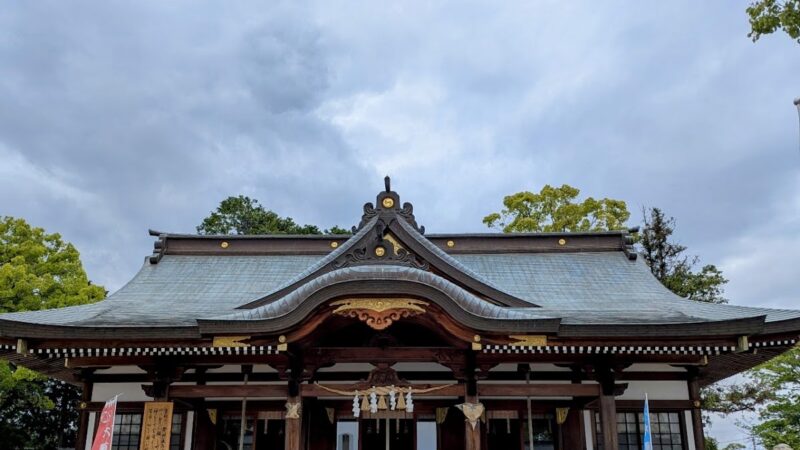
The shrine buildings of Oichi Hachiman Shrine follow traditional shrine architectural styles. The compact yet meticulously maintained grounds exude a refreshing atmosphere. A magnificent offering box stands in front of the worship hall, welcoming visitors.
The main hall is located behind the worship hall and enshrines the deity. Regular repairs are carried out, preserving the beautiful texture of the wood.
Torii Gate and Approach
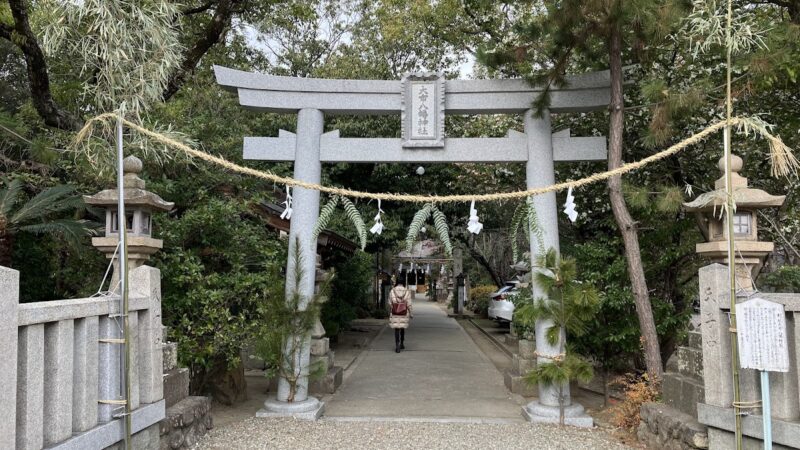
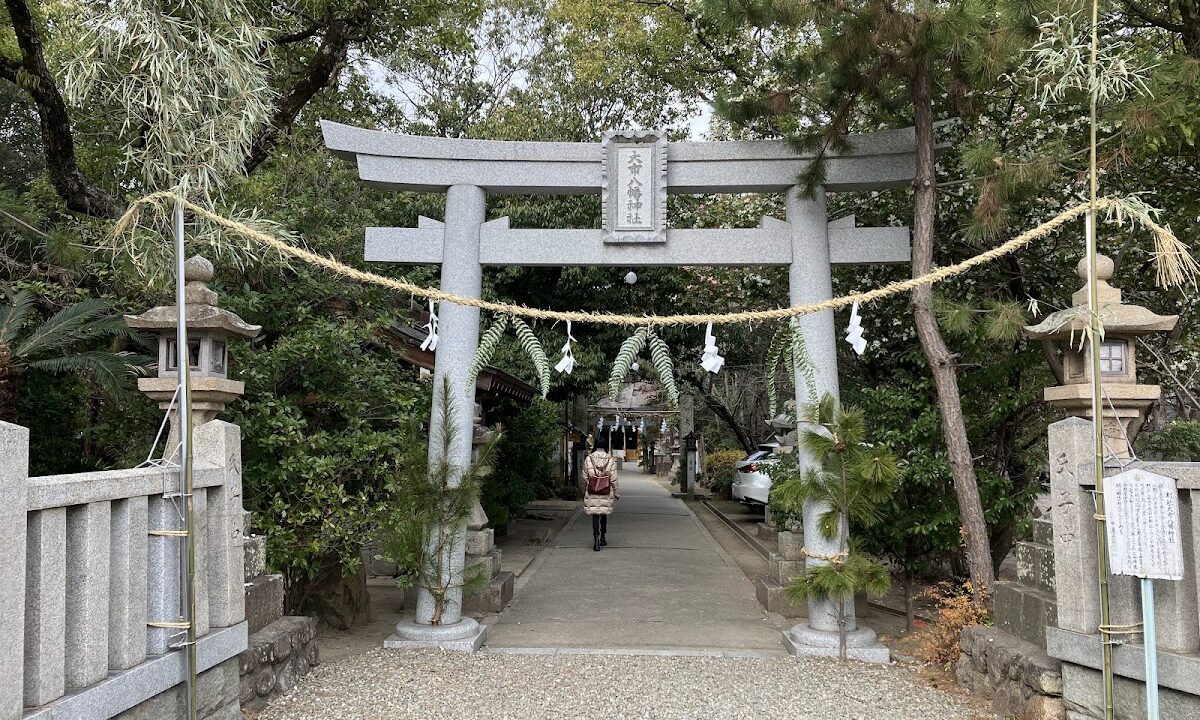
A Shinto torii gate stands at the entrance to the shrine grounds, leading to the approach. Despite being located in a residential area, passing through the torii gate evokes a serene atmosphere unique to a sacred place. The approach is paved with stone, and seasonal flowers are sometimes planted along both sides.
Komainu (Guardian Dogs) and Stone Monument
A pair of guardian dogs (komainu) stand in front of the worship hall, protecting the sacred grounds. Furthermore, several stone monuments and memorials are erected within the shrine grounds, preserving the region’s history and the deep faith in the shrine.
Shrine Grounds
Small subsidiary shrines are also enshrined around the main hall, reflecting the diverse deities worshipped. Local residents can be seen offering prayers daily, making it a place of faith deeply rooted in their lives.
Shrine Office
The shrine office is located within the grounds, where goshuin (shrine stamps) are issued and various prayers are accepted. The chief priest and parishioners provide warm and welcoming service, ensuring that even first-time visitors can feel at ease.
Goshuin Information
About Goshuin Issuance
Oichi Hachiman Shrine offers goshuin. Goshuin are popular as proof of worship and as a tangible memento of one’s connection with the shrine.
Location of Issuance: Shrine Office
Hours of Issuance: Generally 9:00 AM to 5:00 PM (We recommend calling ahead to confirm, as staff may be absent)
Offering Fee: Usually around 300-500 yen
Goshuin Design
The goshuin (shrine stamp) of Oichi Hachiman Shrine features the shrine’s name, “Oichi Hachiman Shrine,” written in ink, and stamped with the shrine’s seal. It is characterized by a simple yet powerful calligraphy style, and many people receive it as a memento of their visit.
If you do not have a goshuin notebook, you may be able to receive a pre-printed goshuin; please inquire at the shrine office.
Manners When Receiving a Goshuin
Since the goshuin is proof of your visit, be sure to receive it only after you have completed your prayers. It is also important to show respect to the chief priest and other shrine officials, and to maintain polite language and demeanor.
Annual Events and Festivals
Main Annual Events
Oichi Hachiman Shrine holds various festivals and events throughout the year.
New Year’s Day Festival (January 1st)
A festival to welcome the new year and pray for peace and prosperity throughout the year. It is bustling with many visitors making their first shrine visit of the year.
Setsubun Festival (around February 3rd)
Events such as bean-throwing are held to ward off evil and bring good fortune.
Spring Grand Festival (Spring)
Celebrating the arrival of spring and praying for a bountiful harvest and the prosperity of the region.
Summer Purification Ceremony (June 30th)
A Shinto ritual to purify and cleanse away the sins and impurities accumulated over the past six months. Sometimes, a ritual of passing through a ring of reeds is performed.
Autumn Grand Festival (Autumn)
The most important festival to give thanks for the year’s harvest and repay divine blessings. Many people from the local community attend. Shichi-Go-San Ceremony (November)
A time to express gratitude for children’s growth and pray for their continued healthy development.
Year-End Purification Ceremony (December 31st)
As a way to conclude the year, a time to purify oneself of sins and impurities and prepare for a refreshing New Year.
Connections with the Community
Oichi Hachiman Shrine is the local guardian shrine and has strong ties with neighborhood associations and community organizations. The shrine plays a central role in local events. During festivals, local residents cooperate in preparations, creating a place for intergenerational exchange.
Access Information
Access by Train
Oichi Hachiman Shrine is easily accessible by public transportation.
Nearest Station: Hankyu Imazu Line “Mondoyakujin Station”
It is approximately a 9-15 minute walk from Mondoyakujin Station. Exit the station and head north, passing through a residential area. There are signs along the way, making it a relatively easy route even for first-time visitors.
Detailed directions from the station:
- Exit the ticket gate at Mondoyakujin Station and head towards the North Exit.
- Walk straight north along the road in front of the station.
- Go through the residential area towards Wakayama-cho.
- You will arrive at Oichi Hachiman Shrine in approximately 650-700m.
Walking time varies from person to person, but it takes about 15 minutes even walking slowly. There are also other notable places along the way, such as Mondoyakujin Tokoji Temple, and many people visit them as well.
Other Nearest Stations:
- Approximately 12-15 minutes on foot (approx. 940m) from Hankyu Imazu Line “Kotoen Station”
- Bus access is also available from JR Kobe Line “Nishinomiya Station”
Access by Car and Parking
If coming by car:
- Approximately 15 minutes from Hanshin Expressway Kobe Line “Nishinomiya IC”
- Approximately 20 minutes from Chugoku Expressway “Takarazuka IC”
Regarding Parking:
Oichi Hachiman Shrine does not have its own parking lot. Therefore, please note the following when coming by car:
- Use nearby coin-operated parking lots
- Paid parking is available around Mondoyakujin Station
- Street parking is strictly prohibited as it is a residential area
- On days when congestion is expected, such as during festivals, the use of public transportation is recommended
The surrounding area is a residential area with narrow roads in some places, so access by train is recommended whenever possible.
Access by Bus
It is also possible to use Hankyu buses from JR Nishinomiya Station or Hanshin Nishinomiya Station. After getting off at the “Mondoyakujin” bus stop, it’s about a 10-minute walk. Please check the Hankyu Bus official website for bus timetables and routes.
Manners and Etiquette for Visiting a Shrine
Basic Etiquette for Visiting a Shrine
There are basic manners to observe when visiting a shrine. When visiting Oichi Hachiman Shrine, please observe the following manners.
How to Pass Through the Torii Gate:
The torii gate is the entrance to the sacred area. Bow before passing through, and avoid walking in the center of the path (the center is considered the path of the gods).
Procedure for Washing Hands:
If there is a water basin for washing hands, purify yourself in the following order:
- Take the ladle with your right hand and wash your left hand.
- Switch the ladle to your left hand and wash your right hand.
- Switch the ladle back to your right hand, receive water in your left hand, and rinse your mouth.
- Wash your left hand again.
- Hold the ladle upright, wash the handle, and return it to its original position.
Procedure for Bowing:
- Place your offering in the offering box.
- If there is a bell, ring it.
- Bow twice, clap twice, and bow once (bowing deeply twice, clapping twice, bowing deeply once).
- Be specific about your wishes, and don’t forget to express your gratitude.
Clothing and Belongings
Everyday clothes are acceptable for worship, but avoid overly casual or revealing clothing. Especially if you are receiving a prayer, proper attire is desirable.
Nearby Attractions
Mondoyakujin Tokoji Temple
Mondoyakujin Tokoji Temple, located within walking distance of Oichi Hachiman Shrine, is a Shingon Buddhist temple famous for warding off evil. It is recommended that those in their unlucky years visit both temples. The temple is bustling with many visitors on the 19th of each month, its festival day.
Mount Kabuto Forest Park
A short trip away lies Mount Kabuto, a symbol of Nishinomiya City, and the surrounding Mount Kabuto Forest Park. This park, rich in nature, is perfect for hiking and picnics.
Other Shrines and Temples in Nishinomiya City
Nishinomiya City boasts numerous historical shrines, including Nishinomiya Shrine (the head shrine of Ebisu) and Hirota Shrine. Visiting these shrines is highly recommended.
Prayers and Exorcisms at Oichi Hachiman Shrine
Acceptance of Various Prayers
Oichi Hachiman Shrine accepts prayers for various milestones in life.
Main Prayer Services Offered:
- Protection from Evil Spirits
- Prayer for Family Safety
- Prayer for Business Prosperity
- Prayer for Traffic Safety
- Prayer for Safe Childbirth
- First Shrine Visit for a Newborn
- Shichi-Go-San Ceremony
- Prayer for Success in Exams
- Prayer for Recovery from Illness
- Groundbreaking Ceremony
- Ridgepole Raising Ceremony
How to Apply for Prayer Services
If you wish to have a prayer service, we recommend contacting us by phone in advance to reserve a date and time. While same-day registration may be possible, it may not be possible depending on the priest’s schedule, so reservations are recommended to ensure you receive a prayer service.
Contact Information: 0798-64-0670
The offering fee (prayer fee) varies depending on the prayer service; please confirm when making your reservation. Generally, it starts from 5,000 yen.
The Role of Oichi Hachiman Shrine in the Community
As a Local Guardian Deity
Oichi Hachiman Shrine serves as the local guardian deity of Wakayama-cho, Nishinomiya City, and is a spiritual anchor for the local residents. Many residents visit the shrine for important life events such as a baby’s first shrine visit, Shichi-Go-San (a traditional rite of passage for children), and exorcisms.
Center of the Community
Through festivals and annual events, it serves as a place for intergenerational interaction among local residents. Even in today’s increasingly urbanized world, it is a valuable example of a community centered around a shrine that remains intact.
Preservation of Traditional Culture
Through festivals and events at the shrine, it also plays a role in passing on traditional Japanese culture and etiquette to children. Oichi Hachiman Shrine is an important place for passing on the history and culture of the region to the next generation.
Notes on Visiting the Shrine
Shrine Office Opening Hours
If you wish to receive a Goshuin (shrine stamp) or prayers, you must visit during the shrine office’s opening hours. Generally, the hours are around 9:00 AM to 5:00 PM, but since the head priest may be absent, it is recommended to call ahead to confirm if you wish to be addressed.
Photography
Photography is generally permitted on the shrine grounds, but there may be restrictions, such as inside the main hall or during Shinto rituals. Please check with the shrine office before taking any photos if you have any questions. Also, please be considerate of the privacy of other worshippers.
Pets
Some shrines may prohibit pets. Particular caution is needed with large dogs or pets that bark loudly. Please check in advance or follow the signs on the shrine grounds.
Behavior on the Shrine Grounds
The shrine grounds are a sacred place. Please refrain from loud conversations and running around, and worship quietly. Also, please take your trash with you and help keep the grounds clean.
Nishinomiya City’s Shrine Culture and Oichi Hachiman Shrine
Shrine Faith in Nishinomiya City
Nishinomiya City, Hyogo Prefecture, is known as a “city of shrines,” home to many historically significant shrines, including Nishinomiya Shrine, the head shrine of Ebisu worship. Nishinomiya, which flourished as a transportation hub since ancient times, has seen the roots of various faiths, and shrines are still scattered throughout the city today.
The Spread of Hachiman Worship
Hachiman worship spread from Usa Shrine (Oita Prefecture), the head shrine of the approximately 40,000 Hachiman shrines nationwide. Hachiman shrines were established throughout Japan as guardian deities for samurai and as objects of worship for common people. Oichi Hachiman Shrine is one such shrine, attracting a deep-rooted community of worship.
Summary: The Charm of Oichi Hachiman Shrine
Located at 3-31 Wakayama-cho, Nishinomiya City, Hyogo Prefecture, Oichi Hachiman Shrine, though not large in scale, is a warm and deeply rooted shrine in the community.
Main Features of Oichi Hachiman Shrine:
- Convenient access, within walking distance of Mondoyakujin Station on the Hankyu Imazu Line
- Wide range of blessings, including protection from evil, good fortune, and family safety
- Offers Goshuin (shrine stamps)
- Beloved as the local guardian deity
- Holds festivals and events throughout the year
- Quiet and peaceful atmosphere of the shrine grounds
It lacks the flashiness of large tourist shrines, but that’s precisely why it offers a warmth of community-based faith. When visiting Nishinomiya City, or when seeking peace of mind in your daily life, please consider visiting Oichi Hachiman Shrine.
Visiting it in conjunction with Mondoyakujin Tokoji Temple will make for an even more fulfilling pilgrimage experience. Why not experience traditional Japanese shrine culture at Oichi Hachiman Shrine, a place beloved by the local community?
Before visiting, please be sure to check the latest information on the official website or by phone, and be sure to observe proper etiquette for a pleasant visit. May your visit be enriching and fruitful.