Okayama Shrine (Okayama Prefecture, Okayama City, Kita Ward) Complete Guide | History, Goshuin (Shrine Seal), and Access Information
Okayama Shrine, located in Ishizeki-cho, Kita Ward, Okayama City, Okayama Prefecture, is a historic shrine situated in the heart of Okayama City, and was once revered as the guardian deity of Okayama Castle. This article provides detailed information you should know before visiting Okayama Shrine, including its history, enshrined deities, goshuin (shrine seal), annual events, and access methods.
Basic Information about Okayama Shrine
Address: 2-33 Ishizeki-cho, Kita Ward, Okayama City, Okayama Prefecture 700-0813
Phone Number: 086-222-7198
Main Deity: Ukanomitama-no-Mikoto
Founded: During the Jogan era (859-877)
Okayama Shrine is located in the heart of Okayama City, near the Orient Museum, and is affectionately known as “Okayama-san” by locals. Located near major tourist attractions such as Okayama Castle and Korakuen Garden, its convenient location makes it an attractive stop during Okayama sightseeing.
History and Origins of Okayama Shrine
Deep Connection to Okayama Castle Since its Founding
Okayama Shrine is said to have been founded during the Jogan era (859-877), making it an ancient shrine with a history of over 1100 years. Initially, it was located on the site of the current Okayama Castle’s main keep and was revered as the guardian deity of the region.
Relocation by Ukita Naoie
A significant turning point in the history of Okayama Shrine was its relocation in 1573. When the Sengoku period warlord Ukita Naoie built Okayama Castle, the land where the shrine was located was needed, so it was relocated to its current location in Ishizeki-cho.
Since this relocation, Okayama Shrine has taken on the role of guardian deity of Okayama Castle and has been revered by successive castle lords. Okayama Castle and Okayama Shrine have an inseparable relationship, and their history is intertwined with the development of Okayama, the castle town.
From the Edo Period to the Present
During the Edo period, under the patronage of the Ikeda family, the lords of the Okayama domain, it flourished as the guardian shrine of the castle town. Despite overcoming numerous difficulties, such as the Meiji-era separation of Shinto and Buddhism and the bombing of Okayama during World War II, it has continued to this day, supported by the faith of the local people.
Currently, its parish covers a wide area of Okayama City’s Kita Ward (including Ekimae-cho, Ekimae-cho, Marunouchi, Iwata-cho, Nishiki-cho, Korakuen, Saiwai-cho, Ishizeki-cho, Nakayamashita, Tenjin-cho, Bansan-cho, Omote-cho, Heiwa-cho, Hokan-cho, Hon-machi, Togiya-cho, Nodaya-cho, etc.) and a part of Naka Ward (Hama district), and it is cherished as the guardian deity of the region.
Deities and Benefits
Main Deity: Ukanomitama-no-Mikoto
The main deity of Okayama Shrine is Ukanomitama-no-Mikoto. Ukanomitama-no-Mikoto is known as the god who presides over abundant harvests and is worshipped nationwide as “O-Inari-san.”
Expected Benefits
Okayama Shrine is believed to offer the following benefits:
- Abundant Harvest and Business Prosperity: Due to the divine virtues of the main deity, Ukanomitama-no-Mikoto, people visit the shrine to pray for prosperity in agriculture and business.
- Family Safety: As a guardian deity of the region, people can pray for the health and safety of their families.
- Protection from Evil and Good Fortune: Due to its history as the guardian deity of Okayama Castle, it is also expected to offer protection from evil and good fortune.
- Academic Success and Passing Exams: During exam season, many students and their parents visit the shrine.
Highlights of the Shrine Grounds
Main Hall and Worship Hall
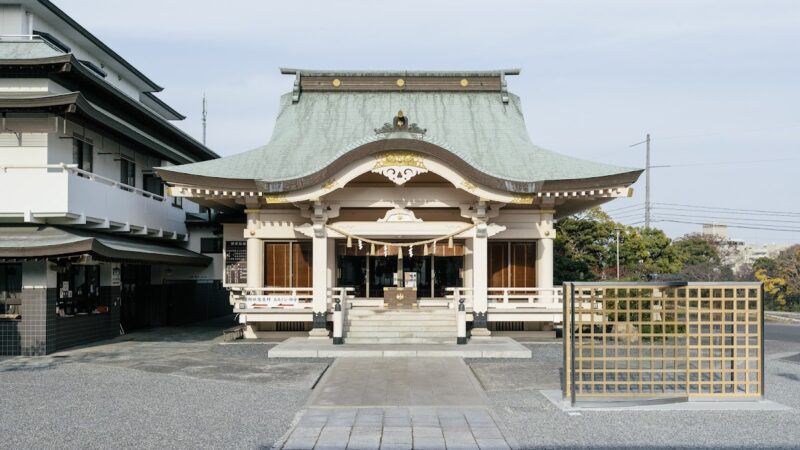
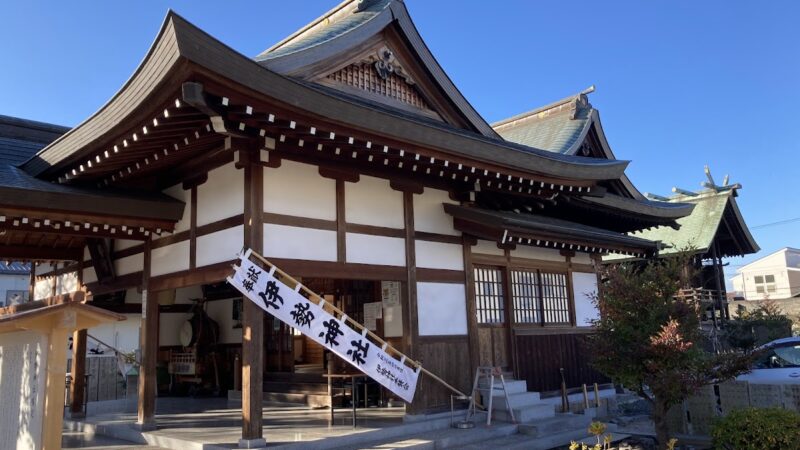
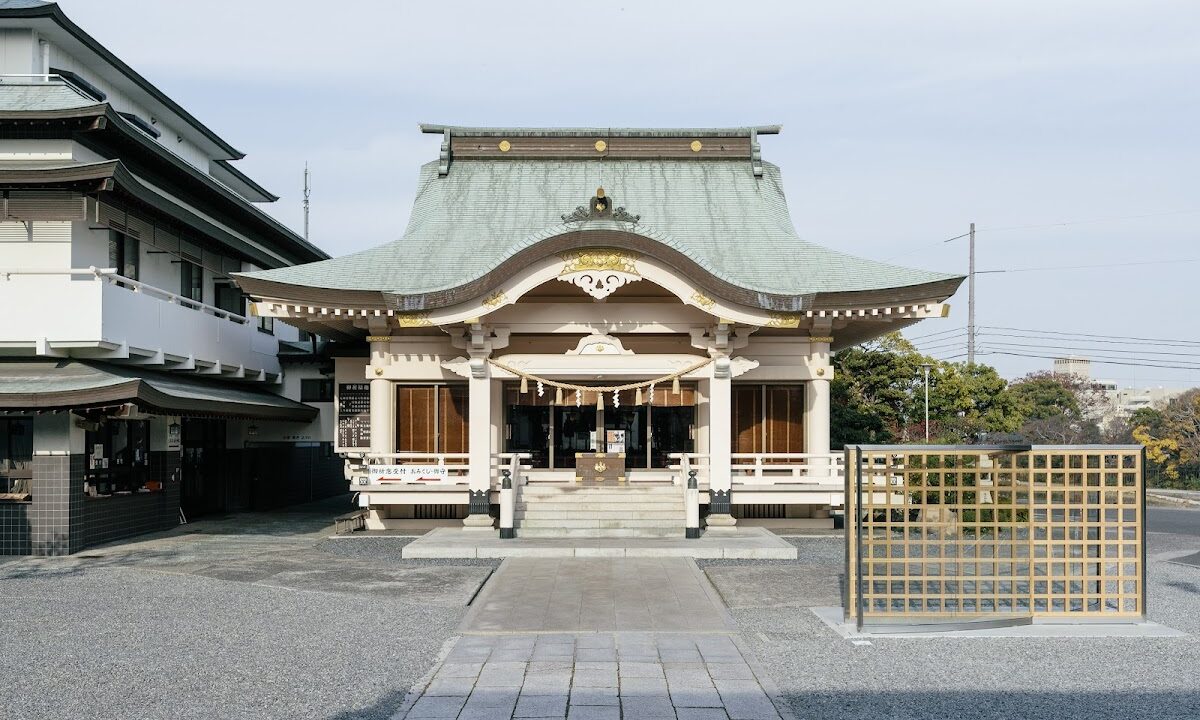
Okayama Shrine’s main hall is built in the traditional style of shrine architecture, exuding a tranquil atmosphere. A magnificent shimenawa (sacred rope) hangs in front of the worship hall, welcoming visitors.
Komainu (Guardian Lions) and Stone Sculptures
The shrine grounds are dotted with stone sculptures such as guardian lion-dogs and stone lanterns, reflecting the long history of the shrine. Many of these sculptures were donated during the Edo and Meiji periods, conveying the deep faith of the time.
Shrine Office
Goshuin (shrine stamps) and amulets are available at the shrine office. Despite its urban location, the shrine grounds maintain a tranquil atmosphere, providing a peaceful space for worship.
Goshuin and Amulet Information
About Goshuin
Okayama Shrine offers goshuin. Goshuin are popular as proof of worship and as a memento of travel.
Goshuin Reception Hours: During shrine office hours (please contact the shrine directly for details)
Offering Fee: Typical price (around 300-500 yen)
Goshuin are carefully handwritten. If you do not have a Goshuincho (stamp book), pre-printed Goshuin stamps may be available, so please inquire at the shrine office.
Amulets and Souvenirs
Okayama Shrine offers a variety of amulets and souvenirs:
- Traffic Safety Amulet: Prayers for safety when driving or cycling
- Academic Success Amulet: Prayers for success in exams and academics
- Exorcism Amulet: For those in their unlucky year or those seeking protection from evil
- Health Amulet: Prayers for the health of the family
- Good Fortune Amulet: For those wishing for improved luck
Amulets are important souvenirs that allow you to feel the protection of the gods close by carrying them with you.
Annual Events and Festivals
Okayama Shrine holds various festivals throughout the year.
Main Annual Events
New Year’s Day Festival (January 1st)
A festival to celebrate the New Year and pray for peace and prosperity throughout the year. Many worshippers visit for Hatsumode (first shrine visit of the year). Setsubun Festival (around February 3rd)
A Shinto ritual, including bean-throwing, is performed to ward off evil and bring good fortune.
Spring Festival (March)
A festival celebrating the arrival of spring, sometimes featuring events such as a flea market.
Summer Purification Ceremony (June 30th)
A Shinto ritual to cleanse away the sins and impurities accumulated over the past six months.
Autumn Grand Festival (late September to October)
One of Okayama Shrine’s most important festivals. The annual “Lion Dance” ritual is performed during the second week of October, attracting many worshippers. The Lion Dance is a traditional performing art passed down in the region and is a spectacular ritual.
Year-End Purification Ceremony (December 31st)
A Shinto ritual to cleanse away the sins and impurities accumulated over the past year and welcome the new year with a fresh start.
Flea Market Event
Okayama Shrine occasionally holds a flea market. Held during events such as the Spring Festival, it features antiques, vintage items, and handmade goods, serving as a gathering place for local residents. Please check the shrine’s official information for event dates.
Prayers and Shinto Weddings
About Prayers
Okayama Shrine accepts various prayers from individuals, families, and companies.
Main Types of Prayers Offered:
- Prayer for Family Safety
- Prayer for Business Prosperity
- Prayer for Protection from Evil Spirits
- Prayer for Protection from All Directions
- Prayer for Traffic Safety
- Prayer for Safe Childbirth
- First Shrine Visit (Omiyamairi)
- Shichi-Go-San Celebration
- Prayer for Success in Exams/Academic Achievement
- Recovery from Illness
- Groundbreaking Ceremony
- Ridgepole Raising Ceremony
- Completion Ceremony
Those wishing to have a prayer performed are advised to make a reservation in advance by phone (086-222-7198).
Shinto Wedding Ceremony
At Okayama Shrine, you can have a traditional Shinto wedding ceremony. The solemn atmosphere of the Shinto ceremony makes it popular with couples who want to cherish traditional Japanese culture.
Those wishing to have a Shinto wedding ceremony should consult with the shrine early to discuss the date and details.
Access Information
Access by Public Transportation
By Tram:
- Take the Okayama Electric Tramway (tram) bound for Higashiyama from JR Okayama Station.
- Get off at the “Shiroshita” tram stop (approximately 10-minute ride).
- Approximately 5-minute walk from the tram stop.
The tram is a charming way to experience Okayama’s atmosphere and is recommended for sightseeing. Shiroshita tram stop is convenient for accessing Okayama Castle and Korakuen Garden.
By Bus:
Take an Okayama Electric Railway bus from JR Okayama Station and get off at the nearest bus stop. It’s a few minutes’ walk from there. Please check the Okayama Electric Railway Bus official website for detailed bus routes.
On Foot:
It takes approximately 20-25 minutes to walk from JR Okayama Station. You can also enjoy a stroll through the center of Okayama City on your way there.
Access by Car
If using the expressway:
- Approximately 20 minutes from the Okayama IC on the Sanyo Expressway
- After exiting the Okayama IC, proceed towards National Route 53 and head towards the city center.
Car Navigation Settings:
- Address: 2-33 Ishizeki-cho, Kita-ku, Okayama City, Okayama Prefecture
- Phone Number: 086-222-7198
Parking Information
Okayama Shrine has a parking lot for visitors. However, spaces are limited, and it may be crowded during festivals and on weekends. If the parking lot is full, please use a nearby coin-operated parking lot.
There are several coin-operated parking lots in the center of Okayama City, and several parking lots are scattered within walking distance of Okayama Shrine.
Nearby Tourist Attractions
Okayama Shrine is located in the center of Okayama City, so there are many tourist attractions nearby.
Okayama Castle (Ujo Castle)
Located about a 10-minute walk from Okayama Shrine, Okayama Castle is a famous castle also known as “Ujo” (Crow Castle) due to its black exterior. Completed by Ukita Hideie, the castle tower offers panoramic views of Okayama City. It reopened in 2022 after renovations, transforming into a museum utilizing the latest exhibition technology.
Okayama Korakuen Garden
Okayama Korakuen Garden, one of Japan’s three most famous gardens, is also within walking distance of Okayama Shrine (about 15 minutes). This daimyo garden, built by Ikeda Tsunamasa, the lord of the Okayama domain, offers beautiful scenery throughout the seasons.
Orient Museum
Located very close to Okayama Shrine, the Orient Museum is a specialized museum housing and exhibiting art from ancient Oriental civilizations. Visitors can admire valuable cultural artifacts from Egypt, Mesopotamia, Persia, and other regions.
Okayama City Center and Omotecho Shopping Street
Within walking distance of Okayama Shrine lies a bustling commercial district, including Omotecho Shopping Street. You can enjoy shopping and dining, and there are numerous restaurants where you can savor local Okayama specialties such as demi-glace pork cutlet rice bowls and mamakari (a type of pickled fish).
Other Shrines in Okayama City’s Kita Ward
Besides Okayama Shrine, many other shrines are located in Okayama City’s Kita Ward.
Kibitsu Shrine
Located in Kibitsu, Kita Ward, Okayama City, Kibitsu Shrine is an ancient shrine dedicated to Kibitsuhiko-no-Mikoto, who is said to be the model for the Momotaro legend. It is famous for its National Treasure main hall and worship hall, and its approximately 400-meter-long corridor, making it one of Okayama’s representative shrines.
Kibitsuhiko Shrine
Located in Ichinomiya, Kita Ward, Okayama City, Kibitsuhiko Shrine also enshrines Kibitsuhiko-no-Mikoto as its main deity. Like Kibitsu Shrine, it is known as a shrine related to the Momotaro legend and is also called “Asahi-no-Miya” (Shrine of the Rising Sun). ### Ashimori Hachimangu Shrine
Located in Kita Ward, Okayama City, Ashimori Hachimangu Shrine is a Hachimangu shrine dedicated to Emperor Ojin. It is cherished as the local guardian shrine.
Visiting these shrines (“shrine pilgrimage”) is one way to enjoy sightseeing in Okayama.
Manners and Points for Visiting a Shrine
Basic Etiquette for Visiting a Shrine
When visiting a shrine, please observe the following basic etiquette:
- Bow before passing through the torii gate: As a sign of respect before entering the sacred area, bow before the torii gate.
- Purify yourself at the water basin: Purify your hands and mouth before praying.
- Avoid walking in the center of the approach: The center of the approach is considered the path of the gods.
- Etiquette in front of the main hall: The basic etiquette is two bows, two claps, one bow (two bows, two claps, one bow).
Photography
Photography is generally permitted within the shrine grounds, but it may be advisable to refrain from taking photos inside the main hall or during Shinto rituals. Please check with the shrine office if you have any questions. Also, please be considerate of other visitors.
Attire
There are no specific dress code requirements for regular visits, but formal attire is desirable if receiving prayers or attending a Shinto wedding ceremony. ## Points to Note When Visiting Okayama Shrine
Visiting Hours
While the grounds of Okayama Shrine are generally open for worship throughout the day, there are limited hours for the shrine office. Those wishing to receive a Goshuin (shrine stamp), amulet, or request prayers are advised to call in advance to confirm.
Crowds During Festivals
Crowds are expected during the New Year’s period (first three days of January), the Autumn Grand Festival, and the Shichi-Go-San season (November). Those wishing to visit at a leisurely pace should avoid these periods or visit on weekday mornings.
Contact Information
For inquiries regarding worship, prayers, Shinto wedding ceremonies, etc., please call the Okayama Shrine office directly at 086-222-7198.
Summary
Okayama Shrine, located in Ishizeki-cho, Kita-ku, Okayama City, Okayama Prefecture, boasts a history of over 1100 years since its founding during the Jogan era. It is a venerable shrine revered by the local people as the guardian deity of Okayama Castle.
The main deity enshrined here is Ukanomitama-no-Mikoto, who grants blessings for abundant harvests and business prosperity. In addition, it is believed to offer various blessings, including family safety, protection from evil, and academic success. Its convenient location—approximately 10 minutes by tram from JR Okayama Station and about a 5-minute walk from the “Shiroshita” tram stop—makes it easily accessible in conjunction with other tourist attractions such as Okayama Castle and Korakuen Garden.
Various festivals are held throughout the year, with the lion dance at the Autumn Grand Festival being particularly impressive. The shrine also offers Goshuin (shrine stamps), making it a great choice for those who enjoy visiting shrines.
When you visit Okayama, be sure to pay your respects at Okayama Shrine and offer a peaceful prayer while feeling its long history and tradition. Located in an urban area, the temple grounds maintain a tranquil atmosphere, allowing you to spend a peaceful moment away from the hustle and bustle of everyday life.