
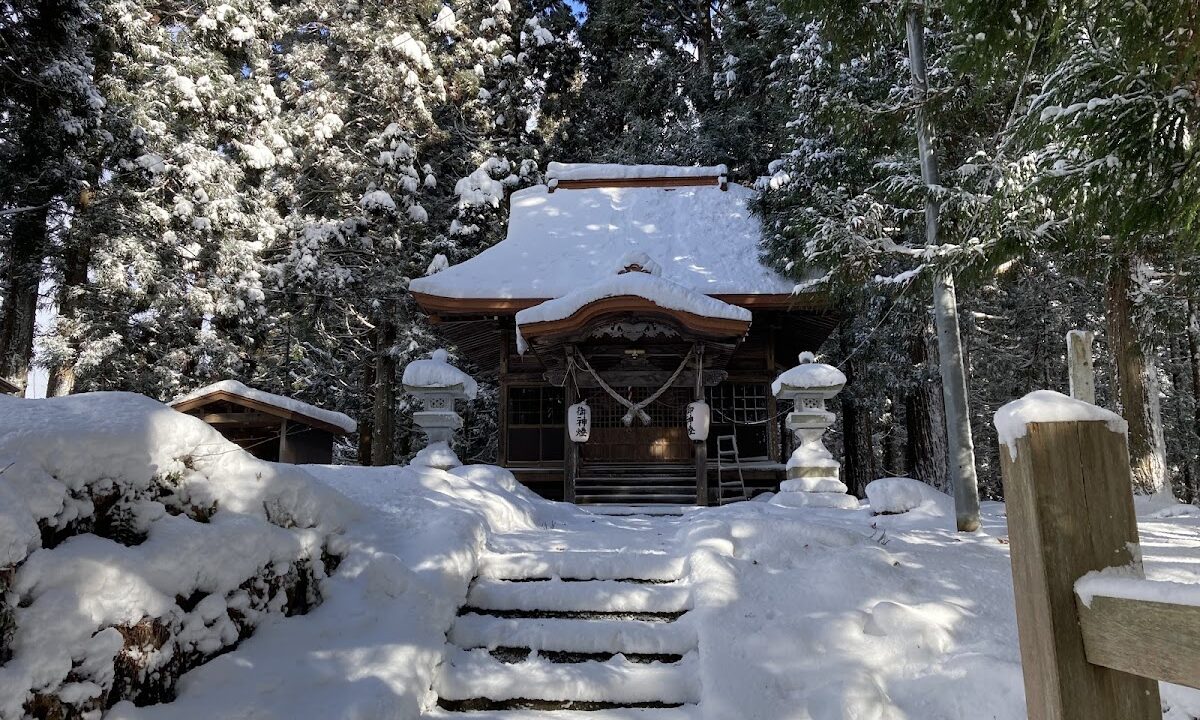
Omori Shrine (Odate City, Akita Prefecture) Complete Guide | History, Deities, and Access Information
Omori Shrine, located in Hanaoka-cho, Odate City, Akita Prefecture, is a shrine with a long history and unique origins. This article comprehensively introduces everything you want to know about this shrine, from detailed basic information to its historical background and practical information useful for visiting.
Basic Information about Omori Shrine
Location and Contact Information
Omori Shrine is located at 126 Omori-Kamidai, Hanaoka-cho, Odate City, Akita Prefecture. The postal code is 〒017-0005. It is located in the Hanaoka-cho area, northeast of the center of Odate City, and has long been cherished as a center of local faith.
Corporate Information
Omori Shrine is registered as a religious corporation, and its corporate number is 7410005002992. This corporate number was assigned on October 5, 2015 (Monday). As a shrine belonging to the Akita Prefectural Shrine Association, it is properly managed and operated.
About Omori Shrines Nationwide
There are 44 shrines named “Omori Shrine” throughout Japan, making it the 150th most common shrine name nationwide. In Akita Prefecture, in addition to this shrine in Odate City, there is also an Omori Shrine in the Omori district of Yokote City, but each is a separate shrine with its own unique history and origins.
History and Origins of Omori Shrine
Circumstances of Founding
The origins of Omori Shrine date back to the second year of Chōryaku (1038). Initially, it was established as Kashima Shrine. This period was the late Heian period, a time when the imperial court’s rule was gradually spreading throughout the Tohoku region.
Deep Connection with Hachiman Taro Yoshiie
A noteworthy aspect of Omori Shrine’s history is its relationship with Minamoto no Yoshiie (Hachiman Taro Yoshiie). In 1092, after concluding the Later Three Years’ War, Yoshiie stopped at this location on his return to Kyoto after conquering Takehira and Iehira.
It is said that at that time, Yoshiie enshrined the sacred object he possessed at Kashima Shrine. The shrine dedicated to this object became revered as “Tsurugihanayama Hachiman Shrine.” This event demonstrates that Omori Shrine is not merely a local tutelary shrine, but also a shrine symbolizing the historical importance of the Tohoku region.
Relationship with the Onodera Clan
During the Bunmei era (1469-1487), after Onodera Nagato-no-kami Michitaka established his castle in Omori Village, he volunteered to make Omori Shrine his guardian shrine. The Onodera clan was a powerful Sengoku-period daimyo family that held influence from southern Akita Prefecture to northern Iwate Prefecture, and their patronage greatly contributed to the shrine’s development.
Major Construction Project During the Tenbun Era
In 1538 (Tenbun 7), a large-scale construction project was undertaken, completely rebuilding the shrine buildings. Simultaneously, 30 koku of land were donated to the shrine, establishing its economic foundation. This period was in the midst of the Sengoku period (Warring States period), and it speaks to the deep faith of local influential figures in the shrine.
Deities and Divine Virtues
Main Deity
Regarding the deities enshrined at Omori Shrine, given its history as a Kashima Shrine, it is highly likely that Takemikazuchi-no-kami is the main deity. Furthermore, since Hachiman Taro Yoshiie enshrined the divine object, it is presumed that Hachiman-no-kami (Emperor Ojin) is also enshrined.
Divine Virtues
Takemikazuchi-no-kami is known as the god of thunder and swords, and is believed to bestow blessings such as good fortune in competitions, protection from evil, and improvement in martial arts. Hachiman-jin is revered as the god of military fortune and victory, and is also believed to bring blessings for national protection, industrial development, and traffic safety.
As a local guardian shrine, it has also functioned as a place to pray for abundant harvests, family safety, and peace and prosperity in the region.
Highlights of the Shrine Grounds
Shrine Architecture
The shrine building, constructed in 1538 (Tenbun 7), has evolved over time to its current form. Featuring characteristics of shrine architecture in northern Akita Prefecture, the building possesses valuable cultural significance, conveying the history of local faith.
Atmosphere of the Shrine Grounds
Nestled in the lush natural environment of Hanaoka-cho, Omori Shrine is enveloped in a tranquil atmosphere. Ancient trees flourish within the grounds, allowing visitors to experience the changing seasons.
How to Worship and Etiquette
Basic Worship Etiquette
There are traditional customs for visiting a shrine. First, bow before passing through the torii gate, and walk along the path avoiding the center. Purify your body and mind at the water basin before proceeding to the main hall.
At the main hall, worship using the “two bows, two claps, one bow” method. Specifically, follow these steps:
- Bow deeply twice (two bows)
- Bring both hands together at chest height, slightly lower your right hand, and clap twice (two claps)
- Offer your prayer with your hands still together
- Finally, bow deeply once (one bow)
Mindset during worship
Shrine worship is not merely a place to make wishes, but a place to express gratitude and respect to the gods. It is important to express your gratitude and worship with a sincere heart.
Access Information
Access by Car
From the center of Odate City, take the national highway towards Hanaoka-cho. It is approximately 10 minutes from the Odate city center. We recommend checking the availability of parking in advance. ### Access by Public Transportation
The nearest station is Odate Station on the JR Hanawa Line. From the station, you will need to take a bus or taxi. For bus routes to Hanaoka-cho, please check the Akita Kita Bus routes.
Geography of the Surrounding Area
Hanaoka-cho in Odate City was once a thriving area due to the Hanaoka Mine. Historical sites that tell the story of that time still remain, and visiting them along with Omori Shrine will allow you to gain a deeper understanding of the history of this region.
Shrine Culture of Odate City
Major Shrines in Odate City
Besides Omori Shrine, many other shrines are located in Odate City. Representative examples include Sasatate Shrine, Shakanai Shinmei Shrine, Konpira Shrine, Oiken Shrine, Odate Shinmei Shrine, Hachiman Shrine, Takayama Hōnen Inari Shrine, and Santetsu Shrine.
Each of these shrines has its own unique history and characteristics, forming a rich religious culture in Odate City.
Relationship with the Akita Prefectural Association of Shinto Shrines
Omori Shrine belongs to the Akita Prefectural Association of Shinto Shrines and plays a part in the prefectural shrine network. The Akita Prefectural Association of Shinto Shrines is an organization that manages and operates shrines within the prefecture, trains Shinto priests, and promotes Shinto culture.
Annual Events and Festivals
Annual Festival
Like many shrines, Omori Shrine holds an annual festival. This is the most important festival for the shrine, where local residents gather to express gratitude to the gods and pray for the prosperity of the community.
Seasonal Events
Seasonal Shinto rituals such as New Year’s visits, Setsubun festivals, and autumn harvest festivals may be held. For specific dates and details, it is recommended to check with the Akita Prefectural Association of Shinto Shrines or local information.
Basic Knowledge of Shinto Shrines
What is Shinto?
Shinto is Japan’s ancient folk religion, based on reverence for nature and ancestors. It lacks scriptures or a clear doctrinal system, and is characterized by its emphasis on rituals and purity.
The Role of Shrines
Shrines are not only places to enshrine deities, but have also served as centers of local communities. They occupy an important position in Japanese society as places where people gather and deepen their bonds through festivals.
About Jingu Taima
Jingu Taima are sacred amulets from Ise Grand Shrine. Many families enshrine Jingu Taima and amulets of their local guardian deity on their household altars, praying for daily peace. It is possible that Omori Shrine also distributes Jingu Taima.
Life Rituals and Shrines
Hatsumiyamairi (First Shrine Visit)
This is a ceremony where a baby visits a shrine for the first time after birth to pray for their healthy growth. It is generally done on the 31st day after birth for boys and the 33rd day for girls, but this varies depending on the region and family.
Shichi-Go-San (7-5-3 Festival)
This is a celebration of a child’s growth and a prayer for their future health and happiness. Children visit a shrine at the milestones of ages 3, 5, and 7.
Exorcism/Protection from Misfortune
It is common to receive prayers for protection from misfortune at a shrine during the unlucky years of life. For men, the unlucky years are 25, 42, and 61; for women, 19, 33, and 37.
Construction Rituals
Groundbreaking Ceremony
This is a ceremony performed before construction to appease the gods of the land and pray for the safety of the construction and the prosperity of the building. It is conducted by a Shinto priest.
Ridgepole Raising Ceremony
This ceremony is performed when the framework of a building is completed, and prayers are offered for the completion of the building and for its future safety.
Mourning Period and Shrine Visits
Mourning Period
When a close relative dies, it is common to observe a period of mourning and refrain from visiting shrines. The duration of the mourning period varies depending on the relationship, but it is generally considered to be 50 days.
Difference from the Mourning Period
The mourning period is a time to remember the deceased and is generally one year. Even during the mourning period, it is possible to visit shrines after the mourning period ends, but it is customary to refrain from celebrations.
History and Culture of Odate City
Overview of Odate City
Odate City is a city located in the northern part of Akita Prefecture, and once prospered from mining and forestry. It is also known as the birthplace of the Akita Inu dog and is a region with rich nature and historical culture.
History of Hanaoka Town
Hanaoka Town, where Omori Shrine is located, is a region that prospered with the development of the Hanaoka Mine. The mine closed in 1994, but its history is still passed down as an important memory of the region.
Local Cultural Assets
Odate City has many cultural assets and historical sites remaining. Omori Shrine is also one of the important cultural assets that convey the history of the region to the present day.
Nearby Tourist Attractions
Akita Dog Village
A tourist facility themed around Akita dogs, located in front of Odate Station. Visitors can interact with Akita dogs and enjoy exhibits related to them.
Odate Jukai Dome
Known as one of the world’s largest wooden domes, this facility hosts various events.
Birthplace of Kiritanpo
Odate City is considered the birthplace of “kiritanpo,” a local Akita dish. Many kiritanpo restaurants can be found in the city, allowing visitors to enjoy the authentic taste.
Precautions When Visiting a Shrine
Dress Code
There are no specific dress code requirements for visiting a shrine, but clean and understated attire is desirable. More formal attire is appropriate if receiving prayers.
Photography
Photography is generally permitted on the shrine grounds, but photography should be refrained from inside the main hall or during Shinto rituals. If unsure, please check with a Shinto priest.
Manners
Please be quiet within the shrine grounds and be considerate of other visitors. Smoking and eating/drinking are prohibited except in designated areas.
About Goshuin (Shrine Seals)
What are Goshuin?
Goshuin are seals given at shrines and temples as proof of worship. While collecting goshuin has become popular in recent years, they are originally meant to be cherished as a record of one’s visit.
Goshuin at Omori Shrine
It is recommended to check in advance whether Omori Shrine offers goshuin. Smaller shrines may not have a resident priest.
Connection with the Community
Parishioner Organization
Omori Shrine is supported by its parishioners (local residents) as the local guardian deity. The parishioner organization plays an important role in the maintenance and management of the shrine and the operation of festivals.
Participation in Local Events
Shrines often play a central role in various local events, strengthening community bonds through festivals.
Future Prospects
Value as a Cultural Asset
Omori Shrine, with its long history dating back to its founding in the second year of Chōryaku (1038), is a valuable resource for conveying the region’s history and culture. Appropriate preservation and transmission are expected in the future.
Contribution to Regional Development
Shrines also have aspects as tourist resources. Efforts to promote regional development utilizing the historical value of Omori Shrine are expected.
Summary
Omori Shrine, located in Hanaoka-cho, Ōdate City, Akita Prefecture, is a venerable shrine with a history of approximately 1,000 years since its founding in the second year of Chōryaku (1038). Its history of enshrining a deity associated with Hachiman Tarō Yoshiie and developing under the patronage of the Onodera clan demonstrates its importance beyond that of a mere local guardian deity.
The fervent faith of powerful local figures during the Sengoku period, including the major reconstruction in the seventh year of Tenbun (1538) and the donation of 30 koku of land, forms the foundation of the shrine’s continued existence today. As a shrine dedicated to Takemikazuchi-no-kami and Hachiman-no-kami, it remains a beloved place for local residents to pray for good fortune in competitions, protection from evil, and peace and prosperity in the region.
When visiting Odate City, why not combine a visit to this historic Omori Shrine with sightseeing such as Akita Inu Village and kiritanpo (rice dumplings)? The quiet grounds, where you can reflect on history and offer your prayers in peace, will surely be a memorable experience.
Among the 44 Omori Shrines nationwide, this one stands out due to its connection to Hachiman Taro Yoshiie, a crucial figure in Japanese history. As a center of local faith and a place to convey history and culture, Omori Shrine will undoubtedly continue to be a vital cultural asset of Odate City.


