Katsura Shimizu Shrine (Maedabukuro, Hinai-Maeda, Odate City, Akita Prefecture) Complete Guide | History, Benefits, and Access Information
Located in the Hinai district of Odate City, Akita Prefecture, Katsura Shimizu Shrine is a historic shrine believed to have been founded before 1723. Known for its miraculous tales surrounding the spring water gushing from its grounds and the large Katsura tree, it once attracted many worshippers from the Tsugaru and Nanbu regions. This article provides a detailed introduction to the charm of this shrine, which has supported local faith, covering its history, enshrined deities, benefits, annual events, and access methods.
Basic Information on Katsurashimizu Shrine
Location: 10 Maedabukuro, Hinai-Maeda, Odate City, Akita Prefecture
Affiliation: Association of Shinto Shrines
Jurisdiction: Akita Prefectural Association of Shinto Shrines
Former Shrine Rank: Village Shrine
Katsurashimizu Shrine is a shrine located in the Maeda area of Hinai district, Odate City, and is affectionately known locally as “Maeda no Katsurashimizu-sama.” It currently belongs to the Association of Shinto Shrines and is under the jurisdiction of the Akita Prefectural Association of Shinto Shrines.
History and Origins of Katsurashimizu Shrine
Founding Date and Records in Ancient Documents
The exact founding date of Katsurashimizu Shrine is unknown, but a document from 1723 (Kyoho 8) mentions “Maeda Village Guardian Shrine, Katsurashimizu Kannon Shrine, Betto Sendenji Temple,” making its founding certain to have occurred before that date. This record indicates that by the mid-Edo period, it was already a local shrine attracting widespread devotion as the guardian shrine of Maeda Village.
According to another document, records from the ancestors of the Wakamiya family, the chief priests of the shrine, indicate that the founder, Hōiin, assumed the position in August of Tenna 2 (1682), suggesting that this year may be the founding year. The Wakamiya family has a history of serving the shrine for 19 generations.
Remnants of the Shinto-Buddhist Syncretism Era
During the Edo period, Katsura Shimizu Shrine was called “Katsura Shimizu Kannon Shrine” and was managed by Ōgita-ji Temple as its affiliated temple. This was a typical form of the Shinto-Buddhist syncretism era, indicating that shrines and temples were worshipped together as one. Following the Meiji-era separation of Shinto and Buddhism, the shrine’s name was changed to its current name, “Katsura Shimizu Shrine.”
Loss of Ancient Documents Due to Fire
Unfortunately, Katsura Shimizu Shrine has suffered several fires throughout its history, resulting in the loss of ancient documents related to the shrine. Therefore, many details regarding the shrine’s founding and subsequent changes remain unclear. However, the history of this faith can be traced through local oral traditions and fragmentary records.
Changes Since the Meiji Era
Due to the Meiji-era policy of separating Shinto and Buddhism, Katsurashimizu Shrine was reorganized as a Shinto shrine, removing its Buddhist elements. During this period, the shrine ranking system was established, and Katsurashimizu Shrine was designated a village shrine. Even through the Meiji, Taisho, Showa, Heisei, and Reiwa eras, it continues to attract unwavering devotion as the guardian shrine of the region.
Deities and Blessings
The following five deities are enshrined at Katsurashimizu Shrine:
Main Deity
Amaterasu Omikami
The supreme deity in Japanese mythology and the ancestral deity of the Imperial family, she is the sun goddess. She bestows blessings of national peace and security, abundant harvests, and good fortune.
Mizuhanome-no-Okami
A goddess who presides over water, she is an object of worship related to water sources, wells, and irrigation. She is deeply connected to the spring water that flows from the grounds of Katsura Shimizu Shrine, making her a particularly important deity.
Enshrined Deities
Ukemochi-no-Okami
A goddess who presides over food, she bestows blessings of abundant harvests, business prosperity, and industrial development.
Honda-wake-no-Okami
A deified form of Emperor Ojin, known as Hachiman-jin. He bestows blessings of military success, victory in competitions, and protection from evil.
Yachimata-hiko-no-Okami
A god of roads and boundaries, he bestows blessings of safe travel, traffic safety, and protection from misfortune.
Expected Benefits
At Katsura Shimizu Shrine, you can expect the following benefits from the divine virtues of the enshrined deities:
- Healing from illness and prayers for good health: Based on the legend of the miraculous spring water
- Protection from water-related disasters and protection of water sources: The divine virtue of Mizuhanome-no-Okami
- Abundant harvests and business prosperity: The divine virtues of Amaterasu-Omikami and Ukemochi-no-Okami
- Family safety and good fortune: The combined divine virtues of all the deities
- Protection from evil and protection from negative directions: The divine virtue of Yashirohiko-no-Okami
The Great Katsura Tree and the Legend of the Miraculous Spring Water
The Ancient Katsura Tree and Spring Water on the Shrine Grounds
The most distinctive feature of Katsura Shimizu Shrine is the ancient Katsura tree on the shrine grounds and the spring water that gushes from its roots. This Katsura tree is a giant tree estimated to be several hundred years old, and it is the origin of the shrine’s name. The clear, cold spring water that gushes forth from the base of the tree has been cherished by the local people since ancient times.
Miraculous Powers Recorded in Documents from the Kyoho Era
Documents from the Kyoho era (1716-1736) describe this spring water as follows:
“Beside the spring that gushes forth stands a large Katsura tree. Purifying one’s body with this spring water cures illnesses and even high fevers. Its miraculous powers are remarkable.”
This description reveals that even in the Edo period, this spring water was already revered for its miraculous powers in curing illnesses. It was particularly believed to reduce high fevers, and in an era when medical care was inadequate, it became an object of people’s earnest wishes.
Pilgrims from Afar
The miraculous powers of the spring water were widely known, and records show that pilgrims came not only from the local Hinai area, but also from as far away as Tsugaru (present-day western Aomori Prefecture) and Nanbu (present-day eastern Aomori Prefecture to northern Iwate Prefecture). Considering the transportation conditions of the time, the fact that people traveled for many days to visit the shrine speaks volumes about the depth of their faith.
Current Spring
Even today, spring water continues to flow within the shrine grounds. It is carefully protected as a valuable water resource for the region and as a symbol of the shrine’s spirituality. Visitors can view this historic spring and the Katsura tree during their visit.
Annual Events and Festivals
Katsura Shimizu Shrine holds various Shinto rituals and festivals throughout the year.
Annual Festival
The annual festival, held at a fixed time each year, is the most important festival for the shrine. Local parishioners and devotees gather to offer thanks to the gods and pray for peace and prosperity in the region and a bountiful harvest.
Monthly Festival
The monthly festival, held on a fixed day each month, expresses gratitude for daily peace and safety and prays for the safety and prosperity of parishioners and devotees.
Niiname-sai (Harvest Festival)
Held around November 23rd, the Niiname-sai is an important festival to give thanks for the year’s harvest. Akita Prefecture is known as a rice-producing region and is a thriving agricultural area, making this event particularly important.
Other Annual Events
- Saitan-sai: A festival celebrating the New Year held on New Year’s Day
- Setsubun-sai: A festival for warding off evil spirits held the day before the beginning of spring
- Natsukoshi no Oharae: A Shinto ritual held at the end of June to purify oneself of sins and impurities accumulated over the past six months
- Toshikoshi no Oharae: A Shinto ritual held at the end of December to purify oneself of sins and impurities accumulated over the past year
The shrine also holds traditional local events and Shinto rituals aligned with seasonal turning points, playing a central role in the local community.
Highlights of the Shrine Grounds
Shrine Building
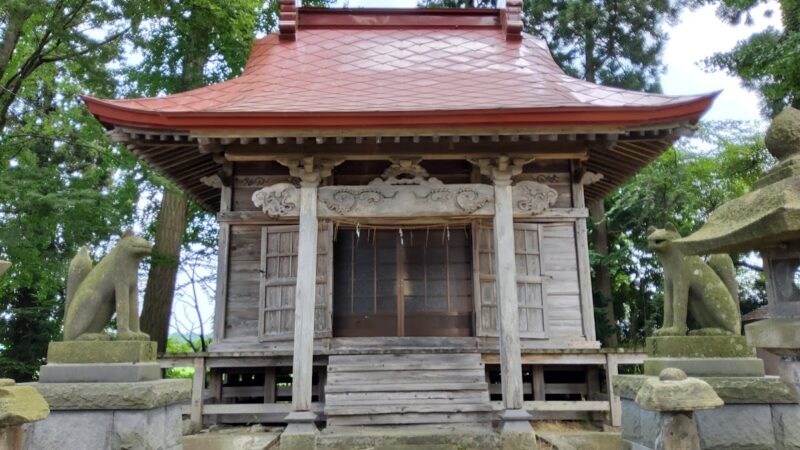
The shrine building of Katsurashimizu Shrine is constructed in the traditional style of shrine architecture. Having been rebuilt several times after fires, the current shrine building is carefully maintained by the faith of the local people.
The Sacred Katsura Tree
The large Katsura tree, a symbol of the shrine grounds, is a giant estimated to be several hundred years old. The mystical sight of clear water gushing from its roots leaves a deep impression on visitors. The color of the leaves changes with the seasons, and the scenery is particularly beautiful during the autumn foliage season.
The Spring Water Source
The clear water gushing from the roots of the Katsura tree remains unchanged, still holding pure water. This water, considered sacred since ancient times, is one of the most important sacred areas of the shrine.
About the Hinai District of Odate City
Regional Characteristics
The Hinai district of Odate City, where Katsura Shimizu Shrine is located, is situated in the northern part of Akita Prefecture and is blessed with a rich natural environment. It is nationally known as a production area for Hinai chicken and is also a region where agriculture and forestry thrive.
Historical Background
The Hinai area is a historical region where people have lived since ancient times, and Jomon period ruins have been discovered there. During the Edo period, it was part of the Kubota Domain (Akita Domain), and villages centered on agriculture were formed. Maeda Village was one of them, and Katsurashimizu Shrine was revered as the village’s guardian shrine.
The Hinai Area Today
Due to the Heisei-era municipal mergers, Hinai Town merged with Odate City, but the “Hinai area” still maintains its unique regional characteristics. Traditional festivals and culture are passed down, and Katsurashimizu Shrine remains a central and deeply rooted part of the community.
Surrounding Shrines and Temples
In addition to Katsurashimizu Shrine, many other shrines and temples are scattered throughout the Hinai area of Odate City and its surroundings.
Katsurashimizu Shrine in Sasadate (Shinmei-sha)
There is another Katsurashimizu Shrine located at 165 Sasadate, Hinai-cho, Odate City. This shrine also enshrines multiple deities, including Amaterasu Omikami, and is revered by the local community. The fact that they share the same name, “Katsura Shimizu Shrine,” suggests a possible historical connection.
Odate Shinmei Shrine
Located in the heart of Odate City, Odate Shinmei Shrine is a prestigious shrine dedicated to Amaterasu Omikami. The annual autumn festival features a grand celebration including the parade of floats and the performance of Odate Hayashi music, and is known as one of Odate City’s representative festivals.
Other Shrines
In the Hinai district, each hamlet has its own guardian shrine, each serving as a spiritual pillar for the local community. These shrines are properly managed under the jurisdiction of the Akita Prefectural Shrine Association, ensuring the preservation of tradition.
Access Information
Location
Address: 10 Maedabukuro, Hinai-Maeda, Odate City, Akita Prefecture 018-5753
Access by Public Transportation
Nearest Station: JR Ou Main Line, Ogita Station
The shrine is approximately a 10-minute drive from Ogita Station. Taking a taxi or renting a car from the station is recommended.
Bus: Bus services are limited, so it is recommended to check the timetable in advance.
Access by Car
From Akita Expressway: Approximately 20 minutes from Odate-Kita IC via National Route 7
From Tohoku Expressway: Approximately 40 minutes from Towada IC via National Route 103 and Prefectural Route 2
Parking: There is parking space for visitors on the shrine grounds.
Precautions When Visiting the Shrine
- The shrine grounds are a sacred place, so please visit in silence.
- The area around the spring may be slippery, so please watch your step.
- If you wish to receive a Goshuin (shrine stamp) or prayer, it is recommended to contact the shrine in advance.
- In winter, there may be snow, so please take precautions against the cold and wear non-slip shoes.
Manners and Etiquette for Visiting the Shrine
Basic Etiquette for Visiting the Shrine
- Bow before passing through the torii gate: This is a courtesy when entering the sacred area.
- Purify yourself at the water basin: Purify your left hand, right hand, and mouth in that order.
- Avoid walking in the center of the path: The center is considered the path of the gods.
- Etiquette in front of the main hall: The basic procedure is two bows, two claps, and one bow.
Meaning of Offerings
Offerings express gratitude to the gods. Sincerity is more important than the amount of money.
How to Make a Wish
When visiting a shrine, it is considered best to first express gratitude for everyday blessings, and then make your wish. There is also a belief that silently stating your address and name allows the deity to recognize you.
Katsura Shimizu Shrine and the Local Community
Spiritual Pillar of the Community
Katsura Shimizu Shrine has functioned as the spiritual center of the Maeda region from the Edo period to the present day. Through festivals, it serves as a place where local residents gather and deepen their community bonds.
Preservation of Traditional Culture
Shrine festivals and annual events are important opportunities to pass on the region’s traditional culture to the next generation. Children’s participation in festivals fosters a love for their hometown and respect for tradition.
Value as a Tourism Resource
The historic Katsura Shimizu Shrine and the legend of its miraculous spring are valuable tourism resources for the Hinai district of Odate City. It is also an important place for learning about the region’s history and culture.
Summary
Katsura Shimizu Shrine, located in Maedabukuro, Hinai Maeda, Odate City, Akita Prefecture, is a historic shrine believed to have been founded before 1723 (Kyoho 8). The miraculous tales surrounding the spring water gushing from the shrine grounds and the large Katsura tree have been widely known since the Edo period, attracting worshippers from as far away as Tsugaru and Nanbu.
The shrine enshrines five deities, including Amaterasu Omikami and Mizuhanome Omikami, and is believed to offer blessings for healing illnesses, good health, and abundant harvests. Although ancient documents have been lost due to several fires, they have been preserved by the faith of the local people and are still cherished as the guardian shrine of the region.
When visiting Odate City, be sure to visit Katsura Shimizu Shrine, steeped in history and legend, touch the pure spring water and the sacred Katsura tree, and feel the spirit of ancient faith. The time spent calming your mind in the tranquil grounds and expressing your daily gratitude to the gods will surely be a memorable experience.