Complete Guide to Rinsenji Temple (Ukyo Ward, Kyoto Prefecture) | A Thorough Explanation of Musō Soseki’s Mausoleum and Historical Value
Located in Saga Tenryuji Zōjichō, Ukyo Ward, Kyoto City, Rinsenji Temple is a temple of significant historical importance as a branch temple of Tenryuji Temple. Although usually closed to the public, it holds a special place in Kyoto tourism as the mausoleum of Musō Soseki and a site associated with the Imperial family. This article provides a detailed explanation of Rinsenji Temple’s history, architecture, cultural significance, and current situation.
Basic Information about Rinsenji Temple
Official Name: Reikizan Rinsenji Temple
Sect: Rinzai Zen Tenryuji School
Principal Image: Maitreya Bodhisattva
Founded: Around 1351 (Shohei 6)
Founder: Muso Soseki (Muso Kokushi)
Location: 33 Saga Tenryuji Zojicho, Ukyo-ku, Kyoto City
Phone: 075-872-0836
Visiting Hours: Normally closed to the public
Access: Approximately 5 minutes on foot from Keifuku Electric Railway Arashiyama Station, approximately 10 minutes on foot from Hankyu Arashiyama Station
Rinsenji Temple is a sub-temple of Tenryuji Temple and is managed as a branch temple of the head temple Tenryuji. Currently, due to the absence of a manager, it is closed to visitors, but its historical value remains undiminished, and it holds an important position as a cultural heritage of Kyoto.
The History of Rinsenji Temple | The Crossroads of the Imperial Family and Zen Buddhism
From a Detached Palace of Kameyama Imperial Villa to a Temple
The history of Rinsenji Temple dates back to the late Kamakura period, to an imperial villa. This site was originally Kawabata-dono, a detached palace of Kameyama-dono, the villa of Emperor Go-Saga and Emperor Kameyama. It was used as the residence of Princess Shōkeimon-in (Princess Yoshiko), daughter of Emperor Kameyama, and was a place of high status due to its connection to the imperial family.
Prince Tokinaga (son of Emperor Go-Daigo), who was adopted by Shōkeimon-in, received his education at Kawabata-dono from Kitabatake Chikafusa and Musō Soseki. During this period, Rinsenji Temple functioned not merely as a residence, but also as a place of education for members of the imperial family.
Deep Connection with Musō Soseki
Musō Soseki (1275-1351) was a high-ranking Zen Buddhist priest of the Rinzai school who was active from the late Kamakura period to the Nanboku-chō period. He is revered as the imperial teacher of seven emperors and is considered one of the most important figures in the history of Japanese Zen Buddhism. Musō Soseki was also the founder of Tenryū-ji Temple and greatly contributed to the development of Zen culture in the Saga-Arashiyama area.
In Shōhei 6 (1351), Musō Soseki passed away at Rinsen-ji Temple. His remains were buried here, and Rinsen-ji Temple became Musō Soseki’s mausoleum, an important sacred site in Zen Buddhism for over 600 years.
Development by Ashikaga Yoshimitsu
Ashikaga Yoshimitsu, the third shogun of the Muromachi shogunate, devoted himself to the development of Rinsen-ji Temple in order to commemorate Musō Soseki. Yoshimitsu is known as a protector of Zen Buddhism and a figure who contributed to the development of Kyoto’s temple culture. With his support, Rinsen-ji Temple was established as a founder’s hall and solidified its position as a branch temple of Tenryu-ji Temple.
Architecture and Grounds of Rinsen-ji Temple
Significance of the Founder’s Hall
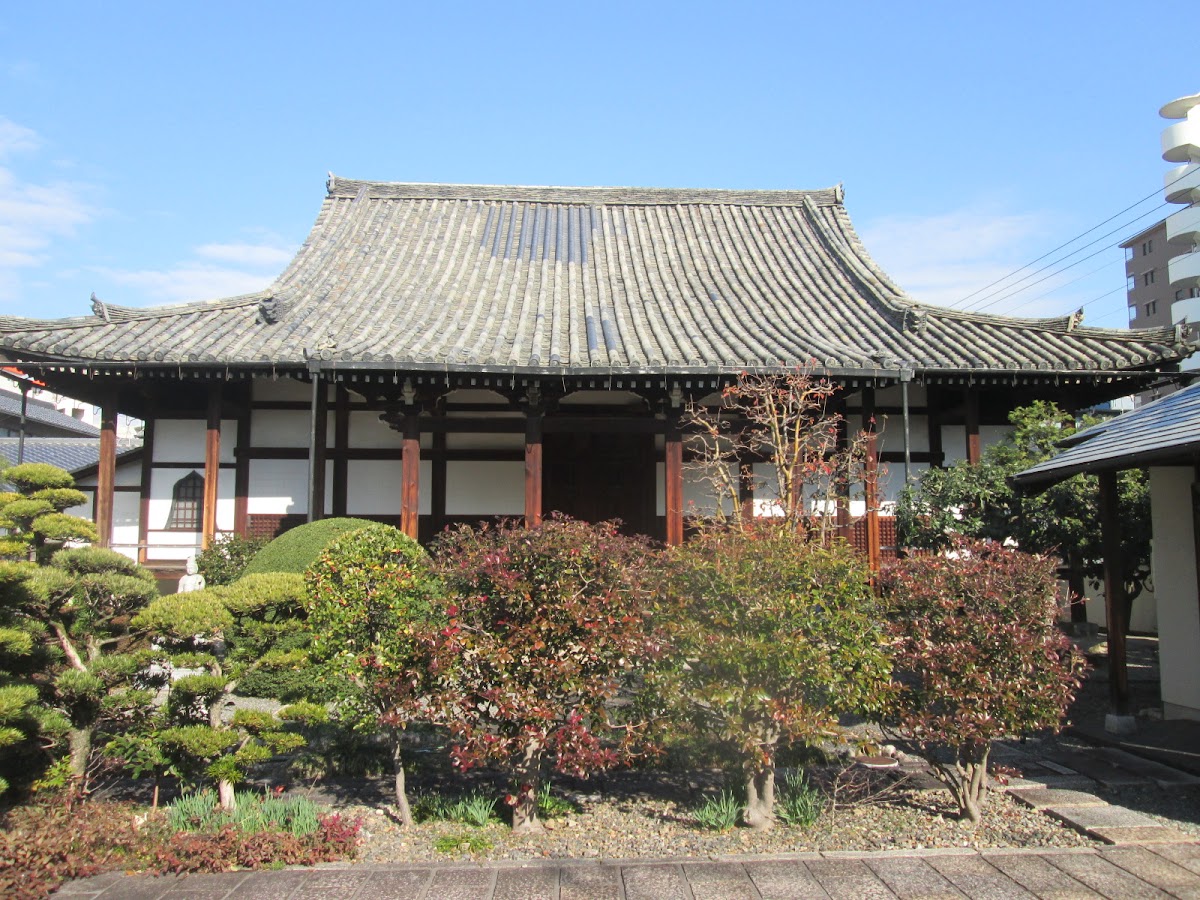
Rinsen-ji Temple is a temple with the characteristics of a “founder’s hall.” A founder’s hall is a building that enshrines the founder (the founder or first head priest) of a temple, and is considered a particularly important facility in Zen Buddhist temples. In the case of Rinsen-ji Temple, it enshrines Muso Soseki, the founder of Tenryu-ji Temple, and can be said to be one of the spiritual centers of Tenryu-ji Temple.
Inside the founder’s hall are enshrined a wooden statue and memorial tablet of Muso Soseki, which have been objects of worship for Zen monks. Although it is usually not open to the public and therefore not visible to general tourists, its very existence plays an important role in the religious landscape of the Saga-Arashiyama area.
The Middle Gate and Temple Grounds
Rinsenji Temple’s grounds are located north of Tenryuji Temple and present a tranquil atmosphere. The approach leading from the middle gate still conveys the prestige of its former status as an imperial residence. Surrounded by the natural beauty of Sagano, it is protected as part of Kyoto’s historical landscape preservation district.
Currently, it is not possible to visit the temple grounds, so only the exterior can be viewed. However, by strolling around the surrounding area when visiting Tenryuji Temple, you can feel the historical atmosphere.
About Musō Soseki (Musō Kokushi)
The Life and Achievements of Musō Soseki
Musō Soseki was born in 1275 (Kōan 8) and passed away in 1351 (Shōhei 6) at the age of 76. Originally from Ise Province (present-day Mie Prefecture), he entered the Buddhist path from a young age and rose to prominence as a high-ranking priest of the Rinzai school.
His greatest achievement was spreading Zen Buddhism among the aristocracy and samurai classes, deeply rooting it in Japanese culture. He received the title of National Teacher from seven emperors—Emperor Go-Daigo, Emperor Kogon, Emperor Komyo, Emperor Suko, Emperor Go-Kogon, Emperor Go-En’yu, and Emperor Chokei of the Northern Court—earning him the title of “Imperial Teacher of Seven Courts.”
Muso Soseki and Garden Culture
Muso Soseki is also known as an excellent landscape gardener. His gardens, such as the Sogenchi Garden at Tenryu-ji Temple and the garden at Saiho-ji Temple (Moss Temple), are still highly regarded as masterpieces in the history of Japanese gardens. He established the “Zen garden” style, expressing the spirituality of Zen in the form of a garden, and greatly influenced later Japanese gardens.
It is believed that there was once a garden at Rinsen-ji Temple that reflected Muso Soseki’s aesthetic sensibilities, but the details are currently unknown.
Muso Soseki’s Thought and Writings
Muso Soseki left behind many writings. A representative example is the *Muchu Mondo Shu* (Collection of Dream Dialogues), a book that explains Zen teachings in an easy-to-understand question-and-answer format, and is still read today as an introductory text to Zen. His philosophy aimed to spread Buddhist teachings to a wider audience by explaining Zen doctrines in simple terms.
Relationship between Rinsenji and Tenryuji
Historical Background of Tenryuji
Tenryuji is a temple founded in 1339 by Ashikaga Takauji to commemorate Emperor Go-Daigo. With Muso Soseki as its founding abbot, it became a prestigious temple ranked first among the Five Great Zen Temples of Kyoto. Currently, it is one of the constituent assets of the World Heritage Site “Historic Monuments of Ancient Kyoto,” attracting many tourists from both Japan and abroad.
Positioning as a Branch Temple
Rinsenji has played a special role as a branch temple of Tenryuji, distinct from the main temple. While Tenryu-ji Temple is a temple dedicated to the repose of Emperor Go-Daigo’s soul, Rinsen-ji Temple is a place that enshrines its founder, Muso Soseki, and can be considered a “head temple” in a spiritual sense.
In Zen Buddhist temples, the mausoleum of the founder is considered a special sacred place. The monks of Tenryu-ji Temple have used visits to Rinsen-ji Temple as an opportunity to return to the spirit of the founder and reaffirm the origins of their training.
Current Situation of Rinsen-ji Temple
Background of the Suspension of Public Visits
Currently, Rinsen-ji Temple is closed to visitors. This is because, after the death of the head priest, there is no one to manage the temple. Tenryu-ji Temple manages the temple, but due to the aging of the building and maintenance issues, it is not open to the public.
This situation symbolizes the challenges faced by many small temples in Kyoto. Due to a lack of successors and maintenance costs, even temples with historical value are increasingly finding it difficult to open to the public.
About Goshuin (Temple Seals)
Currently, it is not possible to obtain Goshuin at Rinsenji Temple. While it seems that Tenryuji Temple used to offer Rinsenji’s Goshuin, it is no longer available. Those collecting Goshuin are advised to obtain the Goshuin from Tenryuji Temple itself.
Cultural Value
Although currently closed to the public, Rinsenji Temple is recognized as a historically significant building in Kyoto City and as part of the scenic and historical sites of Arashiyama. Its historical value remains unchanged, and it is protected as a cultural heritage site of Kyoto.
In the future, if restoration and management systems are in place, there is a possibility of special public viewings. Preservation activities by Kyoto City, Tenryuji Temple, and cultural property protection organizations are expected.
Tourist Attractions Around Rinsenji Temple
Tenryuji Temple (World Heritage Site)
When visiting Rinsenji Temple, be sure to also visit Tenryuji Temple. The Sogenchi Garden is known as a masterpiece designed by Muso Soseki, and you can enjoy beautiful scenery throughout the seasons. The Cloud Dragon painting in the main hall is a must-see.
Visiting Hours: 8:30-17:00 (Varies by season)
Admission Fee: 500 yen for the garden, 300 yen extra for the halls
Estimated Time Required: Approximately 60 minutes
Arashiyama/Togetsukyo Bridge Area
A 10-minute walk from Rinsenji Temple will take you to Togetsukyo Bridge, a representative tourist spot in Arashiyama. The view from the bridge over the Katsura River is known as one of Kyoto’s most spectacular sights. It is especially crowded with tourists during cherry blossom and autumn foliage seasons.
Bamboo Grove Path
The bamboo grove path, which extends from the north gate of Tenryuji Temple, is a representative landscape of Sagano. The tunnel of bamboo groves lining both sides is a popular photo spot where you can feel the atmosphere of Kyoto. Visiting in the early morning or evening allows for a relatively quiet stroll.
Jojakkoji Temple/Nison-in Temple
There are many other temples in the Sagano area. Jōjakkōji Temple is known as a famous spot for autumn foliage, and Nison-in Temple is known as the “Maple Horse Riding Ground.” A recommended route involves strolling around the area surrounding Rinsenji Temple and visiting these temples.
How to Access Rinsenji Temple
Access by Train
Using Keifuku Electric Railway (Randen)
- Get off at Arashiyama Station, approximately 5 minutes on foot
- Approximately 20 minutes from Shijo-Omiya Station to Arashiyama Station
- Fare: 240 yen
Using Hankyu Railway
- Get off at Arashiyama Station, approximately 10 minutes on foot
- Approximately 25 minutes from Kawaramachi Station to Arashiyama Station (transfer at Katsura Station)
- Fare: 230 yen
Using JR
- Get off at Saga-Arashiyama Station, approximately 15 minutes on foot
- Approximately 15 minutes from Kyoto Station to Saga-Arashiyama Station
- Fare: 240 yen
Access by Bus
Kyoto City Bus
- Get off at “Arashiyama Tenryuji-mae” bus stop (Routes 11, 28, or 93), approximately 5 minutes on foot
- Approximately 45 minutes from Kyoto Station
- Fare: 230 yen
During peak tourist seasons (especially cherry blossom season in spring and autumn foliage season), roads become congested, so we recommend accessing the area by train.
Access by Car
Private Car
- Approximately 30 minutes from Kyoto Minami IC on the Meishin Expressway
- Parking: Use the Tenryuji Temple parking lot (paid) or nearby private parking lots.
The Arashiyama area becomes extremely crowded during peak tourist seasons, and parking lots are often full, so we strongly recommend using public transportation.
Best Season to Visit Rinsenji Temple
Spring (Late March to May)
During cherry blossom season, the entire Arashiyama area is enveloped in a vibrant atmosphere. The area around Rinsenji Temple is also beautiful with cherry blossoms, which can be enjoyed together with the cherry blossoms at Tenryuji Temple. The peak is especially in early April.
Summer (June to August)
During the season of fresh greenery, there are relatively few tourists, allowing for a quiet stroll. The green maple leaves are beautiful, making this a time to fully enjoy the nature of Sagano. However, Kyoto summers are extremely hot, so precautions against heatstroke are necessary.
Autumn (November)
The Arashiyama area is at its busiest during the autumn foliage season. The autumn leaves at Tenryu-ji Temple are particularly beautiful, and the area around Rinsen-ji Temple is also dyed in autumn colors. The peak is from mid to late November, and early morning or weekday visits are recommended.
Winter (December-February)
This is the quietest season with the fewest tourists. Arashiyama is exceptionally beautiful on snowy days. While precautions against the cold are necessary, this is a time to experience the winter atmosphere of Kyoto.
Rinsen-ji Temple and Kyoto’s Zen Culture
Zen Temple Culture in the Saga-Arashiyama Area
The Saga-Arashiyama area flourished as a villa area for aristocrats from the Heian period, and many Zen Buddhist temples were built there from the Kamakura period onward. Many Zen temples are concentrated in this area, centered around Tenryu-ji Temple, including Rinsen-ji, Hogon-in, and Kogen-ji.
These temples have functioned not merely as religious institutions but also as centers of cultural dissemination. The ink painting, tea ceremony, and garden culture brought about by Zen Buddhism form the foundation of Japanese culture.
Cultural Influence of Muso Soseki
Muso Soseki’s influence on Kyoto’s Zen culture is immeasurable. His philosophy viewed Zen not merely as a method of practice, but as a culture encompassing all aspects of life.
In garden design, he combined the beauty of nature with the spirituality of Zen, aiming to shift from “gardens to be seen” to “gardens to be felt.” This approach had a significant impact on the later development of Japanese gardens and laid the foundation for Japanese garden culture, which is still appreciated worldwide today.
Future Prospects for Rinsen-ji Temple
Challenges of Preservation and Utilization
How to preserve and utilize historically valuable temples like Rinsen-ji is a challenge for the entire city of Kyoto. Many problems remain, including the aging of the building, a shortage of administrators, and securing maintenance funds.
On the other hand, the importance of recognizing its value as a cultural property and carrying out appropriate preservation activities is also increasing. Kyoto City, the Agency for Cultural Affairs, and private organizations are collaborating to explore sustainable preservation methods.
Possibility of Special Public Openings
In the future, if special public opening periods could be established in spring and autumn, it would create opportunities for many people to experience the historical value of Rinsenji Temple. Some of the sub-temples of Tenryuji Temple, while normally closed to the public, offer special openings, and similar efforts are expected at Rinsenji Temple.
Preservation Utilizing Digital Technology
Recently, efforts to digitally archive cultural properties using 3D scanning and virtual reality technology are progressing. By utilizing these technologies, it would be possible to create an environment where people can learn about the history and architecture of Rinsenji Temple even if they cannot physically visit.
Summary
Rinsenji Temple occupies an important position in Kyoto’s history as the mausoleum of Musō Soseki and as a place associated with the Imperial family. Currently, the temple is closed to the public and not open for worship, but its historical value remains undiminished, and it is protected as a cultural heritage site of Kyoto.
When visiting Tenryu-ji Temple, why not remember the existence of Rinsen-ji Temple and consider the influence that Muso Soseki had on Kyoto’s Zen culture? Even just passing by the gates of Rinsen-ji Temple while strolling through the Saga-Arashiyama area will allow you to feel the deep history of Kyoto.
If there are opportunities for special openings in the future, I would like you to visit and experience the atmosphere of this historical temple firsthand. Until then, you can touch upon Muso Soseki’s spirituality and the profoundness of Kyoto’s Zen culture by visiting the Sogenchi Garden of Tenryu-ji Temple and the surrounding Zen temples.