Rinsho-ji Temple (Ena City, Gifu Prefecture) | A Thorough Explanation of History, Cultural Assets, and Goshuin (Temple Seal) Information
About Rinsho-ji Temple
Rinsho-ji Temple is a Soto Zen Buddhist temple located in Kubohara, Yamaoka-cho, Ena City, Gifu Prefecture. Its official name is “Iōzan Rinsho Zen-ji,” and its mountain name is Iōzan (or Iōzan). The principal image is Yakushi Nyorai (Medicine Buddha), and it is a historical temple visited by many worshippers as the 22nd temple of the Ena Thirty-Three Kannon Pilgrimage and the 27th temple of the Chubu Forty-Nine Yakushi Pilgrimage.
Its address is 388 Kubohara, Yamaoka-cho, Ena City, Gifu Prefecture 509-7601, and it has a long history as a center of local faith.
History
Origin of the Temple and Abbot Sohaku
According to tradition, the founding of Rinsho-ji Temple dates back to the first year of Bunpo (1317), at the end of the Kamakura period. It is said to have begun when a monk named Sohaku, from Tanba Province (present-day Kyoto and Hyogo prefectures), visited Kubohara Village carrying a statue of Yakushi Nyorai (Medicine Buddha) said to have been created by Gyoki Bodhisattva.
It is said that Abbot Sohaku enshrined the Yakushi Nyorai in this place and established a temple to pray for the healing of people’s illnesses and their health. This is the origin of Rinsho-ji Temple, and the mountain name “Iōzan” (醫王山) also derives from the belief that Yakushi Nyorai, as the “King of Medicine,” heals people’s physical and mental illnesses.
Development during the Kan’ei Era
The temple’s current form is believed to have been established during the Kan’ei era (1624-1645), in the early Edo period. During this period, it was officially founded as a Soto Zen temple and developed into a center of Zen Buddhism in the region.
The Soto Zen school, founded by Zen Master Dogen, is characterized by its emphasis on seated meditation (zazen). Rinsho-ji Temple also spread Zen teachings to the local people and functioned as a place for spiritual cultivation.
Development since the Early Modern Period
Throughout the Edo period, Rinsho-ji Temple was positioned as an important temple in the Ena region and gained many parishioners. Despite being affected by the anti-Buddhist movement of the Meiji era, it was preserved through the deep faith of the local people and continues to this day.
Through the Showa and Heisei eras, it continues to function as a pilgrimage temple and a cultural center of the region.
Rurikoji Temple according to the Iōzan Rinsho Zenji Temple History
Rinsho-ji Temple possesses an important record called the “Iōzan Rinsho Zenji Temple History.” According to this history, Rinsho-ji Temple was also known by the alternative name “Rurikoji Temple.”
Rurikō is a Buddhist term meaning the “Eastern Pure Land of Lapis Lazuli,” the pure land of Yakushi Nyorai (the Medicine Buddha). Yakushi Nyorai is also known as “Yakushi Rurikō Nyorai,” and is believed to illuminate people with a pure, lapis lazuli-like light, relieving their suffering.
This historical record is an important document demonstrating that Rinshōji Temple was a center of Yakushi worship, a temple where people prayed for the health and well-being of the local population. The record details the temple’s history, the origin of the principal image, and records of successive chief priests, making it a valuable resource for studying the religious history of the Ena region.
Designated Cultural Property
Ena City Designated Cultural Property
Rinshōji Temple houses valuable cultural properties designated by Ena City. These are protected as important legacies that convey the region’s history and culture to the present day.
Yakushi Nyorai Statue
The principal image, the Yakushi Nyorai statue, is an ancient Buddha statue traditionally attributed to Gyōki Bodhisattva. Gyōki (668-749) was a high-ranking Buddhist monk of the Nara period, a legendary figure said to have built temples and created Buddhist statues throughout Japan. While there are various theories regarding the actual date of creation, this statue is valued as a precious example of ancient style.
Yakushi Nyorai (Medicine Buddha) is generally depicted holding a medicine jar in his left hand and forming the Abhaya Mudra (gesture of fearlessness) with his right hand. The Yakushi Nyorai statue at Rinshōji Temple is also created based on this traditional iconography.
Other Cultural Properties
Besides the Yakushi Nyorai statue, Rinshōji Temple possesses other historically valuable Buddhist implements, ancient documents, and artifacts. These are appropriately preserved and managed as valuable historical materials that tell the history of Ena City.
The designation as an Ena City designated cultural property plays an important role in passing on the region’s cultural heritage to future generations.
Rinsho-ji Temple as a Pilgrimage Site
27th Temple of the Chubu Forty-Nine Yakushi Pilgrimage
Rinsho-ji Temple is designated as the 27th temple of the Chubu Forty-Nine Yakushi Pilgrimage. The Chubu Forty-Nine Yakushi Pilgrimage is a pilgrimage route spanning Aichi, Gifu, Mie, and Shizuoka prefectures, visiting temples whose principal deity is Yakushi Nyorai (Medicine Buddha).
Yakushi Nyorai is the principal deity of the Eastern Pure Land, and is a Buddha who made twelve great vows to heal people’s illnesses, ward off disasters, and satisfy their basic needs. The belief in praying for physical and mental health and peace of mind by visiting these sacred sites has continued since ancient times.
Yakushi Nyorai as the principal deity of the pilgrimage sites is especially believed to grant blessings for healing illnesses, longevity, and family safety, attracting many pilgrims.
Ena Thirty-Three Kannon Pilgrimage Site, Temple No. 22
Rinsho-ji Temple is the 22nd temple on the Ena Thirty-Three Kannon Pilgrimage. The Ena Thirty-Three Kannon Pilgrimage is a pilgrimage route that visits temples dedicated to Kannon (Goddess of Mercy) scattered throughout the area centered around Ena City.
The principal image of the pilgrimage site is the Thousand-Armed Kannon Bodhisattva, enshrined separately in the Kannon Hall from the principal image of Yakushi Nyorai (Medicine Buddha). The Thousand-Armed Kannon is worshipped as a compassionate Buddha who saves all sentient beings without exception with her thousand arms.
The number thirty-three originates from the teachings of the Lotus Sutra, which states that Kannon Bodhisattva transforms into thirty-three forms to save sentient beings. It is believed that by visiting these temples, one can receive the protection of Kannon.
About the Goshuin (Temple Seal)
At Rinsho-ji Temple, you can receive Goshuin for both pilgrimage sites. Goshuin are cherished as proof of visitation and as a record of the pilgrimage.
The goshuin (temple stamp) for the Chubu Forty-Nine Yakushi Pilgrimage features the calligraphy of “Yakushi Nyorai” (Medicine Buddha) and the pilgrimage site number, while the goshuin for the Ena Thirty-Three Kannon Pilgrimage features the calligraphy of “Senju Kannon Bosatsu” (Thousand-Armed Kannon Bodhisattva). Each pilgrimage site has its own dedicated goshuin notebook, making them precious mementos for pilgrims.
When receiving a goshuin, it is customary to complete your prayers at the main hall before speaking to the temple office.
Highlights of the Temple Grounds
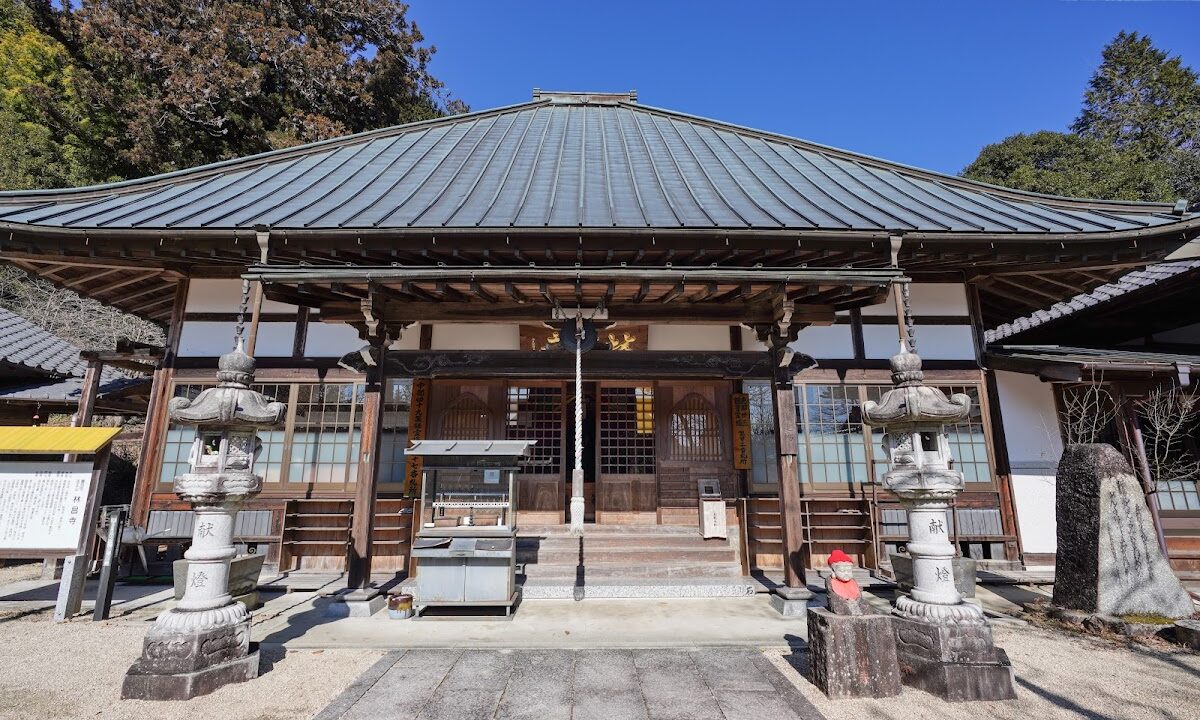
Main Hall
The main hall of Rinsho-ji Temple is a building constructed in the traditional Japanese architectural style. The principal image, a statue of Yakushi Nyorai, is enshrined inside, allowing visitors to pray in a solemn atmosphere.
Regular religious services and Zen meditation sessions are held in the main hall, making it a central hub of local religious activity.
Kannon Hall
Within the temple grounds is the Kannon Hall, which houses the Thousand-Armed Kannon Bodhisattva, the principal image of the Ena Thirty-Three Kannon Pilgrimage. The Kannon Hall is a separate building from the main hall and serves as a center of Kannon worship, welcoming visitors.
Temple Cafe
One of the distinctive features of Rinsho-ji Temple is its temple cafe. Despite being a temple, the presence of a cafe space provides a place where visitors and local people can easily stop by and find peace of mind.
At the temple cafe, you can enjoy tea, coffee, and other beverages while spending quiet time. Spending time in the relaxed atmosphere of the temple is a valuable opportunity for healing in today’s busy life.
It is recommended to check the opening days and hours in advance.
Nature on the Temple Grounds
Located in the naturally rich environment of Yamaoka-cho, the grounds of Rinsho-ji Temple are planted with seasonal flowers and trees. Cherry blossoms in spring, fresh greenery in summer, autumn leaves in fall, and snowscapes in winter—each season presents a different face.
A stroll through the tranquil temple grounds will allow you to experience the spirit of Zen, in harmony with nature.
Access Information
Location
388 Kubohara, Yamaoka-cho, Ena City, Gifu Prefecture 509-7601
Phone Number
0573-56-2089
Access by Public Transportation
Using the Akechi Railway
The nearest station is Hanashiro Onsen Station on the Akechi Railway. From the station, you can access the temple on foot or by taxi. The distance from Hanashiro Onsen Station to Rinsho-ji Temple is approximately 2-3 km.
The Akechi Railway is a local line connecting Ena Station and Akechi Station, a scenic route running through peaceful rural landscapes.
Using the JR Chuo Main Line
You can access the temple by transferring to the Akechi Railway from JR Chuo Main Line’s Ena Station, or by taxi or rental car. It takes approximately 20-25 minutes by car from Ena Station to Rinsho-ji Temple.
Access by Car
Using the Chuo Expressway
The temple is approximately 20 minutes from the Ena Interchange on the Chuo Expressway via National Route 19 and prefectural roads. The route from the Ena Interchange is relatively easy to follow; simply follow the signs towards Yamaoka-cho.
Parking
The temple has a parking lot for visitors. It is recommended to check with the temple in advance for details.
Nearby Tourist Attractions
Yamaoka-cho in Ena City, where Rinsho-ji Temple is located, is a region famous for its production of fine agar-agar. The following are some of the nearby tourist attractions:
- Yamaoka Station Kantenkan: A facility where you can enjoy agar-agar dishes and products unique to Japan’s top producer of fine agar-agar.
- Iwamura Castle Ruins: A national historical site known as one of Japan’s three great mountain castles.
- Iwamura Town’s Old Townscape: A historical townscape designated as an Important Preservation District for Groups of Traditional Buildings.
- Enakyo Gorge: A scenic spot where you can enjoy the beauty of the Kiso River gorge.
By visiting these tourist spots in conjunction with a visit to Rinsho-ji Temple, you can experience the history and culture of the Ena region more deeply.
Etiquette and Manners for Visiting a Temple
Proper Etiquette for Visiting a Temple
When visiting a temple, please observe the following basic etiquette:
- Bow at the Temple Gate: Bow at the temple gate before entering the temple grounds.
- Purify at the Water Basin: If there is a water basin, purify your hands and mouth.
- Worship at the Main Hall: Join your hands in prayer in front of the main hall and pray quietly. Do not clap your hands in a temple.
- How to Receive a Goshuin (Temple Stamp): Receive a Goshuin after completing your worship.
- Bow Upon Exit: When leaving the temple grounds, turn around and bow.
Clothing and Belongings
There are no specific dress code requirements, but clean and modest clothing appropriate for the sacred place of a temple is desirable.
When visiting sacred sites, the following items are helpful:
- Goshuincho (stamp book)
- Nokyoryo (offering)
- Comfortable walking shoes
- Rain gear (depending on the weather)
- Camera (only in areas where photography is permitted)
Regarding Photography
Photography is restricted in some areas of the temple grounds, such as inside the main hall and around Buddhist statues. Always obtain permission or follow the signs when taking photographs.
Annual Events
Rinsho-ji Temple holds various Buddhist events throughout the year. Major events include:
Yakushi Nyorai Festival
The 8th of each month is considered the festival day of Yakushi Nyorai, and special memorial services may be held.
Spring and Autumn Equinox Services
During the Equinox period, centered around the spring and autumn equinoxes, memorial services for ancestors are held.
Other Events
- New Year’s Day First Shrine Visit
- Flower Festival (Buddha’s Birthday Celebration)
- Obon Memorial Service
- New Year’s Eve Bell Ringing
These are just some of the traditional Buddhist events that are held. For details on events and how to participate, please contact the temple directly.
Rinsho-ji Temple and the Local Community
Center of Local Faith
For over 700 years, Rinsho-ji Temple has served as the center of faith for the people of Yamaoka-cho, Ena City. Through the danka (parishioner) system, it is deeply connected to the local community and provides spiritual support to people through weddings, funerals, and annual events.
Cultural Inheritance
Temples are not merely religious facilities; they are also places for inheriting local culture. The cultural artifacts and ancient documents preserved at Rinsho-ji Temple are valuable resources for studying the history of the Ena region.
Furthermore, through new initiatives such as the temple café, it plays a role in connecting tradition and modernity.
Role as a Tourism Resource
As a pilgrimage site, Rinsho-ji Temple is also an important tourism resource for Ena City. Pilgrims and tourists visiting from all over Japan contribute to the local economy.
By visiting this historic temple, visitors have the opportunity to experience traditional Japanese culture and Buddhist teachings.
Footnotes
This article is based on publicly available materials, official temple information, and local historical documents. For the latest information on specific event schedules, visiting hours, and fees, we recommend contacting Rinsho-ji Temple directly.
References
- *Ena City History*
- *Temples of Gifu Prefecture*
- Chubu Forty-Nine Yakushi Pilgrimage Association Materials
- Ena Thirty-Three Kannon Pilgrimage Association Materials
- Rinshoji Temple Official Website
- Ena City Board of Education Cultural Property Materials
External Links
More detailed information about Rinshoji Temple can be found at the following links:
- Rinshoji Temple Official Website
- Ena City Tourism Association Website
- Chubu Forty-Nine Yakushi Pilgrimage Association Official Website
Summary
Rinshoji Temple (Ena City, Gifu Prefecture) is a historic Soto Zen temple dating back to the late Kamakura period. Its mountain name is Iōzan, and with Yakushi Nyorai (Medicine Buddha) as its principal deity, it has a history of over 700 years as a place of worship where people pray for health and peace.
As the 27th temple of the Chubu Forty-Nine Yakushi Pilgrimage and the 22nd temple of the Ena Thirty-Three Kannon Pilgrimage, it is a sacred site visited by many pilgrims. It houses cultural properties designated by Ena City and plays an important role in conveying the history and culture of the region to the present day.
While also undertaking modern initiatives such as a temple café, it demonstrates a commitment to preserving tradition while adapting to the new era. When visiting Ena City, be sure to stop by Rinsho-ji Temple and experience its history and tranquility.
Spending time in quiet prayer within the temple grounds, surrounded by the rich nature of Yamaoka-cho, will be a precious source of healing in today’s busy life. Through this experience at a historic temple, you will have the opportunity to connect with traditional Japanese culture and the teachings of Buddhism.