Rubeshibe Shrine Complete Guide: History, Goshuin (Shrine Seal), Access Information, and the Charm of Visiting
About Rubeshibe Shrine
Rubeshibe Shrine is a shrine located at 115 Miyashita-cho, Rubeshibe-cho, Kitami City, Hokkaido. As the guardian shrine of Rubeshibe-cho, it is deeply revered by the local residents and serves as the protector of the entire Rubeshibe area.
Although a relatively new shrine, founded between the late Meiji and Taisho periods, its origins are deeply intertwined with reverence for Emperor Meiji, and it is known as an important shrine symbolizing the history and culture of the region.
It belongs to the Hokkaido Association of Shrines, and currently, a chief priest and assistant priest are permanently stationed there to manage the shrine and perform religious ceremonies. In recent years, a new chief priest and assistant priest were appointed in November 2023, and the shrine is actively engaged in information dissemination using digital platforms such as SNS and Hotokami.
History and Origins of Rubeshibe Shrine
Circumstances of its Founding and its Connection to Emperor Meiji
The history of Rubeshibe Shrine dates back to the death of Emperor Meiji on July 30, 1912 (Meiji 45). This historical event prompted eight individuals, led by Kiichiro Saito, a volunteer from the Rubeshibe town area, to establish a place of worship at the site where the “Emperor Meiji Monument” now stands.
The town’s residents, revering the virtues of Emperor Meiji and expressing their deepest condolences from afar, have carefully preserved this site as a memorial. Eventually, a small shrine was erected, and the spirit of Amaterasu Omikami was enshrined, with annual festivals being held.
This place of worship is the origin of Rubeshibe Shrine, demonstrating that reverence and gratitude towards Emperor Meiji were the driving force behind the shrine’s founding.
Development from the Taisho to the Early Showa Period
In 1926 (Taisho 15), the shrine officially received permission to be established as “Rubeshibe Shrine.” This established its status as a formal shrine, evolving from a small shrine to a proper one.
In 1927 (Showa 2), it was designated a village shrine, recognized as an official local shrine. This promotion to village shrine was proof of the important role Rubeshibe Shrine played in the local community.
In 1946 (Showa 21), with the enactment of the post-war Religious Corporations Law, it received official recognition as a religious corporation, establishing its current organizational structure.
Modern Rubeshibe Shrine
In November 2023 (Reiwa 5), a new chief priest and assistant priest were appointed, and the shrine is being managed in a way that adapts to the new era while preserving tradition. The shrine is exploring the role of a shrine in the digital age through information dissemination using social media such as Instagram, Facebook, and X (formerly Twitter), and sharing of pilgrimage records on Hotokami.
Deities and Divine Virtues
Main Deity: Amaterasu Omikami
The main deity of Rubeshibe Shrine is Amaterasu Omikami. Amaterasu Omikami is the supreme deity in Japanese mythology and is revered as the ancestral deity of the Imperial Family. As the personification of the sun, she is believed to bestow divine virtues such as the source of life, national peace and security, and abundant harvests.
Divine Virtues and Faith
Rubeshibe Shrine, which enshrines Amaterasu Omikami, is believed to possess the following divine virtues:
- National Peace and Prosperity and Regional Prosperity: As the guardian shrine of the region, prayers are offered for peace and development throughout Rubeshibe Town.
- Abundant Harvests and Industrial Development: In Hokkaido, where agriculture and forestry are thriving, prayers are offered for industrial development.
- Family Safety and Good Health: Prayers are offered for the health of parishioners and visitors, and for peace in their homes.
- Good Fortune and Protection from Evil: Prayers are offered for protection from evil and good fortune at important life events.
Relationship between the Parish Area and the Community
The Parish Area of Rubeshibe Shrine
Rubeshibe Shrine is widely revered as the guardian shrine of Rubeshibe town, but its parish area specifically covers the “Rubeshibe area” (Rubeshibe in the narrow sense) east of National Route 8 (the road that forms the boundary between the Otomi and Shoei districts).
Specifically, the following districts within present-day Rubeshibe town, Kitami City, Hokkaido, are considered part of the shrine’s parish:
- Kinka, Otomi, Tomioka, Toyokane
- Izumi, Asahihigashi, Asahichuo, Asahiminami
- Asahikoen, Asahikita, Asahi1ku, Asahinishi, Asahi3ku
- Sakaemachi, Kamimachi, Nakamachi, Higashimachi
- Motomachi, Miyashitamachi, Maruyama
- Mizuho, Hanazono
For the people living in these districts, Rubeshibe Shrine holds a special place as their guardian deity, and important Shinto rituals such as first shrine visits for newborns, Shichi-Go-San (a traditional rite of passage for children), exorcisms, and weddings are performed there.
Connections with the Local Community
Rubeshibe Shrine is not merely a religious institution; it functions as a central hub for the local community. Annual events, including the annual festival, provide important opportunities for local residents to gather and play a vital role as a place for intergenerational exchange.
Annual Events and the Annual Festival
Annual Festival Date
Rubeshibe Shrine’s annual festival is held every year on September 20th. This festival is the most important ceremony for the shrine, with many parishioners and local residents attending to express gratitude to the gods and pray for the prosperity of the community.
Other Annual Events
Rubeshibe Shrine observes the annual events typical of shrines in Hokkaido:
- New Year’s Day Festival (January 1st): Celebrating the New Year and praying for peace throughout the year
- Setsubun Festival (around February 3rd): Driving away evil and inviting good fortune through bean-throwing, etc.
- Spring Festival: Celebrating the arrival of spring and praying for a bountiful harvest
- Shichi-Go-San (around November 15th): Praying for the healthy growth of children
- Great Purification Ceremony (June 30th and December 31st): Cleansing away the sins and impurities accumulated over the past six months
These rituals are conducted solemnly according to traditional Shinto practices, under the guidance of the Hokkaido Shrine Association.
Goshuin (Shrine Seals) and Amulets
About Goshuin
Goshuin (shrine seals) can be received at Rubeshibe Shrine. A notable point is that all goshuin (temple/shrine stamps) are given on separate sheets of paper, so you can receive one even if you don’t have a goshuincho (stamp book). This shows the shrine’s consideration for visitors and its commitment to providing goshuin to as many people as possible.
The goshuin are carefully written by the chief priest or assistant priest and are cherished as mementos of the visit. With over 95 visitor records posted on Hotokami and over 300 shared photos, it’s clear that many visitors come here.
Concurrent Shrine: Goshuin of Onneyu Shrine
The chief priest of Rubeshibe Shrine also serves at Onneyu Shrine, located in the same town of Rubeshibe. While Onneyu Shrine is usually unattended, Rubeshibe Shrine handles requests such as goshuin.
From June 20, 2024, the Goshuin (seal) of Onneyu Shrine can now be obtained at “Bihaku no Yuya Ooe Honke,” a renowned inn specializing in whitening hot springs, making it more convenient for tourists visiting Onneyu Onsen.
Amulets and Souvenirs
Rubeshibe Shrine offers various amulets and souvenirs. Amulets are available to fulfill various wishes, such as traffic safety, family safety, academic success, and safe childbirth, allowing visitors to choose one that suits their own or their family’s needs.
Highlights of the Shrine Grounds
Monument to Emperor Meiji
Within the shrine grounds is the “Monument to Emperor Meiji,” which marks the origin of Rubeshibe Shrine’s founding. This monument stands on the site where a place of worship was established upon the death of Emperor Meiji in 1912 (Meiji 45), and is an important historical site that conveys the history of the shrine to the present day.
It is still carefully preserved as a place where local residents remember the virtues of Emperor Meiji and express their condolences.
Shrine Buildings and Grounds
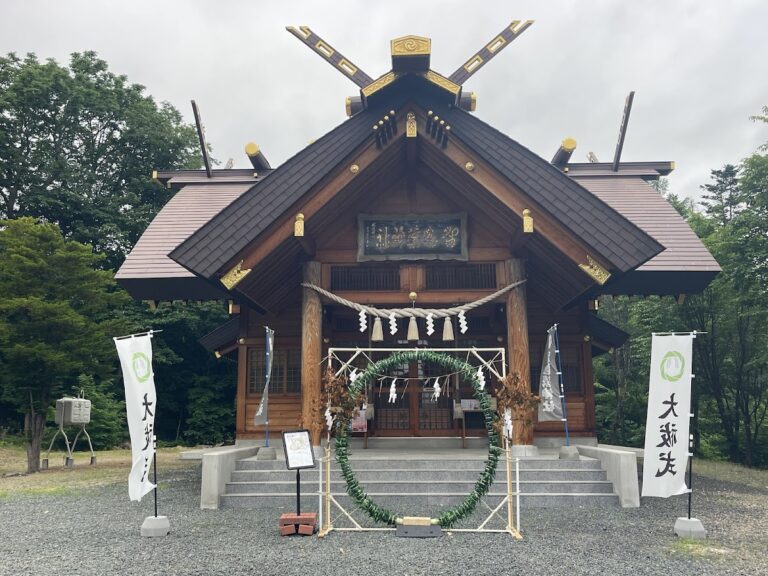
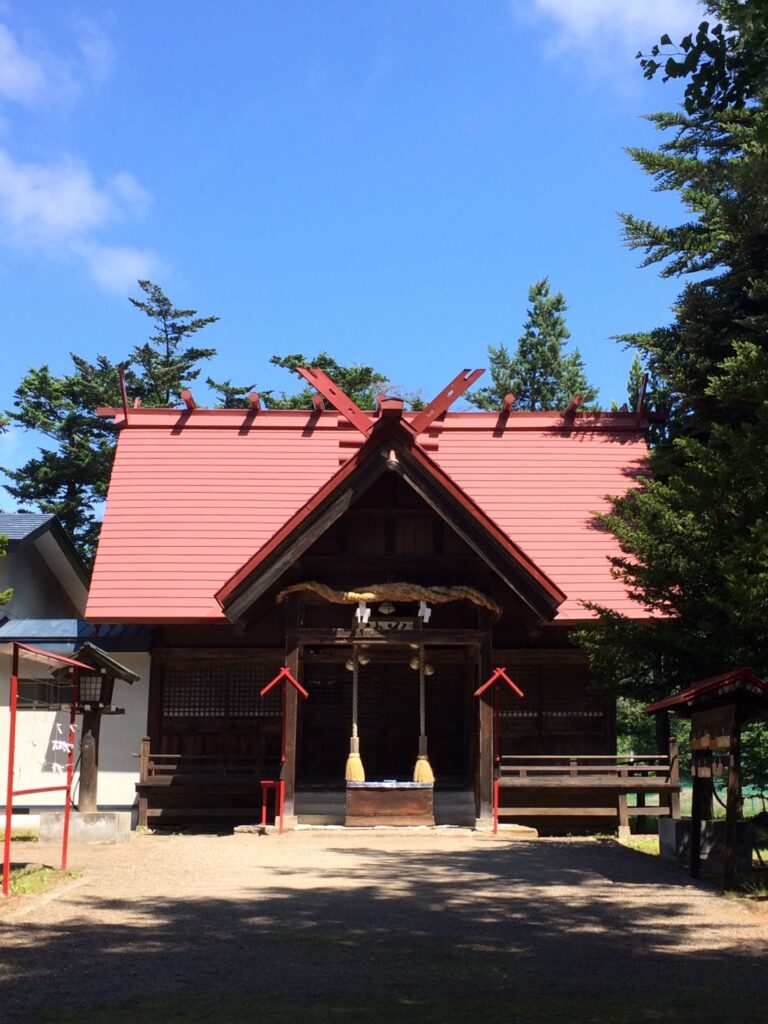
The shrine buildings of Rubeshibe Shrine are built to suit Hokkaido’s climate, boasting a robust structure capable of withstanding heavy snowfall in winter. The grounds are surrounded by nature that changes with the seasons, displaying different scenery each time: fresh greenery in spring, lush trees in summer, vibrant autumn leaves, and a snowy landscape in winter.
The grounds are meticulously clean, allowing visitors to pray in a tranquil and peaceful atmosphere.
Access and Visiting Information
Location
Address: 115 Miyashita-cho, Rubeshibe-cho, Kitami City, Hokkaido
Transportation Access
Access by Train:
- Approximately 10 minutes on foot from JR Sekihoku Main Line “Rubeshibe Station”
- Rubeshibe Station is a major station where express trains also stop, making it convenient to access from Asahikawa and Abashiri.
Access by Car:
- Approximately 2 hours from Asahikawa city center via National Route 39
- Approximately 30 minutes from Kitami city center via National Route 39
- Parking available (parking is possible on the temple grounds or nearby)
Visiting Hours and Shrine Office Hours
Entry to the temple grounds is generally free, but if you wish to receive a Goshuin (temple stamp) or various prayers, it is recommended to check the shrine office hours in advance.
Since November 2023, the chief priest and assistant priest have been permanently stationed at the shrine. However, they may be absent due to religious ceremonies or outings, so we recommend contacting them in advance if you require guaranteed assistance.
Contact Information
You can find the latest information on the official website, social media (Instagram, Facebook, X), and Hotokami. Direct inquiries are handled by phone or at the shrine office.
Combined with sightseeing in the Rubeshibe area
Combined with Onneyu Onsen
Rubeshibe Town is home to Onneyu Onsen, one of Hokkaido’s leading hot spring resorts. Enjoying the hot springs in conjunction with a visit to Rubeshibe Shrine is highly recommended. As mentioned above, you can also receive the Goshuin (shrine stamp) of Onneyu Shrine at “Bihaku no Yuya Ooe Honke,” making it possible to visit both shrines during your hot spring trip.
Nature and sightseeing in Rubeshibe Town
Rubeshibe Town is blessed with the rich natural beauty of Hokkaido. The surrounding area offers numerous opportunities to enjoy nature, including:
- The Daisetsuzan Mountain Range: Enjoy mountain climbing and hiking
- Mukagawa River: Enjoy fishing in the clear stream and nature observation
- Forest Area: Encounter wild animals and forest bathing
You can experience the great nature of Hokkaido in conjunction with visiting the shrine.
Relationship with the Hokkaido Association of Shinto Shrines
Rubeshibe Shrine is a shrine belonging to the Hokkaido Association of Shinto Shrines. The Hokkaido Association of Shinto Shrines is an organization that oversees shrines in Hokkaido, providing guidance on shrine management, training Shinto priests, and passing down Shinto rituals.
Information about Rubeshibe Shrine is also available on the Hokkaido Association of Shinto Shrines’ website, where you can check basic information such as its history and festival dates. Those who wish to learn more about shrines in Hokkaido can also refer to the Hokkaido Association of Shinto Shrines’ leaflets and public relations materials.
Shrines in the Digital Age: Information Dissemination via Social Media
Active Use of Social Media
The chief priest, who assumed office in November 2023, actively utilizes social media such as Instagram, Facebook, and X. This makes it easier for people from far away and younger generations to access information about the shrine.
Various information, such as announcements of seasonal events, the changing seasons of the shrine grounds, and reports on religious ceremonies, is disseminated in real time, making the shrine feel more accessible.
Visit Records on Hotokami
The Hotokami account, managed by the shrine’s priest, actively engages with visitors. With over 95 visit records and more than 300 photos posted, it serves as a valuable source of information for those considering a visit.
Questions from visitors are answered carefully, demonstrating an open and transparent approach to shrine management.
Manners and Etiquette for Visiting a Shrine
Basic Etiquette for Visiting a Shrine
When visiting Rubeshibe Shrine, please observe the following basic etiquette:
- Bow before passing through the torii gate: As a sign of respect before entering the sacred area.
- Purify yourself at the water basin: Purify your left hand, then your right hand, then your mouth.
- Avoid walking in the center of the path: The center is considered the path of the gods.
- Etiquette in front of the main hall:
- A slight bow
- Place your offering
- Ring the bell
- Two bows, two claps, one bow (bowing twice, clapping twice, bowing once)
- Bow again when leaving: With gratitude.
Regarding Photography
Photography is generally permitted on the shrine grounds, but consideration should be given to avoid disturbing religious ceremonies or other visitors. When posting on social media, please be mindful of the sacred nature of the place and act with restraint.
Future Prospects for Rubeshibe Shrine
Under the new chief priest and assistant priest, Rubeshibe Shrine aims to adapt its management to the times while preserving tradition. Various initiatives are expected, including strengthening information dissemination through social media and websites, deepening ties with the local community, and utilizing the shrine as a tourist resource.
At the same time, it can be said that Rubeshibe Shrine’s mission is to cherish its history and traditions dating back to the Meiji era and to remain a shrine that is close to its parishioners and visitors.
Summary
Rubeshibe Shrine is the guardian shrine of Rubeshibe-cho, Kitami City, Hokkaido, born from reverence for Emperor Meiji. Since its founding in 1926 (Taisho 15), it has attracted the faith of local people for approximately 100 years and has been revered as a guardian deity.
Amaterasu Omikami is the principal deity, and the shrine is believed to bestow divine blessings such as national peace, abundant harvests, and family safety. Annual events, including the annual festival on September 20th, are important events for the local community. Located about a 10-minute walk from JR Rubeshibe Station, the shrine boasts excellent accessibility. Since the goshuin (shrine stamp) is provided on a separate sheet, you can receive it even without a goshuincho (stamp book). It’s also recommended to visit in conjunction with other tourist attractions such as Onneyu Onsen.
In November 2023, a new chief priest and assistant priest were appointed, and the shrine is now being managed in a way that adapts to the new era, including the use of social media for information dissemination. When visiting Hokkaido, be sure to visit Rubeshibe Shrine and experience its history and sacred atmosphere.