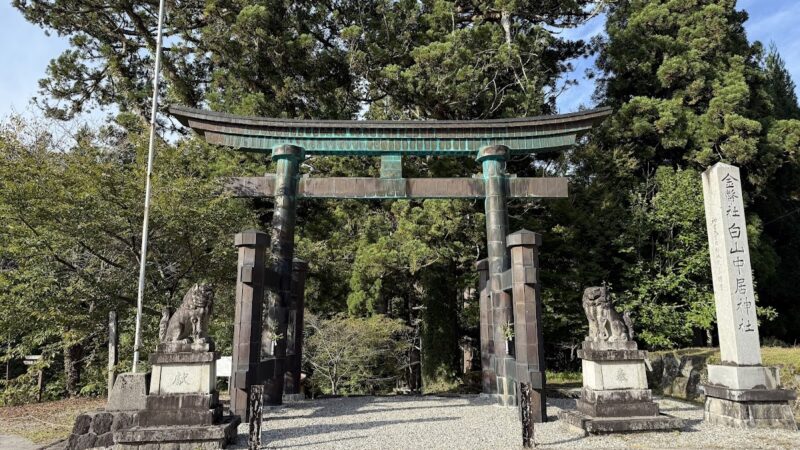
Ryūgo-ji Temple (Ena City, Gifu Prefecture) | A Detailed Introduction to the Mausoleum of Akechi Mitsuhide and the Family Temple of the Akechi Tōyama Clan
Ryūgo-ji Temple, located in Akechi-cho, Ena City, Gifu Prefecture, is a Rinzai Zen temple of the Myōshin-ji school, known as the family temple of the Akechi Tōyama clan, who ruled Akechi Castle from the Sengoku period to the Edo period. Its mountain name is Daimyōzan. Within the temple grounds is a memorial tower for Akechi Mitsuhide, and a memorial service is held there every May in conjunction with the Mitsuhide Festival. This article provides a detailed introduction to Ryūgo-ji Temple, including its history, points of interest within the grounds, cultural assets, and access information.
Overview and Basic Information of Ryūgo-ji Temple
Ryūgo-ji Temple is a Rinzai Zen temple of the Myōshin-ji school (Ryūsen school), located in Higashiyama, Akechi-cho, Ena City, Gifu Prefecture. As the family temple of successive generations of the Akechi Tōyama clan, it is deeply intertwined with the history of the region.
Basic Data
- Official Name: Daimyozan Ryugoji Temple
- Sect: Rinzai Zen Myoshinji School (Ryusen School)
- Mountain Name: Daimyozan
- Address: 1389-1 Higashiyama, Akechi-cho, Ena City, Gifu Prefecture 509-7718
- Phone Number: 0573-54-2540
- Nearest Station: Approximately 11 minutes on foot (approx. 874m) from Akechi Station on the Akechi Railway
Access
It is approximately an 11-minute walk from Akechi Station on the Akechi Railway. It is located at the foot of a quiet mountain, heading towards Higashiyama from the center of Akechi-cho. If coming by car, it is approximately 30 minutes from the Ena Interchange on the Chuo Expressway.
History of Ryugoji Temple
Founding History
Ryugoji Temple was founded in the first year of the Keicho era (1596). The temple’s origins lie in the fact that Toyama Toshikage, the lord of Akechi Castle, selected a sacred site north of the castle and built a Zen temple. Toyama Toshikage was a Sengoku-period daimyo who ruled this region as the head of the Akechi Toyama clan.
Relationship with the Akechi Toyama Clan
The Akechi Toyama clan was a branch of the Toyama clan, who ruled the eastern part of Mino Province, and their base was Akechi Castle. From its founding, Ryugo-ji Temple was positioned as the Akechi Toyama clan’s family temple, and the tombs of successive clan heads and their family members were established there. The temple grounds’ cemetery is lined with tombstones of successive generations of the Akechi Toyama clan, preserving their history to this day.
The Toyama clan served Oda Nobunaga during the Sengoku period and continued as hatamoto (direct retainers of the shogun) during the Edo period. Throughout its long history, Ryugo-ji Temple has functioned as a spiritual pillar for the Akechi Toyama clan.
Deep Connections with the Toki-Akechi Clan
Ryūgo-ji Temple uses the bellflower crest, which signifies the deep connection between the Akechi-Tōyama clan and the Toki-Akechi clan. While there are various theories regarding Akechi Mitsuhide’s origins, a connection to the Mino-Akechi clan has been suggested, and the Akechi-Tōyama clan is also believed to have had deep ties to this Toki-Akechi clan.
Memorial Tower and Mausoleum for Lord Akechi Mitsuhide
Connections with Lord Akechi Mitsuhide
One of the most distinctive features of Ryūgo-ji Temple is the memorial tower for Lord Akechi Mitsuhide located within its grounds. Akechi Mitsuhide is known as the warrior who assassinated his lord, Oda Nobunaga, in the Honnō-ji Incident, but many mysteries remain regarding his origins and final moments.
Regarding the relationship between the Akechi-Tōyama clan and Akechi Mitsuhide, there are theories suggesting a blood or marital relationship, which is why a memorial tower for Mitsuhide was erected at Ryūgo-ji Temple. Locally, the connection between Akechi Mitsuhide and Akechi Town has been passed down through generations.
Features of the Memorial Tower
The memorial tower for Lord Akechi Mitsuhide is located in the cemetery area of the temple grounds. As evidence of the continued memorial services for Lord Mitsuhide by the Akechi Toyama clan since the Edo period, this memorial tower is a historical heritage of the region.
Mitsuhide Festival and Memorial Service
Every year on May 3rd, the “Mitsuhide Festival” is held in Akechi Town, Ena City. In conjunction with this festival, a memorial service for Lord Akechi Mitsuhide is held at Ryugo-ji Temple. It is a valuable opportunity for local residents and Mitsuhide fans to gather and remember the warlord of the Sengoku period.
The Mitsuhide Festival includes a warrior procession and demonstrations of matchlock guns, enveloping the entire town of Akechi in a Sengoku period atmosphere. The memorial service at Ryugo-ji Temple is positioned as an important religious event of this festival.
Cemetery and Nyoirin Kannon Bodhisattva Statues on the Temple Grounds
Cemetery of the Akechi Toyama Family
Within the grounds of Ryugo-ji Temple lies the cemetery of the Akechi Toyama family. The tombstones of successive heads of the Akechi Toyama family, who served as hatamoto (direct retainers of the shogun) during the Edo period, are neatly arranged, conveying a sense of historical weight.
The cemetery is meticulously maintained and continues to be carefully preserved by the descendants of the Toyama family and local residents. Some tombstones bear the bellflower crest, indicating a connection to the Toki Akechi clan.
Two Nyoirin Kannon Bodhisattva Statues
Two distinctive Nyoirin Kannon Bodhisattva statues stand in the cemetery of the Akechi Toyama family. Nyoirin Kannon is one of the Six Kannon, worshipped as a Buddha who grants the wishes of sentient beings and removes worldly desires.
These Kannon statues are made of stone and have withstood the test of time, watching over the cemetery. This can be said to symbolize the depth of faith of the Akechi Toyama clan and the role of Ryugo-ji Temple as their family temple.
Meaning of the Bellflower Crest
The bellflower crest, seen on cemeteries and memorial towers, is known as the family crest of the Toki clan. Akechi Mitsuhide is also said to have used the bellflower crest, making it important evidence of the deep connection between the Akechi Toyama clan and the Toki Akechi clan.
Cultural Properties and Treasures of Ryugo-ji Temple
Ena City Designated Cultural Properties
Ryugo-ji Temple possesses cultural properties designated by Ena City. Materials related to the Akechi Toyama clan and buildings retaining the characteristics of Edo period temple architecture are protected as historical assets of the region.
Numerous Temple Treasures
Ryugo-ji Temple, with its long history, has preserved various temple treasures. Items donated by the Akechi Toyama clan, Buddhist implements and ancient documents passed down as a Rinzai Zen temple are carefully preserved.
These temple treasures are usually not open to the public, but may be displayed on special occasions. It is also a valuable resource for local history research.
Characteristics of the Architectural Style
The main hall and living quarters of Ryugo-ji Temple exhibit the typical architectural style of a Rinzai Zen temple. The simple yet dignified characteristics of Zen architecture are evident throughout, making it valuable for understanding Edo period temple architecture.
About the Myoshin-ji School (Ryusen School) of the Rinzai Zen Sect
What is the Myoshin-ji School of the Rinzai Zen Sect?
The Rinzai Zen sect is one of the five major schools of Chinese Zen Buddhism and was introduced to Japan during the Kamakura period. The Myoshin-ji school is the largest branch of the Rinzai Zen sect, with Myoshin-ji Temple in Kyoto as its head temple, and has approximately 3,400 temples nationwide.
Characteristics of the Ryusen School
The Ryusen school, to which Ryugo-ji Temple belongs, is a faction within the Myoshin-ji school. It is a branch of Zen Buddhism that developed primarily in the Mino region, receiving support from local samurai and powerful families. Ryūgo-ji Temple was established as a Ryūsen-ha temple through its ties with the local rulers, the Akechi Tōyama clan.
Zen Teachings and Practice
Rinzai Zen emphasizes training centered on zazen (seated meditation). The use of koans (question and answer) is also a distinctive training method, exploring the path to enlightenment. Ryūgo-ji Temple has also inherited the teachings of Zen, serving as a spiritual center for the local people.
Relationship between Akechi Castle and Ryūgo-ji Temple
History of Akechi Castle
Akechi Castle was a mountain castle located in Akechi-cho, Ena City, and was the residence of the Akechi Tōyama clan. Built on a mountain approximately 530 meters above sea level, it was an important base protecting a strategic point in eastern Mino Province.
During the Sengoku period, it came under the influence of Oda Nobunaga, and the Tōyama clan followed Nobunaga. During the Edo period, it functioned as a jinya (fortified residence) for a hatamoto (direct retainer of the shogun), but it was abandoned after the Meiji Restoration.
Location of the Castle and the Family Temple
Ryūgo-ji Temple is located at the foot of the mountain north of Akechi Castle. As records indicate, Toyama Toshikage “chose a sacred site north of the castle” to build the temple, placing it in a location easily accessible to the castle lord as his family temple.
The relationship between a castle and a family temple was common in samurai society from the Sengoku period to the Edo period, and Ryūgo-ji Temple and Akechi Castle are typical examples.
Current Status of the Castle Ruins and Temple
Currently, the Akechi Castle ruins have been maintained, and some of the remains can be seen. Visiting Ryūgo-ji Temple in conjunction with the castle ruins will allow for a deeper understanding of the history of the Akechi Toyama clan.
Branch Temples and Related Temples
Branch Temples of Ryūgo-ji Temple
Ryūgo-ji Temple, as the head temple, had several branch temples in the surrounding area. These branch temples supported local faith under the guidance of the Ryūgo-ji Temple’s chief priest.
Relationship with Manshō-ji Temple
Manshō-ji Temple is also recorded as a temple associated with the Akechi Toyama clan. It is evident that the Akechi Toyama clan protected multiple temples and held deep Buddhist faith.
Regional Temple Network
Several Rinzai Zen temples of the Myoshinji school exist around Ena City, and they have interacted with each other, shaping the local religious culture. Ryugo-ji Temple has functioned as one of the central figures in this network.
Annual Events at Ryugo-ji Temple
Spring Events
The memorial service for Akechi Mitsuhide on May 3rd is Ryugo-ji Temple’s most important annual event. It is held in conjunction with the Mitsuhide Festival and attracts many worshippers.
Higan-e and Segaki-e
Higan-e services are held during the spring and autumn equinoxes, and Segaki-e services are held in the summer. These are important opportunities for ancestor worship, and are attended by parishioners and local residents.
Zen Meditation Sessions
As a Rinzai Zen temple, Zen meditation sessions are sometimes held regularly. Those interested in experiencing Zen teachings should inquire in advance.
Nearby Tourist Attractions
Historical Sites Related to Akechi Mitsuhide
Besides Ryugo-ji Temple, Akechi Town has numerous historical sites related to Akechi Mitsuhide. Enjoy a historical walk visiting sites such as the Akechi Castle ruins, the well where Akechi Mitsuhide was bathed as a baby, and the site of Mitsuhide’s school.
Hachioji Shrine
Near Ryugo-ji Temple is Hachioji Shrine. According to legend, there is a maple tree planted by Akechi Mitsuhide himself, making it a must-visit spot along with Ryugo-ji Temple.
Japan Taisho Village
Akechi Town is home to the “Japan Taisho Village,” a tourist facility where you can experience buildings and culture from the Taisho era. Combined with your historical exploration at Ryugo-ji Temple, you can enjoy a journey through time.
Akechi Railway
The Akechi Railway, used to access Ryugo-ji Temple, is also a popular local line. A train journey through the tranquil rural landscape is one of the attractions of Ena City tourism.
Manners and Precautions for Visiting the Temple
Basic Manners for Visiting the Temple
Ryūgo-ji Temple is an active temple, a place for training and religious ceremonies. When visiting, please walk quietly around the temple grounds and be considerate of other visitors and temple staff.
Photography
Photography is generally permitted within the temple grounds, but please refrain from photographing inside the main hall or in the cemetery, or obtain permission in advance. The cemetery, in particular, is a sacred place for remembering the deceased, so it is important to treat it with respect.
Visiting Hours and Admission Fees
While you can generally visit the temple grounds freely, if you wish to view the inside of the main hall or receive special guidance, it is recommended to contact the temple in advance. Please inquire directly with the temple regarding admission fees.
Detailed Access Information to Ryugo-ji Temple
Access by Public Transportation
- Train: Transfer to the Akechi Railway at JR Chuo Main Line “Ena Station,” get off at “Akechi Station,” and walk approximately 11 minutes.
- Bus: Ena City Community Bus is also available (please check the timetable).
Access by Car
- Approximately 30 minutes from Chuo Expressway “Ena IC” via National Route 363.
- Car Navigation Setting: 1389-1 Higashiyama, Akechi-cho, Ena City, Gifu Prefecture
- Parking: Several parking spaces are available on the temple grounds (please check).
Estimated Time Required
If you plan to leisurely visit the grounds of Ryugo-ji Temple, allow 30 minutes to 1 hour. If you plan to visit other historical sites related to Akechi Mitsuhide as well, it is recommended to allocate about half a day.
The Charm and Worth of Visiting Ryugo-ji Temple
Value for History Enthusiasts
Ryugo-ji Temple is a valuable historical site that preserves the history of the Akechi Toyama clan, a local powerful family. It offers insights into the religious practices of the samurai society from the Sengoku period to the Edo period.
A Holy Site for Akechi Mitsuhide Fans
With a memorial tower for Akechi Mitsuhide, it is an important destination for Mitsuhide fans. Many history enthusiasts visit to contemplate Mitsuhide’s mysterious life and origins.
A Tranquil Zen Temple Atmosphere
As a Rinzai Zen temple, Ryugo-ji Temple possesses a tranquil and peaceful atmosphere. It is a valuable space for modern people to escape the hustle and bustle of everyday life and find peace of mind.
Learning about Local History
Ryugo-ji Temple is indispensable for understanding the history of Akechi-cho, Ena City. Experiencing local culture and traditions will provide a deeper travel experience.
Summary
Ryūgo-ji Temple, located in Akechi-cho, Ena City, Gifu Prefecture, is a Rinzai Zen temple of the Myōshin-ji school, founded in 1596 by Toshikage Tōyama, the lord of Akechi Castle. It holds historical significance as the family temple of the Akechi Tōyama clan and as the temple housing a memorial tower for Akechi Mitsuhide.
Within the temple grounds are the ancestral tombs of the Akechi Tōyama clan and two statues of Nyoirin Kannon Bodhisattva. The bellflower crest indicates its deep connection to the Toki Akechi clan. Every year on May 3rd, a memorial service for Akechi Mitsuhide is held in conjunction with the Mitsuhide Festival, making it an important local event.
When visiting Ena City, enjoy a historical journey at Ryūgo-ji Temple, tracing the footsteps of the Sengoku period warlord Akechi Mitsuhide and experiencing the history of the Akechi Tōyama clan. This Zen temple, nestled quietly at the foot of the mountains, offers a sense of historical romance and peace of mind.