Complete Guide to Sakisaki Shrine (Gunma Prefecture) | An Ancient Shrine Dedicated to Sericulture, Located on the Former Site of Nukisaki Shrine
Sakisaki Shrine, located in Saginomiya, Annaka City, Gunma Prefecture, is a venerable shrine boasting a history of approximately 1500 years. It has a tradition of being the former site (Maemiya) of Nukisaki Shrine, the Ichinomiya (first-ranked shrine) of Kōzuke Province, and has been deeply revered by the local people as a deity protecting sericulture. This article provides detailed information you should know before visiting Sakisaki Shrine, including its history, enshrined deities, unique religious culture, and access methods.
History and Origins of Sakisaki Shrine
Founding and its History from Ancient Times
Sakisaki Shrine is said to have been founded in the first year of Emperor Ankan’s reign (531 AD), making it an ancient shrine with a history of approximately 1500 years. According to shrine tradition, this area was the temporary location where Futsunushi-no-Okami, in the age of the gods, set out to Mount Arafune, located on the border between Kōzuke Province and Shinano Province, in pursuit of Takeminakata-no-Kami.
The “Kōzuke Province Shrine Register” lists it as “Sakimae Myōjin, Junior Fifth Rank, Upper Grade,” indicating that it was recognized as a high-ranking shrine from ancient times. This document’s mention serves as evidence of Sakimae Shrine’s important position in Kōzuke Province (present-day Gunma Prefecture).
Deep Connection with Nukisaki Shrine
The most important historical feature of Sakimae Shrine is the tradition that it was the former site of Nukisaki Shrine, the Ichinomiya (first-ranked shrine) of Kōzuke Province. The name “Sakimae” itself is believed to signify the former location of Nukisaki Shrine (Ichinomiya Nukisaki Shrine).
According to the shrine’s traditions, the deity originally enshrined in Saginomiya was later moved to its current location in Ichinomiya, Tomioka City. Therefore, Sakimae Shrine holds historical significance as the “original shrine” and “former site” of Nukisaki Shrine. Even today, the relationship between the two shrines remains strong, and many visitors to Sakimae Shrine are drawn to its historical connection to Nukisaki Shrine.
Changes in Shrine Name
Throughout its long history, Sakimae Shrine has used several different names. It was sometimes called “Maemiya Shrine” and “Kowai Shrine,” and the plaque above the worship hall reads “Saginomiya Daimyojin.” These name changes reflect the evolving role the shrine played within the local community and the transformations in its forms of worship.
Under the Meiji-era shrine ranking system, it was classified as a village shrine and played an important role as the guardian deity of the region.
Deities and Benefits
Main Deities
Sakimae Shrine enshrines three deities.
Takefutsunushi-no-Mikoto
A warrior god considered the ancestral deity of the Mononobe clan, he played an important role in the myth of the transfer of the land. According to the history of Sakimae Shrine, the Isobe clan, who ruled this land, were a family descended from the Mononobe clan, and it is said that they worshipped “Takefutsunushi-no-Mikoto, the ancestral deity of the Mononobe clan.” He is worshipped as a god of protection against disaster, bringing good fortune, and warding off evil.
Onamuchi-no-Mikoto
Another name for Okuninushi-no-Mikoto, he is a god widely worshipped as the god of nation-building, agriculture, medicine, and matchmaking.
Ukemochi-no-Mikoto
A goddess who presides over food, she is revered as the god of abundant harvests and the protection of sericulture. In Gunma Prefecture, where sericulture was particularly thriving, the existence of this deity held significant meaning.
Benefits
Sakimae Shrine is believed to offer the following benefits:
- Protection from Disaster and Bringing Good Fortune and Protection from Evil: Protection from disaster through the power of Takefutsunushi-no-Mikoto as a warrior god
- Physical Health: Protection of physical and mental health
- Protection from Sericulture: Prayers for the success of sericulture, a major industry in Gunma Prefecture
- Safe Childbirth and Child Rearing: A belief in safe childbirth and the healthy growth of children
- Abundant Harvest: Prosperity of agriculture
The belief in the protection of sericulture is a particularly prominent feature of Sakimae Shrine. It was said that shopping at the market held in conjunction with the spring festival would bring “success in sericulture” (referring to successful silkworm farming), and the shrine attracted fervent devotion from sericulture farmers.
The Unique Beliefs of Sakimae Shrine
The Worship of Nagamushi-sama (White Snake)
One of the distinctive beliefs at Sakimae Shrine is the worship of “Nagamushi-sama,” a white snake considered a messenger of the gods. White snakes have long been revered as messengers of Benzaiten (the goddess of fortune) and symbols of wealth and prosperity, but at Sakimae Shrine, they are especially sacred.
Snakes, due to their repeated shedding of skin, are also considered symbols of regeneration and resurrection. Furthermore, because they prey on mice that eat grain, they have been valued as beneficial animals in sericulture and agriculture. The white snake worship at Sakimae Shrine is a locally rooted form of belief that blends these practical and mystical aspects.
The Legend of the Cat Stone
Sakimae Shrine has a unique object of worship called the “Cat Stone.” The belief surrounding this Cat Stone is deeply intertwined with sericulture.
Worshippers believed that taking a small stone offered at the Cat Stone and placing it in their silkworm rearing room would ward off mice. Mice were considered pests that damaged silkworms and mulberry leaves, making their extermination a critical issue for silkworm farmers. The small stones at the Cat Stone were believed to possess the spiritual power to repel mice, much like a cat.
When a wish was granted, it was customary to return double the number of stones taken; this is a form of “double return” worship seen in many shrines. This practical and reciprocal form of worship demonstrates the shrine’s close connection to the lives of the local people.
Value as a Gunma Silk Heritage Site
Sakimae Shrine is recognized as one of the “Gunma Silk Heritage Sites.” Gunma Prefecture was one of Japan’s leading sericulture regions from the Edo period to the early Showa period, and is an important region in the history of the silk industry, as evidenced by the “Tomioka Silk Mill and Related Industrial Heritage Sites” being registered as a World Heritage Site.
Sakimae Shrine, as a guardian shrine of sericulture, has spiritually supported this silk culture and is an indispensable cultural heritage for understanding Gunma Prefecture’s sericulture culture. The history of religious activities linked to actual sericulture, such as the market held during the spring festival and visits by sericulture farmers, is valuable for understanding the region’s industrial history.
Highlights of the Shrine Grounds
Worship Hall and Main Hall
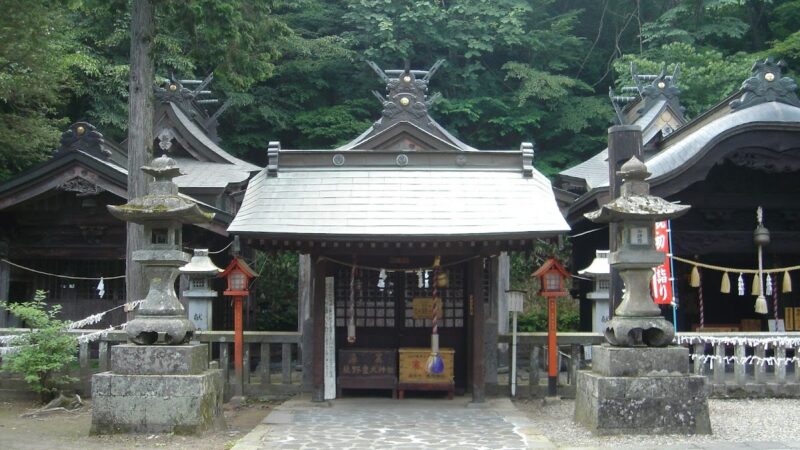
The worship hall of Sakimae Shrine is built in the traditional architectural style of a tiled, hip-and-gable roof with a flat entrance. The plaque bears the inscription “Sagimiya Daimyojin,” preserving the history of the shrine’s name in the region.
The main hall is located behind the worship hall, situated in a tranquil atmosphere. The entire shrine grounds are surrounded by abundant nature, creating a solemn atmosphere befitting an ancient shrine.
Shrine Grove and Natural Environment
The grounds of Sakimae Shrine are lush with ancient trees, creating a sacred space befitting a shrine with a long history. The Sagimiya district of Annaka City, Gunma Prefecture, is a naturally rich area, and the area around the shrine offers beautiful scenery throughout the seasons.
Especially in the seasons of fresh greenery in spring and autumn foliage, the trees on the shrine grounds are beautifully colored, allowing visitors to feel the blessings of nature while praying.
Hitsuji Shrine (Shrine within the Grounds)
Within the grounds of Sakimae Shrine is a shrine called Hitsuji Shrine (Sheep Shrine). Hitsuji Shrine is a rare shrine nationwide and is one of the highlights of a visit to Sakimae Shrine. Because sheep are animals that live in flocks, they are sometimes considered symbols of family safety and prosperity.
Annual Events and Festivals
Spring Festival
The most important festival at Sakimae Shrine is the Spring Festival. This festival, held to pray for the success of sericulture, was once visited by many sericulture farmers. A market was held in conjunction with the spring festival, and there was a legend that shopping there would bring good fortune in silkworm farming (successful silkworm cultivation), so it was bustling with many people.
Kagura
Traditional Kagura (sacred Shinto dance and music) has been offered at Sakimae Shrine. Kagura is a sacred performing art that appeases the gods and prays for a bountiful harvest and peace in the region, playing an important role in the preservation of local culture.
Goshuin (Shrine Seals) and Amulets
Goshuin (Shrine Seals)
Goshuin are available at Sakimae Shrine. Goshuin are popular among many visitors as proof of worship and as a way to forge a connection with the shrine. Sakimae Shrine’s goshuin consists of careful calligraphy and a red seal that reflects the history and prestige of the shrine.
To receive a goshuin, please inquire at the shrine office. However, since the chief priest may be absent, it is recommended to call ahead to confirm if you wish to receive a goshuin.
Amulets
Sakimae Shrine offers various amulets for blessings such as protection from disaster, good fortune, good health, and safe childbirth. As befits a shrine with a tradition of protecting sericulture, amulets for business prosperity and industrial development are also popular.
Relationship with Saginomiya Sakimae Shrine
When researching Sakimae Shrine, you may come across the name “Saginomiya Sakimae Shrine,” but this is a separate shrine. Saginomiya Sakimae Shrine is a small shrine located at 1751 Nakanoya, Annaka City, Gunma Prefecture, about a 5-minute drive from Sakimae Shrine.
The chief priest of Saginomiya Sakimae Shrine is also the chief priest of Sakimae Shrine (3308 Saginomiya, Annaka City, Gunma Prefecture), which is introduced in this article. The two shrines have similar names and are sometimes confused, but please note that they are separate shrines.
Access and Basic Information
Location
Address: 3308 Sagimiya, Annaka City, Gunma Prefecture 379-0124
Phone: 027-381-2726
Transportation Access
Access by Car
- Approximately 15 minutes from the Matsuida Myogi IC on the Joshinetsu Expressway
- Approximately 20 minutes from the Usui Karuizawa IC on the Joshinetsu Expressway
- Accessible from National Route 18
Access by Train
- Approximately 10 minutes by taxi from Isobe Station on the JR Shin’etsu Main Line
- Approximately 15 minutes by taxi from Annaka Station on the JR Shin’etsu Main Line
Public transportation access is somewhat inconvenient, so visiting by car is recommended.
Parking
Sakimae Shrine has a parking lot for visitors. However, parking is limited to approximately 2-3 cars, so please be considerate of others during busy times. Please be especially careful during peak seasons such as long holidays and New Year’s Day when there are many visitors.
Visiting Hours
The shrine grounds are generally open for free worship. However, if you wish to receive a Goshuin (shrine stamp) or amulet, you must visit during the shrine office’s opening hours. Since the chief priest may be absent, it is recommended to call ahead to confirm if you want to be sure to receive a Goshuin or other items.
Nearby Tourist Attractions
Ichinomiya Nukisaki Shrine
This is the Ichinomiya (first-ranked shrine) of Kōzuke Province, deeply connected to the old shrine site legends of Sakimae Shrine. Located about 20 minutes by car from Sakimae Shrine, the pilgrimage route visiting both shrines is popular with history buffs. Nukisaki Shrine has an unusual layout known as a “descending shrine,” with a unique structure where you descend stairs from the main gate to reach the main hall.
Isobe Onsen
Isobe Onsen, known as the birthplace of Japan’s oldest hot spring symbol, is located about 10 minutes by car from Sakimae Shrine. It is a mineral spring containing carbon dioxide, and the water is drinkable. After visiting the shrine, we recommend relaxing in a hot spring to soothe your fatigue. Isobe Onsen’s specialty, “Isobe Senbei” (rice crackers), is a popular souvenir.
Usui Pass Railway Culture Village
A popular facility for railway enthusiasts, it’s about a 15-minute drive from Sakimae Shrine. It features a museum where you can learn about the history of the Shin’etsu Main Line that crossed the Usui Pass, and displays actual railway vehicles.
Mount Myogi
Mount Myogi, considered one of Japan’s three most spectacular landscapes, is about a 20-minute drive from Sakimae Shrine. The unique scenery created by its strangely shaped rocks is breathtaking, and you can enjoy mountain climbing and hiking.
Tomioka Silk Mill
The Tomioka Silk Mill, a World Heritage Site, is about a 25-minute drive from Sakimae Shrine. Visiting it together with Sakimae Shrine, the shrine dedicated to the protection of sericulture, will give you a deeper understanding of Gunma Prefecture’s silk industry history.
Manners and Precautions for Visiting a Shrine
Basic Worship Etiquette
When visiting Sakimae Shrine, please observe the following basic etiquette:
- Bow before passing through the torii gate: This is a courtesy when entering the sacred area.
- Purify yourself at the water basin: Purify your left hand, then your right hand, then your mouth.
- Avoid walking in the center of the path: The center is considered the path of the gods.
- Etiquette in front of the main hall: The basic procedure is two bows, two claps, and one bow.
- Bow again at the torii gate when leaving: This is a courtesy when leaving the sacred area.
Photography
Photography is generally permitted within the shrine grounds, but photography should be refrained from in sacred areas such as inside the main hall. Also, please be considerate of other visitors.
Attire
There are no specific dress code regulations, but since shrines are sacred places, it is desirable to avoid overly revealing clothing and to wear clean, modest attire.
The Charm and Summary of Sakimae Shrine
Sakimae Shrine is an ancient shrine with a history of approximately 1500 years, yet it is a valuable shrine that still conveys a practical faith closely tied to the local industry of sericulture. It possesses multifaceted charm, including its historical importance as the former site of Nukisaki Shrine, the Ichinomiya (first-ranked shrine) of Kōzuke Province; its unique religious culture, such as the worship of white snakes and cat stones; and its cultural value as a “Gunma Silk Heritage” site.
Located in the quiet area of Saginomiya in Annaka City, Gunma Prefecture, Sakimae Shrine has a simple and approachable atmosphere, unlike large-scale tourist shrines. Visiting it along with nearby tourist spots such as Nukisaki Shrine, Isobe Onsen, and Tomioka Silk Mill will allow you to gain a deeper understanding of Gunma Prefecture’s history and culture.
For history buffs, shrine and temple enthusiasts, and those interested in Japanese sericulture culture, Sakimae Shrine is a special place worth visiting. Why not quietly pray in its tranquil grounds, reflecting on 1500 years of history?