Complete Guide to Sanboji Temple (Ukyo Ward, Kyoto Prefecture) | History and Highlights of Narutaki Myoken-san
Located in Narutaki Matsumoto-cho, Ukyo Ward, Kyoto City, Sanboji Temple is a central temple of the Nichiren sect, established in 1628. Affectionately known as “Narutaki Myoken-san,” this temple, bearing the prestigious name “Kin’eizan Myogokokuin Sanboji” bestowed upon it by Emperor Go-Mizunoo, is a valuable presence that conveys the history and culture of Kyoto to the present day.
This article comprehensively explains everything you need to know before visiting Sanboji Temple, from its historical background and highlights within the grounds to information on temple stamps and access methods.
History and Origins of Sanboji Temple
Establishment during the Kan’ei Period and Deep Connections with the Imperial Family
Sanboji Temple was established in 1628 (Kan’ei 5) by two court nobles, Minister of the Right Kikutei (Imadegawa) Tsunekiyo and Middle Counselor Imajo (Reizei) Tameshisa, at the behest of Emperor Go-Mizunoo. The founding priest was Chūseiin Nichigo Shonin, and the temple came to occupy an important position as a central temple of the Nichiren sect.
The temple’s name, “Kin’eizan Myōgokokuin Sanboji,” is said to have been bestowed directly by Emperor Go-Mizunoo, demonstrating its deep connection with the Imperial Family. This name is believed to embody the wish for the protection of the nation through Buddhist teachings.
The Legend of the Founding Priest, Nichigo Shonin, and “The Snail Priest”
The founding priest, Nichigo Shonin, possessed exceptional skills not only as a monk but also as a Buddhist sculptor. He is also known as “Kagyu Hoshi” (Snail Monk) due to the legend that he carved 10,000 Buddhist statues in his lifetime. This nickname is said to represent his diligent and painstaking dedication to Buddhist statue creation, much like a snail.
Nichigo Shonin’s faith and devotion to art formed the spiritual foundation of Sanboji Temple, and this legacy continues to this day.
Location on the Slopes of Shirasuna Mountain and the Narutaki Area
Sanboji Temple is located on the slopes of Shirasuna Mountain, reached by climbing a slope northwest from the Shuzan Road in Narutaki. This location was chosen as a tranquil place for ascetic practice, far removed from the secular world, and from the temple grounds, one can overlook the city of Kyoto.
The name Narutaki is said to originate from the fact that there was once a waterfall in this area, and the sound of its water resonated throughout the landscape. It has long been known as a scenic place blessed with water and greenery.
Highlights of the Temple Grounds
The Mikurumagaeshi Cherry Tree
The most famous highlight of Sanboji Temple is the “Mikurumagaeshi Cherry Tree.” This magnificent cherry tree is a wild cherry tree that was transplanted from the Kikutei family residence at the Kyoto Imperial Palace during the Horeki era (1751-1764). It has the rare characteristic of having both single and double blossoms blooming on the same tree.
The name “Mikurumagaeshi” (meaning “turning the carriage”) comes from an anecdote that when the Emperor passed by this cherry tree in his ox-drawn carriage, he was so struck by its beauty that he turned the carriage back to admire it again. This cherry tree is one of Kyoto’s famous cherry trees and attracts many visitors during the spring season.
The best time to see the cherry blossoms is usually from early to mid-April. The sight of the single and double blossoms blooming simultaneously is truly a work of natural art.
An Ancient Bayberry Tree Approximately 700 Years Old
Standing within the temple grounds is an ancient bayberry tree estimated to be approximately 700 years old. This ancient tree is believed to have existed on this site even before the construction of Sanboji Temple, and can be considered a living witness that has watched over a long history.
The bayberry bears reddish-purple fruit in early summer, and its appearance is also a beloved seasonal feature. The thickness of the ancient tree’s trunk and the way its branches are arranged are impressive, conveying a sense of natural vitality.
Main Hall and Other Halls
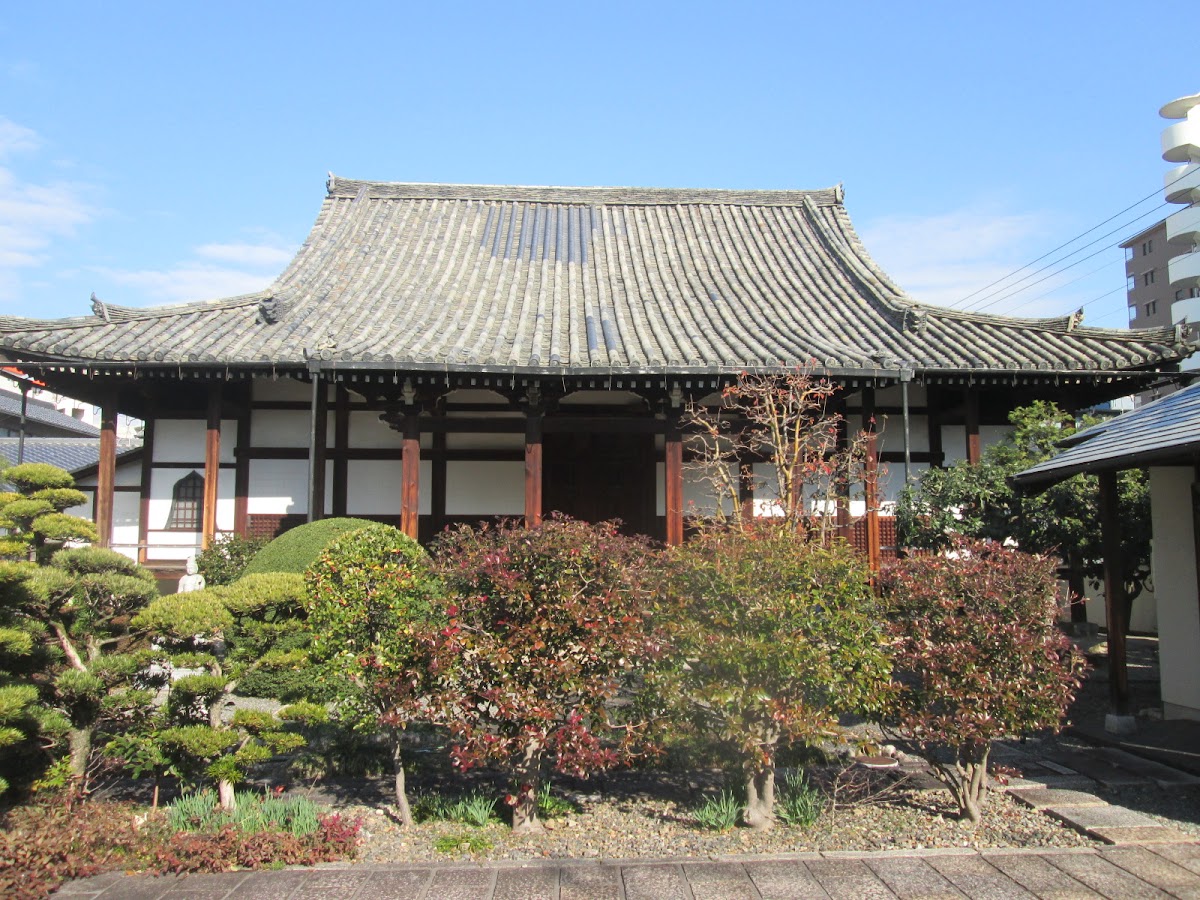
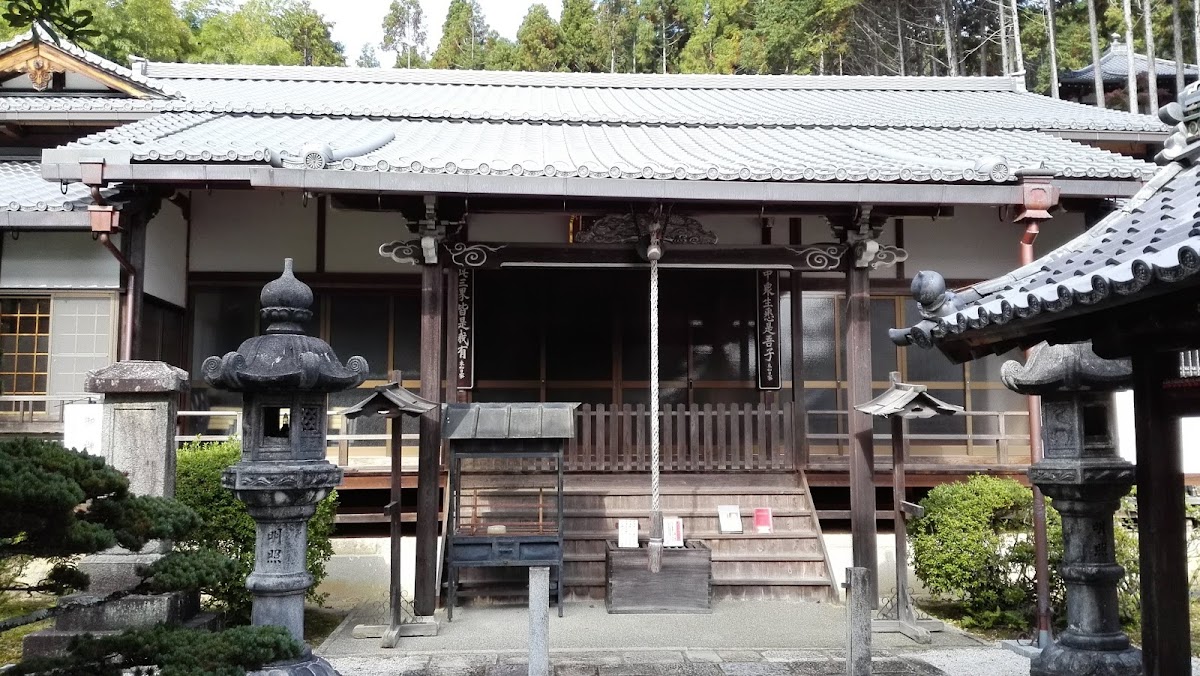
The main hall of Sanboji Temple houses the mandala of “Namu Myoho Renge Kyo,” the principal image of the Nichiren sect. In addition to the main hall, the temple grounds contain various other halls, such as the Founder’s Hall and the Kishimojin Hall, each carefully preserved as a place of worship.
In particular, Myoken-do Hall is affectionately known as “Narutaki’s Myoken-san” by the local people and enshrines Hokushin Myoken Daibosatsu. Myoken worship is believed to bring protection from negative influences and good fortune, attracting many worshippers.
Religious Characteristics of Sanboji Temple
Position as a Central Head Temple of the Nichiren Sect
Sanboji Temple, as a central head temple of the Nichiren sect, is a core presence among Nichiren sect temples in Kyoto. A central head temple is a temple with a status second only to the head temple, and plays a role in overseeing regional Nichiren sect temples.
The Nichiren sect is a Buddhist sect founded by Nichiren Shonin during the Kamakura period, and it teaches that one can attain Buddhahood in this lifetime by chanting the title “Namu Myoho Renge Kyo.” At Sanboji Temple, prayers and memorial services based on these Nichiren sect teachings are performed daily.
A Dojo for Prayer and Ancestor Worship
Sanboji Temple operates as a “dojo for prayer and ancestor worship,” engaging in various religious activities. Various prayers, including moxibustion prayers, address people’s diverse wishes, such as recovery from illness, family safety, and business prosperity.
In particular, moxibustion prayers are a distinctive prayer method of Sanboji Temple, aiming for healing of both body and mind by applying moxibustion to specific parts of the body. The temple also places great emphasis on ancestor worship, holding numerous memorial services throughout the year.
Relationship with the Kikutei and Imajo Families
The Kikutei (Imadegawa) and Imajo (Reizei) families, the founding patrons of Sanboji Temple, are both prestigious noble families. The temple’s official seal features the mantra “Namu Myoho Renge Kyo” along with the family crests of both families, reflecting the deep connection dating back to the temple’s founding.
The Kikutei family was a prestigious family that produced Ministers of the Right and Left throughout the Edo period, and had deep ties with the Kyoto Imperial Palace. The fact that the cherry tree at the Omikuruma-gaeshi (carriage-returning) was transplanted from the Kikutei family’s residence speaks to the depth of this relationship.
Goshuin/Goshudai Information
Characteristics of Sanboji Temple’s Goshuin
Sanboji Temple, as a Nichiren Buddhist temple, offers Goshudai. Goshudai are temple seals centered around the mantra “Namu Myoho Renge Kyo,” and are unique to Nichiren Buddhist temples.
Sanboji Temple’s Goshudai features the mantra “Namu Myoho Renge Kyo” prominently in the center, surrounded by the family crests of the founding patrons, the Kikutei and Imajo families. The mountain name “Kin’eizan,” the temple name “Sanboji,” and the date are also inscribed.
Reception Hours and Location
Goshuin and Goshudai are generally available from 9:00 AM to 4:00 PM. However, please note that they may not be able to accommodate requests during memorial services or other events. If you wish to be sure to receive a Goshuin (temple stamp), it is recommended to call ahead to confirm.
Goshuin can be obtained at the temple office. It is customary to receive the Goshuin after visiting the main hall. While it is common to bring your own Goshuincho (stamp book), pre-printed Goshuin may also be available.
Etiquette for Receiving Goshuin
Goshuin are not merely commemorative stamps, but sacred items bestowed as proof of worship. Please observe the following etiquette when receiving your goshuin (temple stamp):
- First, visit the main hall before receiving your goshuin.
- It is preferable to use separate goshuin notebooks for shrines and temples.
- Prepare small change for the goshuin fee (usually around 300-500 yen).
- Wait quietly while your goshuin is being written.
- Handle your goshuin notebook carefully and store it safely.
Annual Events and Seasonal Highlights
Spring: The Season of the Omikuruma-gaeshi Cherry Blossoms
The most popular time to visit Sanboji Temple is undoubtedly spring, when the Omikuruma-gaeshi cherry blossoms are in bloom. They are typically at their best from early to mid-April, and the sight of single and double blossoms blooming together creates a unique beauty unlike any other.
During cherry blossom season, the entire temple grounds are enveloped in soft spring light, allowing you to appreciate the flowers in a tranquil atmosphere. Compared to other famous tourist spots in Kyoto, Sanboji Temple is less crowded, making it a charming place to enjoy the cherry blossoms at your leisure.
Summer: The Fruit of the Bayberry Tree and the Fresh Greenery
In early summer, the 700-year-old bayberry tree bears its reddish-purple fruit. The trees on the temple grounds are enveloped in lush green leaves, creating a cool and refreshing atmosphere. This is a time when there are fewer visitors, making it a peaceful season for worship.
Autumn: Autumn Leaves and Autumn Ceremonies
In autumn, the trees on the temple grounds change color, revealing a different face. While not on the scale of Kyoto’s famous autumn foliage spots, it’s a hidden gem where you can quietly feel the deepening of autumn.
Winter: Worship in Silence
In winter, Sanboji Temple, covered in snow, sometimes presents a fantastical beauty. It’s the season with the fewest visitors, allowing for a peaceful and serene worship experience.
Access Information
Location
32 Narutaki Matsumoto-cho, Ukyo-ku, Kyoto City, Kyoto Prefecture 616-8256
Access by Public Transportation
If using Keifuku Electric Railway (Arashiyama Line):
- Get off at “Utano Station,” approximately 15 minutes on foot
- Head northwest from the station, via Shuzan Kaido, and up the hill.
If using JR Sanin Main Line (Sagano Line):
- Get off at “Hanazono Station,” approximately 20 minutes on foot
- Or get off at “Uzumasa Station,” approximately 25 minutes on foot
If using City Bus:
- Get off at the Kyoto City Bus “Narutaki” bus stop, approximately 10 minutes on foot
- Multiple bus routes pass through Narutaki, making it accessible from Kyoto Station and Shijo Kawaramachi as well.
Access by Car
From Kyoto City Center:
- From Kitano Tenmangu Shrine, head north on Shuzan Kaido (Prefectural Road 187).
- Turn left at the Narutaki area following the signs, and go up the hill.
From Meishin Expressway:
- Approximately 30 minutes from Kyoto Minami IC
- Approximately 40 minutes from Kyoto Higashi IC
Parking:
- Parking space available for visitors on the temple grounds (limited spaces; public transportation is recommended during peak times)
Visiting Hours and Admission Fees
Visiting Hours: 9:00 AM – 4:00 PM
Admission Fee: Free entry to the grounds (check for entry to the main hall)
Holidays: Generally open year-round (may be closed for religious services, etc.)
Nearby Tourist Attractions
Ninna-ji Temple
A World Heritage site temple located approximately 2 km south of Sanbo-ji Temple. Famous for its Omuro cherry blossoms, it attracts many tourists in spring. It is a prestigious temple as the head temple of the Omuro branch of Shingon Buddhism.
Ryoan-ji Temple
A World Heritage temple famous for its rock garden. Located approximately 3km southeast of Sanbo-ji Temple. Its dry landscape garden, also known as “Tiger Cub Crossing,” embodies the spirit of Zen.
Kinkaku-ji Temple (Rokuon-ji Temple)
One of Kyoto’s most representative tourist attractions. Located approximately 4km southeast of Sanbo-ji Temple. The golden reliquary hall is an architectural masterpiece symbolizing the Kitayama culture of the Muromachi period.
Nature along the Shuzan Kaido Road
The Shuzan Kaido Road, extending north from Sanbo-ji Temple, is a historic road connecting Kyoto city center to the Keihoku region. Enjoy driving or cycling while appreciating the changing seasons.
Points to Note When Visiting Sanbo-ji Temple
Recommended Time to Visit
The best time to visit is undoubtedly from early to mid-April, when the cherry blossoms at Omikuruma-gaeshi are in bloom. However, since the number of visitors increases during this time of year, those who wish to visit in peace should aim for weekday mornings.
If you are seeking tranquility, weekdays in summer or winter are recommended. There are fewer visitors, allowing you to stroll around the temple grounds at your leisure.
Estimated Visit Time
It takes approximately 30 minutes to 1 hour to stroll around the temple grounds and receive your goshuin (temple stamp). If you plan to visit during cherry blossom season or enjoy taking photos, it’s best to allow a little more time.
Clothing and Items to Bring
Since there are slopes and stairs within the temple grounds, comfortable walking shoes are recommended. In summer, the sun is strong, so don’t forget a hat or parasol; in winter, remember to take precautions against the cold.
If you plan to receive a goshuin, have your goshuincho (stamp book) and the goshuin fee (small change) ready.
Photography
Photography is generally permitted within the temple grounds, but you should refrain from taking photos inside the main hall or during religious ceremonies. Also, please be considerate of other visitors.
When photographing the cherry blossoms at Goshagaeshi, it is recommended to use a slightly wider composition to capture the mix of single and double blossoms.
Cultural Properties and Treasures of Sanboji Temple
Buildings
The current buildings of Sanboji Temple are mainly those constructed from the Edo period to the Meiji period. The main hall maintains the style of traditional temple architecture, exhibiting the characteristics of a Nichiren Buddhist temple.
Buddhist Statues and Paintings
Since the temple’s founder, Nichigo Shonin, was also a Buddhist sculptor, Sanboji Temple possesses Buddhist statues believed to have been carved by him. These statues are valuable cultural assets that convey the high level of faith and skill of the sculptor.
Ancient Documents and Records
Sanboji Temple houses ancient documents and records detailing its history since its founding. These include documents concerning the imperial decree of Emperor Go-Mizunoo and materials showing the relationship with the Kikutei and Imajo families, making them important historical sources for the study of Kyoto’s history.
Sanboji Temple and the Local Community
As “Narutaki’s Myoken-san”
Sanboji Temple has long been cherished by the local community as “Narutaki’s Myoken-san.” Myoken worship is the deification of the North Star (Hokushin), and is believed to offer protection from misfortune and bring good fortune.
Local residents have visited Sanboji Temple to pray and find solace during life’s turning points and times of difficulty. This tradition of faith continues to this day.
Involvement in Local Events
Sanboji Temple is involved in various events in the Narutaki area. Through Buddhist services praying for the safety and prosperity of the community, and seasonal festivals, it deepens its ties with the local community.
Contribution to Cultural Activities
Sanboji Temple not only spreads the teachings of Nichiren Buddhism but also contributes to local cultural activities. It provides its grounds as a venue for cultural activities and is sometimes used as a place for learning about history and culture.
Summary: The Charm of Sanboji Temple
Sanboji Temple, a historic Nichiren Buddhist temple established during the Kan’ei period, has played an important role in Kyoto’s religious culture. With its temple name bestowed by Emperor Go-Mizunoo, the legend of its founder, Nichigo Shonin, as the Snail Priest, and its famous cherry tree, the “Carriage Return” cherry tree, and a 700-year-old bayberry tree, it is a charming temple where history and nature harmonize.
Affectionately known as “Narutaki no Myoken-san” by the local community, it continues to attract people as a place of prayer and ancestral veneration. One of Sanboji Temple’s greatest charms is its quiet and peaceful atmosphere, allowing for a leisurely visit compared to Kyoto’s famous tourist spots.
While the cherry blossom season in spring is certainly beautiful, the temple grounds display different expressions throughout the seasons, offering new discoveries with every visit. When you visit Kyoto, why not extend your trip a little and visit Sanboji Temple, blessed with history and nature?
Spending time quietly praying in the temple grounds, overlooking the city of Kyoto from the middle of Mt. Shirasuna, will surely be a precious moment that allows you to forget the hustle and bustle of everyday life.