What is Senkoin? A Thorough Explanation of the Edo Period Shugendo Monk and Temples Across Japan
A search for the term “Senkoin” reveals both a famous Edo period Shugendo monk and temples of the same name scattered throughout Japan. This article comprehensively explains the history and characteristics of Noda Senkoin as a historical figure and the Senkoin temples in various locations, including Kamakura City, Kanagawa Prefecture.
Noda Senkoin: A Representative Shugendo Monk of the Edo Period
The Life and Achievements of Noda Senkoin
Noda Senkoin was an Edo period Shugendo monk (Yamabushi) who lived from 1756 to 1835. His real name was Shigesuke, and his haiku name was Ichiyo. He is known for playing an important role in the world of Shugendo at the time.
Shugendo is a unique Japanese religious form that fuses mountain worship with Buddhism, especially Esoteric Buddhism. Izumikoin, as a practitioner of Shugendo (mountain asceticism), underwent rigorous training and visited many sacred mountains. His activities are valuable resources for understanding the religious culture of the late Edo period.
Context of Izumikoin’s Life
The late 18th and early 19th centuries, when Izumikoin was active, was a period when Edo culture reached its peak. At that time, Shugendo was deeply intertwined with the faith of the common people, and mountain ascetics were involved in people’s lives through prayers and incantations.
Izumikoin’s era was also a turbulent period, from the political reforms of Tanuma Okitsugu to the Kansei Reforms and then the Tenpo Reforms. Izumikoin’s continued role as a religious figure amidst these social circumstances is of great significance in understanding the popular beliefs of the time.
Senkoin Temple in Kamakura City: History and Faith of an Ancient Temple
Founding and History of Senkoin Temple
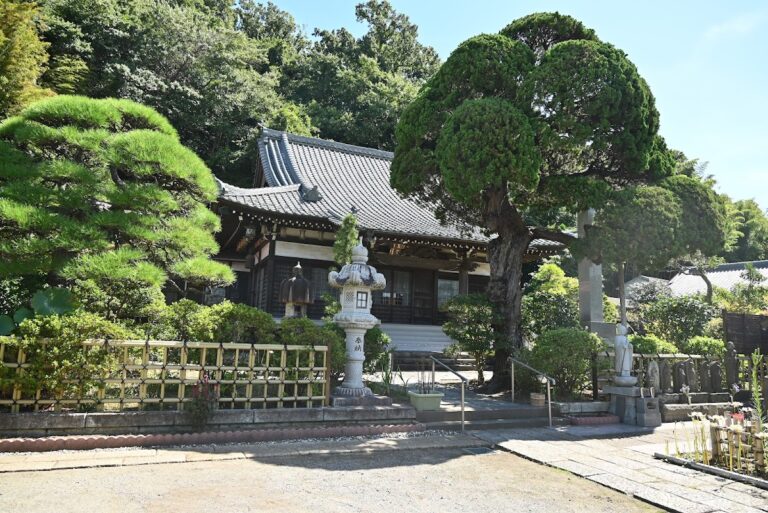
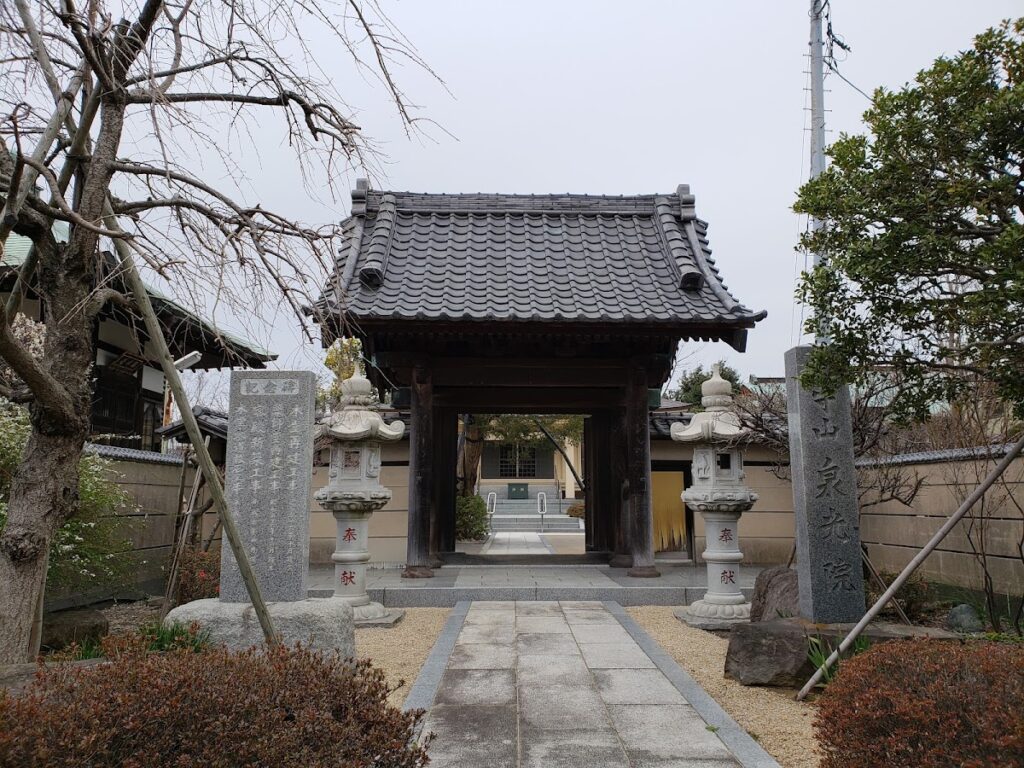
Located in Kamimachi-ya, Kamakura City, Kanagawa Prefecture, Senkoin Temple is a Shingon Buddhist temple founded in 1639 by the Great Master Kito. With a history spanning over 380 years, this temple has held an important position in Kamakura’s religious culture.
Initially, Senkoin Temple belonged to the Koyasan branch of the ancient Shingon sect as a branch temple of Shorenji Temple in Tehiro, Kamakura City. During this period, Senkoin Temple is thought to have played a role in spreading the teachings of the Shingon sect, with Koyasan as its head temple, to the local area. After subsequent changes in sectarian affiliation, it now belongs to the Daikakuji branch of the Shingon sect.
The Daikakuji branch of the Shingon sect is a branch of the Shingon sect with Daikakuji Temple in Kyoto as its head temple, and is a prestigious sect originating from the detached palace of Emperor Saga. The circumstances surrounding Senkoin Temple’s affiliation with this sect are thought to reflect the religious policies of the time and the changes in local beliefs.
Senkoin Temple’s Main Image and Halls
The main hall of Senkoin Temple enshrines the Amida Triad. The Amida Triad is a group of Buddhist statues with Amida Buddha at the center, flanked by Kannon Bodhisattva and Seishi Bodhisattva. The fact that it is a Shingon Buddhist temple yet enshrines Amida Buddha as its principal image is an interesting feature that demonstrates its fusion with Pure Land Buddhism.
Within the temple grounds are two important halls: the Jizo Hall and the Yakushi Hall. The stone Jizo statue enshrined in the Jizo Hall has been affectionately known as the “wart-removing Jizo” by the local people. This Jizo statue is believed to have miraculous powers to remove warts, and it is said that many worshippers visited the temple.
The Yakushi Nyorai in the Yakushi Hall is also called “Machiya Yakushi” and has attracted worshippers seeking healing from illness. Yakushi Nyorai (Medicine Buddha) is the principal deity of the Eastern Pure Land of Lapis Lazuli, a Buddha said to have made twelve great vows to relieve the suffering of all sentient beings. From the Edo period to the present day, he has been revered as a Buddha who protects the health of local residents.
The Origins and Legends of Senkoin Temple
Senkoin Temple has various origins and legends. Its founding during the Kan’ei era, in the early Edo period, coincides with a time when the Tokugawa shogunate was in a stable period and temples and shrines were being developed throughout the country. It is presumed that the establishment of this temple by the Great Master Kito was influenced by the Shingon Esoteric Buddhism missionary activities in Kamakura at that time.
Senkoin Temple, which began as a branch temple of Shorenji Temple, inherited the teachings and rituals of the Shingon sect through its relationship with the main temple. The branch temple system was a basic form of temple organization during the Edo period, a mechanism by which doctrines and culture were transmitted from the main temple to branch temples.
Senkoin Temple in Hirosaki City: A Zen Temple in Tsugaru
Senkoin Temple in the Zen Temple District
In Nishishigemori-cho, Hirosaki City, Aomori Prefecture, lies Senkoin Temple, a Soto Zen (Zen) temple. This temple is counted as one of the 33 temples in Hirosaki City’s Zen Temple District, and is located within the upper temple district, with Choshoji Temple as the principal temple.
The Zen Temple District was an area where the Hirosaki Domain concentrated temples, and it also played a defensive role. At that time, temples functioned as defensive bases for the castle town, and in times of emergency, monks were expected to participate in the defense.
While Senkoin Temple of the Soto Zen sect is of a different sect than the Shingon sect Senkoin Temple in Kamakura, the fact that they share the same temple name suggests the possibility of some historical connection or origin of the name. It is one of the important temples for understanding the development of Zen Buddhism in the Tsugaru region.
Buddhist Culture of the Tsugaru Region
The Tsugaru region, where Senkoin Temple in Hirosaki City is located, has fostered a unique Buddhist culture. In a harsh climate and environment, people held deep faith in Buddhism, and many temples were built.
The Soto Zen sect is a branch of Zen Buddhism introduced to Japan by Zen Master Dogen during the Kamakura period, and it emphasizes “Shikantaza” (simply sitting in meditation). It is believed that Senkoin Temple in Hirosaki played a role in spreading this teaching to the region.
Other Senkoin Temples
Senkoin Temple in Tochigi City
There is also a Shingon Buddhist temple called Senkoin in Tochigi City, Tochigi Prefecture. This temple, too, has supported local faith as a temple that transmits the teachings of Shingon Esoteric Buddhism. Tochigi City flourished as a post town on the Nikko Reiheishi Kaido road during the Edo period, and has a history of many temples and shrines being built.
Further research is needed to determine when Senkoin Temple in Tochigi City was founded and what its history is, but there is no doubt that it has contributed to the religious culture of the region as a Shingon Buddhist temple.
Senkoin Temples Scattered Across Japan
The temple name “Senkoin” can be found throughout Japan. This is thought to be because “Sen” (泉) represents the source of purity and the teachings of Buddhism, “Ko” (光) represents the light of Buddha’s wisdom, and “in” (院) means temple, making it a favored name for Buddhist temples.
Each Senkoin temple belongs to a different sect and has its own unique history and tradition. However, they all share the common purpose of transmitting Buddhist teachings to their communities and serving as a spiritual haven for people.
Access and Visiting Information for Senkoin Temple
Transportation Access to Senkoin Temple in Kamakura City
The nearest stations to Senkoin Temple in Kamimachi-ya, Kamakura City, are Ofuna Station on the JR Yokosuka Line/Shonan Shinjuku Line or Shonan-machi-ya Station on the Enoshima Electric Railway. From Ofuna Station, it is convenient to take a bus or taxi.
Despite being located in the tourist area of Kamakura, Senkoin Temple is situated in a relatively quiet residential area, offering a peaceful atmosphere for worship. Unlike tourist temples, it still functions as a place of worship deeply rooted in the community.
Points to Note When Visiting
When visiting Senkoin Temple, it is important to observe general temple etiquette. Behave quietly on the temple grounds, and take photographs only within permitted areas. It is especially recommended to check in advance regarding photography inside the main hall and of Buddha statues.
If you wish to pray to the “Wart-Removing Jizo” or “Machiya Yakushi,” offer a donation and pray quietly with your hands clasped together. Please respect that this is a place of worship for the community and behave with moderation.
The Role of Senkoin Temple in Modern Times
Establishment of the “Noukotsubo” Columbarium
Senkoin Temple in Kamakura City has established a columbarium called “Noukotsubo” to meet modern needs. This facility is for those who do not have successors to their graves or who seek a form of memorial service different from traditional cemeteries.
In today’s society, characterized by a declining birthrate and an aging population, providing new forms of memorial services is becoming one of the social roles of Buddhist temples. Izumikoin Temple’s “Nokotsubo” (columbarium) exemplifies a temple adapting to changing times while preserving tradition.
As a Center of the Local Community
Izumikoin Temple and other temples throughout Japan function not merely as religious institutions, but also as centers of local communities. Through memorial services and events, they serve as places where local residents gather and deepen their connections.
While it is said that community ties are weakening in modern society, temples still play an important role as places where people gather and interact. Izumikoin Temple, too, has been deeply connected to the local community throughout its history.
Relationship between Shingon Buddhism and Shugendo
Teachings of Shingon Esoteric Buddhism
Shingon Buddhism, to which Izumikoin Temple in Kamakura City and Tochigi City belongs, is a sect of esoteric Buddhism introduced from China by Kobo Daishi Kukai. Shingon Buddhism aims for immediate enlightenment through the three mysteries of body, speech, and mind.
The teachings of Shingon Buddhism emphasize rituals such as mandalas and goma (fire rituals), and transmit unique esoteric Buddhist practices. Izumikoin Temple has also inherited this tradition of Shingon esoteric Buddhism, spreading Buddhist teachings to the local people.
Connections with Shugendo
The Shugendo practiced at Noda Izumikoin Temple has deep ties to esoteric Buddhism such as Shingon and Tendai Buddhism. En no Gyoja (En no Ozunu), considered the founder of Shugendo, is said to have incorporated esoteric Buddhist practices into mountain asceticism.
Shugendo monks studied at Shingon and Tendai temples, and combined their teachings with mountain asceticism in their practice. It is believed that Noda Izumikoin Temple also acquired knowledge and practices of esoteric Buddhism at that time. Thus, the name “Izumikoin” is used both as the name of a Shugendo monk and as the temple name of a Shingon Buddhist temple, demonstrating the deep connection between the two.
Religious Policies in the Edo Period and Senkoin Temple
The Temple Registration System and Temples
During the Edo period, the shogunate prohibited Christianity and established the temple registration system, which required all people to become parishioners of a temple. This system meant that temples also took on the role of managing household registration, and they came to occupy a socially important position.
Senkoin Temple also had parishioners within this system and functioned as a member of the local community. Temples at that time fulfilled not only religious roles but also administrative roles.
Changes in Sectarianism
The background to Senkoin Temple in Kamakura City changing its sect from the Koyasan branch of the ancient Shingon sect to the Daikakuji branch of the Shingon sect lies in the changes in religious policies from the Edo period to the Meiji period. Influenced by the early Meiji-era separation of Shinto and Buddhism and the anti-Buddhist movement, many temples were forced to reorganize their organizations.
Despite these historical changes, Senkoin Temple has continued to preserve the tradition of Shingon Esoteric Buddhism and has passed down its teachings to the present day. The change in sectarianism demonstrates the flexibility of temples in maintaining their essential faith while responding to the demands of the times.
Cultural Properties and Treasures of Senkoin Temple
Buddhist Statues and Relics
Senkoin Temple possesses Buddhist statues and relics that tell the story of its history since its founding. From the principal image of Amida Triad to statues of Jizo Bodhisattva and Yakushi Nyorai, each statue bears the mark of a history of faith.
These Buddhist statues are not merely works of art, but objects of faith that have received people’s prayers for centuries. Statues known for specific miraculous powers, such as the “Wart-Removing Jizo,” demonstrate a unique Japanese religious culture where folk beliefs and Buddhism merged.
Temple Treasures and Records
Old temples often preserve valuable records such as temple registers, historical records, and ancient documents. These materials are important historical sources for understanding the history of the region.
Senkoin Temple may also possess records that tell the history since its founding, as well as documents that show its relationship with its parishioners. Such temple treasures offer clues not only to the history of the temple itself, but also to the changes in the local community.
Summary: Diverse Aspects of Senkoin
The term “Senkoin” refers to both Noda Senkoin, a prominent Shugendo monk of the Edo period, and the various temples located throughout Japan. Each possesses a distinct history and characteristics, yet they all demonstrate the richness of Japanese religious culture.
Senkoin in Kamakura City, since its founding in 1639, has conveyed the teachings of Shingon Esoteric Buddhism for over 380 years, functioning as a center of local faith. Its connection to folk beliefs, such as the “wart-removing Jizo” and “Machiya Yakushi,” demonstrates how deeply Buddhism was rooted in the lives of ordinary people.
Senkoin of the Soto Zen sect in Hirosaki City is an important temple that shows the development of Zen Buddhism in the Tsugaru region, playing a role within the unique temple layout of the Zenrin-gai district.
The existence of Noda Senkoin, a Shugendo monk, is invaluable for understanding the realities of Shugendo during the Edo period, embodying a unique Japanese religious culture that fused mountain worship and Esoteric Buddhism.
Even in modern times, Senkoin Temple continues to uphold its traditions while offering new forms of memorial services, such as the “nokotsubo” (a type of ossuary). It will undoubtedly continue to play a vital role as a center of the local community and a spiritual haven for people.
Understanding history provides clues to understanding the present and considering the future. We hope that through the history of Senkoin Temple, you will gain an appreciation for the depth and diversity of Japanese religious culture.