Togakuji Temple (Kajiwara, Kamakura City) Complete Guide | History, Highlights, Access, and Goshuin Information
Togakuji Temple, located in Kajiwara, Kamakura City, Kanagawa Prefecture, is an ancient temple of the Koyasan Shingon sect, founded during the Oei era. Despite being located near Shonan-Fukasawa Station on the Shonan Monorail, this temple maintains a tranquil atmosphere, possessing a historical and dignified style with its thatched gate and main hall dedicated to Fudo Myoo. This article comprehensively introduces information you should know before visiting Togakuji Temple, from its history and highlights to access methods, goshuin information, and cemetery usage.
Basic Information about Togakuji Temple
Togakuji Temple is a Shingon Buddhist temple located at 1-9-2 Kajiwara, Kamakura City, Kanagawa Prefecture. Its official name is “Kyujozan Mirokuin Togakuji,” and it belongs to the Koyasan Shingon sect.
Basic Data
- Official Name: Kyūjōzan Mirokuin Tōkaku-ji Temple
- Sect: Kōyasan Shingon Buddhism
- Principal Image: Fudo Myoo (Acala)
- Founded: Ōei era (1394-1428)
- Founder: Shūei Sōzu
- Address: 1-9-2 Kajiwara, Kamakura City, Kanagawa Prefecture 247-0063
- Corporate Number: 5021005001943
- Visiting Hours: 9:00-16:00 (approx.)
Tōkaku-ji Temple is located in the Kajiwara district in the northern part of Kamakura City, surrounded by historical temples and shrines such as Daikei-ji Temple and Goryō Shrine. Because it is located somewhat away from the center of Kamakura, it offers a relatively quiet environment for worship.
History of Togakuji Temple
Founding and the Abbot Shuei
Togakuji Temple is believed to have been founded during the Oei era (1394-1428) by the abbot Shuei. The Oei era corresponds to the early Muromachi period, specifically the time of Ashikaga Yoshimitsu and Ashikaga Yoshimochi. While Zen Buddhist temples, particularly the Kamakura Five Mountains, flourished during this period, Shingon Buddhist temples continued to play an important role.
Although detailed records of Shuei are scarce, he is thought to have been a highly educated Shingon Buddhist monk. The title “Sōzu” is a monastic rank bestowed upon monks possessing considerable learning and virtue. It is presumed that Shuei’s establishment of Togakuji Temple in Kajiwara was influenced by the demand for Buddhist faith in the region at the time and the support of influential local figures.
Relationship and Changes with Shorenji Temple
According to temple records, Tokakuji Temple was originally a branch temple of Shorenji Temple. Shorenji Temple was a Shingon Buddhist temple located in Kamakura City, and Tokakuji Temple operated under its umbrella. The branch temple system was an important organizational form in Japanese Buddhist temples, and the relationship between the head temple and branch temples established a system for the transmission of teachings and financial support.
However, currently, Tokakuji Temple is a branch temple of Koyasan Hojuin (Hoju-in). While there are no clear records of the timing and circumstances of this change, possible factors include the reorganization of temples during the Edo period, the anti-Buddhist movement after the Meiji Restoration, or the decline of Shorenji Temple. By adopting Koyasan Hojuin as its head temple, Tokakuji Temple gained a direct connection with Koyasan, the head temple of the Shingon sect.
Relationship with the Kajiwara Region
The Kajiwara region, where Tokakuji Temple is located, was known as the territory of Kajiwara Kagetoki during the Kamakura period. Kajiwara Kagetoki was a samurai who served as a close confidant of Minamoto no Yoritomo, and historical sites associated with the Kajiwara clan are scattered throughout this region. While Tokaku-ji Temple was founded after Kajiwara Kagetoki’s time, it has functioned as an important religious institution within the region’s historical context.
From the medieval to the early modern period, Tokaku-ji Temple is believed to have served as the family temple of the local residents and as a training ground for Shingon Esoteric Buddhism. Even today, it maintains deep ties with its parishioners and local residents as a temple deeply rooted in the community.
Highlights and Features of Tokaku-ji Temple
Thatched Gate
The first thing visitors to Tokaku-ji Temple see is its impressive thatched gate. While several temples in Kamakura City have thatched gates, Tokaku-ji’s gate stands out with its dignified style and historical presence.
Thatched roofs are a traditional Japanese architectural style, and their maintenance requires considerable effort and cost due to the need for regular re-thatching. Nevertheless, maintaining the thatched roof holds significant importance in preserving the temple’s historical value and passing on its traditions to future generations. The main gate of Togaku-ji Temple is a crucial cultural asset, allowing visitors to experience the beauty of Japanese tradition and the weight of the temple’s history.
Main Hall and Principal Image: Fudo Myoo
The principal image of Togaku-ji Temple is Fudo Myoo. Fudo Myoo is one of the most important deities in Shingon Esoteric Buddhism, considered an incarnation of Dainichi Nyorai, and believed to possess the power to sever worldly desires and save all sentient beings. He is generally depicted in a wrathful form, holding a sword and lasso, with flames behind him.
While it is not uncommon for Shingon Buddhist temples to have Fudo Myoo as their principal image, this demonstrates his importance in Esoteric Buddhist practice. While limited information is publicly available regarding the details of the Fudo Myoo statue at Togaku-ji Temple, it is believed to have been enshrined as the center of faith at this temple since its founding during the Oei era.
The main hall is where daily services are performed, and where parishioners and visitors offer their prayers. It is presumed that esoteric Buddhist rituals and Goma fire ceremonies, characteristic of the Shingon sect, are also conducted there.
Atmosphere and Environment of the Temple Grounds
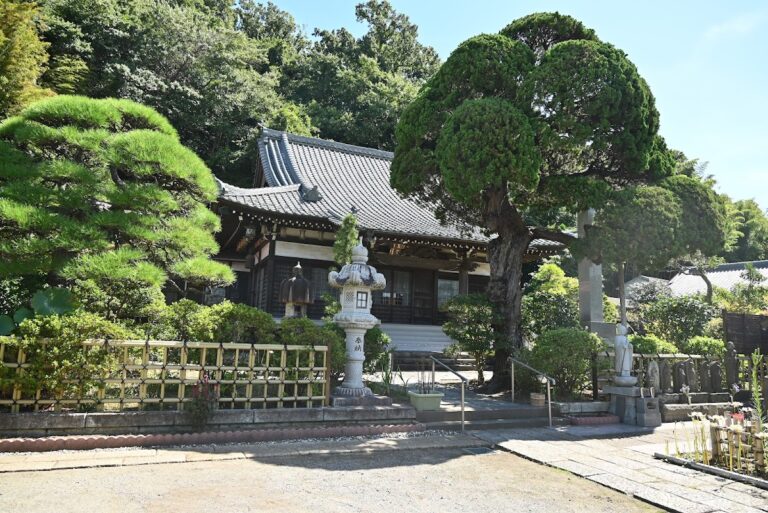
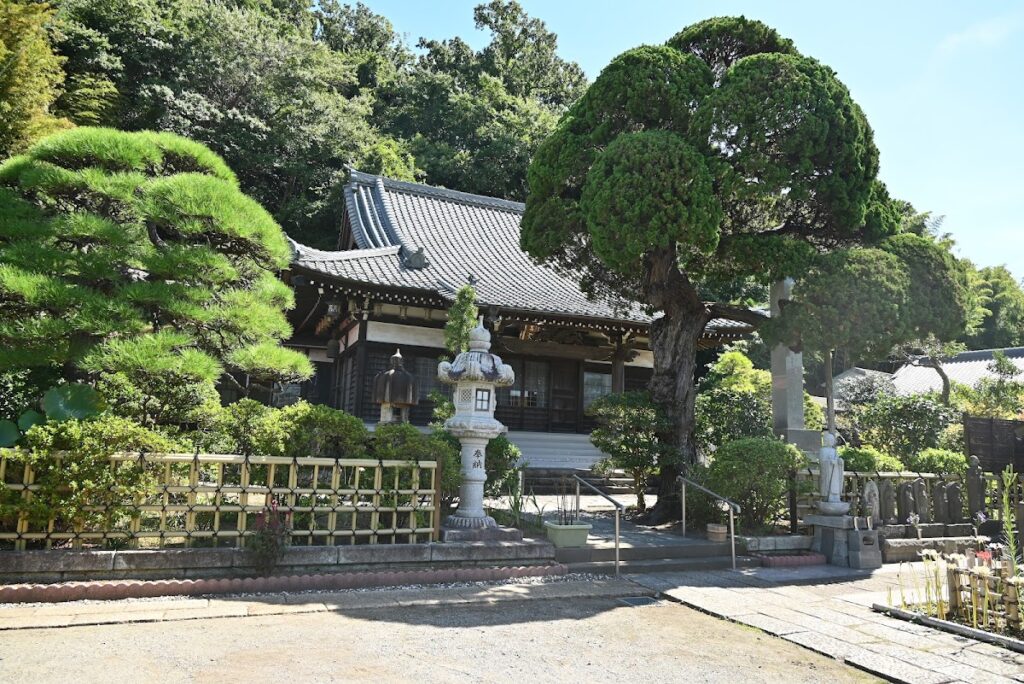
Although located in a quiet residential area in northern Kamakura City, the grounds of Tokakuji Temple maintain a tranquil religious space. Despite its convenient location near a Shonan Monorail station, entering the grounds offers a sense of serenity, far removed from the hustle and bustle of the city.
The grounds include the main hall, the priest’s quarters, and other buildings, as well as an adjacent cemetery. The environment, surrounded by trees, allows visitors to experience the changing seasons. The scenery is particularly beautiful during the fresh greenery of spring and the vibrant autumn foliage.
Relationship with the Special Green Space Preservation Area
The area surrounding Tokakuji Temple includes a zone designated as a Special Green Space Preservation Area by Kamakura City. Based on the Ancient Cities Preservation Law, Kamakura City has established various regulations to preserve its historical landscape, and the Special Green Space Preservation Area is part of this.
This system protects the natural environment and landscape around Togakuji Temple, maintaining a lush green environment befitting a historic temple. By restricting development, it plays an important role in preserving the landscape of Kamakura from the Middle Ages to the present day.
Goshuin Information
Togakuji Temple offers goshuin (temple stamps). Goshuin are calligraphic inscriptions and red seals given by temples as proof of worship, and collecting them has become a popular hobby in recent years.
Basic Information on Goshuin
- Availability: Yes
- Reception Hours: 9:00~16:00 (approximate, prior confirmation recommended)
- Offering Fee: Generally around 300-500 yen (confirmation required)
- Notes: May not be available during religious services or events.
It is believed that Togakuji Temple’s goshuin will include calligraphic inscriptions related to the temple’s name and its principal deity, Fudo Myoo. When receiving a Goshuin (temple stamp), it is proper etiquette to bring your Goshuincho (stamp book) and respectfully offer your prayers before requesting it at the reception area or temple kitchen.
A Goshuin is not merely a commemorative stamp, but proof of a connection made with the Buddha or principal deity. It is important to follow the order of first offering heartfelt prayers at the main hall, and then receiving the Goshuin.
Access and Transportation Information
Access by Public Transportation
The most convenient way to access Tokakuji Temple is by using the Shonan Monorail.
Using the Shonan Monorail
- Nearest Station: Shonan-Fukasawa Station
- Distance from Station: Approximately 180m~200m
- Travel Time: Approximately 2~7 minutes on foot
Shonan-Fukasawa Station is a station on the Shonan Monorail, which connects Ofuna Station and Shonan-Enoshima Station. It is approximately 5 minutes from Ofuna Station and approximately 10 minutes from Shonan-Enoshima Station. After getting off the train, follow the signs and maps towards Kajiwara. After a short walk through the residential area, you’ll see the thatched gate of Tokakuji Temple.
Other Nearest Stations
- Shonan-Machiya Station: Approximately 10 minutes on foot
- Fujimicho Station: Approximately 12 minutes on foot
While these stations are also within walking distance, Shonan-Fukasawa Station is the closest and most convenient.
Access by Car
If you are traveling by car, the following routes are possible:
Access from Major Roads
- Approximately 15 minutes from the Asahina IC on the Yokohama-Yokosuka Expressway
- Via National Route 1 and Prefectural Route 32 (Kamakura-Hayama Line)
Parking Information
Tokakuji Temple may have parking spaces for visitors, but the number is likely limited. If you are visiting for grave visits or memorial services, it is recommended to check with the temple in advance. Since the surrounding area is residential, avoid street parking and use nearby coin-operated parking lots if necessary.
Combining Visits with Nearby Shrines and Temples
There are other historical shrines and temples around Tokakuji Temple, and visiting them together is highly recommended.
- Daikeiji Temple: A Rinzai Zen temple located a few minutes’ walk away.
- Goryo Shrine (Kajiwara): A shrine associated with Kajiwara Kagetoki.
Visiting these shrines and temples will allow you to gain a deeper understanding of the history and culture of the Kajiwara area.
Tokakuji Temple Cemetery Information
Tokakuji Temple as a Temple Cemetery
Tokakuji Temple has a temple cemetery, which is used as a burial place for parishioners and the general public. Temple cemeteries are managed and operated by temples, and are characterized by their meticulous care by the head priest and temple staff.
Characteristics of Temple Cemeteries
- Peace of mind due to management by a historical temple
- Ability to hold memorial services and rites at the temple
- Well-maintained and clean grounds
- A religious atmosphere for remembering the deceased
Conditions and Procedures for Cemetery Use
When using the cemetery at Togakuji Temple, the following conditions and procedures are generally required.
Conditions for Use
- Sect: Often requires membership in the Koyasan Shingon sect
- Temple Membership System: May require becoming a temple member
- Regional Restrictions: May be limited to residents of specific areas
Procedure Flow
- Inquiry and consultation with the temple
- Site visit and explanation
- Selection of burial plot and contract
- Payment of perpetual use fee and management fee
- Construction of tombstone
- Eye-opening ceremony and interment
For specific conditions and costs, we recommend contacting Togakuji Temple directly. Cemetery availability and usage conditions may change depending on the time of year.
Ease of Visiting the Grave
Togakuji Temple’s cemetery is conveniently located just a few minutes’ walk from Shonan-Fukasawa Station on the Shonan Monorail, making it easily accessible by public transportation. This proximity to the station is a significant advantage for the elderly and those visiting from afar.
The surrounding area is a residential neighborhood, providing a quiet and peaceful environment for grave visits. The historical significance of Kamakura further enhances its value as a burial site.
Funeral and Memorial Services
Togakuji Temple also conducts funerals and memorial services. As a temple funeral hall, it can accommodate small-scale funerals such as family funerals.
Main Memorial Services Offered
- Funeral and Farewell Ceremony
- First Seven Day and Forty-Ninth Day Memorial Services
- Annual Memorial Services (First Anniversary, Third Anniversary, etc.)
- Obon and Higan Memorial Services
- Monthly Memorial Services
You can receive respectful memorial services in accordance with Shingon Buddhist rituals. If you wish to hold a funeral or memorial service, please consult with the temple in advance to discuss the schedule and details.
Manners and Precautions for Visiting Togakuji Temple
Basic Manners for Visiting Temple
When visiting Togakuji Temple, please observe the following basic manners:
Manners at the Temple Gate
- Bow before passing through the temple gate
- Avoid walking in the center of the gate (the center is considered the path of Buddha)
Worship at the Main Hall
- Place your offering in the offering box
- Bow with hands clasped
- Offer your prayers quietly
- Bow again with hands clasped
Precautions on the Temple Grounds
- Do not speak loudly
- Take photographs only in permitted areas
- Take your trash with you
- Do not enter areas other than those designated
Regarding Attire
For regular visits, no special attire is required, but please dress in a clean and respectful manner. When attending a memorial service or funeral, mourning attire or formal wear is required.
Regarding Photography
Please follow the temple’s policy regarding photography of the temple grounds and buildings. Generally, exterior photography is often permitted, but photography of the interior of the main hall or of Buddha statues may be prohibited. If unsure, always check with the temple before taking photos.
Tourist Attractions Around Tokakuji Temple
Here are some nearby tourist attractions you might want to visit when you come to Tokakuji Temple.
Daikeiji Temple
This Rinzai sect temple of the Kenchoji school is within walking distance of Tokakuji Temple. Founded during the Muromachi period, it is also known as a historical temple. The temple grounds feature a beautiful garden that shows different expressions depending on the season.
Goryo Shrine (Kajiwara)
This shrine is dedicated to Kajiwara Kagetoki and is an important spot for understanding the history of the region. As a place associated with Kajiwara Kagetoki, a samurai from the Kamakura period, it is particularly interesting for history buffs.
Kamakura Central Park
A short walk away lies the vast Kamakura Central Park. This park, rich in nature, is perfect for strolls and picnics. Its design, which takes advantage of the valley topography, allows visitors to enjoy the changing seasons.
Shonan Monorail
The Shonan Monorail itself can be enjoyed as part of the sightseeing. As the longest suspended monorail line in Japan, it offers panoramic views of the Shonan coast and the Kamakura cityscape from its windows.
Annual Events at Tokakuji Temple
As a Shingon Buddhist temple, Tokakuji Temple is believed to hold various Buddhist events throughout the year.
Main Annual Events (Examples from a typical Shingon Buddhist temple)
January
- Shusho-e (January 1st – 3rd): A Buddhist service praying for peace in the new year
February
- Setsubun-e: A Buddhist service involving bean-throwing and warding off evil spirits
March
- Haru Higan-e: A Buddhist service for ancestors
April
- Hana Matsuri (Kanbutsu-e): A Buddhist service celebrating the birth of Buddha
August
- Obon Segaki-e: A Buddhist service for ancestors and Segaki (feeding of hungry ghosts)
September
- Aki Higan-e: A Buddhist service for ancestors
December
- Joya no Kane (New Year’s Eve Bell): The ringing of the bell on New Year’s Eve
For specific event dates and details, please contact Togakuji Temple directly.
The Position of Togakuji Temple as a Shingon Buddhist Temple in Kamakura
While Kamakura is famous for its Zen Buddhist temples, represented by the Kamakura Gozan (Five Mountains of Kamakura), Shingon Buddhist temples have also played an important role. Tokakuji Temple, as one of the Shingon Buddhist temples in Kamakura City, supports the faith of the local community.
History of Shingon Buddhism in Kamakura
Shingon Buddhism is a sect founded by Kobo Daishi Kukai during the Heian period and had spread to the Kanto region even before the Kamakura period. While Zen Buddhism gained support among the samurai class during the Kamakura shogunate, Shingon Buddhism continued to be widely practiced among the common people.
Shingon Buddhist temples rooted in the community, such as Tokakuji Temple, have not only transmitted the teachings of esoteric Buddhism but have also functioned as places of prayer for local residents. The worship of Fudo Myoo and Goma rituals, unique forms of Shingon esoteric Buddhism, have been passed down to the present day.
Recommended Itinerary for Visiting Tokakuji Temple
Half-Day Course: Exploring the History of the Kajiwara Area
9:00 Arrive at Shonan-Fukasawa Station
9:10 Visit Tokakuji Temple (30 minutes)
9:45 Visit Daikeiji Temple (30 minutes)
10:20 Visit Goryo Shrine (20 minutes)
10:45 Stroll around the surrounding area
12:00 Move to central Kamakura for lunch
This course allows you to efficiently visit the main temples and shrines in the Kajiwara area.
Full-Day Course: Visiting Temples and Shrines in Northern Kamakura
In addition to visiting the temples and shrines in the Kajiwara area, we also recommend a course that visits major temples in northern Kamakura, such as Kenchoji Temple and Engakuji Temple. Using the Shonan Monorail and JR Yokosuka Line will allow for efficient travel.
Summary: The Charm of Tokaku-ji Temple
Tokaku-ji Temple, located in Kajiwara, Kamakura City, Kanagawa Prefecture, is an ancient temple of the Koyasan Shingon sect, founded during the Oei era by the monk Shuei Sozu. Its thatched gate is impressive, and as a historical temple with Fudo Myoo as its principal deity, it has supported the faith of the local community.
Main Charms of Tokaku-ji Temple
- History and tradition since its founding during the Oei era
- Dignified thatched gate
- A temple that conveys the faith of Shingon Esoteric Buddhism
- Convenient access, just a few minutes’ walk from Shonan-Fukasawa Station
- Quiet and peaceful temple grounds
- Issuance of Goshuin (temple stamps)
- Cemetery and funeral services available
While famous temples around Kamakura Station tend to attract attention when it comes to Kamakura sightseeing, local temples like Tokaku-ji also possess their own unique charm and value. In a quiet environment away from the hustle and bustle, you can slowly worship and reflect on history.
When visiting the Kajiwara area in northern Kamakura City, be sure to stop by Tokakuji Temple. Passing through the thatched gate and offering your prayers in the main hall, you will feel the weight of history dating back to the Oei era and the serene atmosphere of Shingon Esoteric Buddhism.
When visiting, please observe basic manners and be considerate of the temple and other visitors. For more information about cemetery use or memorial services, please contact the temple directly. We hope that Tokakuji Temple will be a place of peaceful prayer for everyone.