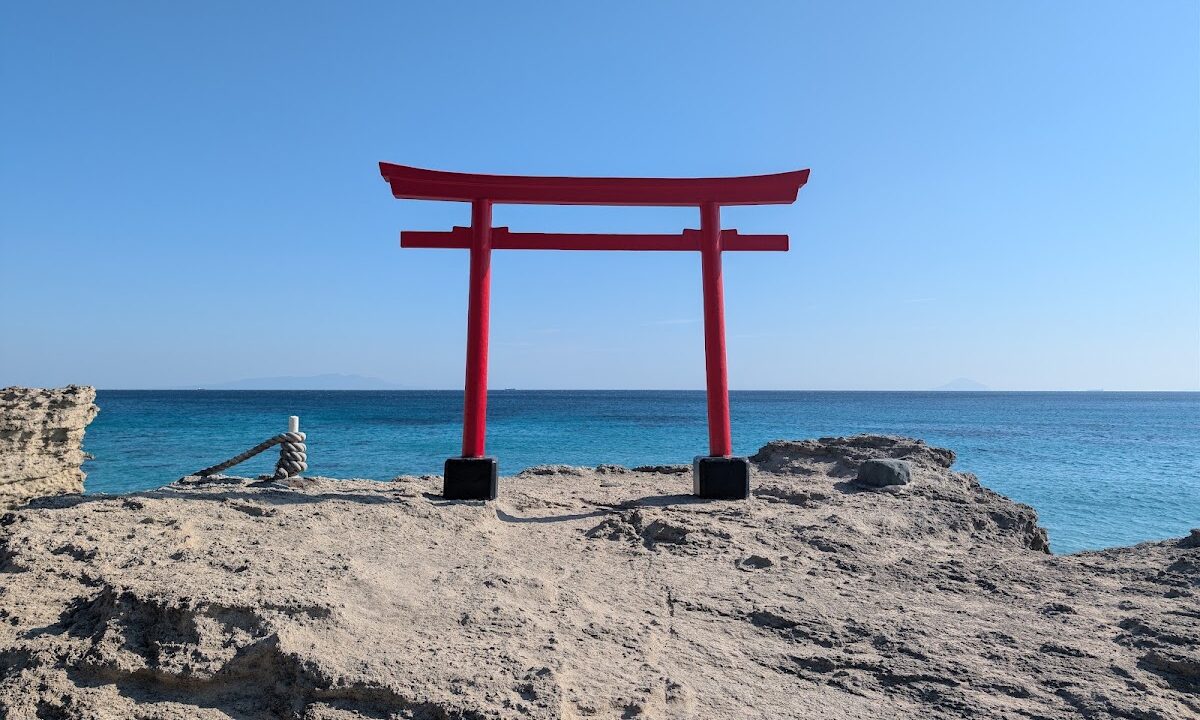
Complete Guide to Sodenji Temple (Shizuoka Prefecture): History, Highlights, and Access Information
Sodenji Temple, located in Shizuoka Prefecture, is an ancient temple with a long history as a Nichiren Buddhist temple. This article provides a detailed explanation of Sodenji Temple’s historical background, highlights within its grounds, visiting information, and access methods. It is one of the temples you should definitely visit when visiting Shizuoka Prefecture.
What is Sodenji Temple?
Sodenji Temple is a Nichiren Buddhist temple located in Shizuoka Prefecture and has long been cherished as a center of local faith. The name “Soden” signifies the correct transmission of Buddhist teachings from master to disciple, representing the temple’s religious mission.
There may be multiple Sodenji temples in Shizuoka Prefecture, but all uphold the teachings of Nichiren Buddhism and engage in activities rooted in the local community.
History of Sodenji Temple
Origin of its Founding
The founding of Sodenji Temple is deeply connected to the missionary activities of Nichiren Buddhism. The Nichiren sect was founded by Nichiren Shonin during the Kamakura period, and many temples were established in the Tokai region, including Shizuoka Prefecture.
Sodenji Temple was founded within this tradition and has attracted the faith of the local people. While the exact founding date and the identity of the first abbot vary depending on the temple’s history and records, it is a temple deeply rooted in the community with a history spanning several hundred years.
Successive Abbots and the Temple’s Development
Sodenji Temple has been protected and developed by successive abbots. During the Edo period, it built close ties with the local community under the danka system (parishioner system), and despite the impact of the anti-Buddhist movement of the Meiji era, it survived thanks to the support of its followers.
Even today, it plays an important role as a spiritual center for the community and as a place to preserve cultural heritage.
From the Post-War Period to the Present
After World War II, Sodenji Temple contributed to the reconstruction of the local community. Having gone through the period of rapid economic growth, in modern times, while maintaining traditional religious ceremonies, it also engages in activities that adapt to the new era.
Highlights of the Temple Grounds
Main Hall
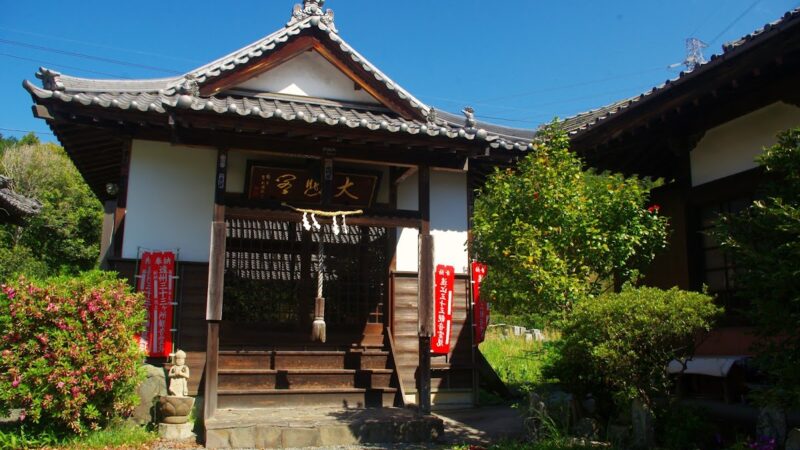
The main hall of Sodenji Temple is the central building of the temple. It houses the mandala, the principal object of worship for the Nichiren sect, and daily services and religious ceremonies are held here. The architectural style of the main hall is characteristic of Nichiren sect temples, and it quietly welcomes visitors.
Inside the main hall, the mantra “Namu Myoho Renge Kyo,” symbolizing the teachings of Nichiren Shonin, is chanted, creating a solemn atmosphere befitting a place of faith.
Trees and Gardens on the Temple Grounds
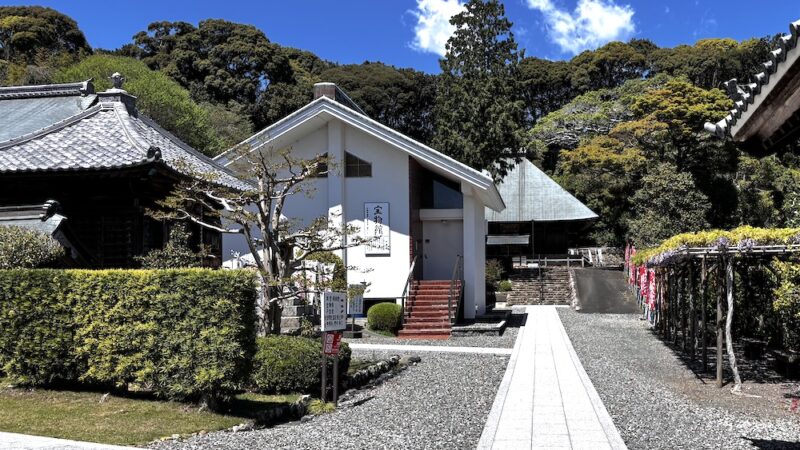
The grounds of Sodenji Temple are planted with ancient trees, allowing visitors to enjoy the scenery of each season. The harmony between the beauty of nature and the temple architecture is particularly magnificent during the cherry blossom season in spring and the autumn foliage season.
The temple grounds, incorporating elements of a Japanese garden, provide a space that offers peace of mind to visitors.
Bell Tower and Bell
There is a bell tower on the temple grounds, where a temple bell hangs. The sound of this bell has served to inform the local people of the time and to spread the teachings of Buddhism. It is also rung at the end of the year as the New Year’s Eve bell, becoming a local tradition.
Stone Monuments and Memorials
Within the temple grounds, there are stone monuments recording the history and origins of the temple, as well as monuments honoring successive chief priests. These monuments are valuable historical documents that convey the history of Sodenji Temple, speaking to visitors about the temple’s past.
The Teachings of Nichiren Buddhism and Sodenji Temple
Basic Philosophy of Nichiren Buddhism
Nichiren Buddhism is a sect that considers the Lotus Sutra as its fundamental scripture and aims for immediate enlightenment by chanting the title “Namu Myoho Renge Kyo.” Nichiren Shonin preached that the Lotus Sutra is the true teaching of Shakyamuni Buddha and dedicated his life to spreading this teaching.
Sodenji Temple also conducts religious activities based on this teaching, focusing on the recitation of the Lotus Sutra, the chanting of the title, and ancestor worship. ### Training and Practice at Sodenji Temple
At Sodenji Temple, various training and practices based on the teachings of the Nichiren sect are carried out. Through morning and evening services, monthly memorial services, and annual events, believers deepen their faith.
In addition, opportunities for general visitors to participate in training, such as sutra copying and chanting, are offered, providing a valuable experience of encountering Buddhism.
Annual Events and Memorial Services
Major Annual Events
At Sodenji Temple, annual events are held in accordance with the traditions of the Nichiren sect. The main events include the following:
New Year’s Day (Shushō-e)
A memorial service is held to welcome the new year and pray for peace and happiness throughout the year. Many visitors come for their first shrine visit of the year, welcoming the start of the new year at the temple.
Setsubun Festival
On Setsubun in February, bean-throwing and a memorial service for warding off evil are held, praying for family safety and good health. Oeshiki (御会式) This is the most important event in the Nichiren sect, held around October 13th, the anniversary of Nichiren Shonin’s death. A lantern procession and special memorial services are held to commemorate the virtues of Nichiren Shonin.
Obon (Urabon-e) In August, the Urabon-e festival is held for ancestral memorial services, where parishioners welcome and honor the spirits of their ancestors.
Monthly Memorial Services
There are also regular monthly memorial services where parishioners gather to honor their ancestors and offer prayers. These services also serve as opportunities to deepen the bonds of the local community.
Visiting Information
Visiting Hours and Admission Fee
Visiting hours for Sodenji Temple are generally during the daytime. Specific times vary by temple, so it is recommended to check in advance.
Normally, entry to the temple grounds is free, and there is no admission fee. However, there may be conditions for participation during special memorial services or events.
Etiquette for Visiting Temples
When visiting a temple, please observe the following etiquette:
- Bow when passing through the temple gate
- Be quiet within the temple grounds and refrain from loud conversations
- When praying in the main hall, clasp your hands together and bow
- Take photographs only within permitted areas
- Take your trash with you
About Goshuin (Temple Seals)
Many temples offer goshuin as a memento of your visit. You may also be able to receive a goshuin at Sodenji Temple; please inquire at the temple office if you wish to receive one. You will receive one upon bringing your goshuincho (stamp book) and making a donation.
Access Methods
Access by Public Transportation
Access to Sodenji Temple varies depending on its location. Generally, you will need to walk from the nearest JR station or bus stop, or take a taxi.
For specific access methods, we recommend contacting the temple in advance or searching using a map app. ### Access by Car
If visiting by car, access via local roads from the nearest interchange. Entering the temple name into your car’s navigation system may display the route.
Parking
Some temples may have parking available for visitors. However, parking spaces may be limited, so please consider using public transportation during memorial services or events.
Nearby Tourist Attractions
Famous Places in Shizuoka Prefecture
When visiting Sodenji Temple, you can also visit other tourist attractions in Shizuoka Prefecture.
Mount Fuji
Mount Fuji, a symbol of Shizuoka Prefecture, is a World Cultural Heritage site and can be viewed from various locations throughout the prefecture.
Kunozan Toshogu Shrine
A shrine dedicated to Tokugawa Ieyasu, known for its national treasure shrine buildings and beautiful scenery.
Mishima Taisha Shrine
A shrine that has long attracted worshippers as the Ichinomiya (first-ranked shrine) of Izu Province, and is also famous as a place associated with Minamoto no Yoritomo.
Local Cultural Facilities
Shizuoka Prefecture boasts a wealth of cultural attractions, including museums, art galleries, and historical buildings. Combining a visit to Sodenji Temple with a trip to experience local history and culture is a wonderful way to enjoy the region.
Engagement with the Local Community
As a Center for the Local Community
Sodenji Temple serves not only as a religious institution but also as a central hub for the local community. It fosters interaction among parishioners and local residents, serving as a gathering place.
Cultural Activities and Social Contribution
The temple engages in activities to promote Buddhist culture and cooperates with local welfare activities. Activities such as sutra copying sessions and Dharma talks are also conducted to widely disseminate Buddhist teachings.
Educational Role
Sodenji Temple also functions as a place for Buddhist education. It supports the spiritual growth of children through moral education and rituals at important life milestones.
The Charm of Sodenji Temple
A Space Where You Can Feel the Weight of History
The greatest charm of Sodenji Temple lies in the spirituality cultivated over its long history and the space that conveys it. Stepping onto the temple grounds, you are enveloped in a tranquil atmosphere, far removed from the hustle and bustle of everyday life.
The Beauty of Nature in Every Season
The trees and flowers on the temple grounds display different expressions with each season. From the fresh green of spring, the deep green of summer, the autumn foliage, to the stillness of winter, it is worth visiting throughout the year.
A Place to Find Peace of Mind
In modern society, places where one can find peace of mind are precious. Sodenji Temple is an important place for those seeking such spiritual healing.
Points to Note When Visiting
Regarding Attire
When visiting a temple, avoid overly revealing clothing and aim for modest attire. Formal attire is especially desirable when attending a memorial service.
Photography
Photography is generally permitted within the temple grounds, but photography inside the main hall or of Buddha statues may be prohibited. Please check before taking photos or follow the signs.
Visiting During Ceremonies
When visiting during a ceremony, please observe quietly and be considerate so as not to disrupt the proceedings.
Experiences at Sodenji Temple
Sutra Copying Experience
Many temples offer sutra copying experiences. By copying a passage from the Lotus Sutra or the title of the Lotus Sutra, you can calm your mind and connect with the teachings of Buddhism.
Zen Meditation
While chanting is central to Nichiren Buddhism, taking time to quietly sit and compose oneself is also considered important. You can spend time reflecting on yourself in the tranquil space of the temple grounds.
Attending Dharma Talks
Dharma talks by the head priest are sometimes held. This is a valuable opportunity to learn about Buddhist teachings and wisdom for life.
The Future of Shodenji Temple
Inheriting Tradition
Shodenji Temple bears the mission of passing on the traditions cultivated over its long history to future generations. It addresses many challenges, including the maintenance of its buildings, the continuation of religious ceremonies, and the transmission of its teachings.
Adapting to Modern Society
At the same time, it is required to undertake new initiatives that meet the needs of modern society. Activities adapted to the times, such as disseminating information via the internet and conducting online memorial services, are being implemented.
Coexistence with the Community
Shodenji Temple will continue to walk hand in hand with the local community, fulfilling its role as a spiritual haven for people.
Summary
Shodenji Temple in Shizuoka Prefecture is an ancient temple that preserves and transmits the teachings of the Nichiren sect, possessing a long history and rich spirituality. The tranquil atmosphere of the temple grounds, the beauty of nature throughout the seasons, and the deep ties with the local community are major attractions of this temple.
When visiting Shizuoka Prefecture, be sure to visit Shodenji Temple and experience traditional Japanese temple culture. You will find peace of mind and new insights.
To ensure a more fulfilling experience, please check the opening hours and access information beforehand and observe proper etiquette. Time spent at this historic temple will undoubtedly add special meaning to your journey.