Suga Shrine (Kokurakita Ward, Kitakyushu City, Fukuoka Prefecture) Complete Guide | Goshuin (Shrine Seal), Access, and History Information
Suga Shrine, located in Suga-cho, Kokurakita Ward, Kitakyushu City, Fukuoka Prefecture, is a shrine that has long been revered as the local guardian deity. It enshrines Susanoo-no-Mikoto as its main deity and is known for its divine power to ward off evil and disease. This article comprehensively provides the latest information necessary for visiting Suga Shrine, including information on its goshuin (shrine seal), detailed access methods, history, and highlights within the shrine grounds.
Basic Information about Suga Shrine
Location
Address: 12-24 Suga-cho, Kokurakita Ward, Kitakyushu City, Fukuoka Prefecture 802-0034
Suga Shrine is located in the Suga-cho area of Kokurakita Ward, Kitakyushu City, and is close to the Tomino Interchange of the urban expressway. A river flows nearby, and the shrine stands quietly amidst a residential area.
Deity Enshrined
Susanoo-no-Mikoto
The deity enshrined at Suga Shrine is Susanoo-no-Mikoto, known in Japanese mythology for slaying the Yamata no Orochi (eight-headed serpent). Susanoo-no-Mikoto is worshipped throughout Japan as a god with diverse divine virtues, including protection against misfortune, eradication of disease, matchmaking, and abundant harvests. The name “Suga” is said to originate from a poem Susanoo-no-Mikoto composed in Izumo, saying “My heart is refreshed,” and the shrine is revered as a symbol of purification and purity of mind and body.
Shrine Rank and History
Suga Shrine has long been worshipped by residents of Suga Town and the surrounding area as the local guardian deity. A notable event in the shrine’s history is the great flood that struck the Kitakyushu region in 1953. The original shrine building was washed away by this flood, but thanks to the enthusiasm of the local people, reconstruction progressed, and the shrine was rebuilt in 1972 as a reinforced concrete structure.
This reconstruction was a major decision, shifting from wooden architecture to a modern reinforced concrete structure, but it aimed to create a stronger and more permanent shrine, drawing on the lessons learned from the flood. The current shrine building is an important structure that tells the story of its history.
How to access Suga Shrine
Nearest Station and Line
The nearest station to Suga Shrine is Kokura Station on the JR Kagoshima Main Line and Nippo Main Line. Kokura Station is the central station of Kitakyushu City and a major terminal station where the Shinkansen also stops.
Access from Kokura Station:
- Approximately 20-25 minutes on foot from Kokura Station
- Approximately 5-7 minutes by taxi
- Bus is the most convenient (see below)
Kokura Station is also the starting station for the Kitakyushu Monorail, but taking the bus is the most efficient way to access Suga Shrine.
Nearest Bus Stop and Route
Nearest Bus Stop: Nishitetsu Bus “Suga-machi” Bus Stop
Suga Shrine is very close to the Suga-machi bus stop, about a 3-minute walk, so bus access is recommended.
Bus Route from Kokura Station:
- Take a Nishitetsu bus from the Kokura Station Bus Center in front of JR Kokura Station
- Take a bus bound for Tomino
- Get off at the “Suga-machi” bus stop
- Suga Shrine is about a 3-minute walk from the bus stop
Nishitetsu buses are a major public transportation system covering Kitakyushu City, and multiple routes operate from Kokura Station. We recommend checking the latest timetable on the Nishitetsu Bus official website or map app beforehand.
Access by Car
If using the Kitakyushu Urban Expressway:
- Approximately 3 minutes from the “Tomino Interchange”
- There is limited parking space around the shrine, but we recommend checking the parking situation for visitors beforehand.
You can confirm the exact location by entering “Suga Shrine, Kokurakita-ku, Kitakyushu City” or the address “12-24 Suga-cho, Kokurakita-ku, Kitakyushu City” into your car navigation system or smartphone map app.
Information on Suga Shrine’s Goshuin (Shrine Seal) and Goshuincho (Shrine Seal Book)
About Goshuin
You can receive a Goshuin at Suga Shrine. Goshuin are popular among many visitors as proof of worship and as a record of their connection with the shrine.
Location for receiving Goshuin: Shrine Office
After your visit, you can request a Goshuin at the shrine office. However, the shrine office may be unattended, so if you want to be sure to receive a goshuin (shrine stamp), we recommend adjusting your visiting time in advance or, if possible, calling ahead to confirm.
Features of the Goshuin:
The goshuin at Suga Shrine features the shrine’s name and date of visit written in ink, along with the shrine’s seal. Simple yet carefully written, the goshuin is cherished as a memento of your visit.
About Goshuincho (Shrine Stamp Books)
For information regarding Suga Shrine’s original goshuincho, we recommend contacting the shrine directly for the latest information. If you do not have a goshuincho, you may be able to bring one obtained from another shrine, or receive a pre-printed goshuin.
Manners for Receiving a Goshuin (Shrine Stamp)
- Complete your prayers first: A Goshuin is proof of your visit, so always complete your prayers at the main shrine before heading to the shrine office.
- Use polite language: Request a Goshuin politely by saying, “I would like a Goshuin, please.”
- Prepare the offering: Having small change ready will make things smoother (generally around 300-500 yen).
- Wait quietly: Wait quietly while the Goshuin is being written.
- Words of gratitude: After receiving it, say “Thank you.”
Suga Shrine Grounds and Highlights
Shrine Building
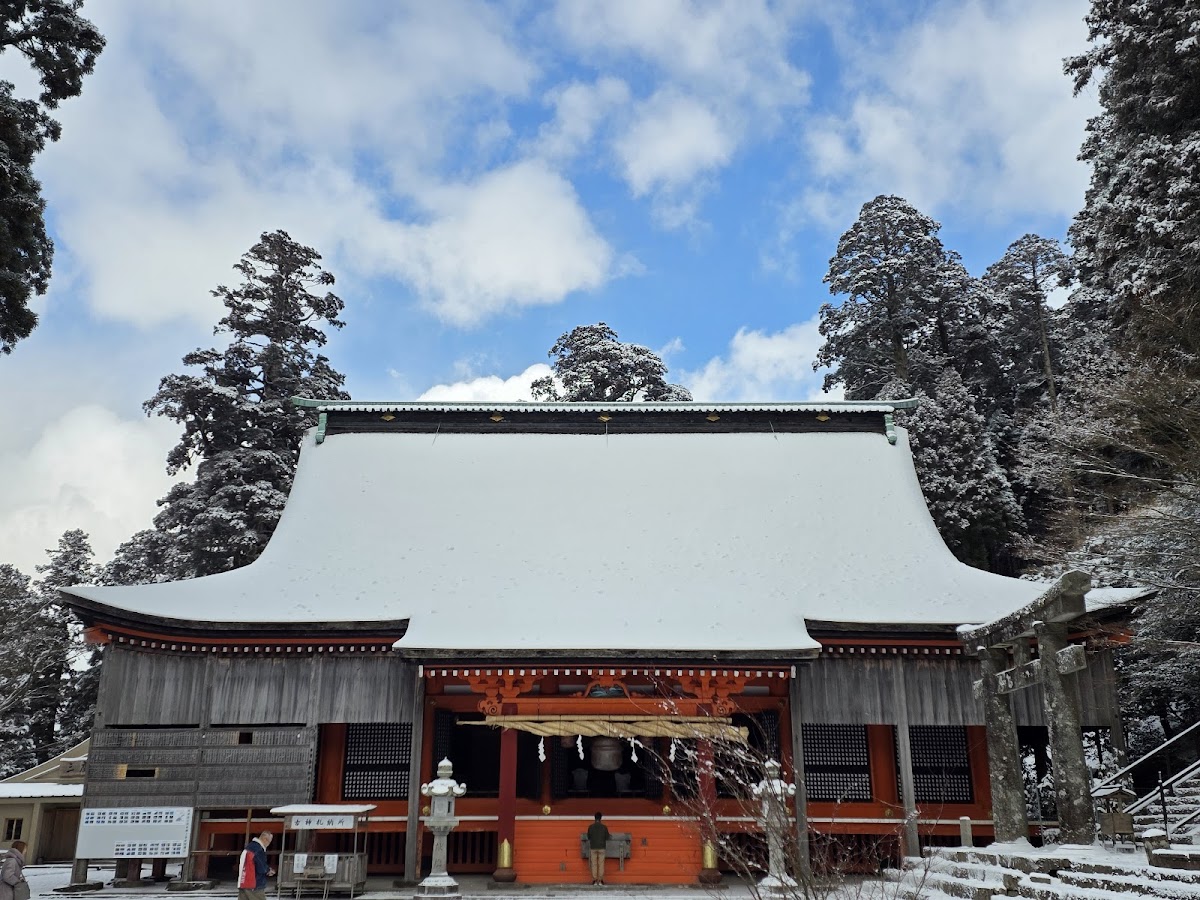
The reinforced concrete shrine building, rebuilt in 1972, is the central structure of Suga Shrine. Built after overcoming the difficulties of the great flood of 1953, this shrine symbolizes the faith and strong will to rebuild of the local people.
Despite its modern architectural style, the shrine maintains a solemn atmosphere, warmly welcoming visitors. Many local residents visit the shrine daily, offering their gratitude and prayers to the deities.
Torii Gate
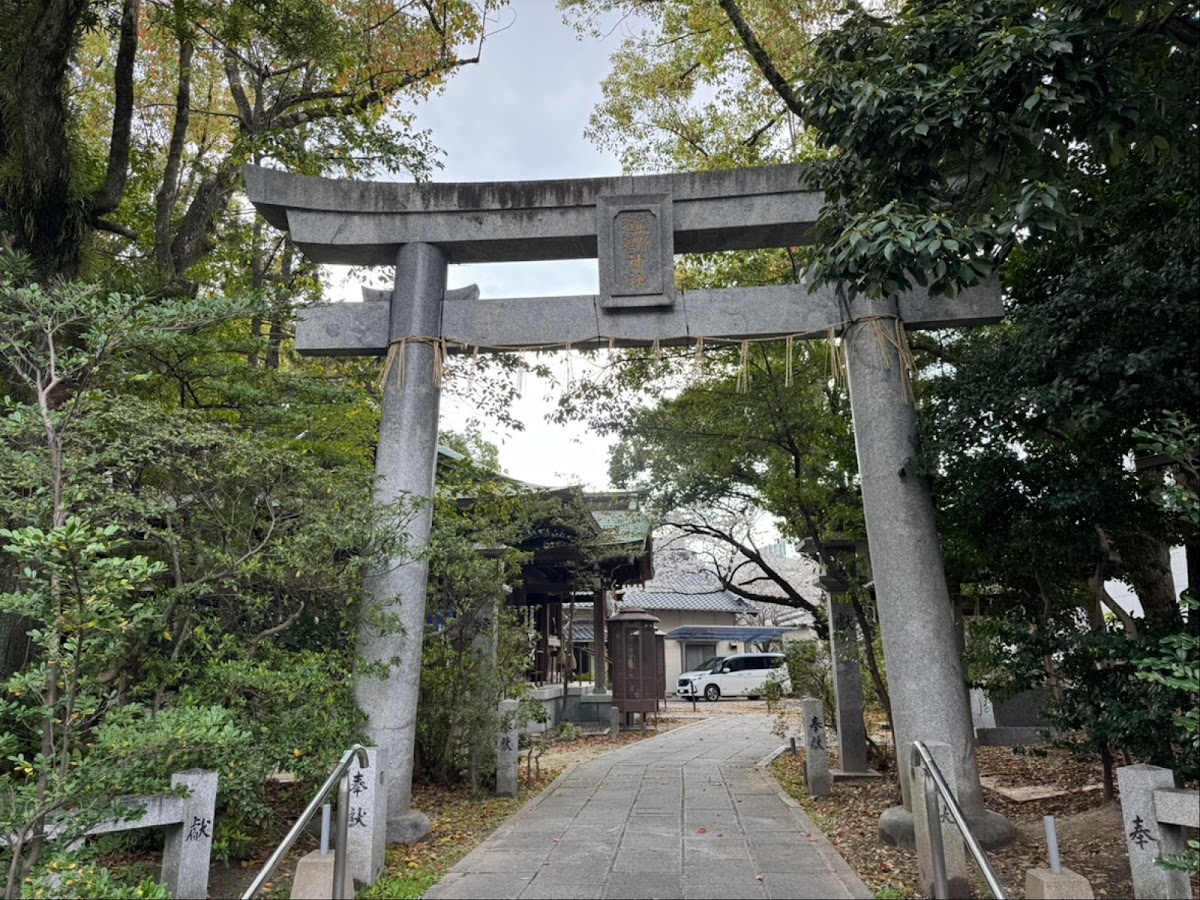
The torii gate, marking the entrance to the shrine grounds, serves as a boundary separating the sacred realm from the secular world. Bowing before passing through the large torii gate is considered proper etiquette for worshippers, showing respect to the deities. Beyond the gate lies a tranquil space, far removed from the hustle and bustle of everyday life.
Shrine Name Marker
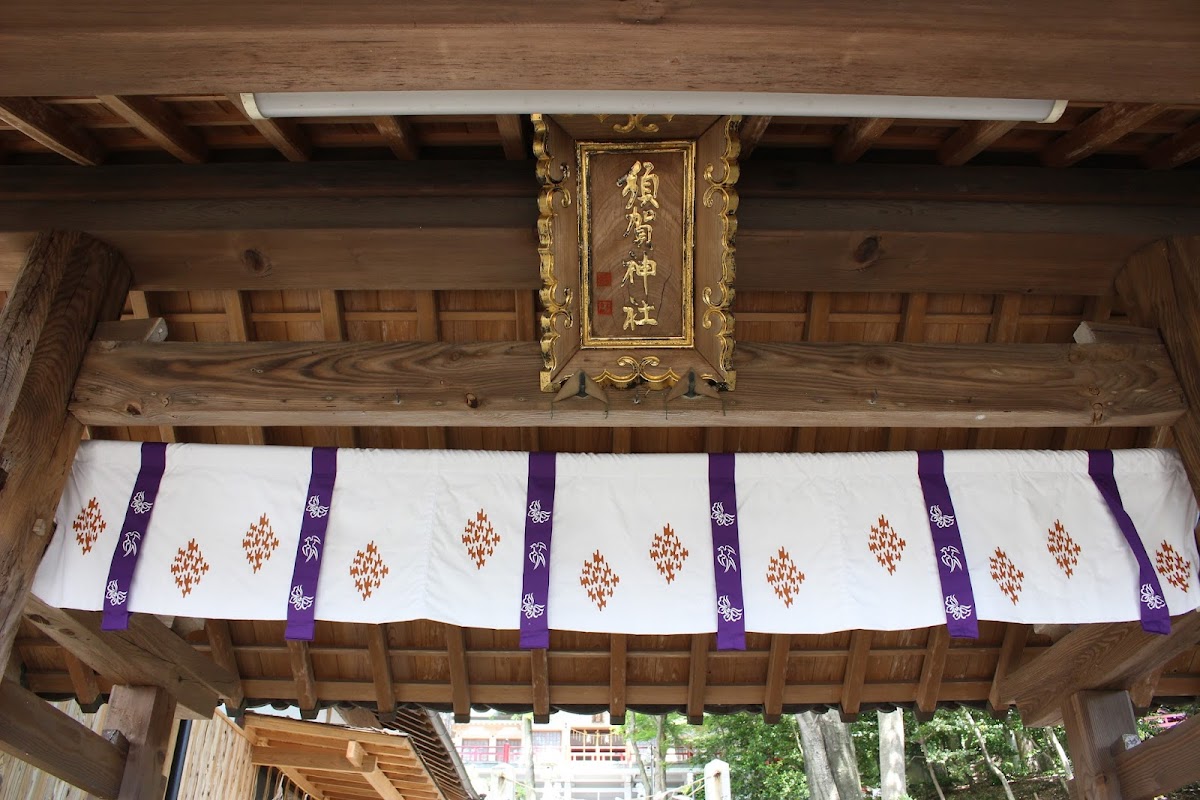
A shrine name marker, inscribed with “Suga Shrine,” stands within the grounds, informing visitors of the shrine’s name. This marker is an important element, considered the face of the shrine, and a popular spot for commemorative photos.
Water Basin
A water basin is provided for purifying the body and mind before worship. The proper etiquette at the purification fountain is as follows:
- Take the ladle with your right hand and purify your left hand.
- Switch the ladle to your left hand and purify your right hand.
- Take the ladle back into your right hand, receive water in your left hand, and rinse your mouth.
- Purify your left hand once more.
- Hold the ladle upright, let water flow over the handle, and return it to its original position.
Performing this series of actions with one ladleful of water is the formal procedure.
Komainu (Guardian Dogs)
Guardian dogs (komainu) are placed around the shrine. A pair of A-gyo (open-mouthed) and Un-gyo (closed-mouthed) guardians protect the sacred area and ward off evil spirits. Though small, these intricately crafted guardian dogs seem to gently watch over worshippers.
Natural Environment of the Shrine Grounds
A river flows around Suga Shrine, and the area is blessed with a rich natural environment. The shrine grounds, which display different expressions with each season, allow visitors to feel the changing seasons. Especially during the seasons of fresh greenery and autumn leaves, visitors can enjoy beautiful scenery.
Annual Events and Festivals of Suga Shrine
Natsukoshi Festival (Summer Festival/Chino-wa Kuguri)
One of the most important annual events at Suga Shrine is the Natsukoshi Festival, held every year at the end of July.
Dates: July 29th and 30th
Time: From 6 PM on both days
The Natsukoshi Festival is a Shinto ritual to purify oneself of sins and impurities accumulated over the past six months and to pray for good health and protection from illness for the remaining half of the year. The centerpiece of this festival is the “Chino-wa Kuguri” (passing through a Chino-wa).
What is Chino-wa Kuguri?:
It is a Shinto ritual in which one passes through a large ring made of Chino-wa (a type of grass) to purify the mind and body and ward off misfortune. The proper way to pass through the Chino-wa (a large ring made of reeds) is to go counterclockwise, then clockwise, then counterclockwise again, drawing a figure eight shape. While doing so, you should chant, “Purify us, cleanse us, protect us, and bless us.”
During the Natsukoshi Festival, local people gather, creating a lively atmosphere befitting a summer festival. Stalls are often set up, and it plays an important role as a community gathering place.
Other Annual Events
- New Year’s Day Festival: A first shrine visit of the year to pray for happiness in the new year.
- Setsubun Festival: A bean-throwing ceremony to ward off evil spirits.
- Autumn Grand Festival: A festival to give thanks for a bountiful harvest and the prosperity of the community.
For detailed dates of these events, we recommend contacting the shrine directly or checking local bulletin boards for the latest information.
Items Offered at Suga Shrine
Amulets and Talismans
Suga Shrine offers amulets and talismans to meet the various wishes of worshippers. The items are primarily related to the divine virtues of Susanoo-no-Mikoto, the enshrined deity.
Main Types of Items Offered:
- Exorcism Amulet: For those in their unlucky year or those wishing to ward off misfortune
- Health Amulet: For those wishing for good health and protection from illness
- Traffic Safety Amulet: For those praying for safety while driving or cycling
- Academic Success Amulet: For students taking exams or those wishing for academic improvement
- Family Safety Amulet: For those praying for the happiness and safety of their family
For details on items and offering fees, please inquire at the shrine office.
Divine Talismans (Ofuda)
Divine talismans for enshrining in your home are also available. By enshrining a Suga Shrine talisman at home, you can receive the daily protection of the gods.
Points to Note When Visiting Suga Shrine
Proper Worship Etiquette
The basic worship etiquette at a shrine is “two bows, two claps, one bow”:
- Stand up straight in front of the offering box.
- Gently place your offering in the box.
- If there is a bell, ring it.
- Bow deeply twice (two bows).
- Bring both hands together at chest height and clap twice (two claps).
- While keeping your hands together, express your wishes or gratitude.
- Finally, bow deeply once (one bow).
Suitable Time for Visiting
Suga Shrine is generally open for daytime visits, but if you wish to receive a Goshuin (shrine stamp) or other items at the shrine office, the hours between 9:00 AM and 5:00 PM are preferable. However, there are times when shrine priests are not always present, so prior confirmation is necessary if you wish to be sure of receiving assistance.
Visiting in the refreshing air of early morning or in the quiet atmosphere of dusk each offers a different charm. ### Regarding Photography
Photography is generally permitted on the shrine grounds, but please observe the following manners:
- Refrain from taking photos inside the main hall or in sacred areas.
- Be considerate of other worshippers.
- Refrain from taking photos during festivals or obtain permission.
- Remember to show respect to the shrine when posting on social media.
Attractions Around Suga Shrine
Kokura Castle
Returning from Suga Shrine towards Kokura Station, you’ll find Kokura Castle, one of Kitakyushu City’s most representative tourist spots. Built in the early Edo period by Hosokawa Tadaoki, this famous castle features a restored keep that is popular with both locals and tourists.
Tanga Market
Tanga Market, known as “Kitakyushu’s Kitchen,” is also located near Kokura Station. This vibrant market offers fresh seafood, vegetables, and prepared foods, allowing you to experience local food culture.
Riverwalk Kitakyushu
A multi-purpose commercial complex near Kokura Castle, featuring shopping, dining, a movie theater, and more. Convenient to visit before or after visiting Suga Shrine.
Three Recommended Shrines in Fukuoka Prefecture
When you visit Suga Shrine, why not also visit other attractive shrines in Fukuoka Prefecture?
1. Dazaifu Tenmangu Shrine (Dazaifu City)
The head shrine of all Tenmangu shrines nationwide, dedicated to Sugawara no Michizane, the god of learning. It is bustling year-round with worshippers praying for success in exams and academic achievement. The beautiful grounds and the gourmet food along the approach are also attractions.
2. Miyajidake Shrine (Fukutsu City)
A shrine with a famous scenic spot known as the “Path of Light.” The sight of the sunset over the approach, twice a year, is breathtaking. The largest shimenawa (sacred rope) and large drum in Japan are also highlights.
3. Hakozaki-gu Shrine (Higashi-ku, Fukuoka City)
Hakozaki Hachimangu Shrine, known for its plaque inscribed with “Surrender of the Enemy Nation.” Located facing the Genkai Sea, it is revered as the guardian deity of maritime traffic. The Hojo-e festival in September is one of Hakata’s three major festivals.
Summary
Suga Shrine is a historic shrine located in Suga-cho, Kokurakita-ku, Kitakyushu City, dedicated to Susanoo-no-Mikoto. Having overcome the hardships of the great flood of 1953, it continues to this day, supported by the faith of the local people.
You can receive a Goshuin (shrine stamp), and traditional events such as the Natsukoshi Festival are carefully preserved. It is easily accessible by bus from Kokura Station and close to the Tomino Interchange on the urban expressway, making it convenient for those visiting by car.
Despite being located in a quiet residential area, Suga Shrine is cherished as a spiritual center for the community. When visiting Kitakyushu City, please be sure to pay your respects. In the tranquil atmosphere of the shrine, you can forget the hustle and bustle of everyday life and spend time purifying your mind.
Frequently Asked Questions (FAQ)
Q1: When can I get a Goshuin (temple/shrine stamp) at Suga Shrine?
A1: You can get a Goshuin at the shrine office, but there are times when the priests are not always present. If you want to be sure to get a Goshuin, we recommend visiting during daytime hours (around 9:00 AM to 5:00 PM). Please also consider calling ahead to confirm.
Q2: What is the most convenient way to access Suga Shrine?
A2: The most convenient way is to take a Nishitetsu bus from JR Kokura Station. Take a bus bound for Tomino from the Kokura Station Bus Center and get off at the “Suga-machi” bus stop. From there, it’s about a 3-minute walk. By car, it’s about a 3-minute drive from the Tomino Interchange on the Kitakyushu Urban Expressway.
Q3: Who is the deity enshrined at Suga Shrine?
A3: The deity enshrined at Suga Shrine is Susanoo-no-Mikoto. This deity is worshipped for their diverse divine virtues, including protection against evil, eradication of disease, matchmaking, and abundant harvests.
Q4: What are the main festivals held at Suga Shrine?
A4: One of the most important festivals at Suga Shrine is the Natsukoshi Festival (Summer Festival), held annually on July 29th and 30th. A ritual of passing through a ring of reeds is performed to purify oneself of sins and impurities accumulated over the past six months and to pray for good health. It is held from 6 PM on both days.
Q5: Is there parking at Suga Shrine?
A5: There is limited parking space around the shrine, but it is recommended to check directly with the shrine regarding the availability and details of a dedicated parking lot for visitors. You may also consider using nearby coin-operated parking lots.
Q6: Why is the main building of Suga Shrine made of reinforced concrete?
A6: In 1953, a major flood struck the Kitakyushu region, and the original shrine building was washed away. Learning from that experience, and aiming for a stronger and more permanent shrine building, it was rebuilt in reinforced concrete in 1972. This shrine building symbolizes the region’s strong will to recover.
Q7: Does Suga Shrine offer wedding ceremonies or prayers?
A7: For prayers and special ceremonies at the shrine, we recommend contacting the Suga Shrine office directly. As the local guardian shrine, they may accommodate various prayers, but please check with the shrine for the latest information.
Q8: Are there any recommended tourist spots around Suga Shrine?
A8: Around Kokura Station, there are tourist spots such as Kokura Castle, Tanga Market, and Riverwalk Kitakyushu. You can visit these places before or after visiting Suga Shrine to enjoy Kitakyushu’s history, culture, and cuisine. Kokura Castle is within walking distance and is especially recommended for history buffs.