Suga Shrine (Yamanashi City, Yamanashi Prefecture) Complete Guide | History, Goshuin (Shrine Seal), and Access Information
Suga Shrine, located in Nishihonaka, Makioka-cho, Yamanashi City, Yamanashi Prefecture, is a historic shrine dedicated to Sugawara no Michizane, known as the god of learning. Founded during the Kenkyu era, this shrine boasts a history of over 800 years and has been cherished by locals as a guardian deity of the region. This article provides detailed information useful for visitors, including the history of Suga Shrine, its enshrined deities, highlights of the grounds, goshuin information, annual events, and access methods.
Basic Information about Suga Shrine
Location: 1196 Nishihonaka, Makioka-cho, Yamanashi City, Yamanashi Prefecture
Deity Enshrined: Sugawara no Michizane
Former Shrine Rank: Former Designated Village Shrine
Code No.: 2088 (Registered with the Yamanashi Prefectural Shrine Association)
Main Benefits: Academic success, passing exams, improvement in writing, protection from evil, good fortune
Suga Shrine is a shrine belonging to the Yamanashi Prefectural Shrine Association and plays a part in the prefecture’s shrine network. Located in the heart of Nishihonaka, Makioka-cho, Yamanashi City, it has long functioned as a center of local faith.
History and Origins of Suga Shrine
From Founding to the Middle Ages
The history of Suga Shrine dates back to the late Heian period to the early Kamakura period. According to records of the Yamanashi Prefectural Shrine Association, “Our shrine has been located in the center of this village since ancient times. There was a small shrine dedicated to Sugawara no Michizane in this area,” indicating that it was initially a small shrine dedicated to Sugawara no Michizane.
In July of Kenkyu 3 (1192), when Yasuda Tōtōmi-no-kami Yoshisada took control of this area, he decided to build a castle on Hotayama (present-day Odano-jōyama). At this time, he revered Sugawara Shrine as the guardian deity of the castle, and it is said that he built the worship hall on June 15, Kenkyu 4 (1193). As a result, Sugawara Shrine took on the character of a guardian deity of samurai families, in addition to being merely a shrine dedicated to the god of learning.
Great Fire and Reconstruction in the Edo Period
In the summer of June of Kan’ei 10 (1633), a great fire broke out, resulting in the tragedy of the complete destruction of the shrine buildings and treasures. However, due to the fervent faith of the parishioners, reconstruction proceeded.
During the reconstruction, a sacred object carved by Hashimoto Kuranosuke, a master Buddhist sculptor from Sanjo Bridge in Kyoto, was enshrined. Furthermore, Fujiwara Akimasa, a Gon-Chunagon (Junior Counselor), donated a seal inscription and materials, and the parishioners also contributed materials to rebuild the shrine building and the large torii gate. This Edo period reconstruction can be said to have laid the foundation for the present-day Suga Shrine.
Developments since the Meiji Era
Due to the reform of the shrine system during the Meiji era, Suga Shrine was designated a village shrine. This indicates the status of the shrine in the region, and its historical value as a “former designated village shrine” is still recognized today.
From the Showa and Heisei eras to the present Reiwa era, Suga Shrine has continued to attract the faith of the local people. Especially during exam season, worshippers visit to pray for academic success and passing exams, and it is cherished as a guardian deity of the region and a god of learning.
About the Deity Enshrined: Sugawara no Michizane
Sugawara no Michizane (845-903), the deity enshrined at Sugawara Shrine, was a renowned scholar and politician of the Heian period. His exceptional talent and learning allowed him to rise to the position of Minister of the Right. However, he became embroiled in political strife, was exiled to Dazaifu, and died in despair.
Why is he revered as the god of learning?
The reason Michizane is revered as the god of learning lies in his outstanding scholarship. From a young age, he excelled in poetry and was highly valued at the imperial court as a “document expert.” Due to his passion for learning and his achievements, after his death he was worshipped as “Tenjin-sama” and is enshrined at Tenmangu, Tenjin, and Sugawara shrines throughout Japan.
What you can pray for at Suga Shrine
- Academic Success/Prayer for Passing Exams: Improved academic performance for students taking exams
- Improved Writing Skills: Improved writing and expressive abilities
- Imprisonment of Wisdom: Acquisition of sound judgment and wisdom
- Protection from Misfortune: Protection from disaster
- Good Fortune and Happiness: Improved luck and the arrival of happiness
Highlights of the Shrine Grounds
Shrine Building
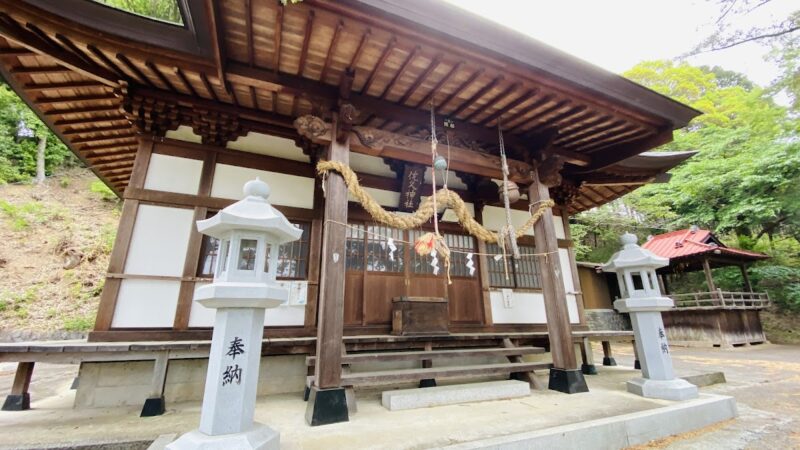
The shrine building, rebuilt after the Great Fire of Kan’ei, is a valuable structure that preserves the architectural style of the Edo period. Composed of a worship hall and a main sanctuary, it has been carefully preserved as the center of local faith.
Grand Torii Gate
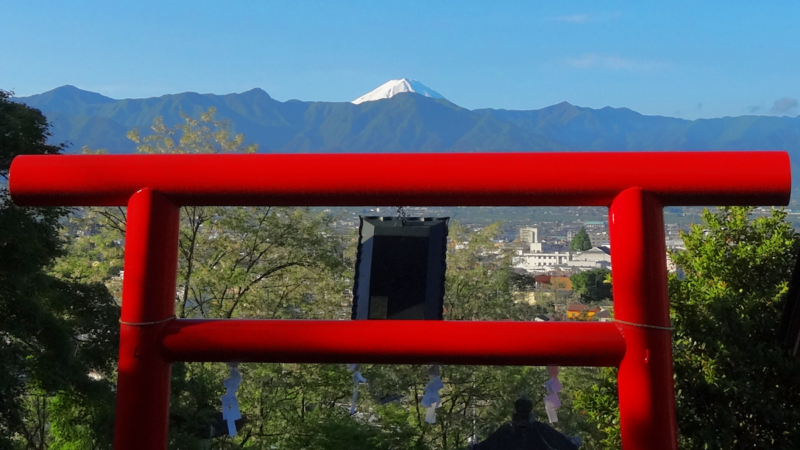
The grand torii gate, rebuilt through donations from parishioners, presents a magnificent presence as the entrance to the sacred grounds welcoming worshippers. Passing through the torii gate, you enter a shrine grounds enveloped in a sacred atmosphere.
Sacred Object
The sacred object, carved by Hashimoto Kuranosuke, a master Buddhist sculptor from Sanjo Bridge in Kyoto, is a valuable cultural asset that showcases the excellent techniques of Edo-period Buddhist sculptors. It is usually enshrined in the main hall, but is sometimes unveiled during special festivals.
Seal Script Plaque
The seal script plaque, donated by Fujiwara no Akimasa, a Gon-Chunagon (Junior Counselor), is an important item that demonstrates the history and status of the shrine. Written in seal script, the plaque is carefully preserved as a cultural asset of high historical value.
Goshuin (Shrine Seal) Information
Goshuin are available at Suga Shrine. Goshuin serve as proof of worship and are important mementos that forge a connection with the shrine.
Features of the Goshuin
The goshuin at Suga Shrine features the calligraphy of “Suga Shrine” and the shrine’s seal. Simple yet dignified, it is a popular memento of worship.
Goshuin (Shrine Seal) Reception
We recommend checking the reception hours and procedures for Goshuin in advance. Since there are times when the reception is unattended, it’s best to inquire beforehand if you wish to be sure to receive one.
Annual Events and Festivals
Sugawara Shrine Autumn Festival
The most important festival at Sugawara Shrine is the Autumn Festival. It attracts many people every year and is a major event in the community.
Highlights of the Autumn Festival:
- Mochi Throwing: A traditional event where good fortune is shared with worshippers.
- Fireworks: A spectacular fireworks display that adds color to the festival.
- Opening of Temple Treasures: The public display of valuable temple treasures that are not usually on display.
- Mikoshi Procession: A procession of portable shrines parading through the community.
The Autumn Festival is an important opportunity to deepen community bonds and is a traditional culture that has been passed down through generations.
Other Annual Events
- Hatsumode (First Shrine Visit of the New Year): A visit to the shrine to pray for a safe and prosperous year.
- Setsubun Festival: Bean-throwing to ward off evil and invite good fortune.
- Reisai (Annual Festival): An important annual festival.
- Shichi-Go-San (Seven-Five-Three Festival): A visit to celebrate the growth of children.
Access Information
Location
1196 Nishihonaka, Makioka-cho, Yamanashi City, Yamanashi Prefecture 404-0007
Access by Car
Using the Chuo Expressway:
- Approximately 20 minutes from Katsunuma IC
- Approximately 25 minutes from Ichinomiya-Misaka IC
Head towards Makioka-cho, Yamanashi City, and aim for the Nishihonaka area. Entering the address into your car navigation system is convenient.
Parking
There is parking space for visitors on or around the shrine grounds, but congestion is expected during festivals. Early arrival is recommended during major events such as the Autumn Festival.
Access by Public Transportation
Nearest Station: JR Chuo Main Line, Yamanashi-shi Station
The shrine is approximately a 15-minute drive from Yamanashi-shi Station. Public transportation access is limited, so taking a taxi is recommended.
Relationship with Other Shrines in Yamanashi City
Besides Suga Shrine, many other shrines are located in Yamanashi City. The following are some of the main shrines in Yamanashi City registered with the Yamanashi Prefectural Shrine Association:
- Oimata Kubohachiman Shrine: One of Yamanashi City’s representative shrines
- Sashideiso Otakeyama Shrine: A shrine known for its panoramic views
- Nishiyama Tenjin Shrine: Another shrine dedicated to Sugawara no Michizane
- Hashiriyu Shrine: A guardian deity of the region
- Tenjin Shrine: Shrines of Tenjin worship scattered throughout the city
Together with these shrines, Suga Shrine forms part of Yamanashi City’s religious culture.
Nearby Tourist Attractions
Highlights of Makioka Town
Makioka Town in Yamanashi City, where Suga Shrine is located, is a region rich in nature and historical culture.
Nishizawa Valley: A hiking spot where you can enjoy the beautiful valley scenery, including the Nanatsugama Godan Falls, selected as one of Japan’s Top 100 Waterfalls.
Kyoho no Sato: Makioka Town is famous as a production area for Kyoho grapes, and you can enjoy fruit picking in the autumn.
Hanakage no Sato Makioka: A roadside station where you can enjoy local specialties and gourmet food.
Yamanashi City Tourism
Fuefukigawa Fruit Park: A park with orchards and an observation deck, offering a spectacular view of the Yamanashi Basin.
Nezu Memorial Hall: A facility that opens the residence of businessman Kaichiro Nezu to the public.
Manriki Park: A place of relaxation for citizens, known as a famous cherry blossom viewing spot.
Manners and Points for Visiting Shrines
Basic Shrine Visiting Etiquette
- Bow before passing through the torii gate.
- Purify your body and mind at the water basin.
- Hold the ladle in your right hand and purify your left hand.
- Switch the ladle to your left hand and purify your right hand.
- Return to your right hand, receive water in your left hand, and rinse your mouth.
- Finally, stand the ladle upright and purify the handle.
- Bow twice, clap twice, and bow once in front of the main hall.
- Recite your wish silently.
- Bow once at the torii gate upon leaving.
Attire for Visiting the Shrine
There are no particularly strict dress code regulations, but it is desirable to wear clothing that reflects the sacred nature of the place. For festivals and special prayers, it is recommended to wear appropriate attire.
Photography
Photography is generally permitted within the shrine grounds, but please refrain from taking pictures inside the main hall or around the sacred object. It is important to check with the shrine office if you have any questions.
Suga Shrine and the Local Community
Suga Shrine is not merely a place of worship, but also functions as the center of the local community. Having existed as the “center of this village” since ancient times, Suga Shrine has played an important role in deepening the bonds among residents.
Parishioner Organization
Local parishioners actively participate in the maintenance and management of the shrine and the operation of festivals. As evidenced by the history of parishioners donating materials to rebuild the shrine after the Great Fire of Kan’ei, the local residents have a deep attachment to the shrine.
Succession Across Generations
Through annual events such as the autumn festival, traditional culture is passed down to younger generations. While incorporating fun elements such as mochi throwing and fireworks, the community’s unity centered around the shrine is maintained.
Network of Sugawara Shrines and Tenjin Shrines in Yamanashi Prefecture
There are several shrines dedicated to Sugawara no Michizane in Yamanashi Prefecture. These form a network of Tenjin worship within the prefecture.
Major Tenjin Shrines
- Sugata Tenjin Shrine (Kamioso, Shioyama, Koshu City): Dedicates Susanoo-no-Mikoto, five male and three female deities, and Sugawara no Michizane.
- Nishiyama Tenjin Shrine (Yamanashi City): Another Tenjin shrine within Yamanashi City.
- Tenjin Shrines in Various Locations: Tenjin shrines exist in multiple districts of Yamanashi City, including Shimokurihara, Shimokaminaigawa, Mikasasho, and Daiku.
These shrines, each with its own unique history and characteristics, are united by the common thread of worshipping the god of learning.
Information for Exam Takers and Students
Timing for Praying for Success
While prayers for success at Suga Shrine are possible year-round, the following times are particularly recommended:
- December-January before exams: Pray together with your first shrine visit of the year
- Immediately before exams: As a final prayer
- After the announcement of results: As a thank-you visit
Amulets for Academic Success
Suga Shrine offers amulets for academic success and prayers for passing exams (we recommend checking the details of the available amulets in advance). By always wearing the amulet, you can feel the protection of Sugawara no Michizane.
Wishes on Ema (Votive Tablets)
By writing your desired school or goal on an ema and offering it, you can convey your wish to the gods. Many exam takers entrust their dreams to ema.
Cultural Value of Suga Shrine
Value as a Historical Building
The shrine building, rebuilt during the Kan’ei era in the early Edo period, is a valuable cultural heritage that conveys the architectural techniques and faith of that time. As a shrine with a history of over 800 years, it is an important presence that tells the story of the region’s history.
Value as a work of art and craft
The sculpture of the sacred object, created by the renowned Kyoto Buddhist sculptor Hashimoto Kuranosuke, is a valuable work that demonstrates the excellent skills of Buddhist sculptors from the Edo period. Furthermore, the seal plaque of Gon-Chunagon Fujiwara Akimasa is preserved as an item of high historical and artistic value.
Festivals as Intangible Cultural Heritage
Annual events, including the autumn festival, can be considered intangible cultural heritage passed down through the region. Traditional events such as mochi throwing and the portable shrine procession are treasures of the region that should be passed down through generations.
Frequently Asked Questions
Q1: When can I receive a Goshuin (shrine stamp) at Suga Shrine?
A1: Regarding the issuance of Goshuin, there are times when the shrine is unattended, so it is recommended to check with the Yamanashi Prefectural Shrine Association or local officials in advance. If you wish to be sure to receive one, it is best to contact them in advance.
Q2: When is the Autumn Festival held?
A2: The specific dates for the Autumn Festival may vary from year to year. The latest information can be found on local bulletin boards, Yamanashi City’s tourist information website, and the Yamanashi Prefectural Shrine Association website.
Q3: Is there parking available?
A3: There is parking available for visitors, but on days when crowds are expected, such as during festivals, we recommend arriving early. Please check details on-site.
Q4: Can I receive prayers for weddings, Shichi-Go-San (children’s festival), etc.?
A4: For various prayers, we recommend contacting the shrine or the Yamanashi Prefectural Shrine Association in advance. Reservations may be required.
Q5: Are Suga Shrine and Sugata Tenjin Shrine the same shrine?
A5: No, they are different shrines. Suga Shrine is located in Nishihonaka, Makioka-cho, Yamanashi City, and Sugata Tenjin Shrine is located in Shioyama Kamioso, Koshu City. Both enshrine Sugawara no Michizane, but they are different shrines.
Summary
Suga Shrine, located in Nishihonaka, Makioka-cho, Yamanashi City, Yamanashi Prefecture, is a historic shrine founded during the Kenkyu era. It enshrines Sugawara no Michizane, the god of learning, and has been a center of faith for the local people for over 800 years.
The shrine, rebuilt through the fervent faith of its parishioners after overcoming the hardship of the Great Fire of Kan’ei, speaks to the strength of the community’s bonds. Valuable cultural artifacts are also preserved, including a sacred object created by a master Buddhist sculptor from Kyoto and a seal inscribed by a Gon-Chunagon (a high-ranking official).
The autumn festival features mochi throwing, fireworks, and the unveiling of temple treasures, attracting many people. This festival is an important traditional culture of the region, passed down through generations.
For students and those preparing for exams, Suga Shrine remains a vital place for praying for academic success and passing exams. For local residents, it serves as a central hub of community.
When visiting Yamanashi City, be sure to visit Suga Shrine and experience its history and traditions. If you put your hands together in prayer in the tranquil temple grounds, you will be able to feel the sacred atmosphere nurtured by 800 years of history.