Suwa Shrine (Fukae-cho, Minamishimabara City, Nagasaki Prefecture) Complete Guide | Deities, History, and Access Information
Suwa Shrine, located in Fukae-cho, Minamishimabara City, Nagasaki Prefecture, is a historical shrine deeply rooted in the local community. This article provides detailed information useful for those considering visiting, from basic information about Suwa Shrine to its enshrined deities, history, grounds, and access methods.
Basic Information about Suwa Shrine
Suwa Shrine, located in Fukae-cho, Minamishimabara City, Nagasaki Prefecture, has long been revered as the local guardian deity. Basic information is summarized below.
Location and Contact Information
- Address: 3142, Fukae-cho, Minamishimabara City, Nagasaki Prefecture 859-1504
- Postal Code: 859-1504
- Corporate Number: 4310005005496
- Detailed Location: Located in the Fukae-cho district of Minamishimabara City, it functions as a central shrine for the local community.
Shrine Overview
Suwa Shrine is an important religious facility in Minamishimabara City, Nagasaki Prefecture, that continues to preserve the traditions of Shinto. As one of the many Suwa Shrines throughout Japan, it conveys the history and culture of the region to the present day. Even in the Reiwa era, it is cherished as a spiritual center for the local residents.
About the Enshrined Deity
The main deity enshrined at Suwa Shrine is Suwa-no-Okami. Suwa-no-Okami is widely worshipped at Suwa Shrines throughout Japan as a god of war and protection against misfortune.
Divine Virtues of Suwa-no-Okami
Suwa-no-Okami is believed to possess the following divine virtues:
- Long-lasting Military Fortune: As a god of war, Suwa-no-Okami bestows strength to overcome challenges and difficulties.
- Protection from Misfortune: Wards off calamities and protects the safety of the home.
- Good Fortune and Prosperity: Guides one towards a positive direction at important junctures in life.
- Abundant Harvest: Also serves as a guardian deity of agriculture.
Suwa faith, with its head shrine being Suwa Grand Shrine in Shinshu (Nagano Prefecture), is a major Shinto faith that spread throughout Japan. Suwa Shrine in Minamishimabara City also follows this tradition and has attracted the faith of the local people.
Origin and History
The origin of Suwa Shrine in Fukae-cho, Minamishimabara City, is deeply intertwined with the history of the region.
Background of Founding
While detailed records regarding the founding date of Suwa Shrine are limited, it is believed to be related to the spread of Suwa faith in Nagasaki Prefecture. In Nagasaki Prefecture, it is known that the Chinzei Taisha Suwa Shrine in Nagasaki City was founded in 1625 (Kanei 2) during the early Edo period, and subsequently, Suwa faith spread throughout the prefecture.
Connection with the Local Community
Fukae Town is located in the southern part of the Shimabara Peninsula and has long been a region where agriculture and fishing thrive. Suwa Shrine, as the local guardian shrine, has fulfilled the following roles:
- Center of Annual Events: A place where local residents gather during seasonal milestones such as New Year’s, spring festivals, and autumn festivals.
- Core of the Local Community: A place that fosters community bonds centered around the shrine.
- Inheritance of Traditional Culture: A role in passing on Shinto traditions and local culture to future generations.
Minamishimabara City was formed through the merger in the Reiwa era, but Suwa Shrine has functioned as a spiritual pillar of the community since the time of its predecessor, Fukae Town.
Shrine Grounds and Highlights
The grounds of Suwa Shrine offer a tranquil space for worship.
Shrine Buildings
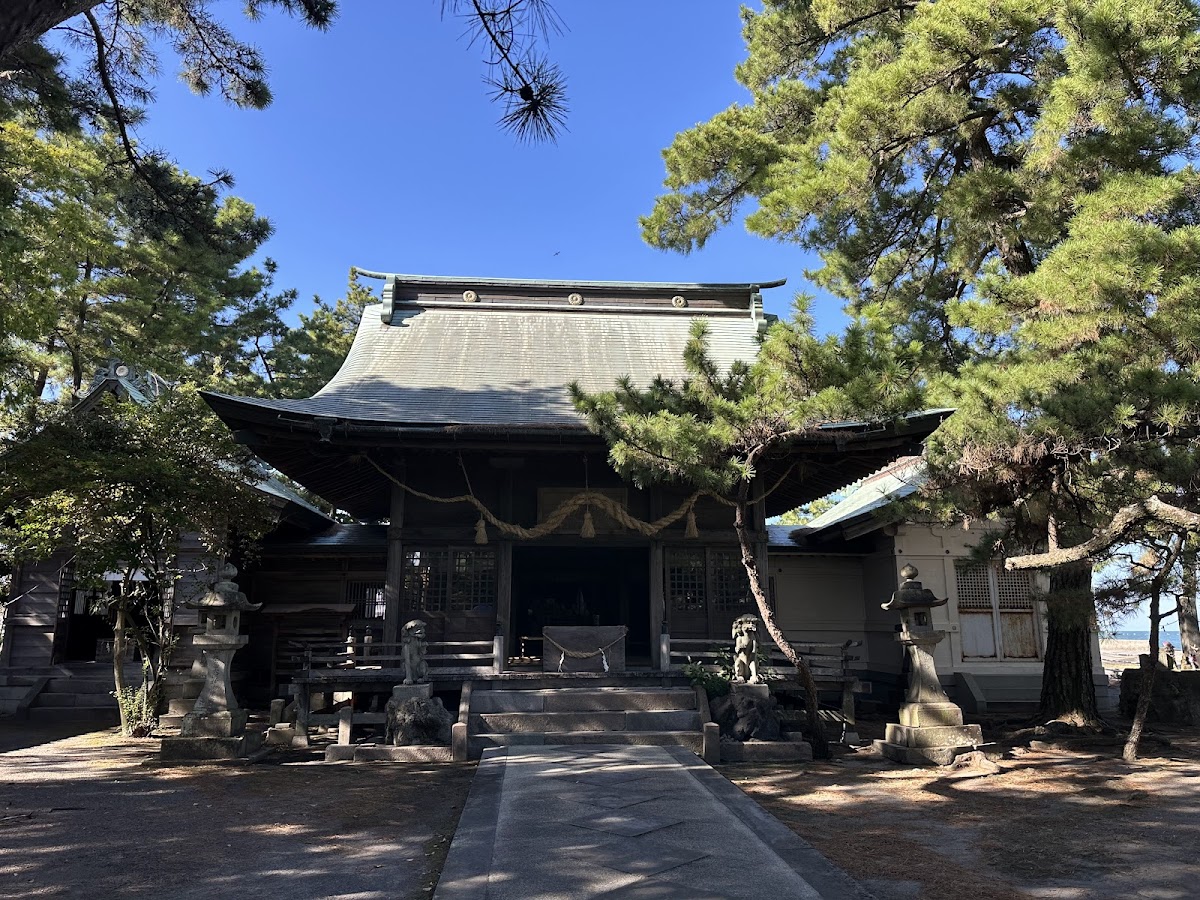
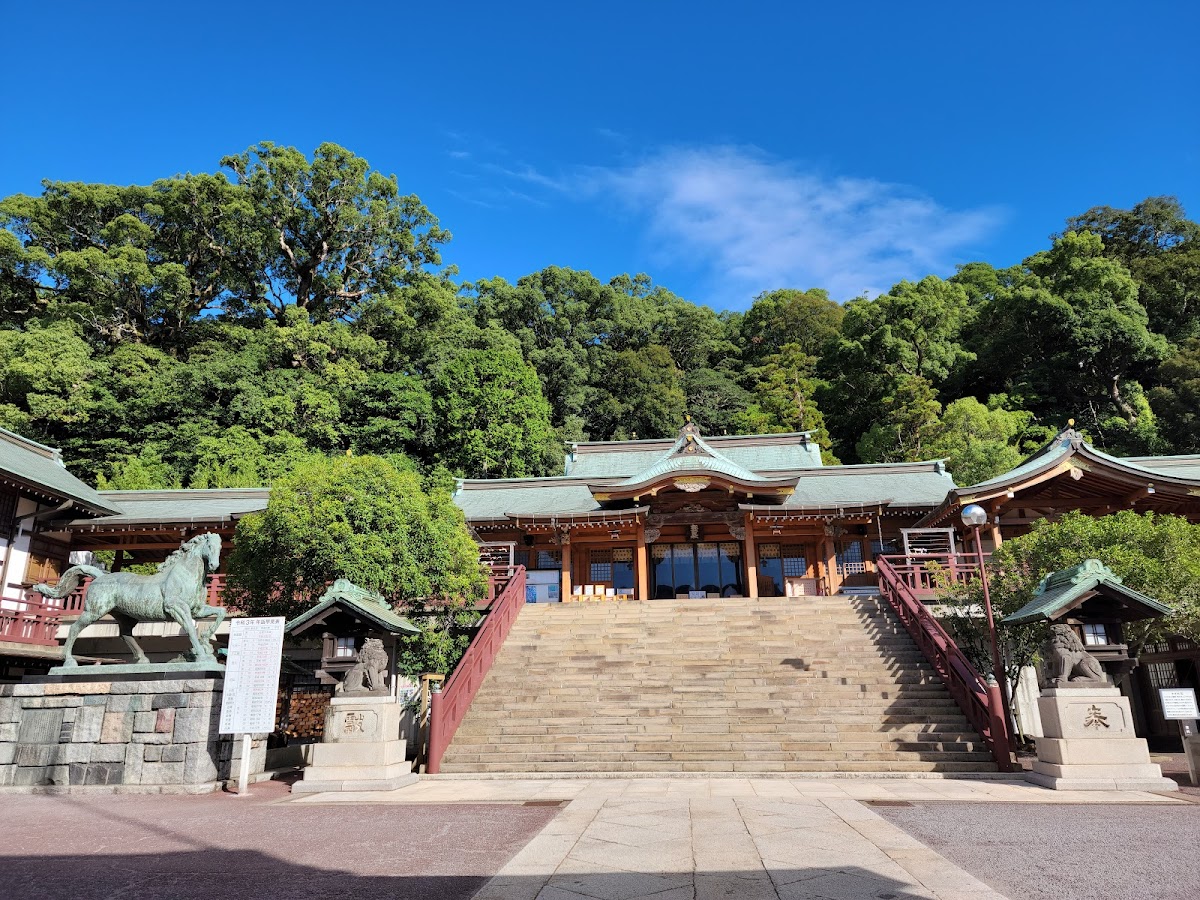
The shrine boasts a traditional shrine architectural style with a main hall and worship hall. It is maintained at an appropriate scale for a local shrine, warmly welcoming visitors.
Shrine Facilities
- Torii Gate: The torii gate marks the entrance to the sacred area, welcoming visitors.
- Temizuya (Water Basin): A place to purify oneself before worship.
- Shamusho (Shrine Office): The place where shrine management and preparations for festivals take place.
- Kaidai Grounds: A public space where local people can gather.
Etiquette for Worship
The basic etiquette for worshipping at a shrine is as follows:
- Bow before passing through the torii gate.
- Purify your hands and mouth at the temizuya.
- Ring the bell in front of the main hall (if present).
- Worship using the two bows, two claps, and one bow ritual.
- Bow towards the shrine after passing through the torii gate on your way out.
This etiquette is common to all shrines throughout Japan, so even first-time visitors can worship with confidence.
Events and Ceremonies
Suwa Shrine holds various Shinto rituals and ceremonies throughout the year.
Main Annual Events
- New Year’s Day (January 1st-3rd): First shrine visit of the year, New Year’s Day Festival
- Spring Festival: Grand spring festival praying for a bountiful harvest
- Summer Purification Ceremony (around June 30th): Shinto ritual to purify oneself of impurities accumulated over the past six months
- Autumn Festival: Grand autumn festival expressing gratitude for the harvest
- Year-End Purification Ceremony (December 31st): Shinto ritual to purify oneself of impurities accumulated over the past year and welcome the new year
These events serve as important opportunities for community interaction at local shrines. For detailed dates, we recommend checking with the shrine office during your visit.
Life Rituals
Suwa Shrine also performs the following Shinto rituals for important life milestones:
- First Shrine Visit: Reporting the birth of a baby to the gods and praying for their healthy growth
- Shichi-Go-San: Celebrating a child’s growth and praying for their future health
- Exorcism: Prayers to ward off misfortune during unlucky years
- Shinto Wedding Ceremony: A traditional wedding ceremony where eternal vows are made before the gods (prior consultation may be required)
If you wish to have these prayers or Shinto rituals performed, we recommend contacting the shrine in advance to confirm the details.
Access Information
We will guide you on how to access Suwa Shrine in Fukae-cho, Minamishimabara City, Nagasaki Prefecture.
Access by Car
From Nagasaki City:
- Approximately 1 hour 30 minutes to 2 hours from central Nagasaki City via National Route 34 and National Route 57
- Approximately 1 hour from Isahaya City, heading south on National Route 57 via the Shimabara Peninsula
From Kumamoto:
- It is also possible to take a ferry from Shimabara Port to Kumamoto Port, or from Shimabara Outer Port to Kuchinotsu Port
- Approximately 15-20 minutes by car from Kuchinotsu Port
Using Car Navigation:
- Address search: “3142 Fukae-cho, Minamishimabara City, Nagasaki Prefecture”
- If phone number search is available, enter the shrine’s contact number
- Or search for “Suwa Shrine, Fukae-cho, Minamishimabara City”
Parking
There are likely parking spaces appropriate to the size of the shrine, but congestion is expected during festivals. It is recommended to check details on-site or inquire in advance.
Access by Public Transportation
Bus routes operate to the Fukae-cho area of Minamishimabara City:
- Shimatetsu Bus: Bus routes connecting within the Shimabara Peninsula are available.
- Access is on foot from the nearest bus stop.
If using public transportation, it is recommended to check the Shimatetsu Bus timetable in advance. Since the number of buses may be limited, careful planning is necessary.
Using Maps on Smartphones
If you have a smartphone, you can easily access the site using the following methods:
- Search for “Suwa Shrine, Fukae-cho, Minamishimabara City” on Google Maps.
- Directly enter the address “3142 Fukae-cho, Minamishimabara City, Nagasaki Prefecture”.
- Using a QR code to scan map information on your smartphone is also convenient.
Map and Aerial Photograph of the Area Around Suwa Shrine
Geographical Location
Suwa Shrine is located in the Fukae-cho area of Minamishimabara City. Fukae-cho is located in the southeastern part of the Shimabara Peninsula, facing the Ariake Sea.
Surrounding Area Characteristics
- Natural Environment: Surrounded by the rich natural environment of the Shimabara Peninsula
- Regional Characteristics: An agricultural area with a close-knit community
- Historical Background: A region that strongly retains the history and culture of the Shimabara Peninsula
For aerial photographs and detailed maps, please search for “3142 Fukae-cho, Minamishimabara City, Nagasaki Prefecture” on online map services (Google Maps, Yahoo! Maps, etc.). This will allow you to understand the exact location of the shrine and its surrounding environment in advance.
List of Nearby Shrines
Many shrines other than Suwa Shrine exist in Minamishimabara City and the surrounding area.
Major Shrines in Minamishimabara City
Minamishimabara City was formed by the merger of eight towns, and historical shrines are scattered throughout each area:
- Fukae-cho Area: Suwa Shrine, as well as local small shrines and tutelary shrines
- Futsu-cho Area: Group of shrines in the Futsu district
- Arie-cho Area: Group of shrines in the Arie district
- Nishi-Arie-cho Area: Group of shrines in the Nishi-Arie district
- Kita-Arima-cho Area: Group of shrines in the Kita-Arima district
- Minami-Arima-cho Area: Group of shrines in the Minami-Arima district
- Kuchinotsu-cho Area: Group of shrines in the Kuchinotsu district
- Katsusa-cho Area: Group of shrines in the Kazusa district
Representative Shrines of the Shimabara Peninsula
The following shrines are also known throughout the Shimabara Peninsula:
- Shimabara City Shrines: Group of shrines related to the Shimabara castle town
- Unzen City Shrines: Shrines in the Unzen Region, including Onsen Shrine
Those who enjoy visiting shrines may want to combine their visits to these shrines. Each shrine conveys the history and culture of the region.
Regarding Goshuin (Shrine Seals)
Collecting Goshuin has become popular in recent years, but it is necessary to check in advance regarding the issuance of Goshuin at Suwa Shrine (Fukae-cho, Minamishimabara City).
Points to Note When Receiving a Goshuin (Shrine/Temple Stamp)
- Prior Confirmation: Since there may not always be a resident priest, it is recommended to confirm in advance.
- Preparing Your Goshuincho (Stamp Book): Bring your goshuincho if you wish to receive a goshuin.
- Pray First: A goshuin is proof of your visit, so always complete your prayers before receiving it.
- Offering Fee: Generally, the going rate is around 300 to 500 yen.
- Manners: Remember that shrines are places of worship, not tourist facilities.
About Suwa Faith in Nagasaki Prefecture
Suwa faith in Nagasaki Prefecture has developed particularly around the Chinzei Taisha Suwa Shrine in Nagasaki City.
Relationship with Chinzei Taisha Suwa Shrine
Nagasaki City’s Suwa Shrine, affectionately known as “Osuwa-san,” has the following characteristics:
- Founding: Founded in 1625 (Kanei 2) with the support of Nagasaki Magistrate Hasegawa Gonroku and Nagasaki Deputy Governor Sueji Heizo.
- Deities Enshrined: Three deities: Suwa Okami (main deity), Morisaki Okami (god of creation and matchmaking), and Sumiyoshi Okami (god of maritime safety and abundant catches).
- Nagasaki Kunchi: An autumn festival held annually from October 7th to 9th, designated as a National Important Intangible Folk Cultural Property.
- Role: Revered as the principal tutelary shrine of Nagasaki, and known as Chinzei Taisha.
Spread throughout the prefecture
Since the founding of Nagasaki City’s Suwa Shrine, Suwa faith has spread throughout the prefecture, and it is believed that the Suwa Shrine in Fukae-cho, Minamishimabara City, has also gathered local faith within this trend. Nationwide, Suwa Shrine is one of the many shrine names, and it ranks highly in the national ranking of shrines with the same name.
About Minamishimabara City
Here is some basic information about Minamishimabara City, where Suwa Shrine is located.
City Overview
- Establishment: Established on March 31, 2006, through the merger of eight towns in Minami-Takaki District (Fukae, Futsu, Ariie, Nishi-Ariie, Kita-Arima, Minami-Arima, Kuchinotsu, and Kazusa).
- Population: Approximately 40,000 (Statistics from the Reiwa era).
- Area: Approximately 170 square kilometers.
- Location: Located in the southern part of the Shimabara Peninsula, facing the Ariake Sea.
Regional Characteristics
- Agriculture: Agriculture thrives, taking advantage of the mild climate.
- History: Home to the Hara Castle ruins, the site of the Shimabara Rebellion, and a component of the World Cultural Heritage site “Hidden Christian Sites in the Nagasaki Region.”
- Tourism: Abundant tourist resources including historical sites, natural landscapes, and hot springs.
- Culture: Traditional festivals and events are passed down in each region.
Characteristics of Fukae Town
Fukae Town, where Suwa Shrine is located, has the following characteristics:
- Location: Located in the northeastern part of Minamishimabara City
- Geography: An area affected by the 1990 eruption of Mount Unzen-Fugen
- Recovery: Having recovered from the eruption disaster, it is now a peaceful rural area
- Community: Strong community ties, and traditional events centered around the shrine are cherished
Manners and Etiquette for Visiting Shrines
We will introduce basic manners and etiquette for visiting shrines.
Attire
- Clean Attire: Dress neatly, as you are visiting a shrine to pay your respects to the gods.
- Modest Attire: Avoid excessive exposure.
- Formal Visit: For those receiving prayers, more formal attire is appropriate.
Points to Note During Shrine Visits
- Photography: Photography is generally permitted on the shrine grounds, but it may be advisable to refrain from taking pictures inside the main hall or during religious ceremonies.
- Respect: Shrines are places of worship, so please refrain from loud conversations.
- Pets: Pet policies vary by shrine, so it is advisable to check beforehand.
- Smoking: Smoking is generally prohibited on the shrine grounds.
- Garbage: Always take your trash with you.
Etiquette for Shrine Visits
- Gratitude: It is important to express gratitude not only for your requests but also for your daily blessings.
- Reverent Attitude: Visit the shrine with respect for the gods.
- Consideration for the Community: Remember that this is also a place of worship for the local community.
Shinto and Japanese Culture
Through a visit to Suwa Shrine, you can deepen your understanding of Shinto, Japan’s traditional faith.
What is Shinto?
Shinto is an ancient Japanese folk religion with the following characteristics:
- Polytheism: Belief in eight million gods
- Nature Worship: The belief that gods reside in nature
- Ancestor Worship: Respecting and honoring ancestors
- Purity: Emphasis on purifying oneself and maintaining purity
- Rituals: Communicating with gods through various festivals and rituals
The Role of Shrines
Shrines are not merely religious facilities, but have the following multifaceted roles:
- Place of Worship: A place to enshrine gods and receive people’s prayers
- Cultural Transmission: Passing on culture to the next generation through traditional festivals and events
- Community Core: A place where local residents gather and deepen their bonds
- Peace of Mind: A place to calm the mind in a tranquil space
- Harmony with Nature: The role of preserving the natural environment as a sacred grove
Combine with sightseeing in Minamishimabara City
We recommend combining a visit to Suwa Shrine with sightseeing in Minamishimabara City.
Main Tourist Spots
- Hara Castle Ruins: A component of the World Cultural Heritage site, the site of the Shimabara-Amakusa Rebellion
- Hinoe Castle Ruins: The site of the Arima clan’s castle
- Kuchinotsu Port: The atmosphere of a historic port town
- Hot Spring Facilities: There are hot spring facilities throughout the city
- Roadside Stations: There are several roadside stations where you can purchase local specialties
Local Products and Gourmet Food
- Somen Noodles: The Shimabara Peninsula is famous as a production area for somen noodles
- Seafood: Fresh seafood from the Ariake Sea
- Agricultural Products: Vegetables and fruits grown in the warm climate
- Guzoni: A local dish of the Shimabara Peninsula
Summary
Suwa Shrine, located in Fukae-cho, Minamishimabara City, Nagasaki Prefecture, is a historic shrine that has long been revered as the guardian deity of the region. This shrine enshrines Suwa-no-Okami, the god of war and protection against misfortune, and serves as a spiritual center for the local people.
In its tranquil grounds, you can find peace of mind during your visit and experience Shinto, a traditional Japanese culture. When you visit Minamishimabara City, be sure to stop by Suwa Shrine. You will be able to experience the region’s history and culture, as well as the faith of its people.
When visiting, please observe proper etiquette and approach the deity with reverence. We hope your visit to Suwa Shrine will be a enriching experience.