
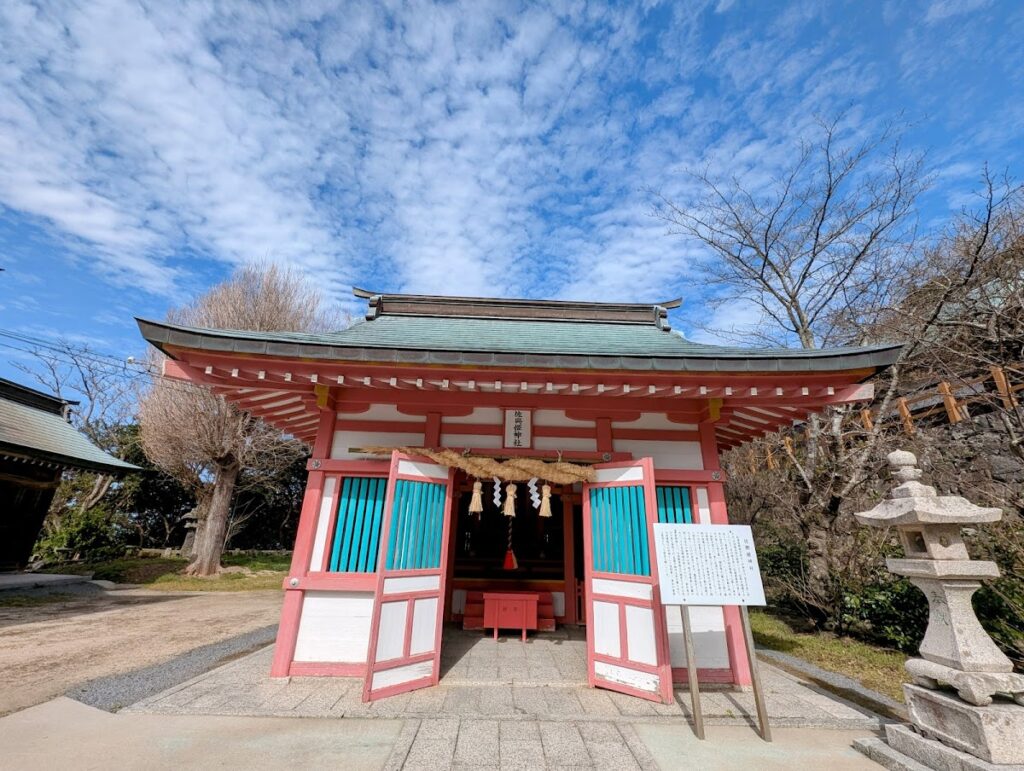
Tajima Shrine Complete Guide | The Oldest Maritime Guardian Deity of Hizen and the Sacred Site of the Sayohime Legend
Tajima Shrine, located on Kabeshima Island in Yobuko-cho, Karatsu City, Saga Prefecture, is a historically significant shrine said to be the oldest in Hizen Province. Standing in a place with a spectacular view overlooking the Genkai Sea, this shrine has been revered since ancient times as the guardian deity of maritime traffic, and it is said that envoys to the Sui and Tang dynasties prayed here for safe voyages. This article comprehensively introduces information you should know before visiting Tajima Shrine, including its history, enshrined deities, highlights, access methods, and surrounding tourist spots.
What is Tajima Shrine? An Overview of the Oldest Shrine in Hizen
Tajima Shrine is located at 3956 Kabeshima Island, Yobuko-cho, Karatsu City, Saga Prefecture, and corresponds to the land of the Malu Kingdom mentioned in the Wei Zhi Woren Zhuan (Records of the Three Kingdoms, Account of the Wa People). Founded in the late Yayoi period, and believed to have already been established during the Tenpyo era (late 7th to mid-8th century), it is one of the oldest shrines in Hizen Province.
Located at a key point on the safest sea route to the continent, it has been highly valued by the central government since ancient times. It is widely revered as a guardian deity of the Genkai Sea, a place where Matsuura pirates and Genkai fishermen sought refuge during maritime crises.
Even today, it attracts many worshippers seeking prosperity in business and safe travels, and remains a beloved center of local faith.
Deities and Benefits | Guardian Deities of the Sea: The Tajima Three Goddesses
Main Deities: The Tajima Three Goddesses (Munakata Three Goddesses)
The main deities of Tajima Shrine are the three goddesses known as the Tajima Three Goddesses. Also known as the Munakata Three Goddesses, the following deities are enshrined here:
- Tagorihime-no-Mikoto: The principal deity enshrined in the central, first seat.
- Ichikishima-hime-no-Mikoto: Also known as the goddess of beauty.
- Tagitsu-hime-no-Mikoto: Presides over the protection of the sea.
These goddesses are deities born from the oath between Amaterasu-Omikami and Susanoo-no-Mikoto, and have been revered since ancient times as guardians of maritime traffic and safe voyages.
Enshrined Deities
In addition to the principal deities, the following deities are also enshrined:
- Oyamatsumi-no-Kami: God of mountains and sake brewing.
- Wakatakeru-no-O-no-Mikoto: Guardian deity of the region.
Benefits
Tajima Shrine is particularly known for the following benefits:
- Maritime Safety and Navigation Safety
- Traffic Safety
- Business Prosperity
- Protection of Fisheries
- Matchmaking
- Prayer for Safe Childbirth
History of Tajima Shrine | An Ancient Shrine Where Envoys to Tang China Also Prayed
History of Faith Continuing from Ancient Times
The founding of Tajima Shrine is uncertain, but it is said to date back to the late Yayoi period. Located in the land of Matsuro-koku, mentioned in the Wei Zhi Woren Zhuan (Records of the Three Kingdoms, Account of the Wa People), it has played an important role as a key point of exchange with the continent since ancient times.
It is believed to have been established as early as the Tenpyo period, and it is said that envoys to Sui and Tang China always visited Tajima Shrine to pray for safe voyages before crossing to the continent. In the dangerous voyages across the rough waves of the Genkai Sea, this shrine was a spiritual haven for seafarers.
The Matsuura Clan and Tajima Shrine
In the Middle Ages, a group of pirates (naval forces) called the Matsuura Clan controlled this region. They made their living from maritime traffic and deeply revered Tajima Shrine as their guardian deity of the sea. Numerous anecdotes remain of the Matsuura clan’s pirate crews seeking solace from the three goddesses of Tajima Shrine when facing danger at sea.
Donations by Minamoto no Yorimitsu and Toyotomi Hideyoshi
Essential to understanding the history of Tajima Shrine are the donations made by successive powerful figures.
It is said that Minamoto no Yorimitsu, a military commander of the Heian period, donated a sword to Tajima Shrine. This sword is now designated as a National Important Cultural Property and is carefully preserved as a treasure of the shrine.
Furthermore, Toyotomi Hideyoshi also visited Tajima Shrine during his invasion of Korea (the Bunroku-Keicho War) and donated a stone torii gate. This torii gate still remains on the shrine grounds and is a valuable cultural asset that conveys the weight of history.
The Mongol Invasions and Tajima Shrine
Tajima Shrine played a crucial role during the Mongol invasions of Japan in the Kamakura period. An anchor stone believed to have been used during the invasion remains on the shrine grounds, testifying to the region’s position as the front line of Japan’s defense.
Highlights of the Shrine Grounds | Important Cultural Properties and a Mystical Atmosphere
Main Hall and Worship Hall
The main hall of Tajima Shrine is a magnificent shrine building with an architectural style unique to the Hizen region. The beautiful vermilion-painted shrine stands out against the blue sea and sky of the Genkai Sea, creating a sacred atmosphere. From the worship hall, visitors can enjoy a spectacular view of the coastline of Kabeshima Island and the Genkai Sea, soothing the hearts of worshippers.
Important Cultural Property: Sword
The sword, believed to have been donated by Minamoto no Yorimitsu, is designated as a National Important Cultural Property. It is a valuable cultural asset that conveys the excellent sword-making techniques of the Heian period and is usually stored in the shrine’s treasure hall. Since it is sometimes open to the public on special occasions, we recommend checking in advance.
Stone Torii Gate Donated by Toyotomi Hideyoshi
The stone torii gate standing at the entrance to the temple grounds is a historical structure said to have been donated by Toyotomi Hideyoshi. Even after more than 400 years, it still stands majestically welcoming visitors, allowing you to feel the history of the Sengoku period firsthand.
Taiko Stone
Within the temple grounds is a massive stone called the “Taiko Stone.” Legend says that Toyotomi Hideyoshi sat on this stone, and it is a popular power spot, attracting many visitors.
Anchor Stone from the Mongol Invasions
An anchor stone believed to have been used during the Mongol invasions is also preserved on the temple grounds. It is a valuable artifact that conveys 13th-century history and is an important document in discussing Japan’s defense history.
Sayohime Shrine and the Legend of Sayohime | A Tragic Love Story
About Sayohime Shrine
Within the grounds of Tajima Shrine is a subsidiary shrine called Sayohime Shrine. This shrine is associated with a poignant legend about a woman named Matsuura Sayohime.
The Legend of Matsuura Sayohime
The legend of Sayohime is an ancient tragic love story recorded in the *Hizen Fudoki* and the *Manyoshu*.
According to the story, when Otomo no Sadehiko, an official of the Yamato court, visited the Matsuura area on his way to conquer Silla, he fell in love with Matsuura Sayohime, the daughter of a local powerful family. However, Sadehiko had to set sail for his mission.
Sayohime, regretting their parting, climbed a mountain, waving her scarf (hire: a part of ancient clothing), and watched the ship sail away. The legend says that she turned to stone in her grief.
The Bofu Stone
The Bofu Stone, said to be the stone that Princess Sayohime turned into, still remains near the coast of Kabeshima Island. Standing as if gazing out at the sea, this stone symbolizes eternal love and has become a power spot visited by people wishing for matchmaking and successful romance.
Princess Sayohime in the Manyoshu
The story of Princess Sayohime is included in several poems in the Manyoshu anthology. Poets such as Yamanoe Okura composed poems expressing Princess Sayohime’s sorrow, and her story holds an important place in the history of Japanese literature.
Festivals and Events of Tajima Shrine
Annual Festival (September 16th)
The most important festival of Tajima Shrine is the annual festival held on September 16th. Local people gather to pray for a bountiful harvest, maritime safety, and the prosperity of the region. Traditional Shinto rituals are solemnly performed, preserving the local culture to this day.
Tajima Shrine Summer Purification Festival
The Summer Purification Festival is an important Shinto ritual held during the summer. It’s a traditional event to purify oneself of the impurities accumulated over the past six months and pray for good health and protection from illness for the remaining half of the year. Ritual ceremonies, such as passing through a ring of reeds, are performed. For the local people, it’s an important event that marks the changing of the seasons.
First Shrine Visit of the New Year
Many worshippers from both within and outside Karatsu City visit the shrine for their first shrine visit of the new year. It’s bustling with people praying for safe voyages, traffic safety, and business prosperity in the new year. It gets especially crowded from New Year’s Day to the third day, so it’s recommended to allow plenty of time for your visit.
Access and Visiting Information
Location
Address: 3956 Kabeshima, Yobuko-cho, Karatsu City, Saga Prefecture 847-0305
Access by Car
- From Fukuoka City: Fukuoka Urban Expressway → Nishi-Kyushu Expressway → Karatsu IC → National Route 204 → Yobuko → Yobuko Bridge → Kabeshima (approx. 1 hour 30 minutes)
- From Karatsu City: Head north on National Route 204 → Yobuko → Yobuko Bridge → Kabeshima (approx. 30 minutes)
- Parking: Free parking available near the shrine (limited spaces, so be aware of congestion)
Access by Public Transportation
- From JR Karatsu Station, take the Showa Bus bound for “Yobuko” → Get off at the “Yobuko” bus stop (approx. 30 minutes)
- From the Yobuko bus stop, take the bus bound for Tajima Shrine → Get off at “Tajima Shrine” (approx. 15 minutes)
- Since bus services are limited, we recommend checking the timetable in advance.
Visiting Hours
- Shrine Grounds: Open all day (however, there is no lighting at night, so daytime visits are recommended)
- Shrine Office: 9:00 AM to 5:00 PM (They may be absent, so if you wish to receive a Goshuin (shrine stamp), we recommend contacting them in advance)
Goshuin and Amulets
Tajima Shrine offers Goshuin, but the shrine office may be unattended. If you definitely want a Goshuin, we recommend calling ahead to confirm.
Amulets are available in various types, including those for maritime safety, traffic safety, and business prosperity.
Precautions During Visits
- The shrine grounds are a sacred place. Please visit quietly.
- As it is located along the coast, we recommend taking precautions against the cold on windy days.
- There are stone steps and slopes, so please wear comfortable shoes.
- Please refrain from bringing pets to the shrine.
What to do next? Complete Guide to Nearby Tourist Spots
After visiting Tajima Shrine, we recommend exploring the attractive tourist spots around Kabeshima Island and Yobuko.
Wind-Viewing Hill Park
Located on a hill on Kabeshima Island, Wind-Viewing Hill Park offers a spectacular panoramic view of the Genkai Sea. The beautiful scenery created by the blue sea and sky captivates visitors. The view at sunset is particularly exceptional and is a popular spot for photography. The park has observation decks and benches, allowing visitors to enjoy the scenery at their leisure.
Suginohara Pasture
At Suginohara Pasture, spread across the vast grasslands of Kabeshima Island, you can enjoy an idyllic scene of cows peacefully grazing. The green grasslands stretching out against the backdrop of the Genkai Sea are breathtakingly beautiful, like a painting. Walking paths are also maintained around the pasture, making it perfect for a stroll while enjoying the sea breeze.
Yobuko Bridge
Connecting the mainland to Kabeshima Island is the Yobuko Bridge, a beautiful arch bridge approximately 728 meters long. From the bridge, you can enjoy spectacular views of Yobuko Bay and the Genkai Sea. There’s also parking space at the base of the bridge, making it a popular spot for commemorative photos.
Otomo-no-Hama Kyaranko Beach
Located on Kabeshima Island, Otomo-no-Hama Kyaranko Beach is a hidden gem with crystal-clear water and beautiful white sand. While it gets crowded with swimmers in the summer, its relatively quiet and peaceful atmosphere is a major draw. It’s also an ideal spot for snorkeling and beachcombing.
Chizu Coffee
Chizu Coffee, a hidden gem on Kabeshima Island, is a popular spot where you can enjoy carefully selected coffee and homemade sweets. It’s the perfect place to relax while gazing at the sea, ideal for a break after visiting Tajima Shrine. Their lunch menu, featuring local ingredients, is also highly regarded.
Ika Doraku
Yobuko is famous for its “live squid sashimi.” Ika Doraku is a popular restaurant where you can enjoy fresh seafood dishes, including their signature transparent live squid sashimi. The squid caught that morning is exceptionally clear and has a wonderfully firm texture. It’s also a nice touch that any leftover squid can be made into tempura.
Live Seafood Restaurant Isaribi
Isaribi boasts dishes made with fresh seafood caught in the Genkai Sea. The fish, sourced directly from local fishermen, is incredibly fresh and can be enjoyed in various ways, including sashimi, simmered dishes, and grilled dishes. Their local fish set meals, in particular, are highly regarded for allowing customers to savor seasonal fish.
Momototo Vesper
Momototo Vesper, a modern cafe and bar in Yobuko, operates as a cafe during the day and a bar at night, offering a sophisticated atmosphere. Enjoy creative dishes and sweets made with local ingredients, as well as carefully selected drinks. Recommended for those who want to enjoy a leisurely meal in a stylish setting.
Recommended Itinerary for Visiting Tajima Shrine
Half-Day Sightseeing Plan
Morning
- 10:00 Arrive at Tajima Shrine and visit (1 hour)
- 11:00 Visit Sayohime Shrine and the Bofuishi Stone (30 minutes)
- 11:30 Enjoy the spectacular view at Kaze no Mieru Oka Park (30 minutes)
- 12:00 Lunch of fresh squid sashimi in Yobuko (1 hour)
Afternoon
- 13:00 Stroll through Yobuko’s morning market (30 minutes)
- 13:30 Cafe time at Chizu Coffee (30 minutes)
- 14:00 Departure
Full-Day Itinerary
Morning
- 9:00 Arrive in Yobuko and stroll through the morning market (1 hour)
- 10:00 Visit Tajima Shrine (1 hour)
- 11:00 Sayohime Shrine and the Watafu Stone Tour (30 minutes)
- 11:30 Stroll through Suginohara Pasture (30 minutes)
Afternoon
- 12:00 Lunch at Ika Doraku (1 hour)
- 13:00 Playing in the sea at Otomo no Hama Kyaranko Beach (2 hours)
- 15:00 Enjoying the spectacular view at Kaze no Mieru Oka Park (30 minutes)
- 15:30 Cafe time at Chizu Coffee (1 hour)
- 16:30 Commemorative photo at Yobuko Ohashi Bridge (30 minutes)
- 17:00 Disbandment
Tips for enjoying the charm of Tajima Shrine to the fullest
Best Season
Tajima Shrine has beauty in every season, but the following times are especially recommended:
- Spring (March-May): A warm and pleasant season with beautiful fresh greenery. The sea is calm, making it ideal for sightseeing.
- Autumn (September-November): September, when the annual festival is held, is a great opportunity to experience local culture. On clear autumn days, you can enjoy spectacular views.
- Winter (December-February): There are fewer people, allowing for a peaceful visit. However, the sea breeze is strong and cold, so warm clothing is essential.
Photography Tips
- Taking a photo of the main shrine building with the Genkai Sea in the background will capture the beauty of the shrine’s location.
- Visiting early in the morning means fewer people, and the shrine grounds, illuminated by the morning sun, glow with a mystical glow.
- The view from the Yobuko Bridge at dusk offers a beautiful silhouette of Tajima Shrine and Kabeshima Island.
Interacting with Locals
The people of Kabeshima and Yobuko are warm and friendly to tourists. Through communication with locals, you may discover hidden spots and delicious restaurants not listed in tourist guides.
Summary: Tajima Shrine is a Special Place Where History and Romance Intersect
Tajima Shrine is not merely a tourist spot; it’s a precious place where you can experience firsthand the history of Japanese maritime worship that has continued from ancient times to the present day. The solemn atmosphere of this shrine, considered the oldest in Hizen Province, the weight of history where even envoys to Tang China prayed, the poignant romance of the Sayohime legend, and the breathtaking views of the Genkai Sea create a space that deeply moves visitors.
Whether you visit to pray for business prosperity or traffic safety as a guardian deity of the sea, or for historical exploration, a literary stroll, or simply to enjoy the beautiful scenery, Tajima Shrine is a multifaceted shrine with many ways to enjoy it.
Combining a visit with the squid cuisine of Yobuko or the scenic spots of Kabeshima Island will create even more fulfilling travel memories. When visiting Karatsu City in Saga Prefecture, be sure to visit Tajima Shrine and experience the special blend of timeless history and beautiful nature.
As you feel the breeze of the Genkai Sea and gaze upon the same ocean that ancient people saw, you will be enveloped in a mysterious feeling that transcends time and space. Tajima Shrine is a sacred place that will leave a lasting impression, where you can spend such a special time.

