Takaanaho Shrine (Otsu City, Shiga Prefecture) Complete Guide | Visiting the Ancient Palace Site Associated with Emperor Keiko
Located in Anou, Otsu City, Shiga Prefecture, Takaanaho Shrine is a historically significant shrine said to be the site of the “Shiga Takaanaho Palace,” built approximately 2000 years ago by the 12th Emperor Keiko. Within its quiet grounds, surrounded by residential areas, stand stone monuments and shrine buildings that evoke the atmosphere of ancient times, and it is affectionately known locally as “Ozenno-san.”
This article comprehensively introduces information you should know before visiting Takaanaho Shrine, including its enshrined deities, historical background, highlights of the grounds, annual festivals, and detailed access information.
Deities Enshrined at Takaanaho Shrine
The deities enshrined at Takaanaho Shrine are as follows:
Main Deity
- Emperor Keikō: The 12th Emperor. Known as the father of Yamato Takeru no Mikoto, he is said to have established the Shiga Takanaho Palace.
Enshrined Deities
- Emperor Seimu: The 13th Emperor. A son of Emperor Keikō, he is said to have ascended to the throne in this area.
- Yamato Takeru no Mikoto: A son of Emperor Keikō, a legendary hero who played an active role in the eastern and western campaigns.
These enshrined deities are all members of the imperial family who played important roles in the history of ancient Japan, indicating that this shrine is a sacred site associated with the imperial family.
History of Shiga Takanaho Palace and Takanaho Shrine
Shiga Takanaho Palace as an Ancient Imperial Capital
According to the *Nihon Shoki* (Chronicles of Japan), Emperor Keiko established the “Shiga Takanaho Palace” in this area during his reign. Although no specific archaeological remains have been confirmed, the place name Anaho and the surrounding topography suggest that this area may have been an ancient imperial capital.
The name “Anaho” was used in ancient times to indicate a sacred place or a noble palace, suggesting that this area held special significance.
Establishment and Evolution as a Shrine
The founding date of Takanaho Shrine is unclear, but it is believed to have been worshipped as a sacred site commemorating the palace since ancient times. During the Edo period, it was called Zenno Daimyojin, and even today, it is affectionately known as “Ozenno-san” by the locals.
Following the Meiji-era separation of Shinto and Buddhism, the shrine adopted its current name and continues to be revered as the local guardian deity.
Relationship with Emperor Seimu
Within the shrine grounds stands a large stone monument inscribed with “Shiga Takanaho Palace,” which is believed to mark the site of Emperor Seimu’s palace. Emperor Seimu was a son of Emperor Keiko, and there is a tradition that he ascended to the throne in this area. Therefore, the shrine is considered important not only as a place associated with Emperor Keiko but also with Emperor Seimu.
Highlights of the Shrine Grounds
Shiga Takanaho Palace Stone Monument
The large stone monument located at the very back of the shrine grounds, behind the main hall, is the main highlight of a visit to Takanaho Shrine. This monument is inscribed with “Shiga Takanaho Palace,” and is a valuable historical site that conveys the existence of an ancient palace approximately 2000 years ago.
Standing before the monument, one can contemplate the era when ancient emperors ruled this land, creating a space where one can feel the romance of history.
Main Shrine and Worship Hall
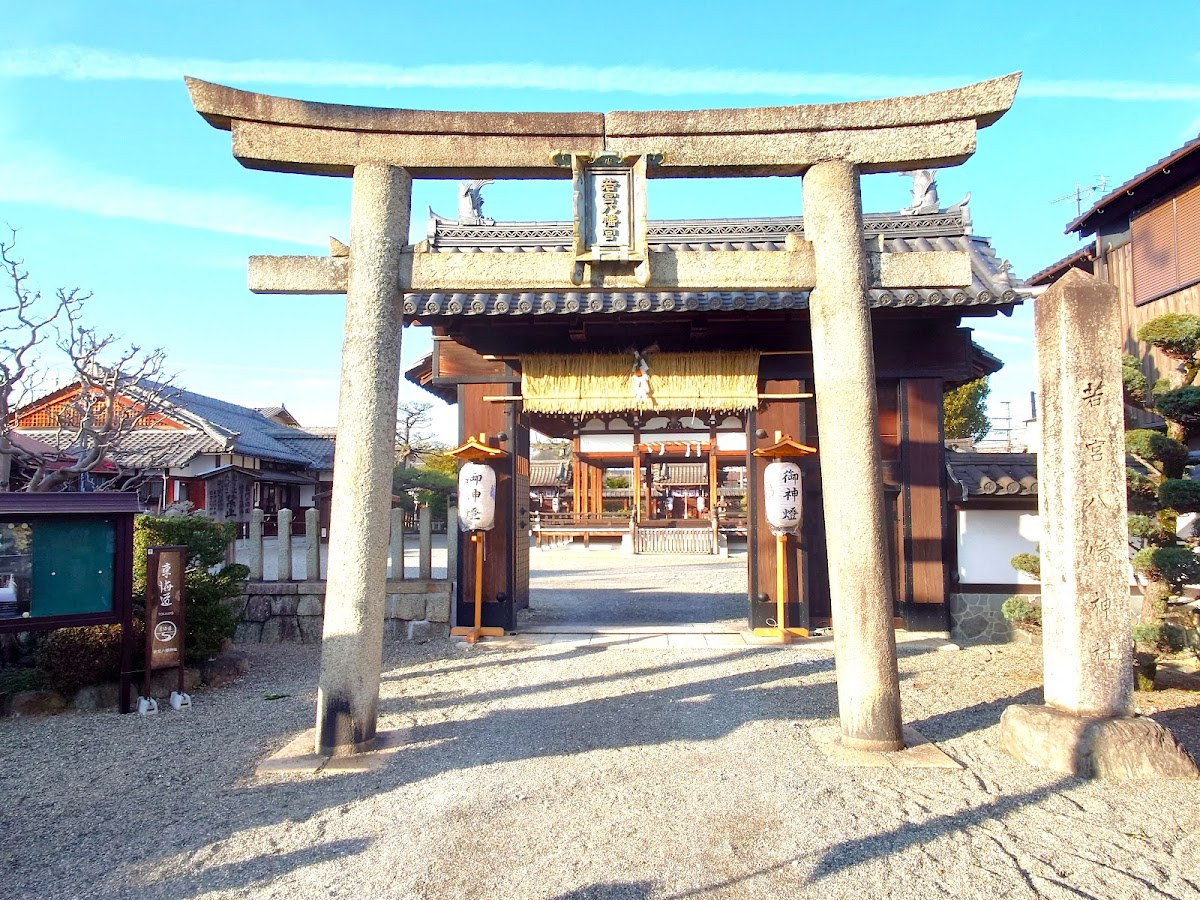
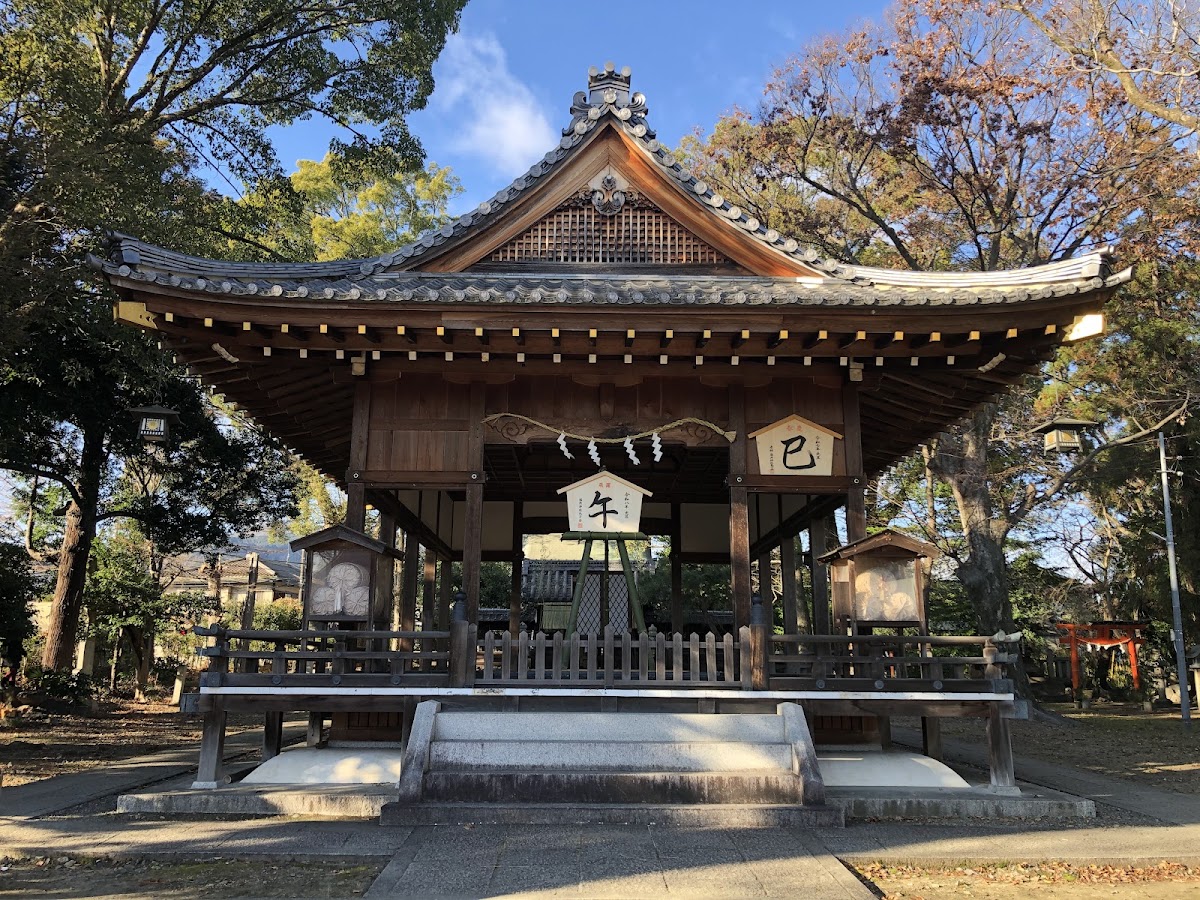
The shrine buildings of Takanaho Shrine maintain a solemn atmosphere despite being located in a residential area. The main shrine, though relatively compact, is meticulously maintained, reflecting the deep faith of the local people.
At the worship hall, one can pray in peace, escaping the hustle and bustle of the city and finding solace.
Forest and Nature within the Shrine Grounds
The forest surrounding Takanaho Shrine is located just east of Anao Station on the Keihan Electric Railway Ishiyama Line. Although surrounded by houses, the forest remains lush and green, making it a valuable natural space in an urban area.
Especially from spring to early summer, the trees are beautifully green, allowing for a peaceful and enjoyable visit.
A Historic Approach
Despite being just a two-minute walk from the station, stepping onto the approach to the shrine evokes a sense of stillness, as if time has stopped. As you ascend the stone steps and pass through the torii gate, you can feel the presence of the gods who have protected this land since ancient times.
List of Festivals and Events at Takanaho Shrine (2026)
Takanaho Shrine holds various festivals and events throughout the year. The following is a list of the main annual events (※Dates are subject to change, so we recommend checking before your visit).
January
- New Year’s Day Festival: January 1st, a festival celebrating the New Year
- First Shrine Visit of the Year: January 1st-3rd, bustling with many worshippers
February
- Setsubun Festival: Around February 3rd, prayers for protection from evil and good fortune
April
- Spring Festival: Mid-April, a festival to give thanks for the arrival of spring
July
- Summer Purification Ceremony: June 30th or early July, a Shinto ritual to purify oneself of the impurities accumulated over the past six months
October
- Autumn Festival: Mid-October, the most important festival to give thanks for a bountiful harvest
- Portable Shrine Procession: Sometimes held in conjunction with the festival
December
- Year-End Purification Ceremony: December 31st, a ceremony to purify oneself of the year’s impurities and prepare for the New Year.
As a shrine deeply rooted in the community, parishioners and local residents participate in these ceremonies, ensuring the continuation of tradition.
Access to Takanaho Shrine
Location
1-3-1 Anao, Otsu City, Shiga Prefecture 520-0007
Takanaho Shrine is located in the Anao district in northern Otsu City, midway between Kyoto and Otsu. It is near the foot of Mount Hiei and has long flourished as a transportation hub.
Nearest Station/Line
Access by Train
The nearest station is Anao Station on the Keihan Electric Railway Ishiyama Line.
- Approximately 2 minutes on foot from Exit 2 of Anao Station
- Upon exiting the station and heading east, you will immediately see the shrine’s forest.
- It is very easily accessible, and even first-time visitors can arrive without getting lost.
Access from Major Stations
From Kyoto:
- JR Kyoto Station → JR Kosei Line, get off at “Otsukyo Station” → Transfer to Keihan Electric Railway Ishiyama Line, get off at “Anao Station” (2 minutes on foot)
- Keihan Electric Railway Keishin Line, get off at “Misasagi Station” → Take the Ishiyama Line directly to “Anao Station” (2 minutes on foot)
From Otsu:
- JR Otsu Station → Walk to Keihan Electric Railway Ishiyama Line, get off at “Biwako-Hamaotsu Station” → “Anao Station” (2 minutes on foot)
- Approximately 10 minutes from Keihan Electric Railway Ishiyama Line, “Hamaotsu Station,” to reach Anao Station.
Nearest Bus Stops and Routes
While bus access is possible, the train is more convenient.
Kojaku Kotsu Bus:
- Get off at the “Anō” bus stop, approximately 3 minutes on foot.
- Bus routes are available from JR Katata Station and the Hieizan Sakamoto area.
Keihan Bus:
- Get off at the “Anō” bus stop, approximately 3 minutes on foot.
- Bus routes operate from Kyoto City and Otsu City.
Access by Car
Meishin Expressway:
- Approximately 15 minutes from “Kyoto East IC”
- Approximately 20 minutes from “Otsu IC”
Parking:
- There is no large parking lot dedicated to the shrine.
- We recommend using nearby coin parking or public transportation.
- Temporary parking may be provided during festivals.
Exploring the Surrounding Area on Foot
The area around Anō Station is known as the base of a group of stonemasons called “Anō-shū,” and is famous for its unique stone wall technique called Anō-zumi. After visiting Takanaho Shrine, we recommend exploring the surrounding historical sites on foot.
- Hiyoshi Taisha Shrine: Approximately 15 minutes on foot, the head shrine of all Hiyoshi, Hie, and Sanno shrines nationwide.
- Former Chikurin-in Temple: Approximately 20 minutes on foot, a temple with a beautiful garden.
- Sakamoto Townscape: Within walking distance, enjoy the beautiful historical landscape with its stone walls.
Points and Manners for Visiting
Visiting Hours
Takanaho Shrine is generally open for worship all day. However, the shrine office has limited hours, so it is recommended to check in advance if you wish to obtain a goshuin (shrine stamp) or amulet.
Clothing and Belongings
- There are no specific dress code requirements, but please dress appropriately as this is a sacred place.
- There are stone steps within the grounds, so we recommend wearing comfortable shoes.
- Don’t forget sun protection in the summer and warm clothing in the winter.
Photography
Photography is generally permitted within the grounds, but please note the following:
- Please refrain from taking photos inside the main hall.
- Please be considerate of other visitors.
- Please obtain permission in advance before taking photos during religious ceremonies.
Nearby Tourist Attractions
Hiyoshi Taisha Shrine
The head shrine of approximately 3,800 Hiyoshi, Hie, and Sanno shrines nationwide. The vast grounds contain many important cultural properties, including the national treasures, the East and West Main Halls. It is about a 15-minute walk from Takanaho Shrine, and visiting both is recommended.
Enryaku-ji Temple on Mount Hiei
The head temple of the Tendai sect, registered as a World Cultural Heritage site. Access to the mountaintop via the Sakamoto Cable Car allows you to enjoy breathtaking panoramic views of Lake Biwa and solemn Buddhist architecture.
Former Chikurin-in Temple
A temple with a beautiful garden designated as a national scenic spot. Enjoy the scenery throughout the seasons, especially the magnificent autumn foliage.
Anō-shū Stone Walls
In the Sakamoto area, magnificent stone walls built by a group of stonemasons known as the Anō-shū still remain. Their skillful technique of combining natural stones was also used in the construction of castles such as Azuchi Castle and Osaka Castle.
Cultural Significance of Takanaho Shrine
Importance in Ancient History Research
Takanaho Shrine is a valuable site that preserves the location of the ancient capital as recorded in historical documents. Although no archaeological remains have been confirmed, the place name and legends provide important clues for the study of ancient history.
Center of Local Religion
Affectionately known as “Ozenno-san” by locals, it serves as a spiritual pillar of the community. Many parishioners participate in festivals, ensuring that traditions are passed down through generations.
Inheritance of Emperor Keiko’s Legends
As a shrine that preserves legends related to Emperor Keiko and Yamato Takeru, it is an important pilgrimage site for those interested in Japanese mythology and ancient history.
Visitor Feedback
Visitors to Takanaho Shrine have shared the following impressions:
- “The tranquility was unbelievable, considering it’s only a two-minute walk from the station; it was truly refreshing.”
- “Seeing the stone monument of Shiga Takanaho Palace allowed me to reflect on ancient romance.”
- “I could feel the atmosphere of how much the shrine is cherished by the local people.”
- “Visiting it along with Hiyoshi Taisha Shrine made for a fulfilling historical walk.”
Summary
Takanaho Shrine, located in Anao, Otsu City, Shiga Prefecture, is a historically significant shrine said to be the site of Emperor Keiko’s Shiga Takanaho Palace. Despite its convenient location just a two-minute walk from Anao Station on the Keihan Electric Railway Ishiyama Line, the shrine grounds offer a serene space that evokes the atmosphere of ancient times.
Enshrining Emperor Keiko, Emperor Seimu, and Yamato Takeru, it is a precious sacred site that conveys the history of ancient Japan, welcoming not only history enthusiasts but also many visitors seeking peace of mind. The surrounding area is dotted with famous historical and cultural sites representing Japan, such as Hiyoshi Taisha Shrine and Enryaku-ji Temple on Mount Hiei. Visiting them together will allow for a deeper historical experience.
Why not visit Takanaho Shrine on a journey to explore the ruins of an ancient capital and reflect on Japanese history? In its tranquil grounds, you’re sure to feel the romance of history that transcends 2000 years.