Takaoka Shrine (Iida City, Nagano Prefecture) Complete Guide | History, Blessings, Giant Cedar, and Access Information
Takaoka Shrine, located in Zakoji, Iida City, Nagano Prefecture, is a historic shrine that has long been revered as the local guardian deity. Within its grounds stands a giant cedar tree over 1000 years old, designated as a natural monument of Nagano Prefecture. This article provides a detailed explanation of everything you need to know before visiting Takaoka Shrine, including its history, enshrined deities, highlights of the grounds, festivals, and access information.
Table of Contents
- Basic Information about Takaoka Shrine
- History and Origins of Takaoka Shrine
- Deities Enshrined and Benefits
- About Shrine Consolidation
- The Great Cedar of Takaoka Shrine (Natural Monument)
- “Watouchi,” the Male Lion of Takasaka
- Highlights of the Shrine Grounds
- Annual Events and Festivals
- Access and Parking Information
- Nearby Tourist Spots
Basic Information about Takaoka Shrine
Takaoka Shrine is a shrine located at 3338 Zakoji, Iida City, Nagano Prefecture. It is cherished by local residents as the tutelary shrine of the Zakoji area, and is known for the large cedar tree on its grounds, which is a prefecturally designated natural monument.
- Location: 3338 Zakoji, Iida City, Nagano Prefecture
- Shrine Rank: Former Village Shrine
- Deities Enshrined: Hondawake-no-mikoto and others
- Annual Festival Day: Third Sunday of October
- Cultural Property: Takaoka Shrine’s Cedar Tree (Nagano Prefecture Natural Monument)
Zakoji is located in the northern part of Iida City and has flourished as a transportation hub since ancient times. It is also known for having Moto-Zenkoji Temple, where the principal image of Zenkoji Temple is said to have been first enshrined.
History and Origins of Takaoka Shrine
Founding and Origins
While there are no clear records regarding the founding date of Takaoka Shrine, it is deeply connected to the ancient history of the Zakoji area. Zakoji belonged to the ancient Ina District of Shinano Province and was a region where hemp production was thriving as Omi-go.
The origins of the shrine are believed to trace back to several small shrines dedicated to the local tutelary deities. Closely intertwined with the lives of the local people, it attracted faith for abundant harvests, family safety, and protection from evil.
Changes in the Meiji Era
During the Meiji era, due to the government’s policy of consolidating shrines, several shrines in the Zakoji district were merged. Between 1907 and 1908, the tutelary deities of surrounding settlements were enshrined at Takaoka Shrine, resulting in its current form.
This merger strengthened Takaoka Shrine’s character as the tutelary deity of the entire Zakoji district. The sacred objects and treasures transferred from each settlement are still carefully preserved today.
From the Post-War Period to the Present
After the war, the shrine continued to play a central role in the local community. The shrine buildings were renovated in the 1950s, and improvements to the shrine grounds have continued into the Heisei era.
Even today, the local community’s parishioners’ organization supports the shrine, and the annual festival and various other festivals are passed down through generations. The large cedar tree on the shrine grounds is a beloved symbol of the region, and the shrine attracts many worshippers.
Deities and Blessings
Main Deity
The main deity of Takaoka Shrine is Honda-wake no Mikoto. Honda-wake no Mikoto is the 15th Emperor Ojin, a deity worshipped nationwide as Hachiman. Known as the god of military fortune and national protection, he later came to be revered as the god of industrial development and traffic safety.
Deities Enshrined Together
Due to the shrine consolidation during the Meiji era, the following deities are also enshrined:
- Take-minakata no Mikoto: The deity of Suwa Grand Shrine. God of martial prowess and agriculture.
- Amaterasu Omikami: The ancestral deity of the Imperial Family. Sun God
- Oyamatsumi-no-Mikoto: Mountain God
- Other local tutelary deities enshrined from various settlements
These deities are enshrined in a single shrine, resulting in a shrine offering diverse blessings.
Blessings
The blessings that can be received at Takaoka Shrine include the following:
- Abundant Harvest: As the guardian deity of agriculture
- Family Safety: Health and peace for the family
- Business Prosperity: As the god of industrial development
- Protection from Misfortune and Disaster: As the local tutelary deity protecting the region
- Traffic Safety: As the divine virtue of Emperor Ojin
- Long-lasting Military Fortune: Due to its characteristics as Hachiman-sama
About Shrine Consolidation
Meiji Era Shrine Consolidation Policy
The Meiji government, while promoting the nationalization of Shinto as the state religion and the development of the shrine system, implemented a nationwide shrine consolidation policy. This policy, based on the principle of “one shrine per town/village,” aimed to streamline management by consolidating small shrines.
This policy was also promoted in Nagano Prefecture, and many shrines in the Iida City area were subject to consolidation. In the Zakoji district, small shrines and local tutelary deities scattered throughout each settlement were consolidated into Takaoka Shrine.
Local Tutelary Deities of Each Settlement Consolidated
The following local tutelary deities were consolidated into Takaoka Shrine:
Shrines in the Takasaka District
- Hachiman Shrine
- Suwa Shrine
- Yamajinja Shrine
Shrines in the Omi District
- Tenjin Shrine
- Inari Shrine
Other Districts
- Small shrines and Dōsojin (roadside deities) from each settlement
These shrines represented deities that had been worshipped in their respective settlements for many years. During the consolidation process, representatives from each settlement gathered to discuss the relocation of the sacred objects and the continuation of religious rites.
The Impact of Shrine Consolidation and the Modern Era
While shrine consolidation has made the maintenance and management of shrines easier, it has also resulted in the loss of unique forms of worship specific to each community. However, at Takaoka Shrine, some of the histories and festivals of the consolidated shrines have been preserved, and it functions as the center of faith for the entire region.
Even today, elements of the former festivals of each community are incorporated into the annual grand festival, ensuring the continuation of the region’s history and traditions.
The Great Cedar of Takaoka Shrine (Natural Monument)
Overview and Designation
Within the grounds of Takaoka Shrine stands a gigantic cedar tree, believed to be over 1000 years old. This cedar was designated a Nagano Prefecture Natural Monument in 1973 (Showa 48) as the “Takaoka Shrine Cedar.”
Locally known as the “Great Cedar of Takaoka” or the “Great Cedar of Zakoji,” it is recognized as one of the representative giant trees of Iida City.
Characteristics of the Giant Cedar
Tree Details:
- Tree Species: Japanese Cedar (Cryptomeria japonica)
- Age: Estimated over 1000 years
- Height: Approximately 40 meters
- Trunk Circumference: Approximately 8 meters
- Tree Vigor: Good
This giant cedar may have existed since the founding of the shrine or even earlier, making it a living witness to the history of Zakoji Temple. Its trunk is thick and powerful, and its canopy spreads widely, creating a solemn atmosphere within the temple grounds.
Faith and Legend
The giant cedar has been revered as a sacred tree and considered part of the shrine’s divine body. The following traditions and beliefs exist in the region:
- Prayer for Longevity: Seeking to benefit from the vitality of a 1000-year-old tree.
- Healing from Illness: A belief that the spirit of the giant cedar tree heals illnesses.
- Conception and Safe Childbirth: As a symbol of vitality.
During the annual festival, special rituals are sometimes performed in front of the giant cedar tree.
Protection and Management
Since its designation as a prefectural natural monument, special care has been taken in the protection and management of the giant cedar tree. Regular health checks by arborists, soil improvement, and pest and disease control are carried out, and efforts continue to preserve this valuable cultural asset for future generations.
In recent years, concerns have been raised about the effects of climate change and urbanization, and local residents and the government are cooperating in protection activities.
The Male Lion Dance of Takasaka: “Watōnai”
The Tradition of Lion Dance
The Zakōji district has a long tradition of lion dance, and among them, the male lion dance “Watōnai” from the Takasaka district is particularly famous. This lion dance is an important sacred performance dedicated at the annual festival of Takaoka Shrine.
The Origin of Watōnai
The name “Watōnai” is said to originate from Watōnai (Zheng Chenggong), the protagonist of Chikamatsu Monzaemon’s puppet play “Kokusen’ya Kassen.” It is characterized by its brave and powerful dance, expressing the masculine character of the lion.
Characteristics of the Dance
The Kosaka male lion dance has the following characteristics:
- Lion Head: Large, with horns and a majestic expression
- Dance Style: Solo lion dance
- Performances: Multiple performances including purification dance, wild lion dance, and flower dance
- Accompaniment: Music played with flute and drums
The dance is performed by parading through the temple grounds and village, warding off evil spirits and praying for a bountiful harvest. It is especially believed that having a child’s head “bitten” by the lion brings good health and protection from illness, attracting many families.
Preservation and Transmission
The Watonai lion dance is preserved by a local preservation society. While passing on the techniques to younger generations remains a challenge, the society is working to preserve the tradition through workshops and other activities in collaboration with local schools.
The lion dance is recognized as an intangible folk cultural property of Iida City and is an important element of the region’s identity.
Highlights of the Shrine Grounds
Shrine Buildings
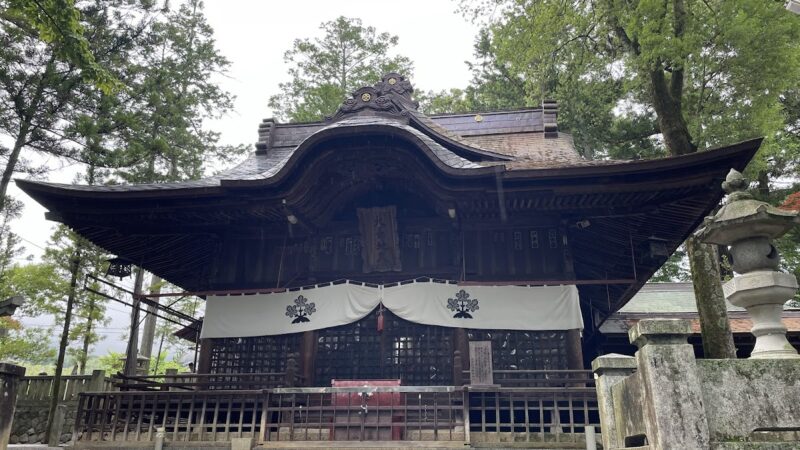
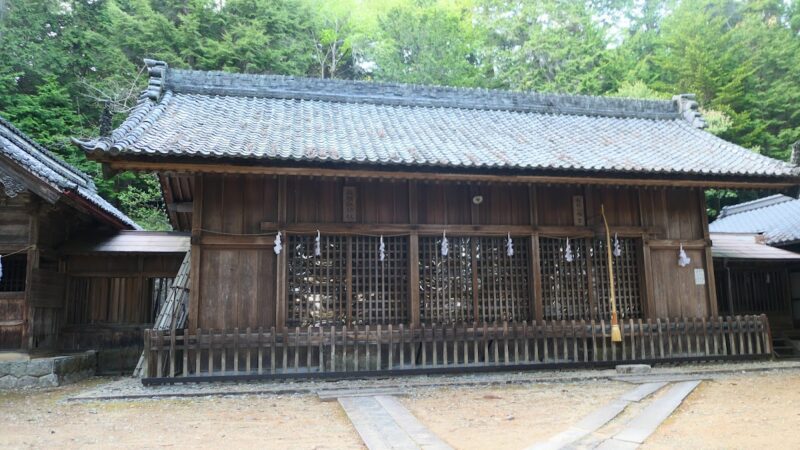
The main hall of Takaoka Shrine is built in the traditional style of shrine architecture. The worship hall has an open design to welcome visitors, while the main hall is situated behind it.
The shrine buildings are regularly repaired, and the carvings and decorations are magnificent. The carvings on the main hall, in particular, feature traditional designs such as dragons, lions, and flowers and birds.
Subsidiary Shrines
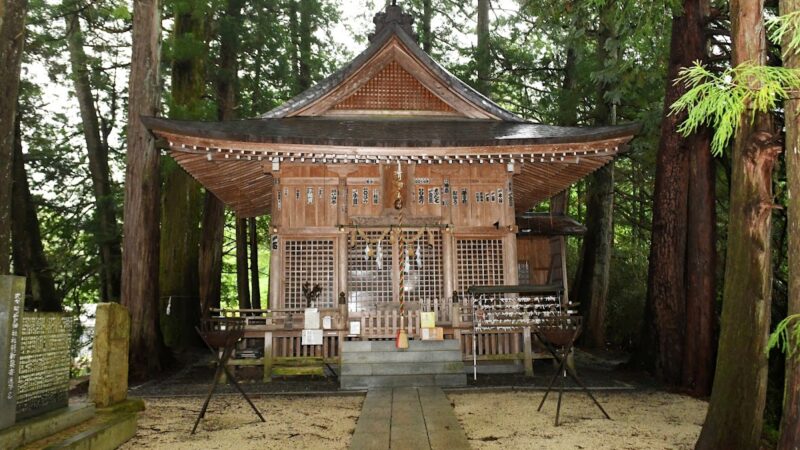
In addition to the main hall, several subsidiary shrines (absent shrines/minor shrines) are enshrined within the grounds:
- Inari Shrine: God of business prosperity and abundant harvests
- Yamajinja Shrine: God of mountain safety and blessings
- Tenjinja Shrine: God of learning, Sugawara no Michizane
These are some of the shrines that were merged and have remained as independent shrines.
Stone Monuments and Memorials
Several stone monuments stand within the shrine grounds, commemorating the history of the shrine and local events:
- Memorial Monument for the Consolidation of Shrines: Records the consolidation of shrines during the Meiji era.
- Natural Monument Designation Monument: Commemorates the protection of the large cedar tree.
- War Dead Memorial Monument: Commemorates those from the region who died in the war.
These monuments are valuable resources for understanding the history of the region.
Approach to the Shrine and Torii Gate
The approach to the shrine passes through a quiet residential area. A stone torii gate stands at the entrance, and lanterns line both sides of the approach. As you proceed along the approach, the large cedar tree comes into view, and you can feel the sacred atmosphere of the shrine grounds.
Annual Events and Festivals
Grand Festival (Third Sunday of October)
The most important event at Takaoka Shrine is the Grand Festival, held every year on the third Sunday of October. On this day, local parishioners gather to express gratitude for the past year and pray for a bountiful harvest in the coming year.
Main Contents of the Annual Grand Festival:
- Shinto Ritual (Recitation of Prayers, Offering of Tamagushi Branches)
- Lion Dance Performance (Watouchi)
- Mikoshi Procession
- Naorai (Post-Festival Feast)
Stalls are set up on the shrine grounds, making it a lively day where local people gather.
New Year’s Visit (January 1st-3rd)
Many worshippers visit the shrine for their first shrine visit of the new year. A Shinto ritual is performed at the New Year’s Day Festival to pray for peace in the new year, and sacred sake is sometimes offered to worshippers.
Summer Purification Ceremony (June 30th)
This Shinto ritual purifies and cleanses away the impurities accumulated over the past six months. A ritual of passing through a ring of reeds is performed, and prayers are offered for good health and protection from illness.
Harvest Festival (November 23rd)
This festival expresses gratitude for the harvest, and the year’s new grain is offered to the gods. In the Zakoji district, where agriculture flourished, this festival has been considered particularly important.
Monthly Festival
A monthly festival is held on the 1st and 15th of each month to pray for daily peace and prosperity. Representatives of the parishioners attend, and a Shinto priest conducts the ritual.
Access and Parking Information
Access by Public Transportation
By Train:
- Get off at Motozenkoji Station on the JR Iida Line
- Approximately 15 minutes on foot
By Bus:
- Take the Shinnan Kotsu bus bound for Zakoji from JR Iida Station
- Get off at the Zakoji bus stop
- Approximately 10 minutes on foot
Access by Car
From the Chuo Expressway:
- Approximately 10 minutes from Iida IC
- Approximately 5 minutes from Zakoji Smart IC
Travel Time from Major Cities:
- From Nagoya: Approximately 2 hours
- From Tokyo: Approximately 3 hours 30 minutes
- From Matsumoto: Approximately 1 hour 30 minutes
Parking
The shrine has parking spaces for visitors, but the number of spaces is limited. Temporary parking may be provided during events such as the annual festival.
Precautions When Visiting the Shrine
- The shrine grounds are a sacred place. Please visit in silence.
- The large cedar tree is a natural monument. Please be careful not to touch or damage it.
- Photography is permitted, but consideration is required during Shinto rituals.
- Please take all your trash with you.
Nearby Tourist Attractions
Moto-Zenkoji Temple
Located about a 15-minute walk from Takaoka Shrine, Moto-Zenkoji Temple is known as the temple where the principal image of Zenkoji Temple in Nagano City was first enshrined. It is said that “visiting only Zenkoji Temple is an incomplete pilgrimage,” and visiting both is recommended.
Omi no Sato Butai-zakura (Stage Cherry Tree)
In the Zakoji area, there is the “Butai-zakura,” an Edo Higan cherry tree approximately 350 years old. It blooms beautifully in spring, attracting many tourists.
Iida City Museum of Art
This is a comprehensive museum where you can learn about the history, culture, and nature of Iida City. It exhibits archaeological and folklore materials, and you can also learn about the history of the Zakoji area.
Apple Tree-lined Street
Located in the central urban area of Iida City, this approximately 400-meter-long apple tree-lined street is a unique avenue lined with apple trees grown by local residents.
Tenryu Gorge
Located in the southern part of Iida City, this scenic spot offers stunning views of the Tenryu River gorge. A well-maintained walking path makes it ideal for hiking.
Recommended itineraries for visiting Takaoka Shrine
Half-day course
Morning:
- Visit to Motozenkoji Temple (experience the underground passage)
- Visit to Takaoka Shrine (viewing the large cedar tree)
- Stroll around the area
Lunch: Local cuisine at a restaurant in the Zakoji area
Full-day course
Morning:
- Visit to Motozenkoji Temple
- Visit to Takaoka Shrine
- Stroll around Omi no Sato
Afternoon:
- Visit to Iida City Museum of Art
- Stroll along the apple tree-lined street
- Shopping in Iida city center
Annual Festival Participation Course (October)
Morning:
- Visit to the Takaoka Shrine Annual Festival
- Watch the lion dance
Afternoon:
- Visit the surrounding autumn festivals
- Shopping at a local farmers’ market
Summary
Takaoka Shrine is a historic shrine located in Zakoji, Iida City, Nagano Prefecture, known for its over 1,000-year-old cedar tree and traditional lion dance. Following the Meiji-era shrine consolidation, it took on the role of the tutelary shrine for the entire Zakoji district and remains a beloved center of local faith.
The large cedar tree on the shrine grounds is designated a prefectural natural monument, and its majestic appearance leaves a deep impression on visitors. The Watonai lion dance, performed at the annual festival, is carefully preserved as a regional traditional culture.
Visiting Takaoka Shrine in conjunction with other nearby tourist attractions, such as Motozenkoji Temple, will allow you to experience the rich history and culture of the Zakoji district. When visiting Iida City, be sure to visit Takaoka Shrine. Standing before the thousand-year-old cedar tree in the tranquil grounds, you will surely feel the weight of history and the mystery of nature.