Complete Guide to Tenso Shrine (Honkomagome, Bunkyo-ku, Tokyo) | The Guardian Shrine of Komagome, Associated with Minamoto no Yoritomo
Tenso Shrine (Komagome Tenso Shrine), located in Honkomagome, Bunkyo-ku, Tokyo, is a historically significant shrine with a founding legend stemming from a divine dream of Minamoto no Yoritomo. During the Edo period, it was known as “Komagome Shinmei-gu” and was revered by the local people as the guardian shrine of Komagome village. This article comprehensively introduces all the information you need to know before visiting Tenso Shrine, including its history, enshrined deities, annual events, goshuin (shrine seals), and access methods.
Basic Information about Tenso Shrine
Official Name: Tenso Shrine
Common Names: Komagome Tenso Shrine, Komagome Shinmei-gu, O-Shinmei-sama
Location: 3-40-1 Honkomagome, Bunkyo-ku, Tokyo
Phone Number: 03-3821-3470
Deity Enshrined: Amaterasu Omikami
Annual Festival Date: September 16th
Tenso Shrine is a Shinto shrine of the Shinmei lineage, enshrining Amaterasu Omikami. While several Tenso Shrines exist in Tokyo, this one located in Honkomagome, Bunkyo-ku, is particularly known for its connection to Minamoto no Yoritomo.
History and Origins of Tenso Shrine
Origin of Founding | Legend of Minamoto no Yoritomo’s Divine Dream
Tenso Shrine’s founding dates back to Bunji 5 (1189). In this year, Minamoto no Yoritomo, on his way to Oshu to subdue Fujiwara no Yasuhira, the head of the Oshu Fujiwara clan, stopped in Komagome.
According to legend, while resting here, Yoritomo had a spiritual dream. In his dream, he saw an amulet from Ise Grand Shrine hanging on a pine branch. Taking this as an auspicious sign of success in his campaign, Yoritomo is said to have built a Shinto shrine dedicated to Amaterasu Omikami. This event became the origin of Tenso Shrine.
Edo Period | Flourishing as Komagome Shinmei Shrine
During the Edo period, Tenso Shrine came to be known as “Komagome Shinmei Shrine” and became the guardian shrine of the entire Komagome village, attracting local devotion. Even in the Edo period, when syncretism of Shinto and Buddhism was common, the shrine’s deity did not use syncretic titles such as Daimyojin or Daigongen, but rather maintained a pure Shinto faith. Local people affectionately called it “O-Shinmei-sama.”
History of Restoration
After its founding, the shrine fell into disrepair for a period without a caretaker. However, it was restored during the Keian era (1648-1652) by Hori Tango-no-kami Toshinao, the local lord. This restoration allowed the shrine to once again function as a center of local faith.
War Damage and Reconstruction
In the Great Tokyo Air Raid of 1945, all of the Tenso Shrine’s buildings and structures were destroyed. However, despite the chaos of the postwar period, thanks to the enthusiasm and efforts of the parishioners, a new shrine building was constructed in 1954, resulting in its current form. This history of restoration speaks to the deep faith of the local residents in the shrine.
Deities and Divine Virtues
Amaterasu Omikami (Amaterasu Ōmikami)
The deity enshrined at Tenso Shrine is Amaterasu Omikami, also known as Amaterasu Ōmikami. Amaterasu Omikami is the supreme deity in Japanese mythology and a goddess revered as the sun goddess. She is also the ancestral deity of the Imperial family, enshrined in the Inner Shrine of Ise Grand Shrine.
Divine Virtues
Amaterasu Omikami’s divine virtues are wide-ranging:
- National Security and Imperial Family Security: Her role as the guardian deity of Japan
- Good Fortune and Prosperity: The power to improve all aspects of luck
- Protection from Evil: The power to ward off disasters and evil spirits
- Family Safety: Protecting the peace and health of the family
- Industrial Development: Prosperity of various industries, including agriculture
- Academic Achievement: Improvement of wisdom and education
Due to her nature as a sun goddess, she is worshipped as a source of life force and a bringer of light.
Highlights of the Shrine Grounds
Shrine Building
The current shrine building was rebuilt in 1954 (Showa 29) and adopts the Shinmei-zukuri architectural style. The Shinmei-zukuri style, exemplified by Ise Grand Shrine, is the oldest style of shrine architecture in Japan, characterized by its simple yet solemn beauty, featuring a gabled roof and a flat entrance.
Ginkgo Trees Along the Approach
Magnificent ginkgo trees line the approach to Tenso Shrine, displaying a spectacular display of yellow foliage in autumn. The “Ginkgo Festival” is held in November, attracting many worshippers and local residents. These ginkgo trees are cherished as a symbol of the shrine.
Subsidiary Shrines
Within the grounds of Tenso Shrine, several subsidiary shrines are enshrined, each housing deities with different divine virtues. Visiting these subsidiary shrines during your pilgrimage will enrich your experience.
Annual Events and Festivals
Tenso Shrine holds various Shinto rituals and festivals throughout the year.
Main Annual Events
January
- New Year’s Day Festival: The first festival to welcome the new year
- First Shrine Visit of the Year: Many worshippers visit to pray for the new year.
February
- Setsubun Festival: Traditional events such as bean-throwing
- Kigensai Festival: A festival held in conjunction with National Foundation Day.
June
- Summer Purification Ceremony (Passing Through a Ring of Reeds): A Shinto ritual to purify oneself of the impurities accumulated over the past six months.
September
- Grand Festival: The largest annual festival, held mainly around September 16th
- A grand festival involving the entire community, including a portable shrine procession and offering ceremonies.
November
- Ginkgo Festival: An autumn tradition to admire the golden leaves of the ginkgo trees along the approach to the shrine.
- Interaction events with local residents are also held.
December
- Year-End Purification Ceremony: A Shinto ritual to purify and cleanse away the impurities of the past year and prepare for the New Year – New Year’s Eve Festival
Characteristics of the Grand Festival
The Grand Festival in September is the most important festival in the Tenso Shrine’s annual events. The procession of the portable shrine through the parish area is a quintessential autumn sight in Komagome. With numerous stalls and a large crowd of worshippers, it is the largest event in the region.
Goshuin (Shrine Seal) Information
Issuance of Goshuin
Tenso Shrine offers Goshuin. You can receive one by requesting it at the shrine office during reception hours.
Offering Fee: Usually around 300-500 yen
Reception Hours: Approximately 9:00 AM to 5:00 PM (may vary depending on the season)
Features of the Goshuin (Shrine Seal)
The Goshuin of Tenso Shrine features the name of the shrine, “Tenso Shrine,” and the name of the enshrined deity, “Amaterasu Omikami,” written in ink. The shrine’s seal is stamped in the center, creating a simple yet dignified design.
During special events, limited edition Goshuin may be offered, so we recommend checking the official website and social media for the latest information.
Access and Transportation Information
Access from the Nearest Station
Public transportation is the most convenient way to access Tenso Shrine.
From Hon-Komagome Station (Tokyo Metro Namboku Line)
- Approximately 5 minutes on foot from Exit 1
- This is the closest station and offers the most convenient access.
From Komagome Station (JR Yamanote Line/Tokyo Metro Namboku Line)
- Approximately 12 minutes on foot from the South Exit
- There is a shopping street around the station, making it enjoyable to stroll around while visiting the shrine.
From Hakusan Station (Toei Mita Line)
- Approximately 15 minutes on foot
Walking Route Landmarks
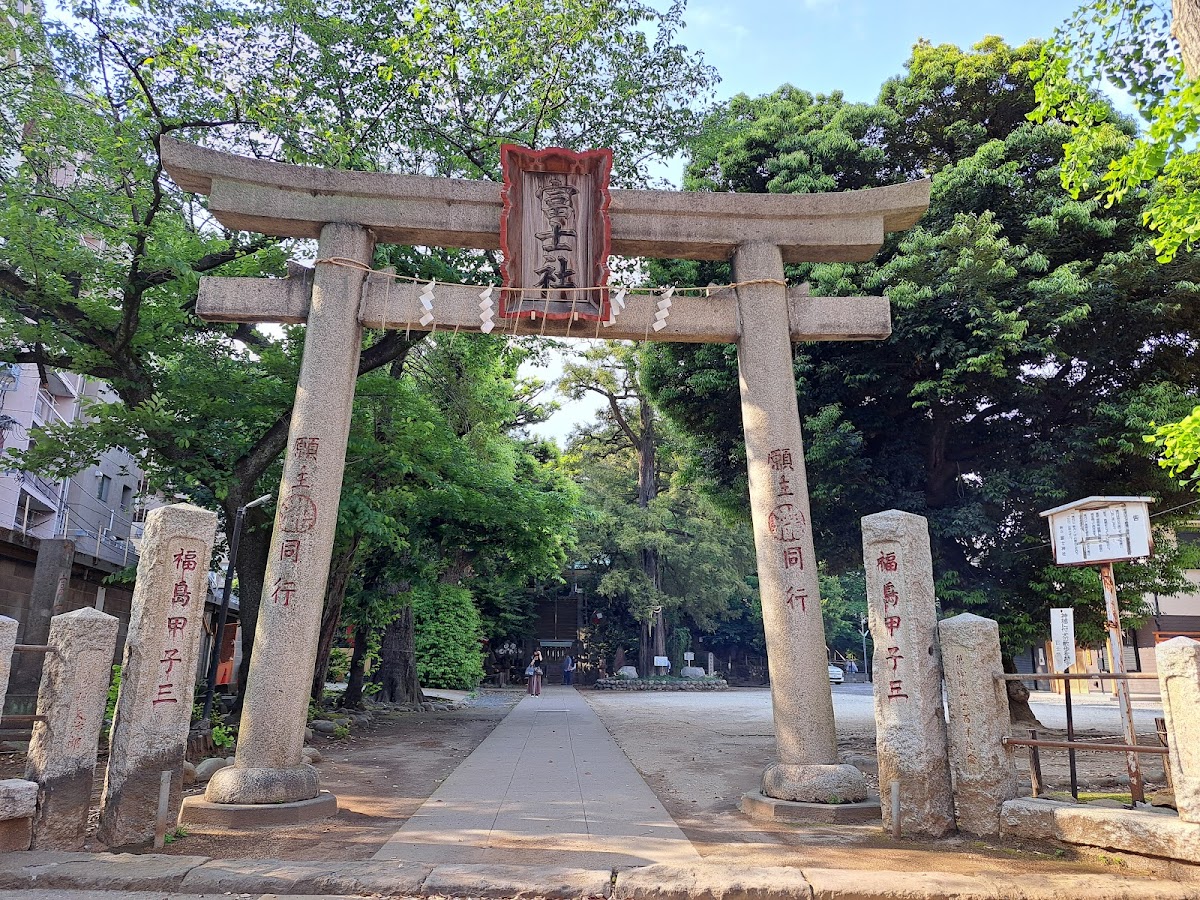
Exit Hon-Komagome Station from Exit 1 and proceed north (towards Komagome) along Hongo-dori. Turn right before Komagome Hospital, and you will see the torii gate of Tenso Shrine as you enter the residential area. There are also signs along the way, making it a relatively easy route to follow.
Access by Car
Since the shrine’s dedicated parking is limited, we recommend using public transportation. If you visit by car, please use nearby coin parking. Congestion is expected, especially during events such as the annual festival.
Surrounding Shrines and the Beliefs of Bunkyo Ward
In addition to Tenso Shrine, Bunkyo Ward is home to many other historical shrines.
Komagome Five Shrine Pilgrimage
The Komagome area has five shrines known as the “Imamiya Five Shrines,” and visiting them is a local tradition:
- Tenso Shrine: The guardian shrine of Komagome
- Imamiya Shrine: The god of protection against disease
- Komagome Fuji Shrine: A sacred site of Fuji worship
- Hikawa Shrine: Dedicated to Susanoo-no-Mikoto
- Komagome Daikoku Shrine: Dedicated to Daikokuten worship
Visiting these shrines allows for a deeper understanding of the history and religious culture of the Komagome area.
Shrine Culture of Bunkyo Ward
Bunkyo Ward is known for having a particularly large number of shrines and temples within Tokyo. A strong tradition of faith dating back to the Edo period remains, and each shrine has functioned as a center of the local community. Tenso Shrine also plays an important role in this.
Manners and Etiquette for Visiting Shrines
Basic Etiquette for Visiting Shrines
Here are the basic etiquette guidelines for visiting Tenso Shrine.
Before Passing Through the Torii Gate
- Bow before entering the shrine grounds after bowing at the torii gate.
- It is considered the gods’ path to walk in the center of the approach to the shrine, so it is preferable to walk along the edges.
How to Purify Yourself at the Water Basin
- Hold the ladle in your right hand and purify your left hand.
- Switch the ladle to your left hand and purify your right hand.
- Switch the ladle back to your right hand, receive water in your left hand, and rinse your mouth.
- Purify your left hand once more.
- Stand the ladle upright, rinse the handle, and return it to its original position.
Worship at the Main Hall
- Stand in front of the offering box and bow slightly.
- Gently place your offering in the box.
- Ring the bell (if present).
- Worship using the two bows, two claps, and one bow method.
- Bow deeply twice.
- Clap your hands twice.
- State your wish silently.
- Finally, bow deeply once.
Attire for Visiting the Shrine
While there are no specific dress code requirements, clean and presentable attire is preferred, reflecting the sacred nature of the place. For those receiving prayers or blessings, more formal attire is recommended.
About Prayers and Supplications
Tenso Shrine accepts various types of prayers and blessings.
Main Types of Prayers
- Family Safety: Praying for the health and peace of the family
- Exorcism: Warding off misfortune during unlucky years
- Traffic Safety: Blessing of cars and motorcycles
- Business Prosperity: Praying for the development of business
- Prayer for Success in Exams: Praying for success in exams and tests
- Prayer for Safe Childbirth: Praying for the health of mother and child and a safe delivery
- First Shrine Visit: Praying for the healthy growth of the baby
- Shichi-Go-San: Celebrating the growth of a child and praying for their future health
How to Apply for a Prayer
If you wish to request a prayer, we recommend contacting us by phone in advance. Especially on weekends, auspicious days, and during the Shichi-Go-San season, it is expected to be crowded, so making a reservation will ensure a smoother experience.
Contact Information: 03-3821-3470
The Charm and Worth of Visiting Tenso Shrine
A Place to Feel Historical Romance
Tenso Shrine, with its origins in the important Japanese historical event of Minamoto no Yoritomo’s conquest of Oshu, is a valuable historical site with over 800 years of history. The shrine buildings, rebuilt after overcoming war damage, speak to the deep faith of the local people.
A Tranquil Space in the City
Located in a residential area of Bunkyo Ward, stepping onto the shrine grounds envelops you in a serene atmosphere. It’s a place to escape the hustle and bustle of the city and find peace of mind, cherished not only by local residents but also by visitors from afar.
Beauty in Every Season
The autumn ginkgo leaves are particularly magnificent, attracting many visitors during the Ginkgo Festival. The shrine grounds, displaying different expressions in each season—the fresh green of spring, the deep green of summer, and the tranquility of winter—offer fresh discoveries with every visit.
A Shrine Rooted in the Community
Tenso Shrine is not merely a tourist spot; it remains a place of deep faith deeply rooted in the lives of the local people. Through festivals and events, it plays a vital role in fostering community bonds, and you can feel its warm atmosphere.
Summary
Tenso Shrine (Komagome Tenso Shrine), located in Honkomagome, Bunkyo-ku, Tokyo, has a founding legend originating from a divine dream of Minamoto no Yoritomo. It is a historical shrine that has attracted the faith of the local community as the guardian shrine of Komagome Village since the Edo period.
It enshrines Amaterasu Omikami as its main deity, and offers divine blessings for good fortune, protection from evil, and family safety. The shrine building, rebuilt in 1954 after being destroyed by war, speaks to the strong faith of the local people.
Various events are held throughout the year, including the annual festival in September, the ginkgo festival in November, and the summer and year-end purification ceremonies, playing a central role in the local community. The beautiful ginkgo tree-lined approach to the shrine is also a highlight. The shrine is conveniently located about a 5-minute walk from Hon-Komagome Station on the Tokyo Metro Namboku Line, and is also within walking distance of Komagome Station. Numerous historical shrines, including the Komagome Five Shrines, are scattered throughout the surrounding area, allowing visitors to experience the rich religious culture of the Komagome region.
Despite being in the heart of the city, Tenso Shrine maintains a tranquil atmosphere, making it a worthwhile place to visit—a place to escape the hustle and bustle of everyday life, find peace of mind, and experience traditional Japanese religious culture. When you visit Bunkyo Ward, be sure to stop by.