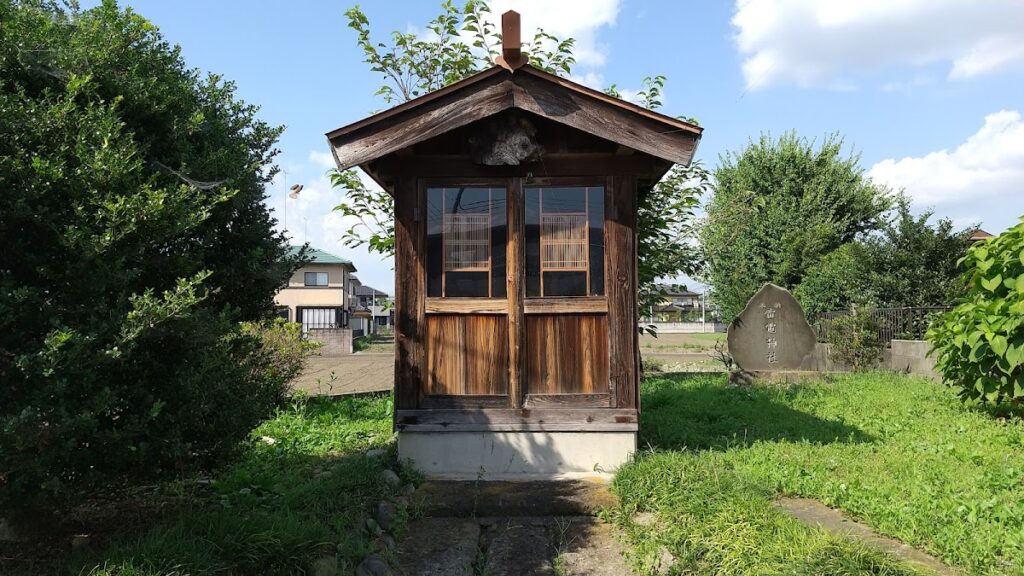
Complete Guide to Raiden Shrines: A Thorough Explanation from the Head Shrine to Major Shrines Nationwide
Raiden Shrines (Raiden Jinja) are a general term for shrines that include “Raiden” in their name, and are numerous, mainly distributed in the Kanto region. They are widely worshipped as gods of protection against lightning and have also been revered as gods that bring blessings to agriculture and water. This article will provide a detailed explanation of the history, enshrined deities, blessings, and cultural properties of major Raiden Shrines throughout Japan, focusing on the head shrine, Raiden Shrine in Itakura-machi, Gunma Prefecture.
What are Raiden Shrines?
Raiden Shrines are a general term for shrines that include “Raiden” in their name, and are numerous in the Kanto region, particularly in Gunma, Saitama, Tochigi, and Ibaraki prefectures. While they are uniformly worshipped as gods of protection against lightning, the enshrined deities and history are not necessarily consistent across individual shrines.
Similar shrines include Raijinja (Thunder Shrine) and Denjinja (Electric Shrine), which are also worshipped in various locations as shrines based on the worship of the thunder god.
Historical Background of Raiden Worship
The worship of the thunder god has existed in Japan since ancient times. Thunder has been feared as a symbol of the wrath and power of the heavenly gods. At the same time, thunderstorms brought beneficial rain to crops, so they were also objects of prayer for bountiful harvests. Lightning strikes were particularly frequent in the Kanto Plain, and it is believed that the worship of Raiden Shrines spread as a way to protect oneself from lightning damage.
Raiden Shrine Headquarters (Itakura Town, Gunma Prefecture)
Located in Itakura Town, Ora District, Gunma Prefecture, Raiden Shrine is known as the head headquarters of Raiden Shrines scattered throughout the Kanto region, especially in the middle and upper reaches of the Tone River. It is also called “Itakura Raiden Shrine” to distinguish it from other Raiden Shrines.
Founding and History
The founding of Raiden Shrine is attributed to Prince Shotoku, and it is said to have begun in 598 AD (the 6th year of Emperor Suiko’s reign) when a shrine was built on a floating island on the shore of Inara Marsh. Later, during the reign of Emperor Tenmu, it is believed to have been moved to its current location. In 1674 (Enpō 2), a major renovation of the shrine buildings was carried out by order of Tokugawa Tsunayoshi (later the 5th Shogun of the Edo Shogunate), who was the lord of the Tatebayashi Domain in Kōzuke Province. As a result of this achievement, Raiden Shrine received the patronage of the Tokugawa family and was granted the honor of being permitted to use the Tokugawa family crest, the three-leaf hollyhock.
Deities and Blessings
The main deities enshrined at Raiden Shrine are the following three:
- Ōikazuchi no Ōkami: God of thunder, offering protection from lightning
- Honoiikazuchi no Ōkami: God who governs fire and thunder
- Wakeikazuchi no Ōkami: God who divides thunder, god of protection from lightning
Due to these deities, Raiden Shrine is believed to offer the following blessings:
- Protection from lightning and lightning strikes
- Prayers for rain and bountiful harvests
- Blessings of water
- Protection from evil and misfortune
- Family safety
- Good health
- Protection from negative influences
Important Cultural Properties and Architecture
The grounds of Raiden Shrine contain numerous valuable cultural properties.
Main Shrine Building (Gunma Prefecture Important Cultural Property)
The current main shrine building was constructed during renovations in 1674 (Enpo 2) and is designated as an Important Cultural Property of Gunma Prefecture. The main hall features intricate carvings and preserves the architectural style of the early Edo period.
Inner Shrine (Gunma Prefecture Important Cultural Property)
The inner shrine is also designated as an Important Cultural Property of Gunma Prefecture and is characterized by its beautiful architectural style that harmonizes with the main shrine building.
Subsidiary Shrine Hachimangu Inari Shrine (Nationally Designated Important Cultural Property)
The main shrine building of the Raiden Shrine’s subsidiary shrine, Hachimangu Inari Shrine, is believed to have been built in 1547 (Tenbun 16) and is designated as a National Important Cultural Property as the oldest wooden building in Gunma Prefecture. It is a two-bay, hip-and-gable roofed structure with a two-bay portico, and is a valuable building that strongly retains the architectural style of the late Muromachi period.
Artistic Value of the Main Hall Sculptures
The main hall of Raiden Shrine features exquisite carvings by master craftsmen from the Edo period. The carvings, depicting mythical creatures such as dragons, lions, and phoenixes, as well as scenes of nature, are highly regarded as a testament to the advanced carving techniques of the time.
Relationship with “Namazu-san”
Raiden Shrine has a unique belief system known as “Namazu-san.” There’s a saying that “you can’t leave Raiden-sama in Itakura, Joshu, without eating catfish,” and the custom of eating catfish dishes after visiting the shrine has continued for centuries.
This is believed to stem from a folk belief that catfish cause earthquakes and a legend that the thunder god suppresses catfish. Even today, there are several restaurants in and around Itakura town that serve catfish dishes, and they are popular with visitors.
Raiden Grand Festival (Annual Festival)
The Raiden Grand Festival (Annual Festival) is held every year in early May, attracting many visitors to the shrine grounds amidst the fresh greenery. Traditional Shinto rituals, such as the procession of the portable shrine and the dedication of Kagura (sacred dance), are performed and the festival is passed down as an important local event.
List of Major Raiden Shrines
There are many Raiden Shrines with unique characteristics throughout the Kanto region. Here, we introduce the major Raiden Shrines by region.
Major Raiden Shrines in the Kanto Region
Kami-no-Raiden Shrine (Kumagaya City, Saitama Prefecture)
Kami-no-Raiden Shrine, located in Kumagaya City, Saitama Prefecture, is known as a shrine that governs electricity and nerves. Its founding is thought to date back to before the Heian period, and it is said to have been restored during the Oei era by Narita Goro Ietoki.
Deities Enshrined:
- Ōikazuchi-no-Mikoto
- Kotoshironushi-no-Mikoto
Benefits:
- Safety in electrical work
- Health of the nervous system
- Improvement of IT skills
- Protection from evil
- Business prosperity
As a modern benefit, many people from IT-related companies and electrical construction workers visit the shrine, demonstrating a form of faith adapted to the times.
Raiden Shrine (Matsudo City, Chiba Prefecture)
Raiden Shrine in Matsudo City, Chiba Prefecture, is a shrine dedicated to the thunder god, Wakeikazuchi-no-Kami. Since ancient times, it has been revered not only as a protector against lightning but also as a god who brings rain and water.
Local farmers are said to have offered vegetables and prayed for bountiful harvests and rain, making it a shrine deeply rooted in the community and deeply connected to agriculture.
Other Raiden Shrines in the Kanto Region
- Raiden Shrines in Tochigi Prefecture: Several Raiden Shrines exist within Tochigi Prefecture, each serving as a center of local lightning protection worship.
- Raiden Shrines in Ibaraki Prefecture: Distributed mainly along the Tone River basin, these shrines are worshipped as guardian deities against floods and lightning strikes.
Raiden Shrines in the Chubu Region
Raiden Shrines also exist in the Chubu region, but they are not as densely concentrated as in the Kanto region. They are scattered throughout areas with frequent lightning strikes, such as Nagano and Niigata prefectures.
About the Deities Enshrined at Raiden Shrines
The deities enshrined at Raiden Shrines vary depending on the shrine, but the following thunder gods are primarily worshipped.
Main Thunder Gods
Honoi-Ikazuchi-no-Okami
A thunder god appearing in the Kojiki, and one of the eight thunder gods born from the body of Izanami-no-Mikoto in the underworld. As the god who controls fire and thunder, he is believed to offer protection against lightning and fire.
Wakeikazuchi-no-Mikoto
This thunder god is also known as the enshrined deity of Kamigamo Shrine in Kyoto. “Wakeikazuchi” means “dividing thunder” or “controlling thunder,” and he is widely worshipped as a god who protects against lightning.
Oikazuchi-no-Okami
Often worshipped as a general term for thunder gods, he is considered the god who controls all aspects of thunder.
Relationship with Kotoshironushi-no-Mikoto
Some Raiden Shrines also enshrine Kotoshironushi-no-Mikoto. Kotoshironushi-no-Mikoto is known as the god of business prosperity and maritime safety, and by enshrining him together with the thunder god, a wider range of blessings are offered.
Raiden Shrine’s Benefits and How to Visit
Main Benefits
The main benefits believed to be received at Raiden Shrine are as follows:
- Protection from Lightning Strikes: This is the most basic benefit, believed to protect houses and buildings from lightning strikes.
- Prayer for Rain and Bountiful Harvest: This is believed to bring the rain necessary for agriculture and lead to a bountiful harvest.
- Protection from Evil Spirits: This is believed to ward off evil spirits with the powerful force of the thunder god.
- Electrical Safety: This is a modern benefit, ensuring the safety of electrical equipment and preventing electrical accidents.
- Health of the Nervous System: This is believed to protect the health of the nervous system, which works with electrical signals.
- Improvement of IT Skills: This is a prayer for success in electronics and IT-related work.
Etiquette for Visiting a Shrine
When visiting Raiden Shrine, follow the general etiquette for visiting a shrine:
- Bow before passing through the torii gate.
- Purify your hands and mouth at the water basin.
- Walk along the edge of the path (the center is the path for the gods).
- Bow twice, clap twice, and bow once in front of the main hall.
- Recite your prayer silently.
About Prayers and Blessings
Many Raiden Shrines offer the following prayers and blessings:
- Protection from misfortune/evil spirits
- Protection from negative influences
- Family safety
- Good health
- Business prosperity
- Safety prayers
- First shrine visit for a newborn
- Shichi-Go-San (7-5-3) ceremony
- Shinto wedding ceremony
If you wish to receive a prayer or blessing, it is recommended to contact the shrine in advance to make a reservation.
Cultural Assets of Raiden Shrine
Raiden Shrine preserves numerous cultural assets of high historical and artistic value. ### Nationally Designated Important Cultural Property
- Raiden Shrine Subsidiary Hachimangu Inari Shrine Main Hall (Itakura-machi, Gunma Prefecture): Built in the late Muromachi period (1547), the oldest wooden building in Gunma Prefecture.
Gunma Prefecture Designated Important Cultural Property
- Raiden Shrine Main Hall (Itakura-machi, Gunma Prefecture): Renovated in Enpo 2 (1674).
- Raiden Shrine Inner Sanctuary (Itakura-machi, Gunma Prefecture)
Other Cultural Properties
Valuable materials that tell the history of the region, such as ridgepole inscriptions, ancient documents, and votive offerings, are stored at Raiden Shrines throughout the area.
Access and Tourist Information for Raiden Shrine
Access to Raiden Shrine Main Shrine (Itakura-machi, Gunma Prefecture)
Address: 2334 Itakura, Itakura-machi, Ora-gun, Gunma Prefecture
Access by Train:
- Approximately 15 minutes on foot from Itakura Toyo University Station on the Tobu Nikko Line
- Approximately 15 minutes by taxi from Tatebayashi Station on the Tobu Isesaki Line
Access by Car:
- Approximately 15 minutes from Tatebayashi IC on the Tohoku Expressway
- Parking available
Access to Kami-no-Raiden Shrine (Kumagaya City, Saitama Prefecture)
Address: Kami-no-Raiden Shrine, Kumagaya City, Saitama Prefecture
Access by Train:
- Bus or taxi from Kumagaya Station on the JR Takasaki Line/Chichibu Railway
Notes for Visitors
- Visiting hours vary depending on the shrine, so it is recommended to check in advance.
- Advance reservations may be required if you wish to receive prayers.
- Crowds are expected on festival days and during the New Year’s visit period.
- Parking availability and capacity vary by shrine.
Raiden Shrine and the Local Community
Deep Connections to Agriculture
Raiden Shrine has played a vital role as a center for rain prayers and harvest prayers in the agricultural Kanto Plain. Even today, farmers can be seen offering vegetables and rice and praying for a bountiful harvest.
Local Festivals and Culture
Raiden Shrines throughout the region hold annual events, including the spring grand festival, providing a place to strengthen community bonds. Traditional festival events such as portable shrine processions, Kagura dance performances, and sumo wrestling are passed down.
Modern Forms of Faith
In recent years, visits from electrical and IT companies have increased, and the faith in Raiden Shrine is evolving to suit the times. It is attracting attention as a shrine that meets modern needs, such as prayers for the safety of electrical equipment and the stable operation of systems.
Annual Events at Raiden Shrine
Main Annual Events
- January 1st: New Year’s Day Festival (First Shrine Visit of the Year)
- February 3rd: Setsubun Festival
- Early May: Grand Festival (Raiden Grand Festival)
- July: Summer Purification Ceremony
- November: Shichi-Go-San Festival
- December 31st: Grand Purification Ceremony/New Year’s Eve Festival
The content and dates of events vary depending on the shrine, so it is recommended to inquire with each shrine for details.
Guidelines for Visiting Raiden Shrine
Preparation Before Visiting
- Dress appropriately: Visit the shrine in clean clothing suitable for meeting the gods.
- Calm your mind: Calm any restless feelings and approach the visit with a peaceful heart.
- Clear your purpose for visiting: Clearly define what you are praying for or thanking for. ### Manners for Visiting the Shrine
- Please be quiet within the shrine grounds.
- Please take photographs only in designated areas.
- Photography inside the main hall is generally prohibited.
- Please follow the shrine’s rules regarding pets.
- Please take your trash with you.
Goshuin (Shrine Seals) and Gifts at Raiden Shrine
Goshuin (Shrine Seals)
Many Raiden Shrines offer goshuin. Bring your goshuincho (seal book) and receive one at the shrine office after your visit. Remember that goshuin are proof of your visit, not a stamp rally.
Main Items Offered
- Amulets: Amulets for protection against lightning, amulets for protection against misfortune, amulets for traffic safety, etc.
- Talismans: For family safety, business prosperity, etc.
- Ema (votive tablets): For writing wishes and offering them
- Omifuda (sacred talismans): Talismans for enshrining on a household altar
Related Shrines and Shinto Culture
Other Shrines Dedicating the Thunder God
Besides Raiden Shrine, there are other shrines throughout Japan that enshrine the thunder god:
- Kamigamo Shrine (Kyoto Prefecture): Dedicates Wakeikazuchi-no-Mikoto
- Kashima Shrine (Ibaraki Prefecture): Dedicates Takemikazuchi-no-Okami (also possesses characteristics of the thunder god)
- Raijin Shrine: Raijin shrines scattered throughout various regions
Worship of the Thunder God in Shinto
The worship of the thunder god in Shinto originated from reverence and gratitude for natural phenomena. While lightning possesses destructive power, it also has a blessing aspect, bringing rain and nourishing crops. This duality has deeply influenced the Japanese view of nature and religion.
Summary
Raiden Shrines, widely distributed mainly in the Kanto region, have long attracted the faith of people as shrines that protect against lightning. From the head shrine in Itakura-machi, Gunma Prefecture, to the various Raiden Shrines throughout the country, a rich history and cultural heritage have been passed down.
In addition to traditional blessings such as protection from lightning and prayers for bountiful harvests, new forms of faith have emerged in modern times, such as those related to electrical safety and advancements in IT technology. Raiden Shrines retain many elements that allow visitors to experience traditional Japanese culture, including historical buildings, artistic sculptures, and locally rooted festivals.
When visiting, understanding the history and culture of the shrine and visiting with respect will lead to a deeper experience. Why not explore Japanese nature worship and Shinto culture through a visit to a Raiden Shrine?