Hachiman Shrine (Zenigame-cho, Hokkaido): History and Charm | A Historic Hakodate Shrine Founded in 1644
Hachiman Shrine, located in Zenigame-cho, Hakodate City, is one of the oldest shrines in Hokkaido. Said to have been founded in 1644, it has attracted the faith of local people for nearly 380 years. Despite its location near the eastern end of the Hakodate Airport runway, this shrine maintains its unchanging presence in a quiet residential area. This article provides a detailed introduction to its history, enshrined deities, shrine buildings, goshuin (shrine seals), and annual events.
Basic Information on Hachiman Shrine (Zenigame-cho)
Location: 273 Zenigame-cho, Hakodate City, Hokkaido
Phone: 0138-58-2044
Deity: Hondawake-no-mikoto
Former Shrine Rank: Village Shrine
Annual Festival Date: August 17th
Number of Parishioners: Approximately 298 households
Shrine Building Style: Gongen-zukuri
Access
Approximately 40 minutes by Hakodate Bus from JR Hakodate Station, then a 3-minute walk from the “Hakodate City Zenigame Branch Office” bus stop. It’s also relatively easy to access, about 10 minutes by car from Hakodate Airport. Located in a residential area along the coast, the surrounding environment is quiet.
The Founding and History of Hachiman Shrine
Founded in 1644
Hachiman Shrine is said to have been founded in 1644 (Shoho 1). This was during the early Edo period, when Tokugawa Iemitsu was the third shogun. At this time, settlers had already settled in the Zenigamezawa area, and it is believed that they invited the Hachiman deity to the shrine.
From the beginning, it served as the central shrine of the village, a spiritual pillar for the local residents. Considering that many shrines in Hokkaido were founded after the Meiji period, Zenigame’s Hachiman Shrine, with its nearly 380-year history, is a particularly valuable and ancient example within Hokkaido.
Edo Period Records and its Role as a Birthing Shrine
The oldest documented mention is in Matsuura Takeshiro’s “Ezo Diary.” The record from 1850 (Kaei 3) lists Zenigame’s Hachiman Shrine as a “birthing shrine.” A “Ubujinja” is a shrine dedicated to the local tutelary deity, indicating that it was revered as the guardian deity of the community.
During this period, Zenigamezawa Village already had a certain settlement size, and the Hachiman Shrine functioned as the center of faith for the villagers. From the traditions and ridgepole inscriptions that remain today, it can be seen that the shrine maintained a close relationship with the local community throughout the Edo period.
Reconstruction of the Shrine in the Taisho Period
The current shrine building was reconstructed in 1924 (Taisho 13). The carpenter was Kodama Shinzo, and it was built in the traditional Gongen-zukuri style. Although it is approaching its 100th anniversary, proper maintenance has kept it in beautiful condition with little sign of deterioration.
The Gongen-zukuri style is a complex shrine building style in which the main hall and worship hall are connected by a stone corridor, and it is a highly dignified architectural style also seen in Nikko Toshogu Shrine. The shrine building of Zenigame’s Hachiman Shrine also follows this traditional style, making it a noteworthy example of shrine architecture in Hokkaido.
About the Deity, Hondawake-no-Mikoto
Hachiman and Emperor Ojin
Hondawake-no-Mikoto, the deity enshrined at Hachiman shrines, is the divine name of Emperor Ojin, the 15th emperor. Hachiman shrines primarily worship Emperor Ojin, and often include Himegami and Empress Jingu, forming the Hachiman Three Deities.
Emperor Ojin is known as the emperor who built a period of prosperity in ancient Japan. He possesses characteristics of a god of war and archery, and has also been worshipped as a guardian deity of industry and maritime traffic. The spread of Hachiman worship during the pioneering period of Hokkaido is thought to be due to the fact that these multifaceted divine virtues aligned with the wishes of the pioneers.
The Spread of Hachiman Worship
Hachiman worship has its head shrine at Usa Shrine in Oita Prefecture, and is the largest shrine system in Japan, with approximately 44,000 shrines nationwide. Hachiman worship spread throughout Kyushu before the Nara period, and from the medieval period onward, it became widely worshipped as a guardian deity of samurai families and also among common people.
In Hokkaido, Hachiman worship was brought by immigrants from Honshu. The Hachiman Shrine in Zenigame is thought to have been established early in the Edo period, as part of this spread of faith.
Origin of the Place Name Zenigame
Excavation of Buried Coins
The unique place name “Zenigame” has an interesting origin. This area was once called “Zenigamezawa Village,” and its name is believed to originate from the numerous buried coins that were unearthed in this area.
Buried coins are ancient coins intentionally buried in the ground, usually thought to have been buried for purposes such as rituals, prayers, or the storage of property. The discovery of many buried coins in Zenigamezawa suggests that this area was a place of human habitation from ancient times and held some important significance.
Historic Settlement Area
The Zenigamezawa area is one of the regions in Hokkaido that saw relatively early settlement. A settlement was already formed in the early Edo period, and the founding of the Hachiman Shrine serves as evidence of this. Its proximity to Hakodate and its location facing the sea are thought to have been factors that enabled early settlement.
Shrine Grounds and Highlights
Pure White Torii Gates
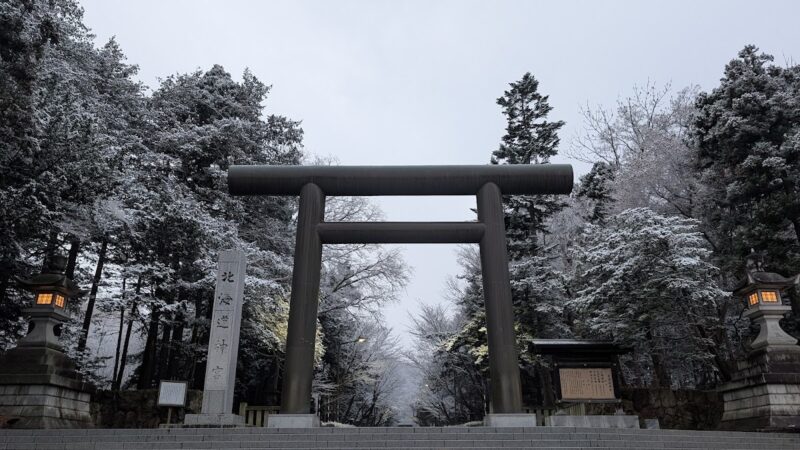
Two torii gates stand within the grounds of Zenigame Hachiman Shrine. Both are painted pure white, creating an overall ethereal and pure atmosphere. These white torii gates are one of the shrine’s striking features, giving visitors a serene impression.
Shrine Buildings and Grounds Layout
The shrine buildings are located on a hill on the west bank of the Zenigame River, amidst a residential area along the coast. Situated slightly higher than its surroundings, it is presumed to have once overlooked the village.
The Gongen-zukuri style shrine building, rebuilt in 1924 (Taisho 13), retains its beautiful appearance even after nearly 100 years. Thanks to proper maintenance and the important preservation efforts of local residents, it remains in a remarkably good state, showing little signs of deterioration.
Small but Dignified Atmosphere
The shrine grounds are not vast, but they possess a harmonious atmosphere that blends the approachability unique to a small shrine with the dignity backed by 380 years of history. Despite being located in a residential area, stepping onto the grounds transports you to a sacred space distinct from everyday life.
About Goshuin (Shrine Seals)
Goshuin Reception
Zenigame Hachiman Shrine offers Goshuin (shrine seals).
Reception Hours: 8:00 AM – 5:00 PM
Reception Status: Always Available
While many shrines in Hokkaido do not offer Goshuin, Zenigame Hachiman Shrine provides them at all times, a thoughtful consideration for visitors.
Manners for Receiving a Goshuin (Shrine Seal)
A Goshuin is given as proof of your visit. Always complete your prayers before requesting a Goshuin at the shrine office. It is important to bring your Goshuincho (seal book) and visit during reception hours. Also, remember to show gratitude to the shrine staff and be polite.
Annual Festival and Other Annual Events
Annual Festival (August 17th)
The annual festival of Zenigame Hachiman Shrine is held every year on August 17th. The annual festival is the most important event for the shrine, and the day when the deity is worshipped most grandly throughout the year.
On the day of the festival, parishioners and local residents gather, and Shinto rituals are performed. With approximately 298 parishioners, the annual festival of Zenigame Hachiman Shrine is an important opportunity to reaffirm and strengthen the bonds of the local community.
Other Annual Events
Like many shrines, it is believed that various festivals and events are held throughout the year at Zenigame Hachiman Shrine. Through seasonal events such as New Year’s Day festivals, Setsubun festivals, and spring and autumn festivals, local beliefs are preserved.
Hachiman Faith in Hokkaido
Hachiman Shrines in the Hakodate Area
Besides the Zenigame Hachiman Shrine, there are other important Hachiman-related shrines in the Hakodate area, such as the Hakodate Sōsha Hachiman Shrine. The Hakodate Sōsha Hachiman Shrine is the main shrine established in 1858 (Ansei 5) when the Ishikari Hachiman Shrine was invited to the area, and is a central figure in Hachiman faith in the Hakodate area.
The Zenigame Hachiman Shrine is positioned as one of the oldest shrines in this network of Hachiman faith in the Hakodate area.
Hachiman Shrines Throughout Hokkaido
There are numerous Hachiman-related shrines in Hokkaido. Hachiman faith is deeply rooted in each region, including the Ishikari Hachiman Shrine in Ishikari City, the Shiraoi Hachiman Shrine in Shiraoi District, and the Sapporo Hachiman Shrine. Many of these shrines were founded after the Meiji period, but shrines like Zenigame Hachiman Shrine, with a history dating back to the early Edo period, are extremely rare.
The spread of Hachiman worship in Hokkaido can be attributed to several factors, including the fact that many settlers migrated from Honshu, and that Hachiman, as a god of war and industry, had a strong affinity with pioneering projects.
Points for Worship
Etiquette for Worship
The basic etiquette for visiting a shrine is as follows:
- Bow before passing through the torii gate: Before entering the shrine grounds, bow before the torii gate.
- Purify yourself at the water basin: If there is a water basin, purify your hands and mouth.
- Walk along the edge of the approach: The center of the approach is considered the path for the gods.
- Etiquette in front of the main hall: Two bows, two claps, and one bow are the basic rituals.
- Bow upon leaving: When leaving, after passing through the torii gate, turn around and bow.
Photography
Photography is generally permitted on the shrine grounds, but please refrain from photographing the interior of the shrine or during religious ceremonies. It is also important to be considerate of other visitors.
Best time to visit
Zenigame Hachiman Shrine is open year-round, but it is particularly lively in mid-August when the annual festival is held. The New Year’s period and Hokkaido’s short summer are also good times to visit. During winter, there is snow, so please be careful of your footing.
Nearby attractions
Hakodate Airport
Zenigame Hachiman Shrine is located near the eastern end of the runway at Hakodate Airport. Its location is interesting for those using the airport or for those who want to watch planes take off and land up close.
Zenigamezawa area
The Zenigamezawa area is located in the eastern part of Hakodate City and is a quiet residential area facing the sea. You can enjoy a peaceful atmosphere that is different from the center of Hakodate. A leisurely stroll while experiencing the local history and culture is highly recommended.
Hakodate City Tourist Spots
Hakodate City boasts many tourist attractions, including Goryokaku, Mount Hakodate, the churches of Motomachi, and the Kanemori Red Brick Warehouses. You can enjoy Hakodate sightseeing in conjunction with a visit to Zenigame Hachiman Shrine.
Connection with the Community
Parishioners and the Local Community
Zenigame Hachiman Shrine, with approximately 298 parishioners, is a central presence in the local community. Annual events, including the festival, provide valuable opportunities for local residents to gather and interact.
For nearly 380 years, Hachiman Shrine has watched over the changes in the Zenigamezawa area. Through the hardships of the pioneering era, post-war reconstruction, and modern development, the shrine has remained a spiritual pillar of the community, even as times have changed.
Cultural Value
The shrine building, constructed in 1924 (Taisho 13), along with traditions and ridgepole inscriptions dating back to the Edo period, are valuable cultural assets that convey the history of the Zenigamezawa area. Preserving these and passing them on to future generations is an important responsibility for the community.
Relationship with the Hokkaido Shrine Association
Zenigame Hachiman Shrine is one of the shrines belonging to the Hokkaido Shrine Association. The Hokkaido Shrine Association is an organization that oversees shrines throughout Hokkaido, providing support for the operation of each shrine, training Shinto priests, and promoting Shinto culture.
The Hokkaido Shrine Association’s website contains information on many shrines in Hokkaido, including Zenigame Hachiman Shrine, and can be used as reference information when visiting shrines.
Summary: The Guardian Deity of Zenigame with a 380-Year History
Hachiman Shrine in Zenigame-cho, Hakodate City, is one of the oldest shrines in Hokkaido, founded in 1644 (Shoho 1). This shrine, dedicated to Emperor Ojin (Homudawake-no-Mikoto) and formerly a village shrine, has long been a center of local faith. It boasts a beautiful Gongen-style shrine building rebuilt in 1924 (Taisho 13) and a striking grounds marked by a pure white torii gate.
Supported by approximately 298 parishioners, it plays a vital role in strengthening community bonds through annual events, including the annual festival on August 17th. The shrine also offers Goshuin (shrine stamps) year-round, warmly welcoming visitors.
Despite its location near Hakodate Airport, Zenigame Hachiman Shrine has watched over the community for nearly 380 years in a quiet residential area. Its history and tradition are invaluable in understanding Hokkaido’s shrine culture. When visiting Hakodate, be sure to stop by this historic shrine and experience the tranquil atmosphere nurtured by its long history.