Complete Guide to Toeiji Temple (Chiba Prefecture): History, Access, and Perpetual Memorial Services for Two Temples in Sōsa City and Ichinomiya Town
Did you know that there are two Tendai sect temples named “Toeiji” in Chiba Prefecture? One is located in Yōkaichiba, Sōsa City, and the other is in Ichinomiya Town, Chōsei District. While belonging to the same sect and sharing the same temple name, these two temples each possess their own unique history and characteristics. This article will provide a detailed explanation of both.
Overview and History of Toeiji Temple (Sōsa City)
Basic Information
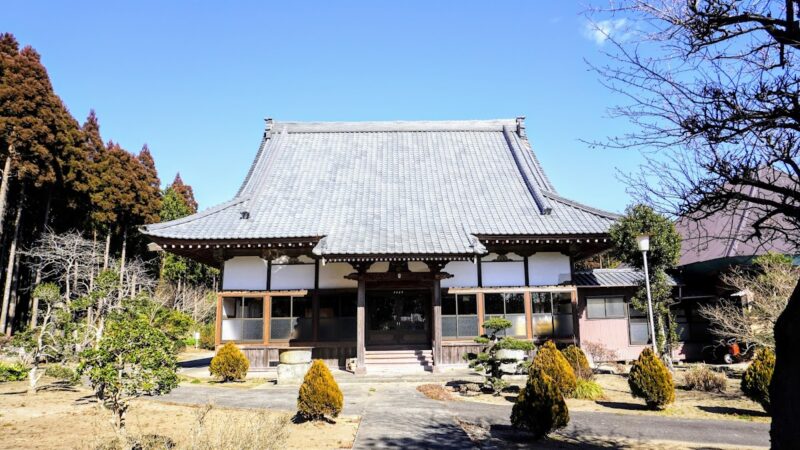
Toeiji Temple in Sōsa City is a Tendai sect temple located at 2333 Yōkaichiba I, Sōsa City, Chiba Prefecture. Its official name is “Jiunzan Muryōjuin Toeiji,” and it has a distinguished history as a direct branch temple of Tōeizan Kan’eiji Temple, with Enryakuji Temple on Mount Hiei as its head temple. Address: 2333 I, Yokaichiba, Sōsa City, Chiba Prefecture 289-2144
Phone: 0479-72-1000
FAX: 0479-73-7276
Sect: Tendai Sect
Mountain Name: Jiunzan
Temple Name: Muryōjuin
History of Tōei-ji Temple (Sōsa City)
The history of Tōei-ji Temple in Sōsa City dates back to February of the second year of Kōei (1343). The founder was a monk named Gōden, who is said to have received Dharma instruction from Kyōshō of Kentoku-ji Temple, a Shingon sect Chizan branch temple in the area, before founding the temple.
A significant turning point occurred in April of the ninth year of Kan’ei (1632). During the time of the then-chief priest, Jōei, the temple received instruction in the teachings of Tendai’s head priest, Jigen Daishi Tenkai, and converted from Shingon Buddhism to Tendai Buddhism. This conversion granted the temple the title of “Jiunzan Muryōjuin Tōei-ji,” and it became a powerful temple, directly affiliated with Tōeizan Kan’ei-ji, and governed by 19 branch temples at the time.
Tenkai Daisōjō was a highly respected priest known as a key advisor to Tokugawa Ieyasu, and inheriting his lineage held great significance for Tōei-ji.
Access (Sōsa City)
Access by Train: Conveniently accessible by public transport, approximately a 10-minute walk (about 1.2 km) from JR Sōbu Main Line “Yōkaichiba Station.” Its location makes it easily accessible from the station.
Access by Bus: The nearest bus stop is “Yashiki” on the Sōsa City Bus Sakae/Suga Nishi Loop Line.
Access by Car: Easily accessible from the Higashi-Kanto Expressway, with ample parking available.
Overview and History of Toei-ji Temple (Ichinomiya Town)
Basic Information
Toei-ji Temple in Ichinomiya Town is a Tendai sect temple located at 3297 (or 3299) Ichinomiya, Ichinomiya-machi, Chosei-gun, Chiba Prefecture. It is also a Tendai sect temple with Enryaku-ji Temple on Mount Hiei as its head temple, and enshrines Amida Buddha as its principal image.
Address: 3297 (3299) Ichinomiya, Ichinomiya-machi, Chosei-gun, Chiba Prefecture 299-4301
Sect: Tendai Sect
Principal Image: Amida Buddha
Characteristics of Toei-ji Temple (Ichinomiya Town)
Toei-ji Temple in Ichinomiya Town is known as a “small temple” and is a beloved temple deeply rooted in the local community. Ichinomiya Town, where Toei-ji Temple is located, has a long history. The town’s name originates from Tamasaki Shrine, the Ichinomiya (first-ranked shrine) of Kazusa Province, which has been a center of worship since the Heian period.
Tamasaki Shrine is a highly prestigious shrine as the Ichinomiya of Kazusa Province, and Toei-ji Temple is situated in the area that flourished as its temple town. In Japan, a country with a history of syncretism of Shinto and Buddhism, this area preserves a cultural landscape where shrines and temples coexist.
Access (Ichinomiya Town)
Access by Train:
The nearest station is Kazusa-Ichinomiya Station on the JR Sotobo Line. It is within walking distance from the station, but slightly further than Toei-ji Temple in Sōsa City.
Surrounding Environment:
Ichinomiya Town is located in the southern part of Kujukuri Beach and is known as a surfing mecca. The temple is situated close to the coastline, in a rich natural environment.
About Perpetual Memorial Graves
Perpetual Memorial Graves at Toei-ji Temple, Sōsa City
Toei-ji Temple in Sōsa City offers perpetual memorial graves that meet modern needs. Perpetual memorial graves are suitable for those without successors or those who do not want to burden their descendants with grave maintenance.
There is a perpetual memorial grave called Fumon-no-tō Gōshi, where the temple takes responsibility for perpetual memorial services. In today’s society, where the birthrate is declining and the population is aging, this is attracting attention as an easily accessible option for perpetual memorial services.
Small Ancestor Graves
In addition to perpetual memorial graves, Toei-ji Temple (Sōsa City) also offers “small ancestral graves.” These are more compact and easier to manage than traditional cemeteries, while still meeting the needs of those who want individual gravestones.
Memorial Services at Toei-ji Temple in Ichinomiya Town
Toei-ji Temple in Ichinomiya Town also accepts consultations regarding perpetual memorial services. Its small size allows for meticulous and personalized service.
About the Tendai Sect
Understanding the Tendai Sect, to which both Toei-ji Temples belong, will clarify the characteristics of the temples.
History and Doctrines of the Tendai Sect
The Tendai Sect is a Japanese Buddhist sect that began in the early Heian period when Dengyo Daishi Saicho founded Enryaku-ji Temple on Mount Hiei. It developed as a comprehensive form of Buddhism with the Lotus Sutra as its fundamental scripture and the “One Vehicle” concept at its core.
Mount Hiei is also known as the “mother mountain of Japanese Buddhism” and is known as the place where the founders of Kamakura Buddhism, such as Honen, Shinran, Eisai, Dogen, and Nichiren, studied. The Tendai sect integrates exoteric and esoteric Buddhism, and is characterized by a comprehensive Buddhist practice encompassing meditation, chanting, and precepts.
Relationship with Toeizan Kan’ei-ji Temple
Toeizan Kan’ei-ji Temple, of which Toei-ji Temple in Sōsa City is a direct branch temple, was founded in the Edo period by the Great High Priest Tenkai, carrying on the wishes of Tokugawa Ieyasu. It played an important role as a temple protecting the northeast direction of Edo and as the family temple of the Tokugawa shogunate.
Being a direct branch temple of Kan’ei-ji Temple indicates that Toei-ji Temple held considerable status and influence during the Edo period.
Ceremonies and Events Held at Toei-ji Temple
Annual Events
As a Tendai sect temple, Toei-ji Temple holds various annual events.
- Shushōe: New Year’s memorial service
- Spring and Autumn Equinox Services: Equinox memorial services
- Urabon-e: Obon memorial service
- Segaki-e: Ancestor memorial service
At these services, parishioners gather to renew their devotion to ancestors and Buddhist teachings.
Individual Memorial Services
We also accept consultations regarding individual memorial services such as funerals, memorial services, and ancestor memorial services. Respectful services are performed in accordance with Tendai sect practices.
The Position of Tendai Sect Temples in Chiba Prefecture
Many Tendai sect temples exist within Chiba Prefecture. The influence of Tendai sect has been particularly strong in the Shimōsa region (present-day northeastern area) and the Kazusa region (present-day central to southern area) since ancient times.
Connections with the Community
As evidenced by its past overseeing 19 branch temples, Toei-ji Temple in Sōsa City has functioned as a center of local faith. Even today, it serves as a spiritual anchor for local residents and plays a cultural role.
Toei-ji Temple in Ichinomiya Town, located in the temple town of Tamasaki Shrine (Ichinomiya), preserves the tradition of syncretism between Shinto and Buddhism.
Manners and Etiquette for Visiting Temples
Basic Manners for Visiting Temples
Let’s review the basic manners for visiting temples.
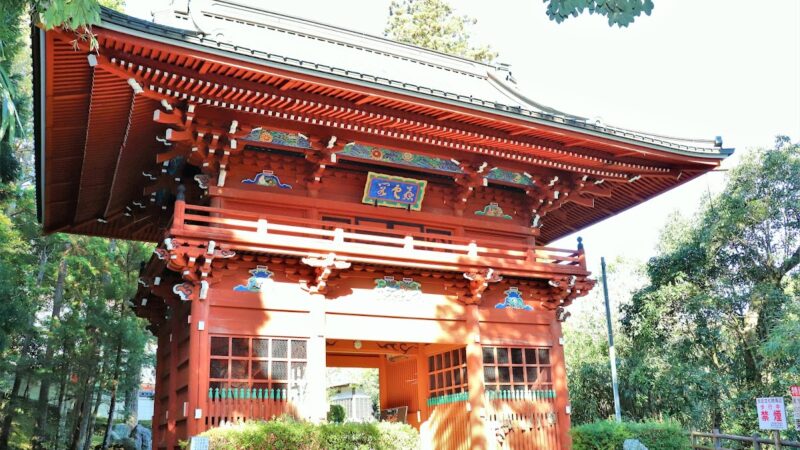
- A Bow at the Temple Gate: Before entering the temple grounds, bow at the temple gate.
- Purifying at the Water Basin: If there is a water basin, purify your hands and mouth.
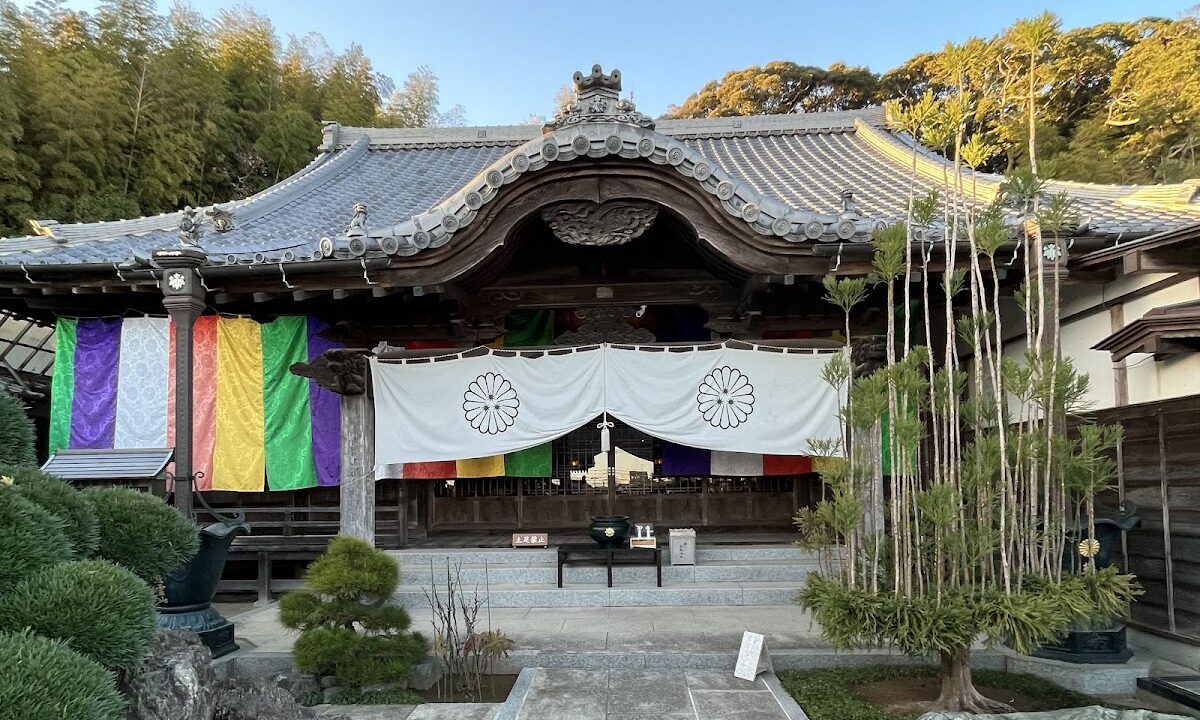
- Worship at the Main Hall: Join your hands in prayer in front of the main hall and quietly clasp your hands together.
- Offering a Coin: Offer your coin quietly and with sincerity.
- A Bow Upon Departure: When leaving, bow at the temple gate before leaving the temple grounds.
Tendai Buddhism’s Gassho (Joining Hands)
In the Tendai sect, the basic gesture is “gassho,” where both hands are joined in front of the chest. Align your fingers, lightly touch your palms together, and face the Buddha with sincerity.
Attractions Around Toei-ji Temple
Around Sōsa City
Sōsa City is pronounced “Sōsa” and derives its name from the former Sōsa District of Shimōsa Province. The Yokaichiba district has long flourished as a commercial center with a thriving market.
- Iitaka-ji Temple (Iitaka Danrin Ruins): Remains of a Buddhist monk training institution from the Edo period
- Sosa City Local History Museum: A facility where you can learn about the local history
Around Ichinomiya Town
Ichinomiya Town is located in the southern part of Kujukuri Beach and is known as a town of surfing and history.
- Kazusa Province Ichinomiya Tamasaki Shrine: A prestigious shrine with a history of over 1200 years
- Ichinomiya Beach: Famous as a surfing mecca
- Tsurigasaki Beach: Surfing venue for the 2020 Tokyo Olympics
For those considering cemeteries and perpetual memorial services
Consultation Process
The general process for consulting about perpetual memorial services and cemeteries at Toei-ji Temple is as follows:
- Consultation by phone or visit: Start by contacting us casually.
- On-site visit: Visit the temple and cemetery in person.
- Detailed explanation: Receive explanations regarding costs, memorial service details, and contract terms.
- Consideration period: Discuss with your family and consider carefully.
- Contract: Sign the contract only after you are satisfied.
Benefits of Perpetual Memorial Service
- No successor required: No burden of grave maintenance is placed on descendants.
- Temple management: The temple takes responsibility for cleaning and memorial services.
- Clear costs: Generally, only an initial fee is required, with no or low subsequent management fees.
- All denominations welcome: In most cases, all denominations are accepted.
Characteristics of Small Ancestor Graves
Small ancestral graves are an intermediate option between perpetual memorial graves and traditional graves.
- Individual Gravestones: You can have a gravestone engraved with your family’s name.
- Compact: Space-saving compared to traditional cemeteries.
- Easy Maintenance: Small size makes maintenance easy.
- Cost: Lower cost than a regular grave, and more individual than a perpetual memorial grave.
User Feedback and Reputation
Toei-ji Temple in Sōsa City is known as a temple deeply rooted in the community, enjoying the strong trust of its parishioners. Regarding perpetual memorial graves, users have commented that they were “easy to consult” and “provided thorough explanations.”
Toei-ji Temple in Ichinomiya Town, though small, is characterized by its warm and welcoming service and is well-liked by local residents.
Toei-ji Temples Nationwide
The temple names “Toei-ji” and “Toei-ji” exist throughout Japan, not just in Chiba Prefecture. “To” (東) signifies direction and good fortune, while “Ei” (榮) signifies prosperity; these are auspicious temple names.
The existence of two Toei-ji temples within Chiba Prefecture alone demonstrates the popularity of this temple name and its unique development in each region.
Summary: The Charms of the Two Toei-ji Temples
The two Toei-ji temples in Chiba Prefecture, while belonging to the same Tendai sect and sharing the same temple name, each possess distinct histories and characteristics.
Toei-ji Temple in Sōsa City boasts a history of nearly 680 years since its founding in 1343, and is a prestigious temple that inherits the lineage of the Great High Priest Tenkai. As its history of governing 19 branch temples demonstrates, it has played a vital role as a center of local faith. In modern times, it offers perpetual memorial graves and small ancestral graves, operating as a temple that meets the needs of the times.
Toei-ji Temple in Ichinomiya Town is a small temple located in the temple town of Ichinomiya in Kazusa Province, providing warm and community-oriented memorial services. With Amida Buddha as its principal deity, the temples preserve the local culture with its history of syncretism between Shinto and Buddhism.
Both Toei-ji temples, based on the teachings of the Tendai sect, play an important role as a spiritual center for local people and a place for ancestral worship. If you are considering perpetual memorial services, a burial plot, or are interested in Tendai sect temples, we encourage you to visit. They are relatively easy to access and offer a welcoming environment for consultations.
Temples are not merely religious facilities; they are valuable institutions that convey the history and culture of a region. Visiting Toei-ji temples will provide a wonderful opportunity to learn about the history of Chiba Prefecture, the teachings of the Tendai sect, and Japanese temple culture.