Tokuenji Temple (Kamigyo-ku, Kyoto Prefecture) | A Complete Guide to the Charm and Access of a Historic Shinshu Otani-ha Temple
Tokuenji Temple, located in Kamigyo-ku, Kyoto City, Kyoto Prefecture, is a historic temple belonging to the Shinshu Otani-ha sect. Nestled in a quiet residential area of the former Nishijin district, this temple is beloved by local residents while offering tranquility and peace to visitors. This article provides detailed information useful for those considering a visit, including the history of Tokuenji Temple, its highlights, access methods, and surrounding area information.
Basic Information on Tokuenji Temple
Sect and Location
Tokuenji Temple, a temple of the Shinshu Otani-ha sect, has two listed addresses in Kamigyo-ku, Kyoto City. One is 698 Kōzai-chō, Ōmiya Higashi-iru, Kamitachiuri-dōri, and the other is 143 Nishiwakamiya Kitahan-chō, Ōmiya Nishiura, Imamiya Otabi-mae Nishi-iru, Shimo-ru, Nishiwakamiya Kitahan-chō. These are thought to be differences in address notation for the same temple; in reality, it is a single temple located south of the former Nishijin Elementary School.
Basic Information Summary:
- Temple Name: Tokuenji Temple
- Sect: Shinshu Otani School
- Location: 698 Kōzai-chō, Kamigyo-ku, Kyoto City, Kyoto Prefecture (Kamitachiuri-dori, Ōmiya Higashi-iri)
- Nearest Station: Imadegawa Station, Kyoto Municipal Subway Karasuma Line
- Area: Nishijin area, Kamigyo-ku
About Shinshu Otani School
Shinshu Otani School is a branch of Jōdo Shinshū Buddhism, a Buddhist sect founded by Shinran Shōnin. Its head temple is Shinshū Honbyō (Higashi Honganji) in Higashiyama-ku, Kyoto City, and it has approximately 8,900 temples nationwide. It cherishes teachings centered on the Nembutsu (“Namu Amida Butsu”) and is based on the philosophy of salvation through faith in Amida Buddha’s original vow.
Tokuenji Temple also inherits the teachings of the Shinshu Otani sect and functions as a place of worship for local parishioners and believers.
History and Origins of Tokuenji Temple
Origins of the Temple
While detailed records of Tokuenji Temple’s founding date and founder are not widely publicized, it is known to have a long history as a temple of the Shinshu Otani sect. The Nishijin area of Kamigyo Ward has long flourished as a textile industry area, and many temples have supported the faith of artisans and merchants.
Tokuenji Temple is also thought to have been passed down through generations as a temple closely intertwined with the lives of the people in this area. Temples of the Shinshu Otani sect have played a role not only in religious ceremonies but also as centers of local communities.
Connection to the Nishijin Area
Nishijin is known as a leading textile production area in Kyoto and is nationally famous under the name “Nishijin-ori.” It is said to have been named after the Western Army’s encampment during the Onin War (1467-1477). Tokuenji Temple is located in Kamigyo Ward, right in the heart of the Nishijin area, a district historically home to many artisans and merchants.
The teachings of the Shinshu Otani sect were widely accepted, especially among the common people, and it is presumed that Tokuenji Temple served as a spiritual haven for those working in Nishijin.
Highlights and Features of Tokuenji Temple
The Beauty of the Weeping Cherry Blossoms
One of the greatest highlights of Tokuenji Temple is the weeping cherry blossoms that bloom within its grounds. Located along Kitagawa Street, the weeping cherry trees at Tokuenji Temple bloom magnificently in spring, delighting locals and visitors alike.
While Kyoto boasts numerous famous cherry blossom viewing spots, Tokuenji Temple’s weeping cherry trees are unique for their demure beauty amidst a quiet residential area. The lack of crowds found in popular tourist destinations allows for a peaceful and enjoyable cherry blossom viewing experience.
Best Time to See Cherry Blossoms:
- Season: Typically late March to early April
- Features: The weeping cherry trees in the temple grounds bloom elegantly.
- Viewing: Enjoy a relaxing experience in a quiet environment.
The Appearance of the Pillar Gate
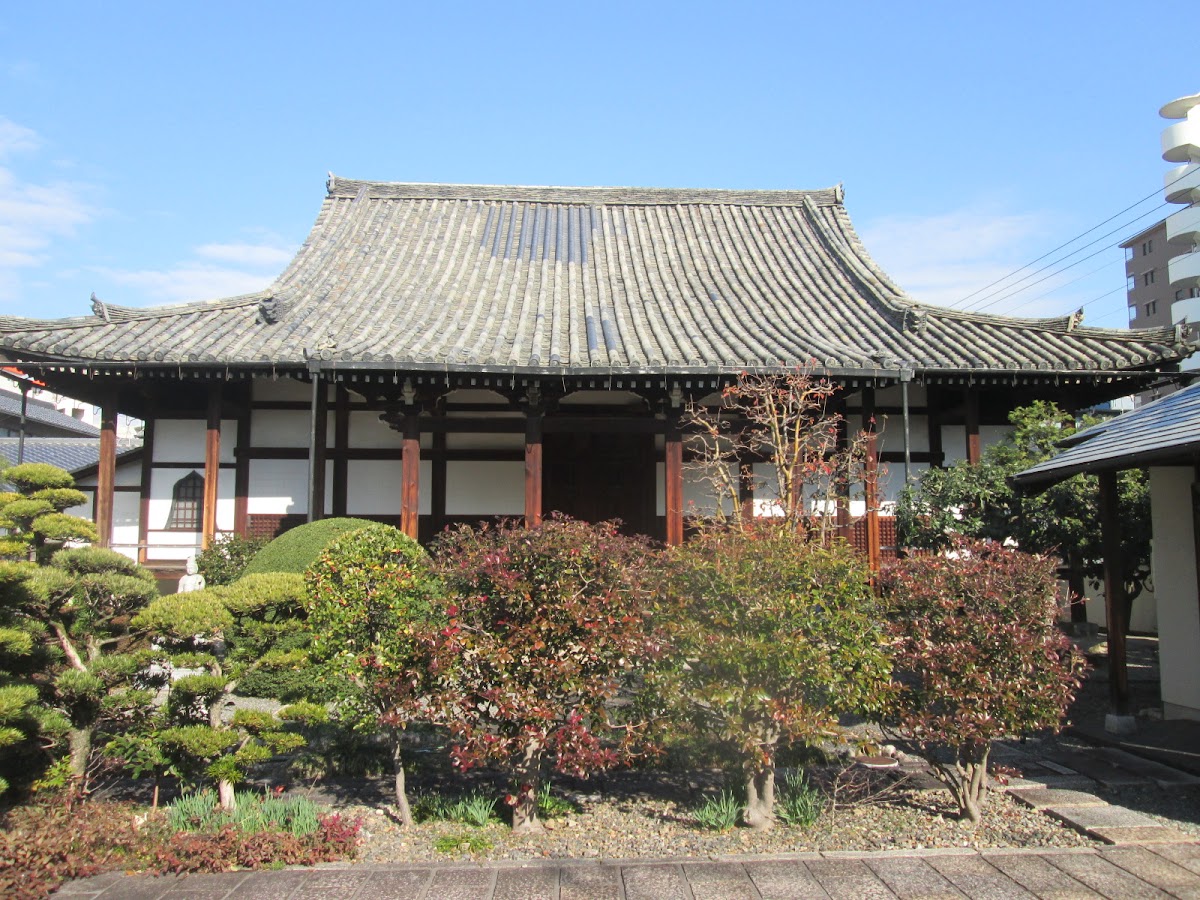
Instead of a main gate, Tokuenji Temple has a pillar gate at its entrance. The pillar gate is relatively simple in construction, giving it a friendly impression. Passing through this gate, you enter a quiet temple grounds, experiencing a tranquil space far removed from the hustle and bustle of the city.
Shinshu Otani sect temples generally have an open atmosphere, and Tokuenji Temple is no exception. The presence of the pillar gate symbolizes the temple’s welcoming attitude towards visitors.
Atmosphere of the Temple Grounds
The grounds of Tokuenji Temple are small but well-maintained and quiet. Centered around the main hall, a calm atmosphere permeates the area, creating an ideal environment for worship and spending quiet time.
Tokuenji Temple’s charm lies in the fact that, despite being located in a residential area, stepping onto its grounds reveals a tranquil world unlike any other. While fulfilling its role as a local temple for parishioners, it also exists as a temple open to visitors.
How to Access Tokuenji Temple
Access by Public Transportation
Tokuenji Temple, located in Kamigyo-ku, Kyoto City, Kyoto Prefecture, is easily accessible by public transportation.
Access from the Nearest Station:
From Imadegawa Station on the Kyoto Municipal Subway Karasuma Line
- Distance: Approximately 1.2km
- Walking Time: Approximately 12-15 minutes
- Exit: Use Exit 1
- Route: Head west on Imadegawa Street, then north on Omiya Street
Imadegawa Station is on the Kyoto Municipal Subway Karasuma Line, approximately 10 minutes from Kyoto Station and approximately 5 minutes from Shijo Station. Exit from Exit 1, head west along Imadegawa Street, and turn north at the intersection with Omiya Street to reach Tokuenji Temple.
Using Kyoto City Buses
If using Kyoto City Buses, the following bus stops are convenient:
- Horikawa Kamitachiuri Bus Stop: Approximately 5-7 minute walk
- Omiya Kamitachiuri Bus Stop: Approximately 3-5 minute walk
From Kyoto Station, you can access Horikawa Kamitachiuri via City Bus routes 9, 101, etc. From the bus stop to Tokuenji Temple, walking along Kamitachiuri Street will lead you smoothly.
Access by Car and Parking Information
If visiting by car, please note that the area around Tokuenji Temple is a residential area, and some roads are narrow. Driving requires caution.
Parking Information:
Public information regarding Tokuenji Temple’s dedicated visitor parking is limited. It is recommended to inquire directly with the temple before visiting. Several coin-operated parking lots are scattered in the surrounding area, which can also be used.
Major Roads in the Surrounding Area:
- Omiya-dori (North-South)
- Kamitachiuri-dori (East-West)
- Horikawa-dori (North-South, slightly to the east)
Access by Foot or Bicycle
Access by foot or bicycle from other tourist spots in Kyoto City:
- From Kyoto Imperial Palace: Approximately 2km, 25 minutes on foot, 10 minutes by bicycle
- From Kitano Tenmangu Shrine: Approximately 1.5km, 20 minutes on foot, 8 minutes by bicycle
- From Seimei Shrine: Approximately 0.8km, 10 minutes on foot, 5 minutes by bicycle
Kyoto is a city well-suited for sightseeing by bicycle. Renting a bicycle to explore Tokuenji Temple and the surrounding temples and shrines is highly recommended.
Tourist Spots Around Tokuenji Temple
Highlights of the Nishijin Area in Kamigyo Ward
The Nishijin area in Kamigyo Ward, where Tokuenji Temple is located, has many historical sites and cultural facilities.
Kitano Tenmangu Shrine
Located approximately 1.5 km west of Tokuenji Temple, Kitano Tenmangu Shrine is the head shrine of all Tenmangu shrines nationwide, dedicated to Sugawara no Michizane, the god of learning. It is also known as a famous spot for plum blossoms, and is bustling with many visitors on the 25th of each month.
Seimei Shrine
Seimei Shrine, dedicated to the Onmyoji (exorcist) Abe no Seimei, is located approximately 800 m east of Tokuenji Temple. In recent years, it has gained popularity as a power spot, and is a shrine with an impressive pentagram symbol.
Kyoto Imperial Palace
Located approximately 2 km east of Tokuenji Temple, the Kyoto Imperial Palace was the residence of the Emperor until the Meiji Restoration. The vast grounds are open to the public, allowing visitors to see historical buildings and beautiful gardens.
Nishijin Textile Center
The Nishijin Textile Center, where you can learn about the history and techniques of Nishijin weaving, is located approximately 1 km north of Tokuenji Temple. You can experience Kyoto’s traditional crafts by watching demonstrations of Nishijin weaving and trying out kimono rentals.
Senbon Shakado (Daihoonji Temple)
Located approximately 1.2 km southwest of Tokuenji Temple, Senbon Shakado is an ancient temple founded during the Kamakura period. It houses numerous valuable cultural assets, including a National Treasure main hall and important cultural property Buddhist statues.
Points to Note When Visiting Tokuenji Temple
Temple Visiting Manners
We will introduce basic manners for visiting temples of the Shinshu Otani sect.
Upon Entering:
- When passing through the gate, bow slightly before entering.
- Walk quietly within the temple grounds and keep conversations to a minimum.
Worship at the Main Hall:
- Join your hands in prayer and bow before the main hall.
- In Shin Buddhism, clapping is not practiced.
- Recite “Namu Amida Butsu” silently.
- When offering money, do so quietly.
Photography on the Temple Grounds:
- If you are unsure whether photography is permitted, please check with temple staff.
- Please be considerate of other visitors.
- Photography inside the main hall is generally prohibited.
Best Time to Visit
Tokuenji Temple is open year-round, but here are some particularly recommended times to visit.
Spring (Late March to Early April):
This is the time when the weeping cherry blossoms are in full bloom. While Kyoto’s cherry blossom season is crowded, Tokuenji Temple is a relatively quiet hidden gem where you can enjoy the blossoms in peace.
Autumn (November):
This is Kyoto’s autumn foliage season. The streets around Tokuenji Temple are painted in autumn colors, making it the perfect season for a stroll.
Weekdays:
Weekdays are quieter than weekends or holidays for visiting the temple. The temple grounds are especially peaceful in the early morning hours.
Clothing and Items to Bring
Clothing:
- There are no specific dress code requirements, but clean clothing appropriate for visiting a temple is desirable.
- Wear comfortable shoes (as access is mainly on foot).
- Remember sun protection in summer and warm clothing in winter.
Items to Bring:
- Camera (especially recommended during cherry blossom season)
- Goshuincho (stamp book) (if you wish to receive a stamp)
- Map or smartphone (for navigation)
- Drinks (especially in summer)
Tokuenji Temple’s Relationship with the Community
Role as a Family Temple
Tokuenji Temple, as a Shinshu Otani sect temple, plays an important role in supporting the religious lives of local parishioners. It conducts Buddhist services such as funerals, memorial services, and annual memorial services, providing spiritual support to its parishioners. Temples of the Shinshu Otani sect have the character of “places for listening to the Dharma,” and sometimes hold regular Dharma talks and Buddhist lectures. It is believed that Tokuenji Temple also deepens its interaction with local residents through these activities.
Temple Culture in Kamigyo Ward
Kamigyo Ward in Kyoto City is an area that developed around the Kyoto Imperial Palace, and many temples are scattered throughout. Tokuenji Temple is one of them, playing a part in forming the rich temple culture of Kamigyo Ward.
There are several Shinshu Otani sect temples in Kamigyo Ward, and they cooperate with each other to preserve and pass on the local Buddhist culture. Tokuenji Temple also occupies an important position within this temple network.
About Kamigyo Ward, Kyoto City
Characteristics of Kamigyo Ward
Kamigyo Ward in Kyoto City is located in the central northern part of Kyoto City, and is an area where important facilities such as the Kyoto Imperial Palace and the Kyoto Prefectural Government are concentrated. While historical streetscapes remain, it also has a modern living environment and is known as a comfortable place to live.
Main Characteristics of Kamigyo Ward:
- Historical landscape centered around the Kyoto Imperial Palace
- A town of artisans where the tradition of Nishijin weaving thrives
- Numerous temples and shrines scattered throughout the area
- Excellent access to Kyoto City Subway and city buses
- A living environment where tradition and modernity harmonize
Culture of the Nishijin Area
The Nishijin area, where Tokuenji Temple is located, has developed as a center of the textile industry since the Onin War. High-quality silk fabrics known as “Nishijin-ori” are representative traditional crafts of Kyoto.
Even today, many weaving workshops and artisans are active, continuing to preserve traditional techniques. Walking around Tokuenji Temple, you can sometimes hear the sound of weaving, giving you a sense of the town’s artisan atmosphere.
Notes on Visiting Tokuenji Temple
Regarding Visiting Hours
Official information regarding the visiting hours of Tokuenji Temple is limited. Generally, temples are open for worship during the daytime (approximately 9:00 AM to 5:00 PM), but due to their nature as family temples, there may be times when the grounds are closed for religious services or other events.
If you wish to visit without any restrictions, it is recommended to inquire by phone in advance. Especially if you wish to receive a temple stamp (Goshuin) or would like to hear more detailed information, prior contact is advisable.
Points to Note on Temple Grounds
- Quiet: Please be quiet on the temple grounds.
- Private Property: The temple is private property. Please follow the instructions of those in charge.
- Trash: Please take all trash with you.
- Smoking: Smoking is strictly prohibited on the temple grounds.
- Pets: Please check in advance whether pets are allowed.
Consideration for Surrounding Residents
Tokuenji Temple is located in a residential area, so consideration for surrounding residents is important.
- Avoid loud conversations
- Absolutely avoid street parking
- Do not trespass on private property
- Avoid visiting early in the morning or late at night
- Refrain from photographing private residences
Other Shinshu Otani-ha Temples in Kamigyo Ward
Besides Tokuenji Temple, there are several other Shinshu Otani-ha temples in Kamigyo Ward, Kyoto City. Visiting them when you visit Tokuenji Temple is highly recommended.
Visiting Nearby Shinshu Temples
Visiting Shinshu Otani-ha temples in Kamigyo Ward will allow you to gain a deeper understanding of Shinshu teachings and Kyoto’s temple culture. Each temple has its own history and characteristics, and comparing them while visiting is a fascinating experience.
Shinshu Otani-ha temples have deep ties to their head temple, Higashi Honganji (Shinshu Honbyo), and you can see common architectural styles and main hall layouts.
Things to do after visiting Tokuenji Temple
Nearby dining spots
The Nishijin area of Kamigyo Ward, surrounding Tokuenji Temple, is dotted with restaurants beloved by locals.
Recommended dining options:
- Kyoto traditional sweets: Many long-established confectionery shops offer seasonal sweets.
- Machiya cafes: Relax in cafes renovated from traditional townhouses.
- Kyoto cuisine: Restaurants serving Kyoto cuisine using local ingredients.
- Udon/Soba: Kyoto-style noodles with flavorful broth.
Recommendation for exploring Nishijin
After visiting Tokuenji Temple, we recommend exploring the Nishijin area.
Walking Highlights:
- Traveling Streetscape: Stroll through alleys lined with traditional Kyoto townhouses.
- Textile Workshops: Observe Nishijin weaving workshops from the outside.
- Small Temples and Shrines: Discover small temples and shrines other than Tokuenji Temple.
- Local Shopping Streets: Experience the daily life of the local people.
A leisurely stroll on foot or by bicycle allows you to discover a different side of Kyoto’s everyday life, distinct from the tourist areas.
Summary: The Charm of Tokuenji Temple
Located in Kamigyo-ku, Kyoto City, Kyoto Prefecture, Tokuenji Temple is a historical temple deeply rooted in the community as a Shinshu Otani sect temple. Its charm lies in the beauty of its weeping cherry blossoms, the tranquil atmosphere of its grounds, and its location in the traditional Nishijin area.
While it lacks the glamour of famous tourist temples, it offers a chance to experience the everyday life of Kyoto and spend a peaceful, calming time. Its convenient access, approximately a 12-minute walk from Imadegawa Station, is another reason why it’s easily accessible.
Tokuenji Temple, located in Kamigyo-ku, Kyoto City, Kyoto Prefecture, is a historical temple of the Shinshu Otani sect deeply rooted in the community. When sightseeing in Kyoto, you can discover a deeper charm of the city by visiting not only major tourist spots but also locally rooted temples like Tokuenji Temple. Be sure to visit Tokuenji Temple, which is especially beautiful during the spring cherry blossom season.
Reconfirming the key points of visiting Tokuenji Temple:
- A community-oriented temple of the Shinshu Otani sect
- Highlight: Weeping cherry blossoms in spring
- Conveniently located about a 12-minute walk from Imadegawa Station
- A peaceful environment for peaceful worship
- Ideal starting point for exploring the Nishijin area
- Many historical sites are scattered around the area
We hope your visit to Tokuenji Temple will be a time of peace and tranquility for you.