What is Ankokuji? A Thorough Explanation from History and Origin to Famous Temples Nationwide
Ankokuji is the name of a group of temples that hold an important position in the history of Japanese Buddhism. It is a network of temples established throughout Japan in the early Muromachi period by Ashikaga Takauji and Ashikaga Tadayoshi, and even today, temples bearing the name “Ankokuji” remain in various locations. This article provides a detailed explanation of Ankokuji, from its historical background to the characteristics of representative Ankokuji temples throughout Japan.
Historical Background of Ankokuji
Circumstances and Purpose of Establishment
Ankokuji temples were established throughout Japan in 1338 (Ryakuō 1) during the Nanboku-chō period by Ashikaga Takauji, the first shogun of the Muromachi shogunate, and his younger brother, Ashikaga Tadayoshi. There is a deep historical background to the establishment of these temples.
Main Reasons for Establishment:
- Commemoration of War Dead: During the Genkō War and the Nanboku-chō period, many samurai and commoners lost their lives. Takauji and Tadayoshi built Ankoku-ji Temple to comfort the souls of those who died in battle, regardless of whether they were friend or foe.
- Prayer for National Peace and Security: The name “Ankoku” embodies the meaning of praying for the peace and security of the nation. After a period of turmoil, there was an intention to achieve stability for the new regime through the power of Buddhism.
- Spread of Zen Buddhism: Many Ankoku-ji temples were built as Rinzai Zen temples, playing a role in spreading Zen Buddhist culture throughout the country.
Influence of Musō Soseki
The construction of Ankoku-ji Temple was strongly influenced by Musō Soseki, a high-ranking priest of the time. Musō Soseki was Ashikaga Takauji’s teacher and proposed the construction of temples throughout the country to commemorate those who died in war.
Following a proposal by Musō Soseki, a plan was drawn up to construct Ankoku-ji temples and Rishō-tō pagodas in each province, and in 1342, the “Imperial Edict for the Construction of Ankoku-ji Temples and Rishō-tō Pagodas” was officially issued. This resulted in the establishment of Ankoku-ji temples in 66 provinces and 2 islands (Iki and Tsushima).
Organization and Structure of Ankoku-ji Temples
Nationwide Network
The plan was to place one Ankoku-ji temple in each province (the provinces under the Ritsuryo system). This was a large-scale project unprecedented in the history of Japanese Buddhism, creating an organized temple network on a national scale.
Characteristics of Placement:
- In many cases, existing temples were renamed Ankoku-ji.
- In some cases, new temples were constructed.
- It was common for influential temples in each province to be selected.
- Zen Buddhist temples (mainly Rinzai sect) were central.
Relationship with Rishō-tō Pagodas
Ankoku-ji temples usually had Rishō-tō pagodas attached. The Rishōtō pagoda, taking the form of a multi-storied pagoda or a five-story pagoda, was a symbolic structure dedicated to commemorating those who died in battle and praying for national peace and security.
Representative Ankoku-ji Temples
Many temples bearing the name “Ankoku-ji” still exist throughout Japan. Here, we introduce Ankoku-ji temples of particular historical and cultural importance.
Kyoto Ankoku-ji Temple (Head Temple Position)
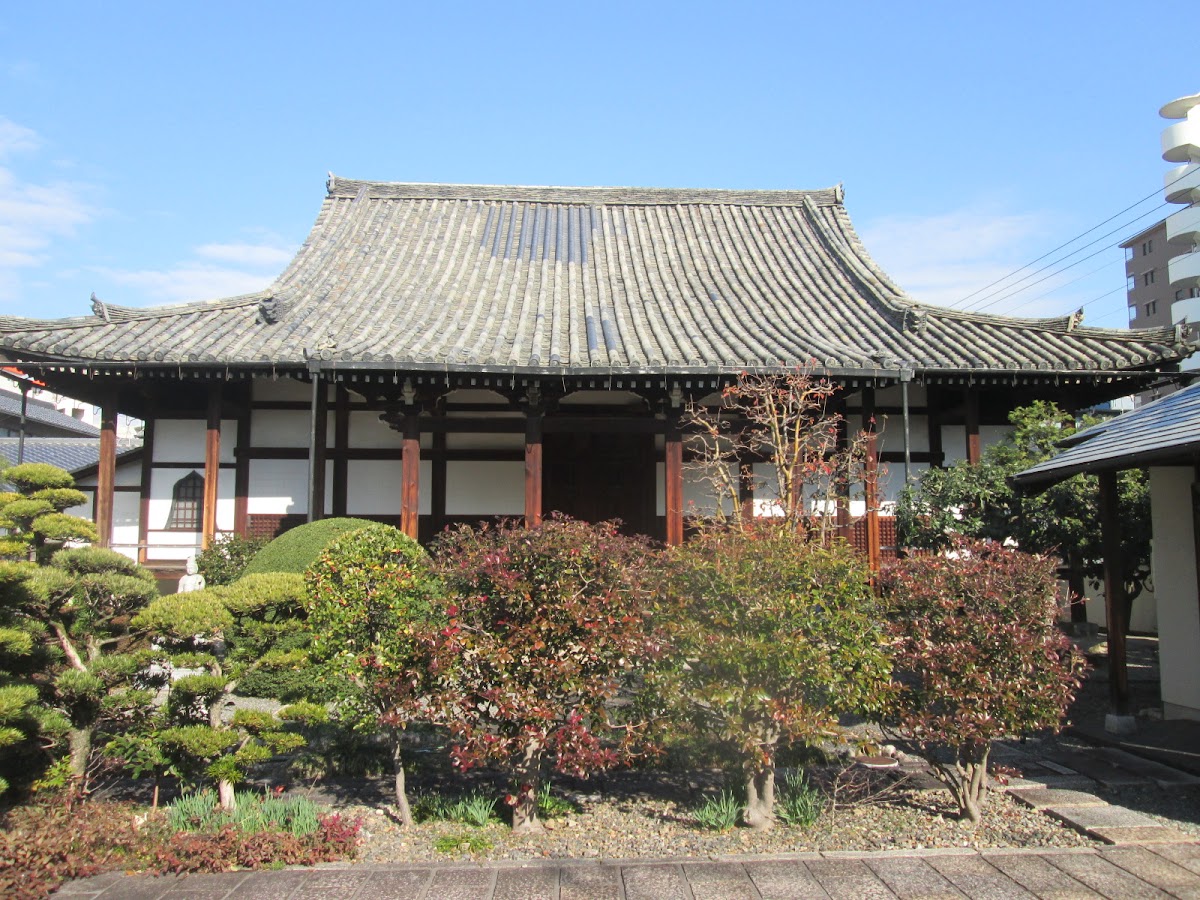
Kyoto had a temple that played a central role in the Ankoku-ji network. However, some of these temples are now abandoned, and tracing their remnants allows us to learn about their history.
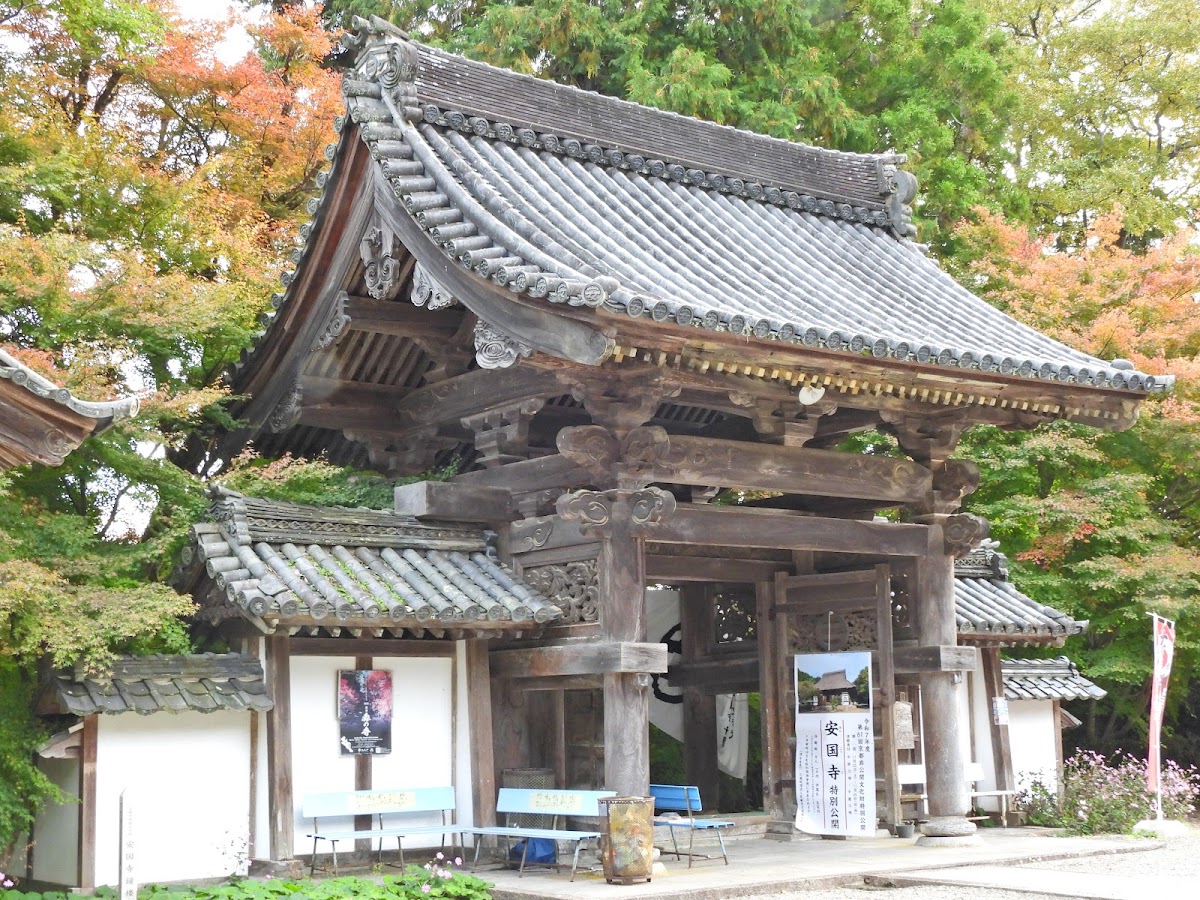
Toyooka City, Hyogo Prefecture Ankoku-ji Temple
The Ankoku-ji Temple in Tajima Province (present-day Hyogo Prefecture) is said to have been built on the land where Ashikaga Takauji spent his childhood, and thus has a deep connection to him.
Features:
- Known as a famous spot for autumn foliage
- Has a beautiful garden of Enkianthus perulatus
- The approach from the temple gate to the main hall is full of charm
- Attracts many tourists in autumn
Ankoku-ji Temple, Kunisaki City, Oita Prefecture
Ankoku-ji Temple in Bungo Province (present-day Oita Prefecture) is known as a temple on the Kunisaki Peninsula.
Features:
- Influenced by the Rokugo Manzan culture of the Kunisaki Peninsula
- May possess important cultural properties
- Deeply connected to the history of the region
Ankoku-ji Temple, Fuchu City, Hiroshima Prefecture
Ankoku-ji Temple in Bingo Province (present-day Hiroshima Prefecture) is one of the representative Ankoku-ji temples in the Chugoku region.
Features:
- Remains historical buildings such as the Shakado Hall
- Protected as a regional cultural property
- Located in a quiet mountainous area, it maintains the atmosphere of a training ground
Ankoku-ji Temple, Takayama City, Gifu Prefecture
Ankoku-ji Temple in Hida Province (present-day Gifu Prefecture) has functioned as the center of Buddhist culture in the Hida region.
Features:
- An important temple that conveys the history of the Hida region
- Still active as a center of regional faith
- Also shows connections to mountain worship
Ankoku-ji Temple, Yamaguchi Prefecture
Ankoku-ji Temples also exist in Suo Province and Nagato Province (present-day Yamaguchi Prefecture), conveying the culture of Yamaguchi in the Middle Ages.
Architecture and Cultural Properties of Ankoku-ji Temple
Architectural Style
The architecture of Ankoku-ji Temple is mainly based on the Zen Buddhist style (Tang style). Zen Buddhist style is an architectural style that originated in China and has the following characteristics:
Characteristics of Zen Buddhist style:
- Slender pillars and high ceilings
- Beautifully curved roofs
- Complex bracketing system called “tsumegumi”
- Decorative windows such as “kato-mado” (flower-shaped windows)
- Wide earthen floors and an open spatial configuration
However, depending on the region and era, eclectic styles combining Zen Buddhist and Japanese styles (Wayo) can also be seen.
Cultural Properties Held
Many Ankoku-ji temples house valuable cultural properties from the medieval to early modern periods:
Main Types of Cultural Properties:
- Buddhist statues (including the principal image of Shakyamuni Buddha)
- Paintings (portraits of Zen monks, ink paintings)
- Calligraphy (calligraphy by the founder and successive chief priests)
- Crafts (temple bells, incense burners, etc.)
- Ancient documents (documents showing the history of the temple)
Ankoku-ji Temple and Zen Culture
Deep Connection with Zen Buddhism
Many Ankoku-ji temples were established as Rinzai Zen temples and played a significant role in the spread of Zen culture in Japan. The Muromachi period was a time when Zen Buddhism deeply permeated samurai society, and Ankoku-ji temples became its center.
Elements of Zen Culture:
- Function as a place for Zen meditation practice
- Development of Zen Buddhist art such as ink painting
- Connection with tea ceremony culture
- Popularization of garden culture (such as dry landscape gardens)
- Center of Gozan literature (Chinese poetry)
Role as a Training Center
Ankoku-ji temples were not merely places of memorial services, but also functioned as training centers for Zen monks. Rigorous Zen training took place at Ankoku-ji temples throughout the region, producing many eminent monks.
The Present State of Ankoku-ji Temples
Surviving Ankoku-ji Temples
Of the Ankoku-ji temples built during the Muromachi period, many still retain the name “Ankoku-ji.” However, many Ankoku-ji temples were lost due to anti-Buddhist movements and war damage.
Current Status of Existing Ankoku-ji Temples:
- Some have changed their religious sect (to a sect other than Rinzai Zen).
- They function as local family temples.
- Some have been developed as tourist temples.
- They are maintained from the perspective of cultural property preservation.
Connections to Local Culture
Current Ankoku-ji temples are important institutions that convey the history and culture of each region. They are central to local festivals and annual events, and are subjects of local history research.
Points to Note When Visiting Ankoku-ji Temple
Etiquette for Visiting Temples
When visiting Ankoku-ji Temple, please observe general temple etiquette:
- Bow at the Temple Gate: Bow before entering the temple grounds.
- Respectful Attitude: Do not speak loudly and pray quietly.
- Photography: Do not take photos in areas where photography is prohibited.
- Praying at the Main Hall: Join your hands in prayer and pray quietly.
- Offering a Coin: Offer your coin respectfully.
Points to Note When Visiting
Enjoying the Architecture:
- Observe the architectural style of the main hall and temple gate.
- Pay attention to the shape and decoration of the roofs.
- Look for characteristics of Zen Buddhist architecture.
Appreciating the Gardens:
- Enjoy the beauty of the dry landscape gardens and pond gardens.
- Enjoy the seasonal changes in plants.
- Consider the meaning behind the garden’s layout.
Learning History:
- Read the temple’s history.
- Reviewing the explanation of the cultural property
- Understanding its connection to local history
Seasonal Attractions
Spring:
- Beautiful cherry blossoms and fresh greenery
- Spring memorial services are sometimes held
Summer:
- Lush greenery and a cool atmosphere
- Zen meditation sessions are sometimes held
Autumn:
- Magnificent autumn foliage (especially at Ankoku-ji Temple in Tajima)
- Some temples have special autumn openings
Winter:
- Beautiful snowscapes
- A chance to spend meditative time in a tranquil atmosphere
Significance of Ankoku-ji Temple Research
Historical Significance
Research on Ankoku-ji Temple is important for understanding the politics, religion, and culture of the Muromachi period:
Research Themes:
- Religious policies of the Ashikaga shogunate
- Medieval temple networks
- The process of Zen Buddhism spreading to the provinces
- The relationship between samurai and Buddhism
- The idea of commemorating war dead
From the Perspective of Cultural Property Protection
The buildings and works of art remaining at Ankoku-ji Temple are of value as Japanese cultural heritage and deserve protection. Local residents, researchers, and the government are working together to continue efforts to pass on these cultural assets to future generations.
Ankoku-ji Temple and Regional Development
Utilization as a Tourism Resource
In recent years, Ankoku-ji Temple has attracted attention as a regional tourism resource. In particular, Ankoku-ji Temple, known as a famous spot for autumn foliage, attracts many tourists.
Examples of Tourism Utilization:
- Autumn Foliage Illumination Event
- Zen Meditation Experience Program
- Sutra Copying and Buddha Image Copying Experience
- Temple Pilgrimage Tours
- Goshuin Stamp Collecting
Contribution to Regional Education
Ankoku-ji Temple also functions as a place for regional history education. It is visited by elementary and junior high school students for local history studies and serves as a venue for local history lectures.
Ankoku-ji Temple and Modern Society
A Place of Peace of Mind
In modern society, Ankoku-ji Temple has become a place for people seeking peace of mind. Spending time in a quiet temple, away from the hustle and bustle of the city, is a precious experience for many.
Modern Roles:
- A healing space in a stressful society
- A place for practicing mindfulness and meditation
- A place for experiencing traditional culture
- A center of the local community
Sustainable Temple Management
Many Ankoku-ji temples face various challenges, such as a decline in parishioners and the aging of buildings. Each temple is implementing creative and innovative initiatives to address these challenges.
Examples of Initiatives:
- Funding for restoration through crowdfunding
- Operating temple cafes and event spaces
- Conducting online memorial services
- Disseminating information through social media
Summary
Ankoku-ji temples are a network of temples established throughout Japan in the early Muromachi period by Ashikaga Takauji and Ashikaga Tadayoshi, occupying an important position in the history of Japanese Buddhism. Established to commemorate war dead and pray for national peace, Ankoku-ji temples also greatly contributed to the spread of Zen Buddhist culture.
The Ankoku-ji temples that still remain throughout Japan serve diverse roles, not only preserving historical buildings and cultural assets, but also acting as centers of local faith, tourist attractions, and places of solace for those seeking peace of mind.
Visiting an Ankoku-ji temple allows you to experience Japanese medieval history, feel the spirit of Zen, and appreciate beautiful architecture and gardens. A journey to discover the unique history and charm of each Ankoku-ji temple will surely be a rich experience.
The network of Ankoku-ji temples across Japan is a precious legacy that conveys Japan’s spiritual culture across generations. Preserving these temples and passing them on to future generations is a crucial responsibility for us.