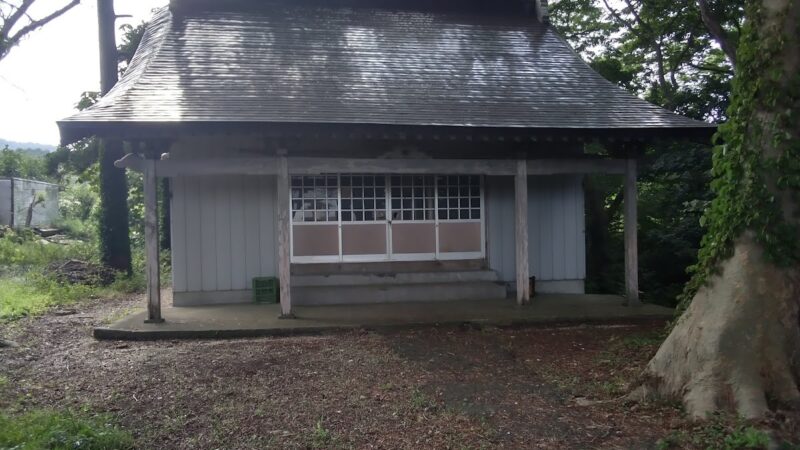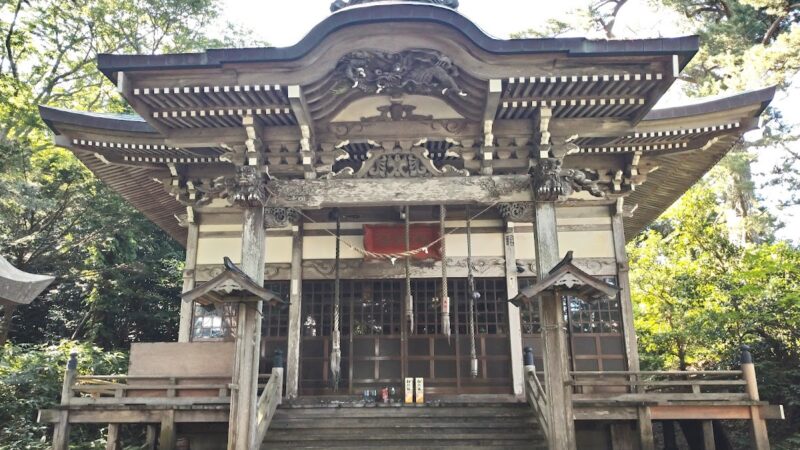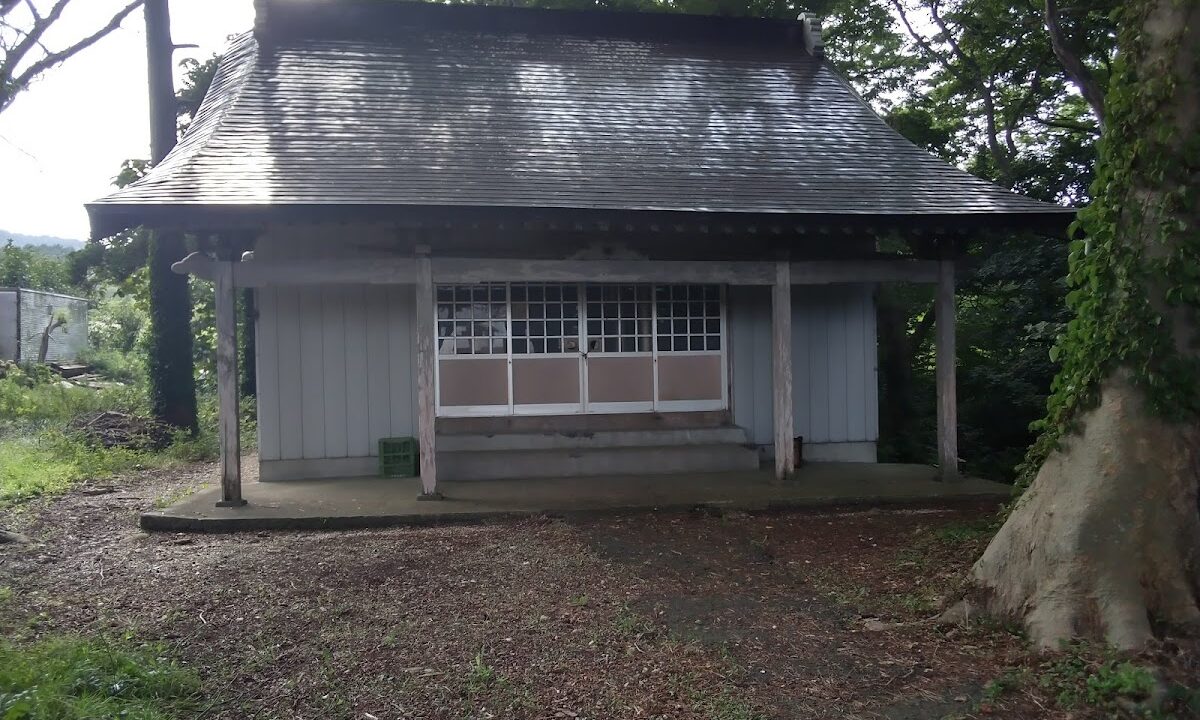
Yamatsumi Shrine (Hirauchi Town, Higashitsugaru District, Aomori Prefecture) Complete Guide | History, Deities, and Access Information
Yamatsumi Shrine, located in Hirauchi Town, Higashitsugaru District, Aomori Prefecture, is a historically significant shrine that attracts the faith of the local community. This article provides a detailed introduction to the historical background of Yamatsumi Shrine, the enshrined deity Oyamatsumi-no-kami, and the role of the shrine in Hirauchi Town.
Basic Information about Yamatsumi Shrine
Yamatsumi Shrine is located in Hirauchi Town, Higashitsugaru District, Aomori Prefecture, and has long been cherished as a center of faith for the local residents. There are approximately 20 shrines scattered throughout Hirauchi Town, and Yamatsumi Shrine holds an important position among them.
Location and Geographical Characteristics
Hirauchi Town, Higashitsugaru District, Aomori Prefecture, is a naturally rich area facing Mutsu Bay. As of May 2026, this town, with 4,681 households and a population of 9,403, is also famous as a fishing town known for its scallop farming. Yamatsumi Shrine is one of the valuable cultural assets that conveys the history and culture of Hirauchi Town to the present day.
Hirauchi Town comprises many areas, including Asadokoro, Azusawa, Inao, Uchidoji, Karibasawa, Kuchihiro, Kominato, Sotodoji, and Fukudate, each with numerous shrines and temples.
About the Deity Enshrined: Oyamatsumi-no-Kami
Divinity and Worship of Oyamatsumi-no-Kami
The deity enshrined at Yamatsumi Shrine is Oyamatsumi-no-Kami. Oyamatsumi-no-Kami is a mountain god appearing in Japanese mythology, and as the name “Yamatsumi” suggests, has been revered since ancient times as a central deity in mountain worship.
Oyamatsumi-no-kami is believed to possess the following diverse divine virtues:
- Protection of Mountains: As the god of mountains, he presides over the safety of mountain climbing and the protection of mountain forests.
- Safe Navigation: As the father of Watashi-no-kami, the god of the sea, he also grants blessings for safety at sea.
- Long-lasting Military Fortune: He also has an aspect as a god of war and was revered by samurai warriors.
- Health and Longevity: From the blessings of the mountains as a source of vitality, he bestows divine virtues of health and longevity.
- Fertility and Safe Childbirth: From the power of the mountains that nurture life, he grants blessings for conception and safe childbirth.
- Business Prosperity: As the guardian deity of industries that utilize mountain resources.
Oyamatsumi Shrines and Yamatsumi Shrines Nationwide
There are approximately 171 shrines nationwide that enshrine Oyamatsumi-no-kami, ranking 51st in the ranking of shrines by enshrined deity. The head shrine is the Oyamazumi Shrine in Omishima-cho, Imabari City, Ehime Prefecture, and is known as the “General Guardian Shrine of Japan.”
Several Oyamazumi Shrines and Yamazumi Shrines also exist in Aomori Prefecture:
- Kishida, Manabe, Aomori City: Oyamazumi Shrine (Corporate Number 8420005000788)
- Wakakusa, Kizukuri, Tsugaru City: Oyamazumi Shrine (Corporate Number 6420005004114)
- Hirauchi Town, Higashitsugaru District: Yamazumi Shrine (The subject of this article)
These shrines play an important role in mountain worship and as guardian deities of the region in their respective areas.
Shrine Culture and Historical Background of Hirauchi Town
Distribution of Shrines in Hirauchi Town
There are approximately 20 shrines in Hirauchi Town, Higashitsugaru District, Aomori Prefecture, and different forms of worship can be seen in each region. The main shrines include the following:
- Hakusan Shrine: Located in Kanukazawa, Tsuchiya, Hiranai-cho
- Yamazumi Shrine: The shrine introduced in this article
- Other small shrines scattered throughout various settlements
Characteristics of Shrine Worship in the Tsugaru Region
Shrine worship in Aomori Prefecture, particularly in Higashitsugaru District, has the following characteristics:
- Influence of Mountain Worship: Strong belief in the surrounding mountains, such as the Hakkoda Mountains
- Fusion with Ocean Worship: Due to the region’s location facing Mutsu Bay, both mountain and sea deities are worshipped
- Connection with Agriculture and Fisheries: Prayers for bountiful harvests and abundant catches are important annual events
- Prayers for Harsh Winter Climate: Reverence for nature and prayers unique to snowy regions
Hiranai-cho is a region where scallop farming is particularly thriving, and gratitude for the blessings of the sea and prayers for safety are important elements of shrine worship.
History and Origins of Yamatsumi Shrine
Circumstances of its Founding
While detailed records regarding the exact founding date of Yamatsumi Shrine are limited, it is believed to be closely related to the development of Hirauchi Town. Many shrines in the Higashi-Tsugaru region were established during the Edo and Meiji periods, coinciding with the formation of settlements. It is highly probable that Yamatsumi Shrine was also enshrined as a guardian deity of the region during this period.
Connections with the Local Community
Yamagami Shrine is not merely a place of worship, but has also played a central role in the local community:
- Annual Festivals and Events: An important social gathering place for local residents
- Milestones in Agriculture and Fishing: Prayers for a bountiful harvest in spring, thanksgiving for the harvest in autumn, etc.
- Life Cycle Rituals: First shrine visit for a newborn, Shichi-Go-San (7-5-3) festival, exorcism, etc.
- Passing Down Local Memory: Transmission of history through oral tradition and festivals
How to Access Yamagami Shrine
Access by Public Transportation
There are several ways to access Hiranai Town, Higashitsugaru District, Aomori Prefecture:
Access by Train:
- It is common to take a bus from Aomori Station
- Kominato Station on the Aoimori Railway Line may be the nearest station
Access by Bus:
- There are regular bus routes from Aomori City to Hiranai Town
- The journey takes approximately 40 minutes to 1 hour
Access by Car
From Aomori City:
- Via National Route 4 and Prefectural Roads
- Approximately 30-40 minutes
From Tohoku Expressway:
- Via National Route 4 from Aomori IC
- Approximately 40-50 minutes
Hirauchi Town is a scenic area along Mutsu Bay and is enjoyable as a driving route.
Parking Information
As this is a small local shrine, there may not be a large dedicated parking lot. Please note the following when visiting:
- Be considerate of local residents
- Avoid street parking
- Check in advance whether parking at local public facilities is available
Shrines Around Hirauchi Town
Hakusan Shrine (Kanukazawa, Tsuchiya, Hirauchi Town)
Hakusan Shrine, located in the same Hirauchi Town, is a place you should visit along with Yamatsumi Shrine. Hakusan Shrine is a shrine of the Hakusan faith, with Hakusan Hime Shrine in Kaga as its head shrine, and its main deity is Kukuri-hime no Kami.
Characteristics of the Hakusan faith:
- God of matchmaking: Kukuri-hime no Kami is considered a goddess of “binding” (kukuru), and is believed to grant blessings for matchmaking.
- God of purification: Due to the pure image of Mount Hakusan, she is believed to have the power to ward off defilement.
- Protection of women: She is particularly worshipped as a goddess who grants women’s wishes.
Temple Culture of Hirauchi Town
In addition to Shinto shrines, Buddhist temples are also scattered throughout Hirauchi Town. In Japan, with its history of syncretism of Shinto and Buddhism, shrines and temples have supported the faith of the region. In Hirauchi Town, Shinto ceremonies at shrines and Buddhist ceremonies at temples coexist as part of the town’s annual events.
Network of Yamatsumi Shrines and Oyamatsumi Shrines in Aomori Prefecture
Oyamatsumi Shrine in Aomori City
Oyamatsumi Shrine, located at 7-1 Kishida, Uchimane, Aomori City, is a religious corporation with corporate number 8420005000788. Aomori City has 106 shrines, making it one of the areas with the highest density of shrines in the prefecture.
Oyamatsumi Shrine in Tsugaru City
Oyamatsumi Shrine (corporate number 6420005004114), located at 165 Wakakusa, Kizukuri Fukihara, Tsugaru City, is situated in the agricultural area of the Tsugaru Plain and is revered by the local community as a god of abundant harvests.
Characteristics and Differences of Each Shrine
Even among shrines that enshrine the same Oyamatsumi-no-kami, there are differences in characteristics depending on the region, as follows:
- Coastal areas (e.g., Hiranai Town): Primarily focused on prayers for fishing safety and maritime safety
- Inland areas (e.g., Tsugaru City): Primarily focused on prayers for agriculture and abundant harvests
- Mountainous areas: Primarily focused on mountain worship and protection of forestry
Aomori Prefecture Shrine Association and Local Shrines
Role of the Aomori Prefecture Shrine Association
The Aomori Prefecture Shrine Association is the organization that oversees shrines within Aomori Prefecture, managing them by region as follows:
- Aomori City and Higashitsugaru District
- Tsugaru City and Nishitsugaru District
- Hirosaki City
- Kuroishi City
- Goshogawara City
- Other areas
Shrines in Hiranai Town are also under the jurisdiction of Aomori City and Higashitsugaru District, and receive various support and information through the Aomori Prefecture Shrine Association.
Shrine Maintenance and Regional Challenges
Challenges Facing Modern Local Shrines:
- Depopulation and Aging Population: Difficulty in maintenance due to a decrease in parishioners
- Shortage of Successors: Aging of Shinto priests and caretakers
- Deterioration of Buildings: Securing funds for repairs
- Preservation of Traditional Events: Simplification or cancellation of festivals
In Hiranai Town, the population is also declining (9,403 people as of May 2026), and maintaining the shrine requires a community-wide effort.
Main Events Held at Yamatsumi Shrine
Annual Events
As is typical for Shinto shrines, the following festivals are believed to be held at Yamatsumi Shrine:
Spring:
- Spring Grand Festival: Prayers for a bountiful harvest and abundant fishing catches
- Kinensai (Harvest Festival): Prayers for a good harvest that year
Summer:
- Natsukoshi no Oharae (Summer Purification Ceremony): Purification of the impurities accumulated over the past six months
- Reisai (Annual Festival): The most important festival of the shrine
Autumn:
- Autumn Grand Festival: Gratitude for the harvest
- Niinamesai (Harvest Festival): Offering of new grain to the gods
Winter:
- Toshikoshi Oharae (Year-End Purification Ceremony): Purification of the impurities accumulated over the year
- Saitansai (New Year’s Day Festival): Celebration of the New Year
Life Rituals
Shrines are also involved in the life milestones of local residents:
- Hatsumiyamairi: A prayer for the health of a baby around one month old.
- Shichi-Go-San: A celebration of a child’s growth.
- Yakubarai: A prayer to ward off misfortune during the unlucky year.
- Anshin Kigan: A prayer for traffic safety, construction safety, etc.
Mountain Worship and Oyamatsumi-no-Kami in the Tohoku Region
Characteristics of Mountain Worship in the Tohoku Region
The Tohoku region has a long history of mountain worship. In Aomori Prefecture:
- Iwaki-san Worship: Mount Iwaki, revered as Tsugaru Fuji.
- Hakkoda-san Worship: A history as a sacred site for Shugendo (mountain asceticism).
- Osore-zan Worship: A sacred place where the spirits of the dead gather.
These mountain worships and the worship of Oyamatsumi-no-Kami are connected by a commonality: reverence for nature.
Shrine Culture in the Three Northern Tohoku Prefectures (Aomori, Iwate, and Akita)
The three northern Tohoku prefectures share common characteristics in their shrine culture:
Aomori Prefecture:
- Differences in the Tsugaru and Nanbu cultural spheres
- Nature worship influenced by Jomon culture
- Influence of Western Japan through Kitamae-bune (northern trade ship) culture
Iwate Prefecture:
- Sacred mountain worship, such as Mt. Hayachine
- Shrine placement influenced by the Nanbu clan
Akita Prefecture:
- Mt. Chokai worship
- Influence of the Akita Domain’s shrine policies
Comparing these regions clarifies the position of Yamatsumi Shrine in Hiranai Town.
Sightseeing and Shrine Visits in Hiranai Town
Main Tourist Spots in Hiranai Town
Tourist spots in Hiranai Town to visit in conjunction with a visit to Yamatsumi Shrine:
Natsudomari Peninsula:
- A scenic spot overlooking Mutsu Bay
- View from Tsubakiyama Observatory
Hotate Hiroba:
- Enjoy Hiranai Town’s specialty scallop dishes
- Direct sale of fresh seafood
Asadokoro Coast:
- Beautiful coastline
- Famous spot for sunsets
Gourmet Food in Hiranai Town
Hiranai Town is known as the “Town of Scallops,” and you can enjoy dishes such as:
- Hotate Donburi: Plenty of fresh scallop sashimi
- Fried Scallops: Thick, deep-fried scallops
- Hot Scallop Ramen: A dish with a rich scallop broth
- Hamayaki: Grilled scallops cooked on the spot
Shrine Visit Manners and Etiquette
Basic Shrine Visit Etiquette
Basic shrine visit manners when visiting Yamatsumi Shrine:
Before passing through the torii gate:
- Bow before entering the shrine grounds.
- Walk along the edge of the path, as the center is the path for the gods.
Purification at the water basin:
- Take the ladle with your right hand and purify your left hand.
- Switch the ladle to your left hand and purify your right hand.
- Return the ladle to your right hand, receive water with your left hand, and rinse your mouth.
- Purify your left hand again.
- Stand the ladle upright, purify the handle, and return it to its original position.
Worship at the main hall:
- Quietly place your offering in the offering box.
- Ring the bell if there is one.
- Bow twice, clap twice, and bow once.
- Make your wish silently in your heart.
Mindset for Shrine Visits
Shrine visits are not just about making wishes:
- A heart of gratitude: Gratitude for daily peace and tranquility.
- Humble Attitude: A reverent attitude before the gods
- Pure Heart: A pure heart free from evil thoughts
- Place of Vows: Making vows of one’s resolve before the gods
Goshuin and Shrine Pilgrimages
About Goshuin
Collecting Goshuin has become popular in recent years, but it’s important to understand its original meaning:
Original Meaning of Goshuin:
- Proof of worship
- Record of connection with the shrine
- Proof of a promise with the gods
Manners When Receiving a Goshuin:
- Always worship first
- Prepare a Goshuincho (stamp book)
- Prepare a donation (around 300-500 yen)
- Express gratitude to the Shinto priest
Small shrines may not have a resident priest, so it’s recommended to check in advance.
Shrine Pilgrimage Routes in Aomori Prefecture
Examples of shrine pilgrimage routes starting from Hiranai Town:
Route along Mutsu Bay:
- Yamatsumi Shrine and Hakusan Shrine in Hiranai Town
- Oyamatsumi Shrine in Aomori City
- Other major shrines in Aomori City
Tsugaru Peninsula Route:
- Head north on National Route 280 from Hiranai Town
- Shrines in Sotogahama Town
- Towards Cape Tappi
History and Culture of Hiranai Town
Origins of Hiranai Town
Hiranai Town has a long history, with Jomon period ruins discovered:
Ancient and Medieval Periods:
- Human activity from the Jomon period
- A trading hub with Ezo (Hokkaido)
Early Modern Period (Edo Period):
- Developed as part of the Nanbu Domain
- As a town of fishing and agriculture
Modern Period and Beyond:
- Implementation of the Meiji-era town and village system
- The current Hirauchi Town formed through mergers in the Showa era
- Development of scallop farming
Traditional Culture of Hirauchi Town
Festival Culture:
- Annual festivals of each shrine
- Summer events such as Bon Odori (Bon dance)
- Traditional New Year’s events
Folk Performing Arts:
- Kagura (Shinto music and dance) and lion dance
- Folk songs passed down in the region
Lifestyle Culture:
- Traditional knowledge related to fishing
- Wisdom for life in a snowy region
The Role of Shrines in Modern Times
As the Core of the Local Community
In rural areas experiencing population decline, the role of shrines is changing:
Traditional Role:
- Place of worship
- Center of festivals
- Preservation of local history
Modern Role:
- Symbol of regional identity
- Utilization as a tourist resource
- Preservation as a cultural property
- Providing a healing space
Shrines and Regional Development
In rural towns like Hirauchi Town, the utilization of local resources, including shrines, is important:
- Collaboration with Tourism: Combining shrine visits with local tourism
- Cultural Property Protection: Preservation of historical buildings and festivals
- Utilization in Education: As a place for local learning
- Community Building: A place for intergenerational exchange
Summary: The Charm of Yamatsumi Shrine and Hiranai Town
Yamatsumi Shrine in Hiranai Town, Higashitsugaru District, Aomori Prefecture, has long been revered by local people as the guardian deity of the region, enshrining Oyamatsumi-no-kami. In the scenic Hiranai Town facing Mutsu Bay, Yamatsumi Shrine is not merely a place of worship, but a valuable entity that conveys the history and culture of the region to the present day.
In Hiranai Town, there are approximately 20 shrines, including Yamatsumi Shrine, each fostering its own unique faith that reflects the characteristics of the region. In this town known for scallop farming, a unique culture has been formed, blending gratitude for the blessings of the sea with faith in the mountain god.
Several Oyamazumi Shrines and Yamazumi Shrines exist within Aomori Prefecture, forming a network of mountain worship sites along with those in Aomori City and Tsugaru City. Visiting these shrines will allow you to experience the rich nature worship and diverse regional culture of Aomori Prefecture.
Despite facing challenges such as population decline and depopulation, Yamazumi Shrines continue to play a vital role as the core of the local community and as a place for passing on the history and traditions of Hiranai Town to future generations. When visiting Hiranai Town, be sure to pay your respects at a Yamazumi Shrine and experience the deep history and culture of this region.