Yashima-ji Temple Complete Guide | History, Highlights, and Visiting Information for the 84th Temple of the Shikoku 88 Temple Pilgrimage
About Yashima-ji Temple
Yashima-ji Temple is a Shingon sect Omuro school temple located on the southern peak of Yashima in Yashima-Higashi-cho, Takamatsu City, Kagawa Prefecture. Its formal name is Nanmenzan Senkoin, and its principal image is the Eleven-faced Thousand-armed Kannon Bodhisattva. As the 84th temple of the Shikoku 88 Temple Pilgrimage, it has welcomed many pilgrims and visitors since ancient times.
Yashima, at an altitude of 293 meters, is a lava plateau jutting out into the Seto Inland Sea and is a historical site known as the site of an ancient battle during the Genpei War. Although it is now a peninsula due to land reclamation during the Edo period, it was once an independent island. Yashima-ji Temple, standing on the summit of Yashima, has preserved its Buddhist teachings for over 1200 years amidst a breathtaking landscape woven from history and nature.
History of Yashima-ji Temple
Founding and the Abbot Ganjin
The history of Yashima-ji Temple dates back to the 6th year of the Tenpyo-Shoho era (754 AD). The Tang Dynasty monk, Abbot Ganjin, stopped at the northern peak of Yashima on his way to Todai-ji Temple to introduce Buddhist precepts to Japan. He built the Fugen-do Hall here, enshrining the statue of Fugen Bodhisattva and scriptures he had brought from Tang China, thus laying the foundation for Yashima-ji Temple.
Abbot Ganjin was a high-ranking monk who overcame five failed attempts to travel to Japan and even blindness, and the fact that his footprints are etched on Yashima speaks to the high status of this temple.
Temple Development by Abbot Eun
A disciple of Ganjin, Abbot Eun of the Kaidan-in of Todai-ji Temple, carried on his master’s wishes, building temple buildings and establishing a monastery. Abbot Eun established the temple name “Yashima-ji” and became its first head priest. This completed the formal establishment of Yashima-ji Temple.
Kobo Daishi and the Relocation to the Southern Peak
In 815 (Kōnin 6), at the request of Emperor Saga, Kobo Daishi (Kukai) visited Yashima-ji Temple. Kobo Daishi relocated the temple complex from the northern peak to its current southern peak and carved an eleven-faced, thousand-armed Kannon statue, which he enshrined as the principal image. At this time, Yashima-ji Temple strengthened its character as a training ground for Shingon Esoteric Buddhism and was established as one of the Shikoku Pilgrimage sites.
Kobo Daishi’s relocation to the southern peak is believed to have been a strategic decision considering feng shui and topography, and the current location of the main hall offers an excellent view of the entire Yashima area.
The Genpei War and Yashima-ji Temple
In 1185 (Bunji 1), Yashima became an important battleground in the Genpei War. During the period when the Taira clan used Yashima as their base, Yashima-ji Temple was also affected by the conflicts. However, it is remembered for historical events such as Nasu Yoichi’s fan target and Yoshitsune’s bow-throwing contest.
Development after the Tenryaku Era
During the Tenryaku era (947-957), the monk Myōtatsu enshrined the Four Heavenly Kings statues, further enriching the temple’s complex. The current main hall was constructed in the late Kamakura period, and throughout the Edo period, under the patronage of the Takamatsu Domain, it continued to prosper as an important pilgrimage site on the Shikoku Pilgrimage.
Highlights of Yashima-ji Temple
Main Hall (Nationally Designated Important Cultural Property)
The main hall of Yashima-ji Temple was constructed in the late Kamakura period and is designated as a Nationally Important Cultural Property. Its beautiful vermilion exterior and dignified architectural style, with its hipped roof and tiled roof, well preserve the characteristics of Kamakura period temple architecture.
Inside the main hall is enshrined the principal image, a seated statue of the Eleven-Headed Thousand-Armed Kannon. This statue, carved from a single piece of kaya wood, possesses a dignified and stable presence and is a valuable artifact believed to date from around the 10th century. Its imposing figure, approximately 2.7 meters tall, deeply impresses visitors.
Treasure Hall
The Yashima-ji Temple Treasure Hall displays numerous valuable cultural artifacts, including picture scrolls, folding screens, and ancient documents related to the Genpei War. In particular, the Genpei War folding screen vividly depicts the Battle of Yashima, including the scene of Nasu Yoichi shooting the fan, making it a must-see for history buffs.
Other items preserved within the hall include a sword believed to have been donated by a Taira clan warrior, Buddhist implements used by successive chief priests, and ancient scriptures—all testaments to the long history of Yashima-ji Temple.
Minoyama Daimyojin (Tanuki)
Within the grounds of Yashima-ji Temple is Minoyama Daimyojin, dedicated to “Taisaburo Tanuki,” one of Japan’s three most famous tanuki. This tanuki is considered the guardian deity of Yashima-ji Temple and is believed to bring blessings for family harmony, matchmaking, and prosperity in the entertainment and drinking industries.
A charming statue of a tanuki stands in front of the main hall, making it a popular spot for visitors. Tanuki-themed amulets and votive tablets are also sold, and are popular as unique souvenirs of Yashima-ji Temple.
Bell Tower and Temple Bell
The temple bell of Yashima-ji Temple is believed to have been made during the Kamakura period and is also known as the “Heike Memorial Bell.” It is said to have been cast to commemorate the Heike warriors who died in the Genpei War, and its sound conveys the history of Yashima to this day.
Visitors can ring the temple bell (for a fee), and the sound of the bell echoing from the mountaintop overlooking the Seto Inland Sea is a special experience that purifies the soul.
Shitenmon and Niomon Gates
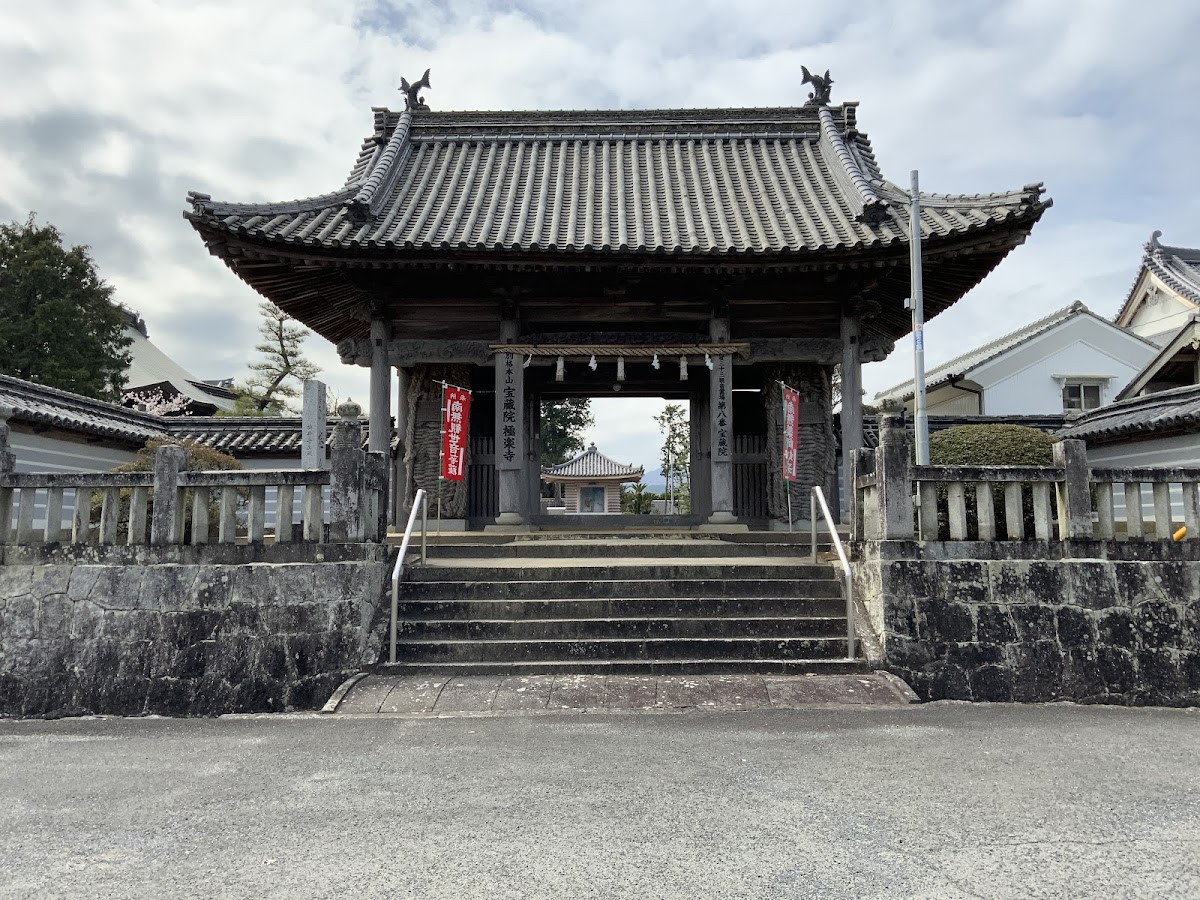
At the entrance to Yashima-ji Temple is the magnificent Shitenmon Gate, where statues of the Four Heavenly Kings are enshrined. These statues, said to have been placed there by the monk Myotatsu during the Tenryaku era, exude a powerful presence that protects the temple.
Further along the path is the Niomon Gate, where Kongo Rikishi statues welcome visitors. Passing through these gates prepares the mind to enter the sacred realm from the secular world.
Rurihochi Pond and Chinoike Pond
Within the temple grounds is a pond called “Rurihochi Pond,” said to have been dug by Kobo Daishi. Also remaining is the “Chinoike Pond,” where warriors are said to have washed their swords during the Genpei War, allowing visitors to feel the traces of history.
Cultural Properties of Yashima-ji Temple
Nationally Designated Important Cultural Properties
- Main Hall: Late Kamakura period architecture
- Principal Image: Eleven-faced Thousand-armed Kannon seated statue: Mid-Heian period (around the 10th century), carved from a single piece of kaya wood
Other Important Cultural Properties
- Four Heavenly Kings statues (placed during the Tenryaku era)
- Temple bell (Kamakura period)
- Materials related to the Genpei War (held in the Treasure Hall)
- Ancient documents and scriptures
These cultural properties demonstrate that Yashima-ji Temple is not merely a sacred site, but a temple that holds an important position in the history of Japanese Buddhism, architecture, and art.
Shikoku Pilgrimage and Yashima-ji Temple
Role as the 84th Temple
Yashima-ji Temple is the 84th temple of the Shikoku 88 Temple Pilgrimage, located towards the end of the pilgrimage route. The distance from Ichinomiya-ji Temple (the 83rd temple) to the next temple, Yakuri-ji Temple (the 85th temple), is approximately 7 kilometers.
Located on a mountain 293 meters above sea level, it is one of the physically challenging temples for pilgrims. However, the magnificent view of the Seto Inland Sea from the summit and the historical atmosphere will soothe your fatigue.
Waka Poem
The waka poem for Yashima-ji Temple is as follows:
“With a bow of catalpa, we visit the shrine of Yashima, offering our prayers, brave warriors.”
This poem depicts the warriors of the Genpei War praying to the gods and Buddhas of Yashima for victory, and strongly reflects the historical background of Yashima-ji Temple.
Temple Office and Goshuin (Stamp)
At the temple office, you can receive a goshuin (stamp) in your Shikoku pilgrimage notebook. The goshuin of Yashima-ji Temple is characterized by its calligraphic depiction of “Senju Kannon” (Thousand-Armed Kannon), making it a precious memento of your pilgrimage. They also sell original goshuincho (stamp books) and pilgrimage supplies.
Access to Yashima-ji Temple
Access by Train and Bus
Using Kotoden (Takamatsu Kotohira Electric Railway):
- Approximately 25 minutes from Kotoden Takamatsu-Chikko Station on the Shido Line, get off at Yashima Station.
- Approximately 10 minutes by Yashima Mountain Shuttle Bus from Yashima Station.
- Alternatively, approximately 40 minutes on foot from Yashima Station (via the Yashima mountain trail).
Using JR:
- Approximately 15 minutes by Yashima Mountain Shuttle Bus from JR Yashima Station.
- Alternatively, approximately 50 minutes on foot.
Local Bus:
- Take the Kotoden Bus bound for “Yashima Mountain” and get off at the last stop; it’s a short walk from there.
Access by Car
- Approximately 20 minutes from Takamatsu Chuo IC on the Takamatsu Expressway.
- Approximately 30 minutes from central Takamatsu City.
- Take the Yashima Driveway (toll road) to the mountaintop.
Parking: Free parking available on Yashima Mountain (approximately 300 cars).
Hiking on Foot
Hiking is also recommended for pilgrims and hiking enthusiasts. The main hiking trails are:
- Pilgrimage Route: The traditional Shikoku pilgrimage route. A historic path with continuous stone steps.
- North Peak Hiking Trail: A relatively gentle trail.
- South Peak Hiking Trail: A somewhat steeper trail, but offers great views.
The hiking time from the trailhead is approximately 40-60 minutes.
Visiting Information
Visiting Hours and Admission Fees
- Visiting Hours: 9:00 AM – 5:00 PM (Open year-round)
- Admission Fees: Free entry to the temple grounds; Treasure Hall: 500 yen for adults, 300 yen for junior and senior high school students, 200 yen for elementary school students
Annual Events
- New Year’s Day: First shrine visit of the year, Shusho-e (New Year’s Day ceremony)
- February 3rd: Setsubun-e (Bean-Throwing Festival)
- Spring/Autumn: Higan-e (Equinox Festival)
- August: Obon-e (Buddhist All Souls’ Day)
- 21st of Every Month: Kobo Daishi Mikage-ku (Memorial Service for Kobo Daishi)
Estimated Time Required
- Visiting the main hall only: Approximately 20 minutes
- Visiting the entire temple grounds: Approximately 40 minutes
- Including the Treasure Hall: Approximately 60 minutes
- Sightseeing around Yashima: 2-3 hours
Attractions Around Yashima-ji Temple
Tourist Attractions on Yashima Mountain
Shishi no Reigan: An observation deck at the eastern end of Yashima, offering a spectacular view of the Seto Inland Sea and Takamatsu city. The view from atop the cliff is breathtaking.
Dankorei: An observation point overlooking the site of the ancient battle of the Genpei War. You can see below the spot where Nasu Yoichi shot the fan target.
Yashima Aquarium: One of the largest aquariums in Japan, popular for its dolphin and sea lion shows. Recommended for families.
Shin-Yashima Aquarium: A unique aquarium located on the mountaintop, mainly exhibiting fish from the Seto Inland Sea.
Pilgrimage Sites around Yashima
- Ichinomiya-ji Temple (Temple No. 83): A pre-pilgrimage site for Yashima-ji Temple. Located in Ichinomiya-cho, Takamatsu City, this temple holds the status of the Ichinomiya (first-ranked shrine) of Sanuki Province.
- Temple No. 85, Yakuri-ji: The next temple after Yashima-ji. Located on the mountainside of Gokenzan, accessible by cable car.
Guidelines for Visiting Yashima-ji
Pilgrimage Etiquette
- Bow at the Temple Gate: Before entering the temple grounds, bow and clasp your hands together at the temple gate.
- Purify at the Water Basin: Cleanse your hands and mouth to purify your mind and body.
- Bell Tower: Ring the bell before praying (only one strike; do not ring it on your return).
- Visit the Main Hall: Place your votive slip, offer a monetary donation, and bow with clasped hands. Chanting the Mantra of the Main Deity
- Visiting the Daishi Hall: Offering prayers of gratitude to Kobo Daishi
- Nokyo-jo (Temple Nokyo Office): Receiving a Goshuin (temple stamp) in your Nokyo-cho (temple nokyo notebook)
Mantra of the Main Deity
Mantra of the Eleven-Faced Thousand-Armed Kannon Bodhisattva:
“Om Vajra Dharma Kiriku”
Clothing and Belongings
- Pilgrim attire such as a white robe, straw hat, and Kongo staff (for a full pilgrimage)
- Comfortable clothing and walking shoes (for general visitors)
- Nokyo-cho, prayer beads, and votive slips
- Drinks for hydration (especially in summer)
History and Topography of Yashima
Formation of Yashima
Yashima is a lava plateau formed by volcanic activity approximately 14 million years ago. It is made of a hard rock called Sanuki-type andesite, and has withstood erosion over many years, forming a unique table-like topography.
Yashima was once an independent island in the Seto Inland Sea, but during the Kan’ei era of the Edo period (1624-1644), the mouth of the Aibiki River was reclaimed, creating the peninsula-like topography we see today.
The Stage of the Genpei War
In February of Bunji 1 (1185), a fierce battle between the Minamoto and Taira clans took place at Yashima, prior to the Battle of Dan-no-ura. The Taira clan controlled the Seto Inland Sea from their base at Yashima, but the Minamoto army, led by Minamoto no Yoshitsune, launched a surprise attack, cornering the Taira after a fierce battle.
The anecdote of Nasu no Yoichi skillfully shooting an arrow through a fan target on a Taira ship, known as the “Fan Target,” is one of the most famous scenes in the Tale of the Heike.
Yashima-ji Temple and Local Culture
Connections to the Local Community
Yashima-ji Temple is not merely a tourist attraction or sacred site, but also a center of faith for the local residents. Throughout the year, local people visit the temple for various occasions, including New Year’s Day prayers, Setsubun bean-throwing ceremonies, and Obon memorial services.
Cultural Heritage Protection and Preservation
Yashima-ji Temple is committed to protecting its valuable cultural assets and passing them on to future generations. Regular restoration of buildings, preservation and management of treasures, and digitization of ancient documents are underway, continuing efforts to connect over 1200 years of history to the future.
Points to Note When Visiting Yashima-ji Temple
Weather and Clothing
Yashima Mountain is 293 meters above sea level, and temperatures are lower and winds can be strong compared to the lowlands. Especially in winter, warm clothing is necessary. Also, the ground can be slippery in rainy weather, so wearing non-slip shoes is recommended.
Physical Considerations
If hiking, the elevation difference is approximately 250 meters, and the climb takes 40-60 minutes. Those who are not confident in their physical fitness or elderly are advised to use a car or shuttle bus.
Photography
Photography is generally permitted within the temple grounds, but it may be prohibited inside the main hall and the treasure hall. Please check before taking photos or follow the signs.
Allowing Enough Time
If you plan to visit other tourist spots on Mount Yashima in addition to Yashima-ji Temple, we recommend allocating about half a day. The view from Shishi no Reigan (Lion’s Sacred Rock) is especially a must-see.
Summary of Yashima-ji Temple’s Charms
Yashima-ji Temple is a rare temple in Japan where three historical elements converge: its founding by Ganjin, its development by Kobo Daishi, and its role as the site of the Genpei War. The main hall and principal image, both designated as important national cultural properties, the treasure hall displaying artifacts from the Genpei War, and the breathtaking panoramic view of the Seto Inland Sea continue to fascinate visitors.
As the 84th temple of the Shikoku 88 Temple Pilgrimage, it is an important base for pilgrims, and at the same time, a place where general tourists can enjoy history and nature. In the tranquil atmosphere created by its unique mountaintop location, the time spent contemplating over 1200 years of history will leave a profound impression on the hearts of visitors.
When you visit Takamatsu, be sure to stop by Yashima-ji Temple and experience the profound depths of Japanese history and Buddhist culture.