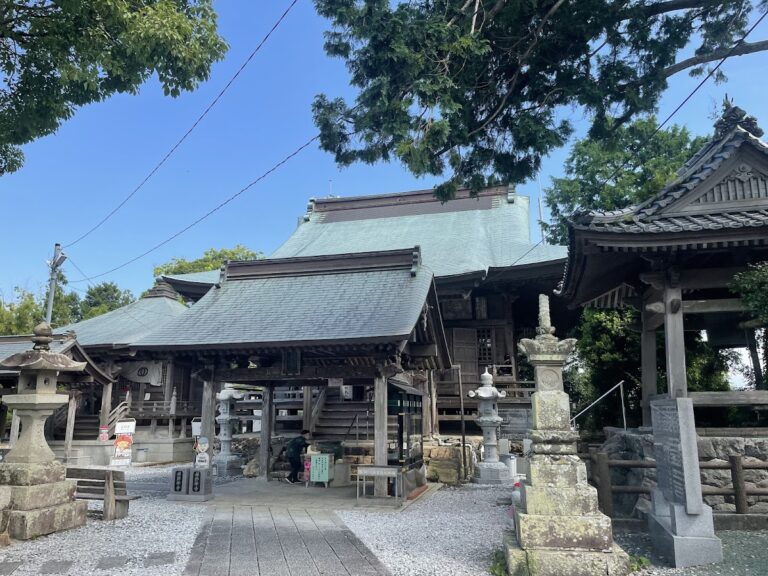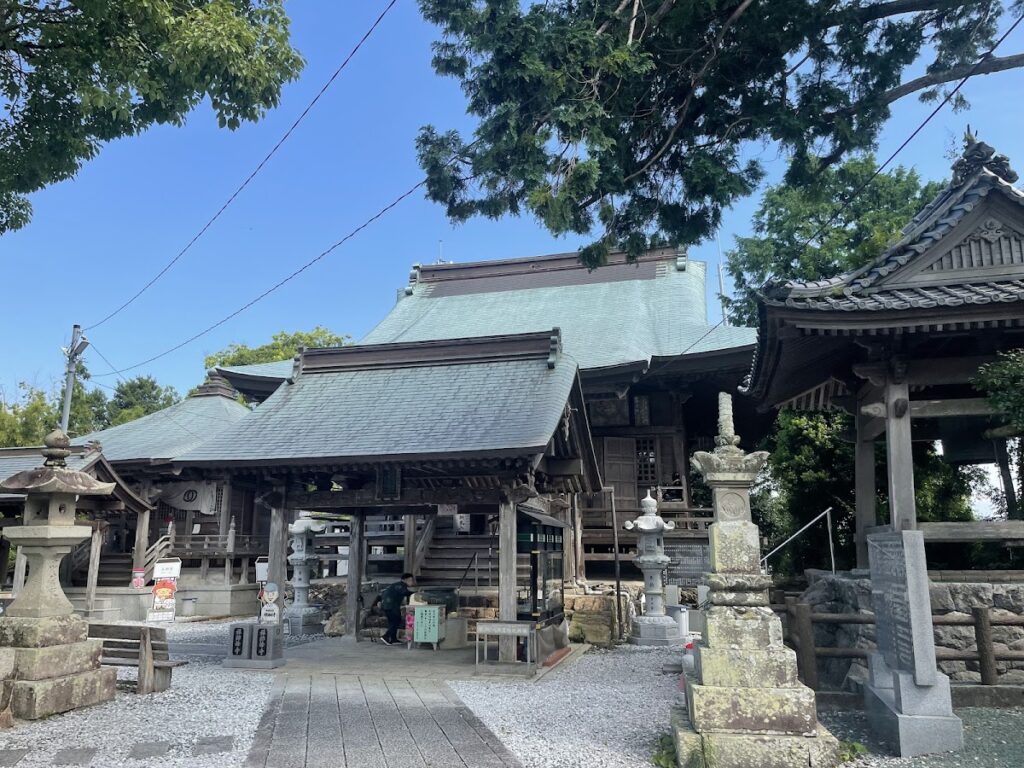
Zenjibuji Temple (No. 32 of the Shikoku 88 Temple Pilgrimage) Complete Guide | History, Highlights, Access, and Goshuin Information
Nestled atop Mt. Mineyama in Nankoku City, Kochi Prefecture, Zenjibuji Temple is the 32nd temple of the Shikoku 88 Temple Pilgrimage and has long been revered as a guardian temple for maritime safety. Located on the 82-meter-high summit of Mt. Mineyama, the temple grounds offer a panoramic view of the Pacific Ocean and are revered as the “Ship Spirit Kannon,” a place of fervent devotion for fishermen and sailors praying for the safety of ships navigating Tosa Bay.
This article comprehensively explains everything pilgrims and tourists need to know about Zenjibuji Temple, from its historical background and highlights to access information and goshuin (temple stamp) details.
Basic Information about Zenjibuji Temple
Official Name: Hachiyozan Gumonjiin Zenjibuji
Sect: Shingon-shu Buzan-ha
Principal Image: Eleven-faced Kannon Bodhisattva
Founder: Gyoki Bodhisattva
Location: 3084 Toichi, Nankoku City, Kochi Prefecture
Phone: 088-865-8430
Locally, it is affectionately known as “Mineji,” “Minenji,” or “Minedera,” and is also called “Kannon of the Ship’s Spirit” by men of the sea.
History and Origin of Zenjibuji Temple
Founding History
The history of Zenjibuji Temple dates back to the Nara period. It is said to have begun when Gyoki Bodhisattva, at the request of Emperor Shomu, built a temple to pray for the safety of ships sailing off the coast of Tosa. In Tosa Bay, a vital hub for maritime traffic even at that time, safe voyages were a fervent wish of the people.
Restoration by Kobo Daishi
In 807 (Daido 2), Kobo Daishi (Kukai), while traveling through Shikoku, visited this area. Kobo Daishi was deeply impressed by the resemblance of Mineyama’s shape to the eight-petaled lotus pedestal of Mount Potalaka (a sacred mountain considered the Pure Land of Kannon Bodhisattva), and recognized this place as a sacred site.
He performed a goma ritual of the Kokuzo Gumonji method here, and carved an eleven-faced Kannon Bodhisattva statue, which he enshrined as the principal image. It is said that the temple’s name was determined from the shape of the mountain (“Hachiyozan”), the Gumonji method he practiced (“Gumonji-in”), and the temple’s name (“Zenjimine-ji”), meaning “a temple on a peak founded by Gyoki.”
Faith as the Ship Spirit Kannon
The principal image, the Eleven-Faced Kannon Bodhisattva, is known as “Funadama Kannon” (Ship Spirit Kannon) and has been revered as a guardian deity watching over the safety of ships sailing off the coast of Tosa Bay. It is said that not only fishermen and sailors, but also successive lords of the Tosa Domain, always prayed for safe passage at this temple before setting sail from Urado Bay for their sankin-kotai (alternate attendance) duties.
During the Edo period, the temple received the patronage of the Tosa Domain and expanded its influence along with the development of maritime transportation. Even today, it continues to attract worshippers from the fishing and shipping industries, retaining its strong character as a sacred site for praying for safe passage at sea.
Waka Poem and Mantra
Waka Poem:
“On the tranquil Zenjifuji Temple, my source, my floating heart is the swift ship of the Dharma.”
This waka poem describes a state of mind where one entrusts their heart to the ship of Buddhism, like a ship floating on calm water. The temple’s character as a place to pray for maritime safety and its devotion to Buddhism are beautifully expressed.
Mantra:
“Om, Maka, Kyaronikya, Sowaka”
This is the mantra of the Eleven-Faced Kannon Bodhisattva, and it is believed that chanting it during worship will allow one to receive the compassion of Kannon.
Highlights of the Temple Grounds
Niomon Gate and Wooden Kongo Rikishi Statues
The first thing you see when climbing the approach to the temple is the Niomon Gate. The two wooden Kongo Rikishi statues enshrined in this gate are designated as important national cultural properties and are one of the valuable cultural assets of Zenjifuji Temple. Their powerful form overwhelms visitors and conveys a sense of dignity as the entrance to a sacred site.
Main Hall
The main hall enshrines the principal image, the Eleven-Faced Kannon Bodhisattva. This principal image, said to have been carved by Kobo Daishi himself, is a hidden Buddha and is not usually open to the public, but its miraculous powers continue to attract many worshippers. From in front of the main hall, you can enjoy a panoramic view of Tosa Bay, and on clear days, you can even see the horizon of the Pacific Ocean.
Daishi Hall
The Daishi Hall, standing next to the main hall, enshrines a statue of Kobo Daishi. Pilgrims offer their sutras here, expressing their gratitude to Kobo Daishi and praying for safe travels.
Byobu-iwa (Folding Screen Rock)
Within the temple grounds is a unique rock formation called “Byobu-iwa” (Folding Screen Rock). This massive rock face, created by nature, resembles a folding screen, further enhancing the mystical atmosphere of the sacred site. This rock formation also demonstrates the geological characteristics of Mineyama, allowing visitors to appreciate the beauty of natural formations.
Temple Bell (Prefectural Designated Cultural Property)
The temple bell of Zenjifuneji Temple is designated as a cultural property and a craft of Kochi Prefecture. This precious temple bell, bearing an inscription from the late Kamakura period (Tokuji 3, 1308), has a history spanning over 700 years. A “waniguchi” (a type of bronze gong) from the Muromachi period (Eiroku 13, 1570) also remains, and these are important cultural assets that tell the story of the temple’s long history.
A Grand Panorama of the Pacific Ocean
The greatest attraction of Zenjihoji Temple, located on the summit of Mineyama Mountain at an altitude of 82 meters, is the spectacular view of the Pacific Ocean from its grounds. The swells of the Pacific Ocean roar from the coastline of Tosa Bay, and on clear days, a grand panorama unfolds, stretching to the horizon.
The scenery is particularly beautiful at sunrise and sunset, with the sight of the Pacific Ocean bathed in golden light being breathtaking. The temple’s location as a place for praying for maritime safety contributes to this magnificent view.
Tsukimizaki
Continuing along the mountain ridge from the temple grounds is a scenic spot called “Tsukimizaki.” Known as a place where Asukai Soe, a literary figure of the Edo period, admired the moon, this is a famous spot where one can enjoy the beauty of the moon floating on the Pacific Ocean on a moonlit night.
Annual Events at Zenjifune-ji Temple
Spring Grand Festival
In spring, the Spring Grand Festival is held to pray for maritime safety and a bountiful catch. Many local fishermen and shipping personnel visit the temple to pray for safe voyages throughout the year.
Kobo Daishi Memorial Service
Around March 21st, the anniversary of Kobo Daishi’s death, the Miekū (memorial service) is held. A solemn memorial service expressing gratitude to Kobo Daishi is held, and many believers visit.
Autumn Grand Festival
In autumn, the Autumn Grand Festival is held to give thanks for the harvest and safe voyages. It is a traditional event where people from the community give thanks for the blessings of the year.
Access Information
Access by Car
From the Kochi Expressway:
- Approximately 15 minutes from Nangoku Interchange
- Head east on National Route 55, and follow the signs towards Mineyama in the Toichi area.
Parking: Free parking is available in front of the gate and near the temple grounds (approximately 20 spaces).
The temple grounds are a short walk from the parking lot.
Access by Public Transportation
By JR Train:
- Get off at Tosa-Otsu Station on the JR Dosan Line, approximately 40 minutes on foot (approx. 3 km)
- Approximately 10 minutes by taxi
By Local Bus:
- Take the Tosa Electric Railway Dream Service bus bound for “Toichi” from Kochi Station
- Get off at the “Toichi” bus stop, approximately 20 minutes on foot
Distance to Previous and Next Temples
- Temple No. 31, Chikurinji: Approximately 8 km (approx. 20 minutes by car)
- Temple No. 33, Sekkeiji: Approximately 7 km (approx. 15 minutes by car)
For pilgrims walking the Shikoku pilgrimage, the journey from Chikurinji takes approximately 2.5 hours, and to Sekkeiji takes approximately 2 hours.
Etiquette and Points for Visiting the Temple
Basic Order of Visiting the Temple
- Bow at the Temple Gate (Niomon Gate): Bow and clasp your hands together before entering the temple grounds.
- Purify yourself at the Water Basin: Cleanse your hands and mouth.
- Ring the Bell at the Bell Tower: Ringing the bell before visiting the temple is permitted as the “entrance bell.”
- Visit the Main Hall: Offer a votive slip, make an offering, bow and clasp your hands together, and chant sutras.
- Visit the Daishi Hall: Similarly, offer a votive slip, make an offering, bow and clasp your hands together, and chant sutras.
- Receive a Goshuin (temple stamp) at the Sutra Office: Receive a Goshuin and a sacred image after visiting the temple.
Points to Note When Visiting the Temple
- As the temple is located on the summit of Mineyama, there are stairs and slopes. We recommend wearing comfortable shoes for your visit.
- When enjoying the view from the temple grounds, please be careful of strong winds.
- Photography is permitted, but please be considerate of those inside the main hall and other visitors.
- Charms and amulets for maritime safety are also available.
Goshuin (Temple Seal) and Gokage (Image)
Goshuin (Temple Seal)
At the temple office, you can have your goshuin book inscribed with ink and stamped with a red seal. Typically, “Eleven-faced Kannon Bodhisattva” is written in the center, “Homage” and “Hachiyozan” in the upper right, and “Zenjifuneji” in the lower left.
Temple Office Hours: 7:00 AM – 5:00 PM (may vary depending on the season)
Temple Office Fee: 300 yen
Gokage (Image)
As proof of your visit, you can receive a Gokage (image) depicting the principal image, the Eleven-faced Kannon Bodhisattva. There are both color prints and commemorative images.
1200th Anniversary of the Founding of the Shikoku Pilgrimage
Since 2014, as part of the 1200th anniversary celebration of the founding of the Shikoku Pilgrimage, special commemorative stamps and images have been distributed. In addition to the regular temple stamps, you can receive a commemorative item.
Nearby Tourist Attractions
Michi-no-Eki Yasu (Roadside Station Yasu)
A roadside station located about 15 minutes by car from Zenjifune-ji Temple. You can purchase fresh local vegetables, seafood, and Tosa specialties. It’s also an ideal rest stop.
Kochi City Center
Kochi Castle, Sunday Market, Hirome Market, and other Kochi city attractions are about 30 minutes away by car. You can enjoy sightseeing in Kochi in conjunction with your pilgrimage.
Katsurahama Beach
Katsurahama Beach, a scenic spot facing Tosa Bay, is about 20 minutes away by car. It’s a representative Kochi tourist spot, featuring the statue of Sakamoto Ryoma and the Katsurahama Aquarium.
The Charm of Zenjifune-ji Temple and the Significance of Pilgrimage
Zenjifune-ji Temple is one of the 88 temples of the Shikoku Pilgrimage that has a particularly strong connection to the sea. From its grounds, which offer a panoramic view of the Pacific Ocean, one can truly feel its role as a “Ship Spirit Kannon” watching over ships sailing in Tosa Bay.
Founded by Gyoki at the behest of Emperor Shomu, and later improved by Kobo Daishi who recognized it as a sacred site, this temple has attracted the faith of people as a guardian temple for maritime safety for over 1200 years. Many valuable cultural assets remain, including the Kongo Rikishi statues in the Niomon Gate, a nationally designated important cultural property, and the temple bell, a prefecturally designated cultural property.
While its location on the summit of Mineyama Mountain requires some effort to reach, the panoramic view of the Pacific Ocean from the temple grounds is a breathtaking sight that makes the effort worthwhile. Especially on clear days, the blue sea and sky of Tosa Bay merge into a magnificent view, offering a refreshing and cleansing experience for the soul.
For those praying for safety at sea and safe voyages, as well as for all those wishing for safety on the journey of life, Zenjifuji Temple holds special significance as a sacred site. The time spent praying in the tranquil temple grounds, gazing at the Pacific Ocean, and reflecting on one’s own heart will undoubtedly be a precious experience on the Shikoku pilgrimage.
Summary
Zenjifuji Temple (Temple No. 32) is one of the 88 temples of the Shikoku pilgrimage, located on the summit of Mineyama Mountain in Nankoku City, Kochi Prefecture. Founded by Gyoki at the behest of Emperor Shomu and later renovated by Kobo Daishi, this historic temple has long been revered as a guardian temple for maritime safety, known as the “Ship Spirit Kannon.”
From its grounds, 82 meters above sea level, a panoramic view of the Pacific Ocean unfolds. Numerous valuable cultural assets remain, including the Kongo Rikishi statues in the Niomon Gate (a nationally designated important cultural property) and the temple bell (a prefecturally designated cultural property). It is easily accessible, approximately 15 minutes by car from the Nankoku Interchange, and has ample free parking.
Zenjifune-ji Temple, where you can pray to the Kannon Bodhisattva watching over the sea and enjoy the magnificent view of the Pacific Ocean, is one of the most memorable temples on the Shikoku Pilgrimage. Be sure to visit it on your next pilgrimage or when you’re sightseeing in Kochi.