Takaya Shrine (Miyazaki Prefecture, Miyazaki City) Complete Guide | An Ancient Shrine Associated with the Legend of Yamasachihiko and Emperor Keiko
Takaya Shrine, located in Murazumi-cho, Miyazaki City, Miyazaki Prefecture, is a historically significant shrine known as the setting for the famous Umisachi-Yamasachi myth in Japanese mythology, and is also traditionally believed to be the site of Emperor Keiko’s temporary palace. This article provides a detailed introduction to Takaya Shrine, from its history and enshrined deities to its highlights and visiting information.
History and Origins of Takaya Shrine
Origins of its Founding and Ancient Beliefs
The founding date of Takaya Shrine is unknown, but according to the traditions of the elders, its history is extremely old. A genealogy of the former shrine family, who became priests of the shrine in the second year of Kasho (849 AD) during the reign of Emperor Ninmyo, remains, confirming that the shrine was already functioning as a shrine at least in the early Heian period.
Furthermore, a ridge beam from a shrine renovation in 1611 (Keicho 16), during the reign of Emperor Go-Yōzei (the 107th emperor), remains, and records indicate that significant repairs were carried out in the early Edo period. These historical materials suggest that Takaya Shrine has remained a center of local faith for over a thousand years.
Takaya Palace as Recorded in the Nihon Shoki
One reason why Takaya Shrine is considered particularly important is its connection to “Takaya Palace” as clearly stated in the Nihon Shoki (Chronicles of Japan). According to the Nihon Shoki, when Emperor Keikō, the 12th emperor, visited Hyūga Province to subdue the Kumaso people of Kyushu, he established a temporary palace called Takaya Palace in the area and stayed there for six years.
While there are various theories regarding the location of this Takaya Palace, the area around Takaya Shrine in Murazumi-cho, Miyazaki City, is considered one of the most likely candidates. Emperor Keikō’s expedition to Kyushu was a significant event in ancient Japanese history, and Takaya Shrine holds historical value as the base of operations for this expedition.
Mythological Place Names Remaining in Murasumi-cho
Murasumi-cho, Miyazaki City, where Takaya Shrine is located, is a region that preserves many myths and place names related to the birth of Hikohodemi-no-Mikoto. Even today, place names related to him remain near his mausoleum, making it a precious land where the memory of the mythological age lives on.
This entire region was one of the centers of the ancient Hyuga Province, and as a special place where myth and history intersect, it has attracted the faith of people since ancient times.
The Deity and the World of Mythology
Main Deity: Hikohodemi-no-Mikoto (Yamasachihiko)
The main deity of Takaya Shrine is Hikohodemi-no-Mikoto. This deity is known as Yamasachihiko, who appears in the particularly famous “Umisachi Yamasachi Myth” in Japanese mythology.
Hikohohodemi-no-Mikoto is an important deity, the son of Ninigi-no-Mikoto (known for the descent of the heavenly grandchild) and Konohanasakuya-hime-no-Mikoto, and the grandfather of Emperor Jimmu, the first emperor of Japan. The story of the fishing hook that occurred between him and his older brother, Hoderi-no-Mikoto (also known as Umisachihiko), is one of the most memorable episodes in Japanese mythology.
Enshrined Deities: Toyotama-hime-no-Mikoto and Emperor Keiko
At Takaya Shrine, Toyotama-hime-no-Mikoto is also enshrined alongside Hikohohodemi-no-Mikoto. Toyotama-hime-no-Mikoto is the daughter of the sea god, and she became the consort of Yamasachihiko when he visited the sea palace. Their child, Ugayafukiaezu-no-Mikoto, became Emperor Jimmu, the first emperor of Japan.
Furthermore, as mentioned earlier, Emperor Keikō is also enshrined here as a deity, preserving the tradition that this area was the emperor’s temporary palace.
Summary of the Umisachi-Yamasachi Myth
The Umisachi-Yamasachi myth begins with the elder brother, Umisachihiko (Hoteri-no-Mikoto), fishing in the sea, and his younger brother, Yamasachihiko (Hikohohodemi-no-Mikoto), hunting in the mountains. One day, Yamasachihiko asks his brother to exchange tools, but loses the fishing hook he borrowed from his brother at sea.
In desperation, Yamasachihiko visits the palace of the sea god, where he meets and marries Toyotama-hime-no-Mikoto. With the help of the sea god, Yamasachihiko retrieves the fishing hook and returns to land, winning his battle against his brother. This myth is considered an important story symbolizing the relationship between agricultural and maritime peoples, and the origins of the ancient Hyūga Province.
The Imperial Mausoleum and Highlights of Takaya Shrine
The Legendary Site of the Imperial Mausoleum of Hikohodemi-no-Mikoto
To the west of Takaya Shrine lies a small hill, which is said to be the imperial mausoleum (or tomb) of Hikohodemi-no-Mikoto. An imperial mausoleum refers to the burial place of a member of the imperial family or a nobleman, indicating that this area has been treated as a special sacred site since mythological times.
Actual archaeological surveys have confirmed several Kofun period (Tumulus period) sites in this area, including burial mounds such as Takaya Shrine Tumulus No. 10. These burial mounds indicate that this region was under the control of powerful local clans since ancient times.
The Atmosphere of the Shrine Grounds and Etiquette for Worship
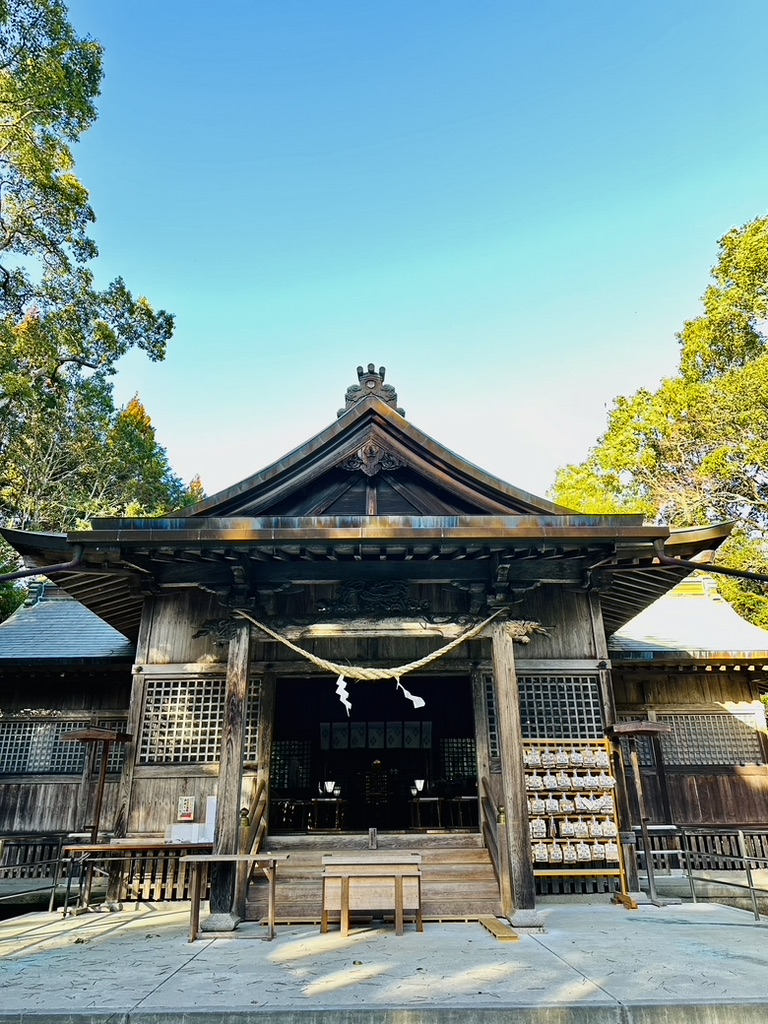
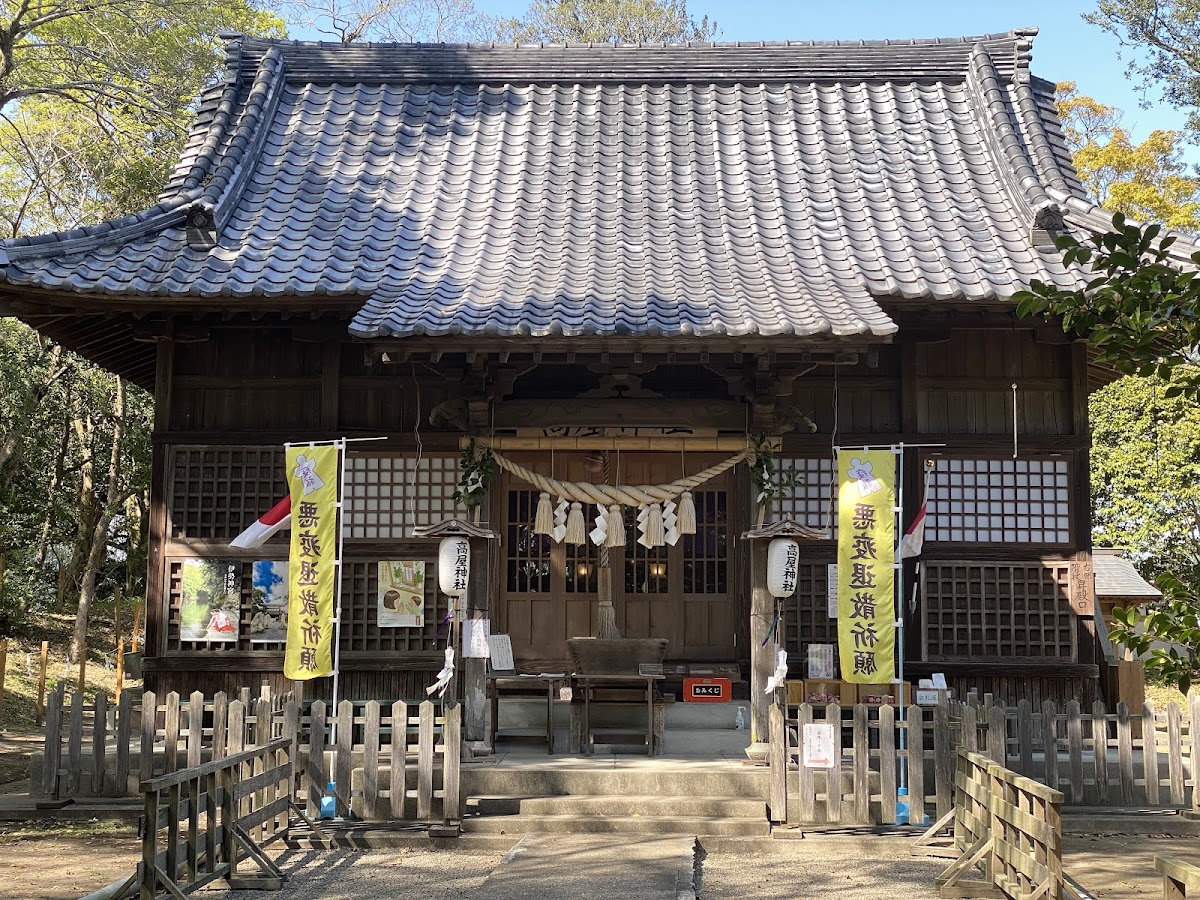
The grounds of Takaya Shrine are a tranquil space steeped in mythology and tradition. Despite its urban location, the shrine grounds maintain a calm atmosphere, allowing for peaceful worship.
The shrine buildings have undergone renovations during the Edo period and possess a historically significant presence. When visiting, we recommend taking your time to stroll through the shrine grounds, reflecting on the history of this place, the setting of many myths.
Takaya Shrine Kagura – Miyazaki City Designated Intangible Folk Cultural Property
At Takaya Shrine, the ancient Kagura dance is performed. Takaya Shrine Kagura is a valuable cultural asset that has been carefully preserved as a traditional performing art of the region, and is designated as a Miyazaki City Designated Intangible Folk Cultural Property.
Kagura is a dance offered to the gods, and is an important Shinto ritual praying for a bountiful harvest and peace in the region. The Kagura of Takaya Shrine strongly reflects the myths and history of this area, and is performed at various Shinto rituals throughout the year.
Divine Blessings and Virtues
Matchmaking and Marital Harmony
Because Takaya Shrine enshrines the married deities Hikohodemi-no-Mikoto and Toyotama-hime-no-Mikoto, it is believed to bring blessings for matchmaking and marital harmony. The story of the two gods who met in the palace of the sea god is revered as a symbol of a fateful encounter and a deep bond.
Family Safety and Prosperity of Descendants
As the shrine enshrines Hikohodemi-no-Mikoto, the ancestral deity of the Imperial family, it is also deeply revered for its blessings of family safety and prosperity of descendants. As the god who is the source of the Imperial lineage leading to Emperor Jimmu, many worshippers visit to pray for the prosperity of their family lineage.
Good Fortune and Victory
Based on the myth of Yamasachihiko overcoming various difficulties and ultimately achieving victory, the shrine is also believed to bring good fortune and victory. Furthermore, because Emperor Keiko used it as a base for his campaign against the Kumaso people, it is also believed to grant blessings for long-lasting military success and the achievement of goals.
Basic Information and Access
Address and Contact Information
Address: 1975 Tachibana-son, Murazumi-cho, Miyazaki City, Miyazaki Prefecture 880-0837
Corporate Number: 4350005000816
Takaya Shrine is located slightly southeast of the center of Miyazaki City, quietly nestled within a residential area.
Access by Car
It is approximately a 15-minute drive from the center of Miyazaki City. The easiest route is to head south from Miyazaki Station along the prefectural road towards Murazumi-cho. Parking is available around the shrine, but it is limited, so it is recommended to allow ample time for your visit.
It is approximately a 20-minute drive from the Miyazaki Interchange on the Miyazaki Expressway.
Access by Public Transportation
If using the bus from Miyazaki Station, take a Miyazaki Kotsu bus towards Murazumi. It is a few minutes’ walk from the nearest bus stop, but since the number of buses is limited, it is recommended to check the timetable in advance.
If you take a taxi, it will take about 15 minutes from Miyazaki Station.
Visiting Hours and Admission Fee
Takaya Shrine is generally open to visitors. While the grounds are always open, the shrine office’s operating hours may be limited, so it is recommended to check in advance if you wish to obtain a Goshuin (shrine stamp) or amulet.
There is no admission fee.
Nearby Tourist Attractions
Miyazaki Jingu Shrine
Located about 20 minutes by car from Takaya Shrine, Miyazaki Jingu Shrine is a representative shrine of Miyazaki Prefecture, dedicated to Emperor Jimmu, the first emperor of Japan. It enshrines Emperor Jimmu, the great-grandson of Hikohodemi-no-Mikoto, the deity enshrined at Takaya Shrine, allowing visitors to trace the lineage of Hyuga mythology by visiting both shrines.
Aoshima Shrine
Located in the southern part of Miyazaki City, Aoshima Shrine is a famous shrine for matchmaking, enshrining Hikohodemi-no-Mikoto and Toyotamahime-no-Mikoto. It enshrines the same deities as Takaya Shrine and is a popular tourist spot associated with the Umisachi Yamasachi myth. ### Saitobaru Burial Mounds (Saito City)
Located about 40 minutes by car from Takaya Shrine, the Saitobaru Burial Mounds are one of Japan’s largest clusters of burial mounds, with over 300 mounds densely packed together. It is an important historical site that tells the story of the prosperity of ancient Hyuga Province, and is especially recommended for those interested in history.
Annual Events at Takaya Shrine
Annual Grand Festival
Takaya Shrine holds its annual grand festival every year. On this day, local parishioners and worshippers gather for the dedication of Kagura (sacred dance and music) and various Shinto rituals. As a traditional event deeply rooted in the community, it attracts many worshippers.
Monthly Festivals and Daily Rituals
In addition to the monthly festival, various rituals are performed throughout the year. These rituals are important activities that convey the traditions of Takaya Shrine, which have continued for over a thousand years.
Differences from Other Takaya Shrines in Miyazaki City
There are several shrines named “Takaya Shrine” throughout Japan, and within Miyazaki Prefecture, there is also a Takaya Shrine in Saito City. The Takaya Shrine in Saito City is also known as Sanno-sha, and enshrines Ōnamuchi-no-mikoto and Emperor Keikō as its main deities. It is said to derive its name from the site of Emperor Keikō’s Takaya Imperial Palace.
The Takaya Shrine in Murazumi-cho, Miyazaki City, is most distinctive in that it enshrines Hikohohodemi-no-mikoto as its main deity. It also has a deep connection to the Umisachi-Yamasachi myth, giving it a unique character compared to other Takaya Shrines.
Significance of Visiting Takaya Shrine
Tracing the Roots of Japanese Mythology
Visiting Takaya Shrine is also a journey to trace the roots of Japan’s founding myths. By standing on the stage of the Umisachi-Yamasachi story, a crucial scene in the Hyūga mythology that continues from the descent of the heavenly grandchild to Emperor Jimmu’s eastern expedition, one can touch upon the spiritual world of ancient Japanese people.
Local Traditions and Culture
The place name of Murazumi-cho in Miyazaki City, and the place names related to the myths remaining in the surrounding area, are cultural heritage that the local people have carefully preserved and passed down for over a thousand years. Takaya Shrine, at its heart, remains a cornerstone of local faith and culture.
One of Miyazaki City’s Oldest Shrines
Due to its connection to Takaya-no-miya, which is clearly mentioned in the Nihon Shoki (Chronicles of Japan), Takaya Shrine is considered one of Miyazaki City’s oldest shrines. This historical weight teaches us, who live in the present, the depth of the lives and faith of our ancestors.
Manners and Mindset for Worship
Basic Worship Etiquette
The basic etiquette for worshipping at a shrine is “two bows, two claps, one bow.” Bow once before passing through the torii gate, and walk along the approach to the shrine avoiding the center. After purifying your body and mind at the water basin, bow deeply twice in front of the main hall, clap your hands twice, and finally bow deeply once.
Strive for Quiet Worship
Takaya Shrine is a quiet shrine located in a residential area. When visiting, please be considerate of the surrounding residents and strive for quiet worship. When taking photographs, please do so with moderation and be careful not to disturb other worshippers.
A Mindset for Visiting a Mythical Site
Takaya Shrine is not merely a tourist spot, but a sacred place with a history of over a thousand years. By paying respect to the history and culture of this place, the setting of mythology, and worshipping with a quiet heart, you will gain a deeper experience.
Summary: The Charm of Takaya Shrine
Located in Murazumi-cho, Miyazaki City, Miyazaki Prefecture, Takaya Shrine enshrines Hikohohodemi-no-Mikoto, also known as Yamasachihiko from the Umisachi-Yamasachi myth, and is a historically significant shrine also traditionally associated with the site of Emperor Keiko’s temporary palace.
With a solid history dating back to the early Heian period, a connection to Takaya Palace mentioned in the Nihon Shoki (Chronicles of Japan), and place names related to mythology that still remain in the area, this shrine is deeply imbued with the ancient history and mythology of Japan. The Takaya Shrine Kagura, a Miyazaki City-designated intangible folk cultural property, is also carefully preserved as a regional traditional culture.
It is believed to bring various blessings, including matchmaking, marital harmony, family safety, prosperity of descendants, and good fortune, attracting not only locals but also many worshippers interested in mythology and history.
When you visit Miyazaki, why not visit Takaya Shrine and experience the world of Hyuga mythology? In this place where mythology and history intersect, you will surely feel the spirituality of ancient Japanese people and the practice of faith that has continued for over a thousand years.