Tokugenji Temple (Aoba Ward, Sendai City, Miyagi Prefecture) Complete Guide | History, Access, and Cemetery Information
Tokugenji Temple, located in Imozawa, Aoba Ward, Sendai City, Miyagi Prefecture, is a historic temple belonging to the Jodo Shinshu Honganji sect. Situated in the naturally rich Imozawa district west of central Sendai, this temple has long been a place of worship for the local community. This article provides detailed information on Tokugenji Temple, including its history, characteristics, access methods, cemetery and memorial park information, and information on memorial services and funerals.
Basic Information on Tokugenji Temple
Tokugenji Temple is a Jodo Shinshu Honganji sect temple located at 36-1, Yatsusawa, Imozawa, Aoba Ward, Sendai City, Miyagi Prefecture. Aoba Ward is an administrative district that includes the central part of Sendai City, while the Imozawa district where Tokugenji Temple is located is a naturally rich area away from the city center.
Location and Contact Information
- Official Name: Tokugenji Temple
- Sect: Jodo Shinshu Honganji School (Nishi Honganji School)
- Address: 36-1, Yatsusawa, Imozawa, Aoba-ku, Sendai City, Miyagi Prefecture 989-3124
- Jurisdiction: Aoba-ku, Sendai City
The Jodo Shinshu Honganji School is a branch of Jodo Shinshu Buddhism, founded by Shinran Shonin, with its head temple being Nishi Honganji Temple in Kyoto. It teaches the belief in Amida Buddha’s original vow and the desire to attain rebirth in the Pure Land by chanting the Nembutsu.
History and Origins of Tokugenji Temple
About the Jodo Shinshu Honganji School
The Jodo Shinshu Honganji School is a sect that follows the lineage of Jodo Shinshu Buddhism, founded by Shinran Shonin (1173-1263), a monk of the Kamakura period. Shinran Shonin, as a disciple of Honen Shonin, studied Pure Land Buddhism, deepened the teachings of “reliance on the power of others,” and developed his own unique doctrines, such as the “theory of salvation even for the wicked.”
The characteristic of Jodo Shinshu Buddhism lies not in rigorous asceticism or precepts, but in the teaching that all people can be equally saved by believing in the original vow of Amida Buddha and chanting the nenbutsu, “Namu Amida Butsu.” This teaching was widely accepted by the people and became one of the largest Buddhist sects in Japan.
Development of Jodo Shinshu Buddhism in the Sendai Region
The propagation of Jodo Shinshu Buddhism in the Tohoku region, including Sendai, intensified from the medieval to the early modern period. Especially during the Edo period, temples of the Honganji and Otani (Higashi Honganji) sects were established in various locations, becoming centers of local faith.
Tokugenji Temple is also thought to have been founded in the Imozawa district within this historical context and functioned as a family temple for the local residents. The Imozawa district has been a settlement centered on agriculture since the Sendai Domain era, and the temple has played a role as a spiritual pillar of the local community.
How to Access Tokugenji Temple
Tokugenji Temple is located in the Imozawa district, in the western part of Aoba Ward, Sendai City, so access by public transportation is somewhat limited. Below is information on how to access the temple using various means of transport.
Access by Train and Bus
Nearest Station: JR Senzan Line “Rikuzen-Ochiai Station”
Tokugenji Temple is approximately 3.5 km from Rikuzen-Ochiai Station, which takes about 45 minutes on foot. Therefore, taking a taxi from the station is more convenient. It takes about 7 minutes by taxi.
Access by Bus:
If using Sendai City Buses, you can take a bus bound for “Sakunami Onsen” or “Nikkabashi” from the Sendai Station West Exit bus terminal, get off at the Imozawa district bus stop, and then walk to the temple. However, please note the distance from the bus stop to the temple and the frequency of buses. For the latest bus timetables and routes, we recommend checking the official website of the Sendai City Transportation Bureau.
Access by Private Car
From central Sendai:
- Head west on National Route 48 (Sakunami Kaido)
- Take the prefectural or city road towards the Imozawa area
- Follow the signs towards Yatsuzawa
The journey takes approximately 30-40 minutes from the area around Sendai Station. If using a car navigation system, please enter the address “36-1 Yatsuzawa, Imozawa, Aoba-ku, Sendai City, Miyagi Prefecture”.
Parking: The temple has parking spaces for visitors, but it may be crowded during memorial services and events. We recommend contacting the temple in advance.
Geographical Characteristics of the Surrounding Area
The Imozawa area, where Tokugenji Temple is located, is situated in the western mountainous area of Sendai City, south of National Route 48, which leads to Sakunami Onsen. The surrounding area is characterized by a tranquil environment blessed with natural beauty, featuring rural landscapes and forests.
Nearby are other temples, including the Okura Dam, a water source for Sendai City, and Jogi Nyorai Saihoji Temple, making this area sometimes referred to as Sendai’s inner sanctuary.
Tokugenji Temple Grounds and Highlights
Main Hall and Temple Facilities
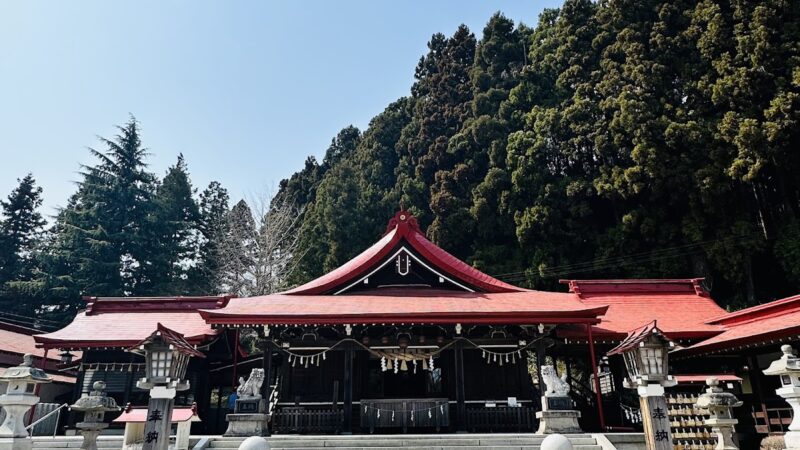
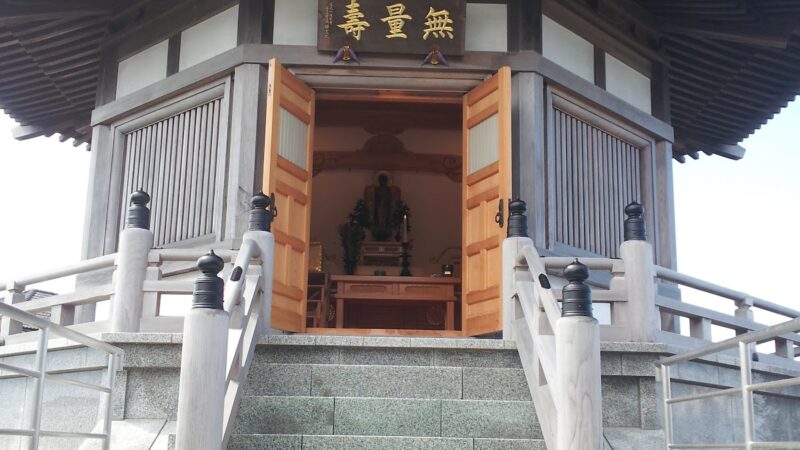
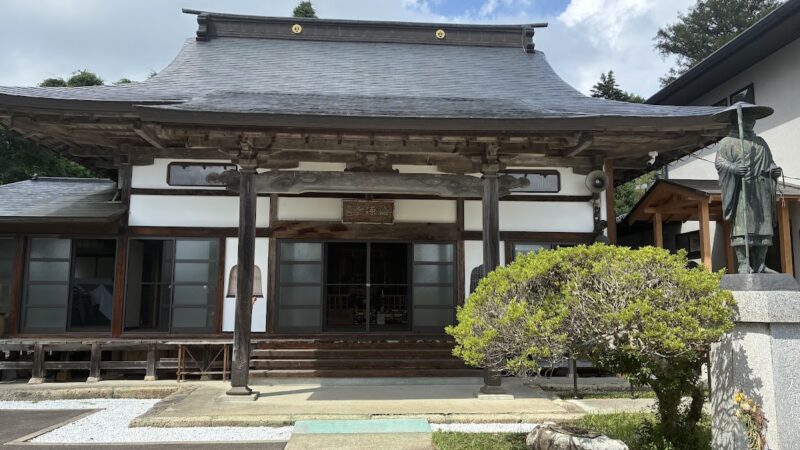
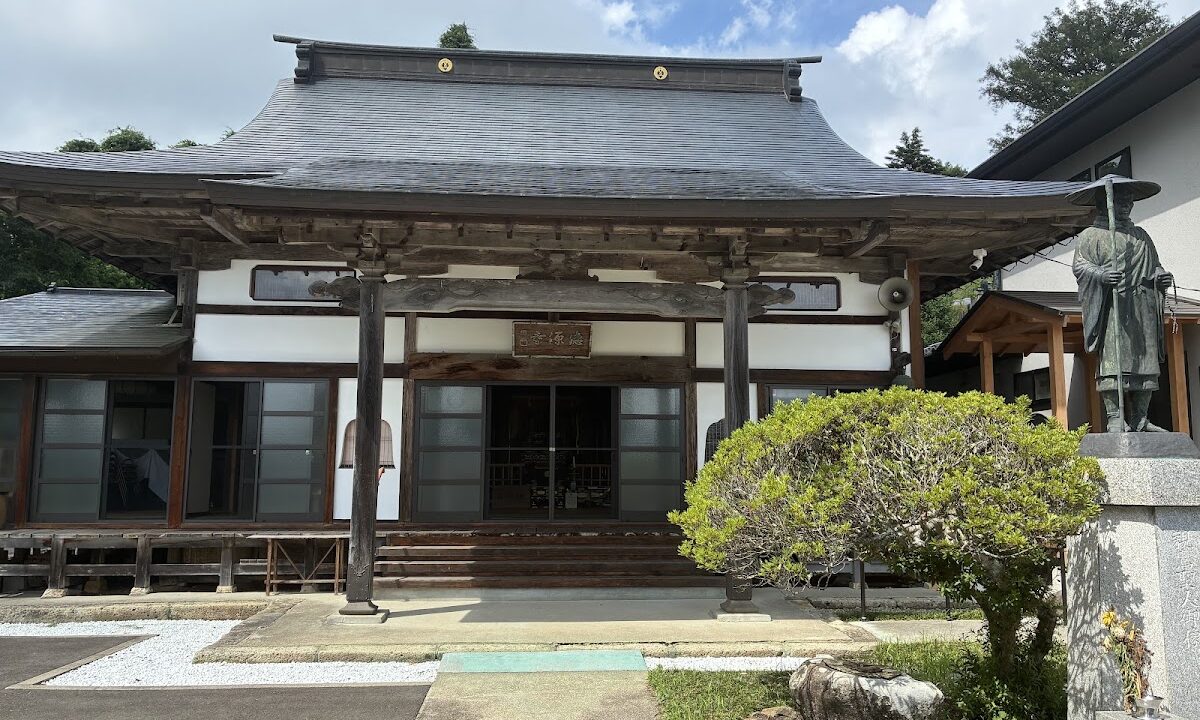
The main hall of Tokugenji Temple follows the traditional architectural style of the Jodo Shinshu Honganji sect. The principal image, Amida Buddha, is enshrined within the main hall, where daily services and religious ceremonies are held.
In Jodo Shinshu temples, it is common to enshrine portraits of the founder Shinran Shonin and successive heads of the sect, centered around the principal image, Amida Buddha. The inner sanctuary is adorned with gold leaf and vibrant colors, representing the world of the Pure Land.
Natural Environment of the Temple Grounds
Located in the naturally rich environment of the Imozawa district, Tokugenji Temple offers beautiful scenery throughout the seasons. From cherry blossoms and fresh greenery in spring, to deep green in summer, vibrant autumn leaves, and snowy landscapes in winter, the temple grounds display different expressions with each season, soothing the hearts of visitors.
Annual Events and Ceremonies at Tokugenji Temple
Main Events of the Jodo Shinshu School
Jodo Shinshu Honganji-ha temples hold various ceremonies and events throughout the year. It is believed that Tokugenji Temple also holds the following events:
Spring Ceremony (Spring Equinox): A ceremony held during the Equinox period, centered around the spring equinox in March. It is a time for expressing gratitude to and honoring ancestors.
Birth Day Celebration (Flower Festival): A ceremony held on April 8th to celebrate the birth of Buddha. It includes rituals such as the pouring of sweet tea.
Obon Festival (Urabon-e): A memorial service for ancestors held in mid-August. In the Tohoku region, it is generally held around August 15th of the Gregorian calendar, rather than the lunar calendar.
Autumn Memorial Service (Autumn Equinox): Held during the Higan period, centered around the autumnal equinox in September.
Hoonko (Memorial Service): The most important memorial service in Jodo Shinshu Buddhism, commemorating the death anniversary of Shinran Shonin (November 28th in the lunar calendar). Many temples hold this service from late November to early December.
Monthly Memorial Services
Many Jodo Shinshu temples hold monthly memorial services (Tsukiki Hoyo) on the anniversary of Shinran’s death each month. Tokugenji Temple may also hold regular memorial services. Please contact the temple directly for detailed dates.
Funeral and Memorial Services at Tokugenji Temple
Funeral Information
Tokugenji Temple conducts funerals for its parishioners and relatives. A Jodo Shinshu funeral is a ceremony that signifies sending the deceased to the Pure Land and beginning a new journey as a disciple of Buddha.
Characteristics of Jodo Shinshu Funerals:
- Not a Ceremony for Attaining Buddhahood: In Jodo Shinshu Buddhism, it is believed that those who recite the Nembutsu (invocation of Amida Buddha) will attain rebirth in the Pure Land at the moment of death, according to the original vow of Amida Buddha. Therefore, the funeral is not a ceremony for attaining Buddhahood, but a ceremony to celebrate the journey as a disciple of Buddha.
- No Use of Purifying Salt: In Jodo Shinshu Buddhism, death is not considered impure, so the custom of using purifying salt, commonly seen in Buddhist funerals, does not exist.
- No Concern for Tomobiki: Jodo Shinshu teachings reject the superstition of judging the auspiciousness or inauspiciousness of days, so there is no need to worry about the Rokuyo (six-day cycle) such as Tomobiki.
Information on Buddhist Memorial Services
Tokugenji Temple also holds various Buddhist memorial services, including annual memorial services.
Main Annual Memorial Services:
- First Seven Days
- Forty-Ninth Day
- First Anniversary
- Third Anniversary
- Seventh Anniversary
- Thirteenth Anniversary
- Seventeenth Anniversary
- Twenty-Third Anniversary
- Twenty-Seventh Anniversary
- Thirty-Third Anniversary
- Fiftieth Anniversary
It is important to consult with the temple in advance regarding scheduling and preparations for memorial services. It is also reassuring to confirm the amount of the offering, necessary offerings, and considerations for attendees.
Information on Tokugenji Temple’s Cemetery
Cemetery Overview
Tokugenji Temple has an attached temple cemetery where parishioners maintain their ancestral graves. The advantages of temple cemeteries include the fact that daily management is thorough due to the presence of a resident priest, and that memorial services and rites can be held easily.
Regarding Cemetery Use
Acquiring a New Cemetery Plot:
If you wish to acquire a new cemetery plot at Tokugenji Temple, you must first consult with the temple. Generally, to use a temple cemetery, you must become a parishioner of that temple.
Regarding the Parishioner System:
A parishioner is someone who provides financial and spiritual support to a specific temple and receives religious services (funerals, memorial services, rites, etc.) from that temple. By becoming a parishioner, you can receive the following services:
- Perpetual use rights of a cemetery plot
- Execution of funerals and memorial services
- Daily consultations on Buddhist matters
- Participation in annual events
In return, parishioners have the following obligations:
- Annual maintenance fee payment
- Cooperation with temple events
- Cooperation with the maintenance of the main hall and temple grounds
Types of graves and how to choose
In modern times, various types of graves are available in addition to traditional family graves.
General grave (family grave): This is a traditional type of grave passed down through generations. A tombstone is erected, and family members and relatives are interred there for generations.
Individual grave/couple grave: This is a grave for an individual or a couple only. This is an option that takes into account the issue of succession.
Perpetual memorial grave: This is a grave where the temple provides perpetual memorial services and management. This is suitable for those who have no successors or who do not want to burden their descendants.
For information on the types of burial plots available at Tokugenji Temple, please contact the temple directly.
Consultation on grave closure/reburial
In recent years, due to the declining birthrate, aging population, and population movement, managing graves located far away has become difficult, and more people are considering “grave closure.” “Grave closure” refers to the removal of the current grave and the relocation of the remains to another location.
Grave Closure Procedure:
- Reaching an agreement among relatives
- Deciding on a new burial site
- Consulting with the current cemetery administrator
- Administrative procedures (application for reburial permit)
- Performing a soul-removal ceremony (closing of the eyes ceremony)
- Removal of the tombstone and return of the burial plot
- Interment and opening of the eyes ceremony at the new burial site
Even if you wish to move a grave to Tokugenji Temple, or rebury remains from Tokugenji Temple to another location, it is important to consult with the temple first. While Jodo Shinshu Buddhism does not have the concept of “soul-removal,” memorial services such as the relocation of the Buddha or altar are performed when moving graves or Buddhist altars.
Temple Environment in Aoba Ward, Sendai City
Characteristics of Aoba Ward
Aoba Ward in Sendai City is an administrative district that includes the central part of Sendai City, with a concentration of administrative institutions such as the city hall and prefectural government, as well as commercial facilities and educational institutions. At the same time, it also includes a vast mountainous area in the west, making it a region blessed with a rich natural environment.
Within Aoba Ward, there are temples of various denominations, including Jodo Shinshu temples like Tokugenji, as well as Nichiren, Soto, and Rinzai Zen temples. Furthermore, shrines such as Sendai Toshogu and Aoba Shrine are scattered throughout the area, creating a diverse coexistence of places of worship.
Major Temples in Aoba Ward
While there are numerous temples in Aoba Ward, here are some of the most representative ones.
Rinnoji Temple: A Soto Zen temple located in Kitayama, Sendai City, known for its connection to the Date family.
Osaki Hachimangu Shrine: Strictly speaking a shrine, it is one of Sendai’s representative religious facilities. The shrine buildings, designated as National Treasures, are a must-see.
Jogi Nyorai Saihoji Temple: A Jodo sect temple located in Okura, Aoba Ward, affectionately known as “Jogi-san.”
Shifukuji Temple: A Rinzai sect temple located in Kitayama, containing the tomb of a concubine of Date Masamune.
Like these temples, Tokugenji Temple also plays an important role in supporting local faith.
The Teachings and Faith of Jodo Shinshu Buddhism
The Teaching of Other-Power
The fundamental idea of Jodo Shinshu Buddhism is “other-power.” This is the teaching that salvation is achieved not through one’s own power (self-power), but through the power of Amida Buddha’s original vow (other-power).
Shinran Shonin deeply contemplated human desires and recognized the difficulty of attaining enlightenment through self-power. He believed in Amida Buddha’s original vow to “save all sentient beings” and taught that salvation is achieved by entrusting oneself to that vow.
The Meaning of Nembutsu
In Jodo Shinshu Buddhism, we chant “Namu Amida Butsu,” but this is not a practice for salvation; rather, it is an expression of gratitude for Amida Buddha’s original vow. We chant the Nembutsu as a way of repaying the kindness and gratitude we feel for already being saved.
Practice in Daily Life
Jodo Shinshu faith does not require special training or strict precepts. The basic principle is to feel Amida Buddha’s compassion and chant the Nembutsu in gratitude in daily life.
Visiting the Buddhist Altar: The family altar is a small temple. By visiting daily, making offerings, and chanting the Nembutsu, we deepen our connection with the Buddha.
Listening to the Dharma: Participating in Dharma talks and study groups at temples to learn Buddhist teachings is also an important practice.
Living a Life of Gratitude: We are encouraged to live with gratitude for Amida Buddha’s compassion and with compassion for others.
Notes and Manners When Visiting Tokugenji Temple
Etiquette for Worship
This section introduces basic etiquette for visiting a Jodo Shinshu temple.
Bow at the Temple Gate: When passing through the temple gate (sanmon), bow before entering.
Worship at the Main Hall:
- Before entering the main hall, purify your hands at the water basin (if available).
- Enter the main hall and clasp your hands together in front of the main image of Buddha.
- If you have prayer beads, place them on both hands.
- Recite the Nembutsu, “Namu Amida Butsu.”
- Bow deeply.
Offering: Offerings are a way of expressing gratitude. There are no set amounts, but quietly place your offering in the offering box.
Regarding Attire
For regular visits, there are no specific dress code requirements, but clean and subdued attire is desirable. For memorial services or funerals, wear formal or mourning attire.
Regarding Photography
Policies regarding photography within temple grounds vary from temple to temple. In particular, permission is often required to photograph the interior of the main hall or Buddha statues, so it’s best to check beforehand or refrain from taking photos altogether.
Visiting Hours
Since the head priest and temple family often live in the temple, avoid visiting early in the morning or late at night. Generally, the appropriate time for visiting is from 9:00 AM to around 5:00 PM. If you are visiting a temple for a religious service or other event, it is necessary to contact them in advance and arrange a date and time.
Sightseeing and Attractions Around Tokugenji Temple
Sakunami Onsen
Heading west from Tokugenji Temple along National Route 48, you will find Sakunami Onsen, known as the “inner sanctuary” of Sendai. This hot spring resort boasts a history of approximately 1,300 years, with inns lining the Hirose River gorge. Combining a visit to Tokugenji Temple with a relaxing soak in the hot springs is highly recommended.
Jogi Nyorai Saihoji Temple
Located in the same Aoba Ward, Jogi Nyorai Saihoji Temple is a temple affectionately known as “Jogi-san.” It is believed to bring blessings for matchmaking and fertility, attracting many visitors. Its famous triangular fried tofu is also well-known.
Okura Dam
Near the Imozawa area lies the Okura Dam, an important water source for Sendai City. The surrounding area is rich in nature, and the scenery is particularly beautiful during the autumn foliage season.
Tourist Attractions in Central Sendai
Aoba Ward includes the central area of Sendai City, providing good access to the following tourist spots:
- Sendai Castle Ruins (Aoba Castle Site): The site of Sendai Castle, built by Date Masamune, offering panoramic views of the city.
- Zuihoden: The mausoleum of Date Masamune, showcasing the opulent Momoyama culture.
- Sendai City Museum: A museum where you can learn about the history and culture of Sendai.
Network of Jodo Shinshu Temples in Miyagi Prefecture
Jodo Shinshu Temples in Miyagi Prefecture
Numerous Jodo Shinshu Honganji-ha and Otani-ha temples exist in Miyagi Prefecture. Besides Aoba Ward in Sendai City, temples are scattered throughout various wards of the city, including Izumi Ward, Taihaku Ward, Miyagino Ward, and Wakabayashi Ward.
Furthermore, Jodo Shinshu temples are located throughout the prefecture, including Ishinomaki City, Kesennuma City, Tome City, Shiogama City, Kakuda City, and Higashimatsushima City, supporting local faith.
Inter-temple Cooperation and Activities
Jodo Shinshu Honganji-ha temples are organized into dioceses and groups, conducting joint memorial services, training sessions, and social activities. Tokugenji Temple is also a member of this network, working in cooperation with other temples.
The Role of Temples in Modern Society
As a Center of the Local Community
In modern times, temples are not merely religious institutions, but also play a vital role as important hubs for local communities. Especially in rural and suburban areas, temples function as places for community interaction and cultural activities.
Temples rooted in the community, such as Tokugenji Temple, have deep ties with their parishioners and local residents, serving not only as places for weddings and funerals but also as places for everyday consultations and interactions.
A Place for Mental Care and Counseling
In modern society, more and more people are experiencing stress, loneliness, and difficulties in life. Temples serve as a spiritual haven for such people, providing a space for listening and counseling by monks.
Buddhist teachings address the fundamental issues of life—birth, aging, sickness, and death—and offer insights into the worries and suffering of modern people.
Cultural Inheritance
Temples also play a role in inheriting Buddhist culture and local traditional culture. Various cultural elements, such as architecture, sculpture, painting, calligraphy, and music (Buddhist chanting), are concentrated within temples.
Furthermore, through annual events and memorial services, we offer opportunities to feel the changing seasons and renew our gratitude to our ancestors.
Summary: For those considering visiting Tokugenji Temple
Tokugenji Temple is a Jodo Shinshu Honganji-ha temple located in a naturally rich environment in Imozawa, Aoba-ku, Sendai City, Miyagi Prefecture. It supports the faith of the local people and functions as a place for funerals, memorial services, and daily prayers.
Access to the temple is approximately 7 minutes by taxi from Rikuzen-Ochiai Station on the JR Senzan Line, or approximately 30-40 minutes by car from central Sendai. For inquiries regarding cemetery use, memorial service consultations, and parishioner matters, please contact the temple directly.
The teachings of Jodo Shinshu Buddhism are full of hope, believing in the original vow of Amida Buddha and chanting the Nembutsu, which promises equal salvation for all. By visiting Tokugenji Temple, you can experience these teachings and find peace of mind.
In addition to Tokugenji Temple, Aoba Ward in Sendai City is home to many other temples and shrines, each with its own unique history and characteristics. Visiting these temples and shrines offers a valuable experience for those of us living in the modern age, allowing us to connect with the local history, culture, and Buddhist teachings.
If you are considering visiting Tokugenji Temple or have inquiries regarding its cemetery or memorial services, we recommend contacting the temple first to confirm the details. The head priest and other temple staff will be happy to provide you with thorough information.